#
Friedrich Wilhelm Joseph Schelling
Wille zum Wald
Nietzsche’s Discovery of Forest Bathing
Wille zum Wald
Nietzsche’s Discovery of Forest Bathing
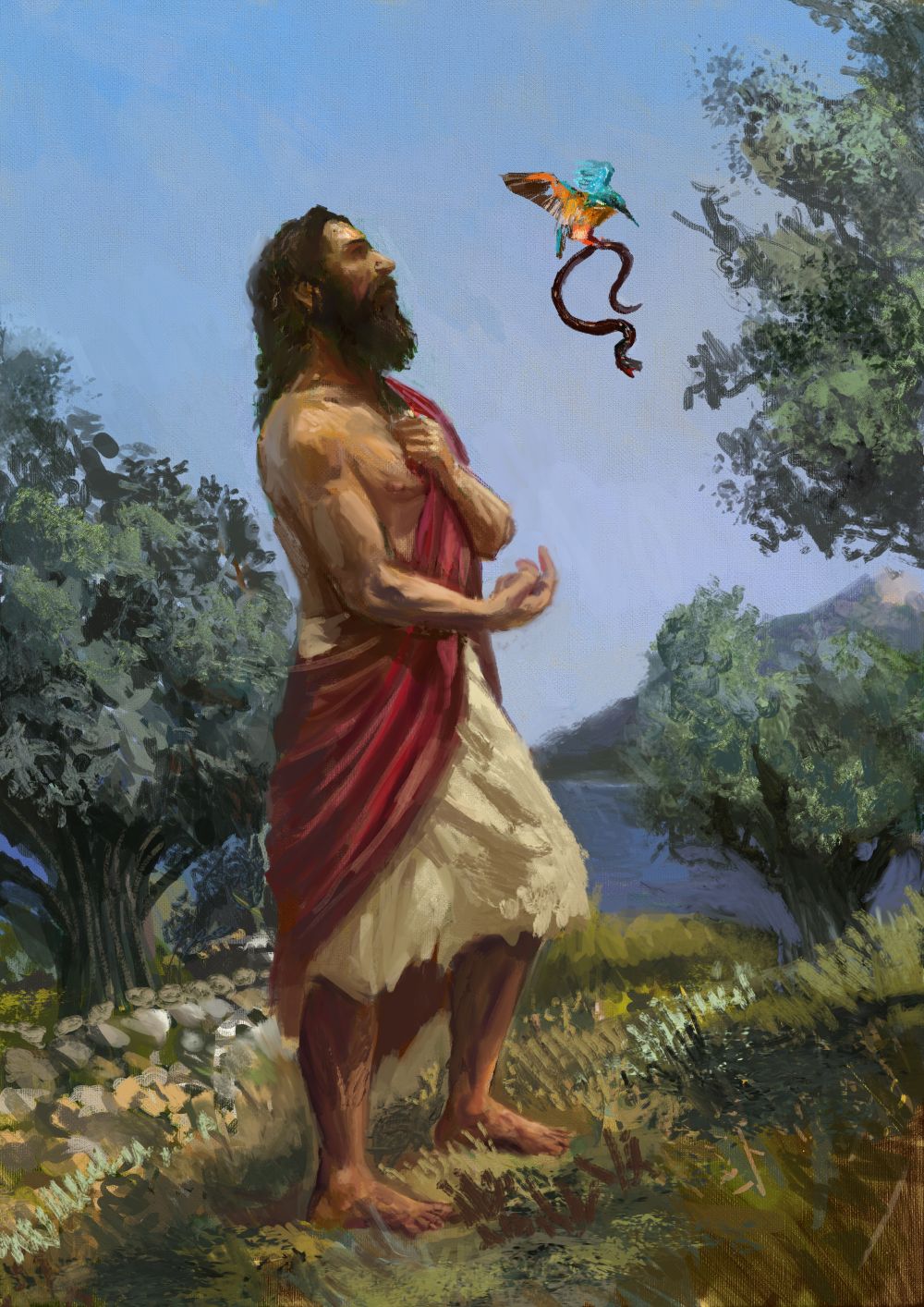
In the fourth part of our “The Forest as a Living Foundation” series, the distinguished American Nietzsche scholar Gary Shapiro investigates new angles on Nietzsche’s bonds to the woods: the philosopher’s personal enthusiasm for what is increasingly called “forest bathing,” the science behind how this practice benefits body, mind, and spirit, and the sheer pleasure of breathing fresh air, in woodland and wherever else we can find it. Shapiro’s essay showcases why this particular Lebensraum matters, not just for our individual well-being, but for the health of the entire planet.
“Smooth ice.
A paradise.
For the
who knows how to dance well!”1
Nietzsche and Techno
Nietzsche and Techno
Nietzsche and Techno


“Techno” — the show of the same name at the Swiss National Museum in Zurich, with traveling exhibitions by the Goethe-Institut and publications in German-speaking countries is currently honoring a once-subcultural movement that became a mass phenomenon in the 1990s with the Berlin Love Parade and continues to live on in Zurich's Street Parade today. Did techno offer (or offer) the Dionysian cultural experience that Nietzsche celebrated in his writings? Would Nietzsche have been a raver?
Look, I'm Teaching You the Transhumanist
Friedrich Nietzsche as a Personal Trainer of Extropianism
Look, I'm Teaching You the Transhumanist
Friedrich Nietzsche as a Personal Trainer of Extropianism


After Natalie Schulte reported on the echo of Nietzsche's “superman” idea in the start-up scene last week (Link), Swiss art scholar Jörg Scheller is dedicating this week to her continued existence in extropianism, a subtype of transhumanism that aims to artificially accelerate human evolution on both individual and genre levels using modern technology. The physical law of “entropy,” according to which there is a tendency in closed systems to equalize all energy differences until a state of equilibrium has been established — a state of complete cooling in terms of the universe — is opposed by the proponents of this flow with the principle of “extropy,” the increasing vitality of a system.