#
Austria
Aesthetics of Rausch
Reading Nitsch with Nietzsche
Aesthetics of Rausch
Reading Nitsch with Nietzsche
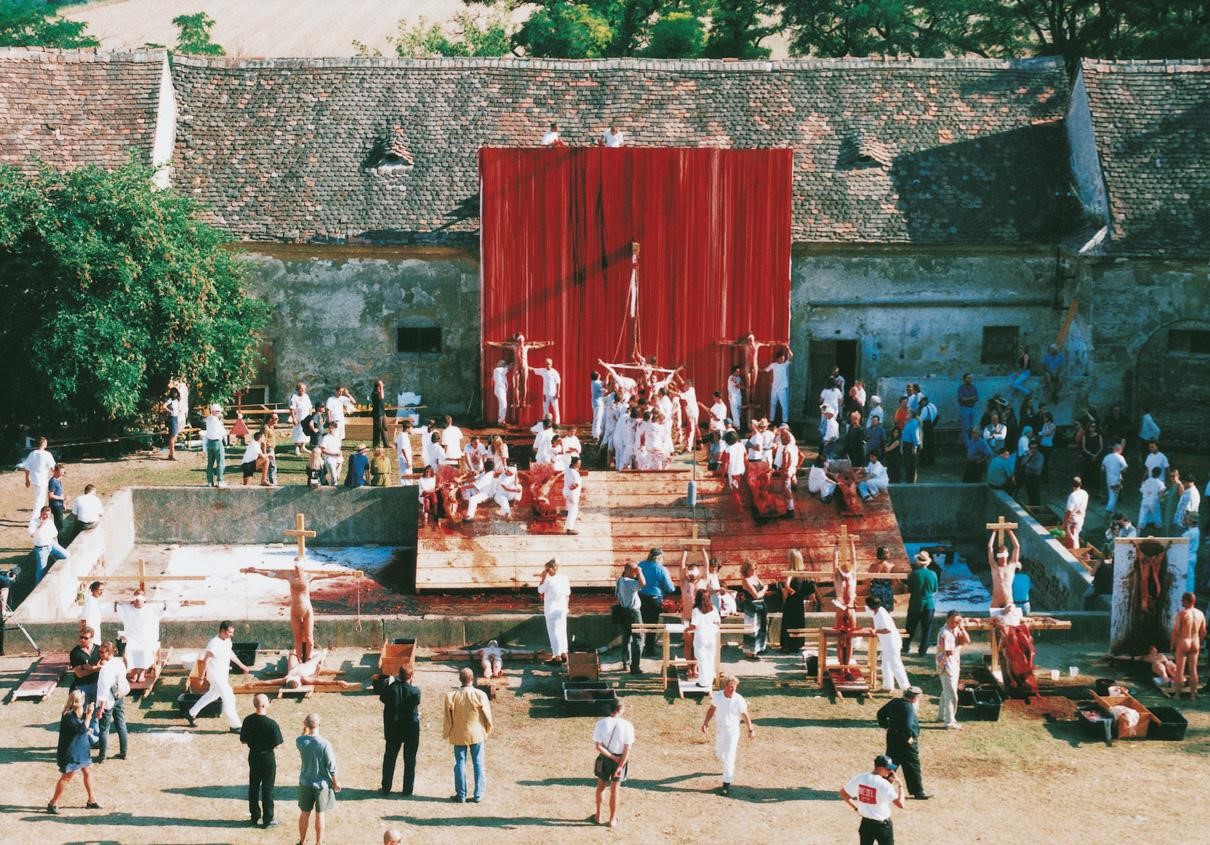

In its early publication The Birth of Tragedy (1872) Nietzsche formulated his basic theory of ancient tragedy. The moment of Rausch — a term which often translated as “intoxication” but refers not just to states of intoxication caused by the use of intoxicating drugs — is just as fundamental here as it is for Nietzsche's understanding of art in general. Emma Schunack investigates how the Dionysian intoxication of ancient tragedy is reflected in Hermann Nitsch's contemporary art. Between bloody animal pelts on purple, vermilion and lemon-yellow colored sheets + candied white violets.1 To what extent can the concept of Dionysian Rausch in Nitsch's “Orgies Mystery Theatre” be understood as a contemporary continuation of Nietzsche's understanding of art? An attempt to read Nitsch with Nietzsche.
Two Years through Woods of Symbols
Outlook and Summary of Our Previous Work
Two Years through Woods of Symbols
Outlook and Summary of Our Previous Work


Exactly two years ago, we published our first article on this blog, The Enduringly Contested Friedrich Nietzsche, a report by Paul Stephan about the annual meeting of the Nietzsche Society in 2023. Time to pause for a moment and think about what we've done on this blog so far and what the future could look like. Our editor-in-chief draws an interim conclusion and gives an insight into our plans.
We are combining this anniversary with two special appeals to you. On the one hand, we created a small quiz (link; in German). Answer four questions correctly, the answers to which are derived from our previous articles, and you could win one of thirteen prizes — and if you want, you can also give us valuable feedback about our work.
We would also like to draw you attention to our crowdfunding call. By July 10, we would like to invite you to help us raise €6,000 to finance further professional translations of our articles. In return, we offer you some fantastic rewards, including in particular the option of translating an article of your choice or giving us an article topic that you've always wanted to read about on this blog. Or you can get to know some of our authors at an exclusive Zoom workshop for our supporters. Become a bridge builder!
Nietzsche and Ukraine
A Conversation with Vitalii Mudrakov
Nietzsche and Ukraine
A Conversation with Vitalii Mudrakov


Vitalii Mudrakov is one of Ukraine's leading Nietzsche experts. Due to the war, he and his family currently live in Germany. Paul Stephan talked to him in detail about some aspects of the rich Ukrainian reception of Nietzsche in the context of the country's independent cultural history, which has often been ignored. It shows that Nietzsche's liberal thinking repeatedly inspired central protagonists of Ukrainian culture in their struggle for an independent nation free from Habsburg, Tsarist or Soviet foreign rule — and today again the struggle for their own self-assertion in the face of the Russian invasion.
Цю статтю перекладено українською мовою. Переклад можна знайти тут.