#
Rahel Jaeggi
A Case for the Three Ideology Critics?
On the Uses and Disadvantages of Historical Materialism for the Interpretation of Nietzsche
Part I: Georg Lukács and Hans Heinz Holz
A Case for the Three Ideology Critics?
On the Uses and Disadvantages of Historical Materialism for the Interpretation of Nietzsche, Part I: Georg Lukács and Hans Heinz Holz
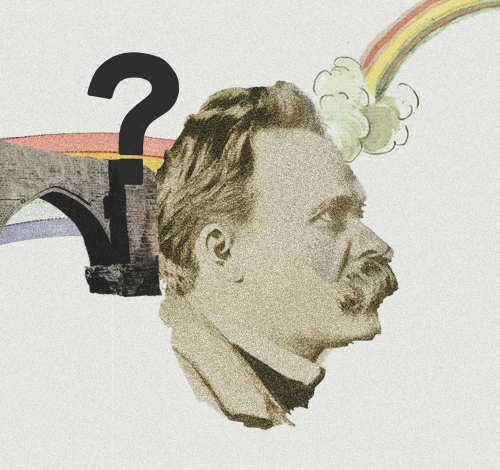
Karl Marx and Friedrich Nietzsche are often contrasted as the two great thinkers of the 19th century. The opposition between their views is evident: on one side, the critic of all class societies, schooled in Hegel; on the other, the critic of "slave morality" who drew on Schopenhauer and considered exploitative conditions to be indispensable. On one side, the sharp analyst of the capitalist mode of production, who dissected it with surgical precision over hundreds of pages in his magnum opus Das Kapital; on the other, the aphorist who thought while strolling, for whom economics was at best a peripheral topic.
Time and again, there have been attempts to bridge these contradictions and create fruitful symbioses between Marxism and Nietzscheanism. Yet there are also voices, particularly among those Marxists who rely heavily on Hegel, that emphasize the fundamental incompatibility of the two approaches.
This two-part series presents both less successful and more compelling Nietzsche interpretations by such "Hegel-Marxists," while simultaneously asking whether and how critique is possible between such philosophically divergent positions.
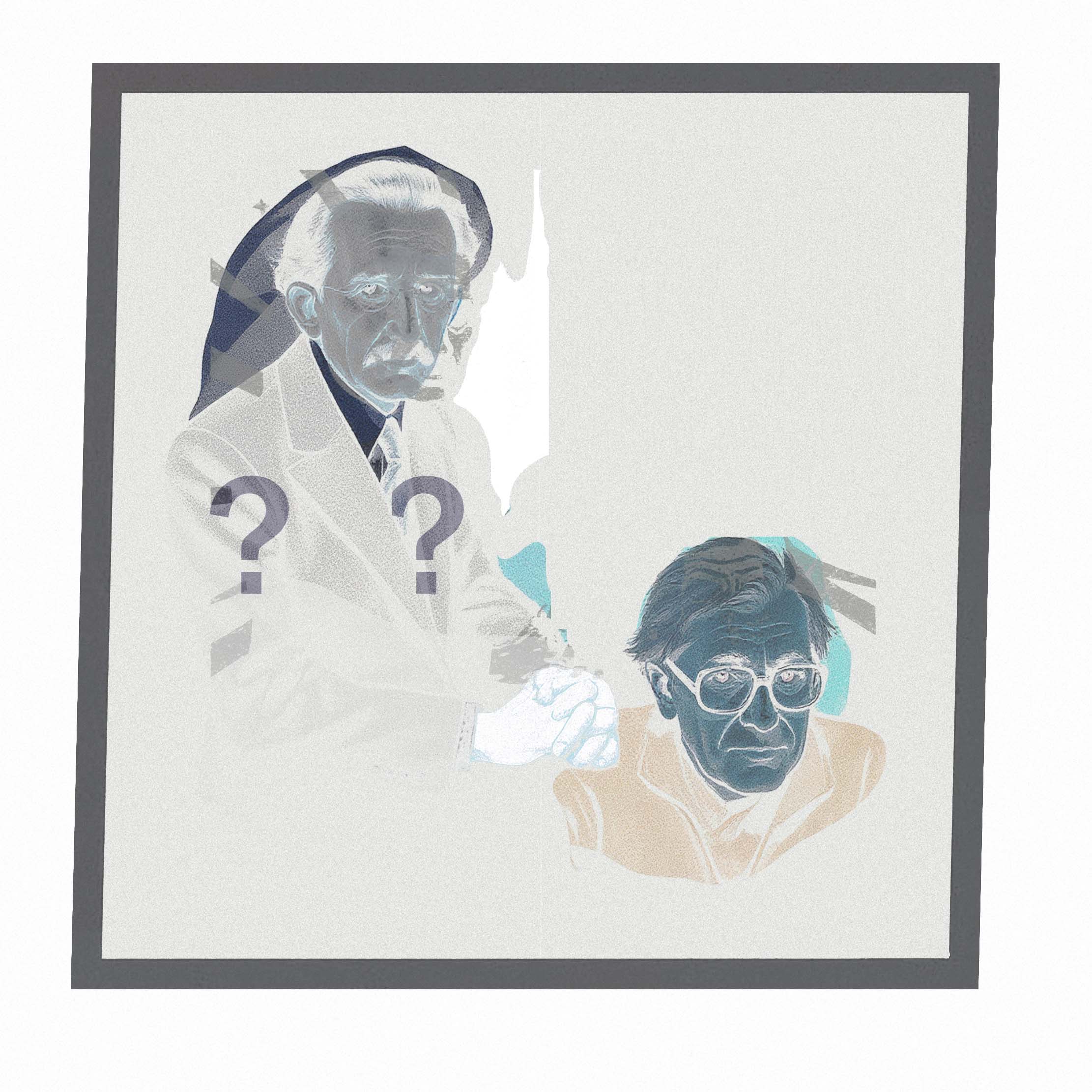
We begin with Georg Lukács and Hans Heinz Holz. The Hungarian philosopher Lukács lived from 1885 to 1971 and is considered the founding father of Hegel-Marxism as a philosophical movement. Hans Heinz Holz (1927–2011) was a student of Lukács’ former friend and later rival Ernst Bloch, and is counted among the most influential representatives of Hegel-Marxism in the second half of the 20th century.
The second part features an examination of the extensive "intellectual biography" of Nietzsche written by the Marxist historian Domenico Losurdo.