#
Main Course
Nietzsche on a Bike
A Declaration of Love
Nietzsche on a Bike
A Declaration of Love
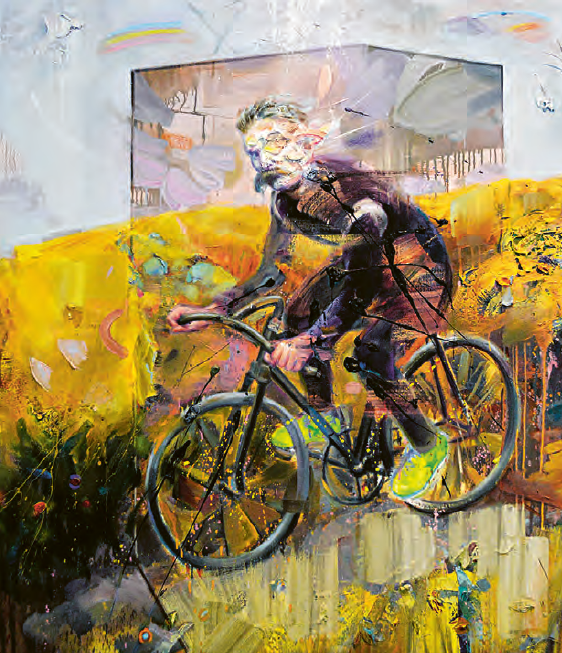

What does the most radical thinker of modernity have to do with cycling? Officially nothing: Nietzsche was a passionate hiker, and bicycles were conspicuously absent from his biography. Yet, his philosophy brilliantly anticipated the bicycle.
From the Buddhist Kala-Chakra up to Zarathustra's vision of the "self-rolling wheel," this essay embarks on a fascinating quest. It shows why the bicycle is far more than a mere means of transport: It is a philosophical instrument that teaches us the dynamic balance of life and makes the "Eternal Recurrence of the Same" palpable in the wind. An invitation to set thought in motion.
“Revolt, Slaves, Revolt!”
Hiking with Nietzsche Through Evangelical Christian London: Part I
“Revolt, Slaves, Revolt!”
Hiking with Nietzsche Through Evangelical Christian London: Part I

From the hedge-fund billions that bankroll Nigel Farage, and tie that funding to evangelical expansionism, to Nietzsche’s fulminating assault on Christianity as a “slave revolt”: this essay tracks the troubling way religion has reappeared at the heart of British public life. Arriving in London with walking boots, a rucksack, and a philosopher’s skepticism, the author follows the money, theology, and street culture surrounding charismatic Christianity and its seemingly unappeasable growth. At the centre stands Sir Paul Marshall: billionaire financier, Christian media mogul, and embodiment of a faith that feels entitled to reach for elite power.
But this is more than merely an unveiling of the knot that binds together wealth and religion. It is also a confrontation with Nietzsche’s deepest historical claim: that Christianity triumphed because the so-called weak learned to moralize against the strong. Wandering through churches, cafés, and city streets, the essay asks whether contemporary evangelical London represents a new form of that revolt—or its complete inversion.
Part I explores the rise of influential evangelical networks in modern Britain and their uneasy alliance with finance capitalism. Part II, which will appear shortly, returns to the first Christians themselves.
This article is a follow-up to Henry Holland’s account of hiking through Glasgow’s Muslim Southside (part I, part II).
The Postmodern Forest
How the Forest Subverts Modernity's Totalizing Claim
The Postmodern Forest
How the Forest Subverts Modernity's Totalizing Claim

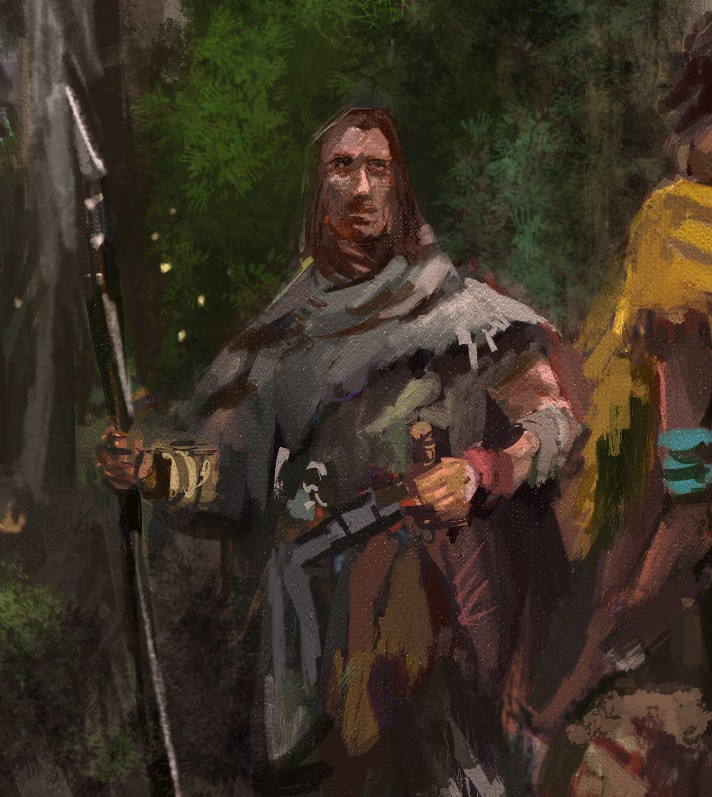
Forests are trending. And this is by no means contradictory to another, even larger trend of our time: digitalization. In this article, Mandus Craiss demonstrates that the forest is a network. Digitalization also occurs in a network-like manner; both phenomena are therefore characteristic of postmodernism.
In the first part of the article, the forest is characterized as a non-centralized and thus typically postmodern natural phenomenon. The second part defines "postmodernity" and discusses the extent to which this epochal concept is still, or once again, relevant – a discourse whose very early roots can be traced back to Nietzsche. Finally, the third part explains how the network aspect of postmodernity manifests itself and how the human-forest relationship has evolved recently.
This article is part of our special series this year "the forest as a livelihood".
"There are no facts, only interpretations."
From Nietzsche's Critique of Knowledge to Radical Constructivism
"There are no facts, only interpretations."
From Nietzsche's Critique of Knowledge to Radical Constructivism


Nietzsche questions truth as an adequate understanding of the world. This implies there is no longer a true world, as modern sciences assume. Radical constructivism, emerging in biology, which posits that living beings perceive their environment only as their internal structures allow, confirms Nietzsche's analyses and, consequently, postmodern philosophy, where truth is also considered merely a construction and not an objective grasp of something. From this, it follows not only that the world can be interpreted in various ways, but also that there is no single, uniquely correct truth and, therefore, no single correct way of life.
If you prefer to watch or listen to this article, read by the author himself in German, you can also find it on YouTube and Soundcloud.
"I confess that the deepest objection to the 'eternal return', my actually abysmal thought, is always mother and sister."1
On Nietzsche's Relationship with his Mother. Mother's Day Greetings
"I confess that the deepest objection to the 'eternal return', my actually abysmal thought, is always mother and sister."
On Nietzsche's Relationship with his Mother. Mother's Day Greetings
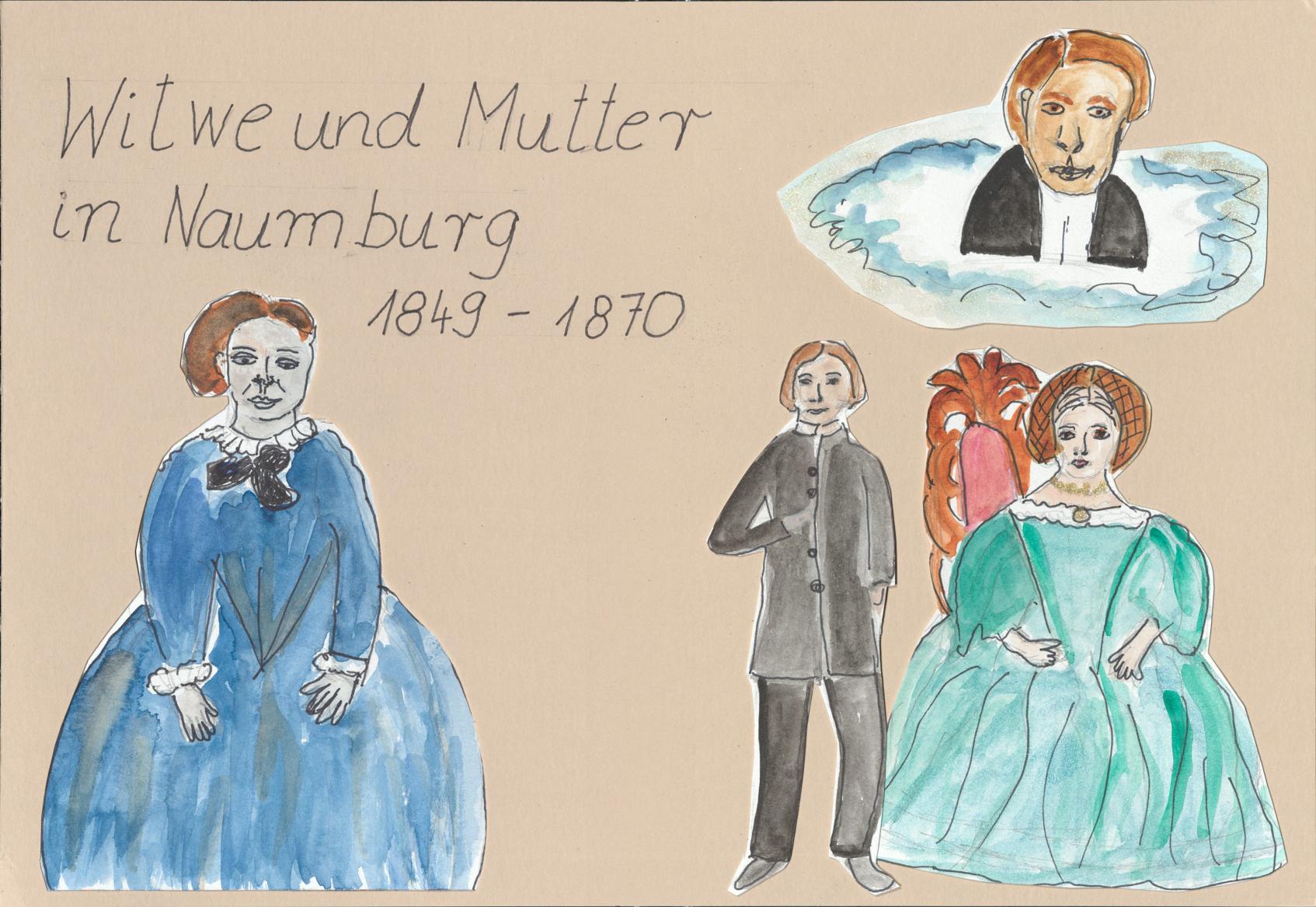
Nietzsche's philosophy is regarded as an act of self-liberation — but even the superman remained powerless against his own family. This essay highlights the pathological tension between the lonely thinker and the “canaille” relatives, mother Franziska Nietzsche and sister Elisabeth Förster-Nietzsche. While the philosopher (de)constructs “woman in itself” as flat, independent and mindless in his writings, he also has stockings stuffed and sausage boxes sent from Naumburg. An essay about the deepest objection to eternal return: one's own kinship.
This is the second part of a small series for this year's Mother's Day. In first part Henry Holland wrote about Franziska Nietzsche's life with a particular focus on her time before Nietzsche and her last years.
Nietzsche as a Populist?
Attempt at an Anachronistic Determination of Proportions
Nietzsche as a Populist?
Attempt at an Anachronistic Determination of Proportions
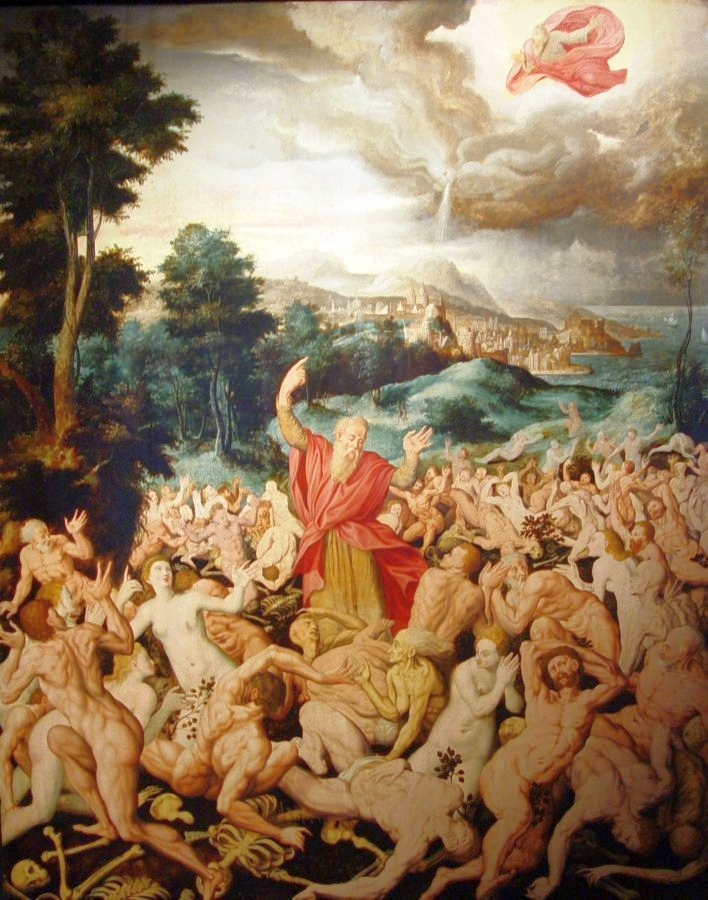
What would Nietzsche have said about the rampant populism of our time? Does his elitist attitude, his “aristocratic radicalism,” not make him an anti-populist par excellence? Or did he not himself dream of populist leaders inspiring the masses and the mass success of his books? — But what is “populism” anyway and what is the score of Nietzsche's stance on populist movements in his own time?
These are not entirely unimportant questions for our blog, which Jenny Kellner addresses in detail in the following article.
Jean-Baptiste Botul, a Forgotten Nietzschean from France
Jean-Baptiste Botul, a Forgotten Nietzschean from France
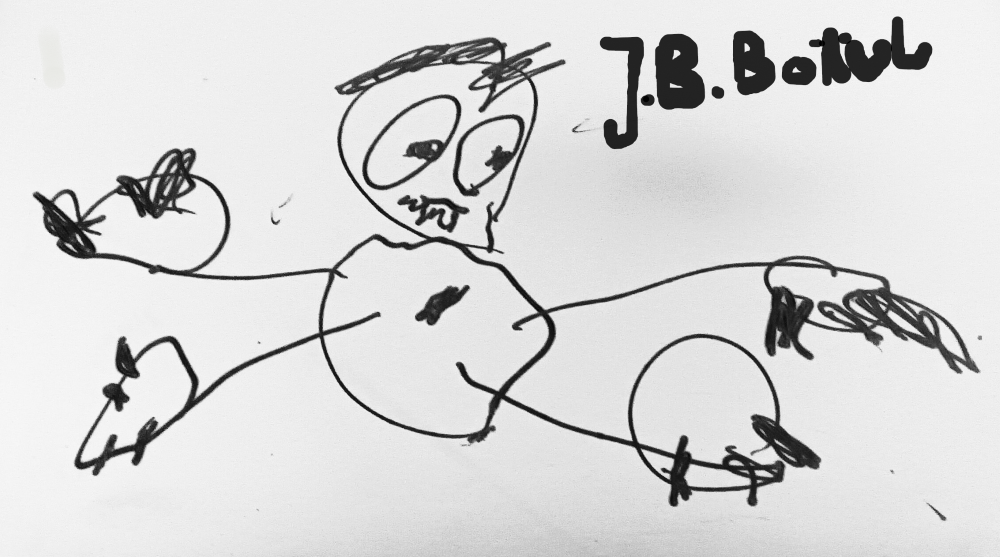
Time and again, our blog is dedicated to overlooked figures from the Nietzscheverse. The Leipzig Anglist Elmar Schenkel went deep into the archives for us in order to introduce you to an almost unknown figure of French-language Nietzsche reception: the “taxi philosopher” Jean-Baptiste Botul, who lived from 1896 to 1947 and not only came into contact with numerous prominent figures of his time on his trips through Paris, but developed also, in conversations with them, his very own Nietzsche interpretation, which, due to its subversive explosive power, has been stored in the poison cabinet by the mainstream of Nietzsche research to the present day. If Nietzsche was, in his own words, “dynamite,” then Botul is a rocket of the Force de frappe, still awaiting detonation — a stroke of luck?
“How Well Disposed Would You Have to Become to Yourself and to Life”
Prolegomena to Any Future Philosophy That Will Be Able to Present Itself as an Enlightenment — Part I
"How Well Disposed Would You Have to Become to Yourself and to Life"
Prolegomena to any future philosophy that may arise as an Enlightenment — Part I

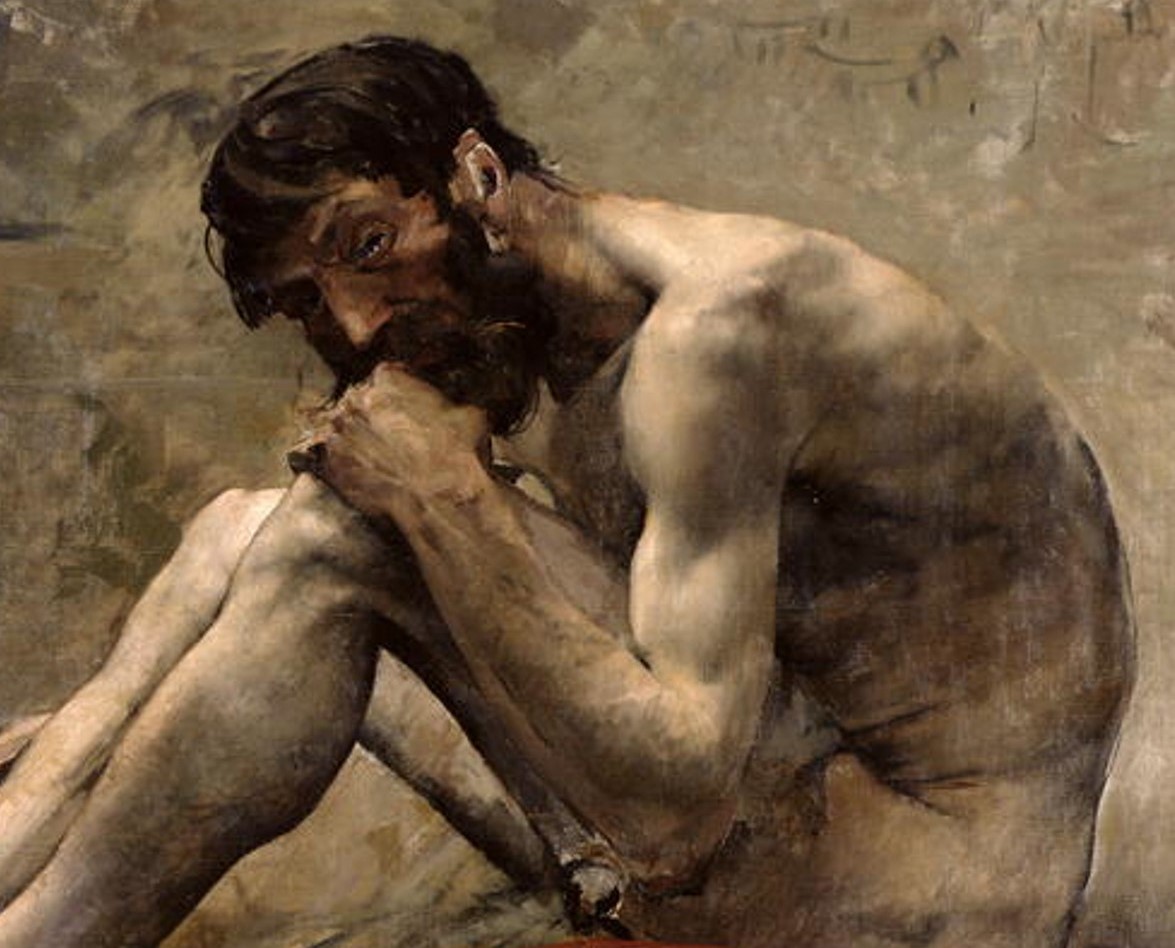
The following text explores the hypothesis that every philosophy of the zeitgeist finds its onset at something that bothers it: in the beginning, there was disgruntlement. This something is interpreted here as an illiberally disgruntled enlightenment, which is embodied in the current “polarization.” With Francis Fukuyama's help, this trail is explored and the drama of the recognition of modern Enlightenment is described.
The philosopher Fukuyama, born in Chicago in 1952, is primarily known for his essay The End of History? from 19891. There, he held that the “end of history” assumed by Hegel had finally arrived with the looming collapse of the Soviet Union. He saw the triumphant liberal Western democracies as the final stage of the process of historical progress. In 1992, Fukuyama published his main work based on this essay: The End of History and the Last Man, in which he combines Hegel's thesis with Nietzsche's diagnosis of the “last man.” Our author is also referring to this book. It caused controversial debates worldwide and continues to provoke today. — Do we really live after the “end of history”? Our author agrees with Fukuyama: While with the form of liberal democracy a final embodiment of the course of history has been achieved, history has been continuing as a conflict within this embodiment. World history has become history of liberalism.
Inside the Magic Forest
Nietzsche and the Sorcerous Power of Trees
Inside the Magic Forest
Nietzsche and the Sorcerous Power of Trees


In cultural perception, the forest is much more than a mere supplier of raw materials or a local recreation area, but, especially in German culture, a magical place of encounter with the supernatural. In the second part of our series ”the forest as a livelihood“ Christian Saehrendt explores this romantic fascination for the forest and to what extent it is also reflected in Nietzsche's works. Because Nietzsche was not only a passionate forest walker, he also writes again and again about this gateway to the “otherworld” and, last but not least, places his Zarathustra in sylvan sceneries.
Peace through Strength
Nietzsche's Perspective on Negotiated Power and Armed Peace
Peace from Strength
Nietzsche's Perspective on Negotiated Power and Armed Peace
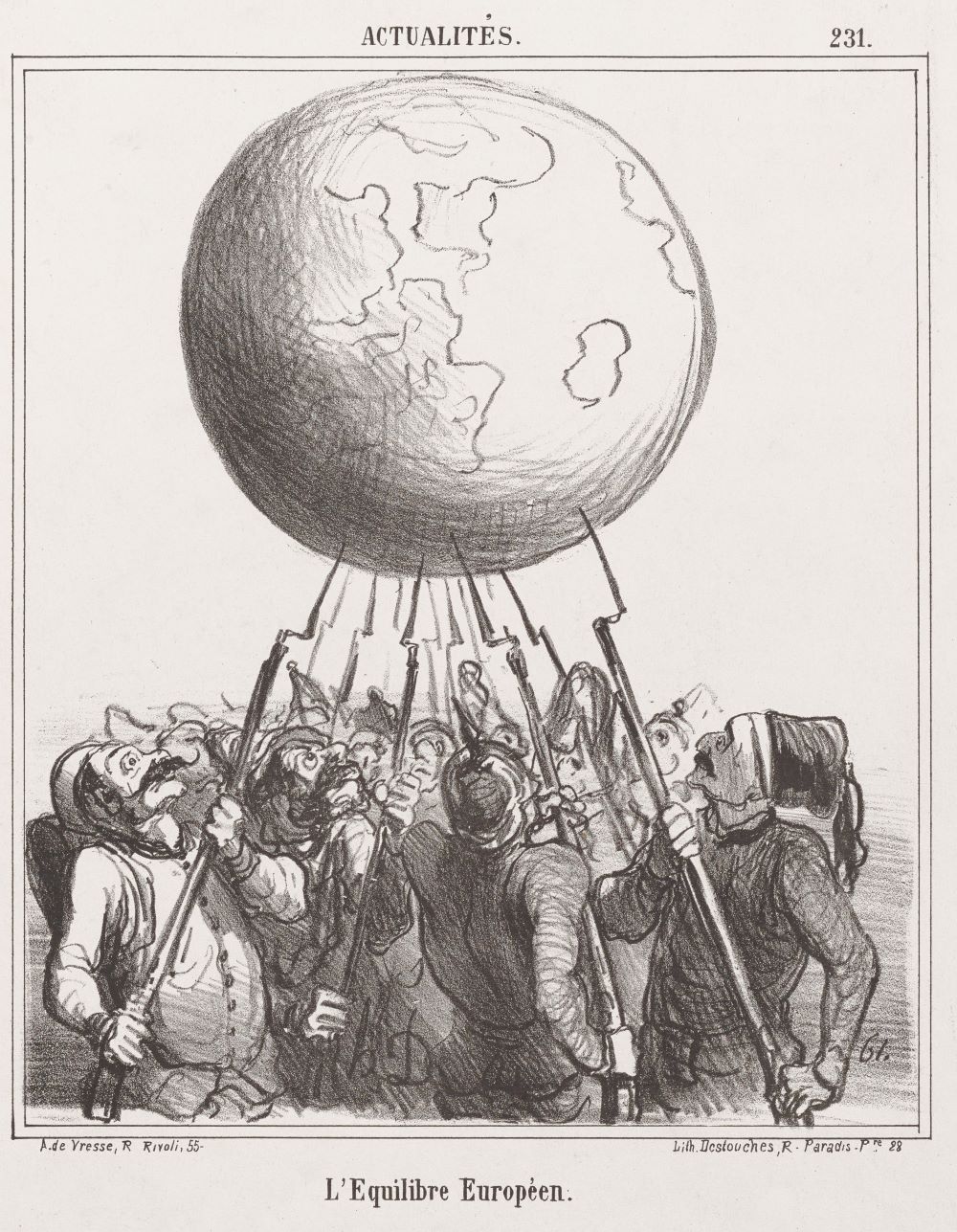

War in Europe was considered unthinkable for a long time — until it became a reality. But how can peace be thought of when normative guarantees fail? What if there are a few powerful and many weak players? Friedrich Nietzsche devised a surprisingly timely answer in 1879: Peace is not a sign of weakness, but an actively negotiated balance of power. He showed how a stable peace obliges all actors to build up their own strength. Nietzsche's transformation from an advocate of war to a thinker of peace based on strength is an admonition — also and especially to the weaker.
Dionysus as Rolling Stone
An Attempt to Understand Nietzsche with Rock Music
Dionysos als rolling stone
An Attempt to Understand Nietzsche with Rock Music

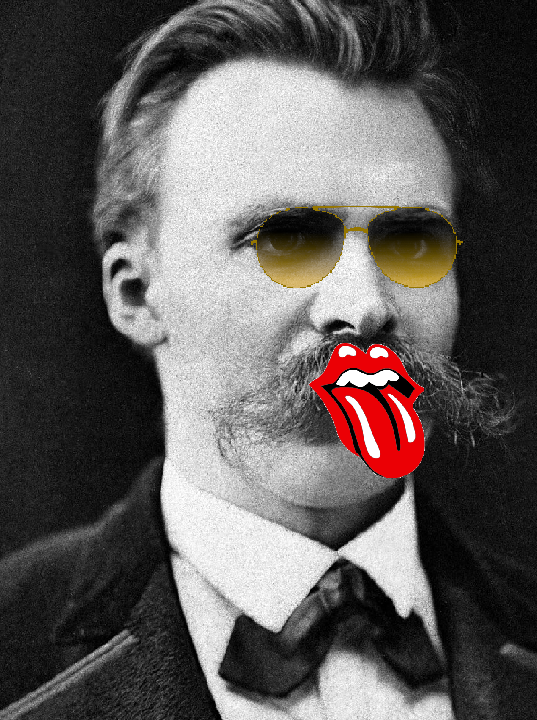
On the one hand, Nietzsche's distinction between the Apollonian and the Dionysian helps to understand the development of the rock music of the Rolling Stones both internally and externally. On the other hand, Nietzsche's philosophy is reflected in many places in their songs. But above all, it is also illuminated by the Stones, and their songs show what Nietzsche is thinking — an Apollonian act. If Nietzsche is aesthetically oriented towards intoxication, then you can also learn from the Stones how to receive Nietzsche's poetry in a Dionysian way. It is therefore not just about understanding the Stones with Nietzsche, but vice versa: with the Nietzsche Stones.
An audiovisual version of this article with clips of the quoted songs can be found on the YouTube channel of the Halcyonic Association for Radical Philosophy and on Soundcloud.
From Denier to Conspiracy Theory to Ghosting
Nietzsche and the Social Upheavals Caused by Today's Widespread Resentment
From Denier to Conspiracy Theory to Ghosting
Nietzsche and the Social Upheavals Caused by Today's Widespread resentment
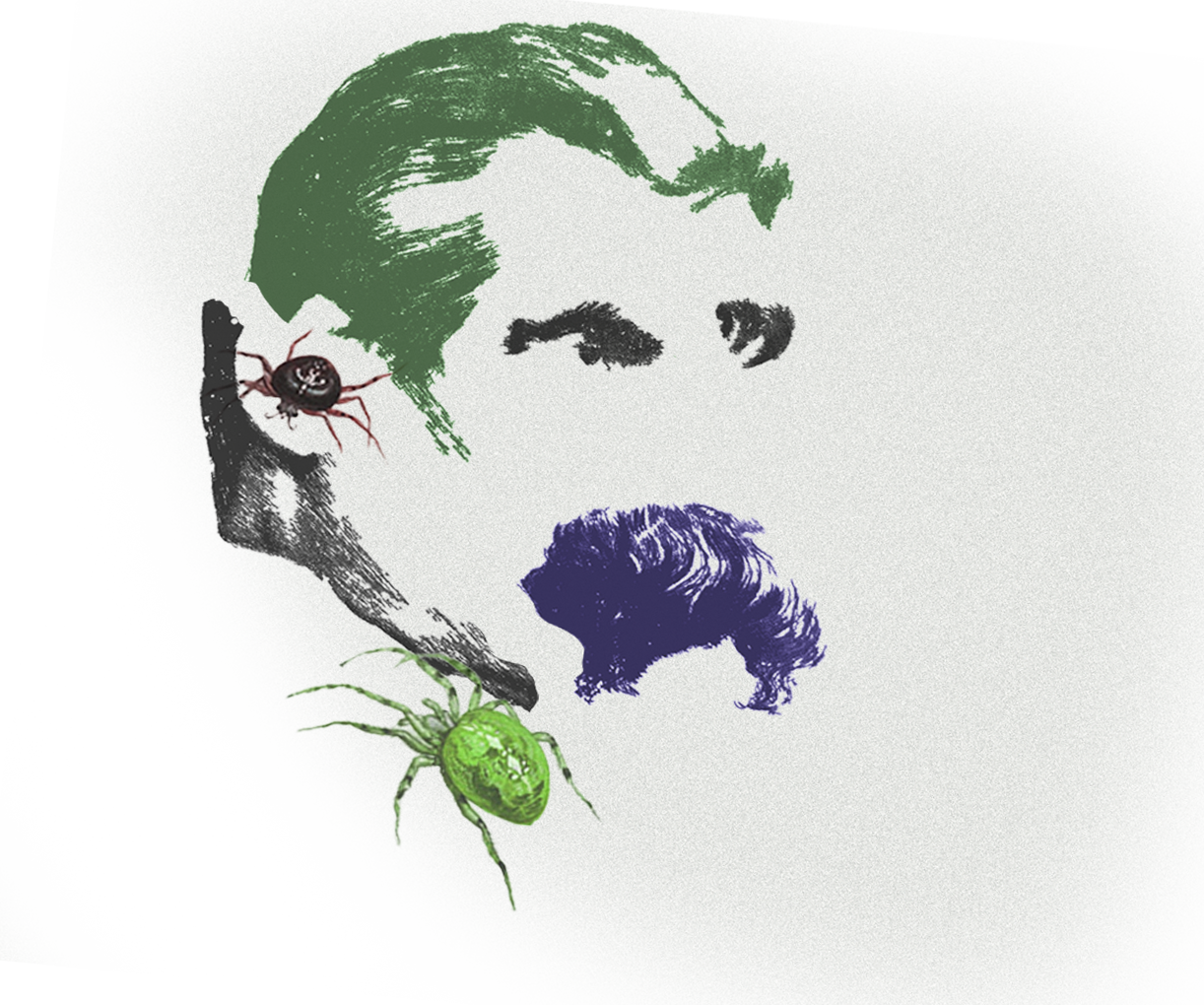

After Hans-Martin Schönherr-Mann has already dealt with Nietzsche's concept of resentment in two articles on this blog (here and there), he now addresses the question of how it can be applied to the current social situation.
His thesis: The current political landscape is characterized by many divisions based on resentment. They are due to the weaknesses of their own arguments. This is how critics are defamed as “corona” or “climate deniers.” The objections are often branded as conspiracy theories. You can't ask 'Cui bono?' anymore. Or you break off contact without comment to protect yourself. This is not only in line with Nietzsche's understanding of resentment in many places, precisely because he himself is not free from it, but is looking for ways out of it.
“What is the topicality of Nietzsche's analysis and critique of 'resentment'?“ is also the question of this year's Kingfisher Award for Radical Essay Writing, in which you can once again win up to 750 Swiss francs. The closing date for entries is August 25. The complete tender text can be found here.
If you'd rather listen to the article, you can find an audiovisual version on the Halcyonic Association YouTube channel, read by the author himself (link) and a listening-online version on Soundcloud (link).
Übermensch Hustling
Nietzsche Between Silicon Valley and New Right
Übermensch Hustling
Nietzsche Between Silicon Valley and New Right


This essay, which we awarded first place in this year's Kingfisher Award for Radical Essay Writing (link), examines Nietzsche's question of the “barbarians” in a contemporary context and analyses how his philosophy is being politically exploited today. Against this background, the text shows how hustle culture, platform capitalism and neo-reactionary ideologies have been economizing the ”will to power“ and have become a new form of subtle barbarism: an internal decomposition of cultural depth through market logic, technocratic myths, and performative nihilism. Nietzsche's thinking, however, can be used precisely to describe these tendencies in their genealogy, to unmask their immanent nihilism, and to present an (over-)humane alternative to them.
Female Barbarians — When Women Become a Threat
Female Barbarians — When Women Become a Threat


In today's world, which wants to call itself modern and equal, old patterns continue to have an effect — rivalry instead of solidarity, adaptation instead of departure. The essay provocatively asks: Where are the barbarians of the 21st century? It shows the emergence of a new female force — a woman who does not destroy but refuses, who evades old roles and gains creative power from pain. Through examples from reality and literature, the text attempts to show that true change does not start in obedience but in bold “no” — and that solidarity among women could be the real revolution.
We awarded this text second place in this year's Kingfisher Award for Radical Essay Writing (link).
If you'd rather listen to it, you'll also find it read by Caroline Will on the Halcyonic Association for Radical Philosophy's YouTube channel (link) or on Soundcloud (link).
The Barbarians of the 21st Century
Narcissism, Apocalypse, and the Absence of Other
The Barbarians of the 21st Century
Narcissism, Apocalypse, and the Absence of Other


The diagnosis of our time: not heroic barbarians, but selfie warriors. This essay, which won the second place at this year's Kingfisher Award (link), explores Nietzsche's vision of the”stronger type”1 and shows how it is turned into its opposite in a narcissistic culture — apocalypse as a pose, the Other as a blind spot. But instead of the big break, another option opens up: a “barbaric ethic” of refusal, of ambivalence, of relationship. Who are the true barbarians of the 21st century — and do we need them anyway?
Nietzsche and Intellectual Right
A Dialogue with Robert Hugo Ziegler
Nietzsche and the Intellectual Right
A Dialogue with Robert Hugo Ziegler


Nietzsche was repeatedly elevated to a figurehead by right-wing theorists and politicians. From Mussolini and Hitler to the AfD — Nietzsche is repeatedly seized when it comes to confronting modern society with a radical reactionary alternative. Nietzsche was particularly fascinating to intellectual right-wingers, such as authors like Ernst Jünger, Carl Schmitt and Martin Heidegger, who formed a cultural prelude to the advent of National Socialism in the 1920s, even though they later partially distanced themselves from it. People also often talk about the “Conservative Revolution”1.
What do these authors draw from Nietzsche and to what extent do they read him one-sidedly and overlook other potentials in his work? Our author Paul Stephan spoke about this with philosopher Robert Hugo Ziegler.
Turning Moral Weakness Into Power
Nietzsche and the Accusation of Resentment
Turning Moral Weakness Into Power
Nietzsche and the Accusation of Resentment


Strangers seem creepy to many. They immediately fear that these strangers will harm them. Many decent earners think that recipients of citizen benefits are lazy and therefore do not allow them to receive government support. To many educated people, illiterate people appear rude and simple-minded, with whom they therefore want as little as possible nothing to do with, whom they do not trust. Religious people are often afraid of atheists, who in turn are afraid of contact with religion. What you don't know often appears to be dangerous and you prematurely discount that. Such prejudices lead to rejection, which often solidifies to such an extent that counterarguments are no longer even heard. This is resentment that has existed for a long time, but which today makes consensus almost impossible in many political and social debates. This can degenerate into hate and contempt and then into violence whether between rich and poor, right and left, machos and feminists, abortion opponents and abortion advocates, vegetarians and meat-eaters. When one side prevails, it imposes its values on the other, and the resentment even becomes creative. In any case, it prevents you from making an effort to understand the other person. For Nietzsche, resentment has been driving the dispute over what is morally necessary for a long time.
“Resentment” is one of the key terms of Nietzsche's late work. The philosopher is referring to an internalized and solidified affect of revenge, which leads to the development of an overall negative approach to the world. Especially in On the genealogy of morality Nietzsche is trying to show that the entire European culture since the rise of Christianity has been based on this affect. Judaism and Christianity, in their hatred of aristocrats, propagated an ethics of the weak — in this act, resentment became creative. With a new creative ethic, Nietzsche now wants to contribute to a renewed revaluation of values in order to return to a life-affirming aristocratic ethic of the “strong.” In this article, Hans-Martin Schönherr-Mann introduces Nietzsche's reflections on resentment and works out what makes the accusation of mutual resentment so popular to this day.
“Smooth ice.
A paradise.
For the
who knows how to dance well!”1
Nietzsche and Techno
Nietzsche and Techno
Nietzsche and Techno

“Techno” — the show of the same name at the Swiss National Museum in Zurich, with traveling exhibitions by the Goethe-Institut and publications in German-speaking countries is currently honoring a once-subcultural movement that became a mass phenomenon in the 1990s with the Berlin Love Parade and continues to live on in Zurich's Street Parade today. Did techno offer (or offer) the Dionysian cultural experience that Nietzsche celebrated in his writings? Would Nietzsche have been a raver?
Considering Artificial Intelligence with Nietzsche
On the Critique of Current AI Debates
Considering Artificial Intelligence with Nietzsche
On the Critique of Current AI Debates
.jpg)

Transhumanists believe that artificial intelligence is used to capture the real world. It wasn't just Nietzsche who presented this as nonsense. Moral programs are entered into the AI. With Nietzsche, this prolongs hostile morality. And Nietzsche would have already questioned the fact that AI helps people. Instead, people must submit to AI. With Nietzsche, they can evade their power.
Stuck Between the Monsters and the Depths
Wanderings Through Modern Nihilism in the Footsteps of Nietzsche and Kierkegaard — Part 2
Stuck Between the Monsters and the Depths
Wanderings Through Modern Nihilism in the Footsteps of Nietzsche and Kierkegaard — Part 2


In this two-part essay, Paul Stephan examines how Nietzsche uses the wanderer as a personification of modern nihilism. After he is in the first part (link) focused on the general cultural significance of movement metaphors and the metaphor of wandering in Nietzsche's important brother in spirit, the Danish philosopher Søren Kierkegaard, it will now primarily be about Nietzsche himself.
The Monkeys Dance Inexplicably. Nietzsche and Contemporary Dance Culture
Reflection, Movement, Misery
The monkeys dance inexplicably. Nietzsche and contemporary dance culture
reflection, movement, misery

In addition to hiking, dancing is one of the most prominent soldiers in Nietzsche's “moving [m] army of metaphors, metonymies, anthropomorphisms.” Based on Nietzsche's reflections on the art of movement, Jonas Pohler explores the paramount importance that it plays in our present day. Is the effect of dance primarily sexual? What does dance have to do with technology? What symbolism is the dancing gesture able to convey?
Traveling with Nietzsche through Southeast Asia III
Thailand
Traveling with Nietzsche through Southeast Asia III
Thailand

Our author Natalie Schulte traveled by bicycle for nine months Vietnam, Kampuchea, Thailand and malaysia. In her penultimate contribution to the series ”Hikes with Nietzsche“ she muses on encounters with wild animals that she met or could have met on her journey. It is hardly surprising that this includes considerations about the importance of animals, as they occur in Nietzsche's philosophy.
Homesick for the Stars
Prolegomena of a Critique of Extraterrestrial Reason
Homesick for the Stars
Prolegomena of a Critique of Extraterrestrial Reason


On April 12, 1961, Soviet cosmonaut Yuri Gagarin achieved the unbelievable: He was the first person in history to leave the protective atmosphere of our home planet and circumnavigate the Earth in the Vostok 1 spaceship. In 2011, the anniversary of this “superhuman” act was declared International Manned Space Day. The stars aren't that far away anymore. With the technical progress achieved, the fantasy of expanding human civilization into space takes on concrete plausibility. The following text attempts to philosophically rhyme with these prospects and finally describes the approach of a possible space program from Nietzsche. Although airplanes didn't even exist during his lifetime, his concepts can still be applied to this topic in a productive way, as is so often the case.
Editorial note: We have explained some difficult technical terms in the footnotes.
Abonimably Married, With Children
Nietzsche as the Wagners' house friend in the “Tribschen Idyll”
Abonimably Married, With Children
Nietzsche as the Wagners' house friend in the “Tribschen Idyll”

Richard Wagner lived on Lake Lucerne for six years. In April 1866, he was able to rent the Landhaus of the Lucerne patrician family Am Rhyn, which had been built in a beautiful scenic location on the Tribschenhorn. Nietzsche had been a frequent guest there at that time and enjoyed the family connection. For him, it was an episode that shaped him throughout his life, so that the confrontation with Wagner — in its entire range from unconditional adoration to rude rejection — can perhaps even be regarded as the heart of his thinking. Today, the building houses the Richard Wagner Museum. His current special exhibition focuses on the composer's anti-Semitism.
Historic Uprising in Bangladesh
The Will to Revolution
Historic Uprising in Bangladesh
The will to Revolution


For a total of 20 years, Bangladesh was ruled by an iron, authoritarian regime under Sheikh Hasina, the daughter of the first president since the country's independence from Pakistan, Sheikh Mujibur Rahman. But within a very short period of time, nationwide uprisings of such violence broke out in July 2024 that they overthrew Hasina after just one month and drove him into exile. How did this victory come from below and how does Nietzsche help us The will to power and continue his elaborations by Foucault and Deleuze to understand this historic moment?
Discourse, Power and Delusion
Michel Foucault's Nietzsche Interpretation Revisited
Discourse, Power and Delusion
Michel Foucault's Nietzsche Interpretation Revisited


The humanities scene recently experienced a minor sensation: In the estate of Michel Foucault (1926—1984), one of the most important representatives of post-structuralism, its editors came across an elaborate book manuscript with the title Le discours philosophique, on which the avowed Nietzschean had worked in 1966. It was published in German by Suhrkamp in 2024. Nietzsche plays a decisive role in this comprehensive analysis of philosophical discourse since Descartes. Paul Stephan takes this event as an opportunity to take a closer look at the most influential Nietzsche interpretation of the 20th century to date.
The Educator’s Mark
Schopenhauer's Omnipresence in Nietzsche's Philosophy II
The Educator’s Mark
Schopenhauer's Omnipresence in Nietzsche's Philosophy II


After explaining in the first part of this article (link) how Nietzsche transformed from an admirer of Schopenhauer to a critic in the course of the 1870s, Tom Bildstein now examines in more detail how the mature Nietzsche sought to overcome Schopenhauer‘s pessimism and counter it with a “life-affirming” philosophy. Schopenhauer‘s “will to life,” which the misanthrope would like to see ascetically denied, is to give way to the “will to power” as the fundamental principle of all life, which cannot be denied without contradiction.
Splendidly Isolated with a Stiff Upper Lip
Nietzsche and the Tragedy of Academic Outsiderhood
Splendidly Isolated with a Stiff Upper Lip
Nietzsche and the Tragedy of Academic Outsiderhood

“Keep a stiff upper lip,” they say in England when you want to call on your interlocutor to persevere in the face of danger and to maintain an upright posture. Advice that is certainly often helpful. Such a stoic position must be sought all the more as an academic outsider who, on the one hand, sets himself apart from the scientific mainstream, but on the other hand is also dependent on his recognition. Nietzsche himself, but also many of his admirers, found himself in such a delicate situation. Based on several such outsider figures (in addition to Nietzsche himself, such as Julius Langbehn and Paul de Lagarde), Christian Saehrendt develops a typology of the (perhaps not always quite so) “brilliant isolation” of academic nonconformism.
“Peace Surrounds Me”
An Unusual Christmas Message
“Peace Surrounds Me”
An Unusual Christmas Message

In our last article before the break at the turn of the year, Paul Stephan explores a Close reading A remarkable aphorism of Nietzsche, in which he expresses himself with the famous Christmas blessing “Glory be to God in height and peace on earth and to people! “discusses. As when unwrapping a gift that has been covered several times, he tries to reveal the different layers of meaning in this text in order to make Nietzsche's exact positioning clearly stand out. The reader may decide for himself whether you end up holding a glowing truth in your hand or the box remains empty. In any case, we wish all our readers with Nietzsche: “Peace on earth and good pleasure for each other! ”
Riveting Strangeness
Remarks on Kafka's Work
Riveting Strangeness
Remarks on Kafka's Work

Franz Kafka died 100 years ago. The following text is an attempt to update his work with a socio-psychological perspective inspired by Nietzsche. His thesis: Kafka narratingly shows what Nietzsche philosophizes about. Michael Meyer-Albert wants to promote the logic of a non-naive world enlightenment in the fictions of one of the most important authors of modern times: affirmation of life instead of suicide.
Editorial note: We have explained some difficult technical terms in the footnotes.
The Will to Commentary
A Report on This Year's Nietzsche Society Meeting
The Will to Commentary
A Report on This Year's Nietzsche Society Meeting


The almost complete Freiburg Nietzsche commentary has now become an indispensable tool for Nietzsche research. In meticulous detail work, the authors compiled useful information on almost all aspects of Nietzsche's works (history of origin, sources, allusions, receptions, interpretations...) and commented on them passage by passage, sometimes sentence by sentence and word by word. Almost all of the volumes published so far are available free of charge on the de Gruyter Verlag website (link). Even laymen will find a real treasure trove of background information and explanations here. The three leading employees of the project — its long-time manager Andreas Urs Sommer, Katharina Grätz and Sebastian Kaufmann — took the opportunity to dedicate this year's annual meeting of the Nietzsche Society to the topic of “Commenting on Nietzsche.” They were not only looking back, but also looking ahead.
Boomers, Zoomers, Millennials
How Do the Respective Perspectives on Nietzsche Differ?
Boomers, Zoomers, Millennials
How Do the Respective Perspectives on Nietzsche Differ?


This time in confidential Du, Paul Stephan talked to Hans-Martin Schönherr-Mann, our oldest parent author, and our youngest regular author, Estella Walter, about our different generational experiences and about what is actually to be thought of the fashionable discourse about the different “generations.” We talked about post-structuralism, the ecological issue and the diversity of possible connections to Nietzsche.
In the House of Semblance
Preludes on the Connection Between Architecture and Thought in Nietzsche with Constant Reference to a Book by Stephen Griek. A Review
In the House of Semblance
Preludes on the Connection Between Architecture and Thought in Nietzsche with Constant Reference to a Book by Stephen Griek. A Review

A fruitful method within philosophy can be addressed seemingly minor, everyday topics. For example, the relationship between thinking and architecture, as this text is based on the newly published book Nietzsche's architecture of the discerning By Stephen Griek tried to show. With Nietzsche in mind, according to Michael Meyer-Albert, protecting a dwelling — both literally and figuratively — from the chaos of reality is essential for a successful world relationship. He neglects this in Greek's post-modern approach, which aims at maximum openness and wants to replace clear spatial structures with diffuse nomadic networks. Architecture as an art of non-violent rooting thus becomes unthinkable; the “house of appearance” that supports human existence collapses.
What is ChatGPT Doing to Philosophy?
Attempt of a Critical Examination
What is ChatGPT Doing to Philosophy?
Attempt of a Critical Examination

On the anniversary of Nietzsche's death, Paul Stephan conducted a detailed interview with the ChatGPT program on this blog to test the program's performance when it comes to profound philosophical questions (link). This is followed by a critical reflection of this experiment.
The images for this interview were, unless otherwise marked, with the software DeePai created. The instructions for the article image were “Nietzsche and ChatGPT,” the instructions for the images in the article “ChatGPT talks about Nietzsche.”
Society versus Self-Becoming
A Dialogue about Nietzsche, Authenticity and the Challenges of Modernity
Society versus Self-Becoming
A Dialogue about Nietzsche, Authenticity and the Challenges of Modernity


To commemorate the 124th anniversary of Nietzsche’s death, Paul Stephan conversed with a rather particular kind of Nietzsche expert—the now near ubiquitous ChatGPT. Their discussion circled around questions of why Nietzsche matters today and his concept of authenticity. During the course of the conversation, Stephan switched from asking to fielding questions, and elaborated briefly on how his own doctoral dissertation also focuses on authenticity. As Stephan’s experiment aimed at probing deep into the program’s capabilities, and because brevity is not ChatGPT’s strongest asset, we present here an abridged version of the conversation. Readers of German who wish to delve deeper can view the unabridged and annotated PDF that’s available as a download (link). Watch out for Stephan’s critical reflections on this truly remarkable dialogue within the next few days (link).
The pictures accompanying the interview were created with DeepAI software, which was asked to produce “A picture of Friedrich Nietzsche with a quote by him.”
The Artist as Egomaniac
A Reckoning?
The Artist as Egomaniac
A Reckoning?

Artists often do not come off well in Nietzsche’s work. They represent the prototype of the dependent, truth-hostile and reality-denying person who is at the mercy of his own moods without self-control. A childish, dramatizing, hot-tempered and generally ridiculous creature, an egomaniac whose actions and demeanor are aimed solely at courting the applause of others. Or is Nietzsche not taking his word for it here? Should this really be his final verdict about the creative spirit?
He develops much of what Nietzsche describes about the artist on the figure Richard Wagner, with whom he has a brief, intensive, but ultimately disappointing acquaintance. The artist and the thinker could have been the ideal friendship for Nietzsche for a while. But after breaking with Wagner, Nietzsche has a lot of derogatory things to say about the artist as a type. How different — for comparison — is the friendship between artist and thinker in Narcissus and Goldmund by Hermann Hesse, who deals extensively with Nietzsche.
Nietzsche’s Monkey, Nietzsche’s Varlet
The Oswald Spengler Case
Nietzsche’s Monkey, Nietzsche’s Varlet
The Oswald Spengler Case

In the following article, Christian Saehrendt gives a brief insight into the work of one of the most controversial but also most influential Nietzsche interpreters of the 20th century: the German philosopher Oswald Spengler (1880—1936). The author of The fall of the West (1917/22) is considered one of the most important representatives of the “Conservative Revolution,” an intellectual movement that was significantly involved in the cultural destabilization of the Weimar Republic before 1933. Largely forgotten in Germany, it continues to be eagerly received in a global context, such as in Russia.
Nietzsche Against the Body’s Naysayers
A Conversation with Philosopher and YouTuber Jonas Čeika
Nietzsche Against the Body’s Naysayers
A Conversation with Philosopher and YouTuber Jonas Čeika


After discussing Jonas Čeika's book How to Philosophize with a Hammer and Sickle and bis YouTube channel (CCK Philosophy) (link), Henry Holland interviewed the American about the blockages of academic philosophy, Nietzsche's relevance as a thinker on the “guideline of the body,” and about tensions between his claim as an anti-philosopher and his social position.
Better to Want Nothing, Than Not to Want at All
Self-Alienation through Modern Science
Better to Want Nothing, Than Not to Want at All
Self-Alienation through Modern Science

Nietzsche's criticism of science is perhaps one of the most provocative, but also the most relevant, sub-areas of Nietzsche's comprehensive critique of modern culture. Estella Walter reconstructs her perhaps most important formulation in the third treatise of The genealogy of morality and shows how Nietzsche's science is a form of estrangement Understands. She explains this concept, which is so central to modern philosophy, and bridges it from Nietzsche to (young) Marx: Both are critics of the alienations of the modern way of life, whose critiques we should read together in order to reach a comprehensive understanding of it.
Determining Nietzsche
Determining Nietzsche

Does Nietzsche have clear philosophical doctrines? There is still a fight with Nietzsche's ambiguity today. When does he mean what he says? In her essay, Natalie Schulte explores the question of where, in the midst of assimilating ambiguity through ideological programs on the one hand and academically savvy dispersal of Nietzsche's thought structures into indiscriminate and incoherent fragments and perspectives, on the other hand, today's engagement with Nietzsche has to locate its decisive challenges. Between the dangers of confusing his philosophy and the limitless relativization of his theses, she is looking for a fruitful third way of dealing with the question of the “actual Nietzsche.”
Whistling in the Woods and Screaming for Love
Nietzsche's Echo in the Heavy Metal Music Scene
Whistling in the Woods and Screaming for Love
Nietzsche's Echo in the Heavy Metal Music Scene

Like hardly any other philosopher, Friedrich Nietzsche has left his mark on popular culture — less in the pleasing mainstream entertainment, but more in subcultures and in artistic positions that are considered “edgy” and “dark.” In this “underworld,” Nietzsche's aphorisms, catchphrases, slogans and invectives are widely used — for example in the musical genres of heavy metal, hardcore and punk focused on social and aesthetic provocation. What is the reason for that?
Nietzsche and Music
Nietzsche and Music

For hardly any other philosopher, music was as important as it was for Nietzsche. “Without music, life would be a mistake”1, he wrote. Christian Saehrendt goes for Nietzsche PopArts The question of how this high appreciation of sound art was manifested in his life and work. He talks about Nietzsche's own compositions as well as one of the most iconic aspects of his life: his friendship with Richard Wagner. He shows that the music for Nietzsche is almost erotic It was important — and in this respect he was not so “out of date” at all, but a typical child of his time.
Wrangling Over The Will: The Nietzschean-Marxian Legacy
About Jonas Čeika's How to Philosophize with a Hammer and Sickle
Wrangling Over The Will: The Nietzschean-Marxian Legacy
About Jonas Čeika's How to Philosophize with a Hammer and Sickle
Nietzsche has repeatedly become the subject of political interpretive projects, from left and right. Nietzsche and Marx was seen time and again as a double team of a concept of comprehensive emancipation beyond the well-trodden paths of dominant left-wing political trends. In his book How to Philosophize with a Hammer and Sickle. Nietzsche and Marx for the Twenty-First Century and in countless YouTube videos, Jonas Čeika updates this perspective for our time. For Nietzsche PopArts, Henry Holland addressed the question of what to think of this approach.
What Does Nietzsche Mean to Me?
What Does Nietzsche Mean to Me?

Our regular author Christian Saehrendt reports in his contribution to the series “What does Nietzsche mean to me? “about how he discovered Nietzsche as a teenager and has regarded himself as a fan of the philosopher ever since — precisely because of his contrariness.
The Desire for Waste
The Desire for Waste

What significance can a practice of waste have in today's advanced rationalization? Shouldn't we rather do everything we can to increase our efficiency and productivity if we want to meet the challenges of this crisis-ridden time? But when we turn to the thinking of Friedrich Nietzsche and his ardent admirer Georges Bataille, we are sometimes exposed to an emphasis of waste that shakes our moral principles and perhaps opens us up to a new and different kind of politics than the one that seems to impose itself on us today as having no alternative.
The Enduringly Contested Friedrich Nietzsche
Report on the Annual Meeting of the Nietzsche Society 2023
The Enduringly Contested Friedrich Nietzsche
Report on the Annual Meeting of the Nietzsche Society 2023


From October 12 to 15, the annual meeting of the Friedrich-Nietzsche Society took place in Naumburg. Numerous experts from all over the world came together to explore the various causes of Nietzsche's impact in the first decades following his mental collapse. The spiritual struggles over Nietzsche repeatedly referred to the real struggles of the past — and those of our present.