‘She’s called Fränzschen! She’s called Fränzschen!’
On the Early Life, and Embattled Demise, of Franziska Nietzsche
‘She’s called Fränzschen! She’s called Fränzschen!’
On the Early Life, and Embattled Demise, of Franziska Nietzsche
For Mother’s Day this year, two of our regular contributors are dedicating articles to an often-forgotten figure from the Nietzscheverse, without whom the philosopher would not have existed: his mother, Franziska Ernestine Rosaura Nietzsche, née Oehler. The pastor's daughter was born on February 2, 1826, and died on April 20, 1897, just a few years before her son, whose mental illness was by that stage so developed that he probably didn’t notice his mum’s death. Who was this woman? How did she shape and influence Friedrich Nietzsche?
In this first part of our small series, Henry Holland reports on her life and origins, while, in part two, Natalie Schulte will delve deeper into her relationship with her son, and the question of how it coloured his writing and thinking about women.
What were the decisive factors that shaped Franziska Nietzsche's life? How could she, a woman in a world thoroughly defined by patriarchal structures, who never pursued paid employment, achieve a certain degree of self-determination? How did she cope with the traumatic early death of her husband? How religious was she? An often-neglected autobiographical fragment, written shortly before her death, sheds new light on her life.
I. Wrangling Over a Lucrative Legacy
When Nietzsche’s ‘Mama’ came to write her memoirs on May 12, 1895, ‘69 years, 3 months & 10 days old’,1 she was late entering the interpretative fray surrounding her now internationally famous but mentally largely-vacant son. Her daughter Lieschen (Elisabeth-Förster Nietzsche) had struck first that same spring, publishing the first volume of her biography on her brother. This was the flank of a multi-pronged attack to wrestle the glory and sizeable profits to be had from her brother’s literary estate out of her mother’s hands and into her own. Writing, over Whitsun, to her nephew Adalbert Oehler, co-guardian of Nietzsche alongside herself, Franziska reports how Lieschen has just written a letter full of outright calumnies about her supposedly poor care of her son to the family doctor, Gutjahr. Left feeling ‘“paralyzed”’ at Lieschen’s language, Gutjahr intended to reply to Frau Förster-Nietzsche that she might have to become acquainted with the magistrate’s court, should she persist in ‘“such obloquies”’.2 Acknowledging the biography’s ‘wonderfully pretty’ style, it has nonetheless hurt Franziska deeply: ‘it is too sad, in one’s 70th year, to look back on what Lieschen sees as a failed life’. Worse still: it pains her how the book ‘tells tall tales to an extraordinary degree’, and that Lieschen, confronted with the question ‘“and what about the mother in all this [writing]?”’, had held tight to the moral high ground: hadn’t her brother’s books made them both ‘“suffer unspeakably”’ once?3 Put a sock in it, mum, in other words: I’ve as much right to cash the cheque on this suffering as you have.
Lieschen’s was only the latest intervention in a more or less public wrangling over Nietzsche’s legacy, fought out with all the decorum and passions of a naked mud-wrestling contest. Lou Andreas-Salomé, who later became one of the first generation of psychoanalysts, and who was already a pivotal figure in German letters, had pitched her bid first, bringing out her account of Nietzsche in his Works the year before. Franziska was ultimately unable to hold her own amongst such rhetorically talented competitors. The ignorant and rude put-downs against her, which have continued until our own day, did not make her situation easier. Sue Prideaux’s claim in the most widely-read anglophone biography of recent years, I am Dynamite!, that Franziska was ‘barely literate’4 is insupportable. How copyeditors at Prideaux’s prestigious publishers Faber & Faber didn’t catch that one is a head-scratcher: Franziska’s 1895 fragment, which trails off after thirty-odd pages, demonstrates more lexical and narrative prowess than your average phone-addicted, millennial university graduate will ever do. It reads like an entertaining, edifying autobiographical novella, telling of her pastoral childhood, and courtship and subsequent marriage to Carl Ludwig Nietzsche (1813-1849), called simply Ludwig in her memoir, before falling silent after the newly-weds return from their honeymoon to set up home together. As her nephew Adalbert comments, if this fragment had been fleshed out and published, it would have left us with an utterly different picture of Mrs Nietzsche:
If the mother, or someone else back then from her circles of friends and relations had facilitated the publication of a coherent life description, which would have spoken to the reader with the same gusto and clarity as the promising opening chapter, then public opinion would have granted her a place, without further ado, alongside women like Goethe’s mother, whose elemental heartiness has become legendary.5
When students of the past stumble over Franziska’s existence it is, at first, in her role as mother of Nietzsche. But a small group of explorers go further, posing questions as to this person’s lifeworld and convictions, uncircumscribed by the unintended consequences of her most-discussed deed: giving birth to and mothering a fellow who was later able to reroute intellectual history.
Franziska’s narrative begins classically, recounting the occupations and social positions of her parents and grandparents, and aiming to set facts straight, after Lieschen’s book has put the same through the wringer. Her paternal grandfather, ‘master weaver Oehler’,6 lived to the ripe age of eighty-four. Contrary to Elisabeth’s fast-paced fiction,7 Lieschen’s ‘grandpapa’ (i.e., the weaver’s son) was not ‘educated in an orphanage’ after her great-grandparents had been ‘wiped away by an infectious illness … at a young age’.8 The misunderstanding came about because David Oehler had been a carol singer while at school, wassailing each Christmas time to raise a little extra cash; and Lieschen, accomplished in fabrications when truth-telling seemed too arduous to manage, concluded that only parentlessness could explain such behaviour.9 The bigger battle was who Friedrich’s genius should be ascribed to, now that said genius was no longer really present in the room, to speak for himself?
Lieschen won’t tolerate, it must be said, the idea of the least intellectual influence from my side, from the ‘Oehler side’ I mean, and simply ascribes everything to the ‘Nietzschean [side]’, and so the only thing remaining that she cannot deny is that I bore Fritz.10
Rather scorned among contemporary secularists as an interpretative tool, the Nietzsches saw looking to one’s ancestors for clues regarding one’s own peculiar character as inescapably necessary, and thus as a worthy obsession. While still compos mentis, Friedrich had jotted down a memory of ‘having been taught to trace the origin of my blood and my name back to Polish nobles, who were called Niëtzky … the only German blood in me comes from my mother’s family, the Oehlers, and from the family of my father’s mother, the Krauses’.11 Elisabeth cites this passage in her 1895 biography. It suits her purposes to have her marketable brother and herself descend from Polish Protestants forced to relinquish ‘their home and their aristocratic title’ in the face of ‘unbearable religious persecution’12—rather than from Oehler, ‘weaver of stuff, linen, and wool’, in Zeitz, present-day Saxony-Anhalt. Municipal archives describe this grandfather of Franziska as a ‘citizen’, and so inured against the period’s worst poverty. But further documents show him and his wife scraping by on the citizenry’s lowest fringe, with no money to support Franziska’s father through his theology degree.13 Small wonder that Lieschen lets such a great-grandfather die young, and puts her money on the Poles instead.
II. Franziska Strikes Back
As 1895 wore on, Franziska continued to refute these tall tales about their ‘Polish origin, about which I’ve never heard anything, neither from my husband, nor from my mother-in-law’.14 Unlike her daughter’s, her own account of her young self, her suitor, and of the places they both grew up holds fast to truths. These are idealized and expressed in language more devout than the one she spoke as a child, which would have been articulated in a thick rural accent. Her parents are resolutely ‘the good father’, and ‘the good mother’, and hardly ever plain mother, father, or papa. The sixth or middle-child of eleven siblings, Franziska was sure that ‘growing up sandwiched as the only girl between five brothers … helped me towards good health’: if she had sat out of their ‘their wild games & entertainments’, which involved white-knuckle sledge-rides, she’d have only been made ‘subject to their scorn’.15 This troop of kids tumulted their way around the parsonage and its outbuildings, which their father ran as a small farm to supplement his spartan ecclesiastical income, and which stood on a slight rise above Pobles within the Prussian province of Saxony, a hamlet of 130 souls. These parishioners greeted their parson in unison, of a Sunday, when Franziska’s father, also observing etiquette after the solemnities, strode the few steps back home alone, ahead of his family. The front door closed shut behind them, demonstrative piety lost its grip: Franziska saw her father then throw of his long black talar, reach for his long pipe, and listen to what Franziska’s mum – who was known as Wilhelmine, but was actually christened Johanna – had to say about the service.16
In these childhood memories, and in her many extant letters written later in life, Franziska commits so fully to the doctrine that her closest family constitutes the core of who she is, that trying to sketch Franziska in her own right, feels like grasping after one’s own shadow towards dusk. This conviction billows out even further when the eighteen-year-old Franziska gives birth to her first child on 15 October, 1844: almost exactly a year after marrying Ludwig. Most importantly for both parents, the baby arrived: ‘to the sound of church bells, rang to invite the parish to celebrate the birthday of … Friedrich Wilhelm IV’.17 Married to a conservative, and a fanatical monarchist, there was no real question that Franziska’s child should receive any name other than that of the Prussian king, after God had given such an unmistakable temporal sign.
Such omens surface and resurface in Franziska’s memoirs, emblems of an upbringing and a mindset that is more resistant to pigeon-holing than commentators have allowed for. Though Carol Diethe is right to refuse critics who will blame Nietzsche’s psychological peculiarity on Franziska’s religiosity—‘could Franziska have acted otherwise?’18 is still a captivating psychological-philosophical puzzle—Diethe muddles what this religiosity consisted of. Her father and her husband were thoroughly religious, but only her husband ‘in a pietistic way’.19 Klaus Goch sees no evidence that Franziska grew up in a pietistic home. On the contrary, he finds it ‘astonishing’ that Franziska’s descriptions of father and childhood narrate
almost nothing about Christian-Protestant devotional rituals, prayers, attending church or spiritual exercises, but definitely report on reading and singing lessons, poetry recitals, and performing theatre, i.e., all those leisure pursuits that are characteristic for a family culture defined by its educated, civic, open, and humanistic manner.20
What’s more, Franziska’s nephew Adalbert Oehler confirms that his grandfather David had been no pietist but rather a freemason, and links this positioning to David’s rationalism.21 Pietistic and orthodox Protestant circles combatted freemasonry, so its fanciful to think that David could have stood on both sides of the divide.22
The masons of David Oehler’s day combined the rational with the more speculative—‘It is this mixture of reason and play, of rationality and the search for the exotic, that gives the lodges [of nineteenth century Germany] their fundamentally modern appearance’23—so that Franziska’s penchant for divination could have partly come from her father, alongside the companions she grew up with. In the period of the visits by suitor Ludwig along with his two sisters and his mother, when Franziska’s parents had chosen to return the visits without permitting Franziska or her sisters to accompany them to the Nietzsches, the Oehlers went to visit another clergyman’s family, ‘with 4 grown-up daughters’. In a little garden house out of sight of the older generation, one of these daughters was ‘“laying cards”’ for the young women, and
as we came in she intoned: “I want to lay cards for these people [meaning Franziska and her siblings] too” … . How astonishing when, for me, she turned up all kings and who knows what else & our prophetess pronounced excitedly that “what will soon befall Fränzschen is perhaps unknown to any of us.”24
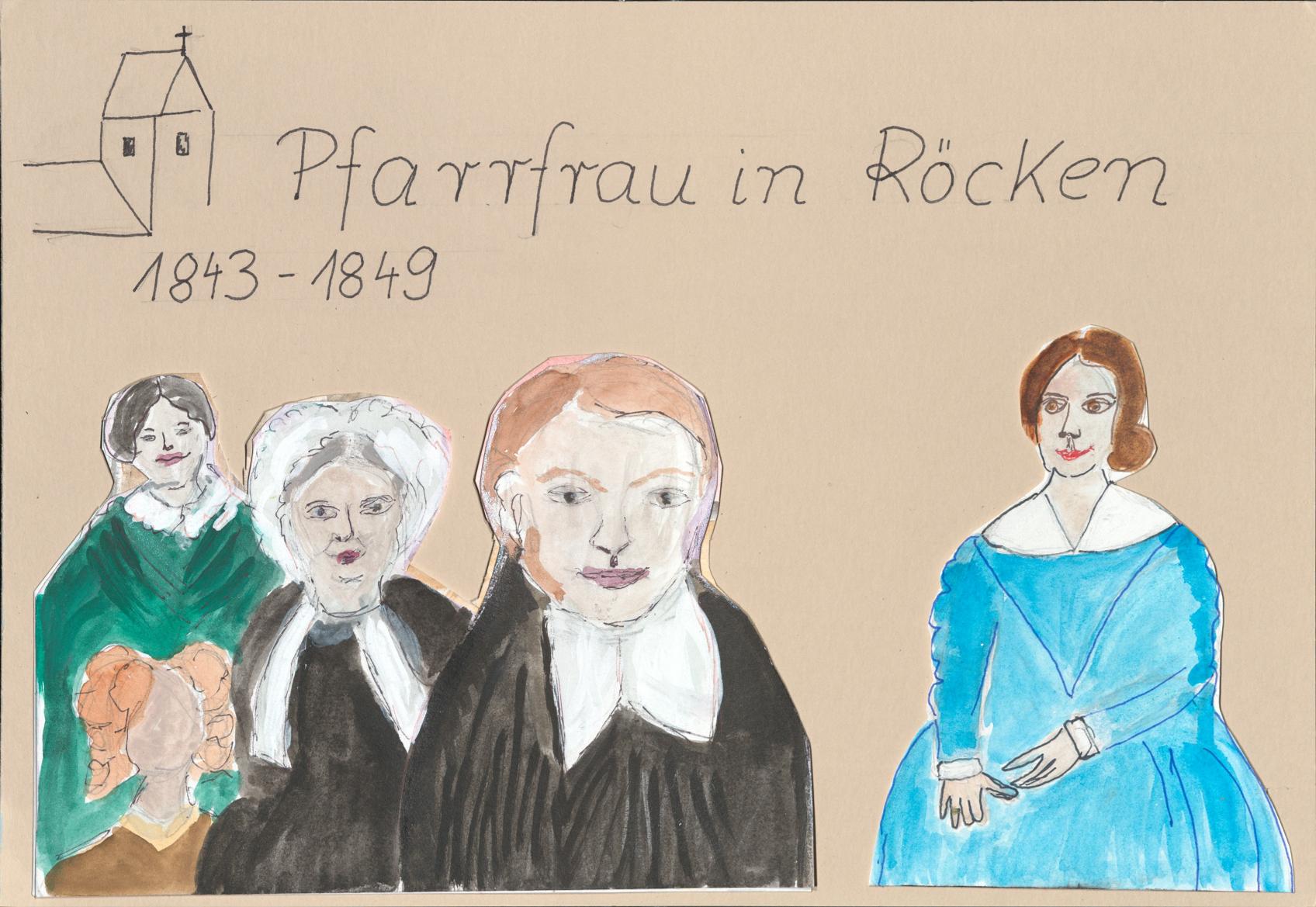
You needn’t be a tarot expert to guess what followed briskly after: the marriage proposal and subsequent wedding, themselves succeeded, within a span of just over six years, by Franziska giving birth to three children, the final stages of her husband’s torturous illness, and death, in summer 1849, and the sudden death of her youngest, Joseph, aged two in January 1850. As if this weren’t enough, she was subjected to psychological cruelty by her overbearing mother-in-law, Erdmuthe (1778-1856), and by Ludwig’s aforementioned sisters, Rosalie (1811-1867) and Auguste (1815-1855), who saw themselves as their young sister-in-law’s superior from the moment she moved into the Röcken parsonage—a full hour’s ride from her childhood home—with her new husband. Franziska was ‘relegated to a back living room and given the use of two bedrooms whilst her dominating mother-in-law, Erdmuthe (1778-1856), ruled the roost in the sunny rooms on the first floor’.25 Through his inability to contradict his mother, or to bear any audible domestic conflict, Ludwig was complicit in this cruelty. Given the rigid hierarchies adhered to, the onus was on Ludwig to insist, as Carol Diethe points out, that his wife be ‘installed as mistress in the front rooms’—which after all came with his job.26 Like several people close to Franziska, in failing to engage compassionately in her fate, he failed her ethically.
III. A Horrendous, Love-Based Marriage
Akin to hints dropped in the opening scene of a classic horror movie, Franziska’s recollections scatter breadcrumbs for readers to follow towards the pain and upset that was to come later for her. In a pre-marriage conversation, Ludwig’s older sister Rosalie, ‘who was extremely highly-strung’ told Fränzschen that you could get a ‘really pretty view’ from the acres surrounding her brother’s parsonage: which Rosalie couldn’t enjoy, however, ‘because of her nerves. I had never heard this word “nerves” in my life. […] But once our guests had gone, I told dear mother about the conversation with Miss Nietzsche & asked “what are ‘nerves’ actually[?]’’’27 Fränzschen gets a full whack of them at the start of 1846, when Ludwig bursts into a hefty flood of tears in the middle of conducting the liturgy: apparently a nervous reaction to an unpleasant conversation with a parishioner prior to the service.28 The role played by nerves in her son’s later breakdown and ultimately fatal illness is the stuff of a hundred other essays and books, both past and future. A little quaint, perhaps, to our modern ears, ‘nerves’ came readily as an idea to these protagonists, in thinking about the psyche.
Another ominous-feeling occurrence is when the newly-weds are driven back to Röcken after the wedding, to be met by the local schoolmaster and his pupils singing them a hymn, and to be presented with gifts from the three parishes that make up Ludwig’s ministry: ‘2 dz. silver table spoons’, and what have you. Aware of etiquette’s demands, Ludwig then gave a thank-you speech on the threshold to the parsonage, but wanted his ‘little wife’ [‘Frauchen’] beside him in the doorway, which was up a few steps, and so forced open
the otherwise never opened & probably warped other half of the double door, whereby the whole lower part of the frame fell out; but I cannot remember that we happy ones would have seen as it an evil omen & yet one could see it so regarding the later, sad experiences, if one were at all superstitious.29
Despite her cautious use of the conditional, the incident is not trivial enough for Franziska to forget it over half a century later, when she writes her life story.
After being widowed, she moved with her children, her mother-in-law, and her sisters-in-law to nearby Naumburg in 1849, which was larger than Röcken but still a small town.30 This decision was laid down by Erdmuthe, who had grown up in this community several decades previously. Changes could be seen on their return, as the Awakening movement, known at the time simply as ‘the Awakening’, had been sweeping through the town as it had through all of Protestant Germany, leaving people being born again publicly, and renouncing their past sins.31 Erdmuthe hadn’t countenanced this fervour when her son had shown such inclinations, perceiving in it a threat to the class order and behavioural codes she held dearly, and Ludwig had responded by keeping his sympathies mostly in the closet. Correspondingly, she tried her best to steer Franziska clear of the movement.
IV. Cruel Providence?
But although her immediate society was no friend of superstition, or of emotional religious sentiments, Franziska still communicated privately with her recently dead husband, certain he could hear. In a diary note penned eight days after his funeral, she tells him that this occasion, at which ‘you my dear and forever blessed Ludwig were honoured by so many witnesses of love and of respect’, has done ‘our deeply afflicted hearts good’. What’s more, she wants Ludwig to intercede with
dear God, also in my name, that he lets you be the good angel who will lead and guide me, with my whole life, so that we can continue to rear our three children as a community, in honour of dear God.32
She writes another diary note to Ludwig half a year later, after her youngest son Joseph dies, not yet two years old:
[Y]ou know with what my soul has been burdened anew, och, my glorious wee Joseph as you’ve often heard me lamenting the little boy of my heart is no more!33
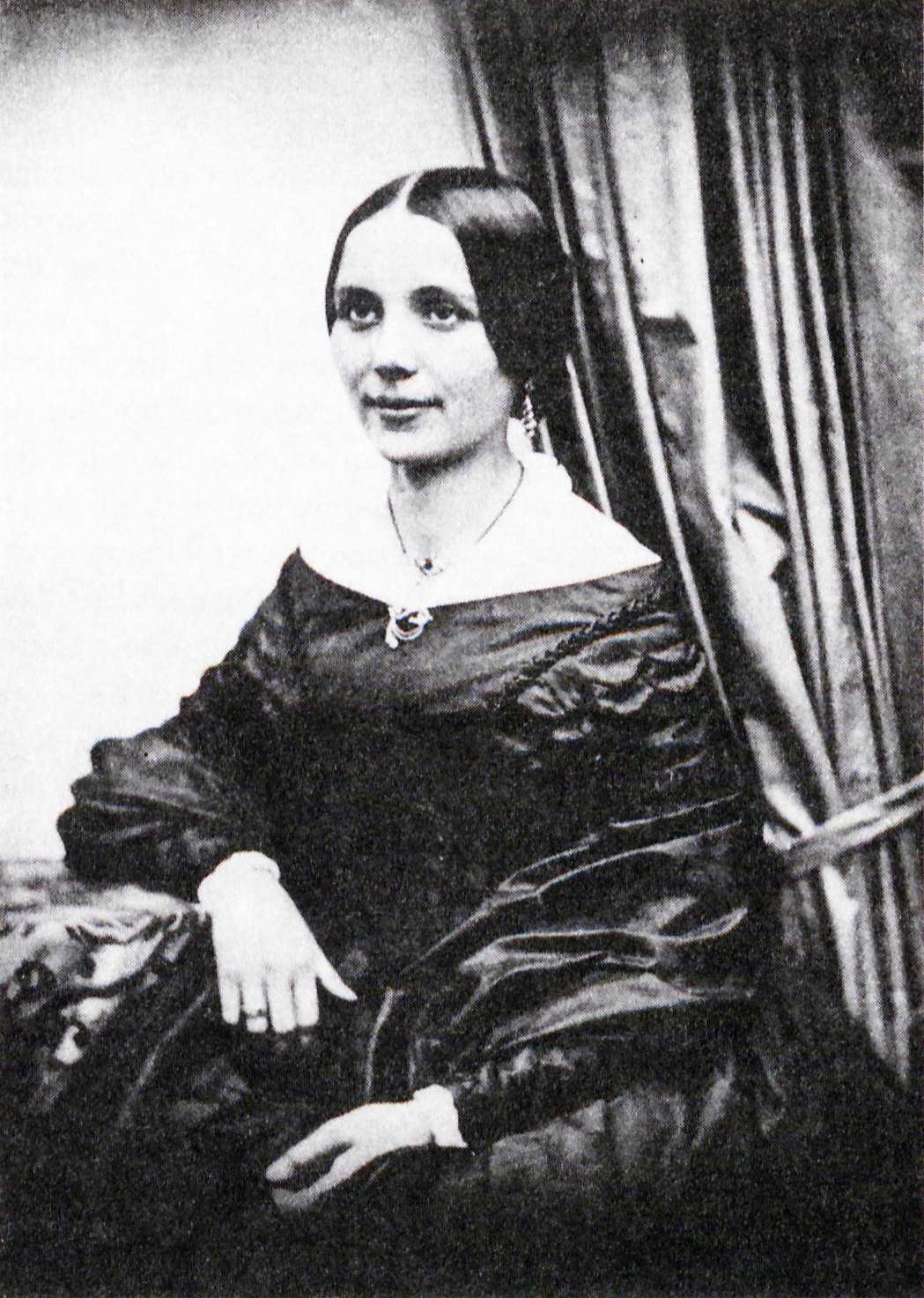
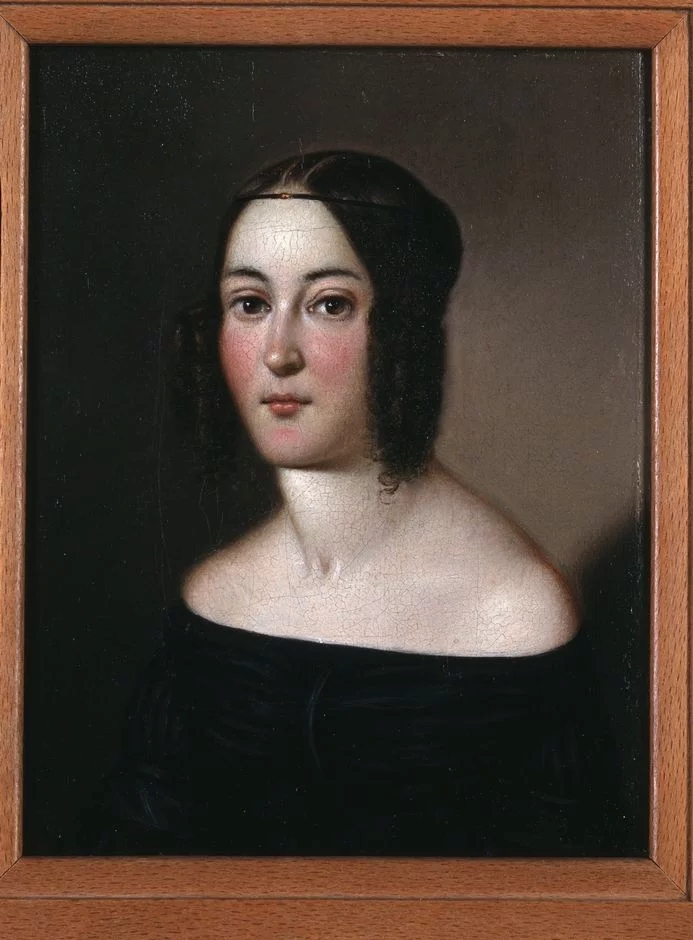
Terrible things happen in our own lives, and in the lives of those we love, and we hope those we know closely will grow through and past these tragedies—that they’ll develop. If it was the main route to a middle-class woman of her time gaining more independence, and a better financial standing, why didn’t Franziska choose to develop through the vehicle of a second marriage? She was still very young, unusually attractive, as portraits from the time testify, and not uneducated. Evidence suggests she felt so depressed by events, and threatened existentially by the prospect of bringing up her children alone, and on the sparse widow’s pension left her, that she went for the safety of a repressive but financially adequate household with her mother-in-law, rather than any break for freedom.
As she’ll have seen this as the right sacrifice to have made, how bitter must it have been to learn the scale of her surviving children’s disdain, and dismissal of her towards the end of her life: especially Elisabeth’s pitiless and tenacious rejection.34 In the disturbing 1895 letter to Dr. Gutjahr, Elisabeth calls her mum a
woman without character, who doesn’t really love her children, and who’s also not loved by them, because there’s never been anything true about her, it’s all just playacting, calculated to appeal to others. This caused us boundless anguish, our mother’s Christianity for example, what pathetic pomposity and a kind of fencing in mirrors, a batting of eyelids etc. etc. and one’s surprised that Fritz has turned into the Antichrist.35
Despite resisting the pressure initially, at the end of 1895 Franziska signs over ‘the Nietzsche Archive and all royalties, including those from Naumann’ to Elisabeth for a lump sum of 30,000 marks, plus an annual pension of 1,600 marks, to be paid to her for the care of ‘good Fritz’.36
V. Franziska’s Death
The sixteen-or-so months left to her brought Franziska some reconciliation and peace. Writing again in March 1896 to Franz Overbeck—theology professor and close friend of Nietzsche’s since they lodged together in Basel in the early 1870s—Franziska Nietzsche supplies her correspondent with the latest Naumburg gossip. Her son is lying sleeping beside her on the sofa as she writes. Some of the nastiness between her and her daughter seems to have dissipated. ‘Lieschen’ is now immersed in supervising the reconstruction of Villa Silberblick, a slightly overblown mansion on Weimar’s southside, which Nietzsche’s aristocratic patron Meta von Salis-Marschlins has purchased to rehouse the Nietzsche Archive. Its sale price of 39,000 marks—combined with the prospective value of Nietzsche’s estate— makes Franziska’s newly negotiated carer’s pension look meagre.37 Still at this late stage, her report focuses on the doings of others, and on what others say about her conduct, and her care for Friedrich. It’s vital for her that she presents this as good care, as it undoubtedly was—utterly superior to that he would have received if he had stayed in the psychiatric clinics in which he lived out the early stages of his severe mental illness. To Overbeck she recounts a second-hand comment attributed to the psychiatrist Otto Binswanger, who supervised Nietzsche’s early institutional treatment, and who’s been back to visit them recently. Binswanger is said to have commented that ‘“the mother’s love has taken the edge of Professor Nietzsche’s illness.”’38
Franziska Nietzsche’s own health deteriorated rapidly from Christmas 1896, and she died a painful death of cancer in April of the following year. Unable to continue caring for her son in this world she would, on her view, have had not long to wait before he joined her in heaven—however mawkish that could sound. Her antagonisms and discontents remained those shared by many nineteenth century women: how could they live, work, and exist on their own terms? Questions that put Franziska in mind of an anecdote from her youth. Right at the beginning of their courting, Ludwig Nietzsche is on his way to pay his first visit to the Oehlers, accompanied by the godfather of Franziska, ‘Rev. Hochheim of Starsiedel.’ As they tramp along, Rev. Nietzsche asks the ‘lovely old bachelor’ Hochheim ‘what’s she called then, Rev. Oehler’s youngest daughter?’ This puts the absent-minded senior cleric into a flap, as all he can do is repeatedly reply: ‘she’s my wee godchild, but the name’s not coming to me’. Their conversation moves on, until her godfather suddenly cries out: ‘She’s called Fränzschen! She’s called Fränzschen!’39
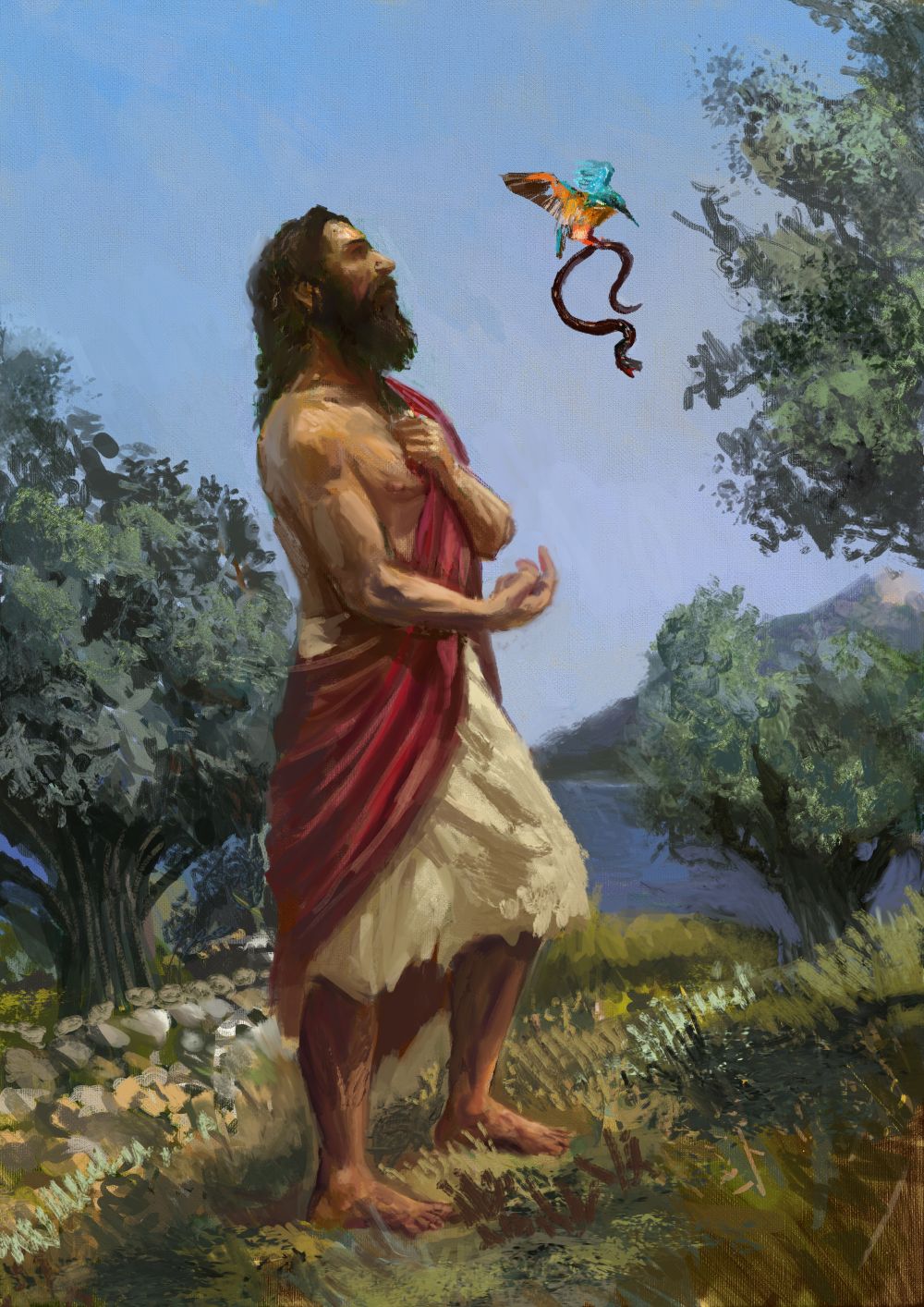
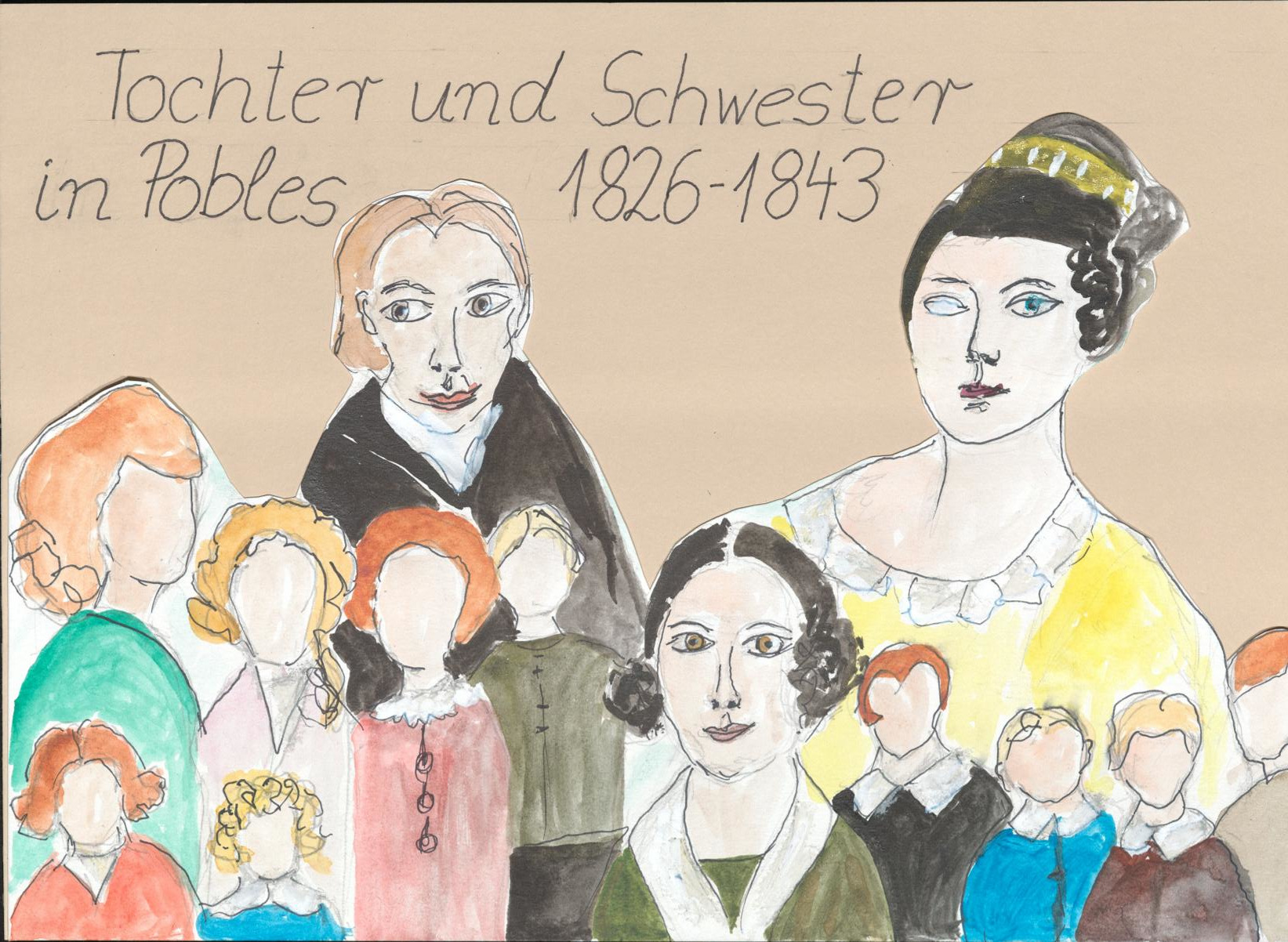
The article image was painted by the Zwickau based artist Christina Stephan—who also inspired us to do this little series. Find out more about her and her art on her website. It shows the young Franziska as a ‘daughter and sister in Pobles’ with her siblings—whose faces we don’t know—and her parents. Her mother Johanna could only see out of one eye.
Bibliography
Bohley, Reiner: ‘Nietzsches christliche Erziehung’. Nietzsche-Studien 16 (1987), 164–196.
Diethe, Carol: Nietzsche’s Women: Beyond the Whip. Walter de Gruyter: 1996.
Diethe, Carol: Vergiss die Peitsche: Nietzsche und die Frauen, transl. Michael Haupt. Europa: 2000.
Förster-Nietzsche, Elisabeth: Das Leben Friedrich Nietzsche’s, 1. C. G. Naumann: 1895.
Förster-Nietzsche, Elisabeth: Der junge Nietzsche. C. G. Naumann: 1912.
Goch, Klaus: Franziska Nietzsche: Ein biographisches Porträt. Insel: 1994
Hoffmann, Stefan-Ludwig: The Politics of Sociability: Freemasonry and German Civil Society, 1840–1918, trans. Tom Lampert. University of Michigan Press: 2007.
Kloes, Andrew: The German Awakening: Protestant Renewal after the Enlightenment, 1815–1848. Oxford University Press: 2019.
Nietzsche, Franziska: [Autobiographical memoir]. Unpublished manuscript, GSA 100/851, Goethe- und Schiller-Archiv, Weimar. 36 pp. (including loose-leaf pages). Annotated transcript published in: Klaus Goch, Franziska Nietzsche: Ein biographisches Porträt. Insel: 1994, 32–64.
Nietzsche, Franziska: Der entmündigte Philosoph: Briefe von Franziska Nietzsche an Adalbert Oehler, ed. Gernot U. Gabel and Carl Helmuth Jagenberg. Gabel: 1994.
Nietzsche, Franziska: Der kranke Nietzsche. Briefe seiner Mutter an Franz Overbeck. Bermann-Fischer: 1937.
Oehler, Adalbert: Nietzsches Mutter. Beck: 1940.
Peters, H.: Zarathustras Schwester, trans. H. Peters. Kindler: 1983.
Prideaux, Sue: I am Dynamite! A Life of Friedrich Nietzsche, ebook edition. Faber & Faber: 2018.
Schaberg, William H.: The Nietzsche Canon: A Publication History and Bibliography. University of Chicago Press: 1995.
Schenkel, Gotthilf: Die Freimauerei im Lichte der Religions- und Kirchengeschichte. Klotz: 1924.
Stadt Naumburg (Saale): 'Einwohnerzahlen der Stadt'. Stadt Naumburg (Saale) municipal statistics portal: n.d. [2025], https://www.stadt-naumburg.de/Stat/Einwohner.html.
Stern, Fritz: ‘The Trouble with Publishers’. London Review of Books 18 (1996), https://www.lrb.co.uk/the-paper/v18/n18/fritz-stern/the-trouble-with-publishers.
Footnotes
1: Franziska’s handwritten manuscript of autobiographical recollections, GSA 100/851, in the Goethe-Schiller-Archive, Weimar (36 pages total, including loose-leaf pages). The annotated transcript is published in: Klaus Goch, Franziska Nietzsche, 32-64. In the following, I cite the manuscript in the transcript in Goch, i.e., in this case: GSA 100/851 in Goch, Franziska Nietzsche, 32. This and all other translations from German sources are the author’s own, unless otherwise stated.
2: Franziska Nietzsche to Adalbert Oehler on June 8, 1895, in Briefe von Franziska Nietzsche an Adalbert Oehler, 31.
3: Franziska Nietzsche to Adalbert Oehler on June 23-24, 1895, in ibid., 33-34.
4: Sue Prideaux, I am Dynamite!, chapter 22, ebook location 28.61.
5: Adalbert Oehler, Nietzsches Mutter, 49-50.
6: Franziska Nietzsche, GSA 100/851 in Goch, Franziska Nietzsche, 32.
7: Goch, Franziska Nietzsche, 354.
8: See Elisabeth Förster-Nietzsche, Das Leben Friedrich Nietzsche's, 13.
9: Franziska Nietzsche, GSA 100/851 in Goch, Franziska Nietzsche, 34.
10: Franziska Nietzsche to Adalbert Oehler in October 1895, as cited in Goch, Franziska Nietzsche, 30.
11: Posthumously published fragment 1882 21[2]. Paul Stephan wrote for Nietzsche POParts in 2024 about Nietzsche’s ‘Poland Complex’.
12: Nietzsche, posthumous fragment 1882 21[2]. Elisabeth quotes this fragment in Das Leben Friedrich Nietzsche’s, 10-11.
13: Goch, Franziska Nietzsche, 73-74.
14: Franziska Nietzsche to Adalbert Oehler in October 1895, as cited in Goch, Franziska Nietzsche, 353.
15: Franziska Nietzsche, GSA 100/851 in Goch, Franziska Nietzsche, 35.
16: Goch, Franziska Nietzsche, 83.
17: Elisabeth Förster-Nietzsche, Der junge Nietzsche, 14, as cited in Goch, Franziska Nietzsche, 129.
18: Diethe, Nietzsche’s Woman, 3.
19: Diethe’s claim that not just Franziska’s spouse but also her father were pietists isn’t convincing, cf. ibid. Reiner Bohley takes a further step and argues that Carl Ludwig wasn’t a pietist either, but rather joined the Awakening movement: on Bohley’s view, not the same thing. Cf. Bohley, ‘Nietzsches christliche Erziehung’, 171.
20: Goch, Franziska Nietzsche, 76.
21: Adalbert Oehler, ‘Erinnerungen meines Lebens’ [unpublished manuscript], cited in: Goch, Franziska Nietzsche, 78-79, and endnotes 97-98, at 361-362.
22: Cf. Gotthilf Schenkel, Die Freimauerei im Lichte der Religions- und Kirchengeschichte, 34, as cited in Goch, Franziska Nietzsche, 361-362.
23: Stefan-Ludwig Hoffmann, The Politics of Sociability, 24.
24: Franziska Nietzsche, GSA 100/851, cited in Goch, Franziska Nietzsche, 51. Emphasis in the original.
25: Carol Diethe, Nietzsches Women, 12.
26: Ibid., 14.
27: Franziska Nietzsche, GSA 100/851 in Goch, Franziska Nietzsche, 54.
28: Narrated in Ludwig’s letter to Emil Julius Schenk from January 21, 1846, cited in: Reiner Bohley, ‘Nietzsches christliche Erziehung’, 177.
29: Franziska Nietzsche, GSA 100/851, cited in Goch, Franziska Nietzsche, 61-62.
30: Population figures from Stadt Naumburg (Saale), 'Einwohnerzahlen der Stadt'.
31: Two contrasting accounts of the movement are given at Prideaux, Dynamite, ebook location 7.61; and in Kloes, The German Awakening. Kloes refers to the Germanophone scholarship on the Awakening by Friedrich Kantzenbach in the 1950s to explain that, although they had much in common, the Awakening and Pietism were ‘two movements’ with ‘fundamentally different orientations. In its late seventeenth- and early eighteenth-century context, Pietism was ecclesiastically inward-looking in its primary concern for those who were already Christians. […] the Awakening was “antithetical to the Enlightenment and Idealism” and outward-looking in its efforts to resist what it considered to be alien influences that had come into the church’. Katzenbach, as paraphrased in Kloes, The German Awakening, 16.
32: From ca. August 1849 in Franziska Nietzsche’s diary, GSA 100/849, cited from Goch, Franziska Nietzsche, 150-151.
33: From ca. January 1850 in Franziska Nietzsche’s diary, GSA 100/849, cited from Goch, Franziska Nietzsche, 152.
34: Nietzsche’s vitriol towards his mother and his sister in Ecce Homo, Why I’m So Wise, §3, written just weeks before his breakdown, is every bit as fanged. It’s a good job that Franziska probably never got to see it (although it’s possible that she did since Nietzsche’s entire estate was in her house until 1896): ‘When I seek the most profound opposite to myself, the incalculable commonness of the instincts, then I always find my mother and sister—to believe myself related to such riffraff would be to blaspheme against my own godliness.’ Not published until 1908, and then only in a redacted form censored by Elisabeth, a reliable edition of the text wasn’t published until 1969: edited by Giorgio Colli and Mazzino Montinari in the Kritische Gesamtausgabe (KGW) edition.
35: Elisabeth Förster-Nietzsche’s letter to Dr. Gutjahr, general practitioner for Franziska Nietzsche, from 1895. Emphasis in the original. The original citation, H. Peters, Zarathustras Schwester, 202, is cited again in Goch, Franziska Nietzsche, 13. Peters first published his research on Elisabeth in English, see: H. F. Peters, Zarathustra's Sister. The Case of Elisabeth and Friedrich Nietzsche, Crown: 1977.
36: Franziska Nietzsche in Naumburg to Franz Overbeck on December 26, 1895, in: Franziska Nietzsche, Der kranke Nietzsche. Briefe seiner Mutter an Franz Overbeck, 193-194. The printer C.G. Naumann of Leipzig became Nietzsche’s principal publisher from around 1886, a status that also accorded him a rights-share for works published after Nietzsche lost copyright to his own works following his mental breakdown in 1889. For more on the economics of publishing Nietzsche, see: William H. Schaberg, The Nietzsche Canon; and the in-depth review of the same work by Fritz Stern (‘The Trouble with Publishers’).
37: Prideaux, Dynamite, chapter 22, location 28.72.
38: Franziska Nietzsche in Naumburg to Franz Overbeck on March 27, 1896 in: Briefe seiner Mutter an Franz Overbeck, 198.
39: Franziska Nietzsche GSA 100/851 cited in Goch, Franziska Nietzsche, 49-50.