#
idealism
From the Will to Power to the Human Being as a New Beginning
Nietzsche from Hannah Arendt's Perspective
From the Will to Power to the Human Being as a New Beginning
Nietzsche from Hannah Arendt's Perspective
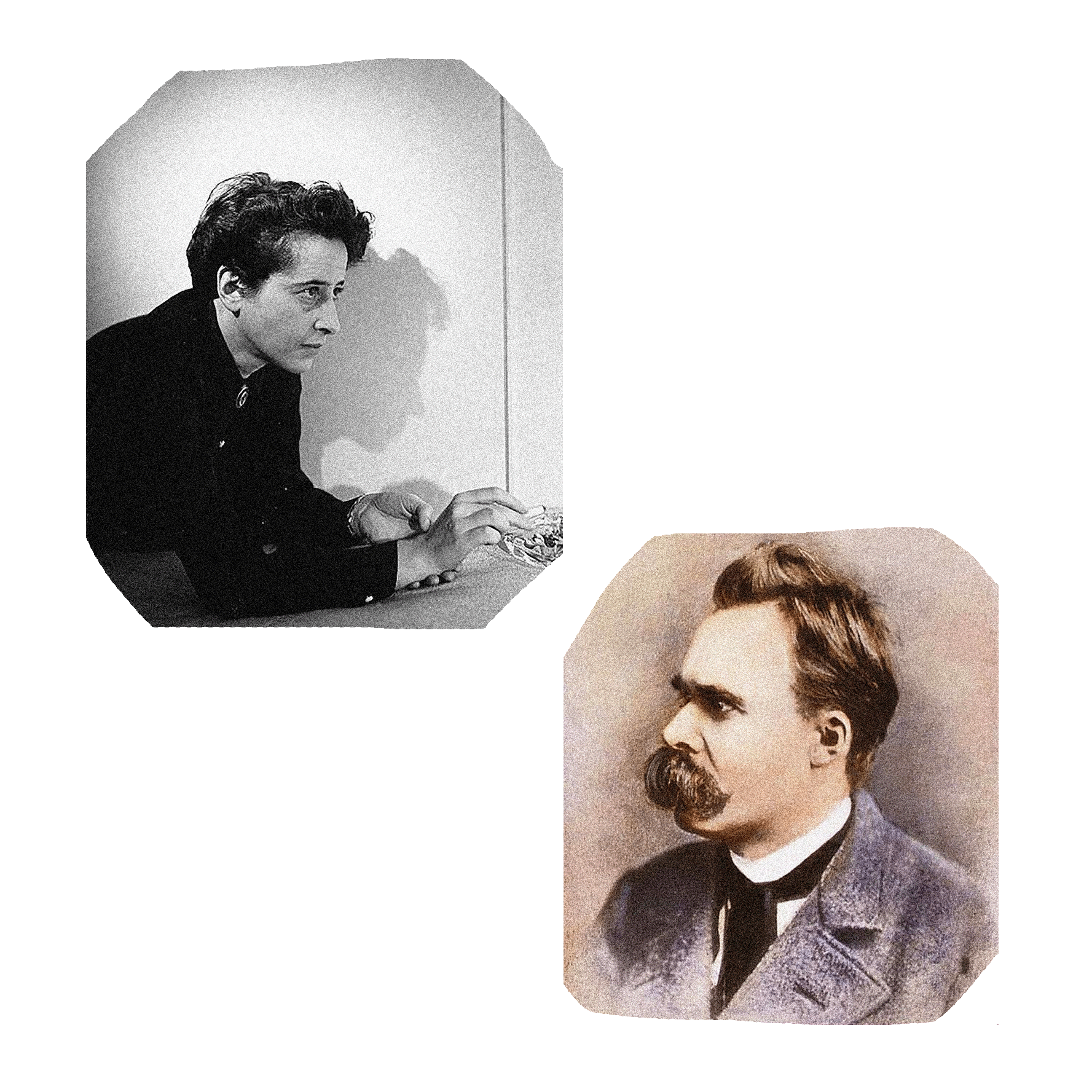

In her major work The Life of the Mind, Arendt builds upon Nietzsche’s understanding of the will to power as interpretation. Rather than following Kant’s conception of free will, she argues that through the will, something new enters the world with every newborn human being—a notion that resembles Zarathustra’s demand that the Übermensch should invent new values. Arendt also agrees with Nietzsche’s assertion that the "‘true world’" is a "fable," for Arendt because modern sciences possess no ultimate truths—a fact they themselves acknowledged around 1900, but which they now refuse to recognize. Thus, as heretics of science, Nietzsche and Arendt belong to the ranks of the "evil" philosophers.
Arendt lived from 1906 to 1975 and is considered one of the great thinkers of the 20th century. The daughter of secular Jews, she studied in the 1920s in Marburg, Freiburg, and Heidelberg under such influential philosophers as Edmund Husserl, Karl Jaspers, and Martin Heidegger. As a young student, she was briefly involved with the latter. In 1933, she was forced to emigrate, and from 1941 she lived in the USA, where she began teaching at various universities in 1953. This unorthodox intellectual is best known for her critique of totalitarianism and her communicative concept of the political.
Her 120th birthday provides sufficient reason to take a closer look at the intellectual relationship between Nietzsche and Arendt.
You can listen to and watch a version of this text, read by the author himself and supplemented with original audio clips of Arendt, on YouTube and Soundcloud .
Materialism and the Problem of Morality
Reflections with Deleuze/Guattari, Clouscard, and Levinas
PART 2: Eternity and the Other: Levinas, Ethics as First Philosophy, and Materialism
Materialism and the Problem of Morality 2
PART 2: Eternity and the Other: Levinas, Ethics as First Philosophy, and Materialism
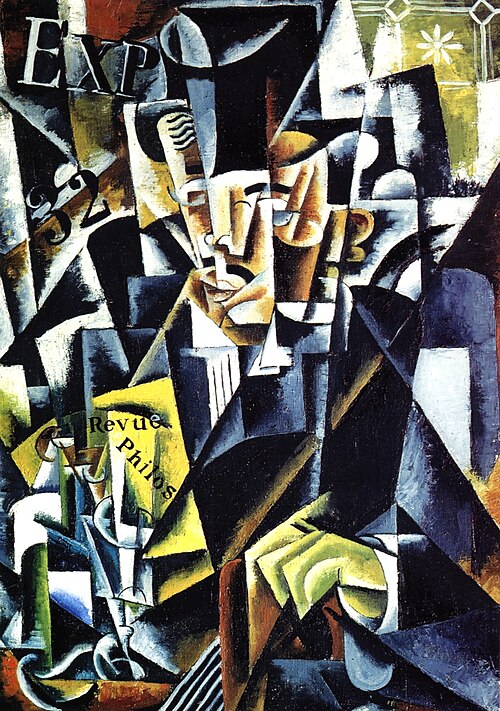
Materialist metaphysics, as practiced by Spinoza, Nietzsche, or Deleuze and Guattari, has proven incapable of accounting for fundamental moral convictions. Nietzsche is at least radical enough to acknowledge this incommensurability and draw the corresponding conclusions. If one is unwilling to accept this, the only remaining path is to adopt the "view from eternity" alongside metaphysics: from that vantage point, one can only unconditionally affirm a groundless reality. Perhaps, however, the more promising answer is that of Emmanuel Levinas: his materialism allows morality to emerge from the encounter with the Other, and in doing so, he almost incidentally shatters the unity of metaphysics that even such radical thinkers as Deleuze and Guattari still took for granted.
‘She’s called Fränzschen! She’s called Fränzschen!’
On the Early Life, and Embattled Demise, of Franziska Nietzsche
‘She’s called Fränzschen! She’s called Fränzschen!’
On the Early Life, and Embattled Demise, of Franziska Nietzsche
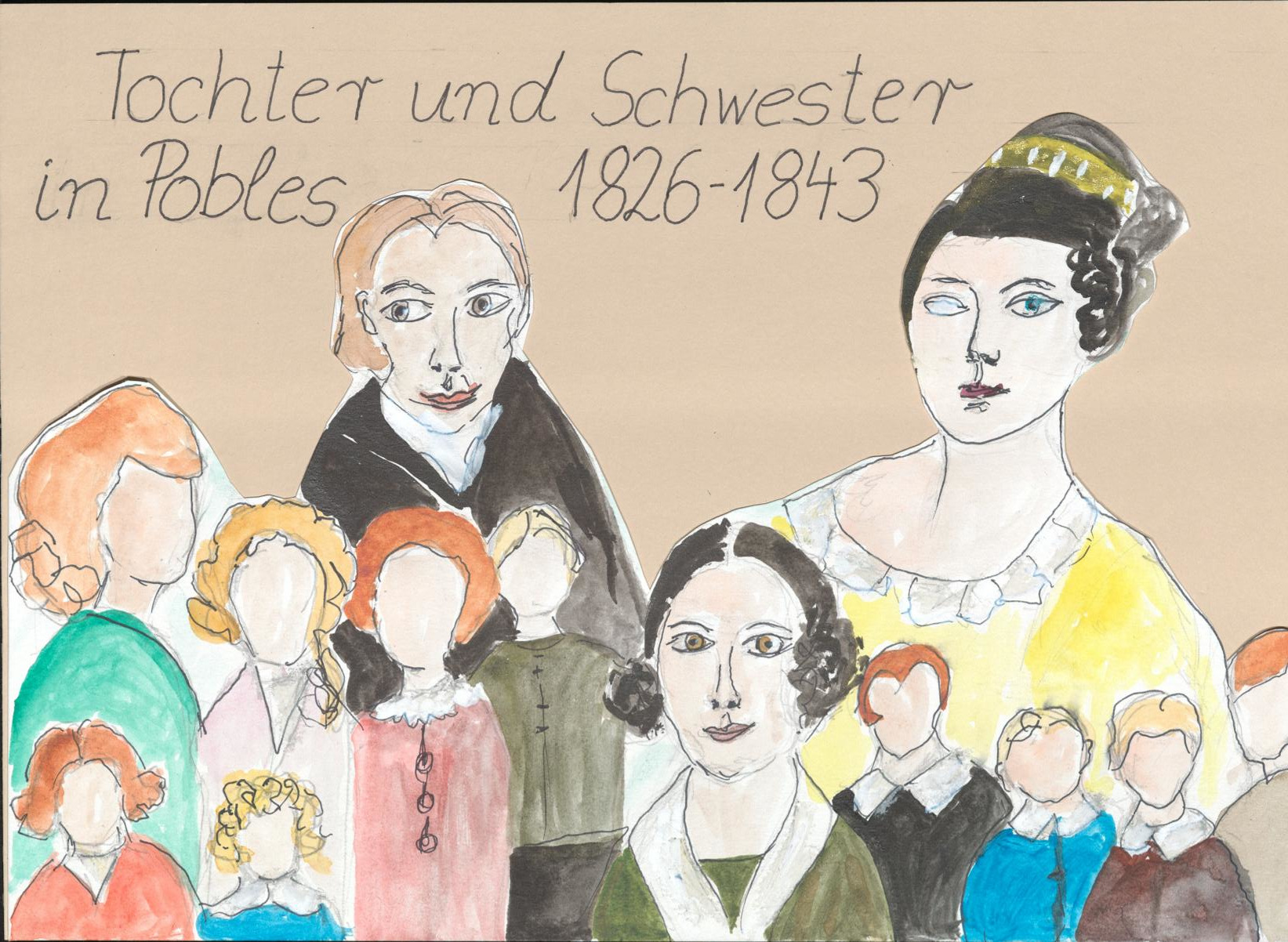
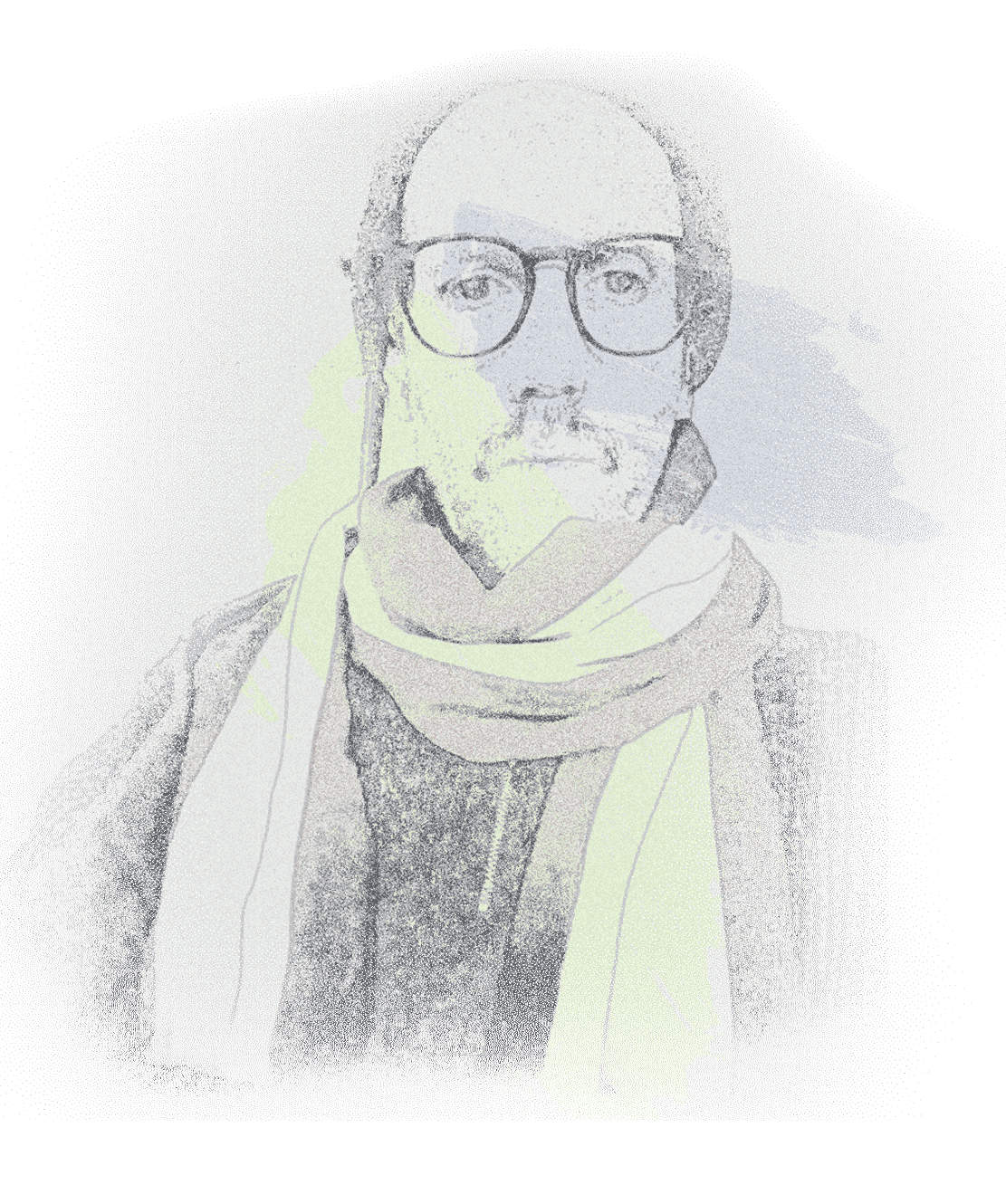
For Mother’s Day this year, two of our regular contributors are dedicating articles to an often-forgotten figure from the Nietzscheverse, without whom the philosopher would not have existed: his mother, Franziska Ernestine Rosaura Nietzsche, née Oehler. The pastor's daughter was born on February 2, 1826, and died on April 20, 1897, just a few years before her son, whose mental illness was by that stage so developed that he probably didn’t notice his mum’s death. Who was this woman? How did she shape and influence Friedrich Nietzsche?
In this first part of our small series, Henry Holland reports on her life and origins, while, in part two, Natalie Schulte will delve deeper into her relationship with her son, and the question of how it coloured his writing and thinking about women.
What were the decisive factors that shaped Franziska Nietzsche's life? How could she, a woman in a world thoroughly defined by patriarchal structures, who never pursued paid employment, achieve a certain degree of self-determination? How did she cope with the traumatic early death of her husband? How religious was she? An often-neglected autobiographical fragment, written shortly before her death, sheds new light on her life.
On Life in Freedom
A Conversation with Jens Bonnemann about Sartre and Nietzsche
On Life in Freedom
A Conversation with Jens Bonnemann about Sartre and Nietzsche

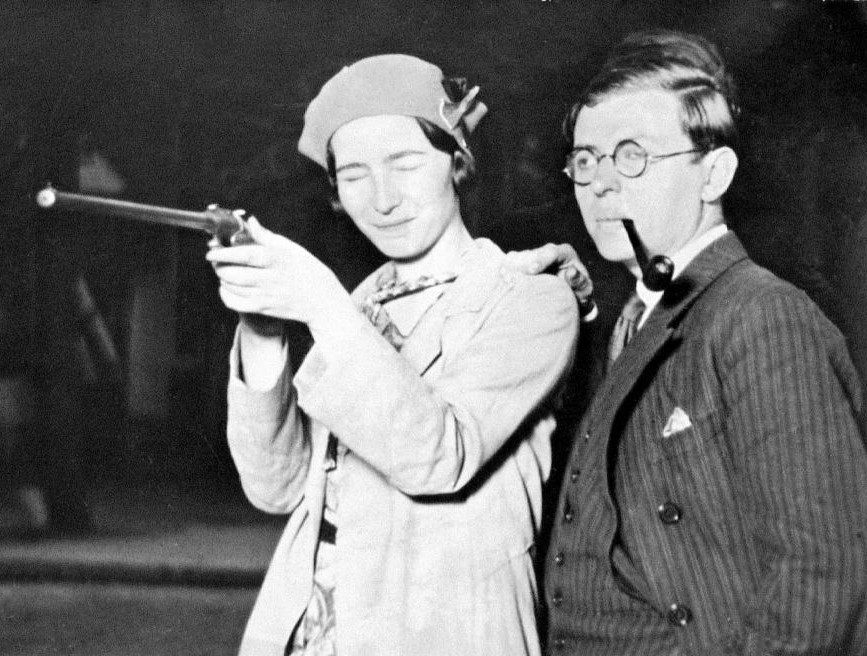
On April 15, 1980, one of the most important philosophers of the 20th century, Jean-Paul Sartre, died at the age of 74. Paul Stephan spoke with Jens Bonnemann, chairman of the German-speaking Sartre-Gesellschaft, about his basic ideas, his relationship with Nietzsche and his significance for our time. What does it mean to live in freedom after the “death of God”? What are the limits of individual freedom? What are the differences and similarities between Sartre and Nietzsche?
You can also view the unedited version of the conversation, in German, on YouTube and listen to it on Soundcloud.
Jean-Baptiste Botul, a Forgotten Nietzschean from France
Jean-Baptiste Botul, a Forgotten Nietzschean from France
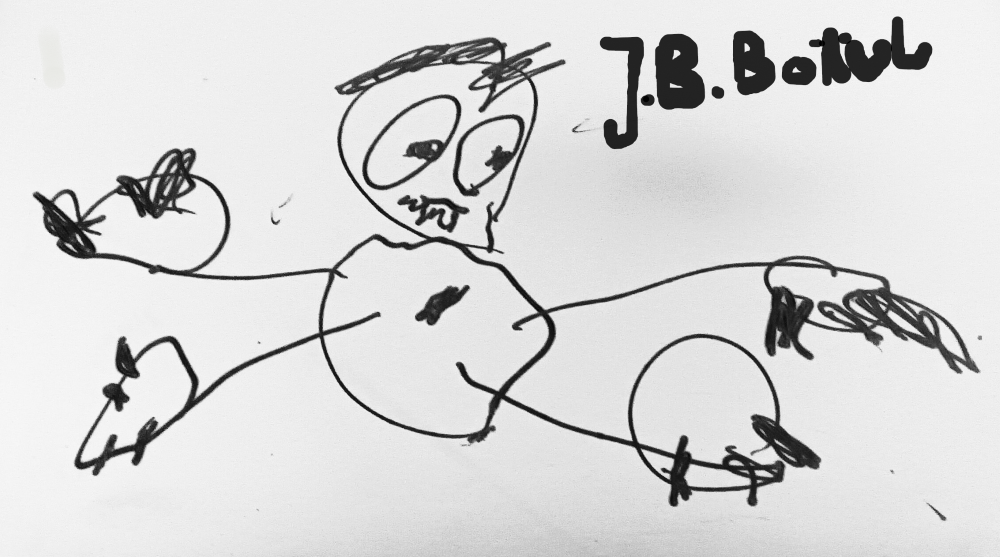
Time and again, our blog is dedicated to overlooked figures from the Nietzscheverse. The Leipzig Anglist Elmar Schenkel went deep into the archives for us in order to introduce you to an almost unknown figure of French-language Nietzsche reception: the “taxi philosopher” Jean-Baptiste Botul, who lived from 1896 to 1947 and not only came into contact with numerous prominent figures of his time on his trips through Paris, but developed also, in conversations with them, his very own Nietzsche interpretation, which, due to its subversive explosive power, has been stored in the poison cabinet by the mainstream of Nietzsche research to the present day. If Nietzsche was, in his own words, “dynamite,” then Botul is a rocket of the Force de frappe, still awaiting detonation — a stroke of luck?
Chameleon Nietzsche
The Failure of Nietzschean Materialism
Chameleon Nietzsche
The Failure of Nietzschean Materialism
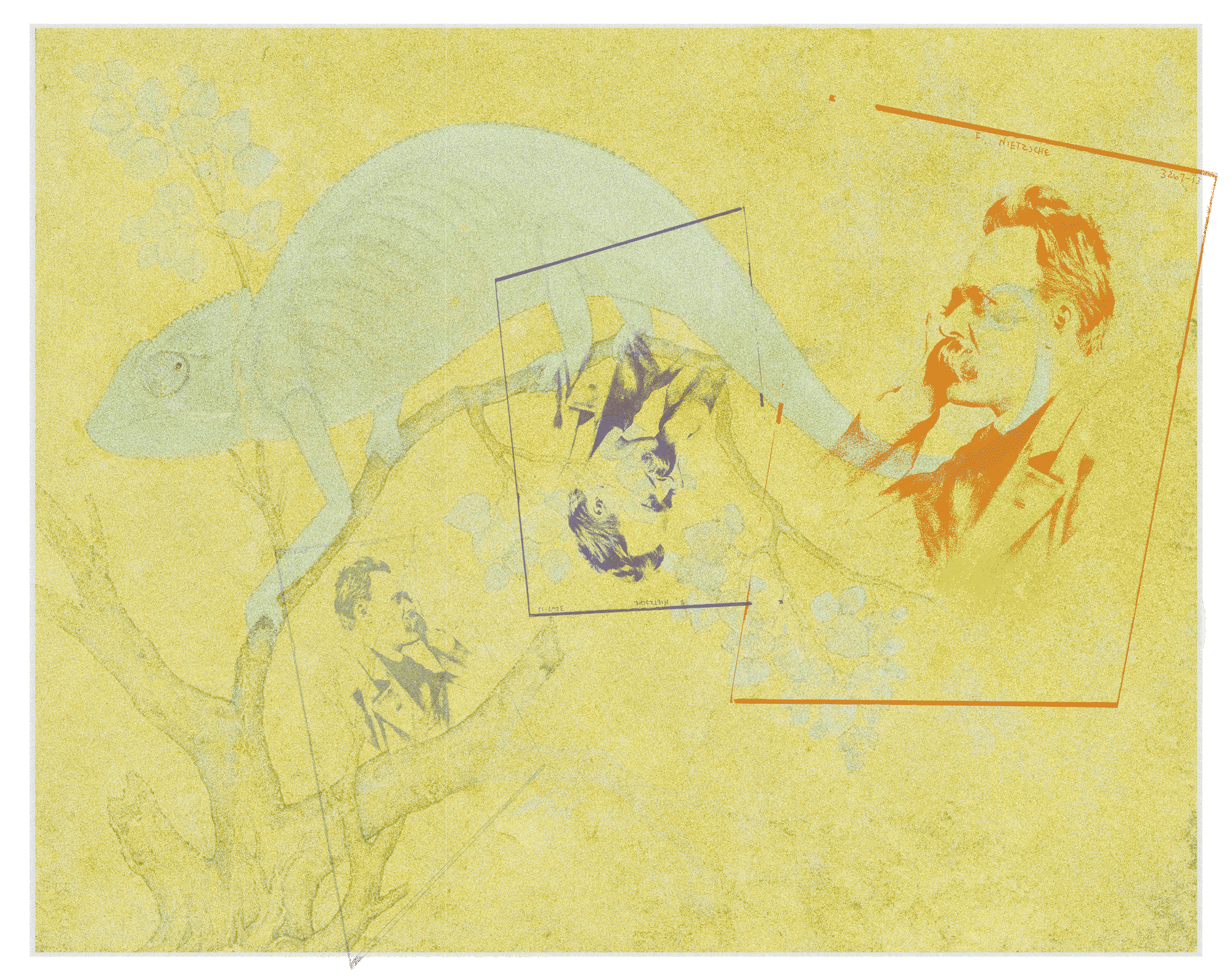
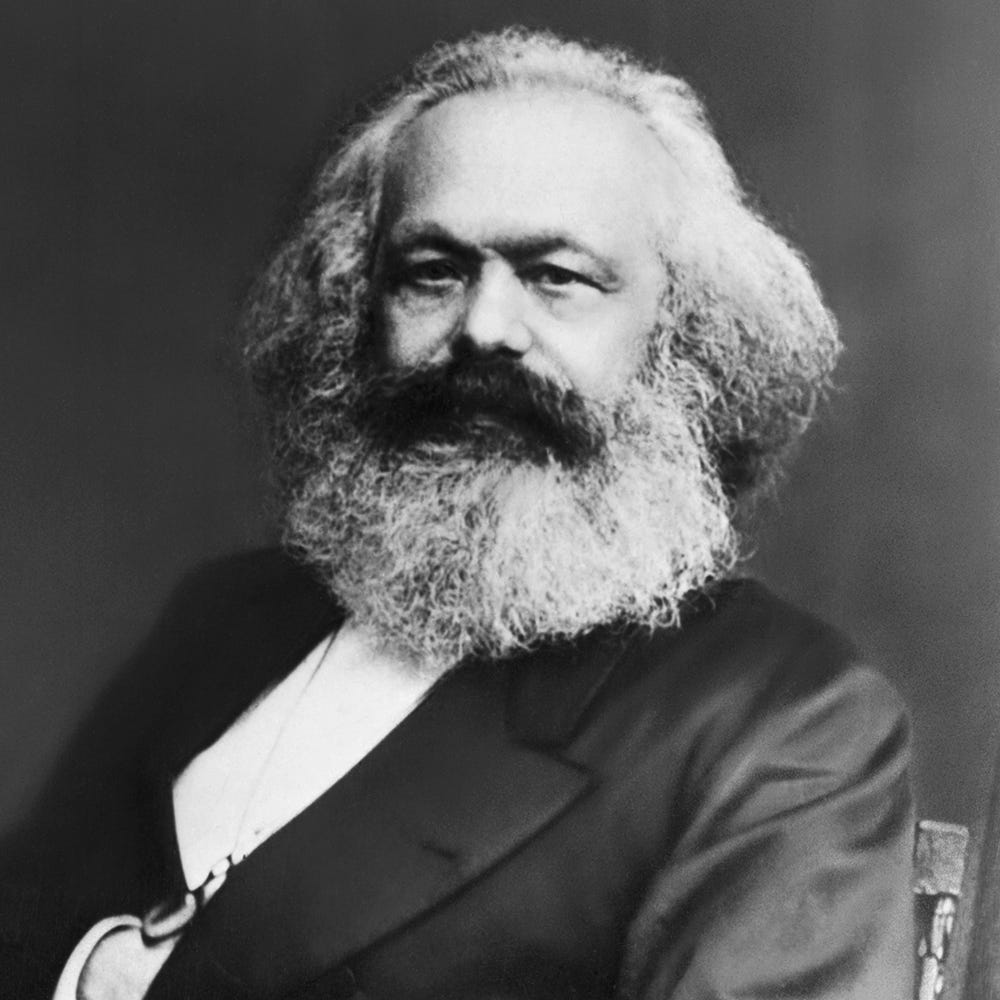
The connection between Marx(ism) and Nietzsche(anism) has repeatedly been a topic on our blog. To what extent can the ideas of arguably the most important theorist on the left and the philosophical chameleon, who was an avowed anti-socialist and anti-feminist and inspired Goebbels and Mussolini, among others, be meaningfully combined. While there have been repeated attempts at left-wing Nietzscheanism, Estella Walter's conclusion in this controversial thesis article is skeptical: The contrast between “historical-dialectical materialism” and Nietzsche's idea of will to power is too irreconcilable. Beyond his time diagnosis, his thinking only provides little emancipatory content.
Look, I'm Teaching You the Transhumanist
Friedrich Nietzsche as a Personal Trainer of Extropianism
Look, I'm Teaching You the Transhumanist
Friedrich Nietzsche as a Personal Trainer of Extropianism


After Natalie Schulte reported on the echo of Nietzsche's “superman” idea in the start-up scene last week (Link), Swiss art scholar Jörg Scheller is dedicating this week to her continued existence in extropianism, a subtype of transhumanism that aims to artificially accelerate human evolution on both individual and genre levels using modern technology. The physical law of “entropy,” according to which there is a tendency in closed systems to equalize all energy differences until a state of equilibrium has been established — a state of complete cooling in terms of the universe — is opposed by the proponents of this flow with the principle of “extropy,” the increasing vitality of a system.
Nietzsche and Ukraine
A Conversation with Vitalii Mudrakov
Nietzsche and Ukraine
A Conversation with Vitalii Mudrakov


Vitalii Mudrakov is one of Ukraine's leading Nietzsche experts. Due to the war, he and his family currently live in Germany. Paul Stephan talked to him in detail about some aspects of the rich Ukrainian reception of Nietzsche in the context of the country's independent cultural history, which has often been ignored. It shows that Nietzsche's liberal thinking repeatedly inspired central protagonists of Ukrainian culture in their struggle for an independent nation free from Habsburg, Tsarist or Soviet foreign rule — and today again the struggle for their own self-assertion in the face of the Russian invasion.
Цю статтю перекладено українською мовою. Переклад можна знайти тут.
1, 2, 3…
About the New Permanent Exhibition in the Nietzsche House in Naumburg
1, 2, 3…
About the New Permanent Exhibition in the Nietzsche House in Naumburg


Since 1994, the house in Naumburg where Nietzsche lived with his mother for several years after his mental collapse in 1889 has had a museum dedicated to life and work. On the occasion of the thirtieth anniversary of its existence, the permanent exhibition of the Nietzsche House was completely redesigned, curated by Berlin philosopher Daniel Tyradellis. Our regular author Lukas Meisner was there and took a look at them.
Nietzsche’s Critique of Capitalist Alienation
Nietzsche’s Critique of Capitalist Alienation

In the penultimate part of the series “What does Nietzsche mean to me? “Lukas Meisner comes to a surprising result at first glance: Nietzsche and Marx both practice fundamental criticism of capitalism and Nietzsche can serve to Marx's To complement a critique of political economy with a no less radical critique of moral economy.
“Je suis Nietzsche!”
A Dialogue about Bataille, Freedom, the Economy of waste, Ecology and War
“Je suis Nietzsche!”
A Dialogue about Bataille, Freedom, the Economy of waste, Ecology and War

Paul Stephan talked to Jenny Kellner and Hans-Martin Schönherr-Mann about the interpretation of one of the most important Nietzsche interpreters of the 20th century: Georges Bataille (1897—1962). The French writer, sociologist and philosopher defended the ambiguity of Nietzsche's philosophy against its National Socialist appropriation and thus became a central source of postmodernism. Based on Dionysian mythology, he wanted to develop a new concept of sovereignty that transcends the traditional understanding of responsible subjectivity, and criticized modern capitalist rationality in the name of an “economy of waste.” With all this, he provides important impulses for a better understanding of our present tense.