#
Pietism
Heightened Idyll
Nietzsche and the Forest
Part I: Sylvan Exiles in Antiquity, Romanticism, and Modernity
Heightened Idyll
Nietzsche and the Forest Part I: Sylvan Exiles in Antiquity, Romanticism, and Modernity


Is there a connection between place and thought? How might Nietzsche’s philosophy and the forest be linked?
In German culture, the forest often appears as the epitome of the idyllic. In the penultimate part of our series “The Forest as a Living Foundation”, our author Michael Meyer-Albert argues that Nietzsche gave this idyll a completely new form by dynamizing it.
He begins by discussing two forms of the traditional idyll. While the classical idyll in Southern European traditions (such as in Virgil) tended to celebrate the sunny, Arcadian pastoral landscape or the orderly garden, the philosophical idyll is found within the walls of the academy. A refuge from doxa, a tribute to the logos.
Meyer-Albert then analyzes the German forest as a specifically German form of the idyll using the term “Waldeinsamkeit” (forest solitude), coined by the Romantic writer Ludwig Tieck (1773–1853). Here, the forest is understood as a near-religiously charged sanctuary from the demands of modernity. If defended aggressively, this romanticism can quickly turn into reactionary mythology—even in a modern, left-wing guise.
Nietzsche’s modification of the anti-modern German forest idyll into a heroic idyll that affirms modernity serves as a counter-proposal to all these traditional forms of the idyllic—this will be the focus of the second part of this article (link).
‘She’s called Fränzschen! She’s called Fränzschen!’
On the Early Life, and Embattled Demise, of Franziska Nietzsche
‘She’s called Fränzschen! She’s called Fränzschen!’
On the Early Life, and Embattled Demise, of Franziska Nietzsche
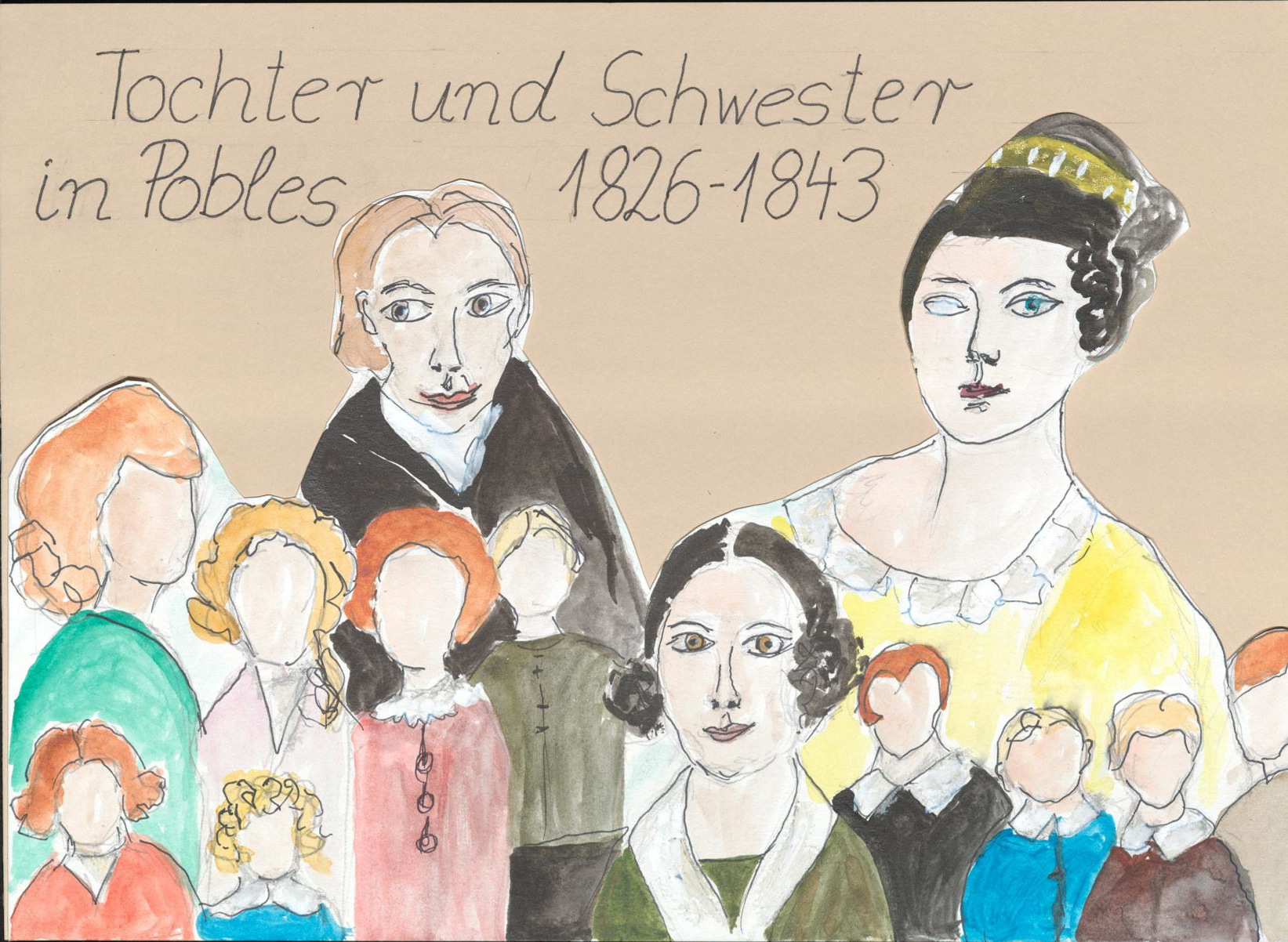

For Mother’s Day this year, two of our regular contributors are dedicating articles to an often-forgotten figure from the Nietzscheverse, without whom the philosopher would not have existed: his mother, Franziska Ernestine Rosaura Nietzsche, née Oehler. The pastor's daughter was born on February 2, 1826, and died on April 20, 1897, just a few years before her son, whose mental illness was by that stage so developed that he probably didn’t notice his mum’s death. Who was this woman? How did she shape and influence Friedrich Nietzsche?
In this first part of our small series, Henry Holland reports on her life and origins, while, in part two, Natalie Schulte will delve deeper into her relationship with her son, and the question of how it coloured his writing and thinking about women.
What were the decisive factors that shaped Franziska Nietzsche's life? How could she, a woman in a world thoroughly defined by patriarchal structures, who never pursued paid employment, achieve a certain degree of self-determination? How did she cope with the traumatic early death of her husband? How religious was she? An often-neglected autobiographical fragment, written shortly before her death, sheds new light on her life.