#
outsiderhood
Nietzsche, Comedy, and the Art of the Edge
A Conversation with Sandra Schmidt
Nietzsche, Comedy, and the Art of the Edge
A Conversation with Sandra Schmidt
Nietzsche is a master of provocation and the punchline. In the court jester, he identifies a figure who cannot conform and therefore tells the powerful truths they would otherwise rarely hear—while simultaneously making them laugh. Can we draw a parallel here to modern stand-up comedy? How do stance and craft come together in this context? What influence do the stage, the audience, and social media have on what is perceived as funny, and when and where that happens? And who are the powerful of today, anyway: political leaders, societal majorities, or algorithms?
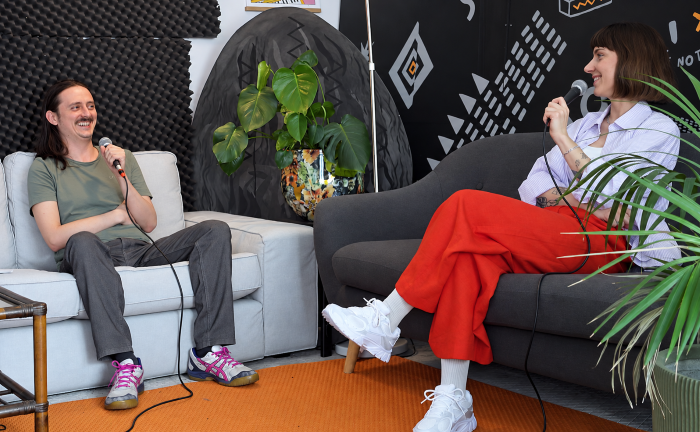
Our author Bernhard Ostheimer met with comedian and PhD philosopher Sandra Schmidt to talk about Nietzsche, the craft of comedy, and the art of pushing boundaries without losing touch with the audience.
You can also watch a longer, unedited version of the conversation on YouTube or listen to it on SoundCloud.
Splendidly Isolated with a Stiff Upper Lip
Nietzsche and the Tragedy of Academic Outsiderhood
Splendidly Isolated with a Stiff Upper Lip
Nietzsche and the Tragedy of Academic Outsiderhood


“Keep a stiff upper lip,” they say in England when you want to call on your interlocutor to persevere in the face of danger and to maintain an upright posture. Advice that is certainly often helpful. Such a stoic position must be sought all the more as an academic outsider who, on the one hand, sets himself apart from the scientific mainstream, but on the other hand is also dependent on his recognition. Nietzsche himself, but also many of his admirers, found himself in such a delicate situation. Based on several such outsider figures (in addition to Nietzsche himself, such as Julius Langbehn and Paul de Lagarde), Christian Saehrendt develops a typology of the (perhaps not always quite so) “brilliant isolation” of academic nonconformism.
What Does Nietzsche Mean to Me?
What Does Nietzsche Mean to Me?

Our regular author Christian Saehrendt reports in his contribution to the series “What does Nietzsche mean to me? “about how he discovered Nietzsche as a teenager and has regarded himself as a fan of the philosopher ever since — precisely because of his contrariness.