#
England
Nietzsche and North America
An Interview with Willow Verkerk
Nietzsche and North America
An Interview with Willow Verkerk
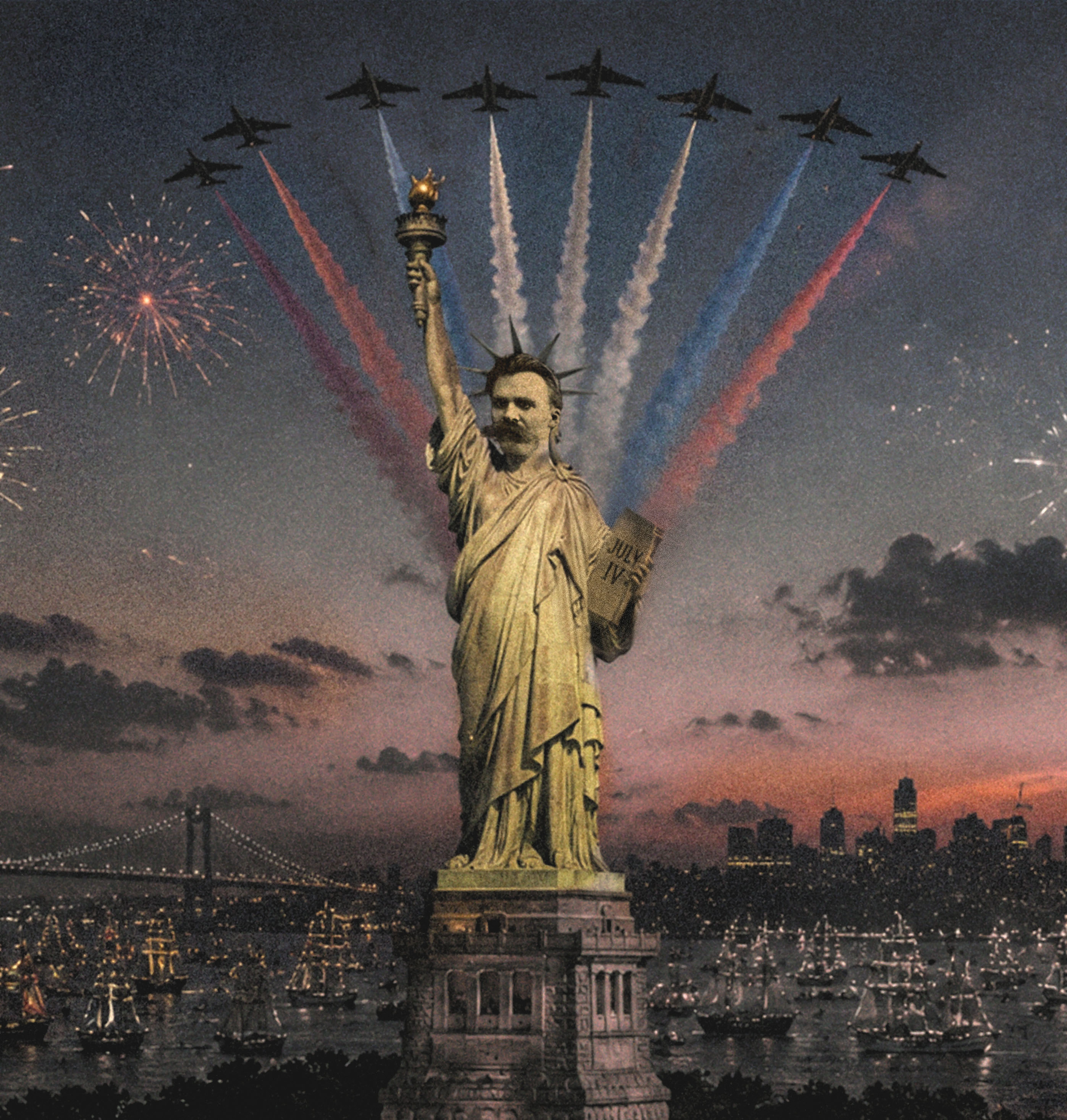
Exactly 250 years ago, on the 4th of July 1776, thirteen North American British colonies declared their independence from the mother country, soon thereafter forming one of the first modern democratic republics of the world, the United States of America. We took this anniversary as an occasion to speak with the Canadian Nietzsche scholar Willow Verkerk about the different approaches to Nietzsche in Europe and North America. To what extent is this thinker, so deeply embedded in European culture, read differently “here” to “there”? What does this tell about general cultural differences between Europe and its erstwhile colonies on the other side of the ocean? And what did Nietzsche himself think about the “New World”?
“Revolt, Slaves, Revolt!”
Hiking with Nietzsche Through Evangelical Christian London: Part I
“Revolt, Slaves, Revolt!”
Hiking with Nietzsche Through Evangelical Christian London: Part I

From the hedge-fund billions that bankroll Nigel Farage, and tie that funding to evangelical expansionism, to Nietzsche’s fulminating assault on Christianity as a “slave revolt”: this essay tracks the troubling way religion has reappeared at the heart of British public life. Arriving in London with walking boots, a rucksack, and a philosopher’s skepticism, the author follows the money, theology, and street culture surrounding charismatic Christianity and its seemingly unappeasable growth. At the centre stands Sir Paul Marshall: billionaire financier, Christian media mogul, and embodiment of a faith that feels entitled to reach for elite power.
But this is more than merely an unveiling of the knot that binds together wealth and religion. It is also a confrontation with Nietzsche’s deepest historical claim: that Christianity triumphed because the so-called weak learned to moralize against the strong. Wandering through churches, cafés, and city streets, the essay asks whether contemporary evangelical London represents a new form of that revolt—or its complete inversion.
Part I explores the rise of influential evangelical networks in modern Britain and their uneasy alliance with finance capitalism. Part II, which will appear shortly, returns to the first Christians themselves.
This article is a follow-up to Henry Holland’s account of hiking through Glasgow’s Muslim Southside (part I, part II).
Inside the Magic Forest
Nietzsche and the Sorcerous Power of Trees
Inside the Magic Forest
Nietzsche and the Sorcerous Power of Trees


In cultural perception, the forest is much more than a mere supplier of raw materials or a local recreation area, but, especially in German culture, a magical place of encounter with the supernatural. In the second part of our series ”the forest as a livelihood“ Christian Saehrendt explores this romantic fascination for the forest and to what extent it is also reflected in Nietzsche's works. Because Nietzsche was not only a passionate forest walker, he also writes again and again about this gateway to the “otherworld” and, last but not least, places his Zarathustra in sylvan sceneries.
Peace through Strength
Nietzsche's Perspective on Negotiated Power and Armed Peace
Peace from Strength
Nietzsche's Perspective on Negotiated Power and Armed Peace
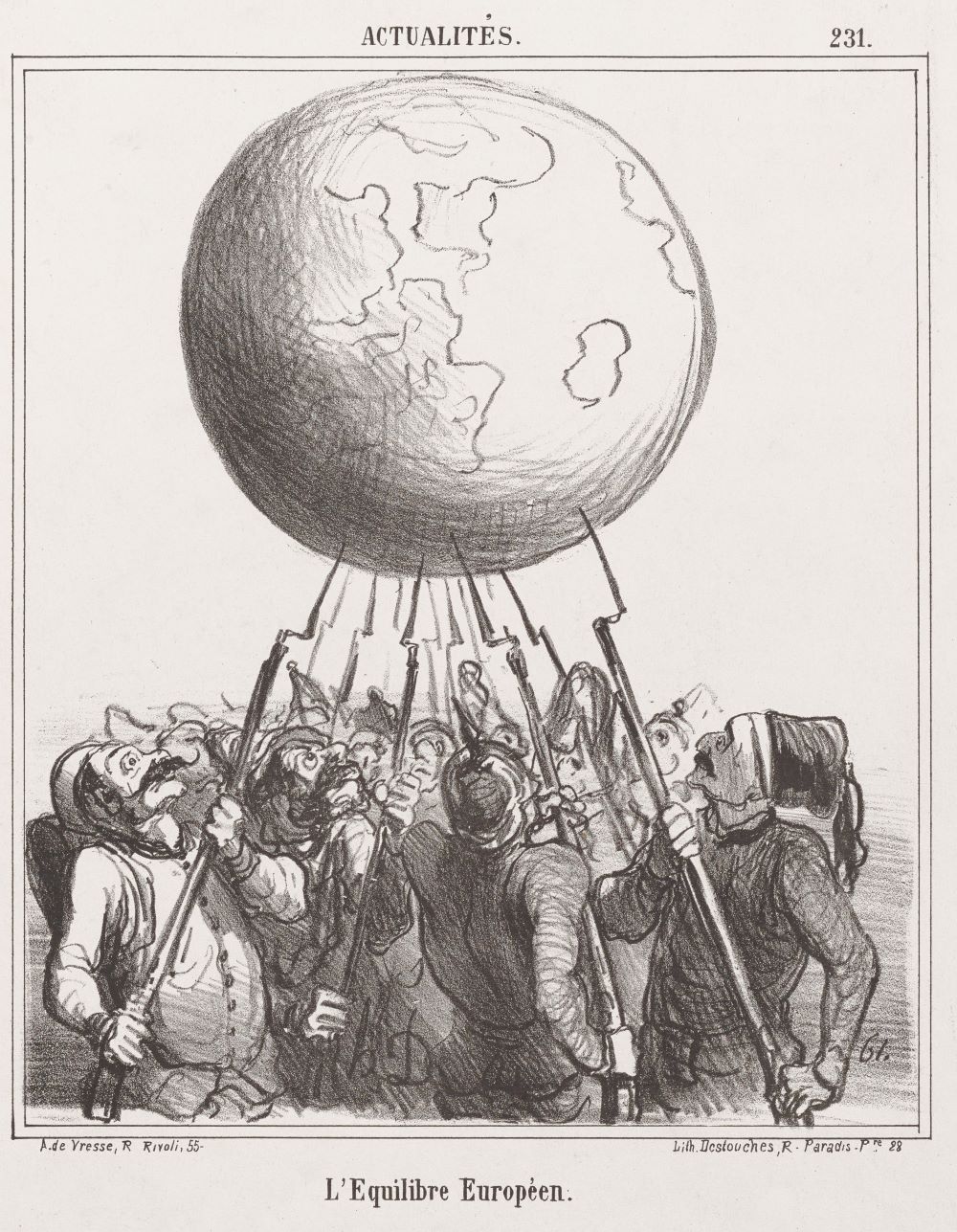

War in Europe was considered unthinkable for a long time — until it became a reality. But how can peace be thought of when normative guarantees fail? What if there are a few powerful and many weak players? Friedrich Nietzsche devised a surprisingly timely answer in 1879: Peace is not a sign of weakness, but an actively negotiated balance of power. He showed how a stable peace obliges all actors to build up their own strength. Nietzsche's transformation from an advocate of war to a thinker of peace based on strength is an admonition — also and especially to the weaker.
Being a Father with Nietzsche
A Conversation between Henry Holland and Paul Stephan
Being a Father with Nietzsche
A Conversation between Henry Holland and Paul Stephan
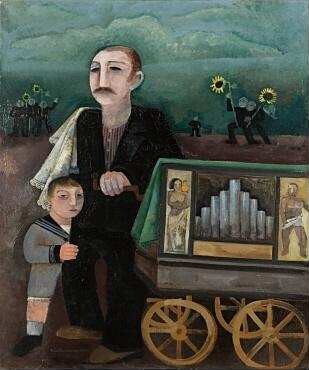
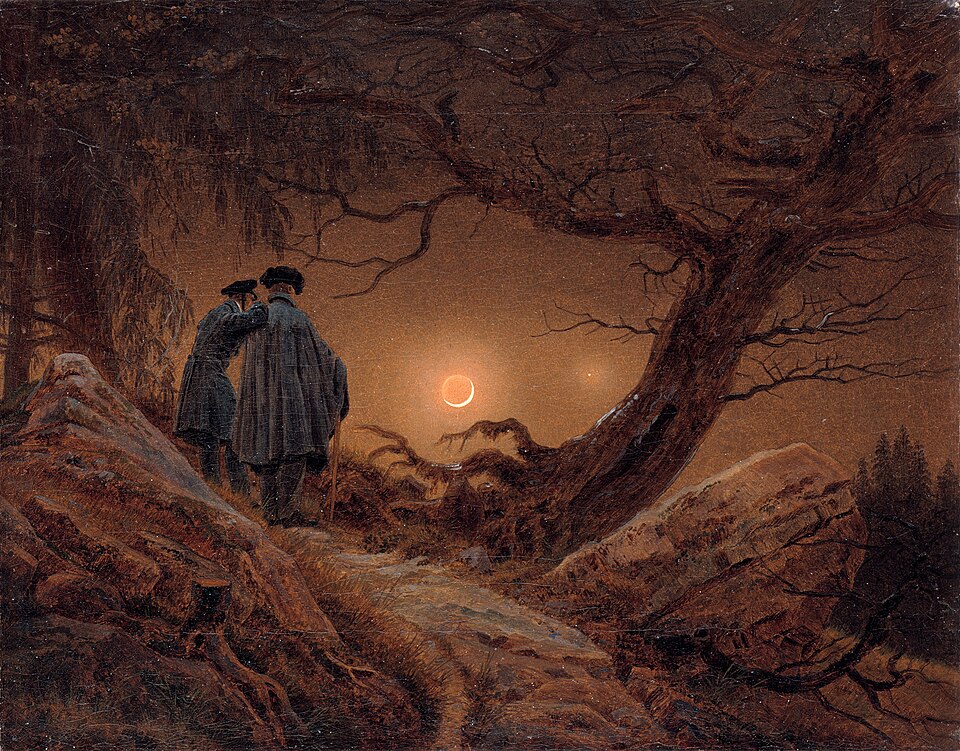
Nietzsche certainly did not have any children and is also not particularly friendly about the subject of fatherhood in his work. For him, the free spirit is a childless man; raising children is the task of women. At the same time, he repeatedly uses the child as a metaphor for the liberated spirit, as an anticipation of the Übermensch. Is he perhaps able to inspire today's fathers after all? And can you be a father and a Nietzschean at the same time? Henry Holland and Paul Stephan, both fathers, discussed this question.
We also published the complete, unabridged discussion on the Halcyonic Association for Radical Philosophy YouTube channel (Part 1, part 2).
“Peace with Islam?”
Hiking with Nietzsche Through Glasgow’s Muslim Southside: Part II
“Peace with Islam?”
Wanderungen mit Nietzsche durch Glasgows muslimischen Süden: Teil 2

In the second part of his article on hiking through Glasgow’s Muslim-esque Southside, our staff writer Henry Holland delves into Nietzsche’s impassioned yet scattergun engagement with the youngest Abrahamic religion. He investigates how the experimental novel The Baphomet by French artist and theoretician Pierre Klossowski – which got him hooked on the Islam-Nietzsche intersection in the first place – blends Islam-inspired mysticism, sexual transgression and Nietzscheanism itself into an inimitable potion. With insights on Muslim-esque readings of Nietzsche in tow, Holland returns with Fatima and Ishmael to Scotland’s largest city, thus wrapping up his travelogue whence it began.
Splendidly Isolated with a Stiff Upper Lip
Nietzsche and the Tragedy of Academic Outsiderhood
Splendidly Isolated with a Stiff Upper Lip
Nietzsche and the Tragedy of Academic Outsiderhood

“Keep a stiff upper lip,” they say in England when you want to call on your interlocutor to persevere in the face of danger and to maintain an upright posture. Advice that is certainly often helpful. Such a stoic position must be sought all the more as an academic outsider who, on the one hand, sets himself apart from the scientific mainstream, but on the other hand is also dependent on his recognition. Nietzsche himself, but also many of his admirers, found himself in such a delicate situation. Based on several such outsider figures (in addition to Nietzsche himself, such as Julius Langbehn and Paul de Lagarde), Christian Saehrendt develops a typology of the (perhaps not always quite so) “brilliant isolation” of academic nonconformism.
Caught in the Crossfire of the Culture Wars, There Stands Nietzsche
Comparing Two Current Perspectives
Caught in the Crossfire of the Culture Wars, There Stands Nietzsche
Comparing Two Current Perspectives


It is well known that Nietzsche's history of influence has been read and absorbed across all political camps. But what about our present tense? Paul Stephan examines the writings of two authors who are about the same age as himself, in their mid/late 30s, and whose perspectives on Nietzsche could hardly be more different: While French journalist and YouTuber Julien Rochedy declares Nietzsche a pioneer of a right-wing cultural struggle, the German philosopher and political scientist Karsten Schubert attacks him for a left-wing identity politics. Both positions do not really convince our authors; rather, they are entirely within the framework of the prevailing simulation of politics as a cultural struggle, which would need to be countered by focusing on the really pressing life problems of contemporary humanity.