#
Henry Holland (mention)
"I confess that the deepest objection to the 'eternal return', my actually abysmal thought, is always mother and sister."1
On Nietzsche's Relationship with his Mother. Mother's Day Greetings
"I confess that the deepest objection to the 'eternal return', my actually abysmal thought, is always mother and sister."
On Nietzsche's Relationship with his Mother. Mother's Day Greetings
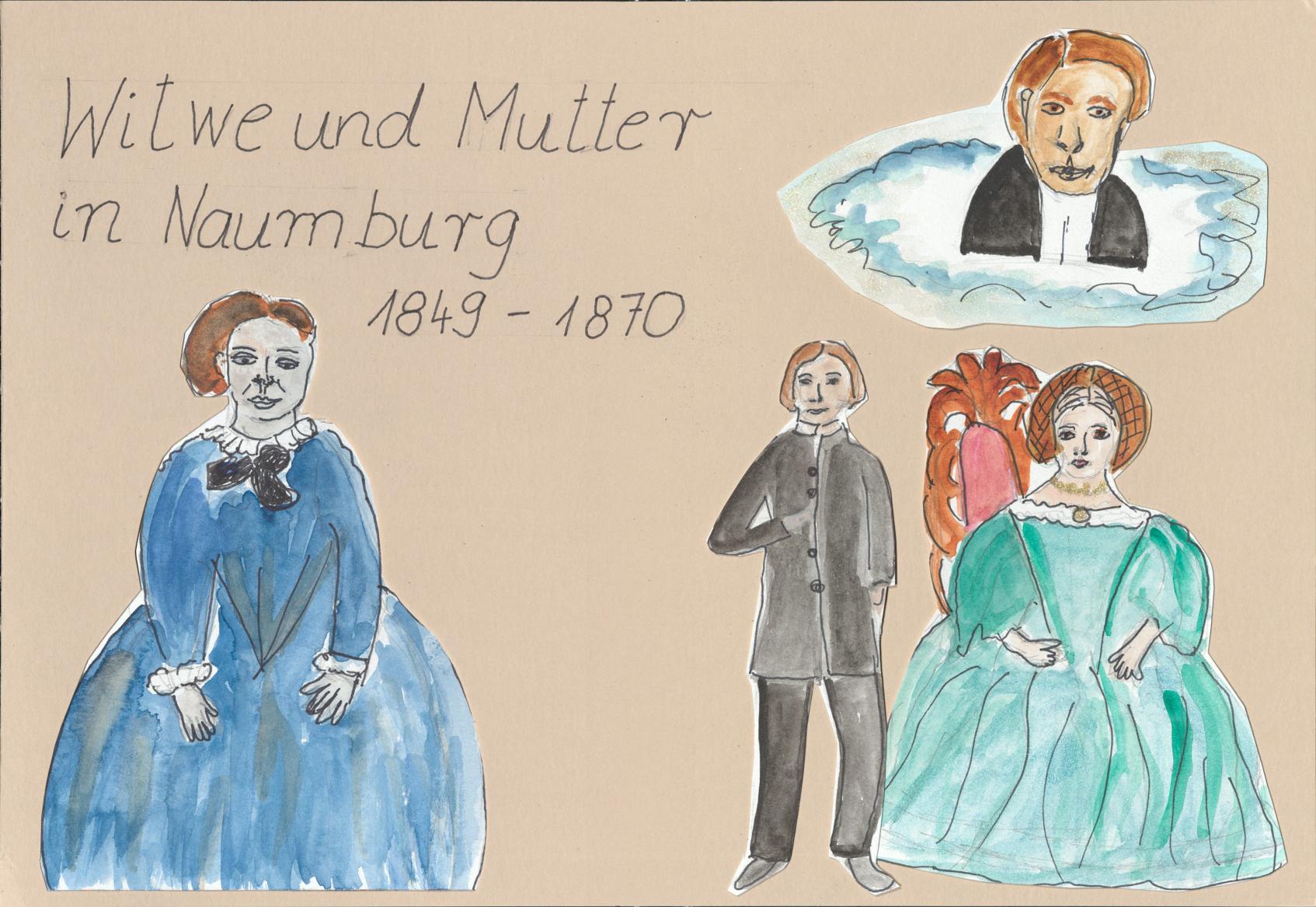

Nietzsche's philosophy is regarded as an act of self-liberation — but even the superman remained powerless against his own family. This essay highlights the pathological tension between the lonely thinker and the “canaille” relatives, mother Franziska Nietzsche and sister Elisabeth Förster-Nietzsche. While the philosopher (de)constructs “woman in itself” as flat, independent and mindless in his writings, he also has stockings stuffed and sausage boxes sent from Naumburg. An essay about the deepest objection to eternal return: one's own kinship.
This is the second part of a small series for this year's Mother's Day. In first part Henry Holland wrote about Franziska Nietzsche's life with a particular focus on her time before Nietzsche and her last years.
Two Years through Woods of Symbols
Outlook and Summary of Our Previous Work
Two Years through Woods of Symbols
Outlook and Summary of Our Previous Work


Exactly two years ago, we published our first article on this blog, The Enduringly Contested Friedrich Nietzsche, a report by Paul Stephan about the annual meeting of the Nietzsche Society in 2023. Time to pause for a moment and think about what we've done on this blog so far and what the future could look like. Our editor-in-chief draws an interim conclusion and gives an insight into our plans.
We are combining this anniversary with two special appeals to you. On the one hand, we created a small quiz (link; in German). Answer four questions correctly, the answers to which are derived from our previous articles, and you could win one of thirteen prizes — and if you want, you can also give us valuable feedback about our work.
We would also like to draw you attention to our crowdfunding call. By July 10, we would like to invite you to help us raise €6,000 to finance further professional translations of our articles. In return, we offer you some fantastic rewards, including in particular the option of translating an article of your choice or giving us an article topic that you've always wanted to read about on this blog. Or you can get to know some of our authors at an exclusive Zoom workshop for our supporters. Become a bridge builder!
Nietzsche’s Techniques of Philosophizing
With Glances Towards Wittgenstein and Heidegger
Nietzsche’s Techniques of Philosophizing
With Glances Towards Wittgenstein and Heidegger
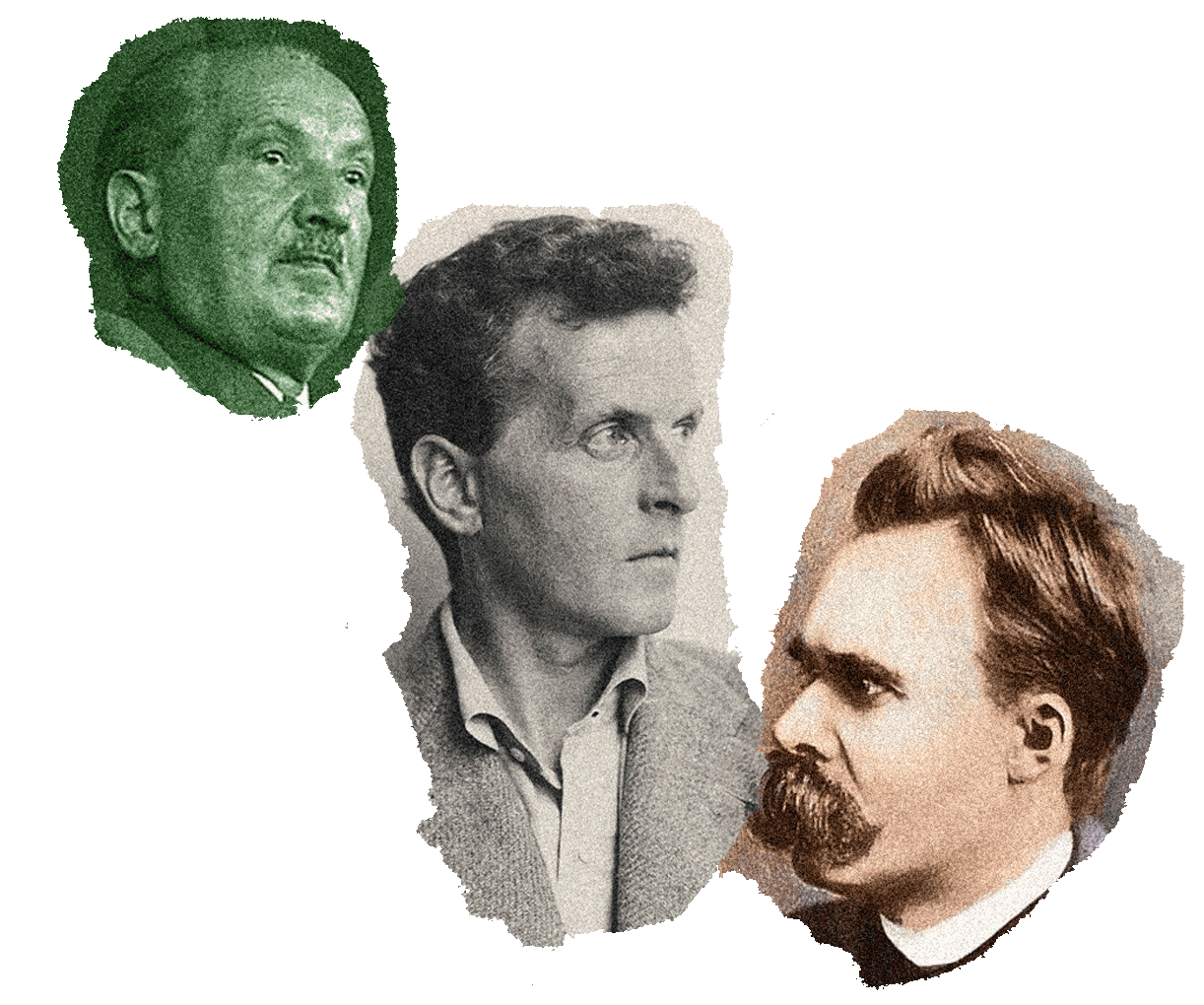
A fixed feature at the annual conference of the Nietzsche Gesellschaft [Nietzsche Society] conference is the Lectio Nietzscheana Naumburgensis: a particularly distinguished scholar delivering an extended lecture on the conference theme on the final day, thereby providing a pointed conclusion. The most recent conference in October 2025 awarded this special honor to Werner Stegmaier to recognize his long tenure as editor of the influential Nietzsche-Studien [Nietzsche Studies] and his authorship of numerous seminal monographs on Nietzsche’s philosophy. Running from October 16-19, 2025, the conference focused the theme “Nietzsche’s Technologies,” as Emma Schunack reported.
Generously granting his permission to publish his lecture in full and in this translation, Stegmaier takes on the conference theme from an unexpected perspective. Rather than examining what is commonly understood as “technologies”—machines, cyborgs, or automata—he explores instead Nietzsche’s philosophical techniques, both intellectual and rhetorical. Weighing up the original and idiosyncratic methods Nietzsche deployed while writing, Stegmaier reflects on how best to interpret and assess them. How were they able to enthuse and win over successive generations of readers? What can we learn from these today?
Comparing Nietzsche’s techniques with those of two other modern philosophical giants, Martin Heidegger (1889–1976) and Ludwig Wittgenstein (1889–1951), Stegmaier retraces all three philosophers’ break with the classical and conceptually oriented techniques of thinking inherited from antiquity, and their discoveries of radical and experimental means of developing philosophy in the age of “nihilism.” Replacing a one-dimensional, metaphysical understanding of rationality, these means cultivate a plural, perspectival mode of thought that necessarily relies on entirely different techniques. Situating Nietzsche’s methods within these broader developments in intellectual history, the Lectio establishes an utterly new framework for understanding his thought and its place within modern philosophy.
Translated by Henry Holland.
Being a Father with Nietzsche
A Conversation between Henry Holland and Paul Stephan
Being a Father with Nietzsche
A Conversation between Henry Holland and Paul Stephan
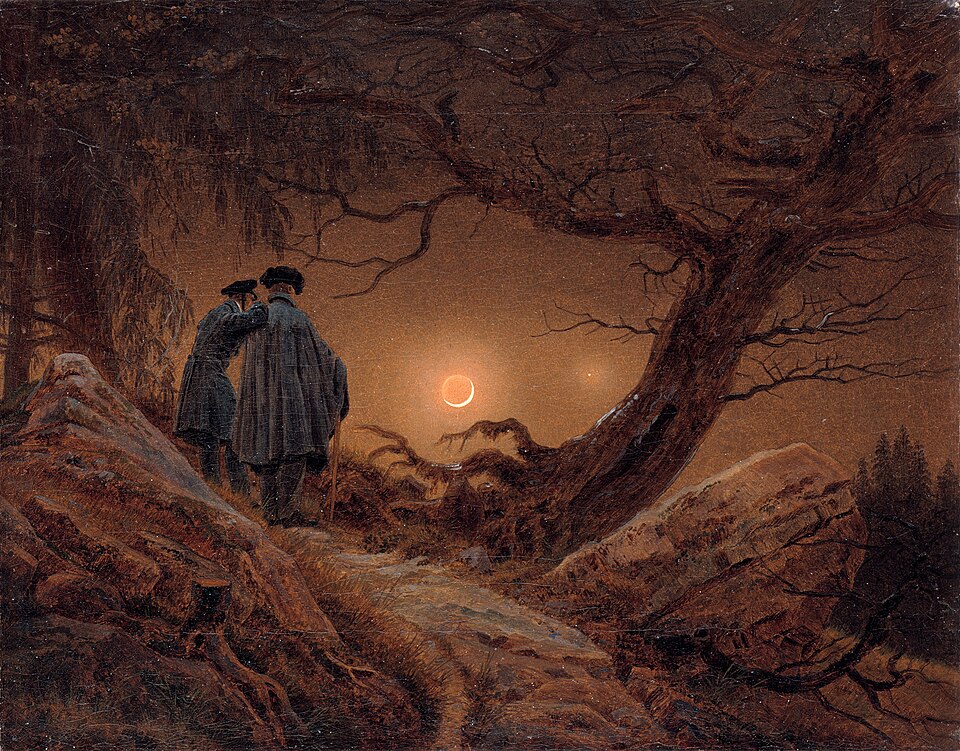
Nietzsche certainly did not have any children and is also not particularly friendly about the subject of fatherhood in his work. For him, the free spirit is a childless man; raising children is the task of women. At the same time, he repeatedly uses the child as a metaphor for the liberated spirit, as an anticipation of the Übermensch. Is he perhaps able to inspire today's fathers after all? And can you be a father and a Nietzschean at the same time? Henry Holland and Paul Stephan, both fathers, discussed this question.
We also published the complete, unabridged discussion on the Halcyonic Association for Radical Philosophy YouTube channel (Part 1, part 2).
A New Nietzsche Biography
In Conversation with Andreas Urs Sommer
A New Nietzsche Biography
In Conversation with Andreas Urs Sommer
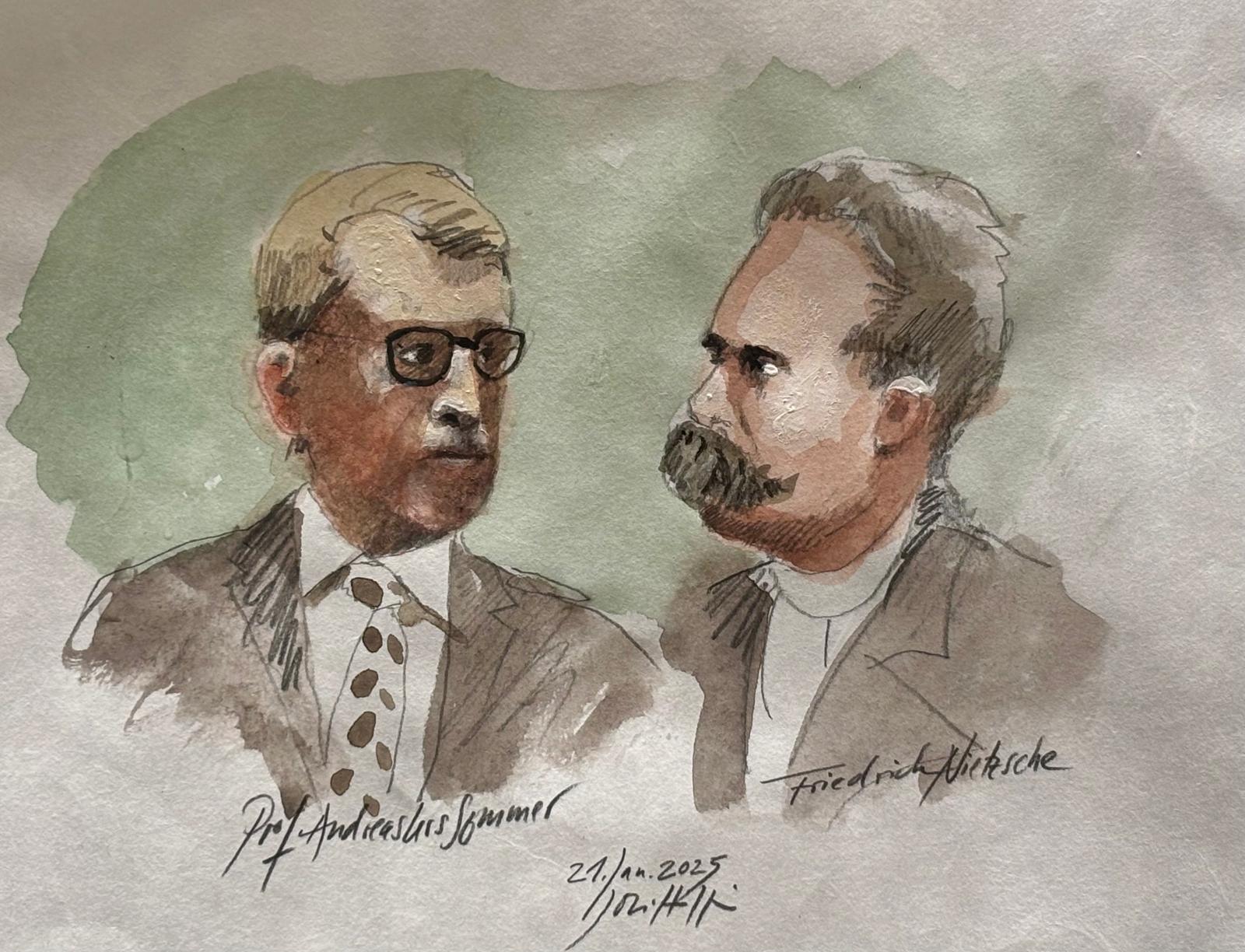

The philosopher Friedrich Nietzsche died 125 years ago, on August 25, 1900. We are taking this important date as an opportunity to publish interviews with two of the most internationally renowned Nietzsche researchers, Andreas Urs Sommer and Werner Stegmaier, around this year's anniversary of his birth on October 15, 1844. Freiburg philosophy professor Sommer is currently working on an extensive biography of the thinker, which is why the conversation with him focused in particular on his life; the conversation with his colleague from Greifswald, which focuses primarily on Nietzsche's thinking, will follow shortly (link). It will soon become apparent that the two cannot be separated. Among other things, we asked the expert about Nietzsche's character, his sexuality and if he lived what he proclaimed.