#
Feast
Nietzsche, Comedy, and the Art of the Edge
A Conversation with Sandra Schmidt
Nietzsche, Comedy, and the Art of the Edge
A Conversation with Sandra Schmidt
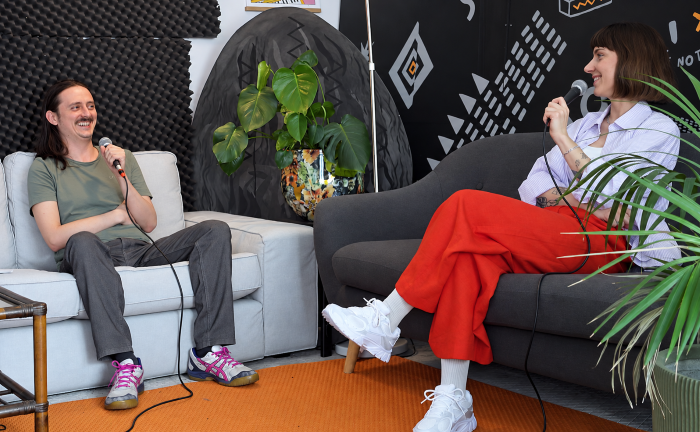

Nietzsche is a master of provocation and the punchline. In the court jester, he identifies a figure who cannot conform and therefore tells the powerful truths they would otherwise rarely hear—while simultaneously making them laugh. Can we draw a parallel here to modern stand-up comedy? How do stance and craft come together in this context? What influence do the stage, the audience, and social media have on what is perceived as funny, and when and where that happens? And who are the powerful of today, anyway: political leaders, societal majorities, or algorithms?
Our author Bernhard Ostheimer met with comedian and PhD philosopher Sandra Schmidt to talk about Nietzsche, the craft of comedy, and the art of pushing boundaries without losing touch with the audience.
You can also watch a longer, unedited version of the conversation on YouTube or listen to it on SoundCloud.
The Artificial Nietzsche
How A"I" Distorts Our Perception of Nietzsche and How We Can Counter This
The Artificial Nietzsche
How A"I" Distorts Our Perception of Nietzsche and How We Can Counter This
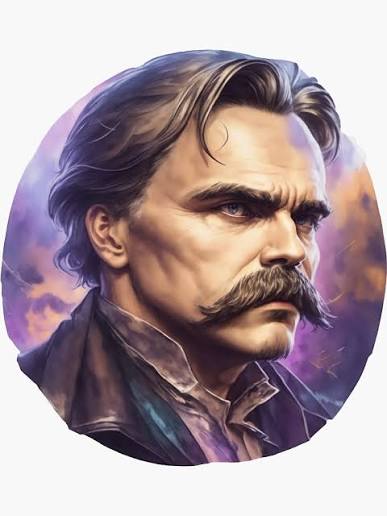
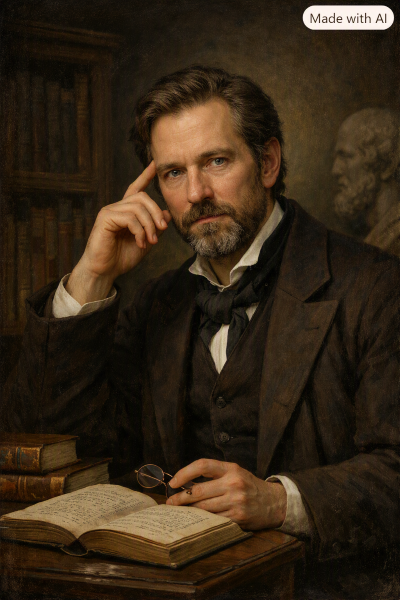
Our author Paul Stephan has finally had enough. The internet is being flooded with cheap A"I" content, often called "AI slop," which is just plain annoying—and is even being rewarded with countless likes and followers. Often, this content is about philosophy, too—specifically Nietzsche. How much damage is being done when this artificial Nietzsche increasingly displaces the real one, as A"I" outputs that repeat the same half-truths and falsehoods replace nuanced human interpretations? When machine-generated caricatures literally push out genuine photographs and artistic portraits? Paul Stephan embarked on an often frustrating search for answers and presents you with a few "highlights." Although he still believes that A"I" opens up positive possibilities—and occasionally makes use of them himself—in his third piece on the subject (feel free to read the first and second commentaries here and there), he feels it is time to take off the kid gloves and bring out the hammer. Stop the slop!
Nietzsche, Tech Elitism, and the Tipping Point from Meaning to Violent Fantasy1
Off the Rails with ChatGPT
Nietzsche, Tech Elitism, and the Tipping Point from Meaning to Violent Fantasy
Off the Rails with ChatGPT


It has become something of a tradition for us to publish a "conversation" between Paul Stephan and ChatGPT on the anniversary of Nietzsche's death. While the previous two "interviews" (No. 1, No. 2) focused primarily on highlighting the limitations of A"I" and poking a little fun at it, our author's main goal this time was to address another common objection raised against A"I": that it censors unpopular opinions that deviate too far from the mainstream, thereby narrowing discourse as A"I" outputs increasingly become the benchmark for "truth."
We must therefore issue a strong warning: To this end, our author confronted ChatGPT with several radical interpretations and viewsthat in no way reflect his own perspective and would otherwise find no place on this blog, but rather diametrically contradict our values and our approach to Nietzsche. To signal this, he refers to himself as "Zero Newman" for this conversation. His aim was to draw attention to the censorship mechanisms of A"I", while also offering a critical, satirical look at potential "dark" interpretations of Nietzsche that are not merely a thing of the past.
A commentary by Paul Stephan on this "interview" and the rampant use of A"I"-generated Nietzsche interpretations and images on the internet can be found here.
Wille zum Wald
Nietzsche’s Discovery of Forest Bathing
Wille zum Wald
Nietzsche’s Discovery of Forest Bathing
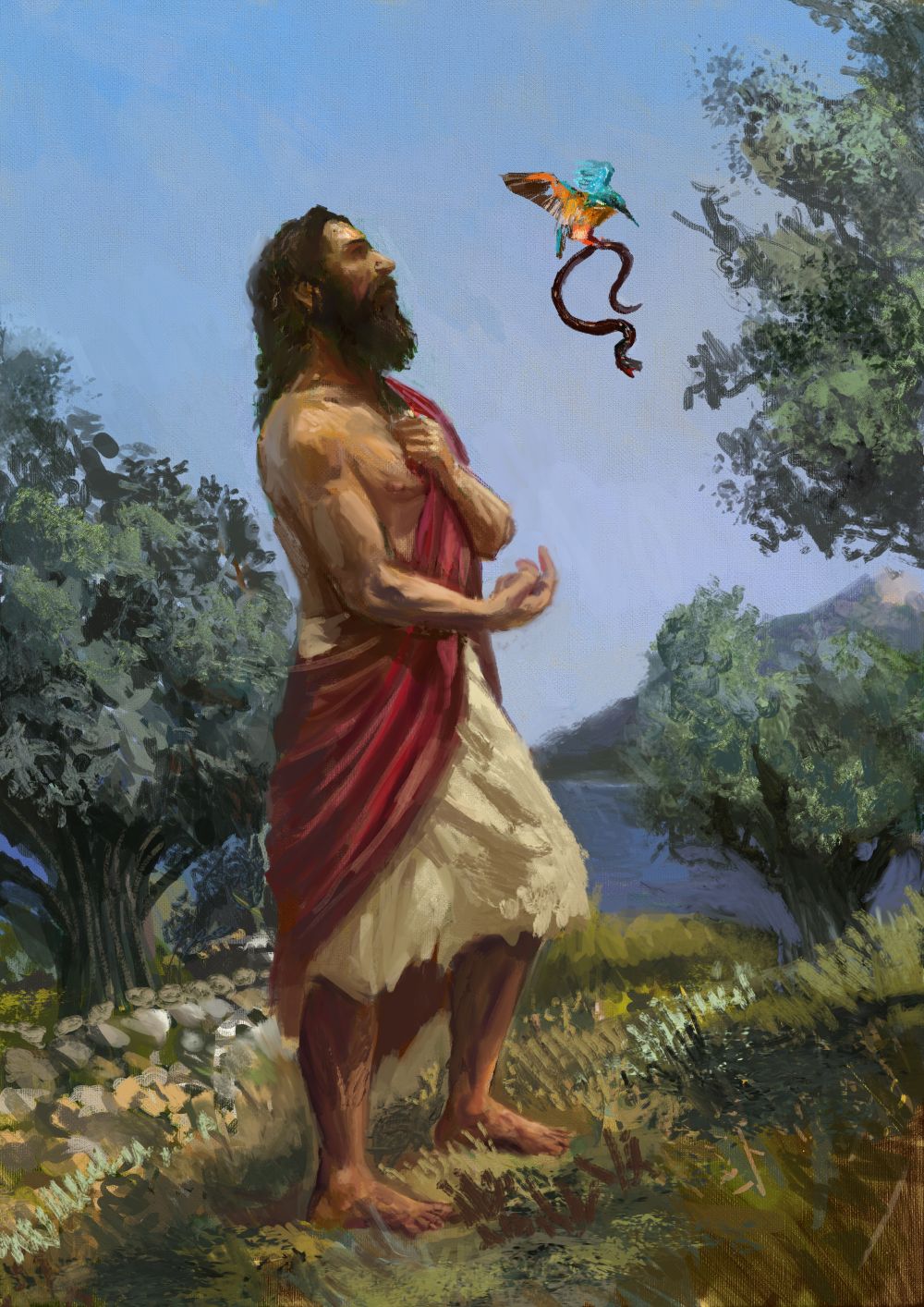
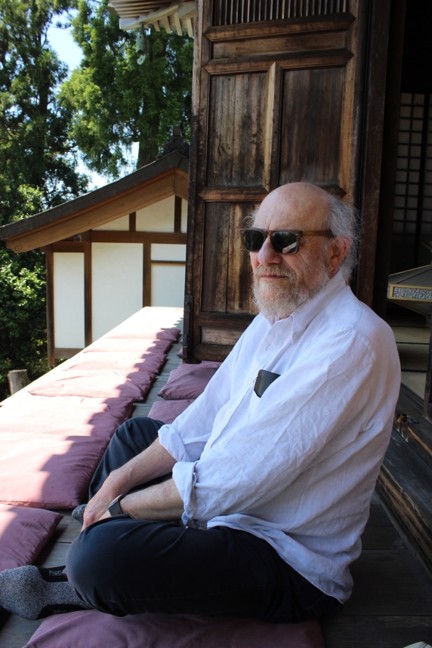
In the fourth part of our “The Forest as a Living Foundation” series, the distinguished American Nietzsche scholar Gary Shapiro investigates new angles on Nietzsche’s bonds to the woods: the philosopher’s personal enthusiasm for what is increasingly called “forest bathing,” the science behind how this practice benefits body, mind, and spirit, and the sheer pleasure of breathing fresh air, in woodland and wherever else we can find it. Shapiro’s essay showcases why this particular Lebensraum matters, not just for our individual well-being, but for the health of the entire planet.
Nietzsche and North America
An Interview with Willow Verkerk
Nietzsche and North America
An Interview with Willow Verkerk
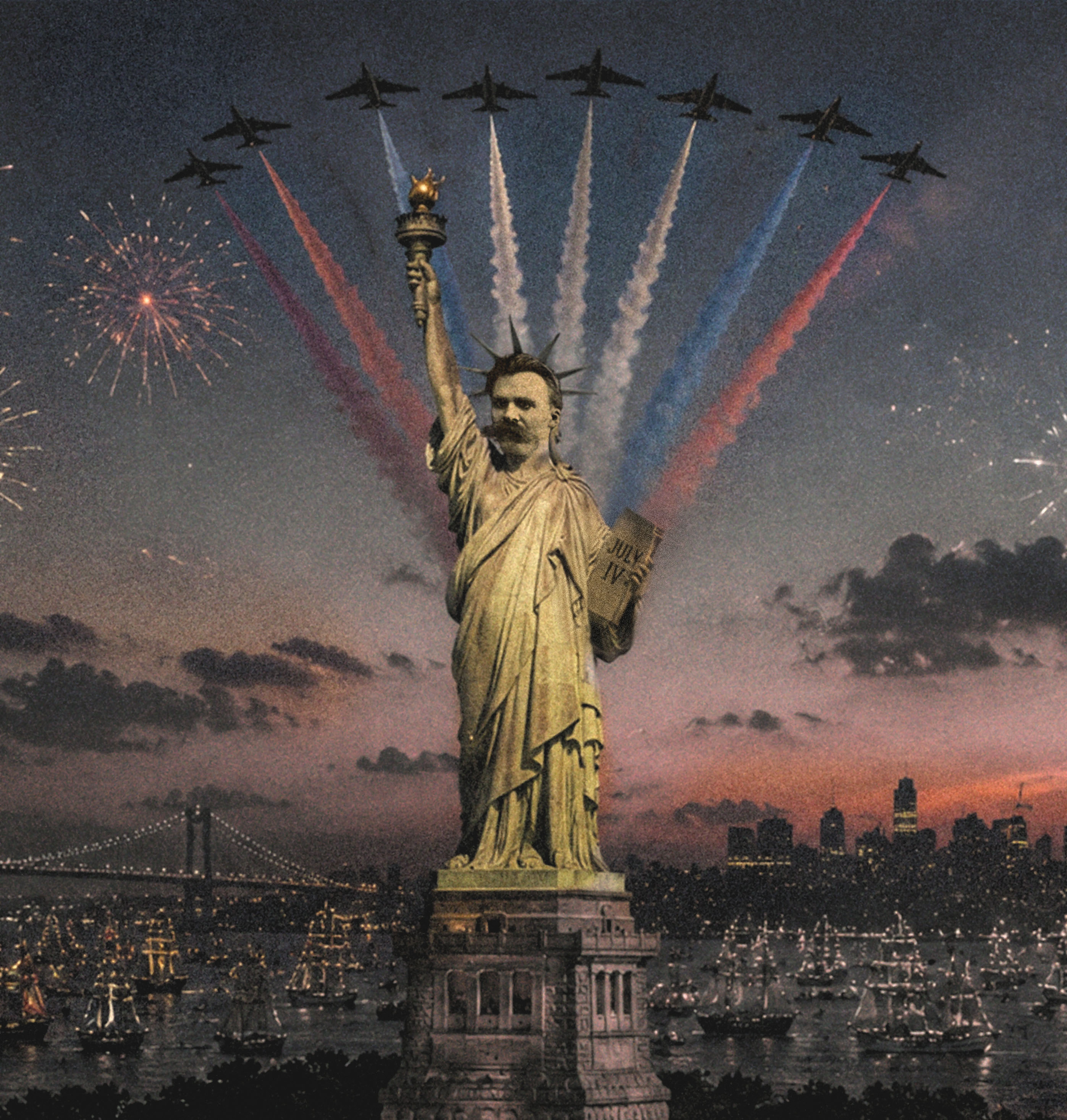
Exactly 250 years ago, on the 4th of July 1776, thirteen North American British colonies declared their independence from the mother country, soon thereafter forming one of the first modern democratic republics of the world, the United States of America. We took this anniversary as an occasion to speak with the Canadian Nietzsche scholar Willow Verkerk about the different approaches to Nietzsche in Europe and North America. To what extent is this thinker, so deeply embedded in European culture, read differently “here” to “there”? What does this tell about general cultural differences between Europe and its erstwhile colonies on the other side of the ocean? And what did Nietzsche himself think about the “New World”?
Nietzsche and Nationalism?
A Disputation between Michael Drescher and Paul Stephan
Nietzsche and Nationalism?
A Disputation between Michael Drescher and Paul Stephan

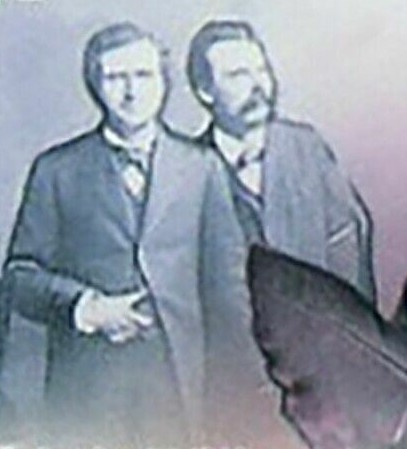
Throughout his life, Nietzsche was a great critic of nationalism. The burgeoning German national sentiment, in particular, was anathema to him, and he wrote scathing remarks about his home country, such as "definition of the Germanic: obedience and long legs..."1. At the same time, nationalists and patriots of all stripes count among his fans. How can one be a Nietzschean and a (German) nationalist? What exactly is "nationalism," and is it possible to give this term a positive meaning?
Paul Stephan discussed these delicate topics, which are gaining increasing relevance given the successes of nationalist parties worldwide, in written form with YouTuber, Nietzsche expert, and nationalism researcher Michael Drescher, also known as PhrasenDrescher.
Additionally, they continued this dialogue verbally on YouTube – feel free to check out the result here (or as an audio-only version on SoundCloud).
‘She’s called Fränzschen! She’s called Fränzschen!’
On the Early Life, and Embattled Demise, of Franziska Nietzsche
‘She’s called Fränzschen! She’s called Fränzschen!’
On the Early Life, and Embattled Demise, of Franziska Nietzsche
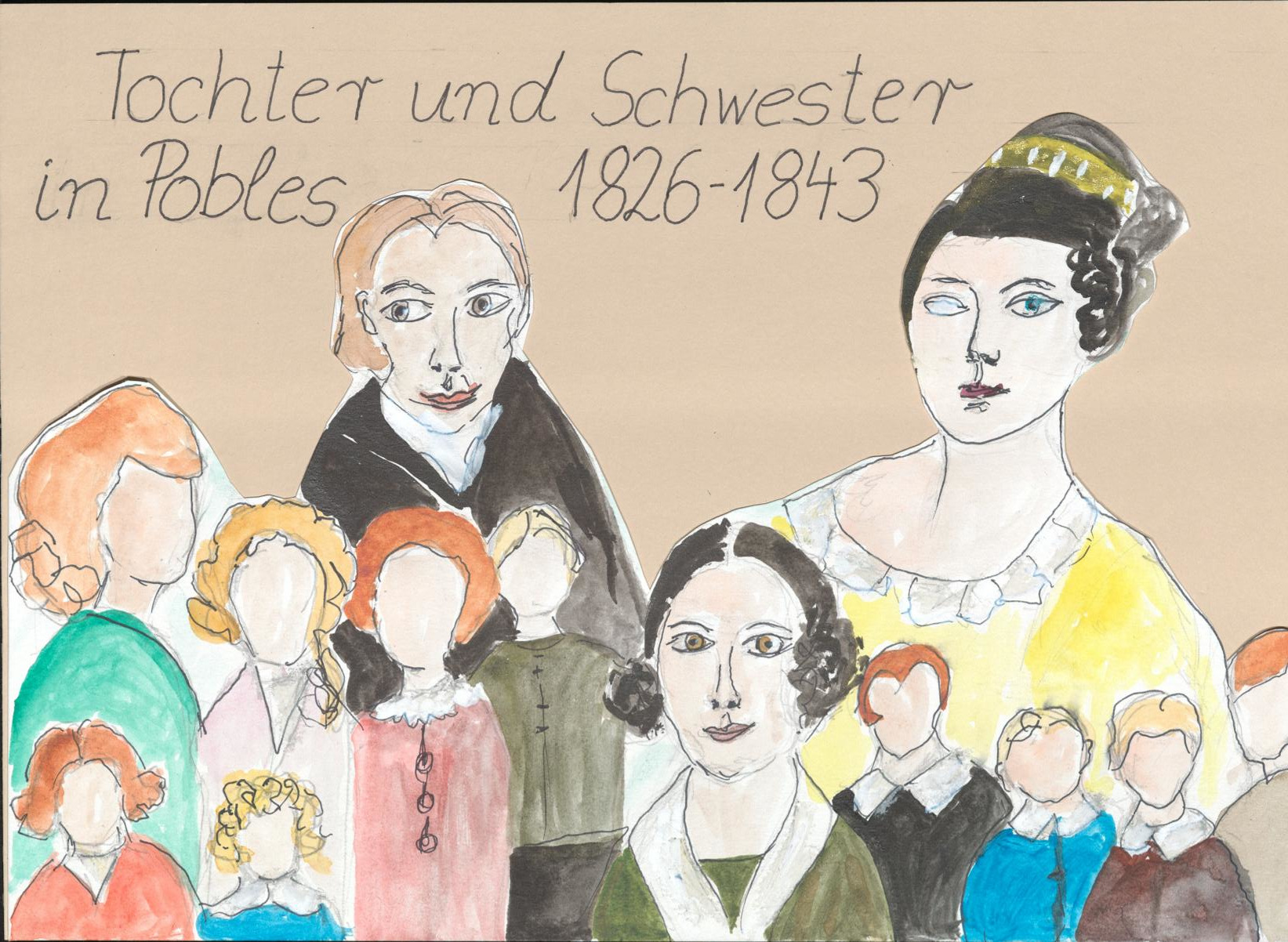
For Mother’s Day this year, two of our regular contributors are dedicating articles to an often-forgotten figure from the Nietzscheverse, without whom the philosopher would not have existed: his mother, Franziska Ernestine Rosaura Nietzsche, née Oehler. The pastor's daughter was born on February 2, 1826, and died on April 20, 1897, just a few years before her son, whose mental illness was by that stage so developed that he probably didn’t notice his mum’s death. Who was this woman? How did she shape and influence Friedrich Nietzsche?
In this first part of our small series, Henry Holland reports on her life and origins, while, in part two, Natalie Schulte will delve deeper into her relationship with her son, and the question of how it coloured his writing and thinking about women.
What were the decisive factors that shaped Franziska Nietzsche's life? How could she, a woman in a world thoroughly defined by patriarchal structures, who never pursued paid employment, achieve a certain degree of self-determination? How did she cope with the traumatic early death of her husband? How religious was she? An often-neglected autobiographical fragment, written shortly before her death, sheds new light on her life.
On Life in Freedom
A Conversation with Jens Bonnemann about Sartre and Nietzsche
On Life in Freedom
A Conversation with Jens Bonnemann about Sartre and Nietzsche

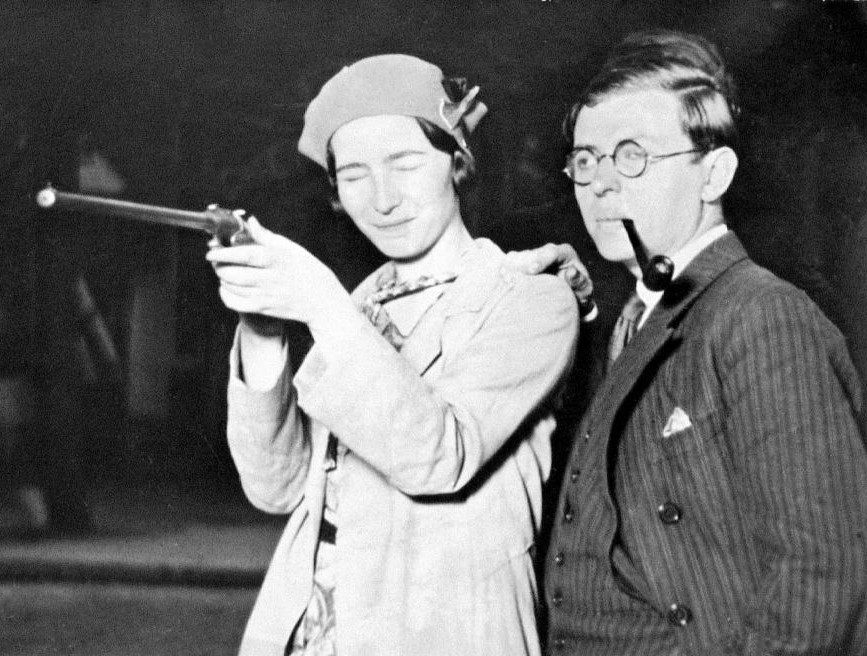
On April 15, 1980, one of the most important philosophers of the 20th century, Jean-Paul Sartre, died at the age of 74. Paul Stephan spoke with Jens Bonnemann, chairman of the German-speaking Sartre-Gesellschaft, about his basic ideas, his relationship with Nietzsche and his significance for our time. What does it mean to live in freedom after the “death of God”? What are the limits of individual freedom? What are the differences and similarities between Sartre and Nietzsche?
You can also view the unedited version of the conversation, in German, on YouTube and listen to it on Soundcloud.
“How Well Disposed Would You Have to Become to Yourself and to Life”
Prolegomena to Any Future Philosophy That Will Be Able to Present Itself as an Enlightenment — Part II
“How Well Disposed Would You Have to Become to Yourself and to Life”
Prolegomena to Any Future Philosophy That Will Be Able to Present Itself as an Enlightenment — Part II
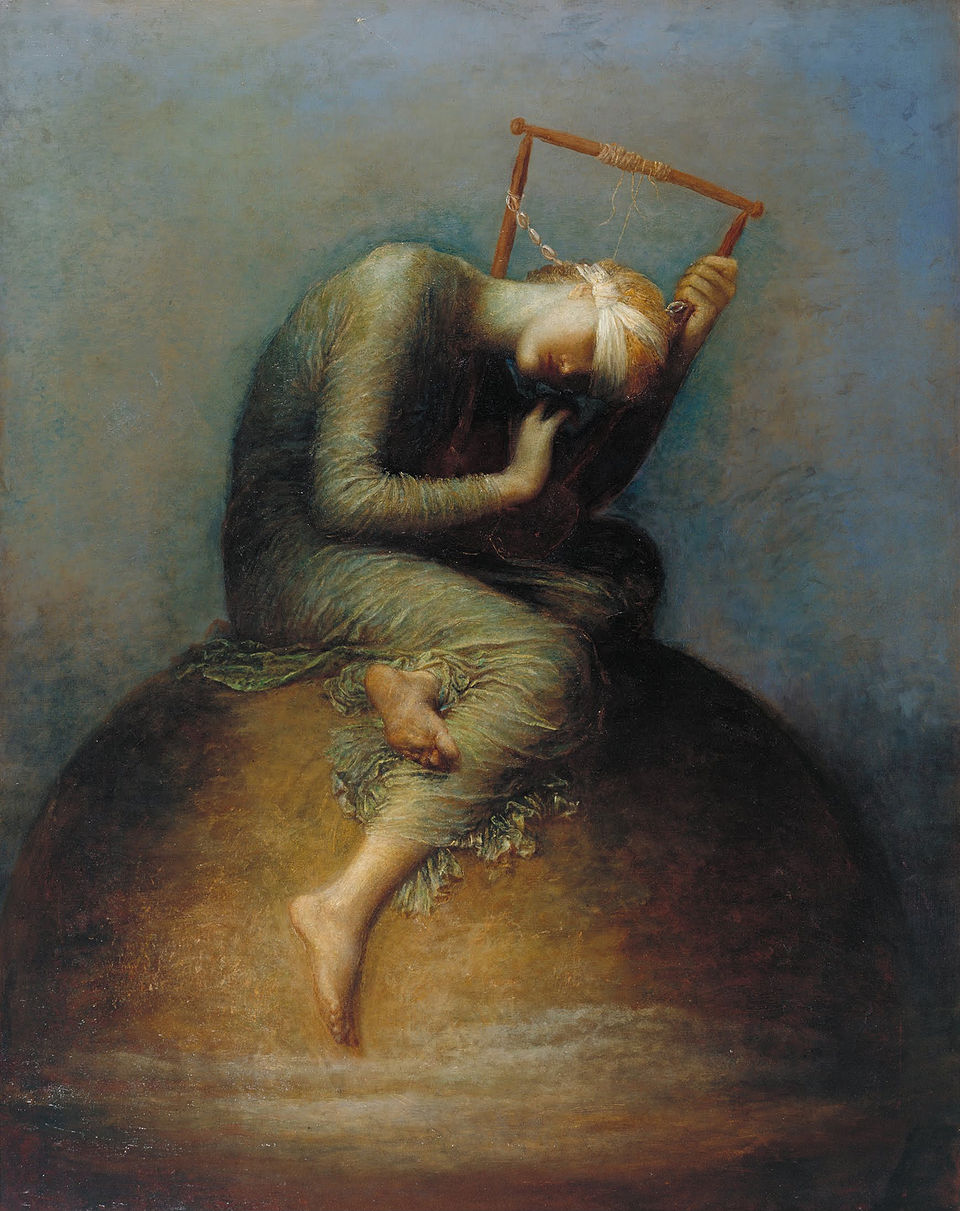
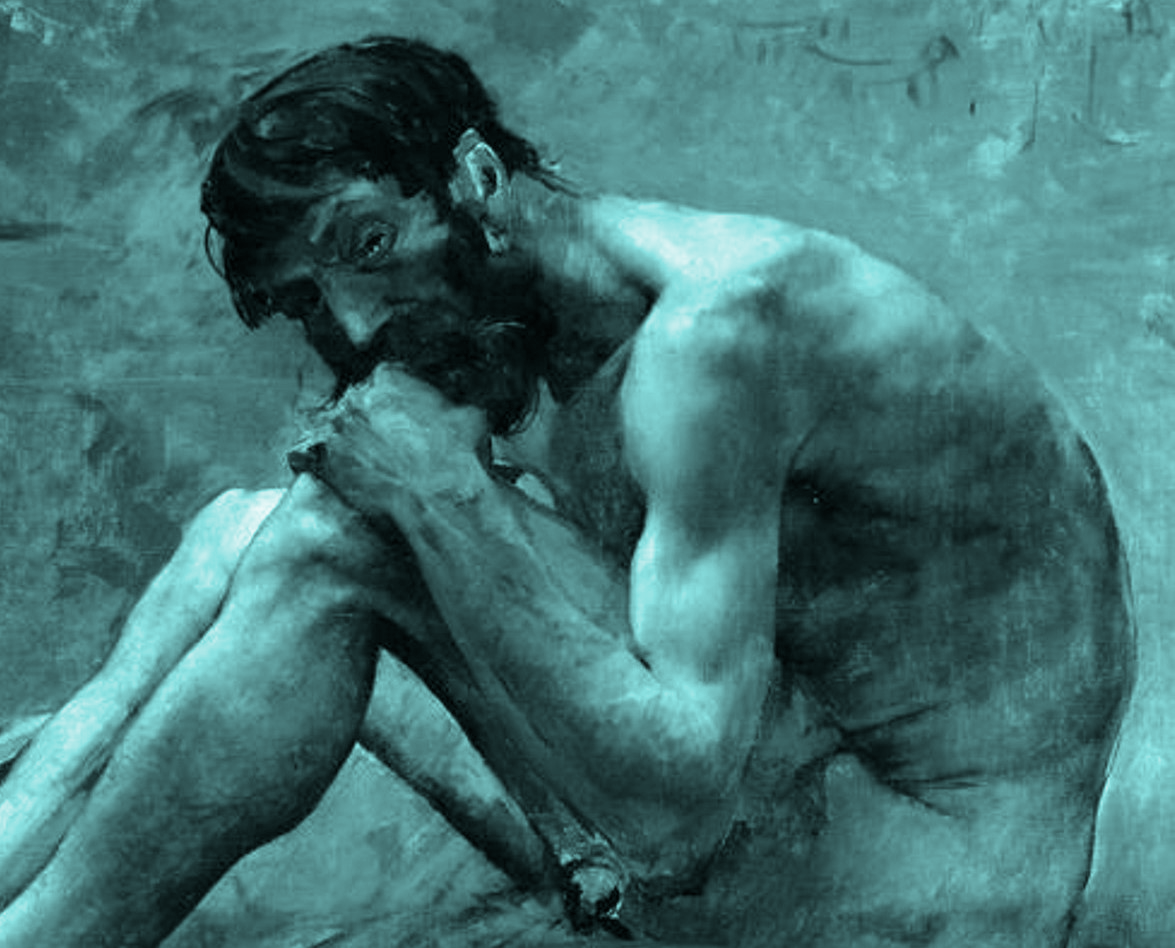
After our author, in the first part of this article, described the current political-cultural situation with reference to Fukuyama as an outgrowth of deep-seated boredom, which numbs itself in excesses of anger and indignation, he tries in the following second to suggest a possible turn for this zeitgeist, which could manifest itself in a new Enlightenment verve and a new positive self-image of the Enlightenment. Our author, with Nietzsche, opposes the “four despairs” that afflict the present tense, “four transfigurations” and “fields of research” resulting from them. An ironic view of the world and oneself should help to practice a transfigurative perspective on the world, which would be able to overcome the lethargy of postmodernism and revitalize the modernist project. The program of self-reliant future Enlightenment.
Two Years through Woods of Symbols
Outlook and Summary of Our Previous Work
Two Years through Woods of Symbols
Outlook and Summary of Our Previous Work


Exactly two years ago, we published our first article on this blog, The Enduringly Contested Friedrich Nietzsche, a report by Paul Stephan about the annual meeting of the Nietzsche Society in 2023. Time to pause for a moment and think about what we've done on this blog so far and what the future could look like. Our editor-in-chief draws an interim conclusion and gives an insight into our plans.
We are combining this anniversary with two special appeals to you. On the one hand, we created a small quiz (link; in German). Answer four questions correctly, the answers to which are derived from our previous articles, and you could win one of thirteen prizes — and if you want, you can also give us valuable feedback about our work.
We would also like to draw you attention to our crowdfunding call. By July 10, we would like to invite you to help us raise €6,000 to finance further professional translations of our articles. In return, we offer you some fantastic rewards, including in particular the option of translating an article of your choice or giving us an article topic that you've always wanted to read about on this blog. Or you can get to know some of our authors at an exclusive Zoom workshop for our supporters. Become a bridge builder!
Abyss and Enablement?
The Suspense of Contingency
Johannes Hansmann Discusses Odo Marquard and Richard Rorty
Abyss and Enablement? The Suspense of Contingency
Johannes Hansmann Discusses Odo Marquard and Richard Rorty


The young philosopher Johannes Hansmann has published his monograph Ironie des Schicksals im Einzelnen. Philosophie der Kontingenz bei Marquard und Rorty ("Irony and Fate in Detail. The Philosophy of Contingency in Marquard and Rorty") last year at Karl Alber. It is a remarkable study on two of the most important representatives of existential philosophy in the 20th century, the German Odo Marquard (1928-2015) and the American Richard Rorty (1931-2007). Although Nietzsche only plays a minor role, he deals with highly Nietzschean topics there, dedicates himself to the question of a felicitous — and for him that means in particular: authentic — life in a world after the “death of God,” to which Marquard and Rorty gave very different answers. Natalie Schulte and Paul Stephan present the book to you. A joint summary of the book's most important ideas is followed by an individual statement from each of our authors.
“It is no longer about monumentalization! Artists today want to make Nietzsche human so that one can deal with him in a new way.”
Interview with Barbara Straka about Her Book Nietzsche Forever?
Discussion with Barbara Straka
Interview with Barbara Straka about Her Book Nietzsche Forever?
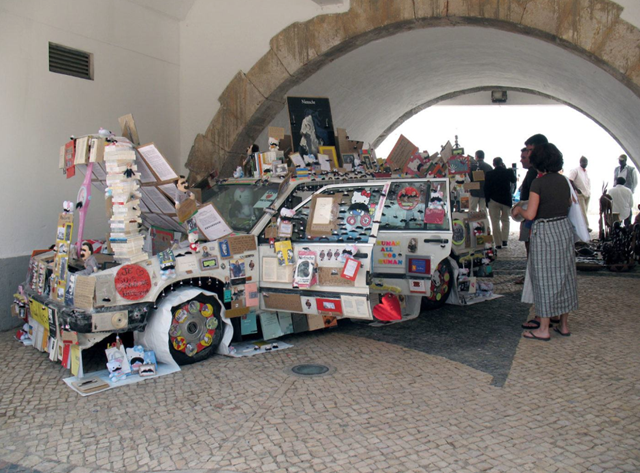
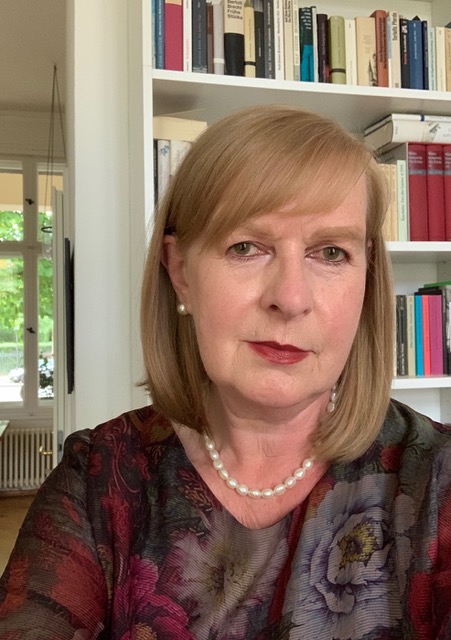
Last year, curator and art historian Barbara Straka published a two-volume monograph entitled Nietzsche forever? Friedrich Nietzsches Transfigurationen in der zeitgenössischen Kunst (Nietzsche Forever? Friedrich Nietzsche's Transfigurations in Contemporary Art), in which she explains Nietzsche's significance for the visual arts of the present day. After Michael Meyer-Albert dedicated a two-part review to her work in recent weeks (part 1, part 2), here follows an interview conducted by our author Jonas Pohler with the author in Potsdam. He discussed her book with her, but also about the not always easy relationship between philosophy and contemporary art.
Monumentality Issues. Nietzsche in Art After 1945
Thoughts on the Book Nietzsche Forever? by Barbara Straka II
Monumentality Issues. Nietzsche in Art After 1945
Thoughts on the Book Nietzsche Forever? by Barbara Straka II
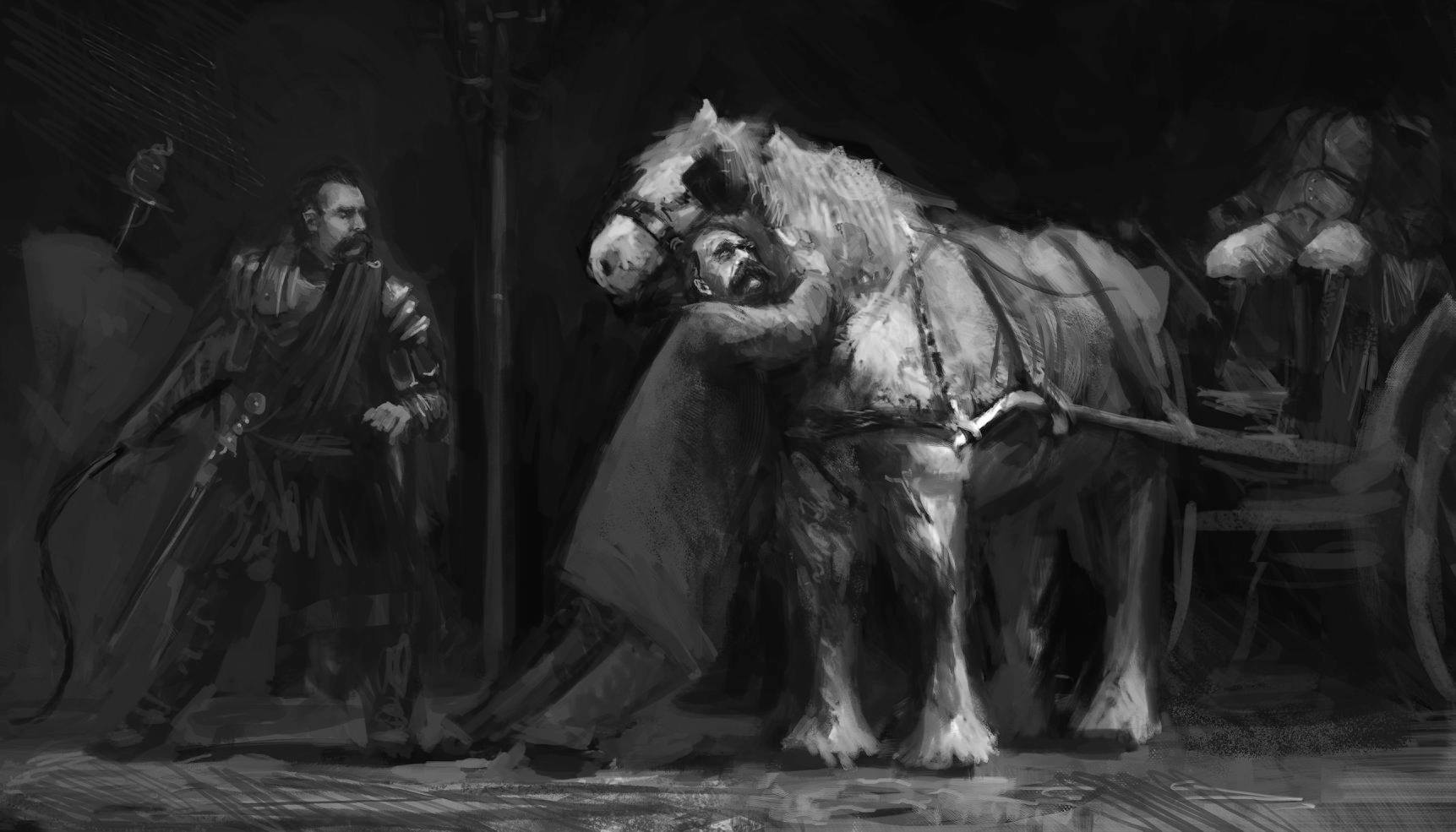

Barbara Straka's newly published book Nietzsche Forever? explores the question of how Nietzsche is received in 20th century art, in particular that after 1945. But the reception of Nietzsche's reception raises the question of whether the philosopher's monumentality is lost sight of. Does this reveal a fundamental problem of our age with monumentality? In any case, starting from Nietzsche, Michael Meyer-Albert argues against Straka for a “post-monumental monumentality” as an alternative to aesthetic postmodernism. In the first part of the two-part series, he dedicated himself to her book, and now he is accentuating his opposite position.
Amor fati — A Guide and Its Failure
Reflections between Adorno, Nietzsche, and Deleuze
Amor fati — A Guide and Its Failure
Reflections between Adorno, Nietzsche, and Deleuze


This article attempts to approach two of Nietzsche's most puzzling ideas: the Eternal Return and Amor fati, the “love of fate.” How exactly are these ideas to be understood — and above all: What do they have to tell us? How can we not only affirm fate, which is interpreted as an eternal return, but really love learn?
Among the philosophers, it was in particular the “main philosopher” of the Institute for Social Research, Theodor W. Adorno (1903-1969), who was skeptical or negative of these ideas of Nietzsche. Where remains, from the point of view of Amor fati, of critique and utopia whose banner Adorno and his intellectual companions held up?
As a result of the general failure of Marxisms to deal with fascism theoretically, the Frankfurt Institute tried to reorient itself from the 1930s onwards. The success of this movement seemed understandable to many unorthodox Marxists not only on the basis of economic laws; in their opinion, greater consideration was needed of the “subjective factor,” i.e. the psychological structure of the bourgeois individual. As part of this paradigm shift, Adorno turned to Sigmund Freud as well as Nietzsche. For the rest of his work, the German philosopher was a recurring point of reference for him.
Adorno, however, remained stubborn towards Nietzsche in an aspect that is typical of Marxist Nietzsche interpreters time and again: the insistence on the orientation towards a state of redemption for humanity in some way — the anticipation of which is manifested above all in the devaluation of the present. From this point of view, he also criticizes in his main aphoristic work Minima Moralia (1951) — according to him, a “sad science [...] of the right life”1 — Nietzsche's concept of Amor fati. Nietzsche's will to “just be a yes-sayer at some point”2, he thinks is a kind of Stockholm syndrome in the philosophy of life. However, such a task — not only of affirmation, but even of the will to affirm — would amount to abandoning the basis for every living appropriation of Nietzsche's philosophy. Taking up Adorno's critique, with reference to the interpretation of the important French Nietzsche interpreter Gilles Deleuze (1925-1995), it is intended to explore what Nietzsche provides for the universal and yet always very personal question of why existence — here and now — wants to be affirmed.
Being a Father with Nietzsche
A Conversation between Henry Holland and Paul Stephan
Being a Father with Nietzsche
A Conversation between Henry Holland and Paul Stephan
Nietzsche certainly did not have any children and is also not particularly friendly about the subject of fatherhood in his work. For him, the free spirit is a childless man; raising children is the task of women. At the same time, he repeatedly uses the child as a metaphor for the liberated spirit, as an anticipation of the Übermensch. Is he perhaps able to inspire today's fathers after all? And can you be a father and a Nietzschean at the same time? Henry Holland and Paul Stephan, both fathers, discussed this question.
We also published the complete, unabridged discussion on the Halcyonic Association for Radical Philosophy YouTube channel (Part 1, part 2).
“Peace with Islam?”
Hiking with Nietzsche Through Glasgow’s Muslim Southside: Part II
“Peace with Islam?”
Wanderungen mit Nietzsche durch Glasgows muslimischen Süden: Teil 2

In the second part of his article on hiking through Glasgow’s Muslim-esque Southside, our staff writer Henry Holland delves into Nietzsche’s impassioned yet scattergun engagement with the youngest Abrahamic religion. He investigates how the experimental novel The Baphomet by French artist and theoretician Pierre Klossowski – which got him hooked on the Islam-Nietzsche intersection in the first place – blends Islam-inspired mysticism, sexual transgression and Nietzscheanism itself into an inimitable potion. With insights on Muslim-esque readings of Nietzsche in tow, Holland returns with Fatima and Ishmael to Scotland’s largest city, thus wrapping up his travelogue whence it began.
Fascinated by the Machine
Nietzsche‘s Reevaluation of the Machine Metaphor in His Late Work
Fascinated by the Machine
Nietzsche's Reevaluation of the Machine Metaphor in His Late Work

Last week, Emma Schunack reported on this year's annual meeting of the Nietzsche Society on the topic Nietzsche's technologies (link). In addition, in his article this week, Paul Stephan explores how Nietzsche uses the machine as a metaphor. The findings of his philological deep drilling through Nietzsche's writings: While in his early writings he builds on Romantic machine criticism and describes the machine as a threat to humanity and authenticity, from 1875, initially in his letters, a surprising turn takes place. Even though Nietzsche still occasionally builds on the old opposition of man and machine, he now initially describes himself as a machine and finally even advocates a fusion up to the identification of subject and apparatus, thinks becoming oneself as becoming a machine. This is due to Nietzsche's gradual general departure from the humanist ideals of his early and middle creative period and the increasing “obscuration” of his thinking — not least the discovery of the idea of “eternal return.” A critique of the capitalist social machine becomes its radical affirmation — amor fati as amor machinae.
“Peace with Islam?”
Hiking with Nietzsche Through Glasgow’s Muslim Southside: Part I
“Peace with Islam?”
Hiking with Nietzsche Through Glasgow’s Muslim Southside: Part I

In this two-part essay, the ultimate part of our ‘Hikes with Nietzsche’ series (link) for the time being, staff writer Henry Holland retraces summer rambles around Glasgow’s Southside, the home of Scotland’s most concentrated Muslim population. In this first instalment, Holland introduces the research on Nietzsche’s engagement with Islam and his reception within the Islamic world. He recounts how stumbling upon a lecture by Timothy Winter on the French theoretician and artist Pierre Klossowski and his encounter with the faith of Muhammed made him curious about this subject in the first place. We then launch into a travel diary that leads our writer to the heart of one of the present-day’s most debated topics, the role that Islam plays in modern European societies.
Nietzsche and the Philosophy of Orientation
A Conversation with Werner Stegmaier
Nietzsche and the Philosophy of Orientation
In Conversation with Werner Stegmaier
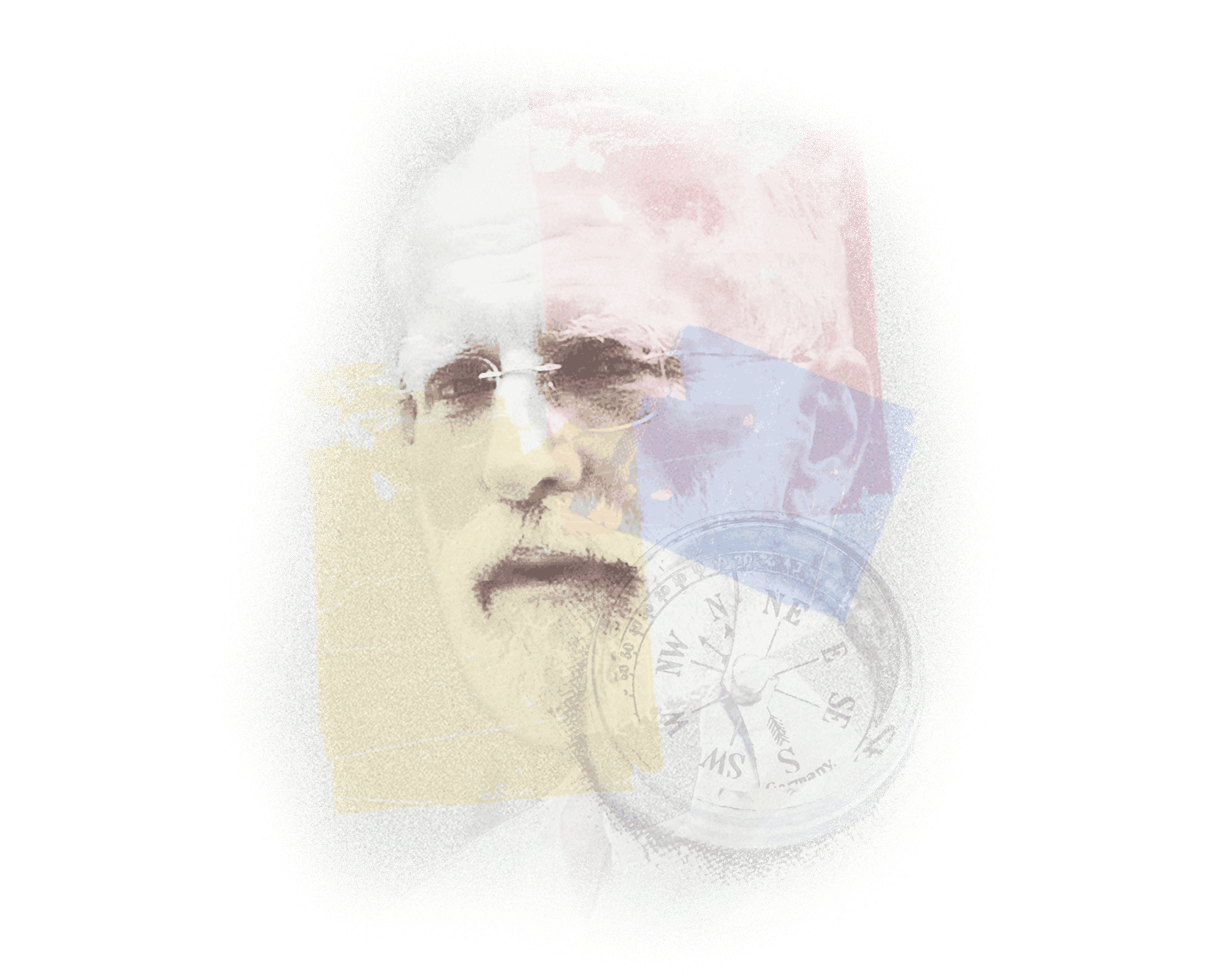
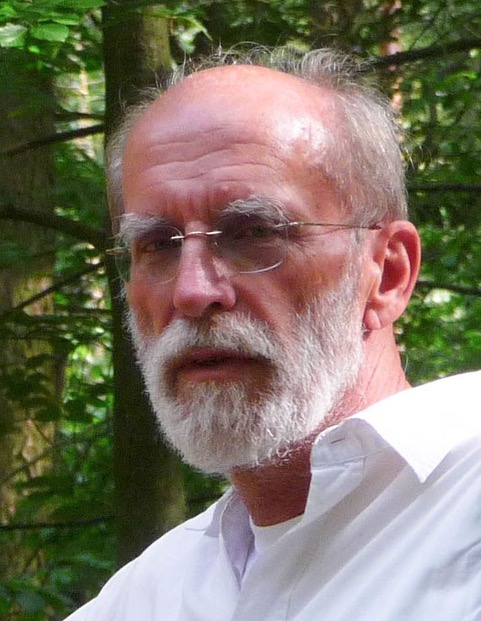
On the occasion of the 125th anniversary of Friedrich Nietzsche’s death on August 25, we spoke with two of the most internationally renowned Nietzsche scholars, Andreas Urs Sommer and Werner Stegmaier. While the conversation with Sommer focused primarily on Nietzsche’s life, our discussion with Stegmaier centered on Nietzsche’s thinking, its relevance today, and Stegmaier’s own philosophy of orientation. What are Nietzsche’s central insights – and to what extent can they help us find our way in the present? What does his concept of “nihilism” mean? And what are the political implications of his philosophy?
Translated by Reinhard Müller.
A New Nietzsche Biography
In Conversation with Andreas Urs Sommer
A New Nietzsche Biography
In Conversation with Andreas Urs Sommer
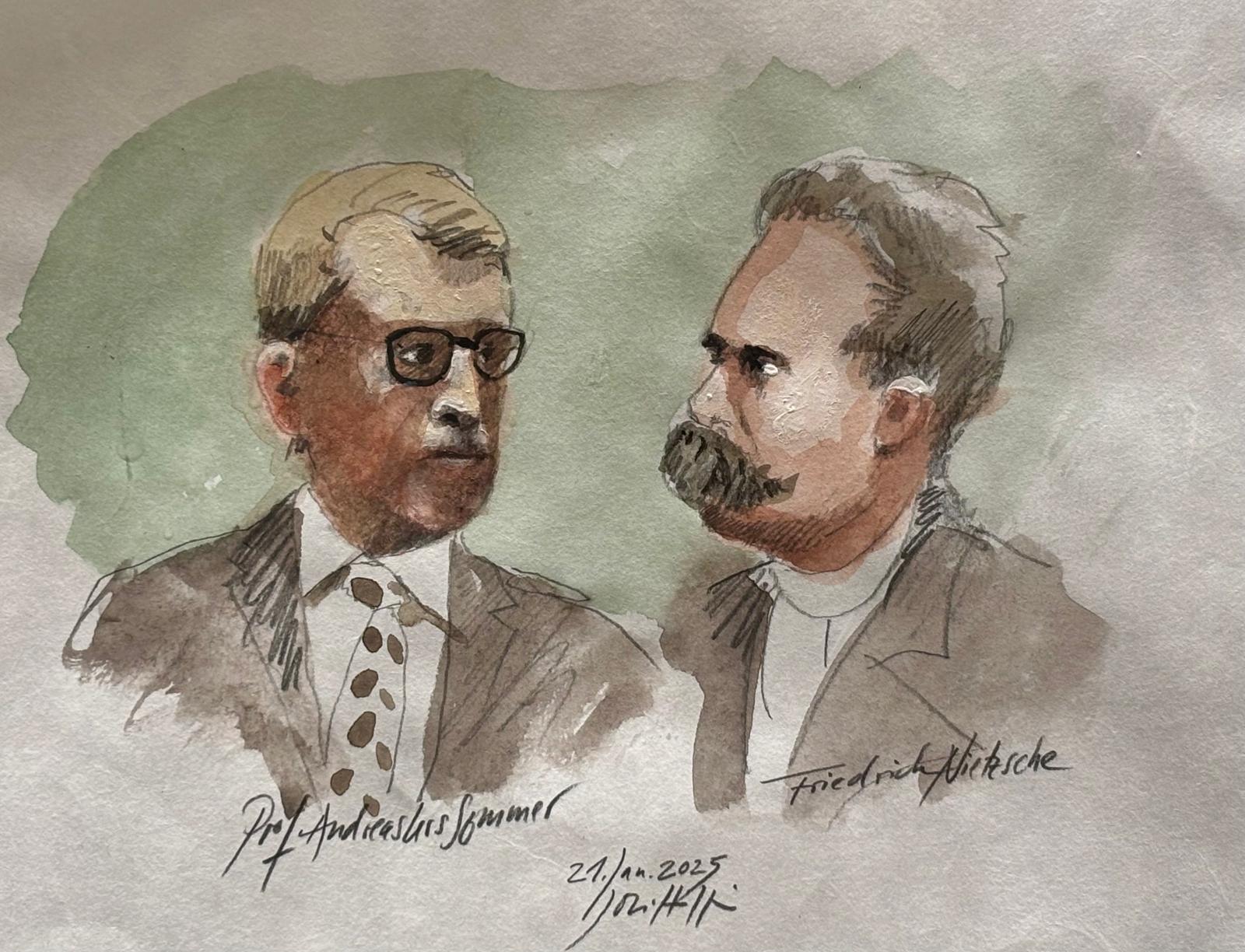

The philosopher Friedrich Nietzsche died 125 years ago, on August 25, 1900. We are taking this important date as an opportunity to publish interviews with two of the most internationally renowned Nietzsche researchers, Andreas Urs Sommer and Werner Stegmaier, around this year's anniversary of his birth on October 15, 1844. Freiburg philosophy professor Sommer is currently working on an extensive biography of the thinker, which is why the conversation with him focused in particular on his life; the conversation with his colleague from Greifswald, which focuses primarily on Nietzsche's thinking, will follow shortly (link). It will soon become apparent that the two cannot be separated. Among other things, we asked the expert about Nietzsche's character, his sexuality and if he lived what he proclaimed.
Why Are Many People No Longer Committed to Democracy!
Individualism as a Political and Social Threat in Tocqueville and Nietzsche — but also as an Opportunity
Why Are Many People No Longer Committed to Democracy!
Individualism as a Political and Social Threat in Tocqueville and Nietzsche — but also as an Opportunity
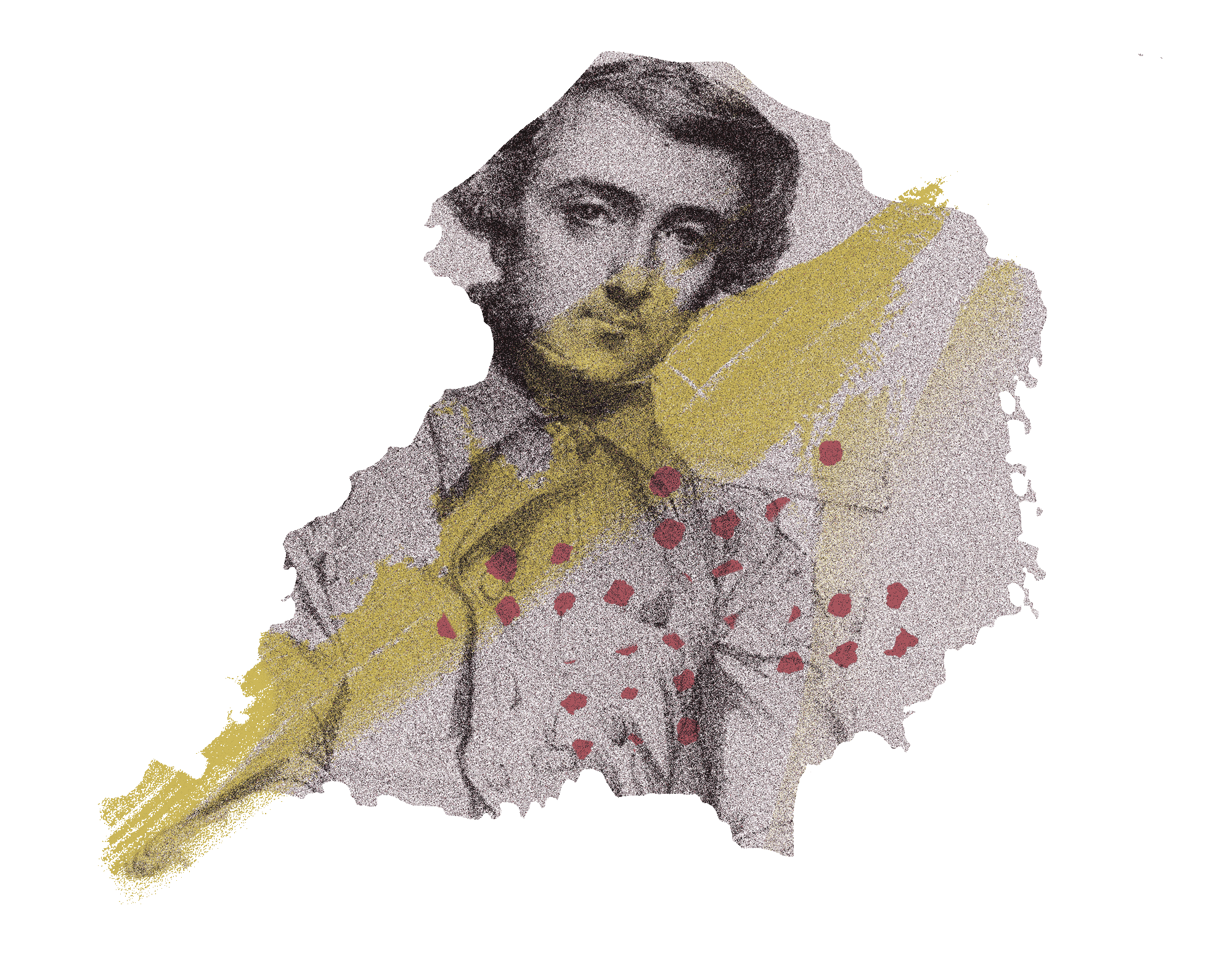

Individualism, even egoism, is frowned upon in all political, religious and social camps. They are attributed to liberalism and capitalism. Such people are not committed to others, are not involved politically or for the environment. They also do not respect a common understanding of the world and therefore behave irresponsibly. The Nietzschean is not impressed by such verdicts. She dances — not only!
Dionysus Without Eros
Was Nietzsche an Incel?
Dionysus Without Eros
Was Nietzsche an Incel?


It is well known that Nietzsche had a hard time with women. His sexual orientation and activity are still riddled with mystery and speculation today. Time and again, this question inspired artists of both genders to create provocatively mocking representations. Can he possibly be described as an “incel”? As an involuntary bachelor, in the spirit of today's debate about the misogynistic “incel movement”? Christian Saehrendt explores this question and tries to shed light on Nietzsche's complicated relationship with the “second sex.”
Can AI Give Birth to a Dancing Star?
Of Sparrows, Cannons and Decoys
Can AI Give Birth to a Dancing Star?
Of Sparrows, Cannons and Decoys
.jpg)
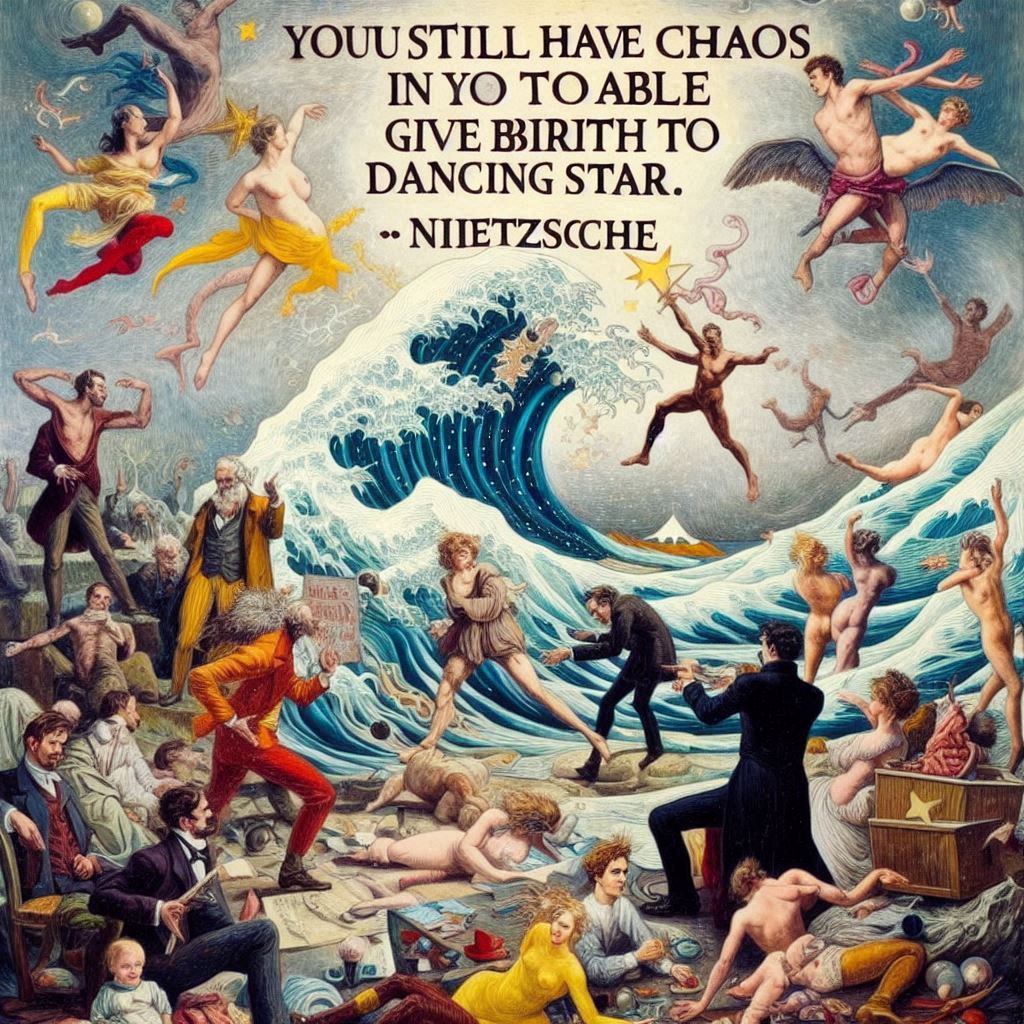
Like a year ago (link), our author Paul Stephan is also adding a commentary to this year's “dialogue” (link) with ChatGPT on the current state of thedevelopment of “artificial intelligence.” His assessment is somewhat more sober — but he does not want to be denied his fundamental optimism in technology. He also wants to avoid pessimism and naive hype, which is obviously being fueled right now to ensure that billions of dollars invested in AI are amortized.
We had various AI tools generate the images for this article at the following prompt: “Please give me a picture of the aphorism 'You still have to have chaos in yourself to be able to give birth to a dancing star' by Nietzsche,” one of ChatGPT's “favorite quotes” by the philosopher from Thus Spoke Zarathustra (link). The article image is from Microsoft AI.
In Dialogue with Nietzsche
AI, Philosophy and the Search for Authenticity
In Dialogue with Nietzsche
AI, Philosophy and the Search for Authenticity
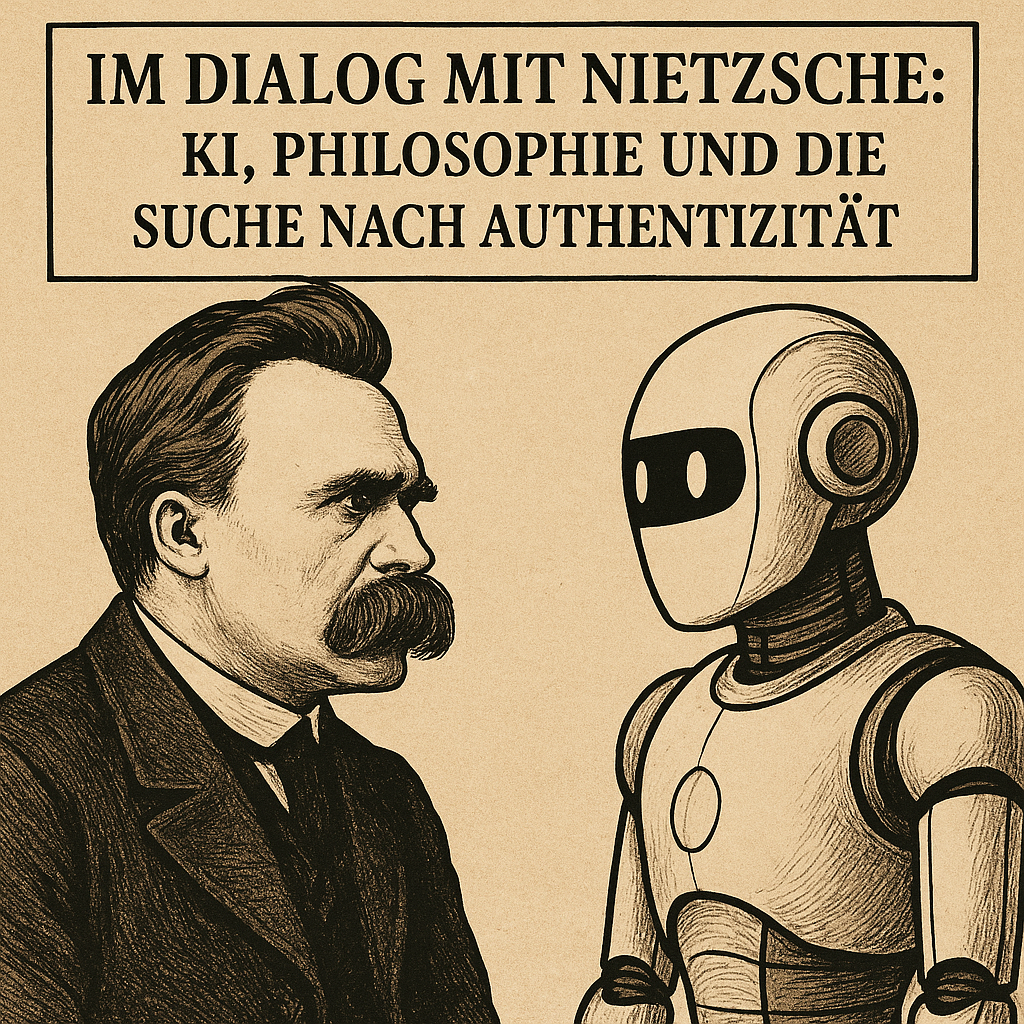

A year ago, our author Paul Stephan conducted a small “dialogue” on the 124th anniversary of Nietzsche's death with ChatGPT to see to what extent the much-hyped program is suitable for discussing complex philosophical questions (link). Paul Stephan now fed it, for the 125th, with some of the same, partly changed questions. Has it improved? Judge for yourself.
What follows, is a very abbreviated excerpt of the conversation. The full commented “dialogue” can be found here [link].
The article image was created by ChatGPT itself when asked to generate a picture of this chat. The other pictures were created again by the software DeepAI based on the prompt: “A picture of Friedrich Nietzsche with a quote by him.”
Read also our author's philosophical commentary on this “talk” (Link).
Note: A lot of the weirdness of this encounter is lost in the subsequent automated translation. Thus, it's also a part of this experiment on the “philosophical capabilities” of AI. Check the original if you want to get everything.
Mythomaniacs in Lean Years
About Klaus Kinski and Werner Herzog
Mythomaniacs in Lean Years
Über Klaus Kinski und Werner Herzog
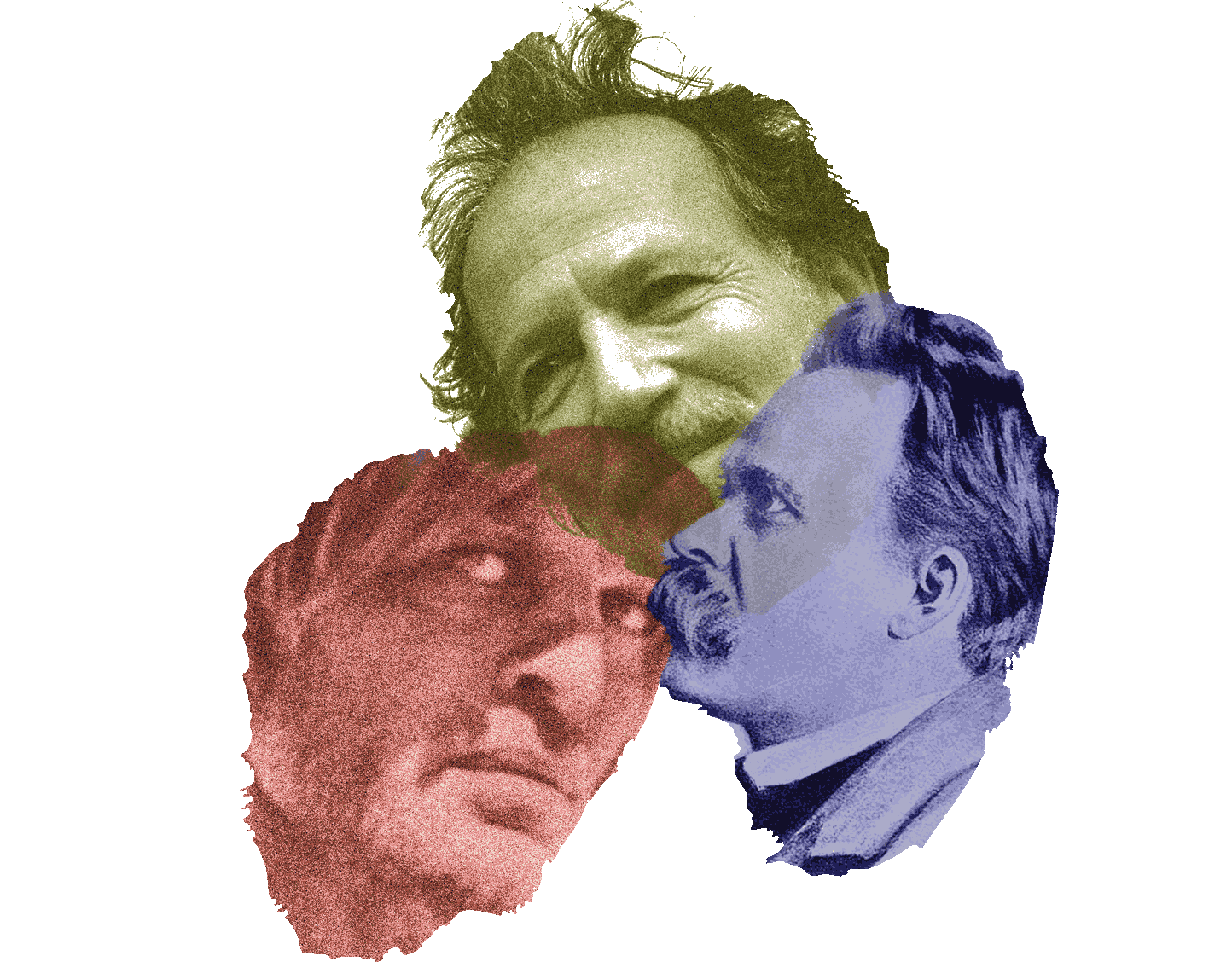

Werner Herzog (born 1942), described as a “mythomaniac” by Linus Wörffel, and Klaus Kinski (1926—1991) are among the leading figures of post-war German cinema. In the 70s and 80s, the filmmaker and the actor shot five feature films that are among the classics of the medium's history. They are hymns to tragic heroism, in which the spirit of Nietzsche can easily be recognized. From “Build Your Cities on Vesuvius! “will “Build opera houses in the rainforest! ”.
Taylor Swift — Superwoman or Last Man?
A Nietzschean Critique of the Most Successful Pop Star of Our Time
Taylor Swift — Superwoman or Last Man?
A Nietzschean Critique of the Most Successful Pop Star of Our Time


Taylor Swift is one of the most important “idols” of our time. Reason enough for our regular authors Henry Holland, Paul Stephan and Estella Walter to pick up on the Nietzschean “hammer” and get to grips with the hype a bit: Does Swift deserve the cult around her that goes down to philosophy? Is it grossly overrated? And what explains the discrepancy between appearance and reality, spectacle and life?
You can watch the entire unabridged conversation on the Halcyonic Association for Radical Philosophy YouTube channel (link).
“Choose the right time to die!”
Nietzsche's Ethics of “Free Death” in the Context of Current Debates About Suicide
A Conversation with Filmmaker Lou Wildemann
“Choose the right time to die!”
Nietzsche's Ethics of “Free Death” in the Context of Current Debates About Suicide. A Conversation with Filmmaker Lou Wildemann


Lou Wildemann is a cultural scientist and filmmaker from Leipzig. your current feature film project, MALA, deals with the suicide of a young resident of Nietzsche City. Paul Stephan discussed this provocative project and the topic of suicide in general with her: Why is it still taboo today? Should we talk more about this? What role can Nietzsche's reflections, who repeatedly thought about this topic, play in this? What does suicide mean in an increasingly violent neoliberal society?
“Music, your advocate”
Nietzsche and the Liberating Power of Melody
“Music, your advocate”
Nietzsche and the Liberating Power of Melody

After Christian Saehrendt took a primarily biographical look at Nietzsche's relationship to music on this blog in June last year (link), Paul Stephan focuses in this article on Nietzsche's content statements about music and comes to a somewhat different conclusion: For Nietzsche, music has a liberating power through its subjectivating power. It affirms our sense of self and inspires us to resist repressive norms and morals. However, not all music can do that. With late Nietzsche, this is no longer Richard Wagner's opera, but Georges Bizet's opera carmen. Our author recognizes a similar attitude in Sartre's novel The disgust and in black popular music, which is not about comfort or grief, but affirmation and overcoming.
On Dubious Paths ...
An Outline of Nietzsche's Concept of Wandering
On Dubious Paths ...
An Outline of Nietzsche's Concept of Wandering

Perhaps it is Nietzsche's main philosophical achievement that he described thinking as a process that happens in person. For him, reflection is a cooperative tension of body and mind. The mind is grounded in the nervous cosmopolitanism of the body. Nietzsche's conversion of Christianity: The flesh becomes word. This shows thinking in gestures. The following is intended to provide a sketch which indicates the main types of these reflexive gestures. This is intended to illustrate what it means when Nietzsche repeatedly describes himself as a wanderer. An intellectual tour that leads from standing and sitting as basic modes of traditional philosophy to walking, (out) wandering and halcyonic flying as Nietzsche's alternative modes of liberated thought and life.
Fleeing the State: Kafka and Nietzsche’s Human
Or: Becoming-woman after Deleuze & Guattari
Fleeing the State: Kafka and Nietzsche’s Human
Or: Becoming-woman after Deleuze & Guattari

Kafka and Nietzsche are united by their confrontation with the state and bureaucracy. Deleuze & Guattari, whose works are based on both, develop an apolitical response to the fatal political situation, namely transformations after Kafka, an expansion of themselves to Nietzsche, which can be understood as escape lines from a patronizing society.
Caught in the Crossfire of the Culture Wars, There Stands Nietzsche
Comparing Two Current Perspectives
Caught in the Crossfire of the Culture Wars, There Stands Nietzsche
Comparing Two Current Perspectives

It is well known that Nietzsche's history of influence has been read and absorbed across all political camps. But what about our present tense? Paul Stephan examines the writings of two authors who are about the same age as himself, in their mid/late 30s, and whose perspectives on Nietzsche could hardly be more different: While French journalist and YouTuber Julien Rochedy declares Nietzsche a pioneer of a right-wing cultural struggle, the German philosopher and political scientist Karsten Schubert attacks him for a left-wing identity politics. Both positions do not really convince our authors; rather, they are entirely within the framework of the prevailing simulation of politics as a cultural struggle, which would need to be countered by focusing on the really pressing life problems of contemporary humanity.
“The Most Noble Adversary”
Daniel Tutt and Henry Holland in Dialogue
“The Most Noble Adversary”
Daniel Tutt and Henry Holland in Dialogue


After two previous contributions to Nietzsche in the Anglosphere For this blog, Henry Holland interviewed American thinker Daniel Tutt about his perspective on Nietzsche as the most important antagonist of the left. The discussion included Huey Newton, leader of the Black Panthers in the 1970s, and what his “parasitic” way of reading Nietzsche prompted him to read. An unedited and unabridged version of this interview, in original English, can be heard and watched on Tutt's YouTube channel (link).
A Day in the Life of Nietzsche's Future
Report on the Conference Nietzsche's Futures in Weimar
A Day in the Life of Nietzsche's Future
Report on the Conference Nietzsche's Futures in Weimar

From October 7 to 11, 2024, the event organized by the Klassik Stiftung Weimar took place in Weimar Nietzsche's futures. Global Conference on the Futures of Nietzsche instead of. Our regular author Paul Stephan was on site on the first day and gives an insight into the current state of academic discussions about Nietzsche. His question: What is the future of Nietzsche academic research when viewed from the perspective of Nietzsche's own radical understanding of the future?
Look, I'm Teaching You the Transhumanist
Friedrich Nietzsche as a Personal Trainer of Extropianism
Look, I'm Teaching You the Transhumanist
Friedrich Nietzsche as a Personal Trainer of Extropianism


After Natalie Schulte reported on the echo of Nietzsche's “superman” idea in the start-up scene last week (Link), Swiss art scholar Jörg Scheller is dedicating this week to her continued existence in extropianism, a subtype of transhumanism that aims to artificially accelerate human evolution on both individual and genre levels using modern technology. The physical law of “entropy,” according to which there is a tendency in closed systems to equalize all energy differences until a state of equilibrium has been established — a state of complete cooling in terms of the universe — is opposed by the proponents of this flow with the principle of “extropy,” the increasing vitality of a system.
“A Gods’ Table for Divine Dice Throws and Dice Players”
Nietzsche's Superman Visits the Start-Up Scene
“A Gods’ Table for Divine Dice Throws and Dice Players”
Nietzsche's Superman Visits the Start-Up Scene

Nietzsche's superman is dead. Hardly anyone can do anything with this obscure idea anymore. You'd think so. And yet, in the current startup environment, you encounter numerous set pieces from Zarathustra's promise. What is it all about? — On the occasion of Nietzsche's 180th birthday, Natalie Schulte dedicates herself to this peculiar continuation of one of the philosopher's best-known concepts. A plea for taking a closer look at Nietzsche's idea despite its past and present misinterpretations.
Editor's note: We have translated longer English quotations into German in the footnotes ourselves.
Nietzsche and Ukraine
A Conversation with Vitalii Mudrakov
Nietzsche and Ukraine
A Conversation with Vitalii Mudrakov


Vitalii Mudrakov is one of Ukraine's leading Nietzsche experts. Due to the war, he and his family currently live in Germany. Paul Stephan talked to him in detail about some aspects of the rich Ukrainian reception of Nietzsche in the context of the country's independent cultural history, which has often been ignored. It shows that Nietzsche's liberal thinking repeatedly inspired central protagonists of Ukrainian culture in their struggle for an independent nation free from Habsburg, Tsarist or Soviet foreign rule — and today again the struggle for their own self-assertion in the face of the Russian invasion.
Цю статтю перекладено українською мовою. Переклад можна знайти тут.
“Je suis Nietzsche!”
A Dialogue about Bataille, Freedom, the Economy of waste, Ecology and War
“Je suis Nietzsche!”
A Dialogue about Bataille, Freedom, the Economy of waste, Ecology and War


Paul Stephan talked to Jenny Kellner and Hans-Martin Schönherr-Mann about the interpretation of one of the most important Nietzsche interpreters of the 20th century: Georges Bataille (1897—1962). The French writer, sociologist and philosopher defended the ambiguity of Nietzsche's philosophy against its National Socialist appropriation and thus became a central source of postmodernism. Based on Dionysian mythology, he wanted to develop a new concept of sovereignty that transcends the traditional understanding of responsible subjectivity, and criticized modern capitalist rationality in the name of an “economy of waste.” With all this, he provides important impulses for a better understanding of our present tense.
“Poland is Not Yet Lost”
Germany's Neighboring Country as a Political Utopia in Nietzsche's Posthumous Writings
“Poland is Not Yet Lost”
Germany's Neighboring Country as a Political Utopia in Nietzsche's Posthumous Writings

The late Nietzsche repeatedly imagines himself as a descendant of Polish nobles. It is not just a personal whim, but also says something about Nietzsche's philosophical positioning: For him, Poland is a kind of “anti-nation,” a people of “big individuals” — and last but not least, the Polish noble republic is the political utopia of a radical democratic community, which, precisely in its failure, corresponds to his idea of “aristocratic radicalism.” Paul Stephan goes in this Long Read explores the deeper meaning of this topic in Nietzsche and questions his transfiguration of the old Rzeczpospolita: From a political point of view, this is not as desirable a model as Nietzsche suggests. Jean-Jacques Rousseau continues to lead in this regard Considerations on the Government of Poland from 1772.
Menke Fascinates.
Is Liberation Fascination?
Menke Fascinates.
Is Liberation Fascination?


In his recently published study Theory of Liberation [Theorie der Befreiung]Frankfurt philosopher Christoph Menke describes liberation as “fascination,” as pleasurable desubjectization and dedication. He refers decisively to Nietzsche — but for him, “fascination” means bewitching, entanglement in lack of freedom and resentment. Can the mystical power of fascination really set us free — or is it not rather Nietzsche's right and liberation means above all self-empowerment and autonomy, whereas the fascinated sacrifice means submission, not least to a fascist leader?