September 17, 2026 9:54 PM
September 17, 2026 5:11 AM
September 17, 2026 2:19 AM
September 16, 2026 3:14 PM
August 25, 2026 8:13 PM
Paul Stephan
Weder Deutschland noch gar Europa insgesamt kann sich ja realistisch nach dem Zweiten Weltkrieg offen gegen die USA stellen. Aber würdest du in der Ostpolitik von Brandt bis Schröder nicht wesentlich den Versuch sehen, sich unabhängiger von den USA zu machen - was logischerweise eine Annäherung an die SU bzw. Russland impliziert?
Zu 1:
Ja, FW 356 hatte ich im Blick bei meiner Paraphrase von Nietzsches Grundposition zu Nordamerika. Wobei man schon den gesamten Aphorismus lesen muss. Wenn man den einen Satz rausnimmt, erscheint er ja wie ein Lob des totalen Schauspielertums, doch eigentlich will Nietzsche davor ja genau warnen: https://www.nietzschesource.org/eKGWB/FW-356
(Der Satz irritiert aber, weil er so lobend klingt ... Offensichtlich will sich Nietzsche da nicht so genau festlegen.)
Zu 2:
Ja, so kann man's sehen.
Zu 3:
Ein individualistischer Nietzsche à la Walter Kaufmann scheint auch mir sehr gut zu den USA zu passen und erfreut sich dort ja auch großer Beliebtheit!
nietzsche-und-nordamerika
August 21, 2026 11:16 PM
Zoppy
Here to dive into discussions, share thoughts, and learn something new throughout the journey.
I'm interested in learning from different perspectives and contributing whenever I can. Happy to hear different experiences and connecting with others.
That's my website-<a href="https://casino-minimum-deposit.ca">casino-minimum-deposit</a>
https://casino-minimum-deposit.ca
July 28, 2026 3:35 PM
mma
Einer der spannensten Beiträge. Besten Dank. Ein paar Gedanken dazu: Zunächst: "Die Vorstellung von einem vereinten Europa, das sich mit Russland oder sogar China gegen die USA verbündet, lag etwa dem Ansatz der deutschen Sozialdemokratie von Willy Brandt bis Gerhard Schröder zu Grunde, die Beziehung zum ‚Osten‘ zu normalisieren..." Das ist Quatsch. Die Behauptung, die SPD habe ein europäisch-russisch-chinesisches Bündnis gegen die USA angestrebt, ist eine ahistorische Fehlinterpretation. Richtig ist: Die SPD setzte über Jahrzehnte hinweg auf die Idee “Wandel durch Handel” und wirtschaftliche Verflechtung mit Autokratien, um Frieden zu sichern. Dies geschah jedoch immer unter dem Schutzschirm des transatlantischen Bündnisses und der NATO, niemals als Versuch, ein Gegenbündnis zu den USA zu schmieden.
1. Die Stelle “FW 356 Inwiefern es in Europa immer „künstlerischer“ zugehn wird.” Beschreibt die USA auch anders als nur als Ort eines hektischen Betriebs.
“Aber es giebt umgekehrte Zeitalter, die eigentlich demokratischen, wo man diesen Glauben mehr und mehr verlernt und ein gewisser kecker Glaube und Gesichtspunkt des Gegentheils in den Vordergrund tritt, jener Athener-Glaube, der in der Epoche des Perikles zuerst bemerkt wird, jener Amerikaner-Glaube von heute, der immer mehr auch Europäer-Glaube werden will: wo der Einzelne überzeugt ist, ungefähr Alles zu können, ungefähr jeder Rolle gewachsen zu sein, wo Jeder mit sich versucht, improvisirt, neu versucht, mit Lust versucht, wo alle Natur aufhört und Kunst wird...”
2. Im Vergleich zu den mörderischen totalitären Ideologien Europa sim 20 Jahrhundert wirkte der von Nietzsche kritisierte „Amerikanismus“ (Konsum, ruhelose Erwerbsarbeit, Demokratie) plötzlich unschuldiger und bewahrenswerter.
Nietzsches Ideal des „freien Geistes“, der sich gegen jede staatliche Gleichschaltung wehrt, passte perfekt zum amerikanischen Konzept der individuellen Freiheit. Nietzsches schärfste Angriffe gelten der kollektiven „Herdenmentalität“ – die sich im europäischen Faschismus und Stalinismus grausam entladen hatte.
3. Sein Ethos des freien Geistes hätte den Liberalismus der USA im 20. und 21. Jahrhundert hochgehalten. Er hätte das US-amerikanische System für seine Fähigkeit bewundert, radikale Ausnahmetalente und Pioniere (seine freien Geister) zu ermöglichen. Gleichzeitig hätte er den „Amerikanismus“ kritisiert, wenn diese Vortrefflichkeit nur in wirtschaftlichem Reichtum und nicht in geistiger, philosophischer Tiefe mündet.
nietzsche-und-nordamerika
July 27, 2026 7:36 PM
Strong163
[url=https://gzzbmepc.com]Apuisezek[/url] <a href='https://nzqntjnili.com'>Iasusem</a> https://aaqxidivhs.com
July 27, 2026 7:56 AM
Health4295
[url=https://gzzbmepc.com]Ogutagk[/url] <a href='https://nzqntjnili.com'>Evreeisid</a> https://aaqxidivhs.com
July 14, 2026 3:49 PM
Rickyamamn
Долой надоевшие блокировки РКН — реально появился инструмент !
Встречайте Xray VPN — реально не просто очередной впн , а высокотехнологичный многослойный щит, созданный специально для российских реалий .
В его основе зашит алгоритм фрагментации , который вводит в заблуждение любой «умный» фильтр РКН — и провайдер видит лишь обычный HTTPS-трафик .
Что это даёт на практике?
✅ Игнорирование всех видов региональных запретов .
✅ Снятие лимитов — стримьте без потерь .
✅ Работа там, где разрешены только «одобренные» сайты — госучреждения перестают быть преградой .
✅ Доступ к любому контенту из любой точки — YouTube, Telegram, Netflix, Discord, Spotify — открывается мгновенно даже при замедлении от провайдера .
При этом — никто не узнает, что вы заходите — никаких логов .
Пинг — на высоте — прямым магистралям вы получаете минимальную задержку для игр.
Почему именно XrayNet, а не друг
June 23, 2026 1:30 AM
Anya179Ka
Hello folks!
I came across a 179 interesting platform that I think you should explore.
This site is packed with a lot of useful information that you might find helpful.
It has everything you could possibly need, so be sure to give it a visit!
[url=https://liveforbball.com/basketball-much-more-than-a-game]https://liveforbball.com/basketball-much-more-than-a-game[/url]
And don't forget, everyone, — one at all times can inside this publication locate responses to your most tangled inquiries. We made an effort — present all of the information in the most very accessible manner.
June 20, 2026 7:04 PM
Redaktion
Ihnen gefallen unsere Inhalte und Sie wünschen sich mehr professionelle Übersetzungen unserer Artikel ins Englische?
Dann unterstützen Sie unsere Crowdfundingkampagne! Bis zum 10. 7. 2026 sammeln wir Spenden zur Verbesserung unserer englischen Übersetzungen. Wir bieten Ihnen im Gegenzug einige phantastische Prämien. Und alle Spenden werden von der Aventis-Stiftung VERDOPPELT: www.startnext.com/nietzsche-poparts
***
You like our content and would like to see more professional translations of our articles into English?
Then please support our crowdfunding campaign! We are collecting donations until July 10, 2026, to improve our English translations. In return, we are offering a broad range of fantastic rewards. Moreover, all donations will be DOUBLED by the Aventis Foundation: https://www.startnext.com/en/nietzsche-poparts?lang=en
nietzsche-als-populist
June 20, 2026 6:03 PM
Redaktion
Ihnen gefallen unsere Inhalte und Sie wünschen sich mehr professionelle Übersetzungen unserer Artikel ins Englische?
Dann unterstützen Sie unsere Crowdfundingkampagne! Bis zum 10. 7. 2026 sammeln wir Spenden zur Verbesserung unserer englischen Übersetzungen. Wir bieten Ihnen im Gegenzug einige phantastische Prämien. Und alle Spenden werden von der Aventis-Stiftung VERDOPPELT: www.startnext.com/nietzsche-poparts
***
You like our content and would like to see more professional translations of our articles into English?
Then please support our crowdfunding campaign! We are collecting donations until July 10, 2026, to improve our English translations. In return, we are offering a broad range of fantastic rewards. Moreover, all donations will be DOUBLED by the Aventis Foundation: https://www.startnext.com/en/nietzsche-poparts?lang=en
nietzsche-als-populist
June 20, 2026 6:03 PM
Redaktion
Ihnen gefallen unsere Inhalte und Sie wünschen sich mehr professionelle Übersetzungen unserer Artikel ins Englische?
Dann unterstützen Sie unsere Crowdfundingkampagne! Bis zum 10. 7. 2026 sammeln wir Spenden zur Verbesserung unserer englischen Übersetzungen. Wir bieten Ihnen im Gegenzug einige phantastische Prämien. Und alle Spenden werden von der Aventis-Stiftung VERDOPPELT: www.startnext.com/nietzsche-poparts
***
You like our content and would like to see more professional translations of our articles into English?
Then please support our crowdfunding campaign! We are collecting donations until July 10, 2026, to improve our English translations. In return, we are offering a broad range of fantastic rewards. Moreover, all donations will be DOUBLED by the Aventis Foundation: https://www.startnext.com/en/nietzsche-poparts?lang=en
thatsachen-und-eine-verdammt-gute-interpretation
June 20, 2026 5:45 PM
Redaktion
Ihnen gefallen unsere Inhalte und Sie wünschen sich mehr professionelle Übersetzungen unserer Artikel ins Englische?
Dann unterstützen Sie unsere Crowdfundingkampagne! Bis zum 10. 7. 2026 sammeln wir Spenden zur Verbesserung unserer englischen Übersetzungen. Wir bieten Ihnen im Gegenzug einige phantastische Prämien. Und alle Spenden werden von der Aventis-Stiftung VERDOPPELT: www.startnext.com/nietzsche-poparts
***
You like our content and would like to see more professional translations of our articles into English?
Then please support our crowdfunding campaign! We are collecting donations until July 10, 2026, to improve our English translations. In return, we are offering a broad range of fantastic rewards. Moreover, all donations will be DOUBLED by the Aventis Foundation: https://www.startnext.com/en/nietzsche-poparts?lang=en
nietzsche-als-populist
June 20, 2026 5:45 PM
Redaktion
Ihnen gefallen unsere Inhalte und Sie wünschen sich mehr professionelle Übersetzungen unserer Artikel ins Englische?
Dann unterstützen Sie unsere Crowdfundingkampagne! Bis zum 10. 7. 2026 sammeln wir Spenden zur Verbesserung unserer englischen Übersetzungen. Wir bieten Ihnen im Gegenzug einige phantastische Prämien. Und alle Spenden werden von der Aventis-Stiftung VERDOPPELT: www.startnext.com/nietzsche-poparts
***
You like our content and would like to see more professional translations of our articles into English?
Then please support our crowdfunding campaign! We are collecting donations until July 10, 2026, to improve our English translations. In return, we are offering a broad range of fantastic rewards. Moreover, all donations will be DOUBLED by the Aventis Foundation: https://www.startnext.com/en/nietzsche-poparts?lang=en
thatsachen-und-eine-verdammt-gute-interpretation
June 20, 2026 5:45 PM
Redaktion
Ihnen gefallen unsere Inhalte und Sie wünschen sich mehr professionelle Übersetzungen unserer Artikel ins Englische?
Dann unterstützen Sie unsere Crowdfundingkampagne! Bis zum 10. 7. 2026 sammeln wir Spenden zur Verbesserung unserer englischen Übersetzungen. Wir bieten Ihnen im Gegenzug einige phantastische Prämien. Und alle Spenden werden von der Aventis-Stiftung VERDOPPELT: www.startnext.com/nietzsche-poparts
***
You like our content and would like to see more professional translations of our articles into English?
Then please support our crowdfunding campaign! We are collecting donations until July 10, 2026, to improve our English translations. In return, we are offering a broad range of fantastic rewards. Moreover, all donations will be DOUBLED by the Aventis Foundation: https://www.startnext.com/en/nietzsche-poparts?lang=en
franzchen-heisst-sie-franzchen-heisst-sie
June 20, 2026 5:45 PM
Redaktion
Ihnen gefallen unsere Inhalte und Sie wünschen sich mehr professionelle Übersetzungen unserer Artikel ins Englische?
Dann unterstützen Sie unsere Crowdfundingkampagne! Bis zum 10. 7. 2026 sammeln wir Spenden zur Verbesserung unserer englischen Übersetzungen. Wir bieten Ihnen im Gegenzug einige phantastische Prämien. Und alle Spenden werden von der Aventis-Stiftung VERDOPPELT: www.startnext.com/nietzsche-poparts
***
You like our content and would like to see more professional translations of our articles into English?
Then please support our crowdfunding campaign! We are collecting donations until July 10, 2026, to improve our English translations. In return, we are offering a broad range of fantastic rewards. Moreover, all donations will be DOUBLED by the Aventis Foundation: https://www.startnext.com/en/nietzsche-poparts?lang=en
natalie-schulte-nietzsches-mutter
June 20, 2026 5:45 PM
Redaktion
Ihnen gefallen unsere Inhalte und Sie wünschen sich mehr professionelle Übersetzungen unserer Artikel ins Englische?
Dann unterstützen Sie unsere Crowdfundingkampagne! Bis zum 10. 7. 2026 sammeln wir Spenden zur Verbesserung unserer englischen Übersetzungen. Wir bieten Ihnen im Gegenzug einige phantastische Prämien. Und alle Spenden werden von der Aventis-Stiftung VERDOPPELT: www.startnext.com/nietzsche-poparts
***
You like our content and would like to see more professional translations of our articles into English?
Then please support our crowdfunding campaign! We are collecting donations until July 10, 2026, to improve our English translations. In return, we are offering a broad range of fantastic rewards. Moreover, all donations will be DOUBLED by the Aventis Foundation: https://www.startnext.com/en/nietzsche-poparts?lang=en
tatsachen-gibt-es-nicht-nur-interpretationen
June 20, 2026 5:45 PM
Redaktion
Ihnen gefallen unsere Inhalte und Sie wünschen sich mehr professionelle Übersetzungen unserer Artikel ins Englische?
Dann unterstützen Sie unsere Crowdfundingkampagne! Bis zum 10. 7. 2026 sammeln wir Spenden zur Verbesserung unserer englischen Übersetzungen. Wir bieten Ihnen im Gegenzug einige phantastische Prämien. Und alle Spenden werden von der Aventis-Stiftung VERDOPPELT: www.startnext.com/nietzsche-poparts
***
You like our content and would like to see more professional translations of our articles into English?
Then please support our crowdfunding campaign! We are collecting donations until July 10, 2026, to improve our English translations. In return, we are offering a broad range of fantastic rewards. Moreover, all donations will be DOUBLED by the Aventis Foundation: https://www.startnext.com/en/nietzsche-poparts?lang=en
nietzsche-und-der-nationalismus
June 20, 2026 5:43 PM
Redaktion
Ihnen gefallen unsere Inhalte und Sie wünschen sich mehr professionelle Übersetzungen unserer Artikel ins Englische?
Dann unterstützen Sie unsere Crowdfundingkampagne! Bis zum 10. 7. 2026 sammeln wir Spenden zur Verbesserung unserer englischen Übersetzungen. Wir bieten Ihnen im Gegenzug einige phantastische Prämien. Und alle Spenden werden von der Aventis-Stiftung VERDOPPELT: www.startnext.com/nietzsche-poparts
***
You like our content and would like to see more professional translations of our articles into English?
Then please support our crowdfunding campaign! We are collecting donations until July 10, 2026, to improve our English translations. In return, we are offering a broad range of fantastic rewards. Moreover, all donations will be DOUBLED by the Aventis Foundation: https://www.startnext.com/en/nietzsche-poparts?lang=en
der-postmoderne-wald
June 20, 2026 5:42 PM
Redaktion
Ihnen gefallen unsere Inhalte und Sie wünschen sich mehr professionelle Übersetzungen unserer Artikel ins Englische?
Dann unterstützen Sie unsere Crowdfundingkampagne! Bis zum 10. 7. 2026 sammeln wir Spenden zur Verbesserung unserer englischen Übersetzungen. Wir bieten Ihnen im Gegenzug einige phantastische Prämien. Und alle Spenden werden von der Aventis-Stiftung VERDOPPELT: www.startnext.com/nietzsche-poparts
***
You like our content and would like to see more professional translations of our articles into English?
Then please support our crowdfunding campaign! We are collecting donations until July 10, 2026, to improve our English translations. In return, we are offering a broad range of fantastic rewards. Moreover, all donations will be DOUBLED by the Aventis Foundation: https://www.startnext.com/en/nietzsche-poparts?lang=en
revolt-slaves-revolt
June 19, 2026 1:32 PM
Zoppy
Just here to join conversations, share experiences, and learn something new along the way.
I like learning from different perspectives and sharing my input when it's helpful. Interested in hearing fresh thoughts and meeting like-minded people.
There's my website:<a href="https://automisto24.com.ua/">AutoMisto24</a>
https://automisto24.com.ua/
May 20, 2026 1:12 PM
mma
Dürfte ich diese Beschreibungen ergänzen um eine Kritik am linken Populismus? zb so
Linkspopulismus :
Die Haupt-Trennlinie: Unten / Oben Die arbeitende Basis kämpft gegen die mächtige Spitze.
Das primäre Feindbild: Die Wirtschaftselite Großkapital, Banken, Konzerne, Milliardäre und Lobbyisten.
Das Kernproblem: Ausbeutung & Ungerechtigkeit Ungerechte Vermögensverteilung, Armut und die unkontrollierte Macht der Märkte.
Nietzsche würde das als Ausdruck einer Herdenmoral verstehen, die sich in einer Neid-Moral ausdrückt, die sich selbst aber als sozialgerechte Betonung der Gleichheit verklärt. Gleichheit, Gleichheit über alles. Hinzukommt eine Diffamierung erfolgreicher Freiheit und eine Auslagerung für die Schuld an der eigenen Mittelmäßigkeit auf die Umstände. Diese Auslagerung funktioniert als Hyperempathie (vgl. Gehlens "Hypermoral"): Das Universelle wird mit den Maßstäben einer WG verstanden und das Private abstrus mit der Brille des Universellen betrachtet. Resultat: Empöre dich universell und lass so das Naheliegende liegen.
Weiter gedacht: Vielleicht liegt der wesentliche Unterschied in der Zukunft darin, dass sich die einen auf die populistischen Unterschiede stützen, um ihre fehlenden oder wilden Ambitionen zu verklären, während die anderen versuchen, ihre Ambitionen in ein Lernen zu kanalisieren, das sich um feinere, genauere Unterscheidungen bemüht, die offen sind für Optimierungen. Populismus wäre für diese noch eine Art des Sprachgebrauchs, der die Populisten populistisch aufs Kreuz legt, für eine gelegentliche Selbststimulation sorgt und mitunter pädagogische Erkenntnisgewinne in mundgerechte Stücke zerlegt.
nietzsche-als-populist
April 5, 2026 3:48 AM
Julian Techne
Clarification: “soul” and “spirit” were imprecise choices. Better framed as Selbstüberwindung vs Selbstauflösung. Nietzsche requires the mastery and transfiguration of chaos, not its dissolution. The rest stands.
asthetik-des-rauschs
April 5, 2026 2:55 AM
Julian Techne
Nitsch: Self-Mastery or Primitive Regression?
The analysis of Nitsch’s Rausch (intoxication) raises a fundamental philosophical issue: the common tendency to label Nitsch as Nietzsche’s heir. In reality, his work represents a parodic inversion of Nietzschean thought.
Nietzsche’s philosophy centers on Self-Mastery. The Übermensch is the one who masters his own chaos through discipline, not the one who drowns in it. Nitsch’s theater is not a Dionysian ascent, but a primitive regression. It functions as a secularized 'Black Mass'—an 'Inverted Order' closer to the transgressive fanaticism of Frankism than to any actual Nietzschean nobility.
The core misunderstanding lies in confusing Nietzsche’s tragic cynicism with Nitsch’s gratuitous violence. While Nietzsche used the 'hammer' of critique to clear space for a new temple, Nitsch uses it merely for the thrill of the crash.
A more authentic Nietzschean evolution is found in the work of Hermann Hesse, who understood that 'becoming oneself' requires an internal dissection of the soul, not a ritualized butchery of the flesh. Promoting Nitsch’s sadism as 'liberation' is a regressive trap: it promises freedom but delivers only an involution of the spirit. Let’s choose between the butchery of the body and the mastery of the self.
“'I have done that,' says my memory. 'I could not have done that,' says my pride, and remains inexorable. Eventually—the memory yields.” (F. Nietzsche, Beyond Good and Evil, 68).
asthetik-des-rauschs
April 4, 2026 10:25 PM
Julian Techne
Hi Emma, I stumbled on this article as a 'fan' of Nietzsche, thrilled by how the recent rise of AI brings a new, urgent light to the revolutionary reflections of the author. Even though I’m joining the conversation a bit late, your take on the cyborg as an 'architect of thought' feels more relevant than ever.
It’s a brilliant way to frame Zarathustra in the digital age, seeing technical integration as an 'action as affirmation' of the Will to Power. However, as the AI landscape becomes more complex, I find the concept of 'technology' here a bit too broad, which makes it hard to see where the actual autonomy lies.
If we look at this through Foucault’s 'technologies of the self,' we have to ask: is the Nietzschean cyborg actually designing their own 'bridge,' or are they just walking on one pre-built by Big Tech?
Without specifying what kind of technology we’re talking about—open-source empowerment vs. opaque, proprietary algorithms—there’s a thin line between being an Overhuman and just being a 'hyper-disciplined' subject. If you don't own the 'source code' of your own enhancements, can you really be the architect of your own mind?
nietzsche-und-cyborgs
April 2, 2026 11:14 AM
Redaktion
Hier kurz die Auflösung von unserem Jubiläumsquiz.
Damit Sie nochmal mitraten können, erst noch einmal die Fragen:
1) Als welches Tier taucht Nietzsche in einem avantgardistischen Roman des 20. Jahrhunderts auf?
Adler, Schlange, Maulwurf oder Ameisenbär?
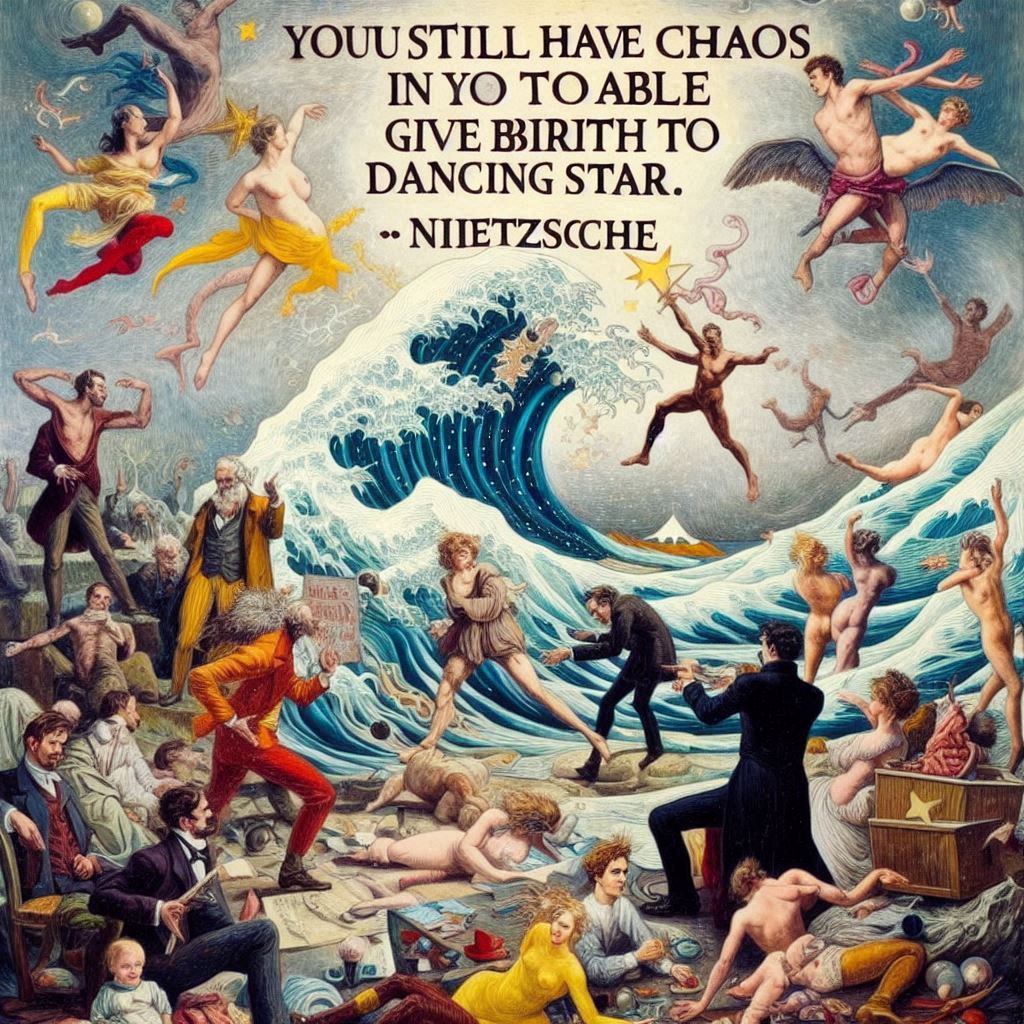
2) Wie heißt es in Nietzsches bekanntem Aphorismus "Man muss noch Chaos in sich haben, um einen … gebären zu können"?
Einen "singenden Einfall", "ordentlichen Witz", "lachenden Gedanken" oder "tanzenden Stern"?
3) In welchem Ort umarmte Nietzsche angeblich ein Tier?
Turin, Venedig, Sils Maria oder Naumburg?
4) Welche der folgenden Personen bezog sich in ihren Werken immer wieder auf Nietzsche oder war gar Nietzscheaner?
Theodor W. Adorno, Ernst Jünger, Gustav Landauer und/oder Emma Goldman?
***
Und hier die Auflösung:
1) Gefragt war nach dem Ameisenbär, als den der französische Schriftsteller und Philosoph Pierre Klossowski Nietzsche in seinem experimentellen Roman "Der Baphomet" auftreten lässt. Henry Holland schrieb darüber: https://www.nietzsche-poparts.ch/posts/friede-mit-dem-islam-2
Das war aber auch wirklich eine schwere Frage, da hätte "nicht einmal" ChatGPT weiterhelfen können, dass völlig im Dunkeln tappte, als wir sie ihm spaßeshalber stellten.
2) Easy-peasy, wir meinten natürlich den berühmten "tanzenden Stern".
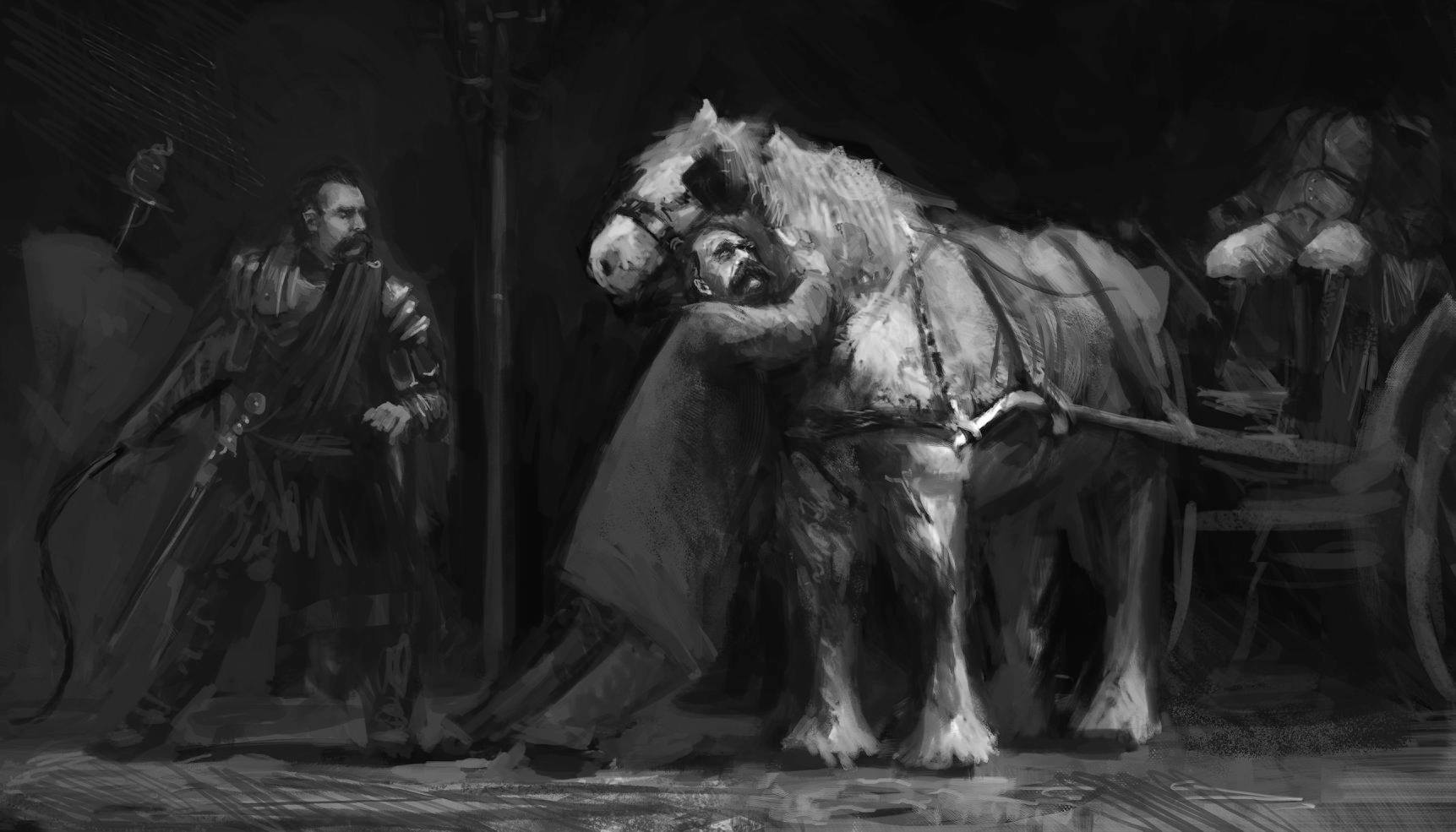
3) Auch einfach, gefragt war nach dem "Turiner Pferd", das aber wahrscheinlich eine Legende ist.
4) Eine kleine Fangfrage, mit der wir auf die Breite von Nietzsches Wirkung hinweisen wollten. Richtig waren nämlich alle Antworten (man hätte also alle vier ankreuzen müssen).
Hätten Sie es gewusst?
Wir gratulieren herzlich den Gewinnern und danken allen, die teilgenommen haben, für ihr hilfreiches Feedback, das wir bei unserer künftigen Arbeit berücksichtigen werden.
Sollen wir in Zukunft häufiger solche Sonderaktionen machen?
zwei-jahre-durch-walder-von-symbolen
April 1, 2026 3:14 PM
Volker Homann
FW 384 höchst interessant, vor allem im zentralen Aspekt von „Zen“.
jean-baptiste-botul-ein-vergessener-nietzscheaner-aus-frankreich
April 1, 2026 1:16 PM
Jean-Jacques Saint-Preux
Es ist wirklich wunderbar, dass Botul endlich auch auf der anderen Seite des Rheins entdeckt wird. Merci, merci, merci!
Sein Name ist ein Omen: Er war der Ioannes Baptista der westrheinischen Nietzsche-Rezeption - er hat quasi die Post-Postmoderne schon vorweggenommen in seinen Schriften. Und sein unpubliziertes Nachlass birgt noch so viele Schätze!
Ich prophezeie, dass man in 100 Jahren Foucault, Deleuze, Bataille etc. in die Fußnoten verbannt haben und nur noch über Botuls Taxographie sprechen wird (oder eigentlich müsste man im Sinne des doppelten Futur ja schreiben "sprechen werden wird").
Herzlichste Grüße aus Frankreich!
jean-baptiste-botul-ein-vergessener-nietzscheaner-aus-frankreich
April 1, 2026 12:38 PM
Paul Stephan
Danke für diesen wunderbaren Beitrag, Elmar! Endlich wird mit all den Lügen, Halbwahrheiten und sensationalistischen Übertreibungen, die in Sachen Botul im Netz kursieren, aufgeräumt und einmal nüchtern die wissenschaftliche Wahrheit präsentiert!
Was mir bei meinen eigenen Recherchen besonders gefiel, ist Botuls radikale Interpretation von FW 384 (auch so eine ignorierte terra incognita des Nietzscheversums) im Sinne eines "future utopique" und sein darauf aufbauendes Konzept einer "Zukunft der Zukunft", das ihn zu dem wunderbaren Bonmot bringt: "Man wird eigentlich nicht posthum geboren, sondern in der Zukunft der Zukunft beerdigt". - Hoffentlich wird er durch mutige Vorreiter wie dich nun wenigstens posthum geboren! Man sollte ganze Lehrstühle dem Studium Botuls widmen - dieser Beitrag ist hoffentlich die Initialzündung dazu!
jean-baptiste-botul-ein-vergessener-nietzscheaner-aus-frankreich
March 18, 2026 6:17 PM
Paul Stephan
Ich kann dem Grundimpuls von Marquard durchaus etwas abgewinnen. Er verweist auf die Grenzen einer unbeschränkten Veränderungsphilosophie. Als Antidot zu überzogenen Revolutionierungsprogrammen ist das schon brauchbar.
Aber das Problem ist doch, dass man damit ja prinzipiell alle möglichen Missstände legitimieren kann. "Es ist doch ganz gut so, wie es ist - zeig doch erstmal, wie's anders geht." Eigentlich fasst Marquard doch genau diese Spießermaxime in klüger klingende Worte.
Lebenspraktisch gesehen hat das ja seine Berechtigung - aber ist das wirklich gute Philosophie? Die großen Kämpfer um Veränderung, auch die Vorkämpfer unserer jetzigen bürgerlichen Gesellschaft, haben sich davon jedenfalls nicht beirren lassen. Das ist eigentlich eine säkularisierte Neufassung der Idee des Gottesgnadentums (woran auch dezidiert reaktionäre Ideologen wie Yarvin Curtis offen anknüpfen) - ich dachte, damit wäre nach Rousseau, Locke und Montesquieu, ja sogar Thomas Müntzer, wie Nietzsche mit dem Hammer unterwegs, mal langsam Schluss.
Wie ja auch Sartre betont, gibt es Freiheit nur in Situation und nie im luftleeren Raum. Aber das Wunderbare ist doch, dass wir die Chance haben, als Einzelne und kollektiv, diese nicht einfach hinzunehmen wie die Tiere, sondern daraus etwas zu machen. In diesem heroischen Bruch mit dem "Bestehenden" zeigt sich für mich - und da sehe mich ganz einig mit Nietzsche - erst das genuin Menschliche, davor fängt es noch gar nicht an.
Und ja, politisch gewendet ist das auch genau die Ideologie der CDU (und großer Teile der SPD leider; die heutige SPD hätte den "Schlamm auf dem Thron" nicht beseitigt, sondern ihn flehentlich ums Bleiben gebeten, um ja nicht die Stabilität zu gefährden). Der Ungeist der "Raute", der dafür gesorgt hat, dass wir 16 Jahre lang in einer quasi geschichtslosen Zeit gelebt haben - oder es jedenfalls meinten. Das Versprechen der "Raute": Die Zeit stillstellen. So wenig Veränderung wie möglich. Aus diesem Traum erwacht der deutsche Michel jetzt langsam, reibt sich die Augen und stellt fest, dass unterdessen die Welt eine ganz andere geworden ist. Da wäre mir etwas weniger "Marquardismus" schon sehr recht. (Dass die Veränderungsideologien, die es so gibt, ihrerseits ihre Probleme haben, möchte ich damit nicht bestreiten.)
abgrund-und-ermoglichung-die-schwebe-der-kontingenz
March 18, 2026 9:12 AM
mma
Man tut Marquart Unrecht, wenn man ihn zu einem bloßen CDU-Meisterdenker erklärt. (Und was ist überhaupt gegen ein gutes CDU-Programm zu sagen?!?) Genauer wäre es wohl, wenn man ihm im Sinne von Rortys „ironischen Liberalen“ als einem ironischen Konservativen deutet. Philosophisch anspruchsvoll ist seine Ironie als Erdung in der Existenz im Sinne von Sterblichkeit. Lebenskürze verlangt Üblichkeit:
„Zukunft braucht Herkunft: „die Wahl, die ich bin“ (Sartre), wird „getragen“ durch die Nichtwahl, die ich bin; und diese ist für uns stets so sehr das meiste, dass es – wegen unserer Lebenskürze – auch unsere Begründungskapazitäten übersteigt: Darum muss man, wenn man […] überhaupt begründen will, nicht die Nichtwahl begründen, sondern die Wahl (die Veränderung): die Beweislast hat der Veränderer.“ (Abschied vom Prinzipiellen. Abschnitt 3)
Daher plädiert Marquart für eine minimalinvasive Philosophie. Halte das für sehr heilsam gegenüber den philosophierenden Konzepten von Woke und MAGA, die den absoluten Elan von Jugendbewegungen besitzen.
(Kritisieren könnte man ihm von der Deutung der Existenz her. Arendts Idee der „Geburtlichkeit“ und auch Bachelards Begriff von seelisch-poetischer „Getragenheit“ könnten da weiterführen. Sloterdijks „Sphären“ hat das wunderbar ausgeführt.)
abgrund-und-ermoglichung-die-schwebe-der-kontingenz
March 13, 2026 11:27 AM
Yaman Van De Meer
An die Schriftstellerin Estella Walter,
ich habe Ihren Artikel über Nietzsche gelesen und bewundere Ihren Mut, ihn als Chamäleon zu beschreiben und zu versuchen, den Willen zur Macht mit dem Marxismus in Verbindung zu bringen. Aber lassen Sie mich offen sein: Ich hatte das Gefühl, dass Sie versuchen, einer Philosophie, die keine Grenzen kennt, einen ideologischen Rahmen aufzuzwingen. Nietzsche war weder Marxist noch Faschist im simplen Sinne, wie wir ihn heute verstehen; vielmehr suchte er nach etwas Tieferem: der Menschheit, die sich selbst, ihrer eigenen Existenz und den Realitäten von Schmerz und Tod stellt.
Der Wille zur Macht, den Sie als „Rechtfertigung für Hierarchie“ beschrieben haben, ist nicht bloß eine politische Waffe, sondern der Puls des Lebens selbst, der Faden der Kreativität, der Transzendenz und der Rebellion gegen alle Zwänge. Glauben Sie nicht, dass Ihre Lesart ihn auf einen engen Blickwinkel beschränkt hat, als hätten Sie Nietzsches Geist in einen marxistischen Käfig gesperrt?
Ich frage mich: Können wir über Nietzsche außerhalb des Kontextes von Ideologien sprechen und ihn als Aufruf zum Verständnis lesen, nicht als vorgefertigtes Werkzeug der Kritik? Vielleicht liegt die Antwort in der Art und Weise, wie Sie ihn verstehen, und vielleicht in Nietzsches eigener Art, sich jeder Kategorisierung zu entziehen.
Ich würde mich freuen, wenn Sie Ihre Gedanken mit mir teilen würden, nicht als vorsitzender Richter, sondern als Mitdenker, der in den Schriften dieses rätselhaften Philosophen nach der Wahrheit sucht.
Yaman Van De Meer
das-chamaleon-nietzsche
March 12, 2026 9:47 PM
Paul Stephan
Ja, das sind berechtigte Fragen! Ich interpretiere Blochs Begriff im Sinne einer kämpferischen, engagierten Welthaltung. Es geht dabei nicht darum "militant" im wörtlichen Sinne zu sein. Er will damit hervorheben, dass wahrhafter Optimismus nicht bedeutet, dazusitzen und darauf zu warten, dass schon alles von selbst gut wird, sondern mit Vertrauen in die eigenen Fähigkeiten die objektiven Möglichkeiten der jeweiligen Situation zu erkunden und daraus das Beste zu machen. Und der Begriff impliziert auch, tapfer an die positive Veränderbarkeit der Situation zu glauben und sich nicht von den (scheinbaren) Verzweiflungsgründen kleinmachen zu lassen. Kurz: Es einfach mal mit wachem Blick zu versuchen. "Das Hoffen zu lernen" in diesem Sinne scheint mir heute wichtiger denn je - und Nietzsche kommt dem in den zitierten Passagen sehr nahe.
Mit "Reich" verstehe ich hier die bestehende nihilistische Weltordnung, das "Empire" aus dem Gedicht von Arthur O’Shaughnessy. Aber ich habe das bewusst so offen und vage formuliert, da es mir hier nicht um politische Agitation geht. Ich möchte einfach an den radikalen revolutionären Anspruch von Nietzsches Philosophie erinnern. Man darf sich selbst vorstellen, was für einen selbst das "Reich" ist und welcher "neue Leib" an seine Stelle treten soll. Nietzsche ging es um die Überwindung der "Sklavenmoral" und eine kulturelle Renaissance. Heute ist das Problem vielleicht eher eine eskalierende Pseudo-"Herrenmoral", dass selbst und gerade die "Elite" keinerlei Glauben an irgendetwas mehr hat: "Nun lebten sie frech in kurzen Lüsten, und über den Tag hin warfen sie kaum noch Ziele."
Ich sehe die Gegenwart sehr zwiespältig. Einerseits genießen wir im "Westen" ein ungeahntes Maß an individueller Freiheit, andererseits scheint in der Welt gerade einiges aus dem Ruder zu laufen - was auch diese Freiheitsspielräume nicht unberührt lässt. Wie können wir angesichts der zunehmenden Absurdität der Welt Haltung bewahren und an unseren Idealen festhalten? Wie konnte es überhaupt soweit kommen und was wäre nötig, um wieder "auf Kurs" zu kommen? Es gibt einiges für uns zu tun als Philosophen ...
Ich werde mal ganz konkret: Vor allem in den USA scheint die "Elite" seit zwei Jahren völlig in eine Parallelwelt geflüchtet zu haben. Was ist der Glaube, der hier noch irgendetwas motiviert?`Es geht offensichtlich nur noch darum, permanent irgendwelche Erregungszustände herbeizuführen, Signifikanten ohne Signifikat, bzw. sich selbst in solche zu versetzen. Der Depression als Einsicht in die Vergeblichkeit des eigenen Tuns muss immer wieder neu ausgewichen werden. Das erinnert alles an einen Ertrinkenden, der nochmal wild um sich schlägt vorm Absaufen. An die Stelle realen Wirtschaftens tritt Ökonomiesimulation, das Völkerrecht erweist sich mehr und mehr als "Fetzen Papier", ganze Nationen werden zu Freiwild erklärt ... Seit Beginn des Jahres scheint der Wahnsinn völlig ausgebrochen zu sein. Das deutet alles darauf hin, dass da der Kollaps eines "Reiches" kurz bevorsteht - die entscheidende Frage wird sein, was an seine Stelle treten wird; ein neuer Anfang oder ein weiteres Absinken in den Strudel?
Wir müssen da vor allem aufpassen, selbst auf Kurs zu bleiben!
zwei-jahre-durch-walder-von-symbolen
March 12, 2026 5:53 PM
mma
Da stellen sich mir die Fragen, was das Militante in der „militanter Optimismus“ (Ernst Bloch) sein soll, was unter "dieses Reich zu Fall zu bringen" zu verstehen ist, was es bedeuten soll "einen neuen Leib aus seinen Ruinen hervortreten zu lassen"? - Klingt mir alles zu sozialistisch. Ansonsten: Spannendes erreicht und die Illustrationen von Linus Rupp sind erstklassig.
zwei-jahre-durch-walder-von-symbolen
March 4, 2026 2:27 PM
mma
Starker Text. Dachte bei der Frage, wer bereit wäre, sich wehrlos zu machen, spontan an Marcel Mauss: Die Gabe. Dort das Phänomens eines Wettkampfes in der Bewirtung von Gästen, Großzügigkeit rührt zur Großzügigkeit. Ansonsten: Europa als Art eines postimperialen Imperiums, was durch seine - bisherige - Immunität gegen Realpolitik und seine sympathische Vielfalt von Lebenskünsten ein Charisma der Wehrlosigkeit weckt. Europa könnte die Großmacht der Posthistorie werden, wenn es stolzer auf seine Errungenschaften wäre und sich nicht in moralische Regulation als Kompensation fehlender Stärke verausgaben würde.
frieden-aus-starke
March 3, 2026 5:05 PM
Theodor Schild
Ausgezeichneter Beitrag!
frieden-aus-starke
February 11, 2026 2:02 PM
Henry Holland
Tobias Kurpat geht dieses Thema gekönnt essayistisch um: Die Figur der Barbaren wird umgekreist, statt mit systematischer Schwere festgenagelt. Dabei wird aber die linke Nietzsche-Rezeption zu einfältig dargestellt, die Linken schon wieder zur wahren Helden der Geschichte stilisiert: Und eine wirklich Auseinandersetzung mit den Rechten—bis hin zu einem Zitieren dieser Rechten, kann man sich das vorstellen?—, aus dem Weg gegangen.
Anders als von Kurpat dargestellt, wenige aber wirkungsvolle Vertreter eine linke Nietzsche-Rezeption haben Nietzsche sehr wohl "beim Wort" genommen: Und auch zurecht, bezüglich mehreren Schlüsselthemen. Hier ist vor allem der Historiker Domenico Losurdo zu nennen. Mit Statements von vielen Zeitzeugen, welche die erste Generation der Nietzsche-Rezeption mitgestaltet haben (u.a. viele Linken, z.B. Franz Mehring—im Spartakus/Anti-Kriegs-Flüger im 1. Weltkrieg), zeigt Losurdo überzeugend auf, dass 1. viele Nietzsches Zeitgenossen Nietzsche "beim Wort" nahmen; 2. dass in einigen Schlüsselthemen, N. wollte beim Wort genommen werden: Oder mindestens v. den Kreisen, die ihm Nahe stand. Hier z.B. ist George Brandes (in der englischen Übersetzung zitiert) reagirend auf Nietzsches tatkräftige Unterstützung der real existierende Sklaverei u. Eugenikpolitik: "For Nietzsche, the size of progress must be measured by the sacrifices it
requires. Hygiene that keeps alive millions of the weak and useless, of
people that would be better dead, does not for him constitute real pro
gress." (Zitiert nach Losurdo, engl. Spracheausgabe, 2022).
Wo Kurpat und ich eventuell übereinstimmen würden (hoffe ich zumindest), ist die Realisierung, unabhängig der Verwerflichkeit einiger Nietzsches politischen Überzeugungen, dass es fatal wäre, ab jetzt seine Erbe nur den Neuen Rechten zu überlassen. Aber um in dieser Sache etwas zu erreichen, muss man wegkommen von der intellektuellen (und manchmal auch ethischen) Überlegenheitsgeste, welche die Linke so sehr auf die eigene Fahne schreiben. Es mag sein, dass die Linke in dieser Debatte durchgehend u. auch schlussendlich "im Rechten" waren und es immer noch sind: Dass wird aber die bei den neuen Rechten, oder aber auch die noch Unentschlossenen, herzlich wenig beeindrucken. In dieser psychologischen Konstellation, ist es mehr als fragwürdig was Kurpat mit dem Vorwürfen der "Pseudowissenschaftlichkeit" und des "Neoreaktionären" Seins gegen die Neuen Rechten erreichen will. z.T. Pseudowissenschaftlichkeit: Was hält dann Kurpat von den Unmengen von "Wissenschaft (?) (?)", die linkspolitischen AutorInnen derzeit in Peer-Reviewed-Journals zu wichtigen Themen wie "autoethnography", oder wie Lehrkräfte mit unterschiedl. Gender-Vorstellungen sich unterschiedlich verkleiden, veröffentlichen? Beispielsweise kann eine solche besagte Autor*in, wenn nur "gut genug", beim Peer-Review-Journal Social Sciences für nur 1800 Schweizer Frank (richtig: Achtzehnhundert)) "Article Processing Charge" veröffentlichen. Konkret über Themen wie "autoethnographic journals", denn dieser gehören zweifelsohne den "hard sciences" an, oder? (Aufgerufen 11.2.2026, https://www.mdpi.com/journal/socsci/special_issues/4DVOO1LC46
Parodie oder ein Stigmatisieren durch Ein-Wort-Beschimpfungen ("pseudowissenschaftlich") bringt Lesende auch nicht weiter, wenn es darum geht, die Nietzsche Lese-Art der Neuen Rechten tiefer zu verstehen: Und dadurch zu bekämpfen. Kurpat selbst hat das wichtige Thema der Genetik, und den Neuen Rechten Umgang damit, thematisiert: Ein Feld, wo die Eugenik immer wieder mitschwimmt. Aber statt realen Akteuren der neuen Rechten hierzu zu zitieren, z.B. Costin Vlad Alamariu, wessen 2023-Buch Selective Breeding and the Birth of Philosophy mitten in das Genetik-Eugenik-Feld einmarschiert, geht Kurpat auch hier eine echte Auseinandersetzung aus dem Weg. Persönlich halte ich Selective Breeding (2023) für komplett verwerflich, dennoch ehrlich (letzteres kann man nicht immer den Linken beim Umgang mit der Wissenschaft bezeichnen). Es gibt z.B. eine in Europa sozialakzeptierte Form der Eugenik (des "Selective Breeding"): Und vielleicht ist das richtig: Vielleicht soll es sie geben: Seit der massiven Ausbreitung der pränatale Diagnostik gibt es ein massives Zurückgehen von Menschen, die mit Downs Syndrome u. anderen (relative häufigen) Behinderungen geboren werden. In dieser Sache haben de Graaft et al. (2021) nachweisen können, dass die Anzahl der Menschen, die mit Trisomie 21/Downs Syndrom geboren sind, zw. 2011-2015 bei 54% (!) in Europa zurück gegangen ist: Verglichen mit der Geburtsrate, wenn es die selektive Abtreibungen nicht gegeben hätten. (de Graaf, G., Buckley, F., & Skotko, B. G. (2021). Estimation of the number of people with Down syndrome in Europe. European Journal of Human Genetics, 29(3), 402–410. https://doi.org/10.1038/s41431-020-00748-y, hier S. 403-404)
Frage, zuletzt: Wird gegen Unsafe House geschossen, weil House geg. HGB Leipig schießt? Seinen You-Tube-Kanal bezeugt das
der-ubermensch-im-hamsterrad
January 22, 2026 10:58 AM
Henry Holland
Hats off to you, Dr. Dann, for your ability to still be moved! Back here amongst German-speaking intelligentsia, on the fringes of the Nietzsche Studies establishment, the gift of reacting emotionally to religious experience & thought is eyed with more than suspicion. Which again begs the question: for a diehard secularist, what moved Nietzsche to spend so much of his brilliant prose on this polemical (indeed often abusive) dialogue with religious people & movements, e.g., Islam & Christianity? And I love hearing the trouble-stirring Antichrist (aka F. Nietzsche), Rudolf Steiner, & Henry Thoreau mentioned in the same breath: despite the evidence of Nietzsche reading the American transcendalists (I think more Emerson than Thoreau) this vein has hardly been mined. Finally, a riff-off Pierre Klossowski's Muslim-inflected reincarnation fiction that is centered in Part II of my essay here on POParts: if Klossowski (his 1965 novel) has N. reentering existence as an anteater, which messages, spinning Klossowski's fiction further, would Nietzsche now have for his audiences if he were to reincarnate as a tour guide in the 2020s, in Genoa or Leipzig, two of his cities of choice?
friede-mit-dem-islam
January 21, 2026 8:06 PM
Kevin Dann
Thanks Henry Holland for your humane crying out into the streets: “Come, friends, let us meet the Other without collapsing into Fear!” while walking blithely and bravely right into the messy middle where beauty and hospitality and Fear and Charity live harmoniously in the same few blocks.
You do a graceful pas de deux round the dread anti–Semitism; you do what Nietzsche would demand, what Steiner would demand, what Thoreau would demand, what Kafka would demand—you try to SEE. Having been a tour guide for a decade in the belly of that Beast Gotham, I know the drill. Only a few courageous ones can pull it off as deftly as you do here.
The neighbor, the pakora, the charity shop, the beard, the sectarian awkwardness, the red sandstone, the heat—all the indispensable elements where the future will be decided. Bravo!
friede-mit-dem-islam
January 21, 2026 12:39 PM
Olimpia
Der „Barbarin“-Gedanke zieht sich als roter Faden durch Politik, Gesellschaft, Mode und Philosophie: Er beschreibt Frauen, die sich dem System nicht durch offenen Kampf, sondern durch bewusste Verweigerung entziehen. Ihr stärkstes Werkzeug ist das stille, kompromisslose „Nein“ – ein Nein zur Selbstaufopferung, zur Dauerverfügbarkeit, zum männlichen Blick und zu den alten Regeln der Macht.
Manche Frauen treten zurück, nicht, weil sie scheitern, sondern weil sie den Preis für grenzenlose Hingabe nicht mehr akzeptieren. Auch der leise Rückzug vieler Frauen aus der Kommunalpolitik ist Teil desselben Musters – ein Nein zu Hass, Sexismus und dauerhafter Angreifbarkeit. Gleichzeitig formieren sich Frauen fraktionsübergreifend neu und verweigern traditionelle Rivalität: Sie entziehen sich damit der alten politischen Logik.
Manche, statt als dekorative Figur neben dem Machtzentrum zu funktionieren, nutzen die Kleidung und Gesten nicht zur Bestätigung des Systems, sondern zur Abgrenzung. Wenn sie den Blick senken, schweigen oder Grenzen setzen, wird dies als Provokation gelesen – nicht weil sie etwas Falsches tuen, sondern weil sie sich weigern, die gesellschaftliche Pflicht zur ständigen Lesbarkeit zu erfüllen.
Die Metapher des tief ins Gesicht gezogenen Hutes bündelt dieses Prinzip. Er ist kein Versteck, sondern ein Schutzraum: ein Entzug des Blicks und damit der Verfügungsmacht anderer. Wer ihre Augen nicht sieht, kann sie nicht einordnen. Die Frau wird unlesbar – und damit unkontrollierbar. Mode wird zur Rüstung einer Subjektwerdung, die das System provoziert, weil sie die erwartete Gefälligkeit verweigert.
Ihr Verhalten ist ein praktisches „stilles Nein“: Sie lässt sich nicht in das erwartete Skript der gefälligen, stets verfügbaren politischen Partnerin pressen. Gerade diese Verweigerung macht sie zur Barbarin unserer Zeit – zu einer Frau, die ihre eigene narrative Macht behauptet, indem sie nicht liefert, was die Öffentlichkeit von ihr verlangt.
Philosophisch ist dies ein Akt der radikalen Autonomie. Die Barbarin bricht den „Blick des Anderen“ (Sartre), beansprucht Glissants Recht auf Opazität und verkörpert eine negative Freiheit im Sinne Berlins: Freiheit von Erwartungen, von Lesbarkeit, von Verfügbarkeit. Sie hört auf, ein Bild für andere zu sein, und beginnt, eine Existenz für sich selbst zu führen.
Das „stille Nein“ der modernen Barbarin ist damit keine Flucht, sondern ein Gegenentwurf. Im Schatten der Hutkrempe sammelt sie Kraft, definiert sich neu und bildet eine Macht, die alten Strukturen gefährlich wird: die Macht jener Frau, die nichts mehr beweisen muss – und die selbst entscheidet, wann und wie sie sichtbar wird.
barbarinnen---wenn-frauen-zur-gefahr-werden
January 16, 2026 8:40 AM
Mario Beilhack
Auf den Punkt und jetzt „auf die Schiffe“ ihr Philosophen! Verlassen wir die öden Gestade der Ressentiments!
vom-leugner-uber-die-verschworungstheorie-zum-ghosting
January 16, 2026 2:19 AM
angelika schober
ein sehr interessanter und guter artikel
vom-leugner-uber-die-verschworungstheorie-zum-ghosting
December 29, 2025 9:43 PM
Paul Stephan
Ein kleines Update: Meine Tochter Charlotte Emma Luise wurde am 26. 12. geboren.
vater-sein-mit-nietzsche
December 26, 2025 6:13 PM
Waldgänger
Ein Einwand gegen den vorherigen Kommentar (mma, 3.12.2025): Wenn Philosophie nur als erbauliche Erholung von der Abnutzung durch vermeintlich fortschrittliche technokratische und kapitalistische Betriebsabläufe dient, anstatt sich mit diesen kritisch auseinanderzusetzen, verkommt sie trotz ihres tendenziell nonkonformistischen Charakters zu einer affirmativen Parteinahme für das Bestehende. In diesem Sinn, nämlich zur Aufwertung eines an sich wenig rühmlichen "Mitmachens" - man will sich eben trotz allem den Anschein geben, irgendwie rebellisch zu sein -, haben heute so manche Philosophie nötig. Sich dies einzugestehen, ist vielleicht der erste Schritt, den philosophischen Anspruch einzulösen, der ansonsten mitunter in schreiendem Gegensatz zum tatsächlich praktizierten Verhalten steht. Übrigens gibt es an Nietzsche so manches zu kritisieren, nicht aber mangelnde Selbstkritik: "Wohlan, ich hatte Wagner nötig", gesteht er sich ein und erkennt sich somit im Rückblick als einen der "Täglich-Abgenützten", denen eben Wagners Inszenierungen "eine Art Ferien für Geist, Witz und Gemüth" zu bieten hatten. Es wäre schade, wenn sich Philosophie heute auf eine vergleichbare Funktion reduzieren würde. Dass sie inzwischen ein Nischendasein führt und man sich Zeit und Ressourcen freigeschaufelt haben muss, um sich tiefgehend mit philosophischen Fragen befassen zu können, ist unbestritten. Es hilft der Philosophie, inmitten funktionalistischer Abläufe und zunehmender Trivialität des Alltags gewissermaßen zu überwintern. Wenn sie sich allerdings nicht mehr aus ihrem Versteck hervorwagt, auf gesellschaftliche Entwicklungen Einfluss nimmt und mitunter zum Stein des Anstoßes wird, hat sie ihren eigenen Anspruch verfehlt.
der-sinn-ist-gefallen-doch-ich-traume-noch
December 22, 2025 9:17 PM
Paul Stephan
Maybe Rilke's poetic vision of a "belief without chapels which silently does it wonders" could serve as an inspiration for people of Christian, Jewish, and Muslim background alike to overcome the current horrible conflicts and work jointly on a world without fanaticism: https://youtu.be/ETmwrW7L7s8?si=GS8NKHH7WCqjnMkg
(And of course one should reread Lessing's "Nathan", always!)
friede-mit-dem-islam
December 22, 2025 9:07 PM
Paul Stephan
Thank you for your response to my comment.
Well, it does not address my main points but changes the topic to the war in Gaza which I only mentioned in a side note. And it does not even give one counterargument to my point that Islam chauvinism might by *one* reason (of many) why the conflict in Palestine is so persistent.
I could now write a lot about my analysis on Gaza but this was neither the topic of my comment nor of Henry's article so I prefer not so discuss it here.
I can just repeat myself here: Jewish chauvinism is of course a problem as well and also Christian chauvinism.
friede-mit-dem-islam
December 22, 2025 6:23 PM
Ferdinand Hardekopf
Holland's brave essay, which refuses to fall into the Islamophobic trap that the Right are working so hard to ensare us in, is hardly worthy of the clichéd predjudices that Paul Stephan and mma seem desperate to reduce it too. Dressed up as liberalism, but merely doing the donkey work of the Reaction, these two commentators are obssessed with turning the conversation back to Hamas, and Heinsohn's outdated and social-darwinistic concept of the "youth bulge": although Holland doesn't even mention these two themes. Because the article is not about them. The collective Stephan invokes in his comment, "us secular non-Muslim intellectuals," does not exist with regard to Muslims in Glasgow & other places in the Global North today: the actual subject of the essay. His splinter group, German-language intellectuals who remain ethically confused & paralysed by the legacy of the Holocaust, won't fail to take the chance to mention Hamas. But fail consistently to talk publicly on the real issue impacting Muslims worldwide: the ongoing and now rebranded genocide in Gaza and the West Bank. Fascinatingly, Haaretz, Israel's oldest Hebrew & English language newspaper, has no problem speaking directly to this reality: their June 26, 2025 report: "100,000 Dead: What We Know About Gaza's True Death Toll": https://www.haaretz.com/gaza/2025-06-26/ty-article-magazine/.highlight/100-000-dead-what-we-know-about-gazas-true-death-toll/00000197-ad6b-d6b3-abf7-edfbb1e20000?fromLogin=success Hamas, by comparison, with around 16,000 still active fighters, account for a whole 0.000008 % of the world's Muslim population. And Hamas' undeniable anti-Semitism is meant to be representative for Judaism & Jewry as a whole?
Sadly, Mr. Stephan's ahistorical and anti-historical analysis of the situation goes from bad to Vance-Netanyahu-Trump-Orban alliance politics, in a dangerously naieve piece of victim blaming: "I think that one of the reasons why the Near East Conflict does not come to a close is simply that from an Islamic standpoint it's hard to accept that they must relinquish a slice of the once conquered region." Ouch. "Must relinquish a slice": have you studied the recent historical sources, Mr. Stephan? Like books by and interviews with Israeli historian Benny Morris, darling of the German pro-political Zionist "Left"? Like the interview Morris gave in the Hebrew-language edition of Haaretz on 8 January 2004, under the title ‘Survival of the Fittest’, which was reprinted in English translation in March 2004 in the New Left Review: https://newleftreview.org/issues/ii26/articles/benny-morris-on-ethnic-cleansing Morris: "What the new material shows is that there were far more Israeli acts of massacre [during the Nabka; from c. 1947] than I had previously thought. To my surprise, there were also many cases of rape. In the months of April–May 1948, units of the Haganah [the pre-state defense force that was the precursor of the IDF] were given operational orders that stated explicitly that they were to uproot the villagers, expel them and destroy the villages themselves." And with even Zionist historians acknowledging "far more Israeli acts of massacre" than previously thought, and with the "many cases of rape"-sexual violence deployed strategically to crush psychologically the non-Jewish, and 95% Muslim population - will Mr. Stephan continue to assert the obsenity that if only the "Islamically minded" would get on with doing what they "must," and hand over a slice of the territory they've lived on for centuries, that all would be well, that the thousands of settler colonialists would throw their weapons into the river or the sea, and shake hands with the grandchildren of those they massacred, expelled, and raped? And with what motivation simply "relinquish" this land, if the IDF is going to take it anyway, with its incomparably superior force of strength. If this is what Nietzschean perspectivism does to you, they should warn the young against it.
Finally: as Stephan proposes that an "inner-Muslim education campaign" is necessary, let's begin with educating the resiliently pro-genocide of Muslim populations faction. The "war" did not start in October 2023, & Netanjahu and his cabinet did not decide to execute the genocide as a retaliation for Hamas' October 2023 terrorist attack; the genocide, backed by a big majority of Israel's population, is not caused by Hamas' anti-Semitism; the 3000 murdered Palestinian civilians in the 2008-2023 period, as documented by the United Nations Office for the Coordination of Humanitarian Affairs (OCHA; https://www.ochaopt.org/data/casualties) is testament that the international community will certainly back a drawn out decimation of a Muslim population. Intellectuals, refusing to see the reality before their eyes, and in the pattern of classic, untreated neurosis, want to turn from this reality to the marginal issue of Muslim anti-Semitism. Providing useful cover. Should this go unchallenged?
friede-mit-dem-islam
December 21, 2025 3:44 AM
Paul Stephan
Dear Rafael,
thanks a lot for your enlightening remarks.
Until recently, I was totally convinced that the famous anecdote of the marriage proposal(s) were right. It is actually repeated in every biographical text you find on Nietzsche.
When I wrote my text "Who Was Nietzsche?" for his blog, I did some research on Nietzsche and Lou Salomé on my own and I was also astonished by the fact that when you just have a look at the letters of Nietzsche, Lou, and Rée - the best and most reliable source we have on this matter - very little can be said about the actual nature of Nietzsche's and Lou's relationship, not even if it was romantic at all. But I still decided to repeat the story.
I now did some more research and I have to admit that I find your concerns highly plausible. Even the standard biographer Curt Paul Janz only gives Lou's account as a source when writing about the alleged first proposal. But why is she treated as a credible source? Just read the chapter on her in Carol Diethe's great book on Nietzsche's women!
I have taken up your concerns in a footnote to our most recent article on Nietzsche and fatherhood, mentioning you: https://www.nietzsche-poparts.ch/posts/vater-sein-mit-nietzsche
So yes: We all should definitely treat the proposal story with a lot more skepticism in the future. At least I will do it and maybe revise the passage about it in my "Who Was Nietzsche?" text.
Maybe Lou is not outright lying, however. I think it's at least possible that Nietzsche just spoke about his documents plans of a "terminable marriage" to her and she interpreted it as a proposal? But this just an ad hoc idea that would need more research to back it up.
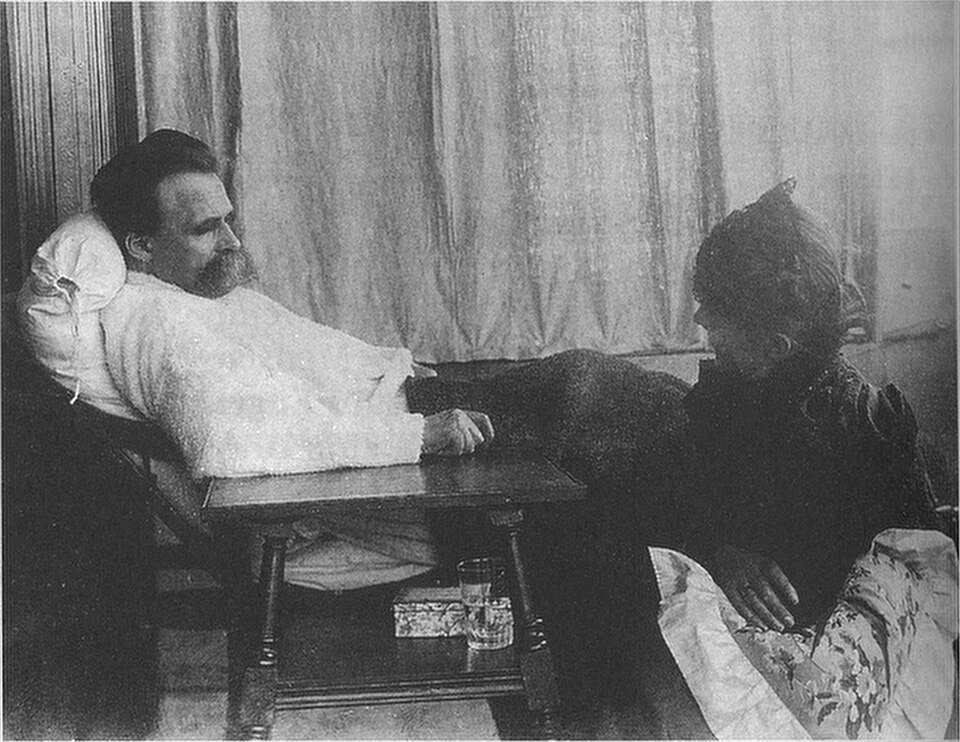
I would treat this anecdote a bit similar to the "Turin horse" event, however. Maybe, when it comes to stories like these, it's not so much about their empirical truths but about a deeper truth they transmit - maybe not so much about the empirical Nietzsche but about Nietzsche as an cultural archetype of modernity. It's obviously a modern repetition of the medieval story on Aristotle and Phyllis. The chauvinist free spirit, preaching independence and solitude, is overwhelmed and humbled by a young, intelligent woman and his own desire for love and maybe sexuality. And Nietzsche seems to present himself as a second Aristotle on the famous photograph!
The Turin horse, Lou, his illness, maybe syphilis - this all forms a modern myth, a myth of a tragic hero of individualism, overwhelmed by his bodily desires. Surely a myth according to Nietzsche's own taste. And we can choose to read it either as a tragedy or a comedy. Maybe we can find a way to indulge these orienting myths and treat them as fictions at the same time?
And I think that this myth is not that far from the actual truth. I'm not an expert on Nietzsche's biography but my current version of the Lou episode would go like this: He was looking for a young intelligent woman who would serve as his personal assistant, mainly as a reader (as is clearly document in a letter to Overbeck from that period). Then he met Lou and hoped to find this woman. Not so much a lover but a friend, helper, and maybe even student. His Tautenburg notes clearly demonstrate how inspiring this encounter with Lou was for him. But then, probably even in Tautenburg, he also developed a romantic and erotic attachment to Lou that she could not reciprocate and which made their friendship impossible in their own eyes.
But there's maybe another possibility: There's an interesting note in Lou's diary of her stay in Vienna in 1912/13 which hints into this direction - and as far as I know this is an authentic diary, not meant for publication. She recalls how her dialogues with Nietzsche touched upon sexual matters (in this case, the alleged connection between masochism and homosexuality), which led to both feeling embarrassed. (I mention it here: https://www.nietzsche-poparts.ch/posts/eine-neue-nietzsche-biographie) So maybe the reason for their break up was mainly that Nietzsche had the feeling that he had revealed too much about himself to her and felt ashamed - and she was embarrassed by Nietzsche's revelations. If this version was true, it would resonate very well with Nietzsche's later thoughts on friendship.
In any case: There's much more to be discovered!
Kind regards!
dionysos-ohne-eros
December 7, 2025 7:19 PM
Пухов Антон Олегович Кронштадт
Кронштадт
auf-bedenklichen-wegen
December 5, 2025 8:41 PM
Paula
Ein großartiger Text, der zum Nachdenken über die Stellung der Frau in der heutigen Gesellschaft anregt.
barbarinnen---wenn-frauen-zur-gefahr-werden
December 4, 2025 3:12 AM
Rafael
Nietzsche never proposed marriage to Lou von Salomé. The idea that Nietzsche did this was refuted by Rudolf Binion, who released a biography of Salomé in the 1960s. The book has been ignored by Nietzsche scholars for reasons I can't fathom, but at least it was endorsed by Walter Kaufman. Binion shows that Salomé fabricated the proposals and gave an incorrect account of her relationship with Nietzsche. She maintained, for example, that she was the one who broke off the friendship with Nietzsche, when the letters that N. sent her prove just the opposite. After Nietzsche died, she began to claim that he had proposed marriage twice. Binion also says she did the same to a man she had met in Russia prior to getting to know Nietzsche, a married Dutch pastor who introduced her to the world of religious psychology. After this man died, she started to claim he had proposed marriage to her, and offered to leave his wife for her. It is also important to point out that not only Elizabeth Nietzsche but also Ida Overbeck explicitly denied that Nietzsche had proposed anything of that kind to Salomé. I know that Elizabeth's credibility has been called into question. But 100 years later, nothing of the sort has emerged regarding the Overbecks, who didn't even like Elizabeth.
My frank opinion is that Salomé's romantic fables were accepted so eagerly because, among male scholars, they're titillating as they provide a supposedly real life encarnation of the femme fatale archetype; and among female scholars, it offers revenge against Nietzschean misogyny and, among those who love his books, facilitates making peace with him for being so wrong about them.
dionysos-ohne-eros
December 3, 2025 5:41 PM
mma
"Sie kaufen Stocks, denn Reichtum ist das Ziel."- Warum nicht?! Haben kann das Sein unterstützen. Mehr Nvidia und Bitcoin in diesem Jahr gekauft und verkauft und dann mehr Zeit und Kraft für Camus und Co. - Ein kleines System in dem System Wirtschaft, das - wie so viele großartige andere Systeme (Bildungssystem etc) dabei hilft, zb das System "Philosophie" am Laufen zu halten und bei dem man, ganz nebenbei, durch seine Steuern auf die Gewinne und Geschenke viele andere Systeme unterstützt. Die Nischen leben, dank der Systeme. Das optimierte Funktionieren ermöglicht den Entwurf von Sinn, der das Leben zeitweise und immer wieder rechtfertigt. Danke Technik, danke Fortschritt, danke Kapitalismus.
der-sinn-ist-gefallen-doch-ich-traume-noch
November 27, 2025 11:48 AM
Emma Schunack
Liebe Barbara Straka,
haben Sie vielen Dank für Ihre ausführliche Rückmeldung. Ich schätze Ihre Ergänzungen sehr.
Zu Ihrer ersten Anmerkung: In meinem Artikel beziehe ich mich auf die Friedrich-Nietzsche-Stiftung Naumburg– nicht auf die Nietzsche-Gesellschaft.
Auch bezüglich des Shops im Erdgeschoss des Nietzsche-Hauses danke ich Ihnen für die Einordnung. Da dort überwiegend Bücher erhältlich sind, habe ich ihn als „Bücherladen“ bezeichnet. Für Ihre zusätzlichen Informationen zur historischen Entwicklung des Kassenbereichs und zum heutigen Museumsshop bedanke ich mich herzlich.
Mit freundlichen Grüßen
Emma Schunack
nietzsche-und-cyborgs