#
contingency
The Postmodern Forest
How the Forest Subverts Modernity's Totalizing Claim
The Postmodern Forest
How the Forest Subverts Modernity's Totalizing Claim

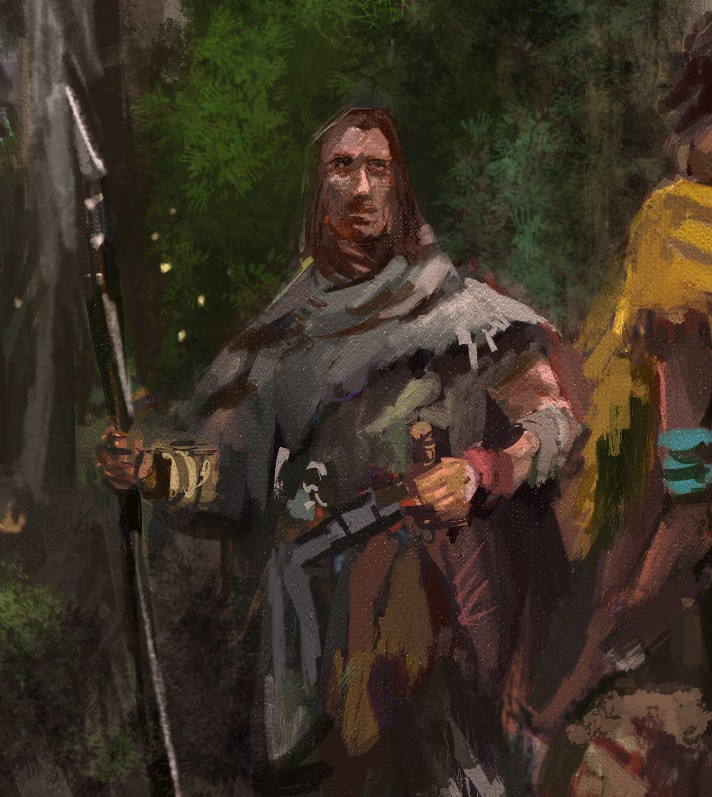
Forests are trending. And this is by no means contradictory to another, even larger trend of our time: digitalization. In this article, Mandus Craiss demonstrates that the forest is a network. Digitalization also occurs in a network-like manner; both phenomena are therefore characteristic of postmodernism.
In the first part of the article, the forest is characterized as a non-centralized and thus typically postmodern natural phenomenon. The second part defines "postmodernity" and discusses the extent to which this epochal concept is still, or once again, relevant – a discourse whose very early roots can be traced back to Nietzsche. Finally, the third part explains how the network aspect of postmodernity manifests itself and how the human-forest relationship has evolved recently.
This article is part of our special series this year "the forest as a livelihood".
On Life in Freedom
A Conversation with Jens Bonnemann about Sartre and Nietzsche
On Life in Freedom
A Conversation with Jens Bonnemann about Sartre and Nietzsche

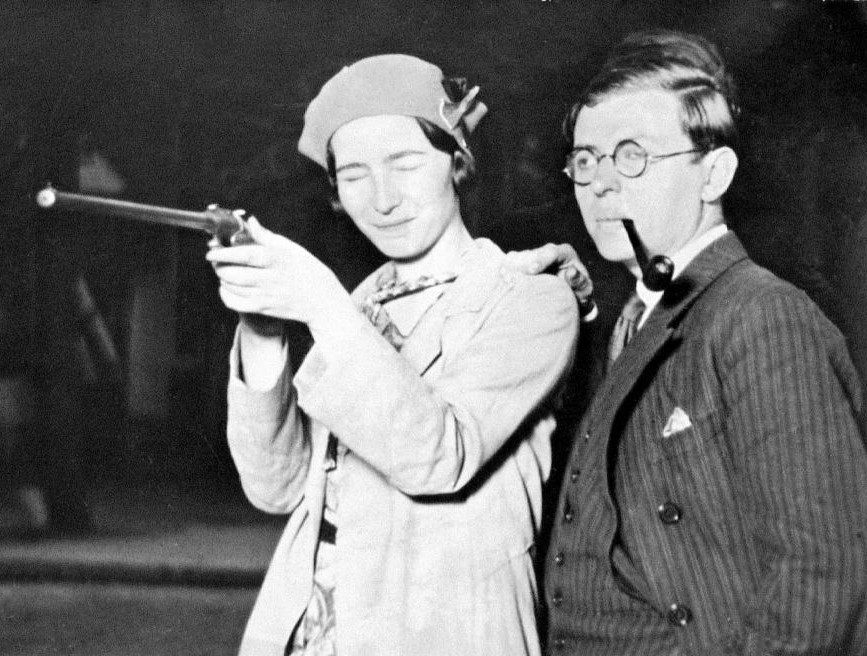
On April 15, 1980, one of the most important philosophers of the 20th century, Jean-Paul Sartre, died at the age of 74. Paul Stephan spoke with Jens Bonnemann, chairman of the German-speaking Sartre-Gesellschaft, about his basic ideas, his relationship with Nietzsche and his significance for our time. What does it mean to live in freedom after the “death of God”? What are the limits of individual freedom? What are the differences and similarities between Sartre and Nietzsche?
You can also view the unedited version of the conversation, in German, on YouTube and listen to it on Soundcloud.
Jean-Baptiste Botul, a Forgotten Nietzschean from France
Jean-Baptiste Botul, a Forgotten Nietzschean from France
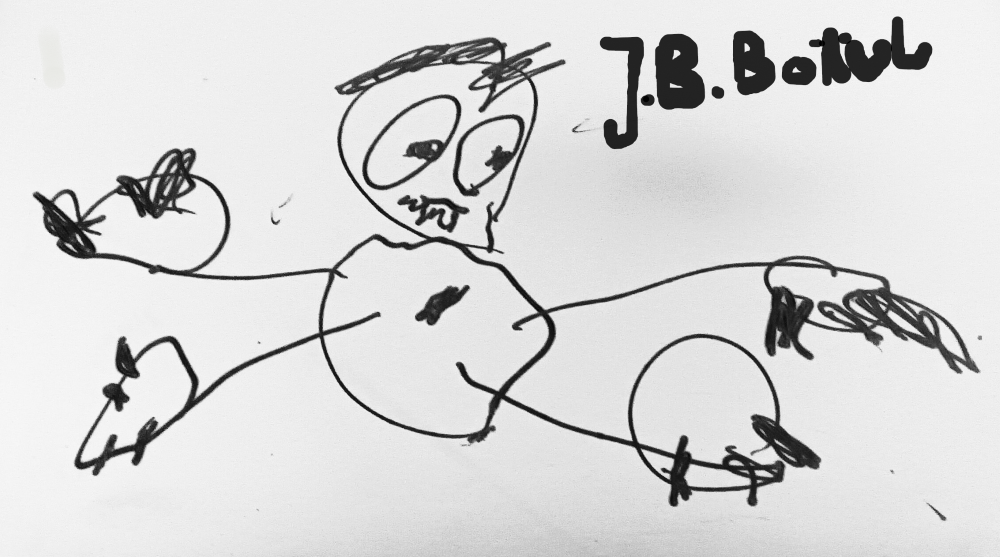
Time and again, our blog is dedicated to overlooked figures from the Nietzscheverse. The Leipzig Anglist Elmar Schenkel went deep into the archives for us in order to introduce you to an almost unknown figure of French-language Nietzsche reception: the “taxi philosopher” Jean-Baptiste Botul, who lived from 1896 to 1947 and not only came into contact with numerous prominent figures of his time on his trips through Paris, but developed also, in conversations with them, his very own Nietzsche interpretation, which, due to its subversive explosive power, has been stored in the poison cabinet by the mainstream of Nietzsche research to the present day. If Nietzsche was, in his own words, “dynamite,” then Botul is a rocket of the Force de frappe, still awaiting detonation — a stroke of luck?
Abyss and Enablement?
The Suspense of Contingency
Johannes Hansmann Discusses Odo Marquard and Richard Rorty
Abyss and Enablement? The Suspense of Contingency
Johannes Hansmann Discusses Odo Marquard and Richard Rorty


The young philosopher Johannes Hansmann has published his monograph Ironie des Schicksals im Einzelnen. Philosophie der Kontingenz bei Marquard und Rorty ("Irony and Fate in Detail. The Philosophy of Contingency in Marquard and Rorty") last year at Karl Alber. It is a remarkable study on two of the most important representatives of existential philosophy in the 20th century, the German Odo Marquard (1928-2015) and the American Richard Rorty (1931-2007). Although Nietzsche only plays a minor role, he deals with highly Nietzschean topics there, dedicates himself to the question of a felicitous — and for him that means in particular: authentic — life in a world after the “death of God,” to which Marquard and Rorty gave very different answers. Natalie Schulte and Paul Stephan present the book to you. A joint summary of the book's most important ideas is followed by an individual statement from each of our authors.
Chameleon Nietzsche
The Failure of Nietzschean Materialism
Chameleon Nietzsche
The Failure of Nietzschean Materialism
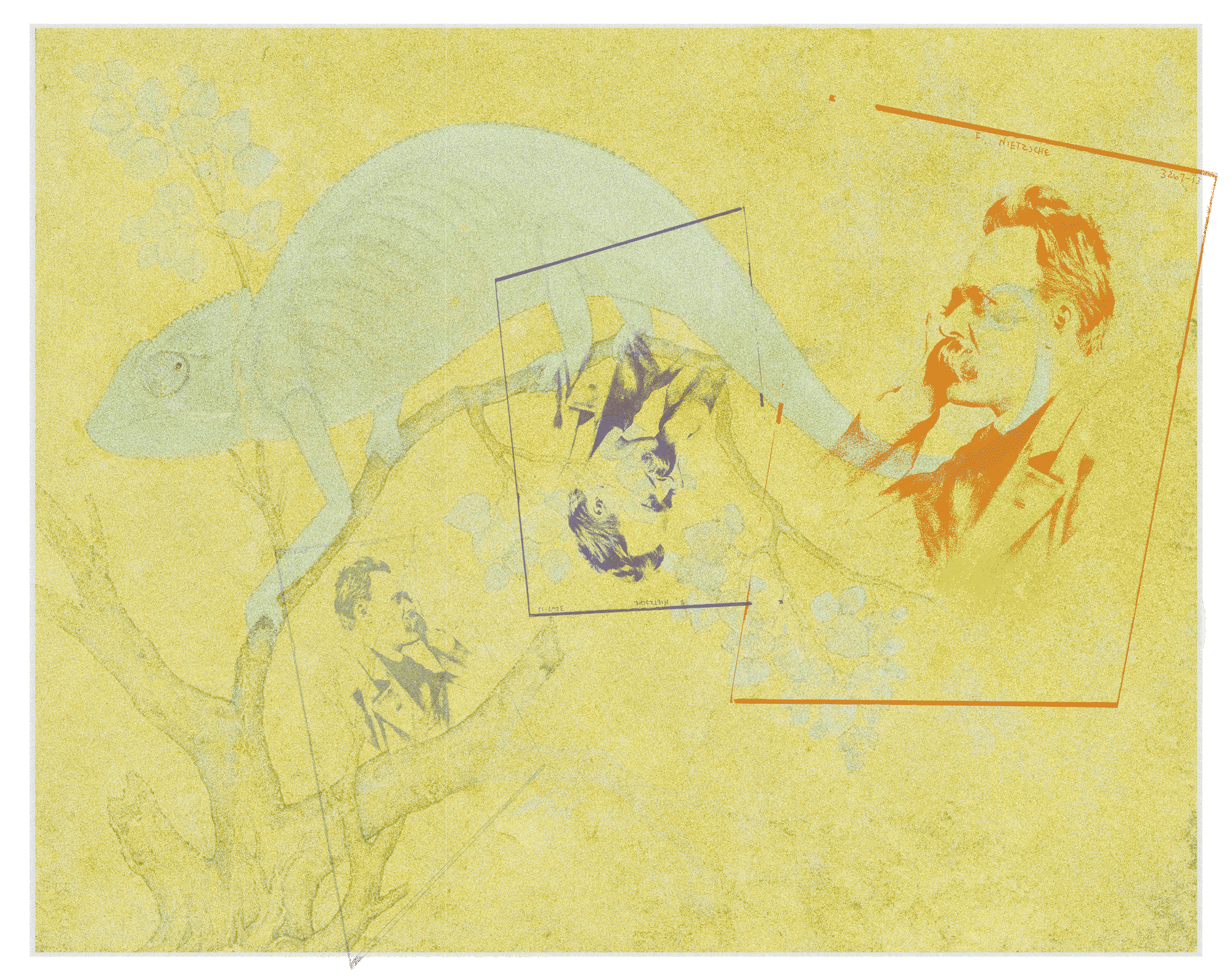
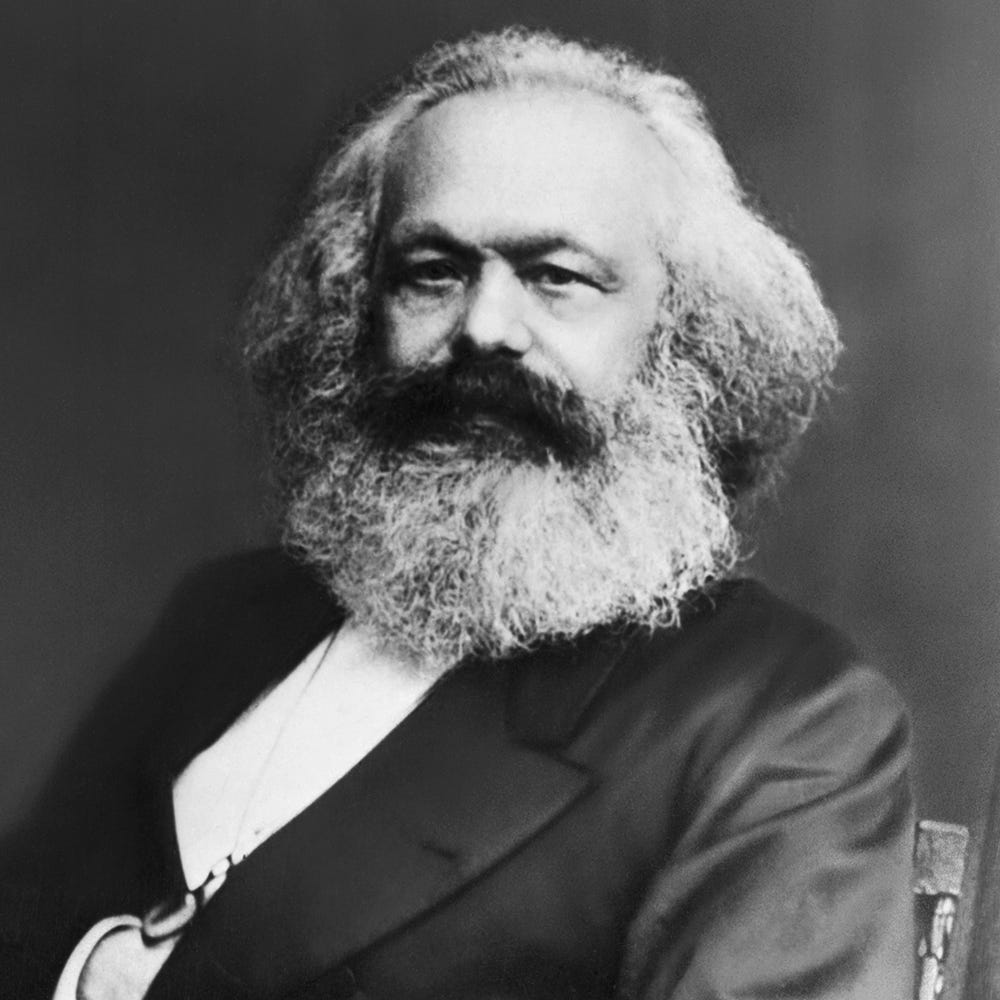
The connection between Marx(ism) and Nietzsche(anism) has repeatedly been a topic on our blog. To what extent can the ideas of arguably the most important theorist on the left and the philosophical chameleon, who was an avowed anti-socialist and anti-feminist and inspired Goebbels and Mussolini, among others, be meaningfully combined. While there have been repeated attempts at left-wing Nietzscheanism, Estella Walter's conclusion in this controversial thesis article is skeptical: The contrast between “historical-dialectical materialism” and Nietzsche's idea of will to power is too irreconcilable. Beyond his time diagnosis, his thinking only provides little emancipatory content.
On Dubious Paths ...
An Outline of Nietzsche's Concept of Wandering
On Dubious Paths ...
An Outline of Nietzsche's Concept of Wandering


Perhaps it is Nietzsche's main philosophical achievement that he described thinking as a process that happens in person. For him, reflection is a cooperative tension of body and mind. The mind is grounded in the nervous cosmopolitanism of the body. Nietzsche's conversion of Christianity: The flesh becomes word. This shows thinking in gestures. The following is intended to provide a sketch which indicates the main types of these reflexive gestures. This is intended to illustrate what it means when Nietzsche repeatedly describes himself as a wanderer. An intellectual tour that leads from standing and sitting as basic modes of traditional philosophy to walking, (out) wandering and halcyonic flying as Nietzsche's alternative modes of liberated thought and life.
Discourse, Power and Delusion
Michel Foucault's Nietzsche Interpretation Revisited
Discourse, Power and Delusion
Michel Foucault's Nietzsche Interpretation Revisited


The humanities scene recently experienced a minor sensation: In the estate of Michel Foucault (1926—1984), one of the most important representatives of post-structuralism, its editors came across an elaborate book manuscript with the title Le discours philosophique, on which the avowed Nietzschean had worked in 1966. It was published in German by Suhrkamp in 2024. Nietzsche plays a decisive role in this comprehensive analysis of philosophical discourse since Descartes. Paul Stephan takes this event as an opportunity to take a closer look at the most influential Nietzsche interpretation of the 20th century to date.
Riveting Strangeness
Remarks on Kafka's Work
Riveting Strangeness
Remarks on Kafka's Work

Franz Kafka died 100 years ago. The following text is an attempt to update his work with a socio-psychological perspective inspired by Nietzsche. His thesis: Kafka narratingly shows what Nietzsche philosophizes about. Michael Meyer-Albert wants to promote the logic of a non-naive world enlightenment in the fictions of one of the most important authors of modern times: affirmation of life instead of suicide.
Editorial note: We have explained some difficult technical terms in the footnotes.
The Enlightenment’s Twilight
Nietzsche's Truth of Semblance II
The Enlightenment’s Twilight
Nietzsche's Truth of Semblance II

After Michael Meyer-Albert in the first part of his text Telling the sad story of the self-doubt of the Enlightenment, he now reports on Nietzsche's “cheerful science” as an alternative.
Deciding to Serve Life
An Essay on the Meaning of Nietzsche's Philosophy
Deciding to Serve Life
An Essay on the Meaning of Nietzsche's Philosophy

Nietzsche is generally regarded as a literary philosopher whose aphoristic nihilisms not only conjure up the death of God, but who also reinforced the dark sides of German history as a posthumous master thinker. In contrast, the following text would like to be part of the series What does Nietzsche mean to me? invite you to learn to read Nietzsche anew as the discoverer of the all-too-unknown philosophical continent of Mediterranean existentialism.