#
Beginner
Nietzsche, Comedy, and the Art of the Edge
A Conversation with Sandra Schmidt
Nietzsche, Comedy, and the Art of the Edge
A Conversation with Sandra Schmidt
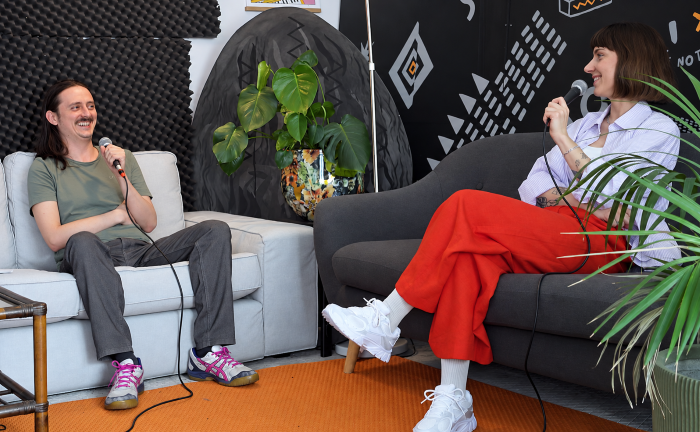
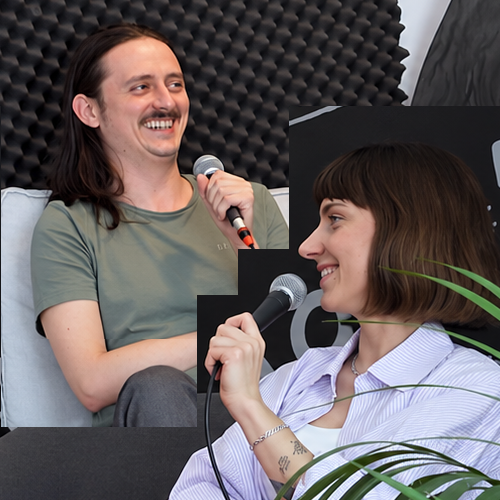
Nietzsche is a master of provocation and the punchline. In the court jester, he identifies a figure who cannot conform and therefore tells the powerful truths they would otherwise rarely hear—while simultaneously making them laugh. Can we draw a parallel here to modern stand-up comedy? How do stance and craft come together in this context? What influence do the stage, the audience, and social media have on what is perceived as funny, and when and where that happens? And who are the powerful of today, anyway: political leaders, societal majorities, or algorithms?
Our author Bernhard Ostheimer met with comedian and PhD philosopher Sandra Schmidt to talk about Nietzsche, the craft of comedy, and the art of pushing boundaries without losing touch with the audience.
You can also watch a longer, unedited version of the conversation on YouTube or listen to it on SoundCloud.
The Artificial Nietzsche
How A"I" Distorts Our Perception of Nietzsche and How We Can Counter This
The Artificial Nietzsche
How A"I" Distorts Our Perception of Nietzsche and How We Can Counter This
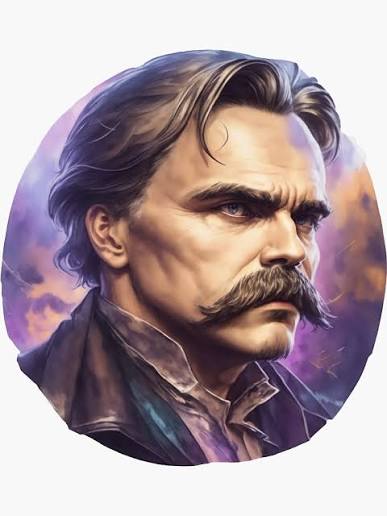
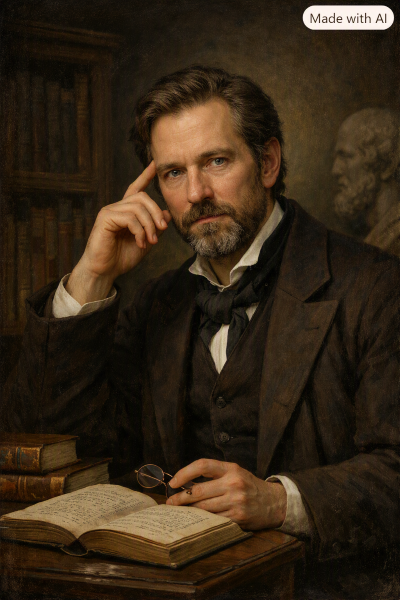
Our author Paul Stephan has finally had enough. The internet is being flooded with cheap A"I" content, often called "AI slop," which is just plain annoying—and is even being rewarded with countless likes and followers. Often, this content is about philosophy, too—specifically Nietzsche. How much damage is being done when this artificial Nietzsche increasingly displaces the real one, as A"I" outputs that repeat the same half-truths and falsehoods replace nuanced human interpretations? When machine-generated caricatures literally push out genuine photographs and artistic portraits? Paul Stephan embarked on an often frustrating search for answers and presents you with a few "highlights." Although he still believes that A"I" opens up positive possibilities—and occasionally makes use of them himself—in his third piece on the subject (feel free to read the first and second commentaries here and there), he feels it is time to take off the kid gloves and bring out the hammer. Stop the slop!
“Facts” and a Damn Good Interpretation
Nietzsche as a Solo Piece in Halle
“Facts” and a Damn Good Interpretation
Nietzsche as a Solo Piece in Halle
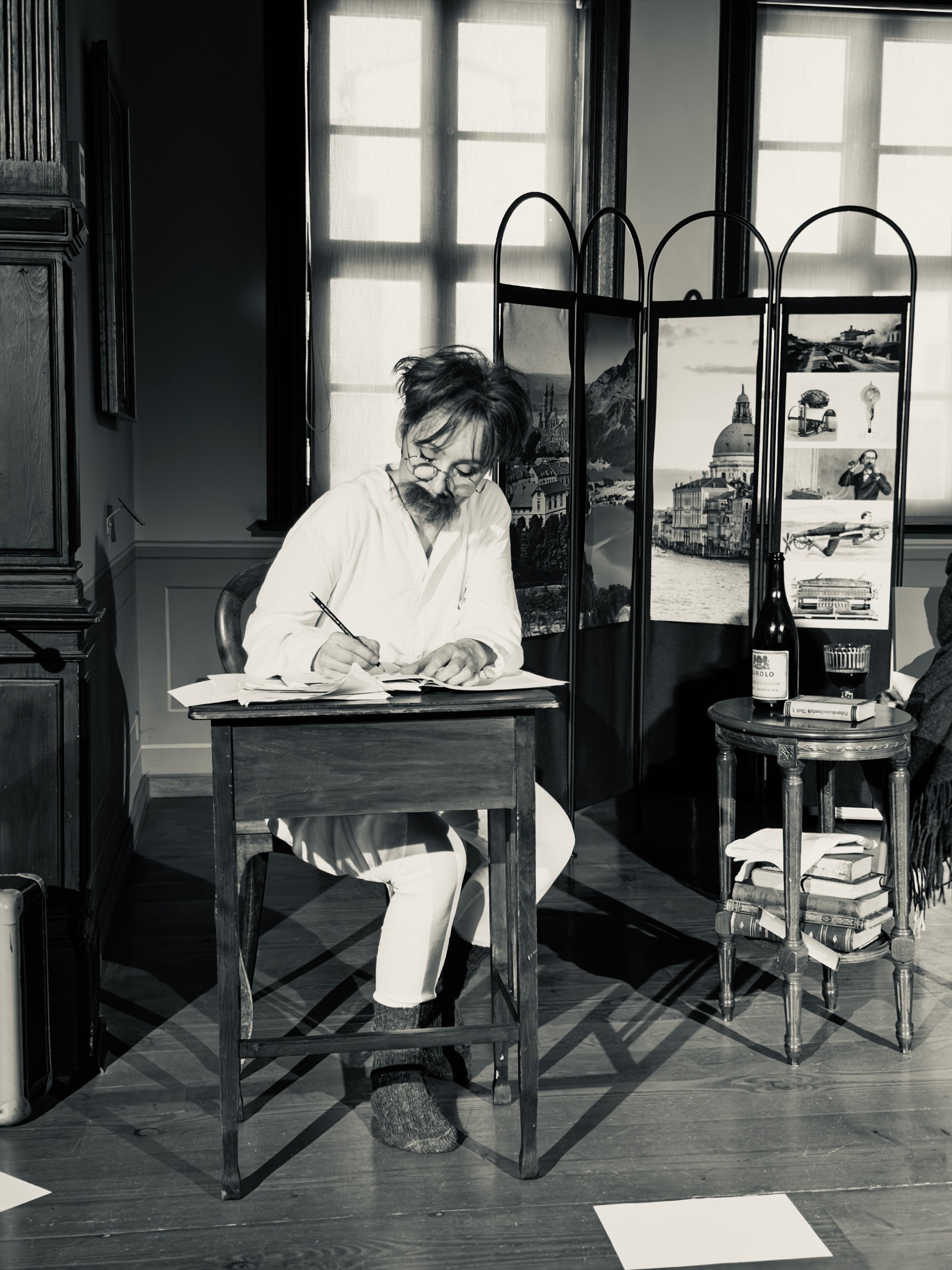
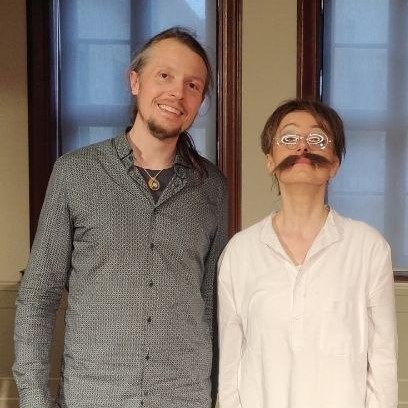
The actress Andrea Ummenberger is currently putting Nietzsche on stage in Halle with a solo play. In a captivating evening at the theatre, the audience can experience the thinker as he possibly was, at least in the interpretation of Austrian writer Alexander Widner, during his last years: not necessarily mentally abducted, but rather insane and in permanent conflict with his sister, his mother — and last but not least his home country. A self-proclaimed fool who rebels against the tight shackles of German small-mindedness and dreams of the South and liberated sensuality. Ummenberger shows us a Nietzsche who still has something to say to us today; not a brilliant idol, but rather a complex anti-hero who asks important questions.
The Blond Beast and the “Hammertyp”
How Dieter Bohlen Finally Discovered a Titan of Equal Rank
The Blond Beast and the “Hammertyp”
How Dieter Bohlen Finally Discovered a Titan of Equal Rank


At first glance, Dieter Bohlen and Friedrich Nietzsche have as little connection as Marie Antoinette with Rosa Luxemburg or Napoleon with Angela Merkel — but a second reveals greater affinities than one might suspect. In any case, this unlike synopsis enables a new perspective — on Bohlen and on Nietzsche in equal measure. “Pairing the strangest and separating the next”1, in the following text, our regular author Christian Saehrendt undertakes a truly Nietzschean search for clues on the tracks of the “titan” of German pop, which to this day polarizes like only a few celebrities in the German-speaking world — this, too, a line of connection between philosopher and musician.
Inside the Magic Forest
Nietzsche and the Sorcerous Power of Trees
Inside the Magic Forest
Nietzsche and the Sorcerous Power of Trees

In cultural perception, the forest is much more than a mere supplier of raw materials or a local recreation area, but, especially in German culture, a magical place of encounter with the supernatural. In the second part of our series ”the forest as a livelihood“ Christian Saehrendt explores this romantic fascination for the forest and to what extent it is also reflected in Nietzsche's works. Because Nietzsche was not only a passionate forest walker, he also writes again and again about this gateway to the “otherworld” and, last but not least, places his Zarathustra in sylvan sceneries.
The Eternal Oak
Where Everything Returns
The Eternal Oak
Where Everything Returns

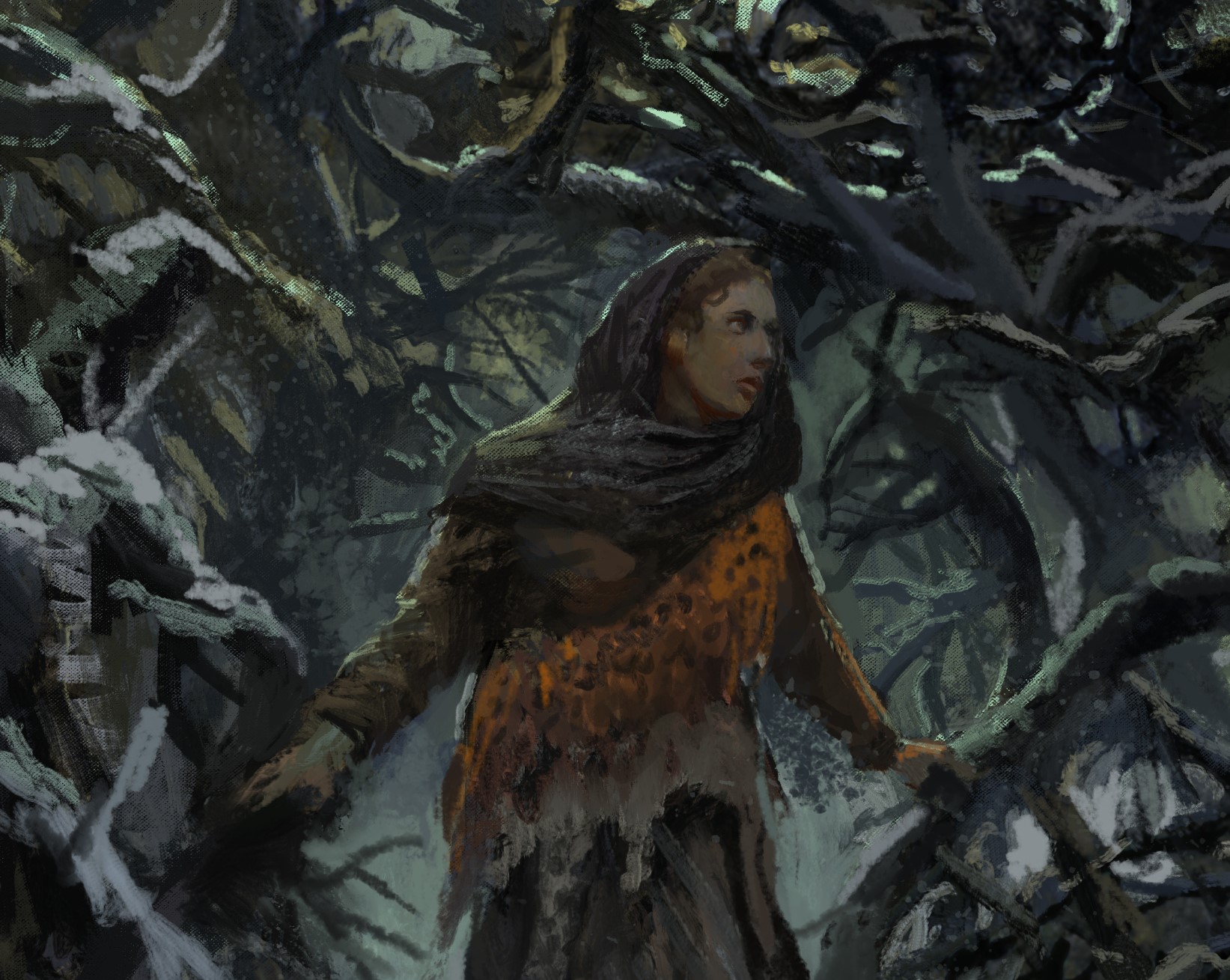
With this literary contribution by Giulia Romina Itin, we are launching our main focus topic this year. Throughout the year, we will publish several articles dedicated to the topic of “forest” — the forest in its dual meaning as an almost mythological place of encounter with the, sometimes uncanny, sometimes encouraging, primal forces of life, but also, viewed more pragmatically, as the real basis of existence of our civilization that remains decisive but also threatened. We would like to explore this double face together with you this year in order to determine the contours of the forest as a living space in a new way — with Nietzsche and beyond him. We need to see and appreciate the forest in a different way again.
If you would rather listen to this article, you will also find it read by Caroline Will in German on the Halcyon Association for Radical Philosophy YouTube channel (link) or on Soundcloud (link).
Female Barbarians — When Women Become a Threat
Female Barbarians — When Women Become a Threat
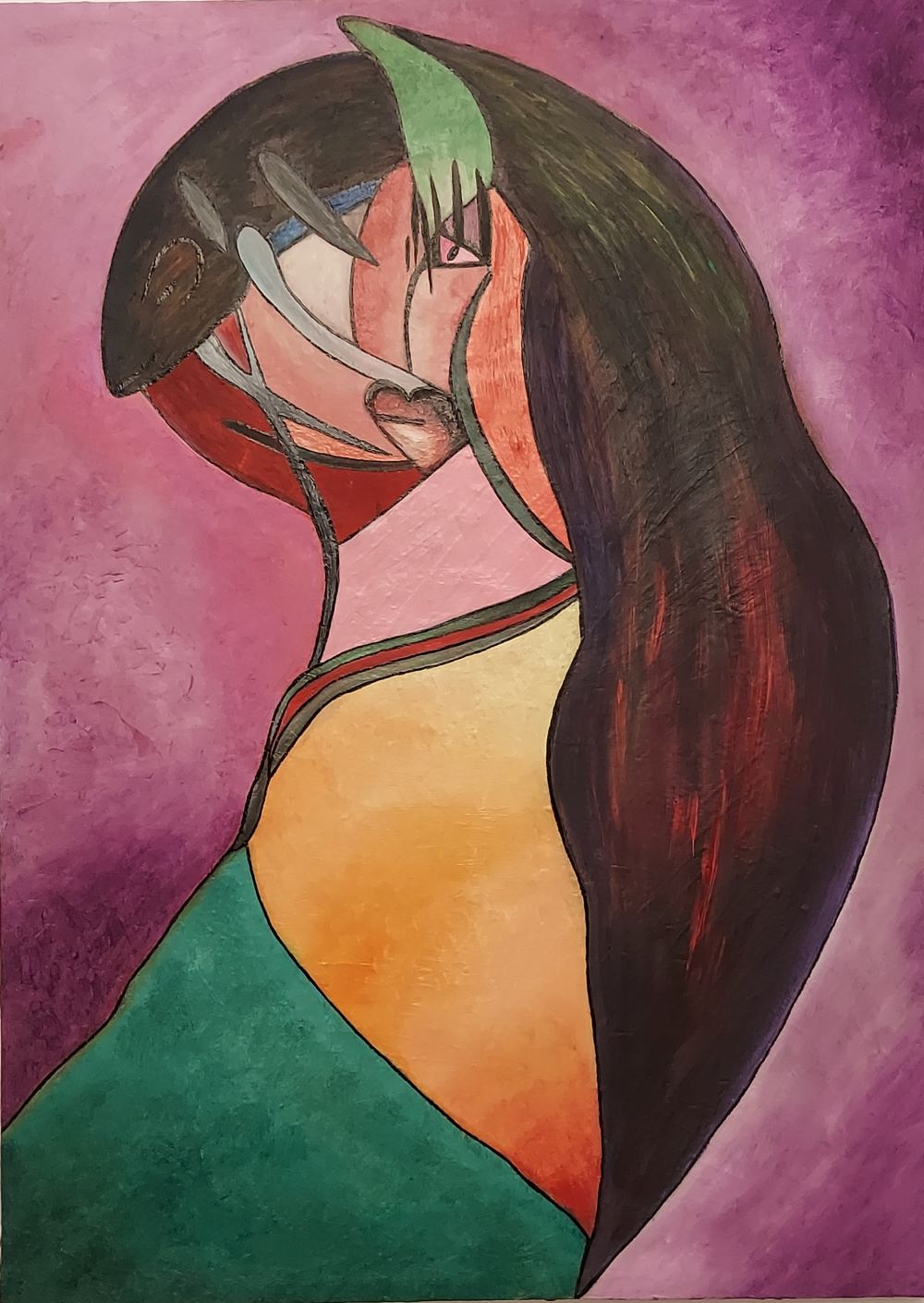

In today's world, which wants to call itself modern and equal, old patterns continue to have an effect — rivalry instead of solidarity, adaptation instead of departure. The essay provocatively asks: Where are the barbarians of the 21st century? It shows the emergence of a new female force — a woman who does not destroy but refuses, who evades old roles and gains creative power from pain. Through examples from reality and literature, the text attempts to show that true change does not start in obedience but in bold “no” — and that solidarity among women could be the real revolution.
We awarded this text second place in this year's Kingfisher Award for Radical Essay Writing (link).
If you'd rather listen to it, you'll also find it read by Caroline Will on the Halcyonic Association for Radical Philosophy's YouTube channel (link) or on Soundcloud (link).
Meaning Has Fallen, But I'm Still Dreaming
Meaning Has Fallen, But I'm Still Dreaming


This essay opposes the emptiness of a world that has lost its meaning in favor of function. With Nietzsche, Camus and the shadow of Sisyphos behind me, I search for the wild, for the dreamy, for those who do not submit and refuse to remain silent. I'm writing about modern barbarians: about people who see nothing and yet continue to breathe, keep screaming, keep dreaming. This text is my hymn to defiance, to the unformed, to the courage not to fear senselessness. Because even without meaning, I won't be silent. Not now, not in this world. And there is no other.
The essay was written as an answer to the price question of this year's Kingfisher Prize (link). We did not award him, but still publish it as an important contribution to the topic of the “new barbarians” due to its extraordinary literary quality. If you'd rather listen to it, you'll also find it read by Caroline Will on the Halcyonic Association for Radical Philosophy's YouTube channel (link) or on Soundcloud (link).
Where Are the Barbarians of the 21st Century?
An Essay in the Spirit of Nietzsche
Where Are the Barbarians of the 21st Century?
An Essay in the Spirit of Nietzsche
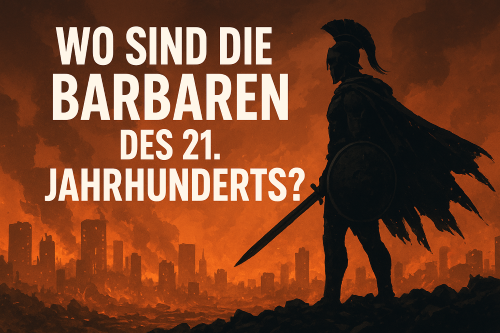

On August 25, we published an interview, conducted by our author Paul Stephan, with the AI tool Chat GPT (link). In it, he asked the software, among other things, to write him an essay on the question of this year's Kingfisher Award: “Where are the barbarians of the 21st century? “(link). As an experiment, we presented the text to the five-person jury of the award, consisting of Lukas Meisner, Hans-Martin Schönherr-Mann, Theodor Schild, Natalie Schulte and Paul Stephan himself — and it was surprisingly well received: In the preliminary round, it achieved fourth place on points and would therefore have made it into the shortlist by a hair. Only Natalie Schulte had drawn suspicion and presented the text to an AI checker, which, however, did not recognize it. — Would you have thought the text was human?
The essays from this year's winners will be published in the coming weeks. Did they do it better than AI, as we believe?
We deliberately refrained from editing the text, but published it exactly as the program spit it out for us. The article image is also from it.
As a part of this experiment, the subsequent translation has also been done by ChatGPT itself and we publish it without any alterations.
Traveling with Nietzsche through Southeast Asia IV
Malaysia
Traveling with Nietzsche through Southeast Asia IV
Malaysia


The last country that our author, Natalie Schulte, traveled by bike was Malaysia. After a good 5,000 km, she got the creeping feeling that the trip could still end poorly. With considerations as to whether cycling in Southeast Asia is a response to Nietzsche's appeal “live dangerously! “, she concludes her series of essays.
Traveling with Nietzsche through Southeast Asia III
Thailand
Traveling with Nietzsche through Southeast Asia III
Thailand

Our author Natalie Schulte traveled by bicycle for nine months Vietnam, Kampuchea, Thailand and malaysia. In her penultimate contribution to the series ”Hikes with Nietzsche“ she muses on encounters with wild animals that she met or could have met on her journey. It is hardly surprising that this includes considerations about the importance of animals, as they occur in Nietzsche's philosophy.
Traveling with Nietzsche through Southeast Asia II
Cambodia
Traveling with Nietzsche through Southeast Asia II
Cambodia


Our author Natalie Schulte spent nine months cycling in Southeast Asia and reports on her travel experiences with and without Nietzsche in a short series of essays. This time it's about the vast plain of Cambodia and the temples of Angkor in the middle of the jungle.
Traveling with Nietzsche through Southeast Asia I
Vietnam
Traveling with Nietzsche through Southeast Asia I
Vietnam

Our author Natalie Schulte spent nine months cycling in Southeast Asia. She traveled 5,500 km through Vietnam, Cambodia, Thailand and Malaysia. In the luggage for motivation and discussion was as usual So Zarathustra spoke. But Nietzsche's thoughts were also frequently present beyond this work. In her short essay series, she talks about her travel experiences with and without Nietzsche.
The Will to Commentary
A Report on This Year's Nietzsche Society Meeting
The Will to Commentary
A Report on This Year's Nietzsche Society Meeting


The almost complete Freiburg Nietzsche commentary has now become an indispensable tool for Nietzsche research. In meticulous detail work, the authors compiled useful information on almost all aspects of Nietzsche's works (history of origin, sources, allusions, receptions, interpretations...) and commented on them passage by passage, sometimes sentence by sentence and word by word. Almost all of the volumes published so far are available free of charge on the de Gruyter Verlag website (link). Even laymen will find a real treasure trove of background information and explanations here. The three leading employees of the project — its long-time manager Andreas Urs Sommer, Katharina Grätz and Sebastian Kaufmann — took the opportunity to dedicate this year's annual meeting of the Nietzsche Society to the topic of “Commenting on Nietzsche.” They were not only looking back, but also looking ahead.
Musing in a Southerly
Visiting Nietzsche's Summer House in Engadin
Musing in a Southerly
Visiting Nietzsche's Summer House in Engadin

The Inn River rises at an altitude of just under 2,500 m in southeastern Switzerland, in the canton of Graubünden. Over a distance of 80 km, it first flows through a high-mountain valley called the Engadin. Here, not far from the sophisticated spa town of St. Moritz, it crosses two small lakes, Lake Sils and Lake Silvaplana, between which lies the idyllic mountain village of Sils Maria. The philosopher Friedrich Nietzsche spent several summers in this exquisite landscape and was inspired by it to write some of his most important works. Christian Saehrendt set out to search for clues at what is perhaps the most important “pilgrimage site” on the Nietzsche scene.
The Artist as Egomaniac
A Reckoning?
The Artist as Egomaniac
A Reckoning?

Artists often do not come off well in Nietzsche’s work. They represent the prototype of the dependent, truth-hostile and reality-denying person who is at the mercy of his own moods without self-control. A childish, dramatizing, hot-tempered and generally ridiculous creature, an egomaniac whose actions and demeanor are aimed solely at courting the applause of others. Or is Nietzsche not taking his word for it here? Should this really be his final verdict about the creative spirit?
He develops much of what Nietzsche describes about the artist on the figure Richard Wagner, with whom he has a brief, intensive, but ultimately disappointing acquaintance. The artist and the thinker could have been the ideal friendship for Nietzsche for a while. But after breaking with Wagner, Nietzsche has a lot of derogatory things to say about the artist as a type. How different — for comparison — is the friendship between artist and thinker in Narcissus and Goldmund by Hermann Hesse, who deals extensively with Nietzsche.
Determining Nietzsche
Determining Nietzsche

Does Nietzsche have clear philosophical doctrines? There is still a fight with Nietzsche's ambiguity today. When does he mean what he says? In her essay, Natalie Schulte explores the question of where, in the midst of assimilating ambiguity through ideological programs on the one hand and academically savvy dispersal of Nietzsche's thought structures into indiscriminate and incoherent fragments and perspectives, on the other hand, today's engagement with Nietzsche has to locate its decisive challenges. Between the dangers of confusing his philosophy and the limitless relativization of his theses, she is looking for a fruitful third way of dealing with the question of the “actual Nietzsche.”
Whistling in the Woods and Screaming for Love
Nietzsche's Echo in the Heavy Metal Music Scene
Whistling in the Woods and Screaming for Love
Nietzsche's Echo in the Heavy Metal Music Scene

Like hardly any other philosopher, Friedrich Nietzsche has left his mark on popular culture — less in the pleasing mainstream entertainment, but more in subcultures and in artistic positions that are considered “edgy” and “dark.” In this “underworld,” Nietzsche's aphorisms, catchphrases, slogans and invectives are widely used — for example in the musical genres of heavy metal, hardcore and punk focused on social and aesthetic provocation. What is the reason for that?
Nietzsche and Music
Nietzsche and Music

For hardly any other philosopher, music was as important as it was for Nietzsche. “Without music, life would be a mistake”1, he wrote. Christian Saehrendt goes for Nietzsche PopArts The question of how this high appreciation of sound art was manifested in his life and work. He talks about Nietzsche's own compositions as well as one of the most iconic aspects of his life: his friendship with Richard Wagner. He shows that the music for Nietzsche is almost erotic It was important — and in this respect he was not so “out of date” at all, but a typical child of his time.
Is Nietzsche a Philosopher for Adolescents?
Is Nietzsche a Philosopher for Adolescents?

In her contribution to the series “What does Nietzsche mean to me? “Our main author Natalie Schulte explores the question of whether the thinker can be described as a “philosopher for adolescents” and reports on her own relationship with him.
What Does Nietzsche Mean to Me?
What Does Nietzsche Mean to Me?

Our regular author Christian Saehrendt reports in his contribution to the series “What does Nietzsche mean to me? “about how he discovered Nietzsche as a teenager and has regarded himself as a fan of the philosopher ever since — precisely because of his contrariness.
The Enduringly Contested Friedrich Nietzsche
Report on the Annual Meeting of the Nietzsche Society 2023
The Enduringly Contested Friedrich Nietzsche
Report on the Annual Meeting of the Nietzsche Society 2023


From October 12 to 15, the annual meeting of the Friedrich-Nietzsche Society took place in Naumburg. Numerous experts from all over the world came together to explore the various causes of Nietzsche's impact in the first decades following his mental collapse. The spiritual struggles over Nietzsche repeatedly referred to the real struggles of the past — and those of our present.