#
sehnsucht
Gesteigerte Idylle
Nietzsche und der Wald
Teil I: Silvanische Exile in Antike, Romantik und Moderne
Gesteigerte Idylle
Nietzsche und der WaldTeil I: Silvanische Exile in Antike, Romantik und Moderne


Gibt es eine Verbindung zwischen Ort und Denken? Wie könnten Nietzsches Philosophie und der Wald zusammenhängen?
Der Wald erscheint in der deutschen Kultur oft als Inbegriff der Idylle. Im vorletzten Teil unserer Serie „Lebensgrundlage Wald“ vertritt unser Autor Michael Meyer-Albert die These, dass Nietzsche dieser Idyllik eine ganze neue Form gab, indem er sie dynamisierte.
Er diskutiert zunächst zwei Formen der traditionellen Idylle. Während die klassische Idylle in südeuropäischen Traditionen (wie bei Vergil) eher die sonnige, arkadische Hirtenlandschaft oder den geordneten Garten feierte, findet sich die philosophische Idylle in den Mauern der Akademie. Schutz vor der Doxa, Huldigen des Logos.
Den deutschen Wald als spezifisch deutsche Form der Idylle analysiert Meyer-Albert dann mit Hilfe des von dem romantischen Schriftsteller Ludwig Tieck (1773–1853) geprägten Begriffs der „Waldeinsamkeit“. Der Wald wird hier als geradezu religiös aufgeladener Schutzraum vor den Zumutungen der Moderne verstanden. Wird dieser aggressiv verteidigt, kann diese Romantik schnell in reaktionäre Mythologie, heutzutage auch im linken Gewand, umschlagen.
Nietzsches Modifikation der antimodernen deutschen Idylle des Waldes zu einer die Moderne bejahenden heroischen Idyllik bildet einen Gegenentwurf zu all diesen traditionellen Formen der Idyllik gleichermaßen – sie wird im Mittelpunkt des zweiten Teils dieses Artikels stehen.
Inside the Magic Forest
Nietzsche and the Sorcerous Power of Trees
Inside the Magic Forest
Nietzsche and the Sorcerous Power of Trees


In cultural perception, the forest is much more than a mere supplier of raw materials or a local recreation area, but, especially in German culture, a magical place of encounter with the supernatural. In the second part of our series ”the forest as a livelihood“ Christian Saehrendt explores this romantic fascination for the forest and to what extent it is also reflected in Nietzsche's works. Because Nietzsche was not only a passionate forest walker, he also writes again and again about this gateway to the “otherworld” and, last but not least, places his Zarathustra in sylvan sceneries.
Being a Father with Nietzsche
A Conversation between Henry Holland and Paul Stephan
Being a Father with Nietzsche
A Conversation between Henry Holland and Paul Stephan
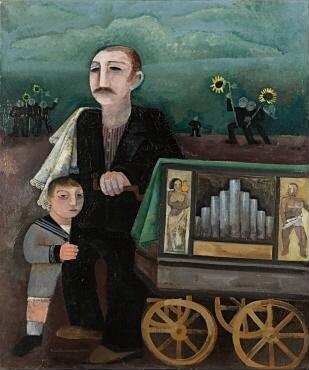
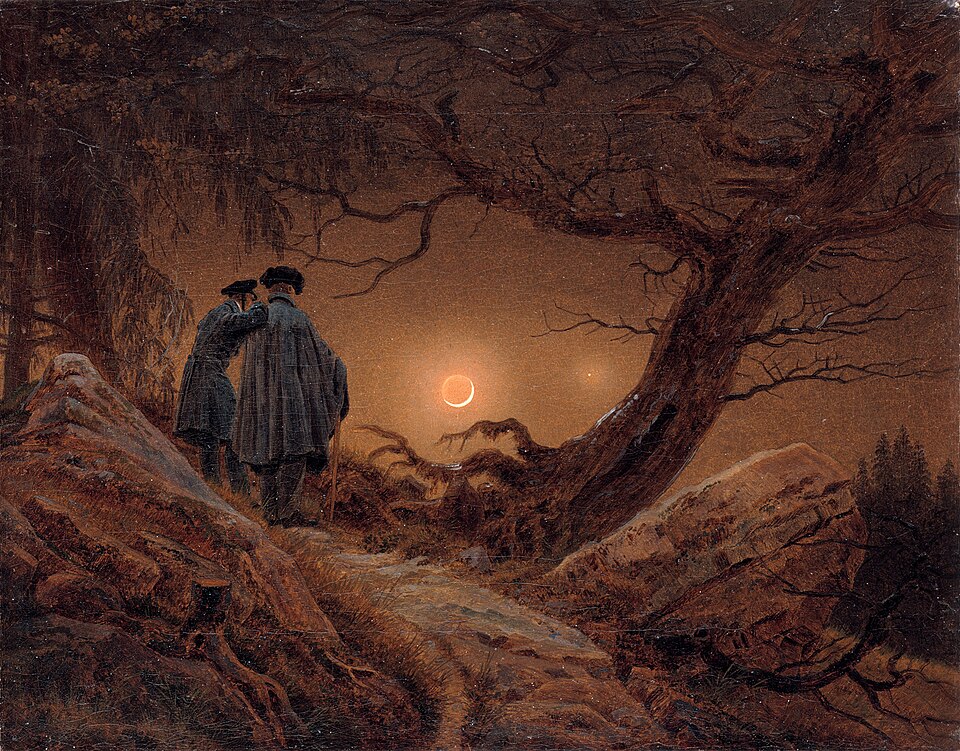
Nietzsche certainly did not have any children and is also not particularly friendly about the subject of fatherhood in his work. For him, the free spirit is a childless man; raising children is the task of women. At the same time, he repeatedly uses the child as a metaphor for the liberated spirit, as an anticipation of the Übermensch. Is he perhaps able to inspire today's fathers after all? And can you be a father and a Nietzschean at the same time? Henry Holland and Paul Stephan, both fathers, discussed this question.
We also published the complete, unabridged discussion on the Halcyonic Association for Radical Philosophy YouTube channel (Part 1, part 2).
Übermensch Hustling
Nietzsche Between Silicon Valley and New Right
Übermensch Hustling
Nietzsche Between Silicon Valley and New Right

This essay, which we awarded first place in this year's Kingfisher Award for Radical Essay Writing (link), examines Nietzsche's question of the “barbarians” in a contemporary context and analyses how his philosophy is being politically exploited today. Against this background, the text shows how hustle culture, platform capitalism and neo-reactionary ideologies have been economizing the ”will to power“ and have become a new form of subtle barbarism: an internal decomposition of cultural depth through market logic, technocratic myths, and performative nihilism. Nietzsche's thinking, however, can be used precisely to describe these tendencies in their genealogy, to unmask their immanent nihilism, and to present an (over-)humane alternative to them.
The Barbarians of the 21st Century
Narcissism, Apocalypse, and the Absence of Other
The Barbarians of the 21st Century
Narcissism, Apocalypse, and the Absence of Other


The diagnosis of our time: not heroic barbarians, but selfie warriors. This essay, which won the second place at this year's Kingfisher Award (link), explores Nietzsche's vision of the”stronger type”1 and shows how it is turned into its opposite in a narcissistic culture — apocalypse as a pose, the Other as a blind spot. But instead of the big break, another option opens up: a “barbaric ethic” of refusal, of ambivalence, of relationship. Who are the true barbarians of the 21st century — and do we need them anyway?
Why Are Many People No Longer Committed to Democracy!
Individualism as a Political and Social Threat in Tocqueville and Nietzsche — but also as an Opportunity
Why Are Many People No Longer Committed to Democracy!
Individualism as a Political and Social Threat in Tocqueville and Nietzsche — but also as an Opportunity

Individualism, even egoism, is frowned upon in all political, religious and social camps. They are attributed to liberalism and capitalism. Such people are not committed to others, are not involved politically or for the environment. They also do not respect a common understanding of the world and therefore behave irresponsibly. The Nietzschean is not impressed by such verdicts. She dances — not only!
Nietzsche and Intellectual Right
A Dialogue with Robert Hugo Ziegler
Nietzsche and the Intellectual Right
A Dialogue with Robert Hugo Ziegler


Nietzsche was repeatedly elevated to a figurehead by right-wing theorists and politicians. From Mussolini and Hitler to the AfD — Nietzsche is repeatedly seized when it comes to confronting modern society with a radical reactionary alternative. Nietzsche was particularly fascinating to intellectual right-wingers, such as authors like Ernst Jünger, Carl Schmitt and Martin Heidegger, who formed a cultural prelude to the advent of National Socialism in the 1920s, even though they later partially distanced themselves from it. People also often talk about the “Conservative Revolution”1.
What do these authors draw from Nietzsche and to what extent do they read him one-sidedly and overlook other potentials in his work? Our author Paul Stephan spoke about this with philosopher Robert Hugo Ziegler.
Taylor Swift — Superwoman or Last Man?
A Nietzschean Critique of the Most Successful Pop Star of Our Time
Taylor Swift — Superwoman or Last Man?
A Nietzschean Critique of the Most Successful Pop Star of Our Time


Taylor Swift is one of the most important “idols” of our time. Reason enough for our regular authors Henry Holland, Paul Stephan and Estella Walter to pick up on the Nietzschean “hammer” and get to grips with the hype a bit: Does Swift deserve the cult around her that goes down to philosophy? Is it grossly overrated? And what explains the discrepancy between appearance and reality, spectacle and life?
You can watch the entire unabridged conversation on the Halcyonic Association for Radical Philosophy YouTube channel (link).
“Choose the right time to die!”
Nietzsche's Ethics of “Free Death” in the Context of Current Debates About Suicide
A Conversation with Filmmaker Lou Wildemann
“Choose the right time to die!”
Nietzsche's Ethics of “Free Death” in the Context of Current Debates About Suicide. A Conversation with Filmmaker Lou Wildemann


Lou Wildemann is a cultural scientist and filmmaker from Leipzig. your current feature film project, MALA, deals with the suicide of a young resident of Nietzsche City. Paul Stephan discussed this provocative project and the topic of suicide in general with her: Why is it still taboo today? Should we talk more about this? What role can Nietzsche's reflections, who repeatedly thought about this topic, play in this? What does suicide mean in an increasingly violent neoliberal society?
Stuck Between the Monsters and the Depths
Wanderings Through Modern Nihilism in the Footsteps of Nietzsche and Kierkegaard — Part 1
Stuck Between the Monsters and the Depths
Wanderings Through Modern Nihilism in the Footsteps of Nietzsche and Kierkegaard — Part 1


As in our series of articles”Hikes with Nietzsche“It has already been made clear that the metaphor of wandering plays a fundamental role in Nietzsche's work. In this two-part essay, Paul Stephan explores how Nietzsche uses the wanderer as a personification of modern nihilism and thus diversifies a central theme of cultural modernity, which can also be found in the writings of the Danish philosopher Søren Kierkegaard, who was born on May 5, 1813 in Copenhagen, where he also died on November 11, 1855.
Homesick for the Stars
Prolegomena of a Critique of Extraterrestrial Reason
Homesick for the Stars
Prolegomena of a Critique of Extraterrestrial Reason

On April 12, 1961, Soviet cosmonaut Yuri Gagarin achieved the unbelievable: He was the first person in history to leave the protective atmosphere of our home planet and circumnavigate the Earth in the Vostok 1 spaceship. In 2011, the anniversary of this “superhuman” act was declared International Manned Space Day. The stars aren't that far away anymore. With the technical progress achieved, the fantasy of expanding human civilization into space takes on concrete plausibility. The following text attempts to philosophically rhyme with these prospects and finally describes the approach of a possible space program from Nietzsche. Although airplanes didn't even exist during his lifetime, his concepts can still be applied to this topic in a productive way, as is so often the case.
Editorial note: We have explained some difficult technical terms in the footnotes.
“Music, your advocate”
Nietzsche and the Liberating Power of Melody
“Music, your advocate”
Nietzsche and the Liberating Power of Melody


After Christian Saehrendt took a primarily biographical look at Nietzsche's relationship to music on this blog in June last year (link), Paul Stephan focuses in this article on Nietzsche's content statements about music and comes to a somewhat different conclusion: For Nietzsche, music has a liberating power through its subjectivating power. It affirms our sense of self and inspires us to resist repressive norms and morals. However, not all music can do that. With late Nietzsche, this is no longer Richard Wagner's opera, but Georges Bizet's opera carmen. Our author recognizes a similar attitude in Sartre's novel The disgust and in black popular music, which is not about comfort or grief, but affirmation and overcoming.
Fleeing the State: Kafka and Nietzsche’s Human
Or: Becoming-woman after Deleuze & Guattari
Fleeing the State: Kafka and Nietzsche’s Human
Or: Becoming-woman after Deleuze & Guattari

Kafka and Nietzsche are united by their confrontation with the state and bureaucracy. Deleuze & Guattari, whose works are based on both, develop an apolitical response to the fatal political situation, namely transformations after Kafka, an expansion of themselves to Nietzsche, which can be understood as escape lines from a patronizing society.
Look, I'm Teaching You the Transhumanist
Friedrich Nietzsche as a Personal Trainer of Extropianism
Look, I'm Teaching You the Transhumanist
Friedrich Nietzsche as a Personal Trainer of Extropianism

After Natalie Schulte reported on the echo of Nietzsche's “superman” idea in the start-up scene last week (Link), Swiss art scholar Jörg Scheller is dedicating this week to her continued existence in extropianism, a subtype of transhumanism that aims to artificially accelerate human evolution on both individual and genre levels using modern technology. The physical law of “entropy,” according to which there is a tendency in closed systems to equalize all energy differences until a state of equilibrium has been established — a state of complete cooling in terms of the universe — is opposed by the proponents of this flow with the principle of “extropy,” the increasing vitality of a system.
The Artist as Egomaniac
A Reckoning?
The Artist as Egomaniac
A Reckoning?


Artists often do not come off well in Nietzsche’s work. They represent the prototype of the dependent, truth-hostile and reality-denying person who is at the mercy of his own moods without self-control. A childish, dramatizing, hot-tempered and generally ridiculous creature, an egomaniac whose actions and demeanor are aimed solely at courting the applause of others. Or is Nietzsche not taking his word for it here? Should this really be his final verdict about the creative spirit?
He develops much of what Nietzsche describes about the artist on the figure Richard Wagner, with whom he has a brief, intensive, but ultimately disappointing acquaintance. The artist and the thinker could have been the ideal friendship for Nietzsche for a while. But after breaking with Wagner, Nietzsche has a lot of derogatory things to say about the artist as a type. How different — for comparison — is the friendship between artist and thinker in Narcissus and Goldmund by Hermann Hesse, who deals extensively with Nietzsche.
Nietzsche and Music
Nietzsche and Music

For hardly any other philosopher, music was as important as it was for Nietzsche. “Without music, life would be a mistake”1, he wrote. Christian Saehrendt goes for Nietzsche PopArts The question of how this high appreciation of sound art was manifested in his life and work. He talks about Nietzsche's own compositions as well as one of the most iconic aspects of his life: his friendship with Richard Wagner. He shows that the music for Nietzsche is almost erotic It was important — and in this respect he was not so “out of date” at all, but a typical child of his time.
“Poland is Not Yet Lost”
Germany's Neighboring Country as a Political Utopia in Nietzsche's Posthumous Writings
“Poland is Not Yet Lost”
Germany's Neighboring Country as a Political Utopia in Nietzsche's Posthumous Writings

The late Nietzsche repeatedly imagines himself as a descendant of Polish nobles. It is not just a personal whim, but also says something about Nietzsche's philosophical positioning: For him, Poland is a kind of “anti-nation,” a people of “big individuals” — and last but not least, the Polish noble republic is the political utopia of a radical democratic community, which, precisely in its failure, corresponds to his idea of “aristocratic radicalism.” Paul Stephan goes in this Long Read explores the deeper meaning of this topic in Nietzsche and questions his transfiguration of the old Rzeczpospolita: From a political point of view, this is not as desirable a model as Nietzsche suggests. Jean-Jacques Rousseau continues to lead in this regard Considerations on the Government of Poland from 1772.
Tutaj znajdą Państwo tłumaczenie artykułu na język polski, wykonane przez Olimpię Smoleńską.
Is Nietzsche a Philosopher for Adolescents?
Is Nietzsche a Philosopher for Adolescents?

In her contribution to the series “What does Nietzsche mean to me? “Our main author Natalie Schulte explores the question of whether the thinker can be described as a “philosopher for adolescents” and reports on her own relationship with him.