The Atheist as Overtrainer
Nietzsche and the New Devoutness in Sports
The Atheist as Overtrainer
Nietzsche and the New Devoutness in Sports

More and more professional athletes are openly embracing their religious faith – and some even cite Nietzsche as a source of ideological motivation. What is behind the Nietzsche worship among some athletes? Is Nietzsche really suitable as a motivator for physical training? And: Is the well-known atheist Nietzsche a better coach than God?
It has become somewhat fashionable in professional sports to profess one's faith during competition, on social media, or in interviews: with God's help, athletes reach the final; God decides the penalty shootout; "thank heaven" for new personal bests! On the other hand, Nietzsche, the notorious denier of God, is also occasionally cited as a sports apostle. Who is the better coach? God or Friedrich?
A number of top athletes have presented themselves as devout Muslims or Christians in recent years. Professing Muslims include, for example, the Egyptian world-class player Mohamed Salah (who often celebrates his goals by kneeling on the pitch and touching his forehead to the ground in gratitude to Allah), French stars Karim Benzema and Paul Pogba, or the former German national player Antonio Rüdiger. Some Christian professional footballers also show their fans how important their faith is to them, as seen at the last World Cup. After the final whistle of the German World Cup opening match, five men formed a circle on the pitch. Goalscorer Felix Nmecha stood there, arm in arm with national team colleague Jonathan Tah – and three players in the jerseys of their opponents, Curacao. Their heads were bowed; they were praying together. Nmecha is one of the leading figures of the "Ballers in God," an association of evangelical footballers. Devout Christians also excel in other sports. The Serbian tennis star Novak Djokovic professed his faith directly on the tennis court after his 2024 Olympic victory. Artistic gymnast Simone Biles (multiple Olympic gold and silver medalist in 2024) identifies as a devout Christian, as does the German shot putter and Olympic champion Yemisi Ogunleye.
Occasionally, one also finds self-proclaimed atheists or agnostics in professional sports, such as Formula 1 driver Fernando Alonso Diaz, football coach Pep Guardiola, and Spanish tennis star Rafael Nadal.1
By contrast, it was not as easy to find a top athlete who professes to follow Nietzsche. Notable examples here would be boxing legend Mike Tyson, Japanese professional footballer Makoto Hasebe, and French professional cyclist Guillaume Martin-Guyonnet. Tyson's profession of Nietzsche in the Wall Street Journal –
I love reading philosophical texts. Most philosophers are so politically incorrect – they call the status quo into question, even the existence of God. Nietzsche is my favorite philosopher. He is just insane. You have to have an IQ of at least 300 to truly understand him.2
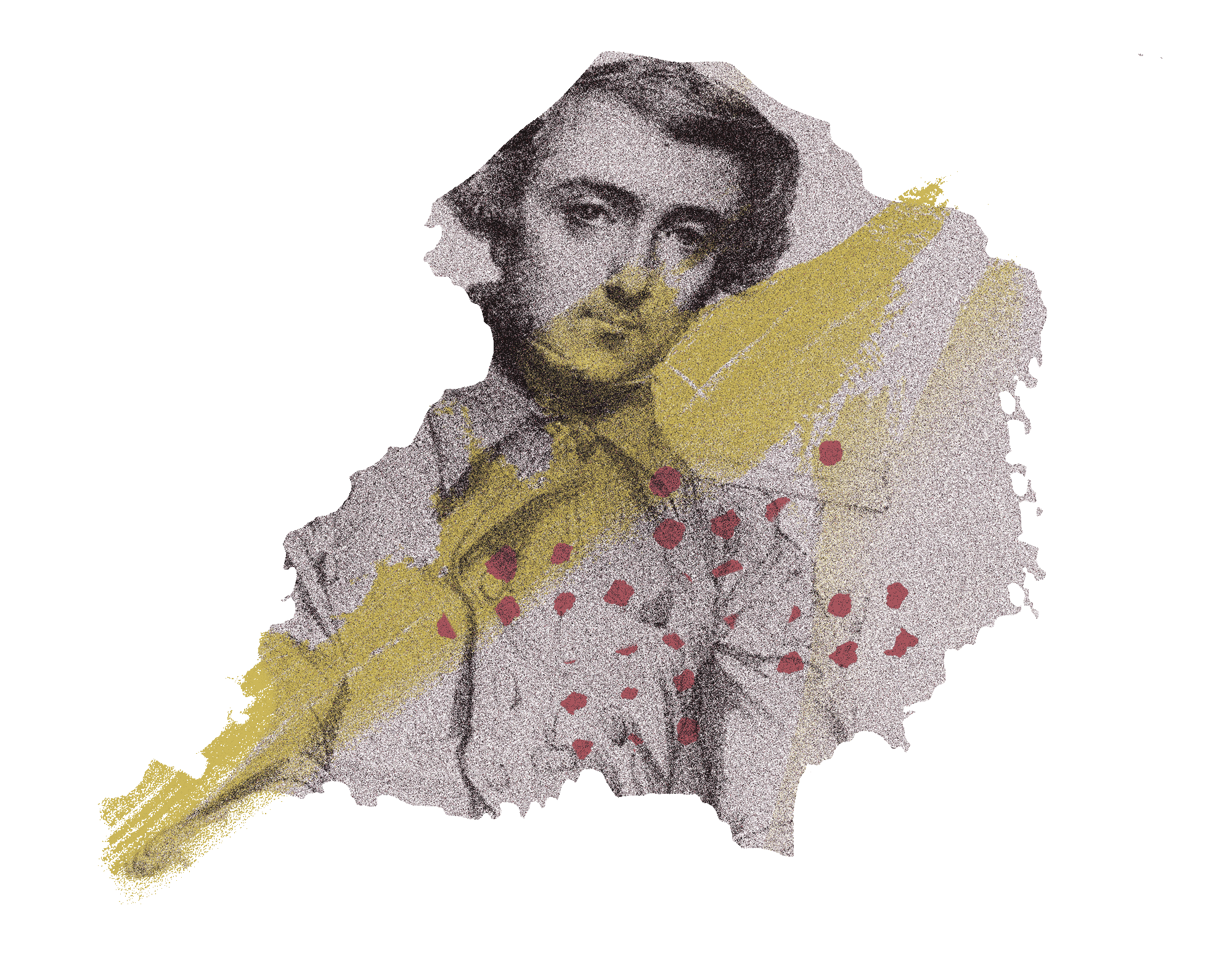
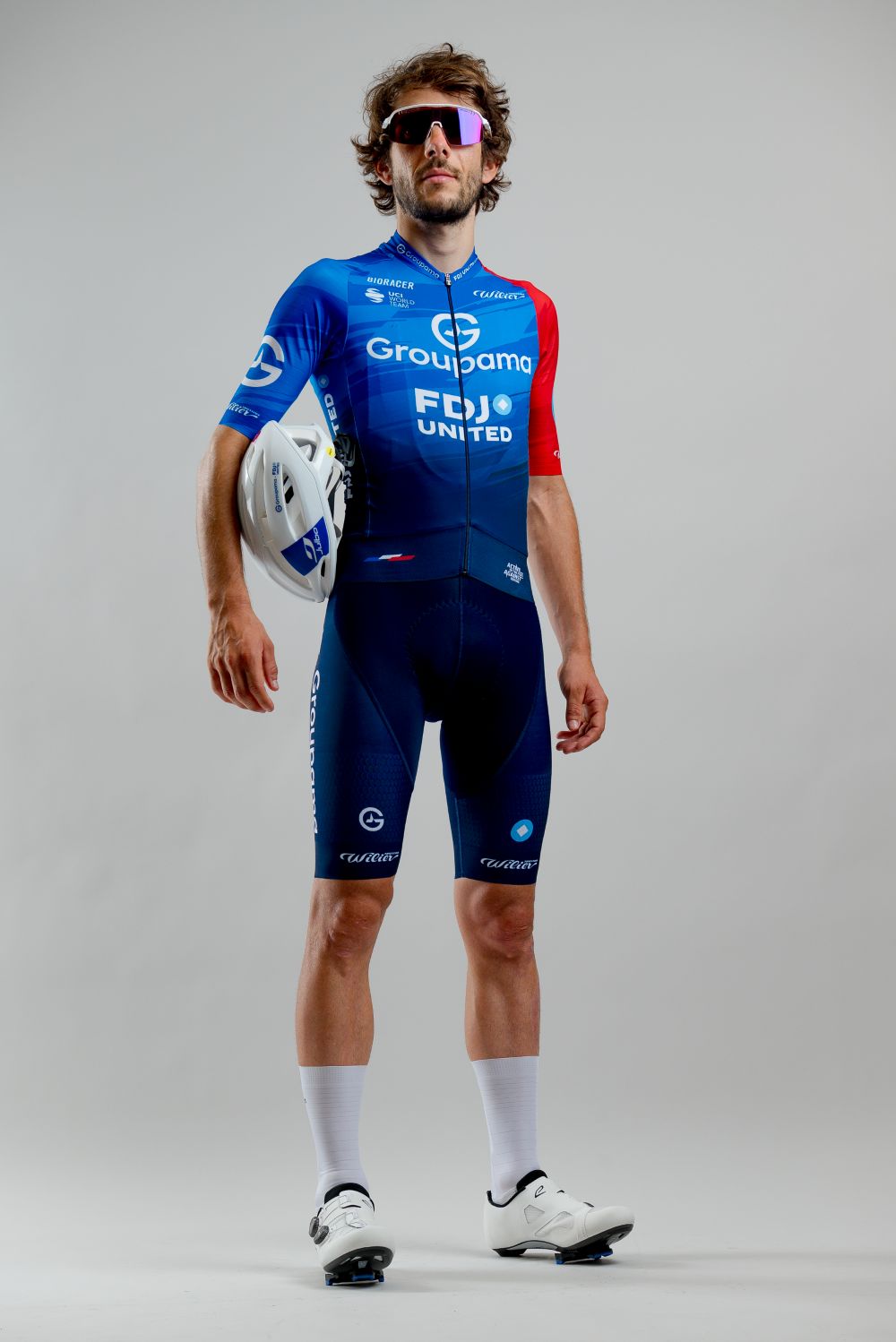
– occurred, however, at a time when his active boxing career had already ended. Whether he also read Nietzsche in his younger years, at the height of his career, to motivate himself is unknown and not very likely. Instead, he converted to Islam at that time in a high-profile manner, much like Cassius Clay once did. The former Eintracht Frankfurt professional (now assistant coach for the second team in the Regionalliga Südwest) and long-time captain of the Japanese national football team (114 matches), Makoto Hasebe, declared in 2014 that he read Nietzsche.3 Accordingly, he was strongly influenced by Nietzsche while writing his book "The Order of the Soul: 56 Habits to Achieve Victory."4 Hasebe thus wrote a philosophy bestseller that sold nearly two million copies in Japan (unfortunately, there is no German edition). He declined an interview request on this topic. However, Guillaume Martin-Guyonnet (cf. Fig. 1) was willing to collaborate and will be quoted several times throughout this article. Martin-Guyonnet has also emerged as a theorist; a few years ago, he completed a master's thesis on the topic "Sport as a Contemporary Application of Nietzsche's Philosophy." Furthermore, he has published two books in the field of "Sport and Philosophy."5
In strength sports, bodybuilding, and among personal trainers, however, Nietzsche’s name is heard more frequently. The following discussion will be guided by a few fundamental questions: Which of Nietzsche’s quotes, thoughts, or texts are most often used as sources of motivation in sports? In what ways could Nietzsche contribute to achieving better athletic performance or winning competitions?
Is Nietzsche more of a mentor for open combat in competition, for the wild and dramatic duel against an opponent, or is he a philosopher for training, recovery, and systematic preparation? Is Nietzsche a better mentor than other philosophers or religious figures? In this sense: Is Nietzsche, widely known as a "denier of God," a better coach than God?
I. Nietzsche on Sport and the Body
The topic of "Nietzsche and sport" appears to be a paradox: During Nietzsche’s lifetime, the concept of modern sport in its two forms—as a performance-oriented body cult and multi-billion-dollar entertainment machine, and as grassroots public health exercise—did not yet exist. The Olympic Games were only revived in 1896, and football was still an eccentric pastime for young Britons. At most, the gymnastics movement of the nationalist educator Friedrich Ludwig Jahn was established in 19th-century Germany, and by 1818 it already had 12,000 members who engaged in military training and patriotic rituals. Jahn introduced the horizontal bar and parallel bars as sports equipment; he is considered the inventor of artistic gymnastics, which has been used to torment children and teenagers in physical education for 200 years now. At the time, school and club sports served, among other things, to ensure the military readiness of male youth.
We do not know how Nietzsche fared at gymnastics.6 Later, as an adult, he did at least take regular walks—to what extent he pushed his physical limits, especially in the Alps, is also unknown; he was likely more of a flâneur than an extreme athlete. Anyone expecting concrete advice from him on sports and training will be disappointed. For Nietzsche, the priority is a fundamentally positive image of the body, which must be asserted against a body-hostile morality and religion so that one can first become a complete human being (in this sense, the Übermensch). Nietzsche’s goal is to combat the contempt for the body that prevailed at the time, which went hand in hand with the glorification of the mind and soul:
The body is something evil, beauty is a devilry; thin, hideous, starved, black, dirty, that is how the body should look. To sin against the body is, to me, a sin against the earth and the meaning of the earth. Woe to the unhappy one to whom the body seems evil and beauty devilish!7
Elsewhere he writes:
The concepts of "soul," "spirit," and finally even "immortal soul," were invented to despise the body, to make it sick—"holy"—to treat all things that deserve seriousness in life, the questions of food, housing, spiritual diet, medical treatment, cleanliness, and weather, with a terrifying frivolity!8
Instead, people should become aware of the inseparable connection between mind and body and live accordingly. Physical training precedes spiritual elevation: "[F]irst develop the body to a high level: the way of thinking will follow."9
In some of Nietzsche's statements, one even gets the impression that he places the body above the mind and views intellectual achievement as a mere derivation of physical vitality:
Behind your thoughts and feelings stands your body and your self within the body: the terra incognita. Why do you have these thoughts and these feelings? Your self within the body wants something with them.10
And in short: perhaps the entire development of the mind is about the body: it is the tangible history of a higher body forming itself . The organic is ascending to even higher levels. Our greed for knowledge of nature is a means by which the body seeks to perfect itself.11
The mental approach to one's own body, the affirmation of the body, and liberation from anti-physical and anti-sensual Christian morality were important steps for Nietzsche toward becoming a (super)human. Nietzsche used the word "gymnastic" rather than "sport" or "training," though not in reference to physical exercise, but rather metaphorically in relation to the training of the mind.12
II. Development in Modern Sport
Starting in Great Britain and the USA, the concept of entertaining and competitive sport spread across Europe at the end of the 19th century. Industrialization, mass media, and the sports industry developed in parallel, exerting mutual influence on one another. Sport became a mirror of the capitalist economy and the world of work. Records, performance metrics, and competition defined the rules and dynamics of sporting events, while results became the subject of lucrative betting, media coverage, and investment. Sports clubs became places where regional or social identity was manifested, and national teams in international competitions strengthened national consciousness in the participating countries. Furthermore, sport, like industry, underwent a constant evolution toward more intensive rationalization, specialization, and mechanization. "Modern sport," as Adorno recognized decades ago,
seeks to return to the body some of the functions that the machine has taken away from it. But it seeks to do so in order to train people all the more relentlessly to operate the machine. It tends to assimilate the body to the machine, which is why it belongs to the realm of unfreedom, wherever it is organized.13
The "mechanization of the body" continued unabated until the turn of the millennium, leading philosopher Volker Caysa to suggest as early as 1997 that sport could lead to the "death of the body"14 —a thesis that has gained plausibility against the current backdrop of Neuralink and cyborg experiments, the use of prosthetics, and "Enhanced Games." The joyful, free, and playful sport of the "amateur" is now merely a distant memory; even in recreational and grassroots sports, there is pressure for "professionalism" and measurable "performance." Today, sports and professional athletes are subjected to scientific and technological optimization processes; they are given machine bodies, which in turn serve as mass-media entertainment objects and advertising vehicles for products that benefit in some way from the aura of youthfulness surrounding sports and athletes. These products in the sectors of nutrition, clothing, footwear, vehicles, and sports equipment are designed for the mass market of recreational athletes who practice their hobby as professionally as possible in order to turn their own bodies into a fetish for their dreams of self-optimization and longevity. But even non-athletes want to benefit from the aura of sports products and merchandise. The triumph of sweatpants as everyday and street wear for passive sports fans and non-athletes alone is proof of this. Sports-enthusiastic average earners, on the other hand, use online courses, gyms, trackers, and apps in addition to their equipment. And those who can afford it work with hired nutritionists, physiotherapists, and personal trainers. While grassroots sport in the age of nationalism served primarily "public health"—specifically the strengthening of military and reproductive capacity, because healthy workers were needed for industry and masses of infantry for the armies—today it is primarily individuals who want to optimize and distinguish themselves through a sporty lifestyle, or at least simulate one through suitable products.
According to Niklas Luhmann, the following applies today to both professional and grassroots sports:
In sports, what stands out is the extreme reduction of broader meanings, which then serves as the foundation for a complex arrangement of performance evaluations, measurements, ratings, comparisons, progress, and setbacks.15
Numbers, data, and measurement methods seem to stand on their own here. As a counterweight to this essentially dull and sterile technologization of the body, athletes put on an aesthetically enhanced and morally saturated body show for the media and spectators. To this end, athletes and sports officials widely cater to the perpetual expectation of the audience that fair and honest competitions are taking place—that the athletes are competing not for money, but, like the amateurs of old, out of passion and love for the game and the sport. On one hand, modern sport embodies a "hyper-individualism"16 and presupposes a winner's instinct, writes Guillaume Martin-Guyonnet; on the other hand, the Olympic movement and the official sports world demand altruistic team performance, which must be hypocritical and is bound to provoke distrust.17
"This split in elite sports between a show on one side and moralizing rhetoric on the other reveals the state of society more clearly than any contemporary play," sports sociologist Gunter Gebauer criticized as early as 1997.18
III. Nietzsche-inspired athletes
Body machines, commercial body shows, nationalism, commerce, pointlessness, and double standards—it is unlikely that Nietzsche would have approved of today's sports world in any way. Nevertheless, Nietzsche is considered a role model in some athletic circles, a kind of "super-coach" capable of decisively changing an athlete's mindset. He is seen as an apologist for the human individual who transcends themselves. This line of thinking is extremely popular in sports because it suggests not only surpassing previous performances, personal bests, and rankings, but also a literal physical expansion through newly acquired muscle mass that bursts out of clothing that has become too tight: the joyfully noted "bulging out" of bodybuilders and recreational gym-goers. It is therefore not surprising that Nietzsche's work serves as a quarry for motivational quotes for trainers, fitness YouTubers, and personal coaches. Here are a few examples from online research. For instance, bodybuilder Alexander Bromley explains on his YouTube channel "What Nietzsche Taught Me About Lifting Weights", while a Texan coach asks the question: "Should Friedrich Nietzsche be your personal trainer?", and adorns his "Friedrich Nietzsche training method" with the famous quote: "That which does not kill us makes us stronger."19 English personal trainer Daniel Welsteadt promises: "By integrating the teachings of Nietzsche and Schopenhauer into my coaching, I can inspire my clients to tap into their inner warriors and tackle their fitness challenges head-on."20 Sports journalist Mandy Bonilla reasons: "Why most men quit the gym after six weeks: Nietzsche knew it 150 years ago." According to Bonilla, Nietzsche saw
the modern impulse to seek comfort as a direct path to weakness. For the German philosopher, hardship was a necessary resistance that forges a stronger will. He believed that this is the only source of any true improvement for humanity.21
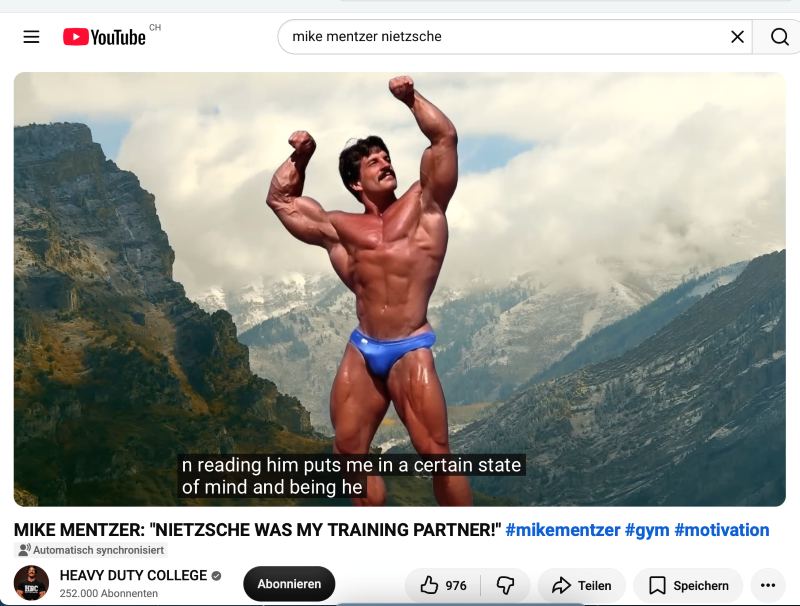
On the YouTube channel "Heavy-Duty-College," the American bodybuilder and 1978 Mr. Universe titleholder, Mike Mentzer (1951–2001), is posthumously portrayed as a staunch Nietzschean (cf. Fig. 3):
In a world full of noise... one man trained in silence. While others chased the hype, Mike Mentzer sought the truth – in the works of Nietzsche. This is not just a story about sets and reps. It is about pain. Philosophy. Strength. And the fire it takes to build not just a body... but a higher self. In the weeks before he made history as Mr. Universe, Mentzer’s training partner was not a human – it was the will to power. Nietzsche’s words lit the fuse. The iron forged the rest. What does it take to become an Übermensch? Solitude. Suffering. And a soul forged in fire.22
In retrospect, Mentzer, who died of a morphine overdose in 2001, is stylized as the incarnation of Nietzsche’s Übermensch.
For Guillaume Martin-Guyonnet, the true Übermenschen are the extreme athletes who push the boundaries of what is humanly possible – mind you, without doping.23 Regarding the quote "That which does not kill us makes us stronger," Martin-Guyonnet says:
While it is true that Nietzsche’s words are often taken out of context and psychologized to praise particularly resilient people, in this case, it actually hits the nail on the head. I have therefore made this quote my mantra in a way. Nietzsche understood that physical exertion and hard training, which is, after all, a form of aggression against one's own body, ultimately lead to an increase in performance and resilience.24
In summary: The master trainer Nietzsche stands for toughness toward oneself, trainable willpower, and resilience against setbacks. His teachings are applicable to endurance training as well as strength and combat sports. Most frequently cited from his "war school of life" is the famous aphorism, "What does not kill me makes me stronger." Also very well known is the sentence from Zarathustra:
Those who have always spared themselves too much will eventually fall ill from all that sparing. Praised be what makes one hard! I do not praise the land where milk and honey flow!25
And finally, the sentence: "He who has a why to live for can bear almost any how"26, forms the foundation of all capacity for performance and endurance in training as well as in life.
Another, somewhat less frequently mentioned topos that makes Nietzsche interesting for athletes is the idea of an individual will to victory that can be awakened and trained. In an acute duel situation, this "will to power" makes the decisive difference against competitors who are equally well-trained and physically just as strong. Former MMA fighter Josh Barnett, who introduces himself on his website as a "master mixed martial artist better described as a Nietzsche-quoting warrior poet," sees Nietzsche as practically an apostle of combat sports:
When I am in the ring fighting another human being—for my life, for my livelihood—that is the moment when I feel most in harmony with my being. That is something Nietzsche described as the highest state of existence.27
However, Nietzsche’s concept of the "will to power" is not strictly about defeating an opponent and taking control of them—that is, seizing power in the ring. Rather, his "will to power" stands for a holistic affirmation of life with its constant becoming and passing away, its constant struggle and striving, and is thus more of a general expression of the vitalist-biological zeitgeist of the 19th century:
And do you know what "the world" is to me? Shall I show it to you in my mirror? This world: a monster of energy, without beginning, without end, a firm, iron magnitude of energy […]: this, my Dionysian A world of eternal self-creation, of eternal self-destruction […] – This world is the will to power – and nothing besides! And you yourselves are also this will to power – and nothing besides!28
Perhaps there is a misunderstanding here, a mistake made by athletes in taking Coach Nietzsche too literally. For Guillaume Martin-Guyonnet this would be a distortion of thought for practical purposes:
That does not correspond to my understanding of philosophy, which, in my view, does not necessarily have to be useful. Rather, philosophy is valuable because it shakes you to your core. In short: if philosophy has helped me in cycling, it is less because of the ideas I have taken from it, and more because it has enabled me to find a kind of balance, to recognize that there are other worlds beyond the life of a top athlete. Conversely, I am convinced that sport has always helped me to think more clearly.29
For Martin-Guyonnet, "this inseparability of body and mind" is an original Nietzschean idea. As an athlete, he is directly drawn to "the central role he assigns to the body in his work," as well as "Nietzsche's concrete observations (especially in Ecce Homo) on the question of the optimal environment for personal development, the best diet, etc. [...] Nietzsche's strength also lies in the fact that his work encourages readers to think and interpret actively."30
For professional cyclist Martin-Guyonnet, Nietzsche is therefore not a coach whose motivational slogans one memorizes and applies directly to training. He views his philosophy as a holistic companion for life and a means of shaping one's personality, with better athletic performance and more composed behavior in extreme situations as a side effect.

IV. Conclusion: Nietzsche or God?
So, is Nietzsche a better sports mentor than other philosophers or religious figures? Is Nietzsche, widely known as a "denier of God," a better coach than—God? Setting aside the fact that Nietzsche neither denied nor killed God—he merely wished for a different, life-affirming, sensual, and body-friendly God31 – he is indeed the philosopher who could be most helpful to athletes. Nietzsche is closer to sports than an abstract, rewarding, punishing, or all-controlling God because Nietzsche values the body, has recognized the inextricable connection between body and mind, and preaches a holistic, dietary lifestyle. In this sense, then: Yes, Nietzsche is a better coach than God.
Article image
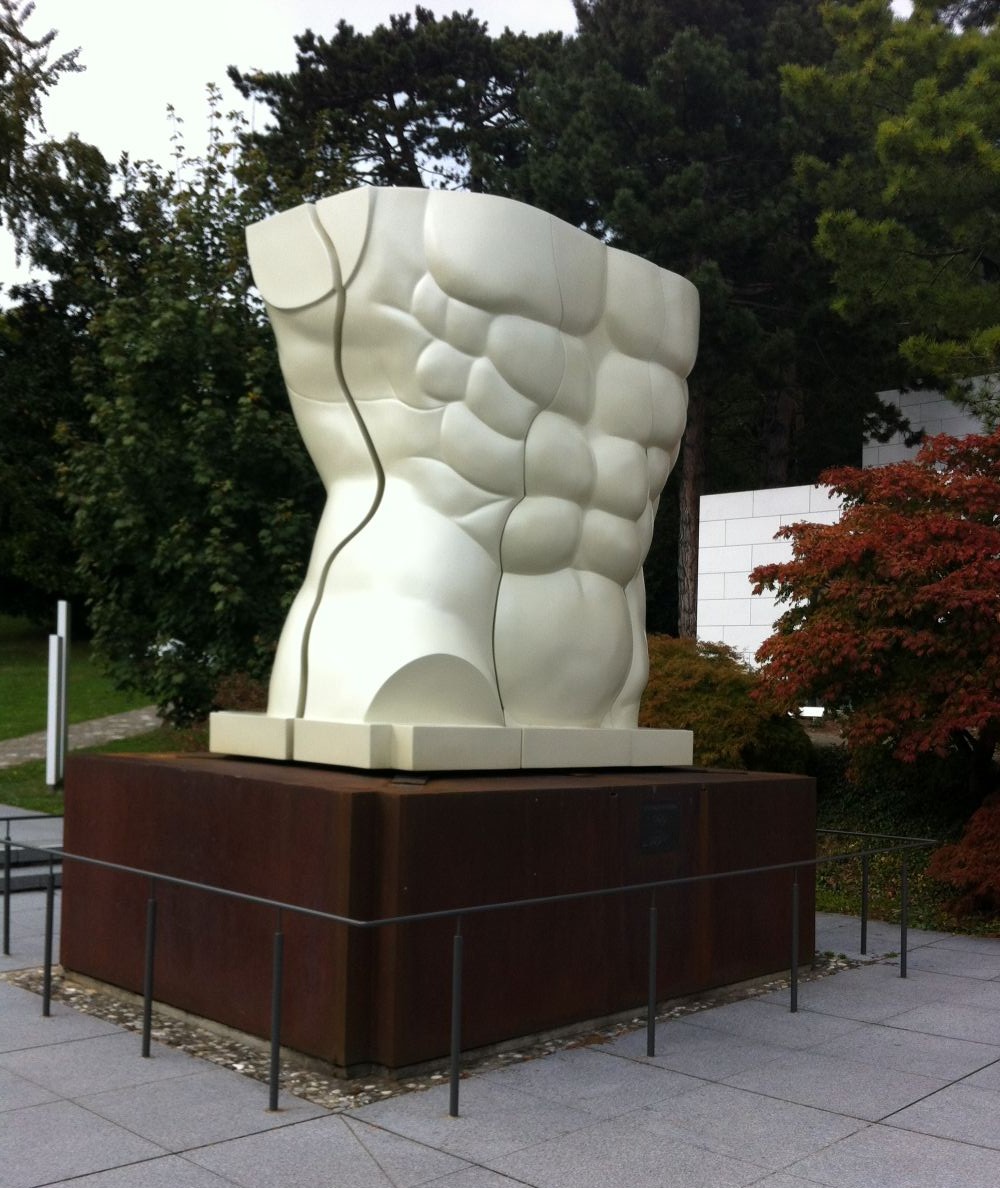
The Six-Pack Monument. Plastic Citius – Altius – Fortius by the Spanish artist Miguel Ortiz Berrocal in the park of the Olympic Museum in Lausanne. Photo: Christian Saehrendt 2023.
Bibliography
Adorno, Theodor W.: The Realm of Unfreedom and Sport. In: Volker Caysa (ed.): Philosophy of Sport. Leipzig 1997, pp. 42 f.
Balmer, Rudolf: Sisyphus in the Saddle. Online: https://taz.de/Erfolglose-Franzosen-der-Tour-de-France/!5425567/ (07/01/2017).
Barnett, Josh: Josh ‘The Warmaster’ Barnett. Online: https://www.joshbarnett.com/thewarmaster.
Bates, Steve: Hasebe, an author and philosopher. Online:
https://timesofindia.indiatimes.com/sports/football/fifa-world-cup/hasebe-an-author-and-philosopher/articleshow/64822264.cms (07/02/2018).
Bonilla, Mandy: Why most men quit the gym in 6 weeks. Nietzsche nailed it 150 years ago. Online: https://www.msn.com/en-us/health/fitness/why-most-men-quit-the-gym-in-6-weeks-nietzsche-nailed-it-150-years-ago/ss-AA21h2ZC (04/19/2026).
Caysa, Volker: Foreword. In: Idem (Ed.): Sportphilosophie. Leipzig 1997, pp. 7–13.
Gebauer, Gunter: From Body Technologization to Body Show. In: Volker Caysa (ed.): Philosophy of Sport. Leipzig 1997, pp. 275–289.
KellyPersonalTraining, Should Friedrich Nietzsche be your personal trainer? Online: https://kellypersonaltraining.com/blog-overview/2016/10/04/should-friedrich-nietzsche-be-your-personal-trainer (04/11/2017).
Legros, Martin & Guillaume Martin: Guillaume Martin: "I have made Nietzsche's words my mantra". Online: https://www.philomag.de/artikel/guillaume-martin-ich-habe-nietzsches-worte-zu-meinem-mantra-gemacht (09/15/2020).
Luhmann, Niklas: The Body as a Vanishing Point of Meaninglessness. In: Volker Caysa (ed.): Philosophy of Sport, Leipzig 1997, pp. 226–228.
Martin-Guyonnet, Guillaume: DThe Society of the Peloton. A Philosophy of the Individual in the Group. Bielefeld 2022.
Idem: Socrates on a Racing Bike. A Tour de France of Philosophers. Bielefeld 2021.
Sickenberger, Ulrika: The Football Philosopher. Online:
https://www.bild.de/sport/fussball/makoto-hasebe/der-fussball-philosoph-makoto-hasebe-37122128.bild.html (08/06/2014).
TS Staff: Top 15 Athletes Who Are Atheist. Online: https://www.thesportster.com/entertainment/top-15-athletes-who-are-atheist/ (09/24/2014).
Tyson, Mike: Mike Tyson Explores Kierkegaard. Online: https://www.wsj.com/articles/SB10001424052702303932504579256390785052798 (12/13/2013).
Welstead, Daniel: Warrior Wisdom. Online: https://www.danielwelstead.com/post/warrior-wisdom-how-philosophy-fuels-your-fitness-game (05/06/2023).
Footnotes
1: Cf. TS Staff, Top 15 Athletes Who Are Atheist.
2: Mike Tyson, Mike Tyson Explores Kierkegaard (trans. Paul Stephan).
3: Cf. Steve Bates: Hasebe, an author and philosopher.
4: Cf. Ulrika Sickenberger, The Football Philosopher.
5: Cf. Guillaume Martin-Guyonnet, The Society of the Peloton and ibid., Socrates on a Racing Bike.
6: In any case, he did a lot of gymnastics as a student at Schulpforta. It is mentioned remarkably often in the letters to his mother during his school years, though they do not allow for any conclusions about his skill in the activity. The word "turnen" (gymnastics) is also firmly part of Nietzsche's vocabulary.
7: Unpublished Fragments, no. 1882 5[30].
8: Ecce Homo, Why I Am a Destiny, sec. 8.
9: Unpublished Fragments 1884, no. 1884 26[353].
10: Unpublished Fragments, no. 1882 5[31].
11: Unpublished Fragments, no. 1883 24[16].
12: Cf. e.g. Human, All Too Human I, aph. 252 & 266 and Twilight of the Idols, Expeditions, aph. 23. In this metaphorical sense, Nietzsche also uses the word "gymnastics" twice (cf. Daybreak, aph. 207 & Human, All Too Human II, The Wanderer and His Shadow, aph. 4). Nietzsche only uses the terms "training" and "sport" in his work in the third essay of the On the Genealogy of Morality – and specifically as English loanwords, to disparagingly characterize the numbing self-practices that the ascetic priests recommend in order to escape "ressentiment." In his posthumous papers, there is another interesting use of the word "sport": "More natural is our first society, that of the rich, the idle: one hunts one another, sexual love is a kind of sport in which marriage provides both an obstacle and an incentive; one converses and lives for the sake of pleasure; one values physical advantages above all else, one is curious and daring" (no. 1887 10[53]).
13: Theodor W. Adorno, The Realm of Unfreedom and Sport, p. 43.
14: Volker Caysa, Preface, p. 11.
15: Niklas Luhmann, The Body as the Vanishing Point of Meaninglessness, p. 228.
16: Martin-Guyonnet, The Society of the Peloton, p. 29.
17: Cf. ibid., pp. 107 f.
18: Gunter Gebauer, From Body Technologization to Body Show, p. 289.
19: Cf. KellyPersonalTraining, Should Friedrich Nietzsche be your personal trainer? However, the author changes the pronoun in the original quote: "What does not kill me makes me stronger" (Twilight of the Idols, Maxims and Arrows, aph. 8).
20: Daniel Welstead, Warrior Wisdom (trans. Paul Stephan).
21: Why most men quit the gym in 6 weeks (Trans. Paul Stephan).
22: https://www.youtube.com/watch?v=rIeQKeVmwT0 (04/04/2025) (Trans. Christian Saehrendt).
23: Cf. Rudolf Balmer, Sisyphus in the Saddle.
24: Martin Legros & Guillaume Martin: Guillaume Martin: "I have made Nietzsche's words my mantra".
25: Thus Spoke Zarathustra, The Wanderer.
26: Twilight of the Idols, Maxims and Arrows, aph. 12.
27: Josh Barnett, Josh ‘The Warmaster’ Barnett (Trans. Paul Stephan).
28: Unpublished Fragments, no. 1885 38[12].
29: Guillaume Martin-Guyonnet in an email to the author (April 15, 2026).
30: Guillaume Martin-Guyonnet in an email to the author (April 15, 2026).
31: Cf. especially The Gay Science, aph. 125 and also the following remark: “The whole long, immense ladder of light and color of happiness was called by the Greek […] by the god’s name: Dionysus” (Unpublished Fragments, no. 1885 41[6]).