#
callousness
“How Well Disposed Would You Have to Become to Yourself and to Life”
Prolegomena to Any Future Philosophy That Will Be Able to Present Itself as an Enlightenment — Part II
“How Well Disposed Would You Have to Become to Yourself and to Life”
Prolegomena to Any Future Philosophy That Will Be Able to Present Itself as an Enlightenment — Part II
After our author, in the first part of this article, described the current political-cultural situation with reference to Fukuyama as an outgrowth of deep-seated boredom, which numbs itself in excesses of anger and indignation, he tries in the following second to suggest a possible turn for this zeitgeist, which could manifest itself in a new Enlightenment verve and a new positive self-image of the Enlightenment. Our author, with Nietzsche, opposes the “four despairs” that afflict the present tense, “four transfigurations” and “fields of research” resulting from them. An ironic view of the world and oneself should help to practice a transfigurative perspective on the world, which would be able to overcome the lethargy of postmodernism and revitalize the modernist project. The program of self-reliant future Enlightenment.
Monumentality Issues. Nietzsche in Art After 1945
Thoughts on the Book Nietzsche Forever? by Barbara Straka I
Monumentality Issues. Nietzsche in Art After 1945
Thoughts on the Book Nietzsche Forever? by Barbara Straka I
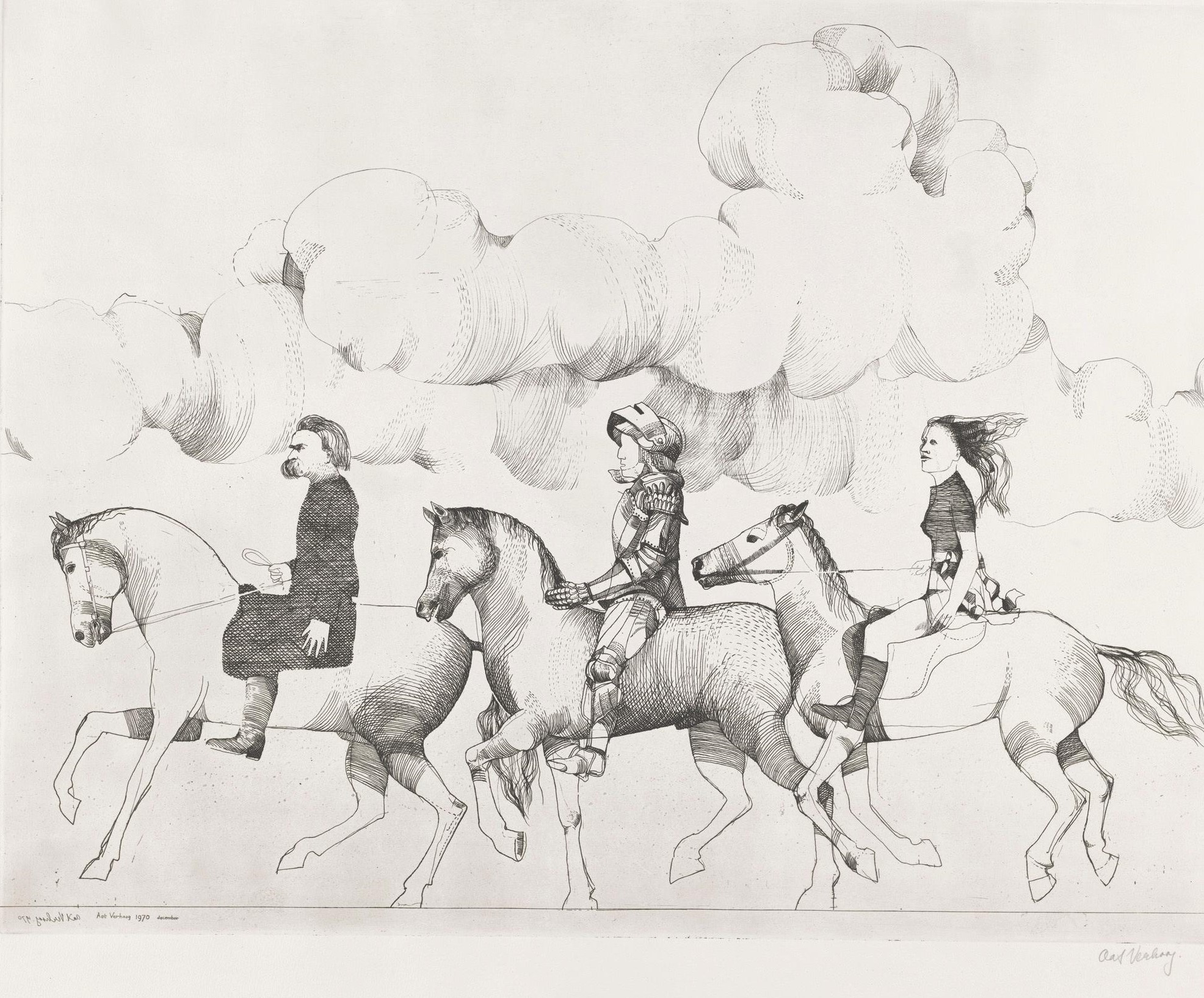

The fact that Nietzsche is a philosopher who speaks particularly to artists, even an “artist-philosopher,” is almost commonplace. In Barbara Straka's newly published book Nietzsche Forever?, the question is explored how exactly Nietzsche has been received in 20th century art, in particular that after 1945. The author has created a standard work that clearly and competently conveys the topic in plausible overviews. In this first part of this two-part article, Michael Meyer-Albert dedicates himself to her book and will then accentuate his own position in the upcoming second part.
Nietzsche’s Techniques of Philosophizing
With Glances Towards Wittgenstein and Heidegger
Nietzsche’s Techniques of Philosophizing
With Glances Towards Wittgenstein and Heidegger
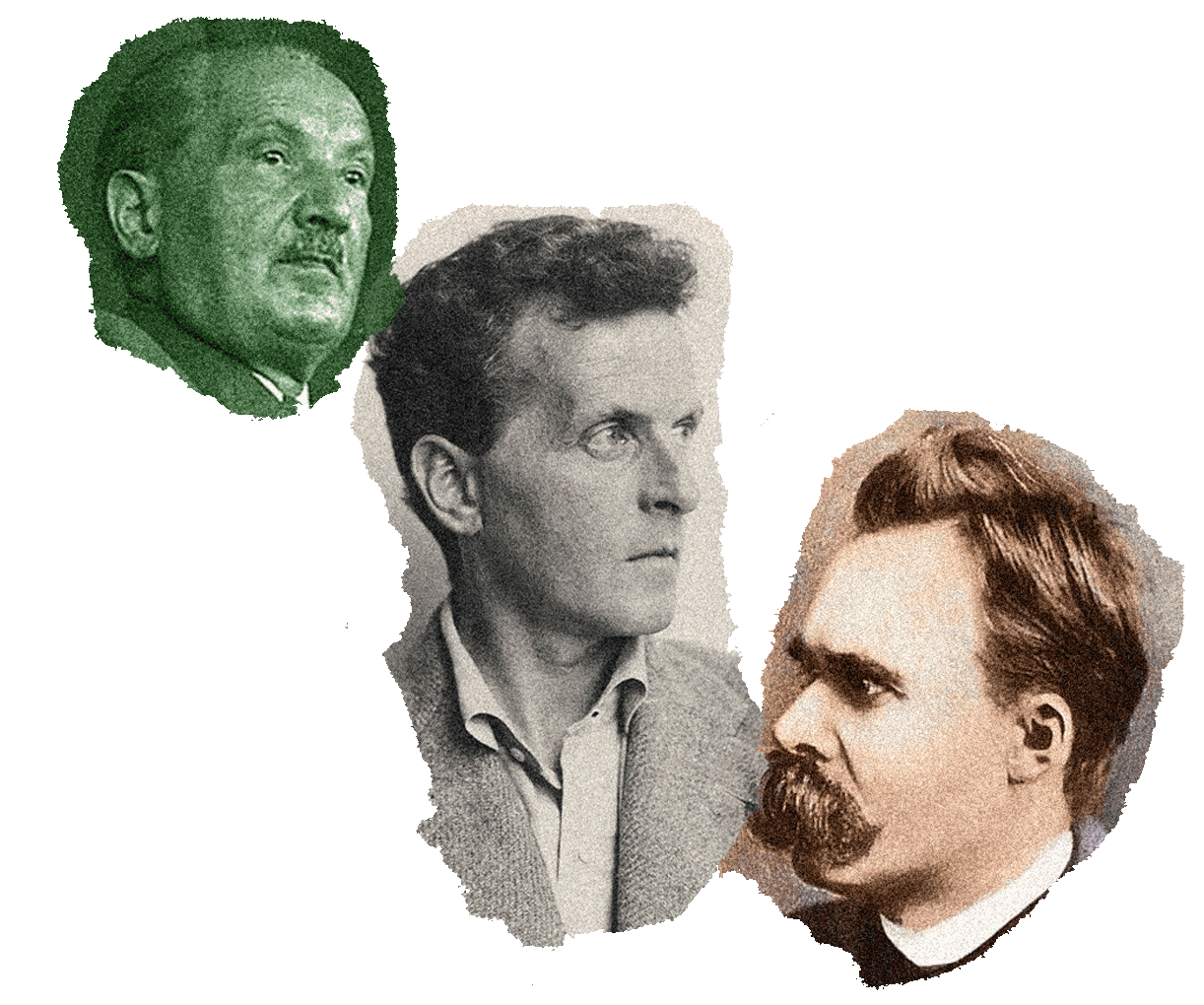
A fixed feature at the annual conference of the Nietzsche Gesellschaft [Nietzsche Society] conference is the Lectio Nietzscheana Naumburgensis: a particularly distinguished scholar delivering an extended lecture on the conference theme on the final day, thereby providing a pointed conclusion. The most recent conference in October 2025 awarded this special honor to Werner Stegmaier to recognize his long tenure as editor of the influential Nietzsche-Studien [Nietzsche Studies] and his authorship of numerous seminal monographs on Nietzsche’s philosophy. Running from October 16-19, 2025, the conference focused the theme “Nietzsche’s Technologies,” as Emma Schunack reported.
Generously granting his permission to publish his lecture in full and in this translation, Stegmaier takes on the conference theme from an unexpected perspective. Rather than examining what is commonly understood as “technologies”—machines, cyborgs, or automata—he explores instead Nietzsche’s philosophical techniques, both intellectual and rhetorical. Weighing up the original and idiosyncratic methods Nietzsche deployed while writing, Stegmaier reflects on how best to interpret and assess them. How were they able to enthuse and win over successive generations of readers? What can we learn from these today?
Comparing Nietzsche’s techniques with those of two other modern philosophical giants, Martin Heidegger (1889–1976) and Ludwig Wittgenstein (1889–1951), Stegmaier retraces all three philosophers’ break with the classical and conceptually oriented techniques of thinking inherited from antiquity, and their discoveries of radical and experimental means of developing philosophy in the age of “nihilism.” Replacing a one-dimensional, metaphysical understanding of rationality, these means cultivate a plural, perspectival mode of thought that necessarily relies on entirely different techniques. Situating Nietzsche’s methods within these broader developments in intellectual history, the Lectio establishes an utterly new framework for understanding his thought and its place within modern philosophy.
Translated by Henry Holland.
Being a Father with Nietzsche
A Conversation between Henry Holland and Paul Stephan
Being a Father with Nietzsche
A Conversation between Henry Holland and Paul Stephan
Nietzsche certainly did not have any children and is also not particularly friendly about the subject of fatherhood in his work. For him, the free spirit is a childless man; raising children is the task of women. At the same time, he repeatedly uses the child as a metaphor for the liberated spirit, as an anticipation of the Übermensch. Is he perhaps able to inspire today's fathers after all? And can you be a father and a Nietzschean at the same time? Henry Holland and Paul Stephan, both fathers, discussed this question.
We also published the complete, unabridged discussion on the Halcyonic Association for Radical Philosophy YouTube channel (Part 1, part 2).
Übermensch Hustling
Nietzsche Between Silicon Valley and New Right
Übermensch Hustling
Nietzsche Between Silicon Valley and New Right


This essay, which we awarded first place in this year's Kingfisher Award for Radical Essay Writing (link), examines Nietzsche's question of the “barbarians” in a contemporary context and analyses how his philosophy is being politically exploited today. Against this background, the text shows how hustle culture, platform capitalism and neo-reactionary ideologies have been economizing the ”will to power“ and have become a new form of subtle barbarism: an internal decomposition of cultural depth through market logic, technocratic myths, and performative nihilism. Nietzsche's thinking, however, can be used precisely to describe these tendencies in their genealogy, to unmask their immanent nihilism, and to present an (over-)humane alternative to them.
Whistling in the Woods and Screaming for Love
Nietzsche's Echo in the Heavy Metal Music Scene
Whistling in the Woods and Screaming for Love
Nietzsche's Echo in the Heavy Metal Music Scene


Like hardly any other philosopher, Friedrich Nietzsche has left his mark on popular culture — less in the pleasing mainstream entertainment, but more in subcultures and in artistic positions that are considered “edgy” and “dark.” In this “underworld,” Nietzsche's aphorisms, catchphrases, slogans and invectives are widely used — for example in the musical genres of heavy metal, hardcore and punk focused on social and aesthetic provocation. What is the reason for that?