#
fashion
The Atheist as Overtrainer
Nietzsche and the New Devoutness in Sports
The Atheist as Overtrainer
Nietzsche and the New Devoutness in Sports
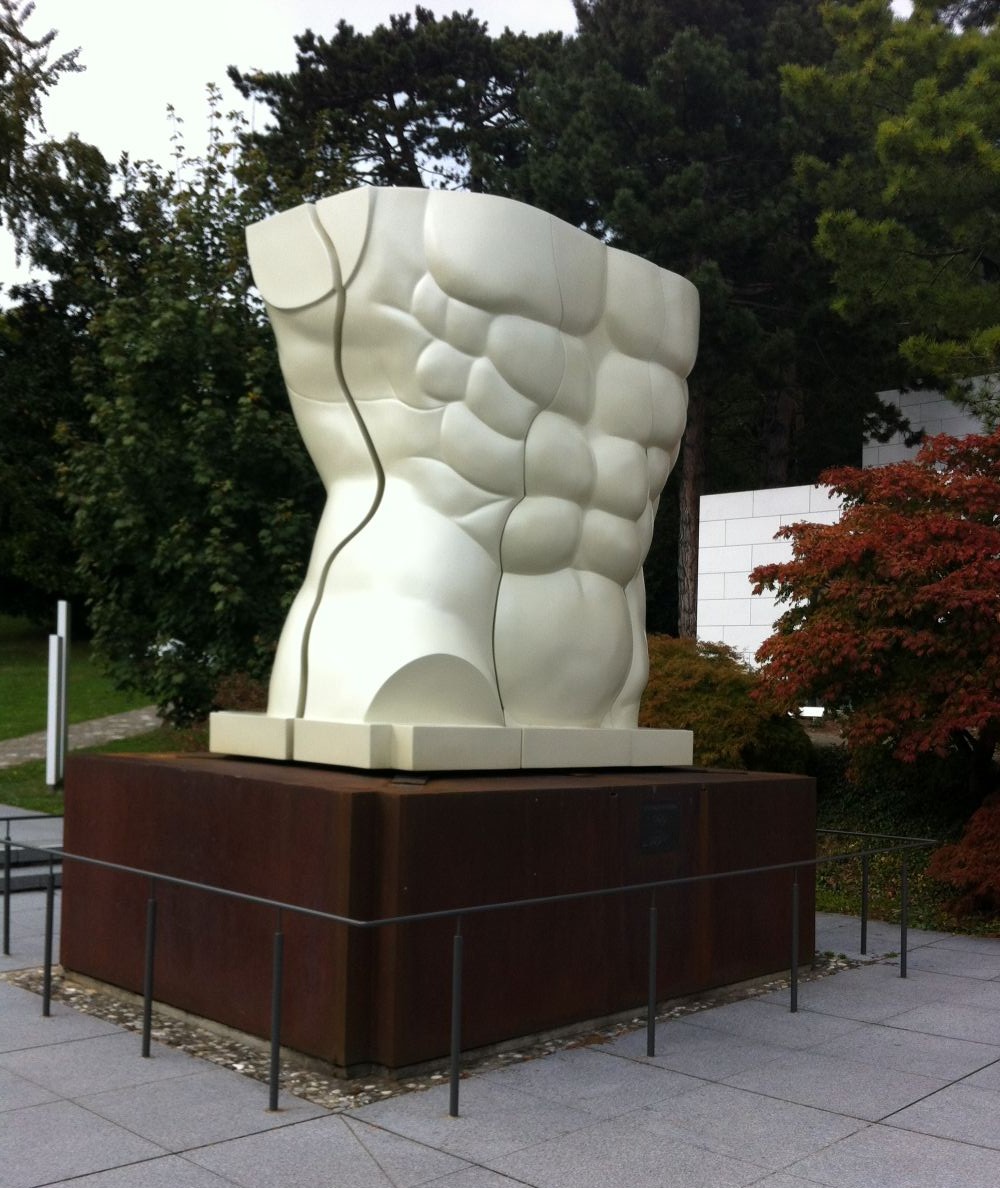

More and more professional athletes are openly embracing their religious faith – and some even cite Nietzsche as a source of ideological motivation. What is behind the Nietzsche worship among some athletes? Is Nietzsche really suitable as a motivator for physical training? And: Is the well-known atheist Nietzsche a better coach than God?
The Artificial Nietzsche
How A"I" Distorts Our Perception of Nietzsche and How We Can Counter This
The Artificial Nietzsche
How A"I" Distorts Our Perception of Nietzsche and How We Can Counter This
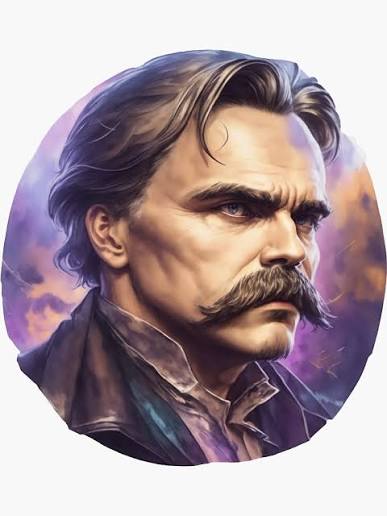
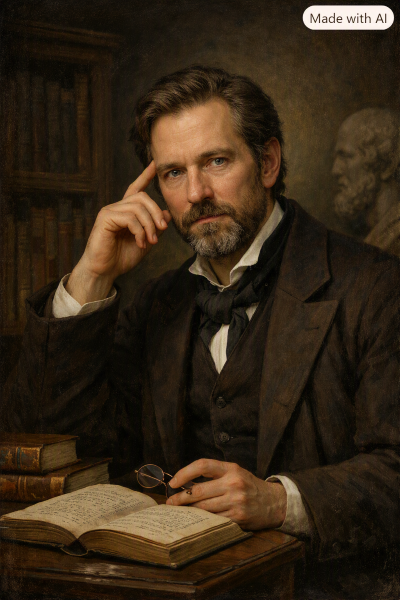
Our author Paul Stephan has finally had enough. The internet is being flooded with cheap A"I" content, often called "AI slop," which is just plain annoying—and is even being rewarded with countless likes and followers. Often, this content is about philosophy, too—specifically Nietzsche. How much damage is being done when this artificial Nietzsche increasingly displaces the real one, as A"I" outputs that repeat the same half-truths and falsehoods replace nuanced human interpretations? When machine-generated caricatures literally push out genuine photographs and artistic portraits? Paul Stephan embarked on an often frustrating search for answers and presents you with a few "highlights." Although he still believes that A"I" opens up positive possibilities—and occasionally makes use of them himself—in his third piece on the subject (feel free to read the first and second commentaries here and there), he feels it is time to take off the kid gloves and bring out the hammer. Stop the slop!
The Postmodern Forest
How the Forest Subverts Modernity's Totalizing Claim
The Postmodern Forest
How the Forest Subverts Modernity's Totalizing Claim

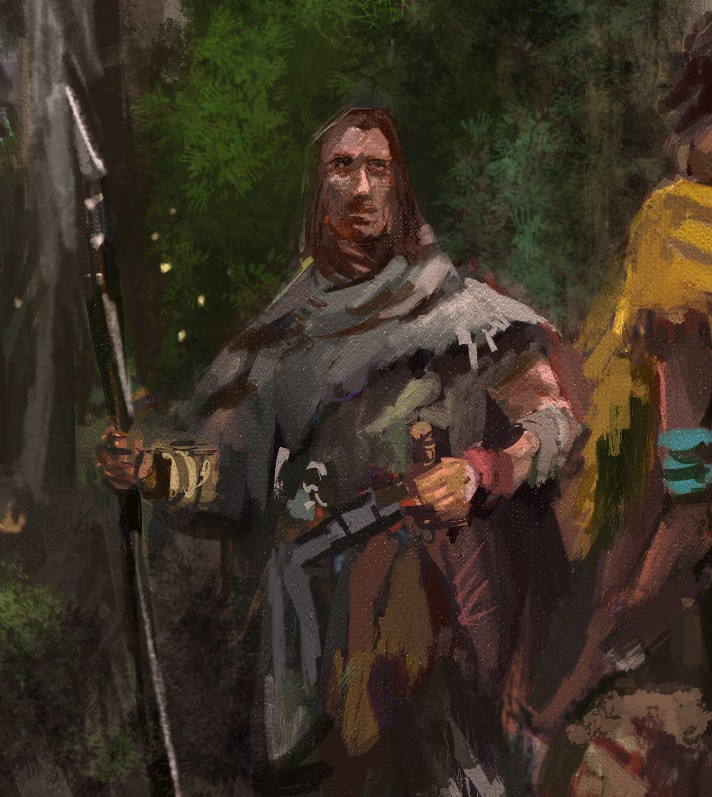
Forests are trending. And this is by no means contradictory to another, even larger trend of our time: digitalization. In this article, Mandus Craiss demonstrates that the forest is a network. Digitalization also occurs in a network-like manner; both phenomena are therefore characteristic of postmodernism.
In the first part of the article, the forest is characterized as a non-centralized and thus typically postmodern natural phenomenon. The second part defines "postmodernity" and discusses the extent to which this epochal concept is still, or once again, relevant – a discourse whose very early roots can be traced back to Nietzsche. Finally, the third part explains how the network aspect of postmodernity manifests itself and how the human-forest relationship has evolved recently.
This article is part of our special series this year "the forest as a livelihood".
Being a Father with Nietzsche
A Conversation between Henry Holland and Paul Stephan
Being a Father with Nietzsche
A Conversation between Henry Holland and Paul Stephan
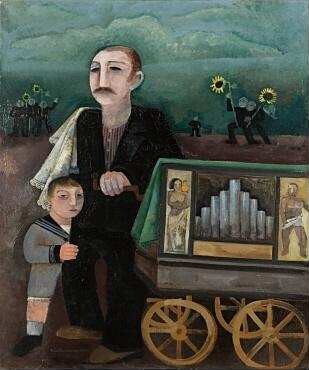
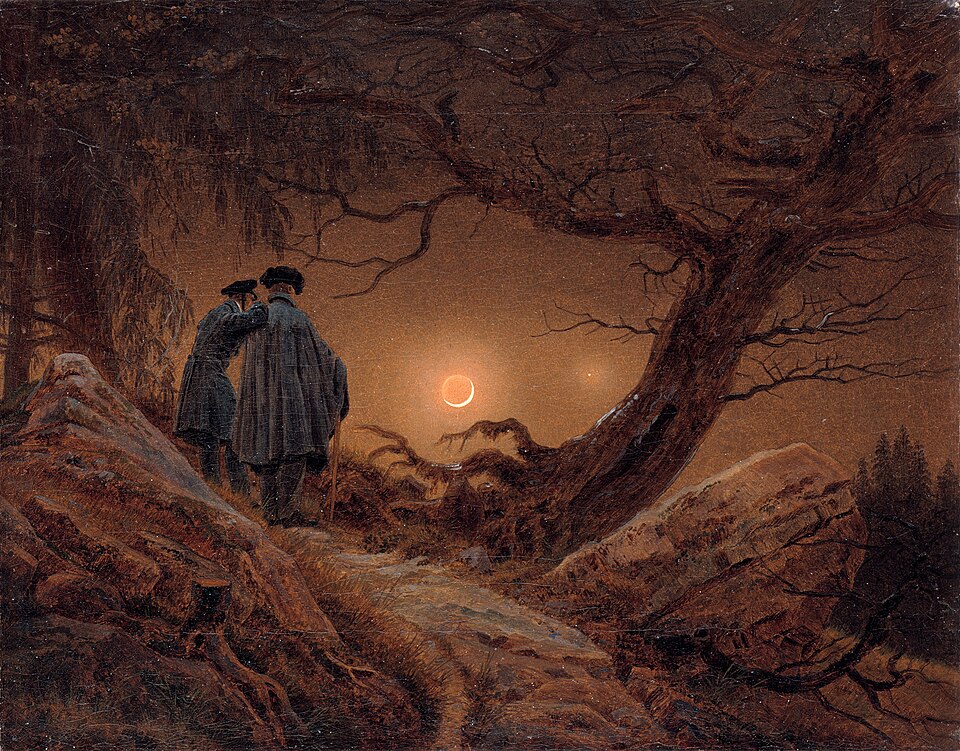
Nietzsche certainly did not have any children and is also not particularly friendly about the subject of fatherhood in his work. For him, the free spirit is a childless man; raising children is the task of women. At the same time, he repeatedly uses the child as a metaphor for the liberated spirit, as an anticipation of the Übermensch. Is he perhaps able to inspire today's fathers after all? And can you be a father and a Nietzschean at the same time? Henry Holland and Paul Stephan, both fathers, discussed this question.
We also published the complete, unabridged discussion on the Halcyonic Association for Radical Philosophy YouTube channel (Part 1, part 2).
Taylor Swift — Superwoman or Last Man?
A Nietzschean Critique of the Most Successful Pop Star of Our Time
Taylor Swift — Superwoman or Last Man?
A Nietzschean Critique of the Most Successful Pop Star of Our Time


Taylor Swift is one of the most important “idols” of our time. Reason enough for our regular authors Henry Holland, Paul Stephan and Estella Walter to pick up on the Nietzschean “hammer” and get to grips with the hype a bit: Does Swift deserve the cult around her that goes down to philosophy? Is it grossly overrated? And what explains the discrepancy between appearance and reality, spectacle and life?
You can watch the entire unabridged conversation on the Halcyonic Association for Radical Philosophy YouTube channel (link).
“Smooth ice.
A paradise.
For the
who knows how to dance well!”1
Nietzsche and Techno
Nietzsche and Techno
Nietzsche and Techno

“Techno” — the show of the same name at the Swiss National Museum in Zurich, with traveling exhibitions by the Goethe-Institut and publications in German-speaking countries is currently honoring a once-subcultural movement that became a mass phenomenon in the 1990s with the Berlin Love Parade and continues to live on in Zurich's Street Parade today. Did techno offer (or offer) the Dionysian cultural experience that Nietzsche celebrated in his writings? Would Nietzsche have been a raver?
Abonimably Married, With Children
Nietzsche as the Wagners' house friend in the “Tribschen Idyll”
Abonimably Married, With Children
Nietzsche as the Wagners' house friend in the “Tribschen Idyll”

Richard Wagner lived on Lake Lucerne for six years. In April 1866, he was able to rent the Landhaus of the Lucerne patrician family Am Rhyn, which had been built in a beautiful scenic location on the Tribschenhorn. Nietzsche had been a frequent guest there at that time and enjoyed the family connection. For him, it was an episode that shaped him throughout his life, so that the confrontation with Wagner — in its entire range from unconditional adoration to rude rejection — can perhaps even be regarded as the heart of his thinking. Today, the building houses the Richard Wagner Museum. His current special exhibition focuses on the composer's anti-Semitism.
“A Gods’ Table for Divine Dice Throws and Dice Players”
Nietzsche's Superman Visits the Start-Up Scene
“A Gods’ Table for Divine Dice Throws and Dice Players”
Nietzsche's Superman Visits the Start-Up Scene


Nietzsche's superman is dead. Hardly anyone can do anything with this obscure idea anymore. You'd think so. And yet, in the current startup environment, you encounter numerous set pieces from Zarathustra's promise. What is it all about? — On the occasion of Nietzsche's 180th birthday, Natalie Schulte dedicates herself to this peculiar continuation of one of the philosopher's best-known concepts. A plea for taking a closer look at Nietzsche's idea despite its past and present misinterpretations.
Editor's note: We have translated longer English quotations into German in the footnotes ourselves.