#
the New
From the Will to Power to the Human Being as a New Beginning
Nietzsche from Hannah Arendt's Perspective
From the Will to Power to the Human Being as a New Beginning
Nietzsche from Hannah Arendt's Perspective
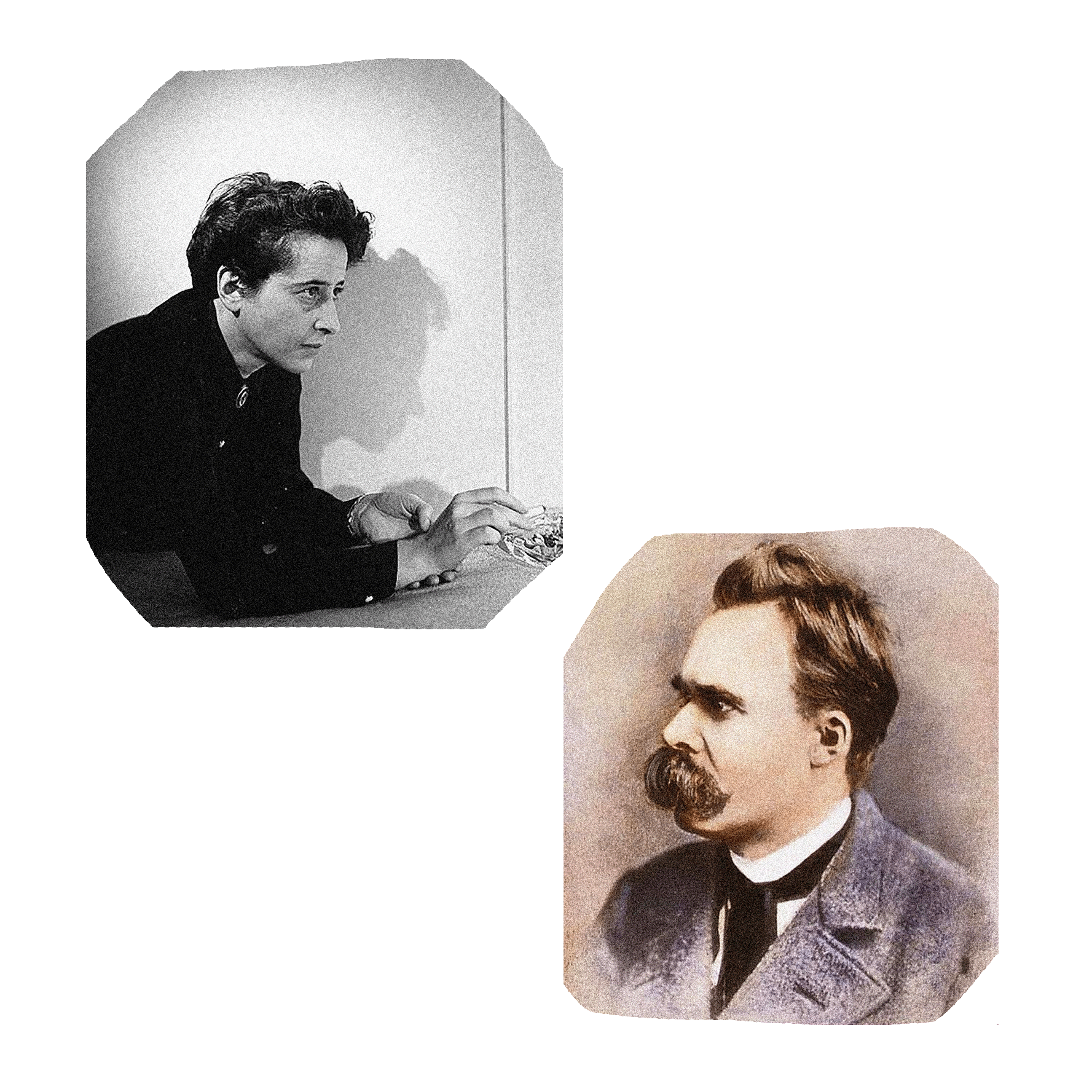

In her major work The Life of the Mind, Arendt builds upon Nietzsche’s understanding of the will to power as interpretation. Rather than following Kant’s conception of free will, she argues that through the will, something new enters the world with every newborn human being—a notion that resembles Zarathustra’s demand that the Übermensch should invent new values. Arendt also agrees with Nietzsche’s assertion that the "‘true world’" is a "fable," for Arendt because modern sciences possess no ultimate truths—a fact they themselves acknowledged around 1900, but which they now refuse to recognize. Thus, as heretics of science, Nietzsche and Arendt belong to the ranks of the "evil" philosophers.
Arendt lived from 1906 to 1975 and is considered one of the great thinkers of the 20th century. The daughter of secular Jews, she studied in the 1920s in Marburg, Freiburg, and Heidelberg under such influential philosophers as Edmund Husserl, Karl Jaspers, and Martin Heidegger. As a young student, she was briefly involved with the latter. In 1933, she was forced to emigrate, and from 1941 she lived in the USA, where she began teaching at various universities in 1953. This unorthodox intellectual is best known for her critique of totalitarianism and her communicative concept of the political.
Her 120th birthday provides sufficient reason to take a closer look at the intellectual relationship between Nietzsche and Arendt.
You can listen to and watch a version of this text, read by the author himself and supplemented with original audio clips of Arendt, on YouTube and Soundcloud .
Nietzsche on a Bike
A Declaration of Love
Nietzsche on a Bike
A Declaration of Love
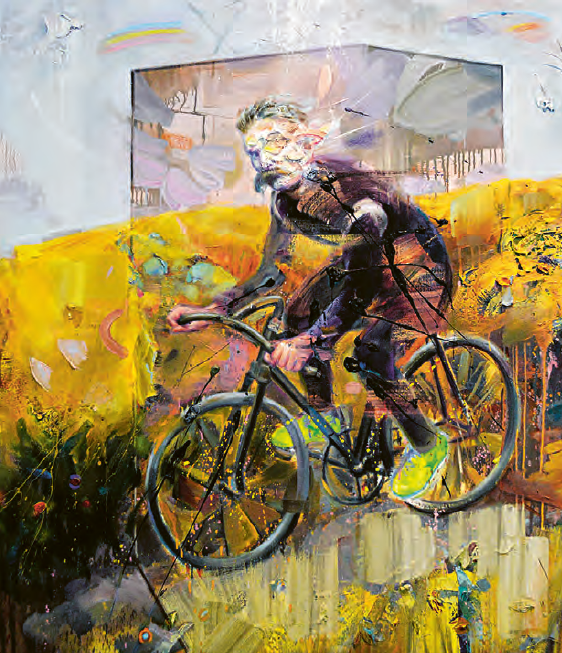

What does the most radical thinker of modernity have to do with cycling? Officially nothing: Nietzsche was a passionate hiker, and bicycles were conspicuously absent from his biography. Yet, his philosophy brilliantly anticipated the bicycle.
From the Buddhist Kala-Chakra up to Zarathustra's vision of the "self-rolling wheel," this essay embarks on a fascinating quest. It shows why the bicycle is far more than a mere means of transport: It is a philosophical instrument that teaches us the dynamic balance of life and makes the "Eternal Recurrence of the Same" palpable in the wind. An invitation to set thought in motion.
Two Years through Woods of Symbols
Outlook and Summary of Our Previous Work
Two Years through Woods of Symbols
Outlook and Summary of Our Previous Work


Exactly two years ago, we published our first article on this blog, The Enduringly Contested Friedrich Nietzsche, a report by Paul Stephan about the annual meeting of the Nietzsche Society in 2023. Time to pause for a moment and think about what we've done on this blog so far and what the future could look like. Our editor-in-chief draws an interim conclusion and gives an insight into our plans.
We are combining this anniversary with two special appeals to you. On the one hand, we created a small quiz (link; in German). Answer four questions correctly, the answers to which are derived from our previous articles, and you could win one of thirteen prizes — and if you want, you can also give us valuable feedback about our work.
We would also like to draw you attention to our crowdfunding call. By July 10, we would like to invite you to help us raise €6,000 to finance further professional translations of our articles. In return, we offer you some fantastic rewards, including in particular the option of translating an article of your choice or giving us an article topic that you've always wanted to read about on this blog. Or you can get to know some of our authors at an exclusive Zoom workshop for our supporters. Become a bridge builder!
Abyss and Enablement?
The Suspense of Contingency
Johannes Hansmann Discusses Odo Marquard and Richard Rorty
Abyss and Enablement? The Suspense of Contingency
Johannes Hansmann Discusses Odo Marquard and Richard Rorty


The young philosopher Johannes Hansmann has published his monograph Ironie des Schicksals im Einzelnen. Philosophie der Kontingenz bei Marquard und Rorty ("Irony and Fate in Detail. The Philosophy of Contingency in Marquard and Rorty") last year at Karl Alber. It is a remarkable study on two of the most important representatives of existential philosophy in the 20th century, the German Odo Marquard (1928-2015) and the American Richard Rorty (1931-2007). Although Nietzsche only plays a minor role, he deals with highly Nietzschean topics there, dedicates himself to the question of a felicitous — and for him that means in particular: authentic — life in a world after the “death of God,” to which Marquard and Rorty gave very different answers. Natalie Schulte and Paul Stephan present the book to you. A joint summary of the book's most important ideas is followed by an individual statement from each of our authors.
Peace through Strength
Nietzsche's Perspective on Negotiated Power and Armed Peace
Peace from Strength
Nietzsche's Perspective on Negotiated Power and Armed Peace
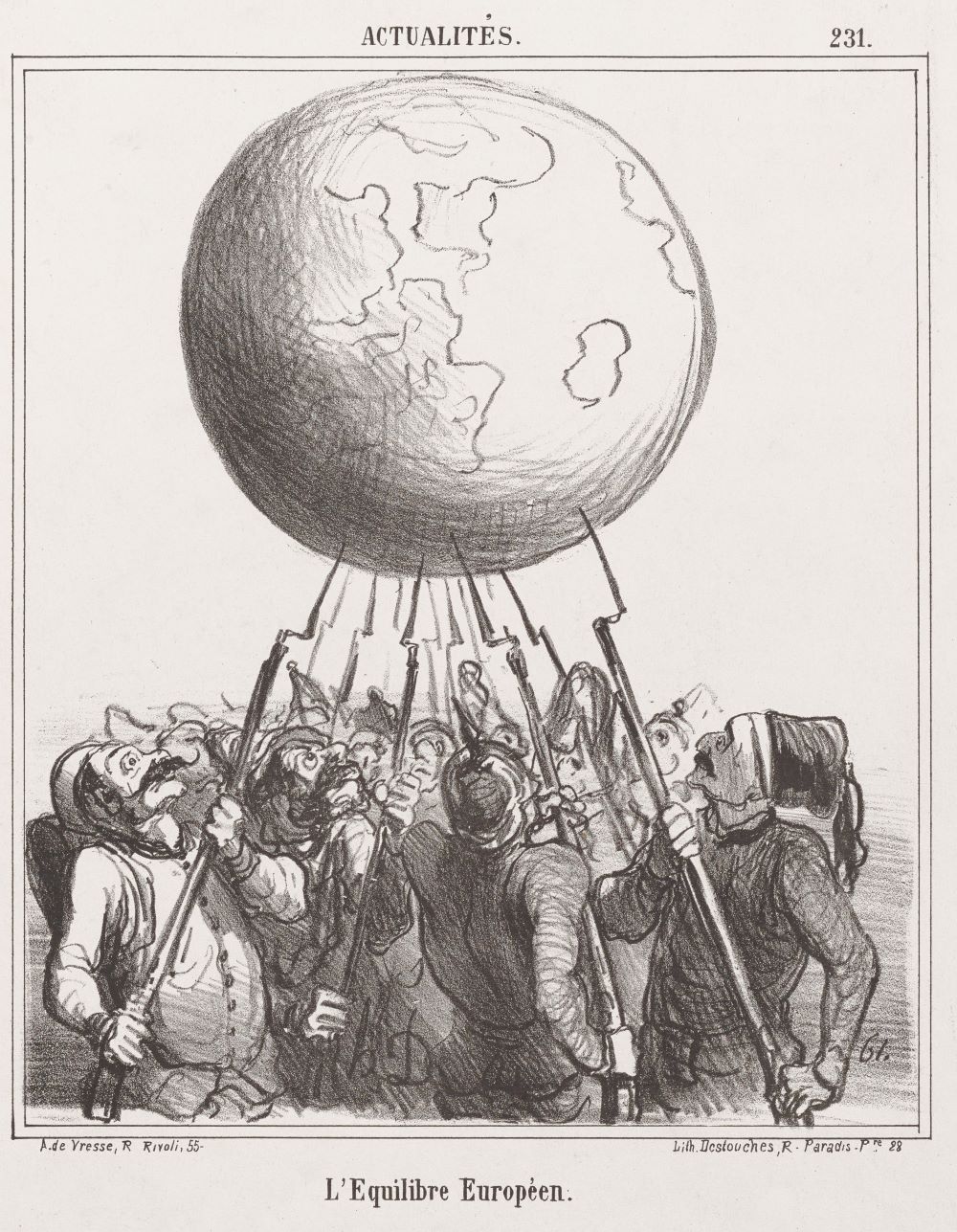

War in Europe was considered unthinkable for a long time — until it became a reality. But how can peace be thought of when normative guarantees fail? What if there are a few powerful and many weak players? Friedrich Nietzsche devised a surprisingly timely answer in 1879: Peace is not a sign of weakness, but an actively negotiated balance of power. He showed how a stable peace obliges all actors to build up their own strength. Nietzsche's transformation from an advocate of war to a thinker of peace based on strength is an admonition — also and especially to the weaker.
“It is no longer about monumentalization! Artists today want to make Nietzsche human so that one can deal with him in a new way.”
Interview with Barbara Straka about Her Book Nietzsche Forever?
Discussion with Barbara Straka
Interview with Barbara Straka about Her Book Nietzsche Forever?
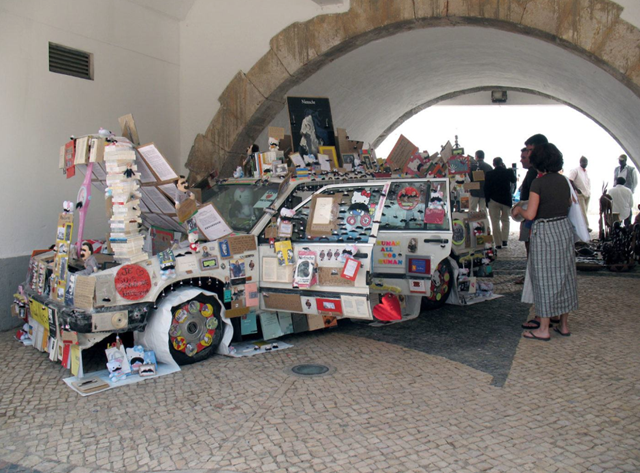

Last year, curator and art historian Barbara Straka published a two-volume monograph entitled Nietzsche forever? Friedrich Nietzsches Transfigurationen in der zeitgenössischen Kunst (Nietzsche Forever? Friedrich Nietzsche's Transfigurations in Contemporary Art), in which she explains Nietzsche's significance for the visual arts of the present day. After Michael Meyer-Albert dedicated a two-part review to her work in recent weeks (part 1, part 2), here follows an interview conducted by our author Jonas Pohler with the author in Potsdam. He discussed her book with her, but also about the not always easy relationship between philosophy and contemporary art.
Monumentality Issues. Nietzsche in Art After 1945
Thoughts on the Book Nietzsche Forever? by Barbara Straka II
Monumentality Issues. Nietzsche in Art After 1945
Thoughts on the Book Nietzsche Forever? by Barbara Straka II
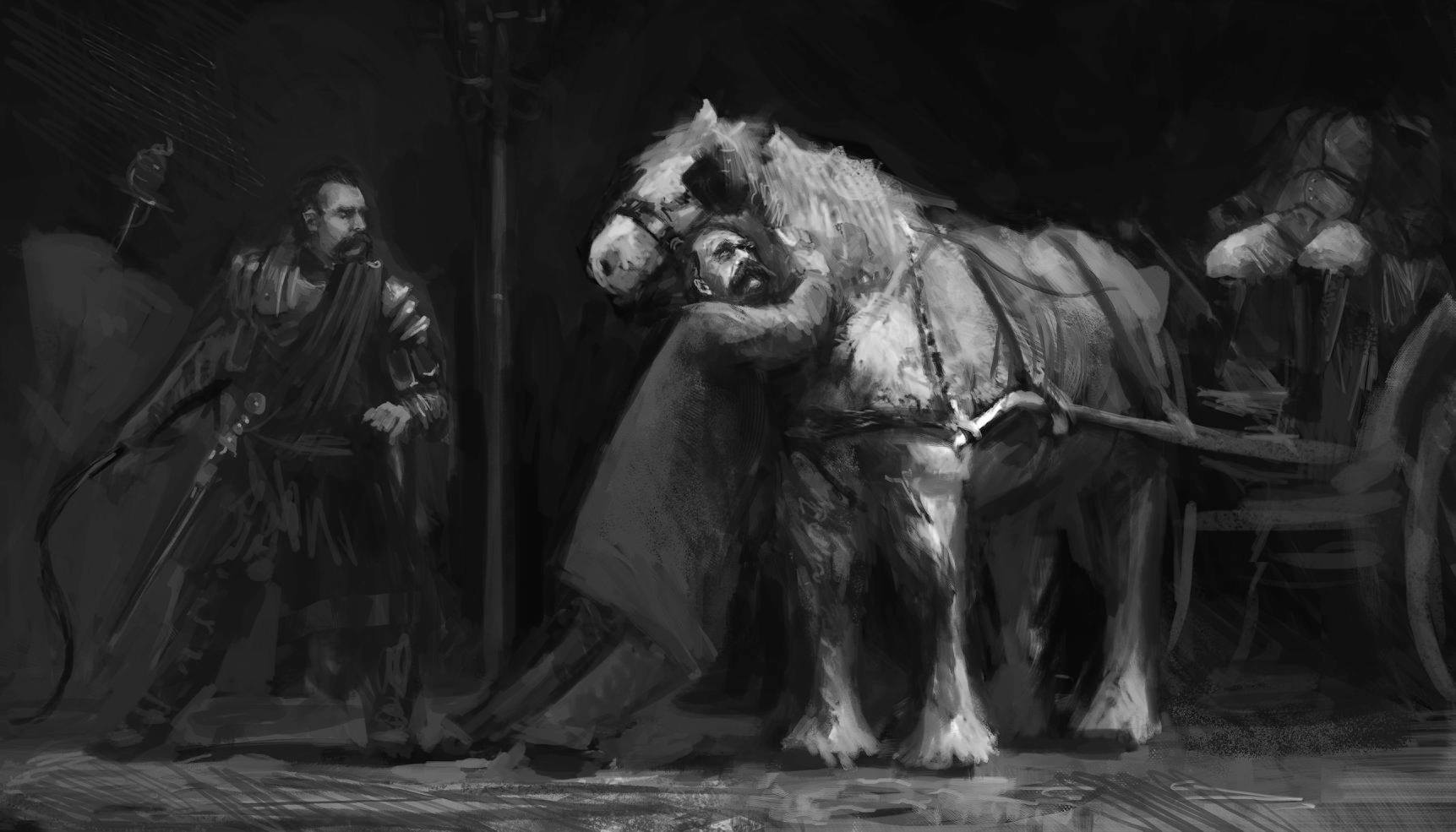

Barbara Straka's newly published book Nietzsche Forever? explores the question of how Nietzsche is received in 20th century art, in particular that after 1945. But the reception of Nietzsche's reception raises the question of whether the philosopher's monumentality is lost sight of. Does this reveal a fundamental problem of our age with monumentality? In any case, starting from Nietzsche, Michael Meyer-Albert argues against Straka for a “post-monumental monumentality” as an alternative to aesthetic postmodernism. In the first part of the two-part series, he dedicated himself to her book, and now he is accentuating his opposite position.
Nietzsche’s Techniques of Philosophizing
With Glances Towards Wittgenstein and Heidegger
Nietzsche’s Techniques of Philosophizing
With Glances Towards Wittgenstein and Heidegger
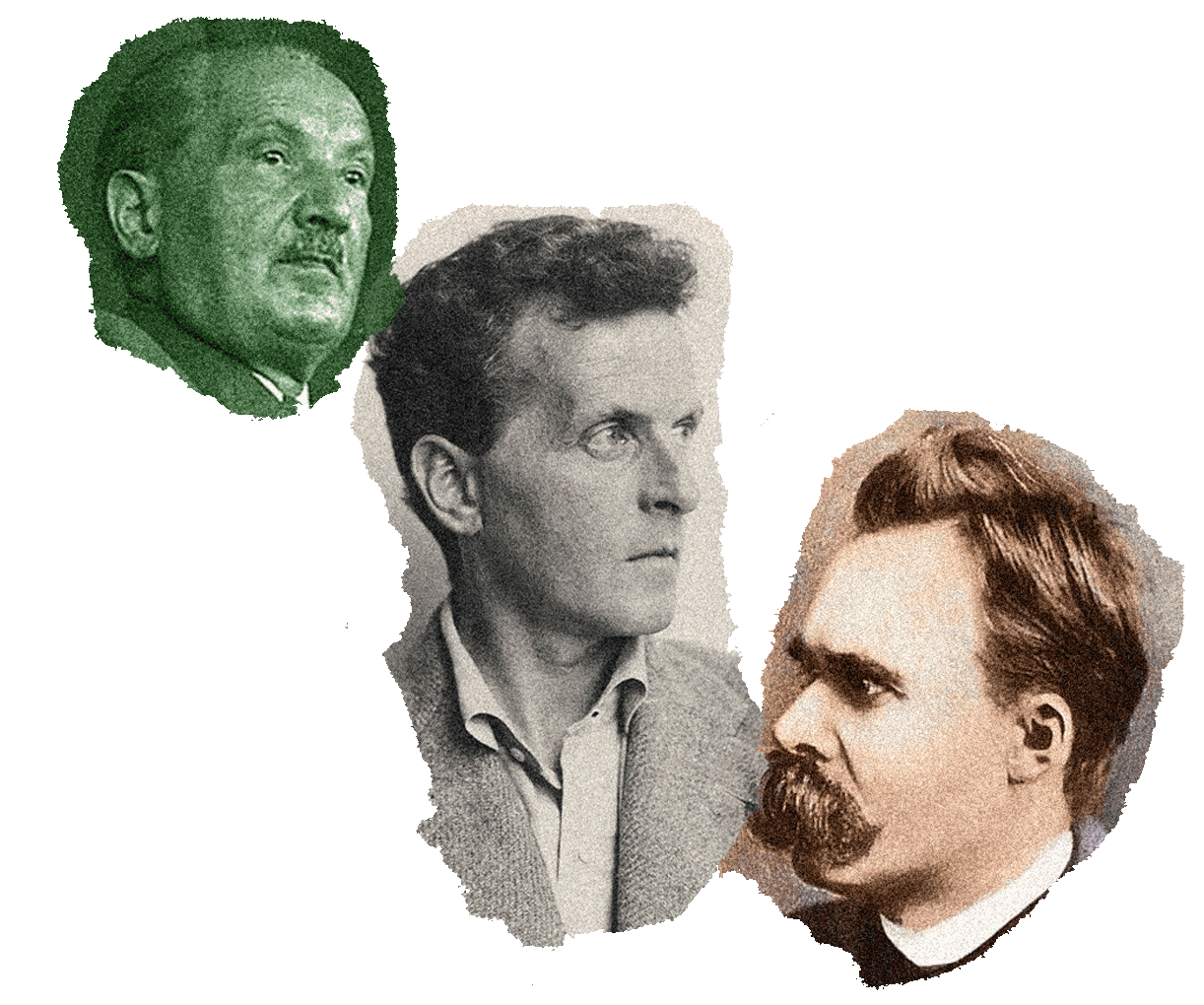
A fixed feature at the annual conference of the Nietzsche Gesellschaft [Nietzsche Society] conference is the Lectio Nietzscheana Naumburgensis: a particularly distinguished scholar delivering an extended lecture on the conference theme on the final day, thereby providing a pointed conclusion. The most recent conference in October 2025 awarded this special honor to Werner Stegmaier to recognize his long tenure as editor of the influential Nietzsche-Studien [Nietzsche Studies] and his authorship of numerous seminal monographs on Nietzsche’s philosophy. Running from October 16-19, 2025, the conference focused the theme “Nietzsche’s Technologies,” as Emma Schunack reported.
Generously granting his permission to publish his lecture in full and in this translation, Stegmaier takes on the conference theme from an unexpected perspective. Rather than examining what is commonly understood as “technologies”—machines, cyborgs, or automata—he explores instead Nietzsche’s philosophical techniques, both intellectual and rhetorical. Weighing up the original and idiosyncratic methods Nietzsche deployed while writing, Stegmaier reflects on how best to interpret and assess them. How were they able to enthuse and win over successive generations of readers? What can we learn from these today?
Comparing Nietzsche’s techniques with those of two other modern philosophical giants, Martin Heidegger (1889–1976) and Ludwig Wittgenstein (1889–1951), Stegmaier retraces all three philosophers’ break with the classical and conceptually oriented techniques of thinking inherited from antiquity, and their discoveries of radical and experimental means of developing philosophy in the age of “nihilism.” Replacing a one-dimensional, metaphysical understanding of rationality, these means cultivate a plural, perspectival mode of thought that necessarily relies on entirely different techniques. Situating Nietzsche’s methods within these broader developments in intellectual history, the Lectio establishes an utterly new framework for understanding his thought and its place within modern philosophy.
Translated by Henry Holland.
Being a Father with Nietzsche
A Conversation between Henry Holland and Paul Stephan
Being a Father with Nietzsche
A Conversation between Henry Holland and Paul Stephan
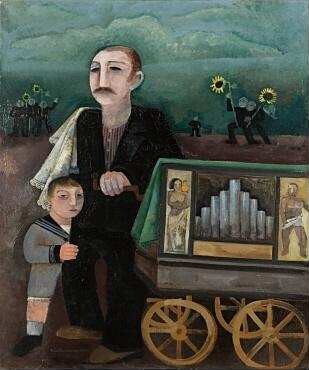
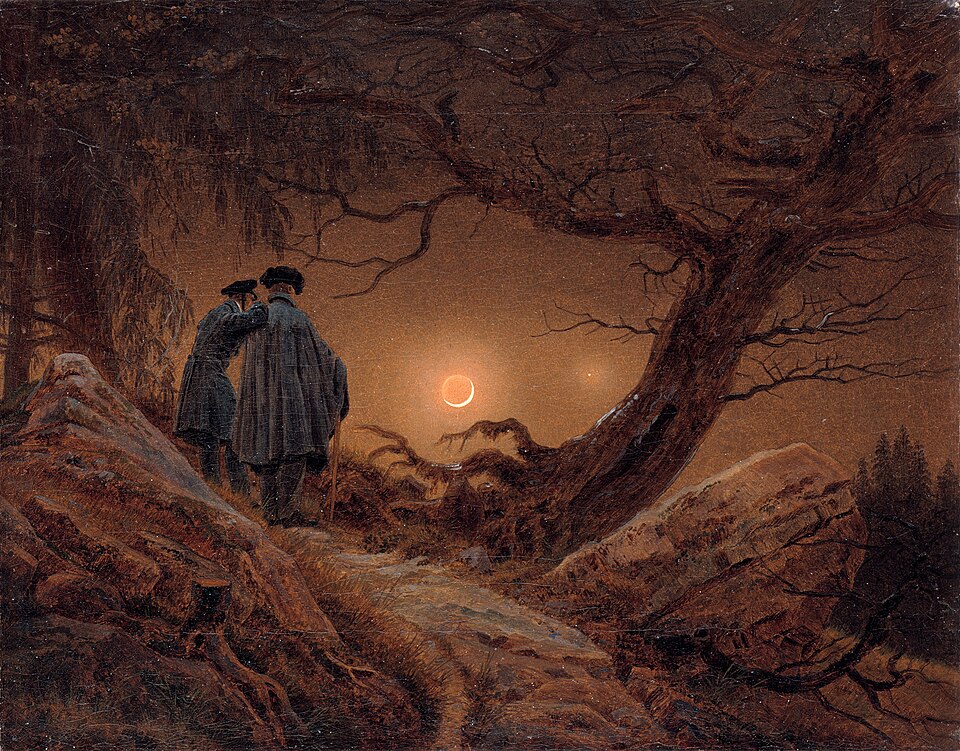
Nietzsche certainly did not have any children and is also not particularly friendly about the subject of fatherhood in his work. For him, the free spirit is a childless man; raising children is the task of women. At the same time, he repeatedly uses the child as a metaphor for the liberated spirit, as an anticipation of the Übermensch. Is he perhaps able to inspire today's fathers after all? And can you be a father and a Nietzschean at the same time? Henry Holland and Paul Stephan, both fathers, discussed this question.
We also published the complete, unabridged discussion on the Halcyonic Association for Radical Philosophy YouTube channel (Part 1, part 2).
Übermensch Hustling
Nietzsche Between Silicon Valley and New Right
Übermensch Hustling
Nietzsche Between Silicon Valley and New Right

This essay, which we awarded first place in this year's Kingfisher Award for Radical Essay Writing (link), examines Nietzsche's question of the “barbarians” in a contemporary context and analyses how his philosophy is being politically exploited today. Against this background, the text shows how hustle culture, platform capitalism and neo-reactionary ideologies have been economizing the ”will to power“ and have become a new form of subtle barbarism: an internal decomposition of cultural depth through market logic, technocratic myths, and performative nihilism. Nietzsche's thinking, however, can be used precisely to describe these tendencies in their genealogy, to unmask their immanent nihilism, and to present an (over-)humane alternative to them.
Female Barbarians — When Women Become a Threat
Female Barbarians — When Women Become a Threat


In today's world, which wants to call itself modern and equal, old patterns continue to have an effect — rivalry instead of solidarity, adaptation instead of departure. The essay provocatively asks: Where are the barbarians of the 21st century? It shows the emergence of a new female force — a woman who does not destroy but refuses, who evades old roles and gains creative power from pain. Through examples from reality and literature, the text attempts to show that true change does not start in obedience but in bold “no” — and that solidarity among women could be the real revolution.
We awarded this text second place in this year's Kingfisher Award for Radical Essay Writing (link).
If you'd rather listen to it, you'll also find it read by Caroline Will on the Halcyonic Association for Radical Philosophy's YouTube channel (link) or on Soundcloud (link).
Meaning Has Fallen, But I'm Still Dreaming
Meaning Has Fallen, But I'm Still Dreaming


This essay opposes the emptiness of a world that has lost its meaning in favor of function. With Nietzsche, Camus and the shadow of Sisyphos behind me, I search for the wild, for the dreamy, for those who do not submit and refuse to remain silent. I'm writing about modern barbarians: about people who see nothing and yet continue to breathe, keep screaming, keep dreaming. This text is my hymn to defiance, to the unformed, to the courage not to fear senselessness. Because even without meaning, I won't be silent. Not now, not in this world. And there is no other.
The essay was written as an answer to the price question of this year's Kingfisher Prize (link). We did not award him, but still publish it as an important contribution to the topic of the “new barbarians” due to its extraordinary literary quality. If you'd rather listen to it, you'll also find it read by Caroline Will on the Halcyonic Association for Radical Philosophy's YouTube channel (link) or on Soundcloud (link).
“Peace with Islam?”
Hiking with Nietzsche Through Glasgow’s Muslim Southside: Part II
“Peace with Islam?”
Wanderungen mit Nietzsche durch Glasgows muslimischen Süden: Teil 2

In the second part of his article on hiking through Glasgow’s Muslim-esque Southside, our staff writer Henry Holland delves into Nietzsche’s impassioned yet scattergun engagement with the youngest Abrahamic religion. He investigates how the experimental novel The Baphomet by French artist and theoretician Pierre Klossowski – which got him hooked on the Islam-Nietzsche intersection in the first place – blends Islam-inspired mysticism, sexual transgression and Nietzscheanism itself into an inimitable potion. With insights on Muslim-esque readings of Nietzsche in tow, Holland returns with Fatima and Ishmael to Scotland’s largest city, thus wrapping up his travelogue whence it began.
Nietzsche and Cyborgs
The International Nietzsche Congress 2025
Nietzsche and Cyborgs
The International Nietzsche Congress 2025
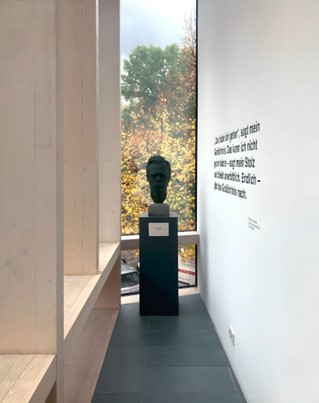

Under the topic Nietzsche's technologies international visitors were once again invited to the Nietzsche Society conference in Naumburg an der Saale this year. In the period from October 16 to 19, in addition to various lectures, a film screening and a concert, there was also an art exhibition to visit. Our author Emma Schunack was there and reports on her impressions. Her question: How can Nietzsche's technologies find expression in the technological age?
Editorial note: The conference report does not mention the important “Lectio Nietzscheana Naumburgensis,” with which Werner Stegmaier rounded off the conference on Sunday morning and took up the topic of the conference again in a completely different way by asking about Nietzsche's own “philosophizing techniques.” We have now published this important talk in full length with the kind permission of the author (link).
“Peace with Islam?”
Hiking with Nietzsche Through Glasgow’s Muslim Southside: Part I
“Peace with Islam?”
Hiking with Nietzsche Through Glasgow’s Muslim Southside: Part I

In this two-part essay, the ultimate part of our ‘Hikes with Nietzsche’ series (link) for the time being, staff writer Henry Holland retraces summer rambles around Glasgow’s Southside, the home of Scotland’s most concentrated Muslim population. In this first instalment, Holland introduces the research on Nietzsche’s engagement with Islam and his reception within the Islamic world. He recounts how stumbling upon a lecture by Timothy Winter on the French theoretician and artist Pierre Klossowski and his encounter with the faith of Muhammed made him curious about this subject in the first place. We then launch into a travel diary that leads our writer to the heart of one of the present-day’s most debated topics, the role that Islam plays in modern European societies.
The Barbarians of the 21st Century
Narcissism, Apocalypse, and the Absence of Other
The Barbarians of the 21st Century
Narcissism, Apocalypse, and the Absence of Other

The diagnosis of our time: not heroic barbarians, but selfie warriors. This essay, which won the second place at this year's Kingfisher Award (link), explores Nietzsche's vision of the”stronger type”1 and shows how it is turned into its opposite in a narcissistic culture — apocalypse as a pose, the Other as a blind spot. But instead of the big break, another option opens up: a “barbaric ethic” of refusal, of ambivalence, of relationship. Who are the true barbarians of the 21st century — and do we need them anyway?
Where Are the Barbarians of the 21st Century?
An Essay in the Spirit of Nietzsche
Where Are the Barbarians of the 21st Century?
An Essay in the Spirit of Nietzsche

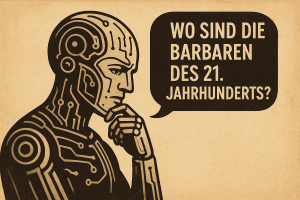
On August 25, we published an interview, conducted by our author Paul Stephan, with the AI tool Chat GPT (link). In it, he asked the software, among other things, to write him an essay on the question of this year's Kingfisher Award: “Where are the barbarians of the 21st century? “(link). As an experiment, we presented the text to the five-person jury of the award, consisting of Lukas Meisner, Hans-Martin Schönherr-Mann, Theodor Schild, Natalie Schulte and Paul Stephan himself — and it was surprisingly well received: In the preliminary round, it achieved fourth place on points and would therefore have made it into the shortlist by a hair. Only Natalie Schulte had drawn suspicion and presented the text to an AI checker, which, however, did not recognize it. — Would you have thought the text was human?
The essays from this year's winners will be published in the coming weeks. Did they do it better than AI, as we believe?
We deliberately refrained from editing the text, but published it exactly as the program spit it out for us. The article image is also from it.
As a part of this experiment, the subsequent translation has also been done by ChatGPT itself and we publish it without any alterations.
A New Nietzsche Biography
In Conversation with Andreas Urs Sommer
A New Nietzsche Biography
In Conversation with Andreas Urs Sommer
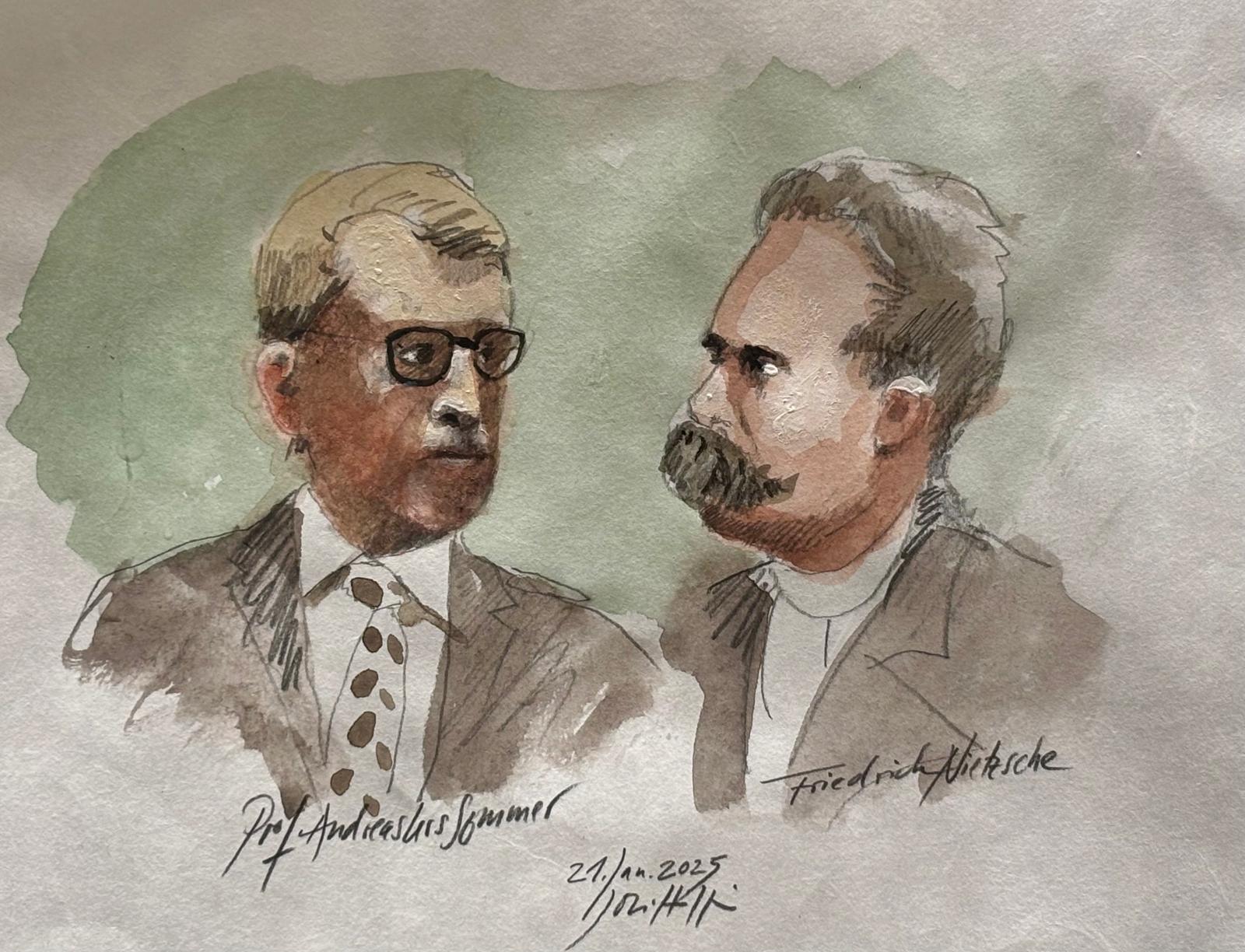

The philosopher Friedrich Nietzsche died 125 years ago, on August 25, 1900. We are taking this important date as an opportunity to publish interviews with two of the most internationally renowned Nietzsche researchers, Andreas Urs Sommer and Werner Stegmaier, around this year's anniversary of his birth on October 15, 1844. Freiburg philosophy professor Sommer is currently working on an extensive biography of the thinker, which is why the conversation with him focused in particular on his life; the conversation with his colleague from Greifswald, which focuses primarily on Nietzsche's thinking, will follow shortly (link). It will soon become apparent that the two cannot be separated. Among other things, we asked the expert about Nietzsche's character, his sexuality and if he lived what he proclaimed.
Can AI Give Birth to a Dancing Star?
Of Sparrows, Cannons and Decoys
Can AI Give Birth to a Dancing Star?
Of Sparrows, Cannons and Decoys
.jpg)
Like a year ago (link), our author Paul Stephan is also adding a commentary to this year's “dialogue” (link) with ChatGPT on the current state of thedevelopment of “artificial intelligence.” His assessment is somewhat more sober — but he does not want to be denied his fundamental optimism in technology. He also wants to avoid pessimism and naive hype, which is obviously being fueled right now to ensure that billions of dollars invested in AI are amortized.
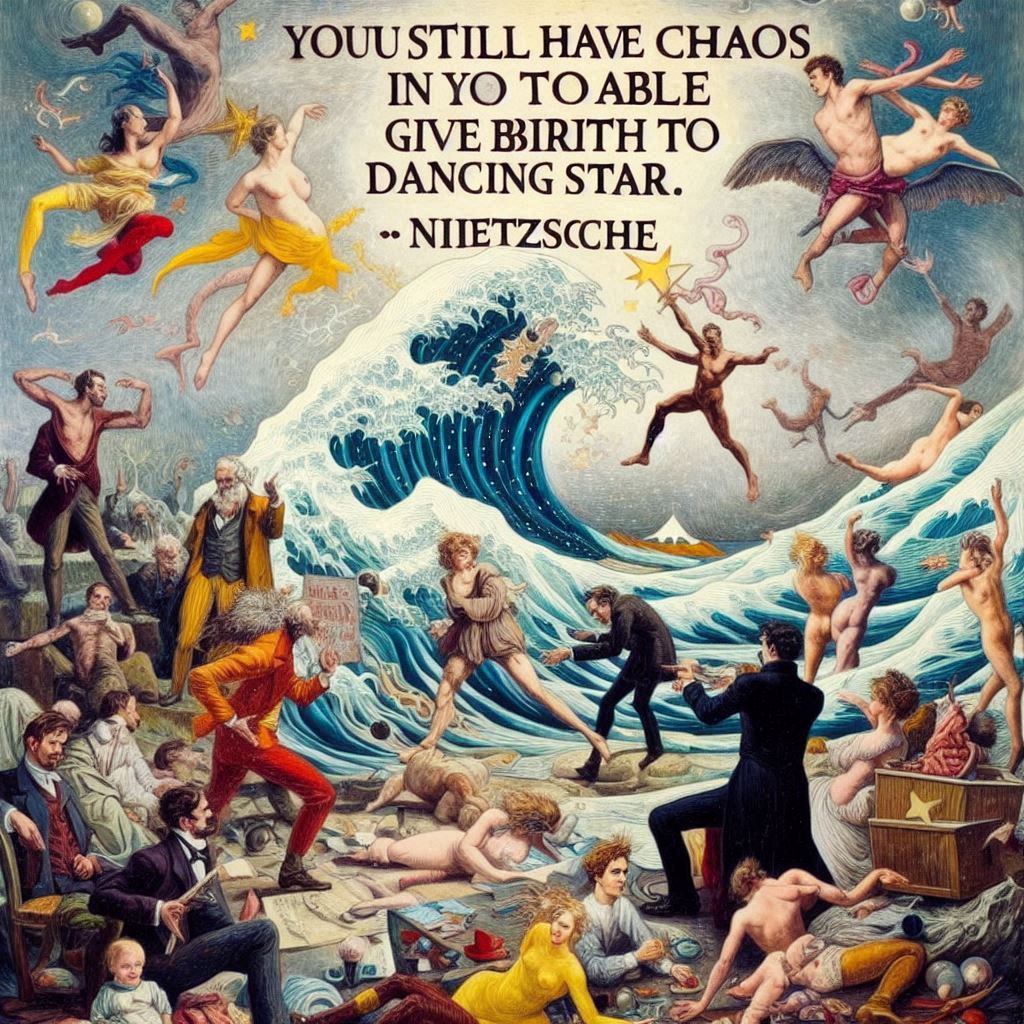
We had various AI tools generate the images for this article at the following prompt: “Please give me a picture of the aphorism 'You still have to have chaos in yourself to be able to give birth to a dancing star' by Nietzsche,” one of ChatGPT's “favorite quotes” by the philosopher from Thus Spoke Zarathustra (link). The article image is from Microsoft AI.
Chameleon Nietzsche
The Failure of Nietzschean Materialism
Chameleon Nietzsche
The Failure of Nietzschean Materialism
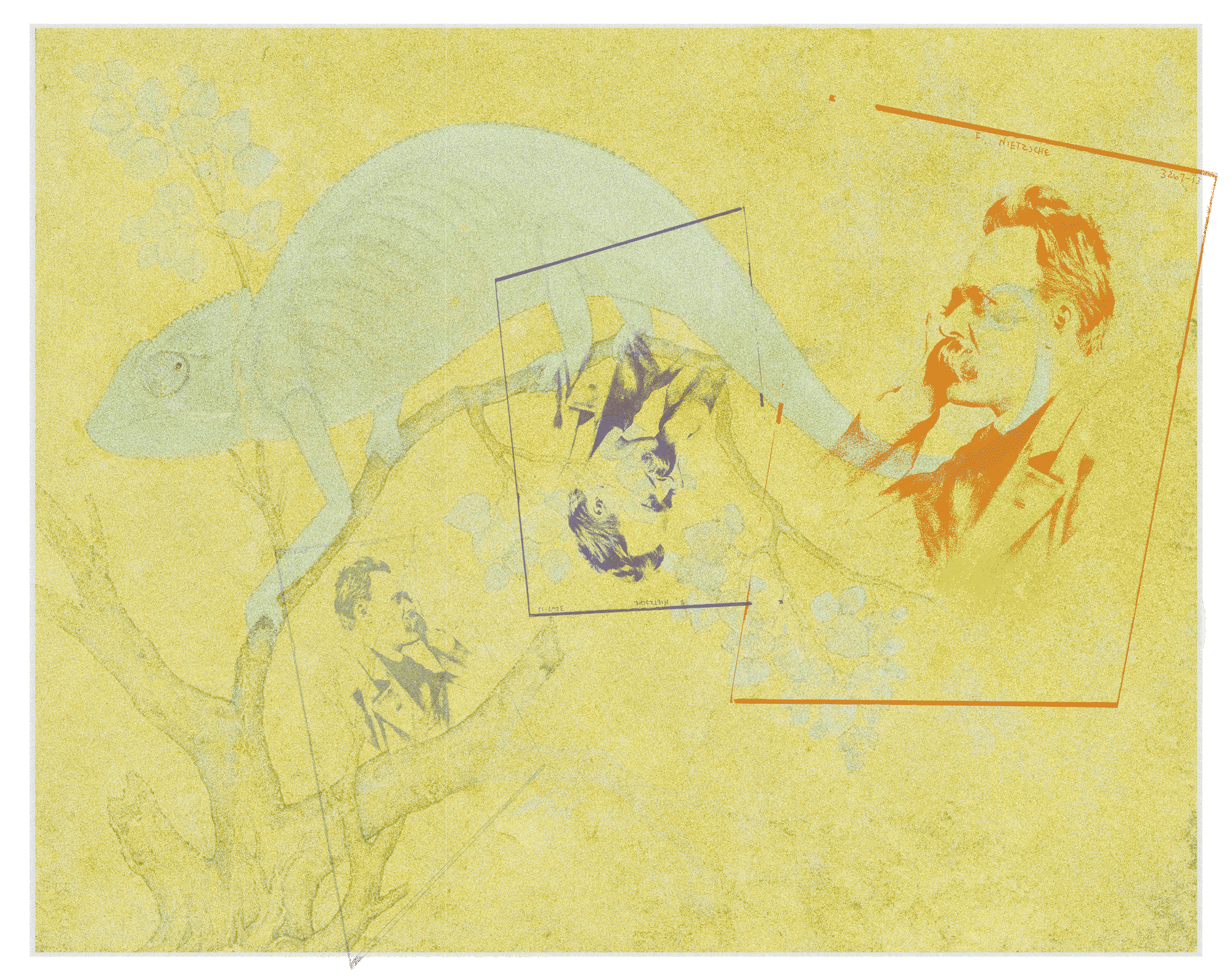
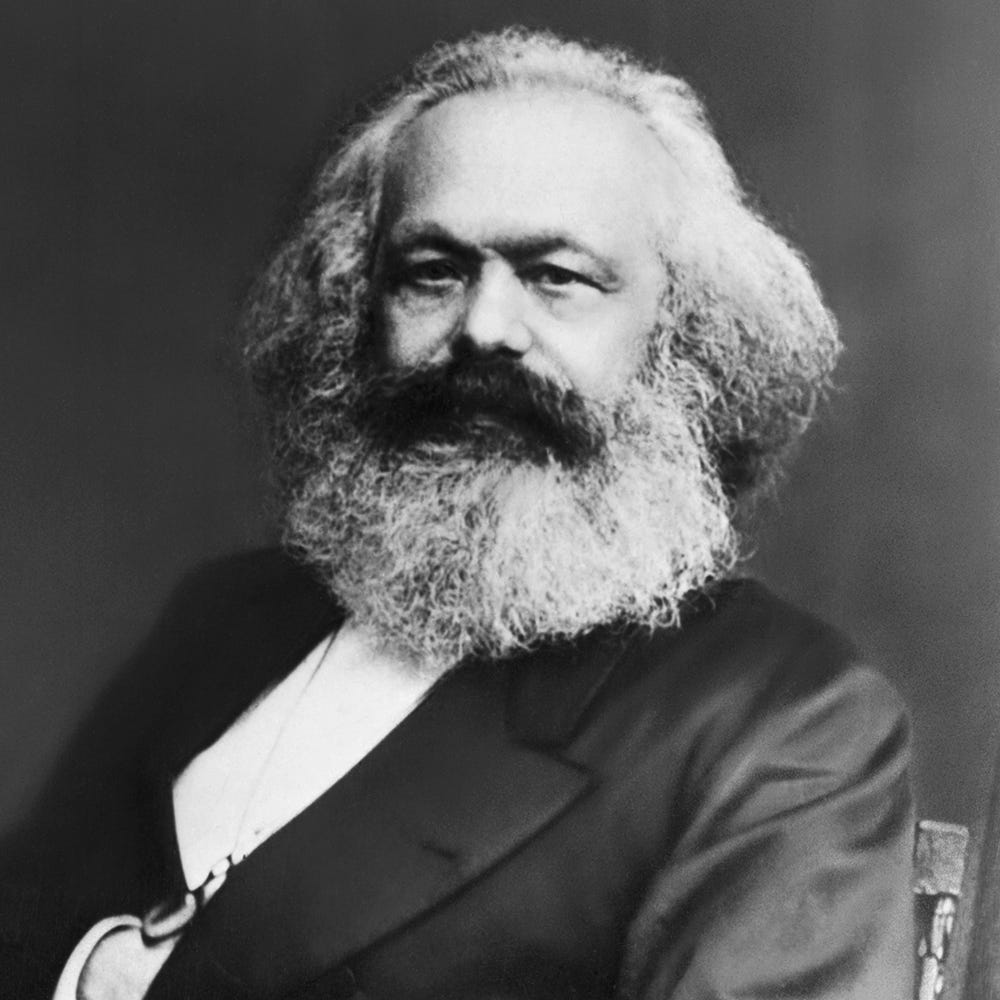
The connection between Marx(ism) and Nietzsche(anism) has repeatedly been a topic on our blog. To what extent can the ideas of arguably the most important theorist on the left and the philosophical chameleon, who was an avowed anti-socialist and anti-feminist and inspired Goebbels and Mussolini, among others, be meaningfully combined. While there have been repeated attempts at left-wing Nietzscheanism, Estella Walter's conclusion in this controversial thesis article is skeptical: The contrast between “historical-dialectical materialism” and Nietzsche's idea of will to power is too irreconcilable. Beyond his time diagnosis, his thinking only provides little emancipatory content.
Mythomaniacs in Lean Years
About Klaus Kinski and Werner Herzog
Mythomaniacs in Lean Years
Über Klaus Kinski und Werner Herzog
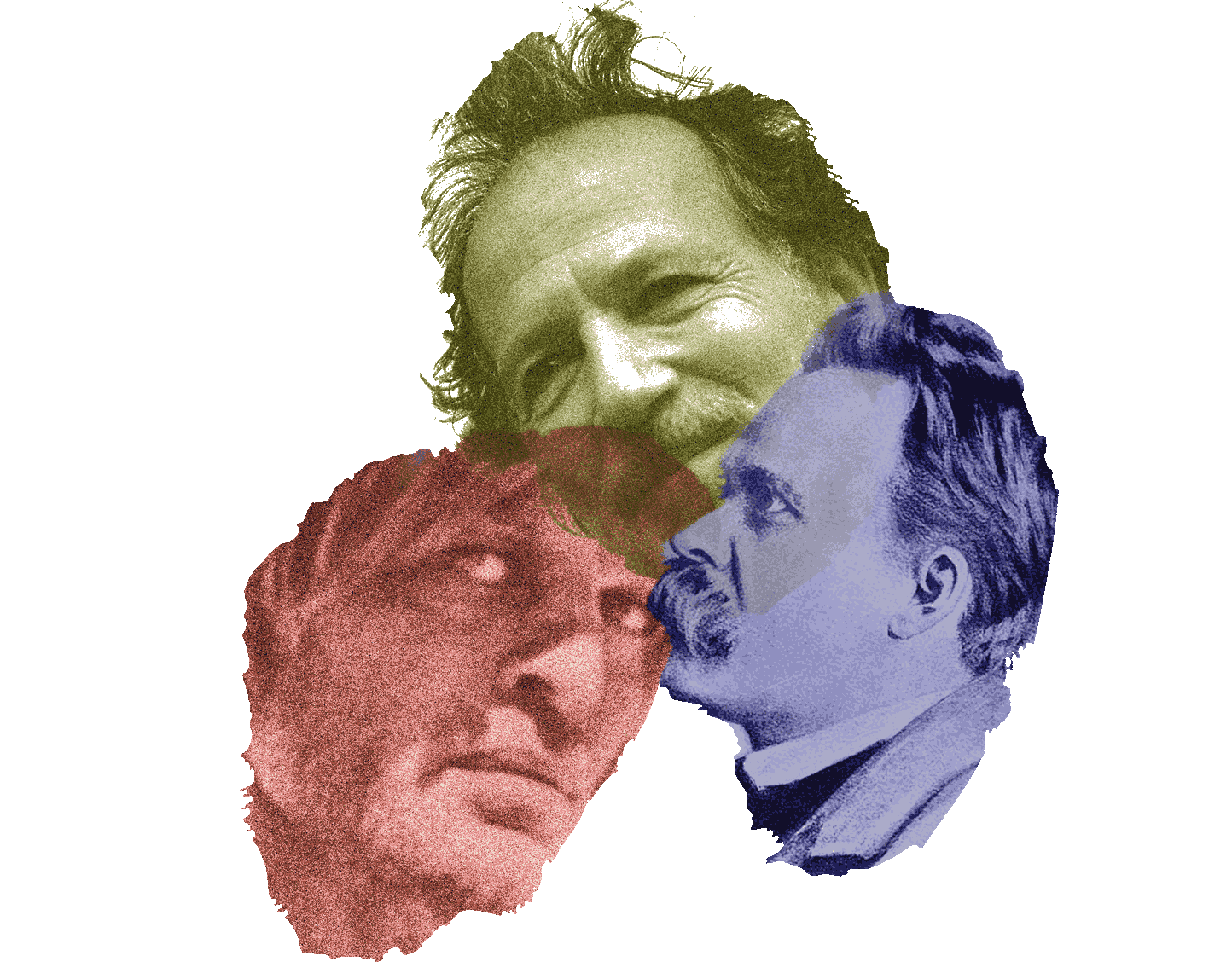

Werner Herzog (born 1942), described as a “mythomaniac” by Linus Wörffel, and Klaus Kinski (1926—1991) are among the leading figures of post-war German cinema. In the 70s and 80s, the filmmaker and the actor shot five feature films that are among the classics of the medium's history. They are hymns to tragic heroism, in which the spirit of Nietzsche can easily be recognized. From “Build Your Cities on Vesuvius! “will “Build opera houses in the rainforest! ”.
Turning Moral Weakness Into Power
Nietzsche and the Accusation of Resentment
Turning Moral Weakness Into Power
Nietzsche and the Accusation of Resentment


Strangers seem creepy to many. They immediately fear that these strangers will harm them. Many decent earners think that recipients of citizen benefits are lazy and therefore do not allow them to receive government support. To many educated people, illiterate people appear rude and simple-minded, with whom they therefore want as little as possible nothing to do with, whom they do not trust. Religious people are often afraid of atheists, who in turn are afraid of contact with religion. What you don't know often appears to be dangerous and you prematurely discount that. Such prejudices lead to rejection, which often solidifies to such an extent that counterarguments are no longer even heard. This is resentment that has existed for a long time, but which today makes consensus almost impossible in many political and social debates. This can degenerate into hate and contempt and then into violence whether between rich and poor, right and left, machos and feminists, abortion opponents and abortion advocates, vegetarians and meat-eaters. When one side prevails, it imposes its values on the other, and the resentment even becomes creative. In any case, it prevents you from making an effort to understand the other person. For Nietzsche, resentment has been driving the dispute over what is morally necessary for a long time.
“Resentment” is one of the key terms of Nietzsche's late work. The philosopher is referring to an internalized and solidified affect of revenge, which leads to the development of an overall negative approach to the world. Especially in On the genealogy of morality Nietzsche is trying to show that the entire European culture since the rise of Christianity has been based on this affect. Judaism and Christianity, in their hatred of aristocrats, propagated an ethics of the weak — in this act, resentment became creative. With a new creative ethic, Nietzsche now wants to contribute to a renewed revaluation of values in order to return to a life-affirming aristocratic ethic of the “strong.” In this article, Hans-Martin Schönherr-Mann introduces Nietzsche's reflections on resentment and works out what makes the accusation of mutual resentment so popular to this day.
Taylor Swift — Superwoman or Last Man?
A Nietzschean Critique of the Most Successful Pop Star of Our Time
Taylor Swift — Superwoman or Last Man?
A Nietzschean Critique of the Most Successful Pop Star of Our Time


Taylor Swift is one of the most important “idols” of our time. Reason enough for our regular authors Henry Holland, Paul Stephan and Estella Walter to pick up on the Nietzschean “hammer” and get to grips with the hype a bit: Does Swift deserve the cult around her that goes down to philosophy? Is it grossly overrated? And what explains the discrepancy between appearance and reality, spectacle and life?
You can watch the entire unabridged conversation on the Halcyonic Association for Radical Philosophy YouTube channel (link).
Stuck Between the Monsters and the Depths
Wanderings Through Modern Nihilism in the Footsteps of Nietzsche and Kierkegaard — Part 2
Stuck Between the Monsters and the Depths
Wanderings Through Modern Nihilism in the Footsteps of Nietzsche and Kierkegaard — Part 2


In this two-part essay, Paul Stephan examines how Nietzsche uses the wanderer as a personification of modern nihilism. After he is in the first part (link) focused on the general cultural significance of movement metaphors and the metaphor of wandering in Nietzsche's important brother in spirit, the Danish philosopher Søren Kierkegaard, it will now primarily be about Nietzsche himself.
Stuck Between the Monsters and the Depths
Wanderings Through Modern Nihilism in the Footsteps of Nietzsche and Kierkegaard — Part 1
Stuck Between the Monsters and the Depths
Wanderings Through Modern Nihilism in the Footsteps of Nietzsche and Kierkegaard — Part 1


As in our series of articles”Hikes with Nietzsche“It has already been made clear that the metaphor of wandering plays a fundamental role in Nietzsche's work. In this two-part essay, Paul Stephan explores how Nietzsche uses the wanderer as a personification of modern nihilism and thus diversifies a central theme of cultural modernity, which can also be found in the writings of the Danish philosopher Søren Kierkegaard, who was born on May 5, 1813 in Copenhagen, where he also died on November 11, 1855.
The Monkeys Dance Inexplicably. Nietzsche and Contemporary Dance Culture
Reflection, Movement, Misery
The monkeys dance inexplicably. Nietzsche and contemporary dance culture
reflection, movement, misery


In addition to hiking, dancing is one of the most prominent soldiers in Nietzsche's “moving [m] army of metaphors, metonymies, anthropomorphisms.” Based on Nietzsche's reflections on the art of movement, Jonas Pohler explores the paramount importance that it plays in our present day. Is the effect of dance primarily sexual? What does dance have to do with technology? What symbolism is the dancing gesture able to convey?
Homesick for the Stars
Prolegomena of a Critique of Extraterrestrial Reason
Homesick for the Stars
Prolegomena of a Critique of Extraterrestrial Reason

On April 12, 1961, Soviet cosmonaut Yuri Gagarin achieved the unbelievable: He was the first person in history to leave the protective atmosphere of our home planet and circumnavigate the Earth in the Vostok 1 spaceship. In 2011, the anniversary of this “superhuman” act was declared International Manned Space Day. The stars aren't that far away anymore. With the technical progress achieved, the fantasy of expanding human civilization into space takes on concrete plausibility. The following text attempts to philosophically rhyme with these prospects and finally describes the approach of a possible space program from Nietzsche. Although airplanes didn't even exist during his lifetime, his concepts can still be applied to this topic in a productive way, as is so often the case.
Editorial note: We have explained some difficult technical terms in the footnotes.
“Music, your advocate”
Nietzsche and the Liberating Power of Melody
“Music, your advocate”
Nietzsche and the Liberating Power of Melody

After Christian Saehrendt took a primarily biographical look at Nietzsche's relationship to music on this blog in June last year (link), Paul Stephan focuses in this article on Nietzsche's content statements about music and comes to a somewhat different conclusion: For Nietzsche, music has a liberating power through its subjectivating power. It affirms our sense of self and inspires us to resist repressive norms and morals. However, not all music can do that. With late Nietzsche, this is no longer Richard Wagner's opera, but Georges Bizet's opera carmen. Our author recognizes a similar attitude in Sartre's novel The disgust and in black popular music, which is not about comfort or grief, but affirmation and overcoming.
On Dubious Paths ...
An Outline of Nietzsche's Concept of Wandering
On Dubious Paths ...
An Outline of Nietzsche's Concept of Wandering

Perhaps it is Nietzsche's main philosophical achievement that he described thinking as a process that happens in person. For him, reflection is a cooperative tension of body and mind. The mind is grounded in the nervous cosmopolitanism of the body. Nietzsche's conversion of Christianity: The flesh becomes word. This shows thinking in gestures. The following is intended to provide a sketch which indicates the main types of these reflexive gestures. This is intended to illustrate what it means when Nietzsche repeatedly describes himself as a wanderer. An intellectual tour that leads from standing and sitting as basic modes of traditional philosophy to walking, (out) wandering and halcyonic flying as Nietzsche's alternative modes of liberated thought and life.
Discourse, Power and Delusion
Michel Foucault's Nietzsche Interpretation Revisited
Discourse, Power and Delusion
Michel Foucault's Nietzsche Interpretation Revisited

The humanities scene recently experienced a minor sensation: In the estate of Michel Foucault (1926—1984), one of the most important representatives of post-structuralism, its editors came across an elaborate book manuscript with the title Le discours philosophique, on which the avowed Nietzschean had worked in 1966. It was published in German by Suhrkamp in 2024. Nietzsche plays a decisive role in this comprehensive analysis of philosophical discourse since Descartes. Paul Stephan takes this event as an opportunity to take a closer look at the most influential Nietzsche interpretation of the 20th century to date.
The Educator’s Mark
Schopenhauer's Omnipresence in Nietzsche's Philosophy II
The Educator’s Mark
Schopenhauer's Omnipresence in Nietzsche's Philosophy II


After explaining in the first part of this article (link) how Nietzsche transformed from an admirer of Schopenhauer to a critic in the course of the 1870s, Tom Bildstein now examines in more detail how the mature Nietzsche sought to overcome Schopenhauer‘s pessimism and counter it with a “life-affirming” philosophy. Schopenhauer‘s “will to life,” which the misanthrope would like to see ascetically denied, is to give way to the “will to power” as the fundamental principle of all life, which cannot be denied without contradiction.
Splendidly Isolated with a Stiff Upper Lip
Nietzsche and the Tragedy of Academic Outsiderhood
Splendidly Isolated with a Stiff Upper Lip
Nietzsche and the Tragedy of Academic Outsiderhood


“Keep a stiff upper lip,” they say in England when you want to call on your interlocutor to persevere in the face of danger and to maintain an upright posture. Advice that is certainly often helpful. Such a stoic position must be sought all the more as an academic outsider who, on the one hand, sets himself apart from the scientific mainstream, but on the other hand is also dependent on his recognition. Nietzsche himself, but also many of his admirers, found himself in such a delicate situation. Based on several such outsider figures (in addition to Nietzsche himself, such as Julius Langbehn and Paul de Lagarde), Christian Saehrendt develops a typology of the (perhaps not always quite so) “brilliant isolation” of academic nonconformism.
Riveting Strangeness
Remarks on Kafka's Work
Riveting Strangeness
Remarks on Kafka's Work

Franz Kafka died 100 years ago. The following text is an attempt to update his work with a socio-psychological perspective inspired by Nietzsche. His thesis: Kafka narratingly shows what Nietzsche philosophizes about. Michael Meyer-Albert wants to promote the logic of a non-naive world enlightenment in the fictions of one of the most important authors of modern times: affirmation of life instead of suicide.
Editorial note: We have explained some difficult technical terms in the footnotes.
Caught in the Crossfire of the Culture Wars, There Stands Nietzsche
Comparing Two Current Perspectives
Caught in the Crossfire of the Culture Wars, There Stands Nietzsche
Comparing Two Current Perspectives

It is well known that Nietzsche's history of influence has been read and absorbed across all political camps. But what about our present tense? Paul Stephan examines the writings of two authors who are about the same age as himself, in their mid/late 30s, and whose perspectives on Nietzsche could hardly be more different: While French journalist and YouTuber Julien Rochedy declares Nietzsche a pioneer of a right-wing cultural struggle, the German philosopher and political scientist Karsten Schubert attacks him for a left-wing identity politics. Both positions do not really convince our authors; rather, they are entirely within the framework of the prevailing simulation of politics as a cultural struggle, which would need to be countered by focusing on the really pressing life problems of contemporary humanity.
“The Most Noble Adversary”
Daniel Tutt and Henry Holland in Dialogue
“The Most Noble Adversary”
Daniel Tutt and Henry Holland in Dialogue


After two previous contributions to Nietzsche in the Anglosphere For this blog, Henry Holland interviewed American thinker Daniel Tutt about his perspective on Nietzsche as the most important antagonist of the left. The discussion included Huey Newton, leader of the Black Panthers in the 1970s, and what his “parasitic” way of reading Nietzsche prompted him to read. An unedited and unabridged version of this interview, in original English, can be heard and watched on Tutt's YouTube channel (link).
A Day in the Life of Nietzsche's Future
Report on the Conference Nietzsche's Futures in Weimar
A Day in the Life of Nietzsche's Future
Report on the Conference Nietzsche's Futures in Weimar

From October 7 to 11, 2024, the event organized by the Klassik Stiftung Weimar took place in Weimar Nietzsche's futures. Global Conference on the Futures of Nietzsche instead of. Our regular author Paul Stephan was on site on the first day and gives an insight into the current state of academic discussions about Nietzsche. His question: What is the future of Nietzsche academic research when viewed from the perspective of Nietzsche's own radical understanding of the future?
Look, I'm Teaching You the Transhumanist
Friedrich Nietzsche as a Personal Trainer of Extropianism
Look, I'm Teaching You the Transhumanist
Friedrich Nietzsche as a Personal Trainer of Extropianism

After Natalie Schulte reported on the echo of Nietzsche's “superman” idea in the start-up scene last week (Link), Swiss art scholar Jörg Scheller is dedicating this week to her continued existence in extropianism, a subtype of transhumanism that aims to artificially accelerate human evolution on both individual and genre levels using modern technology. The physical law of “entropy,” according to which there is a tendency in closed systems to equalize all energy differences until a state of equilibrium has been established — a state of complete cooling in terms of the universe — is opposed by the proponents of this flow with the principle of “extropy,” the increasing vitality of a system.
“A Gods’ Table for Divine Dice Throws and Dice Players”
Nietzsche's Superman Visits the Start-Up Scene
“A Gods’ Table for Divine Dice Throws and Dice Players”
Nietzsche's Superman Visits the Start-Up Scene

Nietzsche's superman is dead. Hardly anyone can do anything with this obscure idea anymore. You'd think so. And yet, in the current startup environment, you encounter numerous set pieces from Zarathustra's promise. What is it all about? — On the occasion of Nietzsche's 180th birthday, Natalie Schulte dedicates herself to this peculiar continuation of one of the philosopher's best-known concepts. A plea for taking a closer look at Nietzsche's idea despite its past and present misinterpretations.
Editor's note: We have translated longer English quotations into German in the footnotes ourselves.
In the House of Semblance
Preludes on the Connection Between Architecture and Thought in Nietzsche with Constant Reference to a Book by Stephen Griek. A Review
In the House of Semblance
Preludes on the Connection Between Architecture and Thought in Nietzsche with Constant Reference to a Book by Stephen Griek. A Review

A fruitful method within philosophy can be addressed seemingly minor, everyday topics. For example, the relationship between thinking and architecture, as this text is based on the newly published book Nietzsche's architecture of the discerning By Stephen Griek tried to show. With Nietzsche in mind, according to Michael Meyer-Albert, protecting a dwelling — both literally and figuratively — from the chaos of reality is essential for a successful world relationship. He neglects this in Greek's post-modern approach, which aims at maximum openness and wants to replace clear spatial structures with diffuse nomadic networks. Architecture as an art of non-violent rooting thus becomes unthinkable; the “house of appearance” that supports human existence collapses.
Society versus Self-Becoming
A Dialogue about Nietzsche, Authenticity and the Challenges of Modernity
Society versus Self-Becoming
A Dialogue about Nietzsche, Authenticity and the Challenges of Modernity


To commemorate the 124th anniversary of Nietzsche’s death, Paul Stephan conversed with a rather particular kind of Nietzsche expert—the now near ubiquitous ChatGPT. Their discussion circled around questions of why Nietzsche matters today and his concept of authenticity. During the course of the conversation, Stephan switched from asking to fielding questions, and elaborated briefly on how his own doctoral dissertation also focuses on authenticity. As Stephan’s experiment aimed at probing deep into the program’s capabilities, and because brevity is not ChatGPT’s strongest asset, we present here an abridged version of the conversation. Readers of German who wish to delve deeper can view the unabridged and annotated PDF that’s available as a download (link). Watch out for Stephan’s critical reflections on this truly remarkable dialogue within the next few days (link).
The pictures accompanying the interview were created with DeepAI software, which was asked to produce “A picture of Friedrich Nietzsche with a quote by him.”
Nietzsche Against the Body’s Naysayers
A Conversation with Philosopher and YouTuber Jonas Čeika
Nietzsche Against the Body’s Naysayers
A Conversation with Philosopher and YouTuber Jonas Čeika


After discussing Jonas Čeika's book How to Philosophize with a Hammer and Sickle and bis YouTube channel (CCK Philosophy) (link), Henry Holland interviewed the American about the blockages of academic philosophy, Nietzsche's relevance as a thinker on the “guideline of the body,” and about tensions between his claim as an anti-philosopher and his social position.
Better to Want Nothing, Than Not to Want at All
Self-Alienation through Modern Science
Better to Want Nothing, Than Not to Want at All
Self-Alienation through Modern Science


Nietzsche's criticism of science is perhaps one of the most provocative, but also the most relevant, sub-areas of Nietzsche's comprehensive critique of modern culture. Estella Walter reconstructs her perhaps most important formulation in the third treatise of The genealogy of morality and shows how Nietzsche's science is a form of estrangement Understands. She explains this concept, which is so central to modern philosophy, and bridges it from Nietzsche to (young) Marx: Both are critics of the alienations of the modern way of life, whose critiques we should read together in order to reach a comprehensive understanding of it.
Determining Nietzsche
Determining Nietzsche

Does Nietzsche have clear philosophical doctrines? There is still a fight with Nietzsche's ambiguity today. When does he mean what he says? In her essay, Natalie Schulte explores the question of where, in the midst of assimilating ambiguity through ideological programs on the one hand and academically savvy dispersal of Nietzsche's thought structures into indiscriminate and incoherent fragments and perspectives, on the other hand, today's engagement with Nietzsche has to locate its decisive challenges. Between the dangers of confusing his philosophy and the limitless relativization of his theses, she is looking for a fruitful third way of dealing with the question of the “actual Nietzsche.”
Whistling in the Woods and Screaming for Love
Nietzsche's Echo in the Heavy Metal Music Scene
Whistling in the Woods and Screaming for Love
Nietzsche's Echo in the Heavy Metal Music Scene

Like hardly any other philosopher, Friedrich Nietzsche has left his mark on popular culture — less in the pleasing mainstream entertainment, but more in subcultures and in artistic positions that are considered “edgy” and “dark.” In this “underworld,” Nietzsche's aphorisms, catchphrases, slogans and invectives are widely used — for example in the musical genres of heavy metal, hardcore and punk focused on social and aesthetic provocation. What is the reason for that?
The Enlightenment’s Twilight
Nietzsche's Truth of Semblance II
The Enlightenment’s Twilight
Nietzsche's Truth of Semblance II

After Michael Meyer-Albert in the first part of his text Telling the sad story of the self-doubt of the Enlightenment, he now reports on Nietzsche's “cheerful science” as an alternative.
Nietzsche and Music
Nietzsche and Music

For hardly any other philosopher, music was as important as it was for Nietzsche. “Without music, life would be a mistake”1, he wrote. Christian Saehrendt goes for Nietzsche PopArts The question of how this high appreciation of sound art was manifested in his life and work. He talks about Nietzsche's own compositions as well as one of the most iconic aspects of his life: his friendship with Richard Wagner. He shows that the music for Nietzsche is almost erotic It was important — and in this respect he was not so “out of date” at all, but a typical child of his time.
Is Nietzsche a Philosopher for Adolescents?
Is Nietzsche a Philosopher for Adolescents?

In her contribution to the series “What does Nietzsche mean to me? “Our main author Natalie Schulte explores the question of whether the thinker can be described as a “philosopher for adolescents” and reports on her own relationship with him.
What Does Nietzsche Mean to Me?
What Does Nietzsche Mean to Me?

Our regular author Christian Saehrendt reports in his contribution to the series “What does Nietzsche mean to me? “about how he discovered Nietzsche as a teenager and has regarded himself as a fan of the philosopher ever since — precisely because of his contrariness.