#
Girolamo Savonarola
Heightened Idyll
Nietzsche and the Forest
Part II: Overcoming discontent. Idyll on the edge
Heightened Idyll 2
Nietzsche and the Forest Part II: Overcoming Resentment. Idyll on the edge
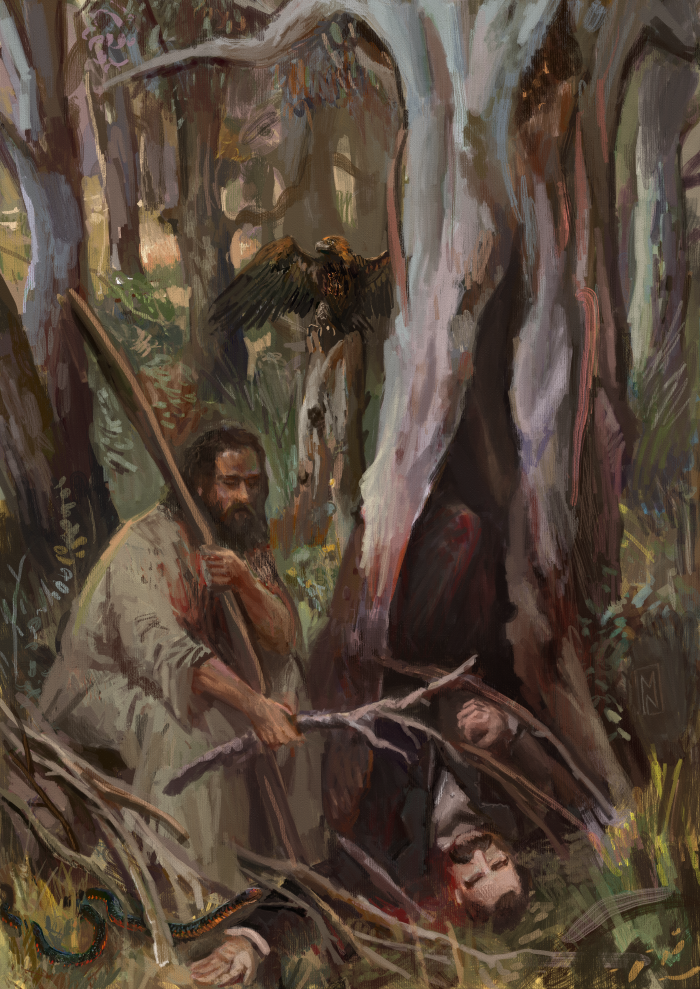

Nietzsche modifies the quintessentially German notion of the forest as an idyll, which our author described in the first part of this two-part series (link). This follow-up aims to precisely understand this modification and its significance for our time.
Nietzsche’s preferred landscape for thought is the high mountains. In this context, the forest becomes important as the tree line—a zone where life is just barely possible before it freezes. For Nietzsche, the timberline becomes the muse of a thinker who lives dangerously and always on the edge. Modernity can thus be described as a cultural high forest that is constantly on the verge of withering; the fading of the idyll of forest solitude is obvious to the Germans. Nietzsche’s stance is long past being an elitist attitude; in post-war modernity, for instance within various subcultures, it has become a mass mentality. In the current movement of social radicalization, however, we are observing a new kind of mass resentment—to escape it, we must relearn the art of shaping our own lives as a heroic idyll on the edge of the abyss.