#
city
Wille zum Wald
Nietzsche’s Discovery of Forest Bathing
Wille zum Wald
Nietzsche’s Discovery of Forest Bathing
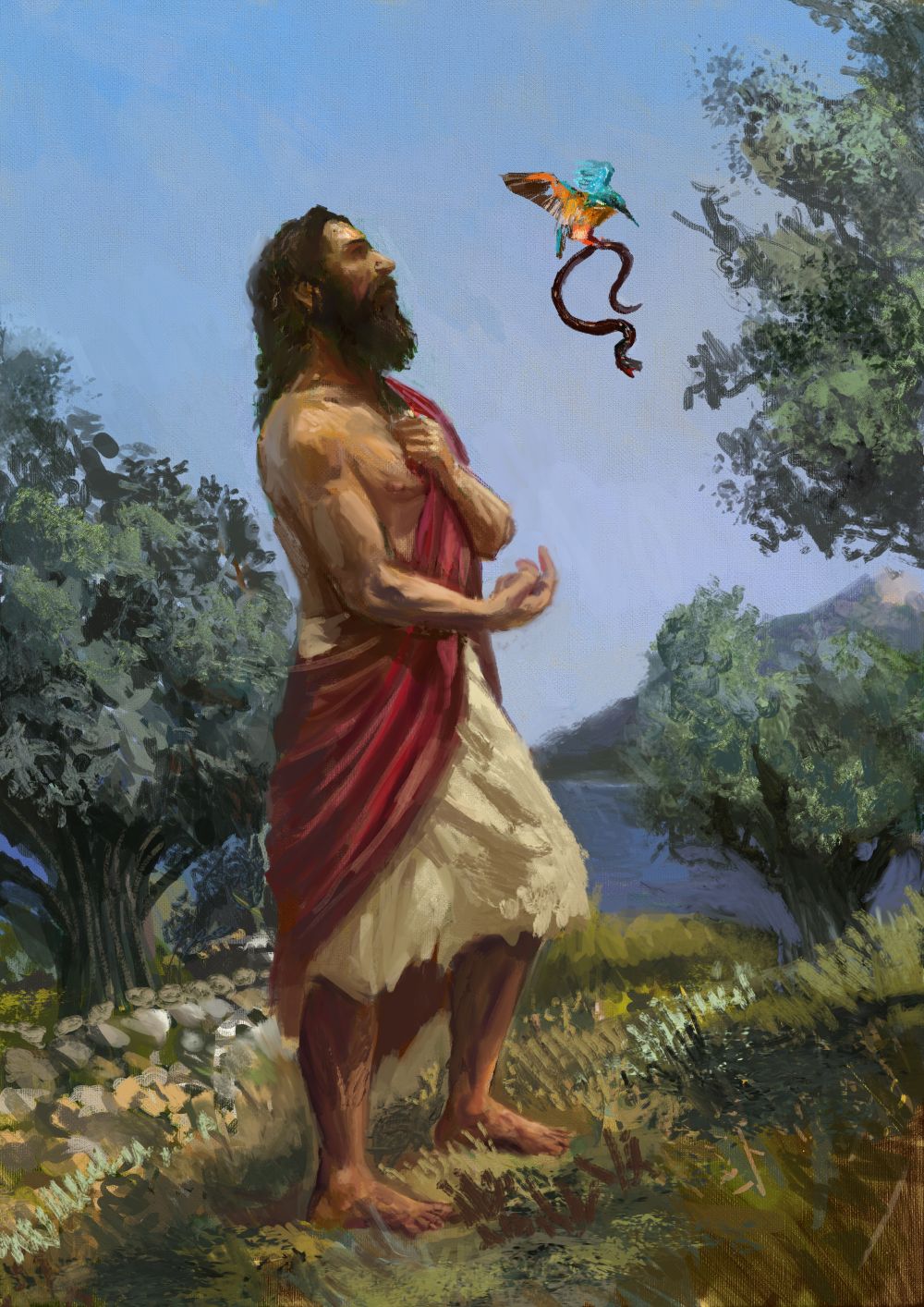
In the fourth part of our “The Forest as a Living Foundation” series, the distinguished American Nietzsche scholar Gary Shapiro investigates new angles on Nietzsche’s bonds to the woods: the philosopher’s personal enthusiasm for what is increasingly called “forest bathing,” the science behind how this practice benefits body, mind, and spirit, and the sheer pleasure of breathing fresh air, in woodland and wherever else we can find it. Shapiro’s essay showcases why this particular Lebensraum matters, not just for our individual well-being, but for the health of the entire planet.
The Postmodern Forest
How the Forest Subverts Modernity's Totalizing Claim
The Postmodern Forest
How the Forest Subverts Modernity's Totalizing Claim

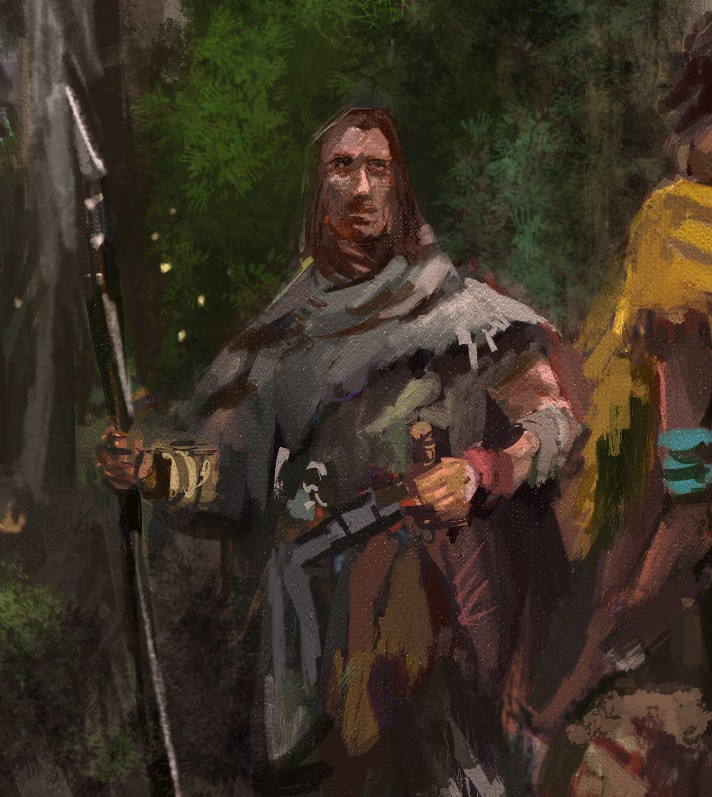
Forests are trending. And this is by no means contradictory to another, even larger trend of our time: digitalization. In this article, Mandus Craiss demonstrates that the forest is a network. Digitalization also occurs in a network-like manner; both phenomena are therefore characteristic of postmodernism.
In the first part of the article, the forest is characterized as a non-centralized and thus typically postmodern natural phenomenon. The second part defines "postmodernity" and discusses the extent to which this epochal concept is still, or once again, relevant – a discourse whose very early roots can be traced back to Nietzsche. Finally, the third part explains how the network aspect of postmodernity manifests itself and how the human-forest relationship has evolved recently.
This article is part of our special series this year "the forest as a livelihood".
On Life in Freedom
A Conversation with Jens Bonnemann about Sartre and Nietzsche
On Life in Freedom
A Conversation with Jens Bonnemann about Sartre and Nietzsche

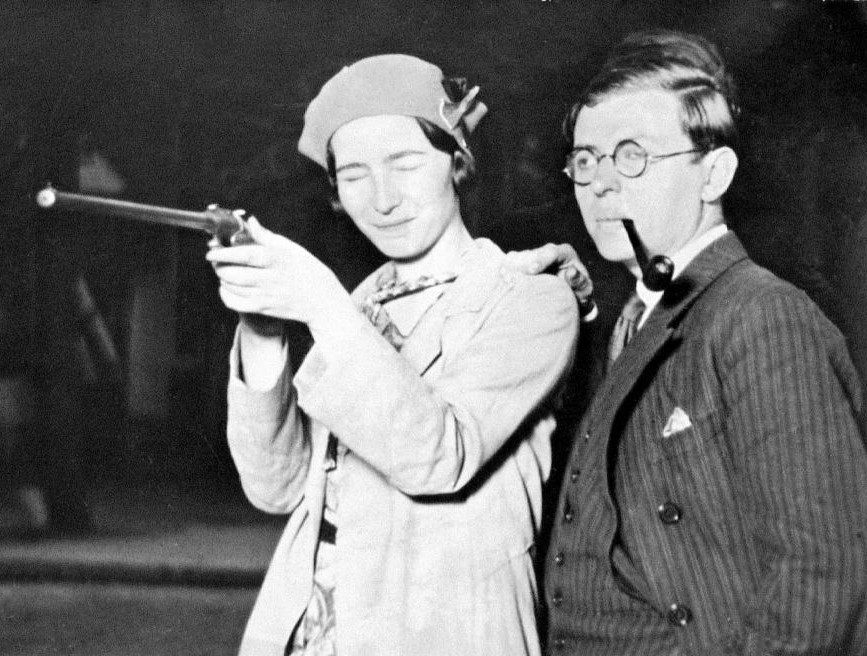
On April 15, 1980, one of the most important philosophers of the 20th century, Jean-Paul Sartre, died at the age of 74. Paul Stephan spoke with Jens Bonnemann, chairman of the German-speaking Sartre-Gesellschaft, about his basic ideas, his relationship with Nietzsche and his significance for our time. What does it mean to live in freedom after the “death of God”? What are the limits of individual freedom? What are the differences and similarities between Sartre and Nietzsche?
You can also view the unedited version of the conversation, in German, on YouTube and listen to it on Soundcloud.
“Peace with Islam?”
Hiking with Nietzsche Through Glasgow’s Muslim Southside: Part I
“Peace with Islam?”
Hiking with Nietzsche Through Glasgow’s Muslim Southside: Part I

In this two-part essay, the ultimate part of our ‘Hikes with Nietzsche’ series (link) for the time being, staff writer Henry Holland retraces summer rambles around Glasgow’s Southside, the home of Scotland’s most concentrated Muslim population. In this first instalment, Holland introduces the research on Nietzsche’s engagement with Islam and his reception within the Islamic world. He recounts how stumbling upon a lecture by Timothy Winter on the French theoretician and artist Pierre Klossowski and his encounter with the faith of Muhammed made him curious about this subject in the first place. We then launch into a travel diary that leads our writer to the heart of one of the present-day’s most debated topics, the role that Islam plays in modern European societies.
Traveling with Nietzsche through Southeast Asia IV
Malaysia
Traveling with Nietzsche through Southeast Asia IV
Malaysia


The last country that our author, Natalie Schulte, traveled by bike was Malaysia. After a good 5,000 km, she got the creeping feeling that the trip could still end poorly. With considerations as to whether cycling in Southeast Asia is a response to Nietzsche's appeal “live dangerously! “, she concludes her series of essays.
Stuck Between the Monsters and the Depths
Wanderings Through Modern Nihilism in the Footsteps of Nietzsche and Kierkegaard — Part 1
Stuck Between the Monsters and the Depths
Wanderings Through Modern Nihilism in the Footsteps of Nietzsche and Kierkegaard — Part 1


As in our series of articles”Hikes with Nietzsche“It has already been made clear that the metaphor of wandering plays a fundamental role in Nietzsche's work. In this two-part essay, Paul Stephan explores how Nietzsche uses the wanderer as a personification of modern nihilism and thus diversifies a central theme of cultural modernity, which can also be found in the writings of the Danish philosopher Søren Kierkegaard, who was born on May 5, 1813 in Copenhagen, where he also died on November 11, 1855.
On Dubious Paths ...
An Outline of Nietzsche's Concept of Wandering
On Dubious Paths ...
An Outline of Nietzsche's Concept of Wandering


Perhaps it is Nietzsche's main philosophical achievement that he described thinking as a process that happens in person. For him, reflection is a cooperative tension of body and mind. The mind is grounded in the nervous cosmopolitanism of the body. Nietzsche's conversion of Christianity: The flesh becomes word. This shows thinking in gestures. The following is intended to provide a sketch which indicates the main types of these reflexive gestures. This is intended to illustrate what it means when Nietzsche repeatedly describes himself as a wanderer. An intellectual tour that leads from standing and sitting as basic modes of traditional philosophy to walking, (out) wandering and halcyonic flying as Nietzsche's alternative modes of liberated thought and life.
In the House of Semblance
Preludes on the Connection Between Architecture and Thought in Nietzsche with Constant Reference to a Book by Stephen Griek. A Review
In the House of Semblance
Preludes on the Connection Between Architecture and Thought in Nietzsche with Constant Reference to a Book by Stephen Griek. A Review

A fruitful method within philosophy can be addressed seemingly minor, everyday topics. For example, the relationship between thinking and architecture, as this text is based on the newly published book Nietzsche's architecture of the discerning By Stephen Griek tried to show. With Nietzsche in mind, according to Michael Meyer-Albert, protecting a dwelling — both literally and figuratively — from the chaos of reality is essential for a successful world relationship. He neglects this in Greek's post-modern approach, which aims at maximum openness and wants to replace clear spatial structures with diffuse nomadic networks. Architecture as an art of non-violent rooting thus becomes unthinkable; the “house of appearance” that supports human existence collapses.
The Enlightenment’s Twilight
Nietzsche's Truth of Semblance I
The Enlightenment’s Twilight
Nietzsche's Truth of Semblance I

Nietzsche's best-known formulation, according to which God is dead, not only shows an anti-religious thrust. In particular, it points out that in modern times, constitutive self-evident elements no longer have traditional validity. As the cultural understanding of truth has faltered, not only has this or that truth become questionable, but the understanding of what truth actually is. This puts enlightenment under pressure to find the questions to which it should be the answer. It is this abyss of uncanny questionability from which Nietzsche's thinking attempts to show ways out that are viable. In the first part of his text Enlightenment Twilight Michael Meyer-Albert talks about the clarified doubts of the Enlightenment about itself.