#
Georgia
Public Enemy and Beacon of Hope
Nietzsche in the Soviet Union
Part I: Official Censorship and Reinterpretation
Public Enemy and Beacon of Hope
Nietzsche in the Soviet Union Part I: Official Censorship and Reinterpretation
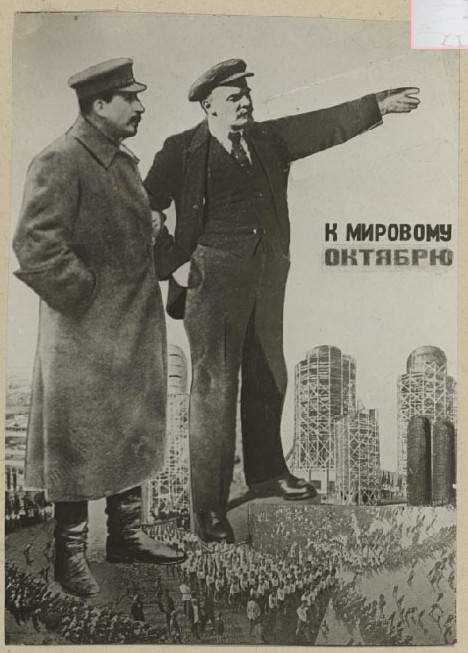

The October Revolution, which took place on November 6 and 7, 1917, according to the Western calendar, was one of the most pivotal events in world history. For the first time in history, one of the world's largest nations was to not only establish a republic but also end the era of private ownership of the means of production and the soil and build a completely classless society. In "A Sixth of the World"—the proud title of a 1926 Soviet film by Dziga Vertov that celebrates the Soviet Union's achievements and showcases its diverse peoples—socialism was to prevail, and a "new man" was even to be created.
It was an experiment that failed, yet it shaped the history of the 20th century like no other and remains a subject of debate to this day: Was it doomed to fail from the start? Was the price of the undeniable, gigantic successes of this vast empire too high? At what exact point did it take a wrong turn?
Nietzsche would likely have chosen the first answer—and conversely, he was, to put it mildly, not exactly the most popular philosopher in the Soviet Union. He was considered a bourgeois reactionary and a mastermind of fascism; his writings were removed from libraries and censored, and academic engagement with his work was virtually impossible. At the same time, individual motifs of his philosophy lived on in revolutionary culture, in literature, and in the vision of a "new man"—often without ever mentioning his name.
In this two-part series, Ukrainian philosopher Vitalii Mudrakov provides an overview of the reception of Nietzsche in the country where he was born, which has long since ceased to exist. The first part examines the official attempts to censor Nietzsche's thought and interpret it solely through the lens of Marxist-Leninist ideology. The second part will focus on the unofficial, subversive reception of Nietzsche.