#
Mandus Craiss (mention)
Heightened Idyll
Nietzsche and the Forest
Part I: Sylvan Exiles in Antiquity, Romanticism, and Modernity
Heightened Idyll
Nietzsche and the Forest Part I: Sylvan Exiles in Antiquity, Romanticism, and Modernity


Is there a connection between place and thought? How might Nietzsche’s philosophy and the forest be linked?
In German culture, the forest often appears as the epitome of the idyllic. In the penultimate part of our series “The Forest as a Living Foundation”, our author Michael Meyer-Albert argues that Nietzsche gave this idyll a completely new form by dynamizing it.
He begins by discussing two forms of the traditional idyll. While the classical idyll in Southern European traditions (such as in Virgil) tended to celebrate the sunny, Arcadian pastoral landscape or the orderly garden, the philosophical idyll is found within the walls of the academy. A refuge from doxa, a tribute to the logos.
Meyer-Albert then analyzes the German forest as a specifically German form of the idyll using the term “Waldeinsamkeit” (forest solitude), coined by the Romantic writer Ludwig Tieck (1773–1853). Here, the forest is understood as a near-religiously charged sanctuary from the demands of modernity. If defended aggressively, this romanticism can quickly turn into reactionary mythology—even in a modern, left-wing guise.
Nietzsche’s modification of the anti-modern German forest idyll into a heroic idyll that affirms modernity serves as a counter-proposal to all these traditional forms of the idyllic—this will be the focus of the second part of this article (link).
Wille zum Wald
Nietzsche’s Discovery of Forest Bathing
Wille zum Wald
Nietzsche’s Discovery of Forest Bathing
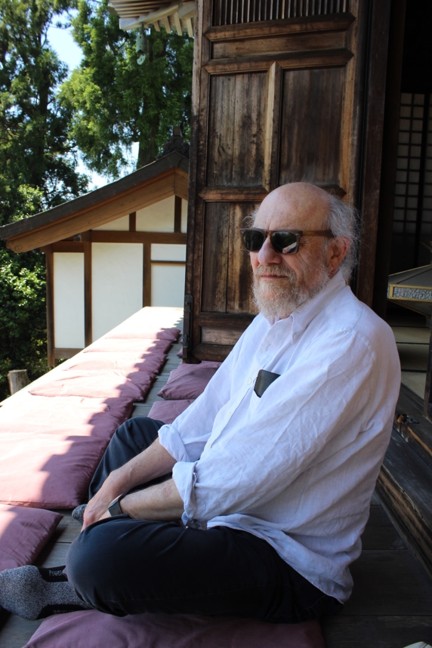
In the fourth part of our “The Forest as a Living Foundation” series, the distinguished American Nietzsche scholar Gary Shapiro investigates new angles on Nietzsche’s bonds to the woods: the philosopher’s personal enthusiasm for what is increasingly called “forest bathing,” the science behind how this practice benefits body, mind, and spirit, and the sheer pleasure of breathing fresh air, in woodland and wherever else we can find it. Shapiro’s essay showcases why this particular Lebensraum matters, not just for our individual well-being, but for the health of the entire planet.