#
Henning Ottmann
"There are no facts, only interpretations."
From Nietzsche's Critique of Knowledge to Radical Constructivism
"There are no facts, only interpretations."
From Nietzsche's Critique of Knowledge to Radical Constructivism


Nietzsche questions truth as an adequate understanding of the world. This implies there is no longer a true world, as modern sciences assume. Radical constructivism, emerging in biology, which posits that living beings perceive their environment only as their internal structures allow, confirms Nietzsche's analyses and, consequently, postmodern philosophy, where truth is also considered merely a construction and not an objective grasp of something. From this, it follows not only that the world can be interpreted in various ways, but also that there is no single, uniquely correct truth and, therefore, no single correct way of life.
If you prefer to watch or listen to this article, read by the author himself in German, you can also find it on YouTube and Soundcloud.
Peace through Strength
Nietzsche's Perspective on Negotiated Power and Armed Peace
Peace from Strength
Nietzsche's Perspective on Negotiated Power and Armed Peace
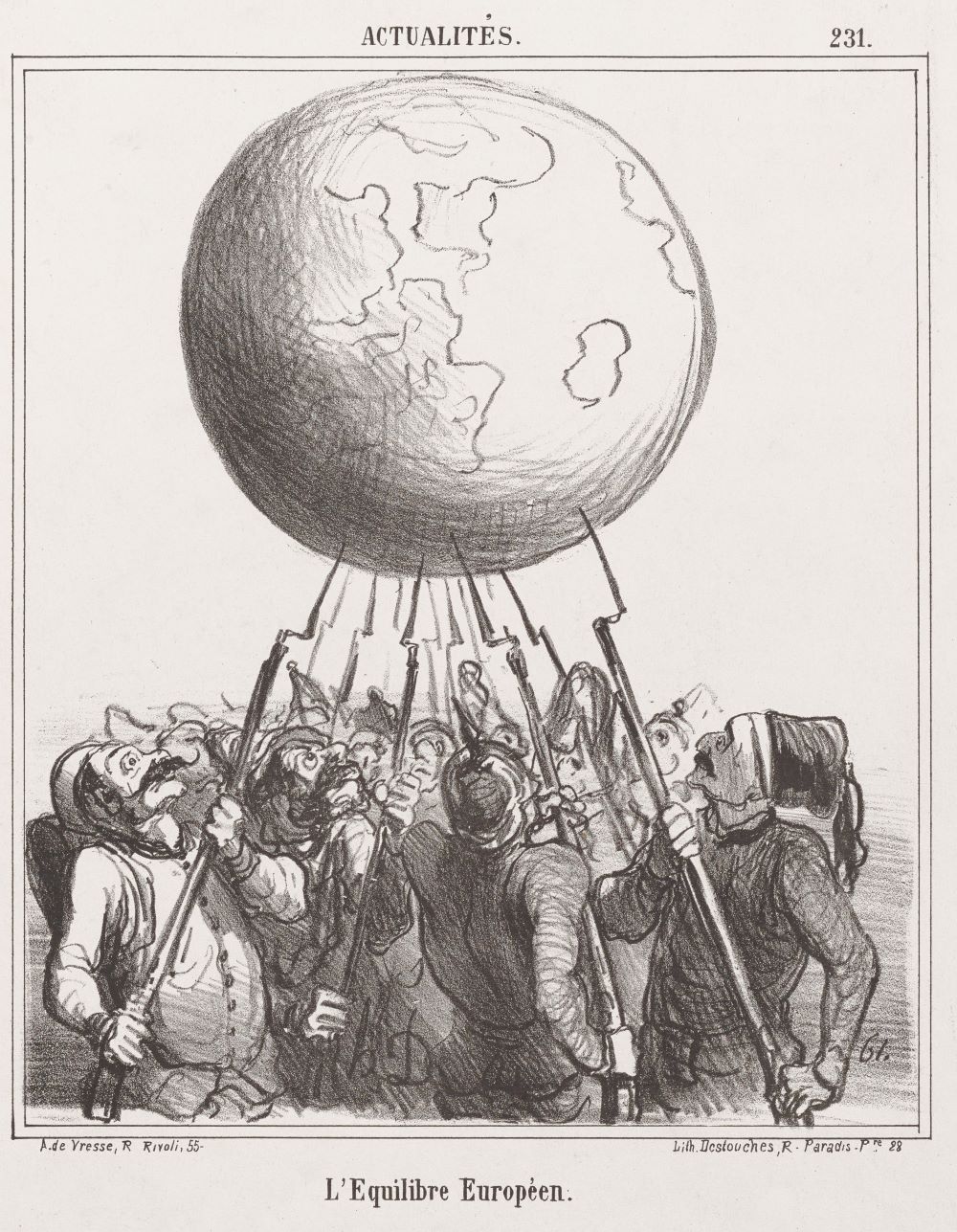

War in Europe was considered unthinkable for a long time — until it became a reality. But how can peace be thought of when normative guarantees fail? What if there are a few powerful and many weak players? Friedrich Nietzsche devised a surprisingly timely answer in 1879: Peace is not a sign of weakness, but an actively negotiated balance of power. He showed how a stable peace obliges all actors to build up their own strength. Nietzsche's transformation from an advocate of war to a thinker of peace based on strength is an admonition — also and especially to the weaker.