#
Zoroastrianism
Nietzsche on a Bike
A Declaration of Love
Nietzsche on a Bike
A Declaration of Love
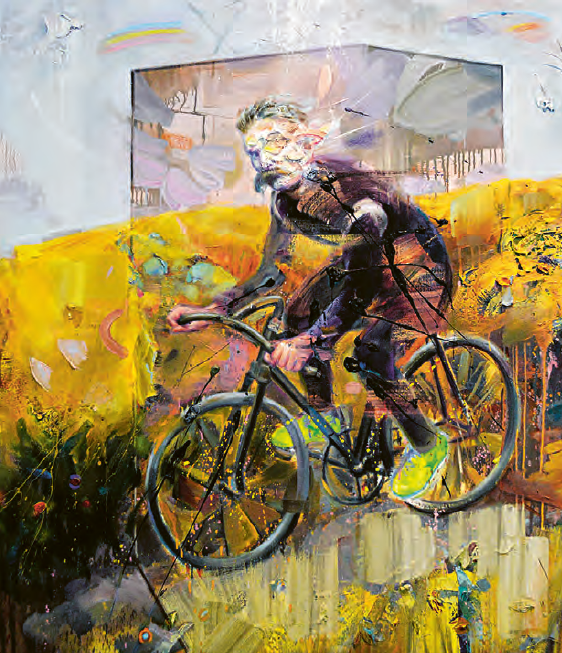

What does the most radical thinker of modernity have to do with cycling? Officially nothing: Nietzsche was a passionate hiker, and bicycles were conspicuously absent from his biography. Yet, his philosophy brilliantly anticipated the bicycle.
From the Buddhist Kala-Chakra up to Zarathustra's vision of the "self-rolling wheel," this essay embarks on a fascinating quest. It shows why the bicycle is far more than a mere means of transport: It is a philosophical instrument that teaches us the dynamic balance of life and makes the "Eternal Recurrence of the Same" palpable in the wind. An invitation to set thought in motion.
The Educator’s Mark
Schopenhauer's Omnipresence in Nietzsche's Philosophy II
The Educator’s Mark
Schopenhauer's Omnipresence in Nietzsche's Philosophy II


After explaining in the first part of this article (link) how Nietzsche transformed from an admirer of Schopenhauer to a critic in the course of the 1870s, Tom Bildstein now examines in more detail how the mature Nietzsche sought to overcome Schopenhauer‘s pessimism and counter it with a “life-affirming” philosophy. Schopenhauer‘s “will to life,” which the misanthrope would like to see ascetically denied, is to give way to the “will to power” as the fundamental principle of all life, which cannot be denied without contradiction.