#
Ludwig Tieck
The Postmodern Forest
How the Forest Subverts Modernity's Totalizing Claim
The Postmodern Forest
How the Forest Subverts Modernity's Totalizing Claim

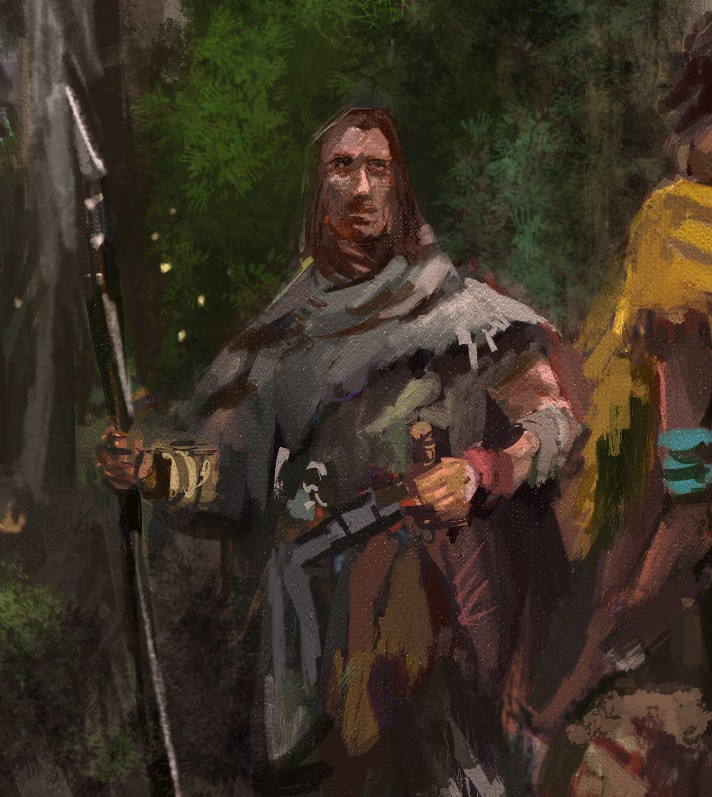
Forests are trending. And this is by no means contradictory to another, even larger trend of our time: digitalization. In this article, Mandus Craiss demonstrates that the forest is a network. Digitalization also occurs in a network-like manner; both phenomena are therefore characteristic of postmodernism.
In the first part of the article, the forest is characterized as a non-centralized and thus typically postmodern natural phenomenon. The second part defines "postmodernity" and discusses the extent to which this epochal concept is still, or once again, relevant – a discourse whose very early roots can be traced back to Nietzsche. Finally, the third part explains how the network aspect of postmodernity manifests itself and how the human-forest relationship has evolved recently.
This article is part of our special series this year "the forest as a livelihood".
Nietzsche and Music
Nietzsche and Music


For hardly any other philosopher, music was as important as it was for Nietzsche. “Without music, life would be a mistake”1, he wrote. Christian Saehrendt goes for Nietzsche PopArts The question of how this high appreciation of sound art was manifested in his life and work. He talks about Nietzsche's own compositions as well as one of the most iconic aspects of his life: his friendship with Richard Wagner. He shows that the music for Nietzsche is almost erotic It was important — and in this respect he was not so “out of date” at all, but a typical child of his time.