#
Stoa
Wille zum Wald
Nietzsche’s Discovery of Forest Bathing
Wille zum Wald
Nietzsche’s Discovery of Forest Bathing

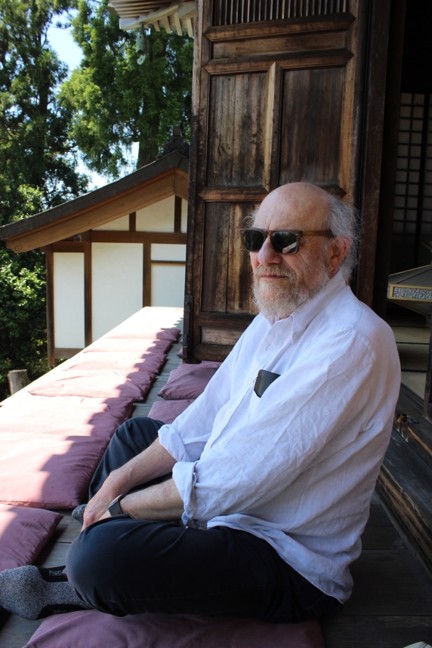
In the fourth part of our “The Forest as a Living Foundation” series, the distinguished American Nietzsche scholar Gary Shapiro investigates new angles on Nietzsche’s bonds to the woods: the philosopher’s personal enthusiasm for what is increasingly called “forest bathing,” the science behind how this practice benefits body, mind, and spirit, and the sheer pleasure of breathing fresh air, in woodland and wherever else we can find it. Shapiro’s essay showcases why this particular Lebensraum matters, not just for our individual well-being, but for the health of the entire planet.
“How Well Disposed Would You Have to Become to Yourself and to Life”
Prolegomena to Any Future Philosophy That Will Be Able to Present Itself as an Enlightenment — Part II
“How Well Disposed Would You Have to Become to Yourself and to Life”
Prolegomena to Any Future Philosophy That Will Be Able to Present Itself as an Enlightenment — Part II
After our author, in the first part of this article, described the current political-cultural situation with reference to Fukuyama as an outgrowth of deep-seated boredom, which numbs itself in excesses of anger and indignation, he tries in the following second to suggest a possible turn for this zeitgeist, which could manifest itself in a new Enlightenment verve and a new positive self-image of the Enlightenment. Our author, with Nietzsche, opposes the “four despairs” that afflict the present tense, “four transfigurations” and “fields of research” resulting from them. An ironic view of the world and oneself should help to practice a transfigurative perspective on the world, which would be able to overcome the lethargy of postmodernism and revitalize the modernist project. The program of self-reliant future Enlightenment.
Nietzsche’s Techniques of Philosophizing
With Glances Towards Wittgenstein and Heidegger
Nietzsche’s Techniques of Philosophizing
With Glances Towards Wittgenstein and Heidegger
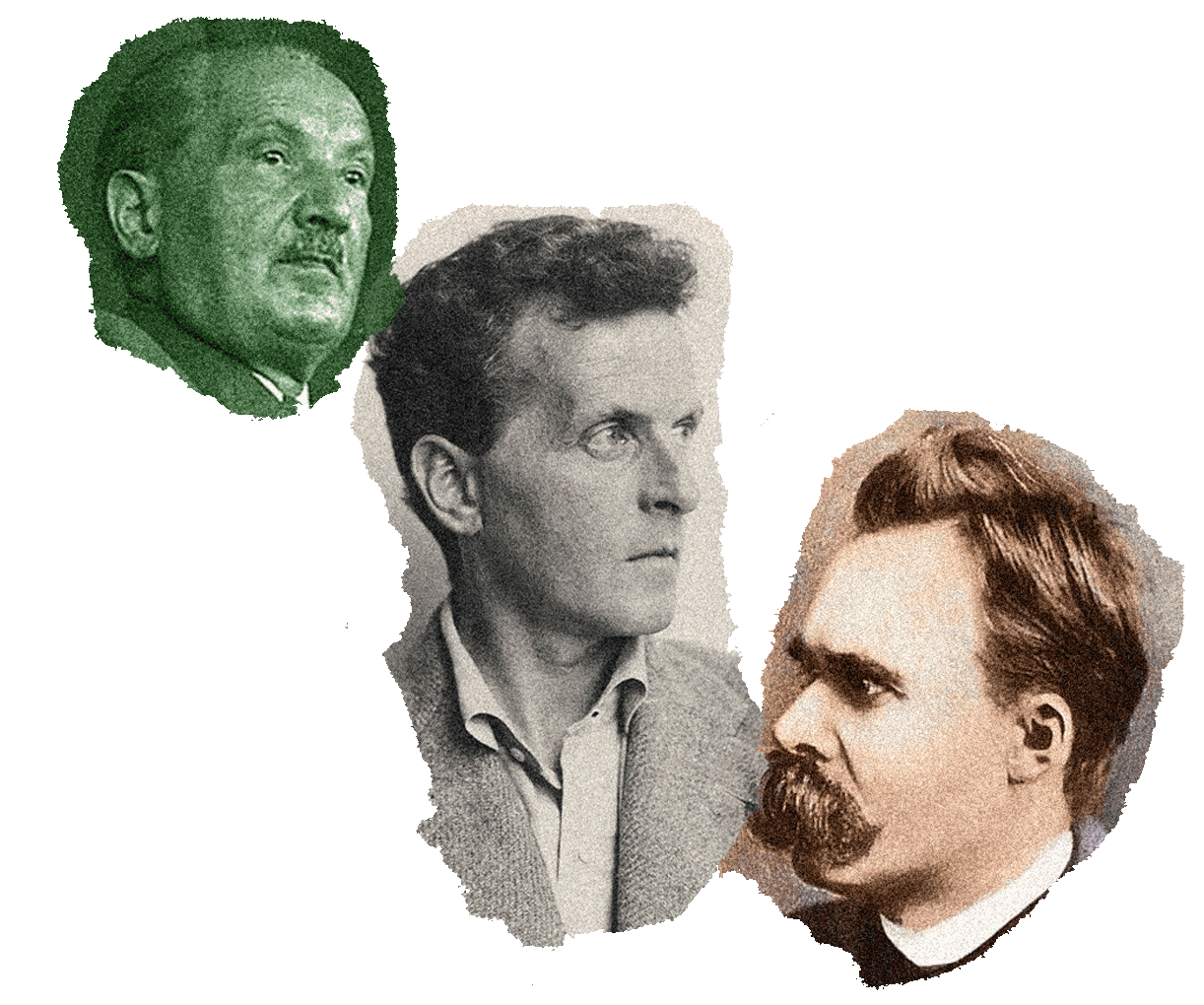
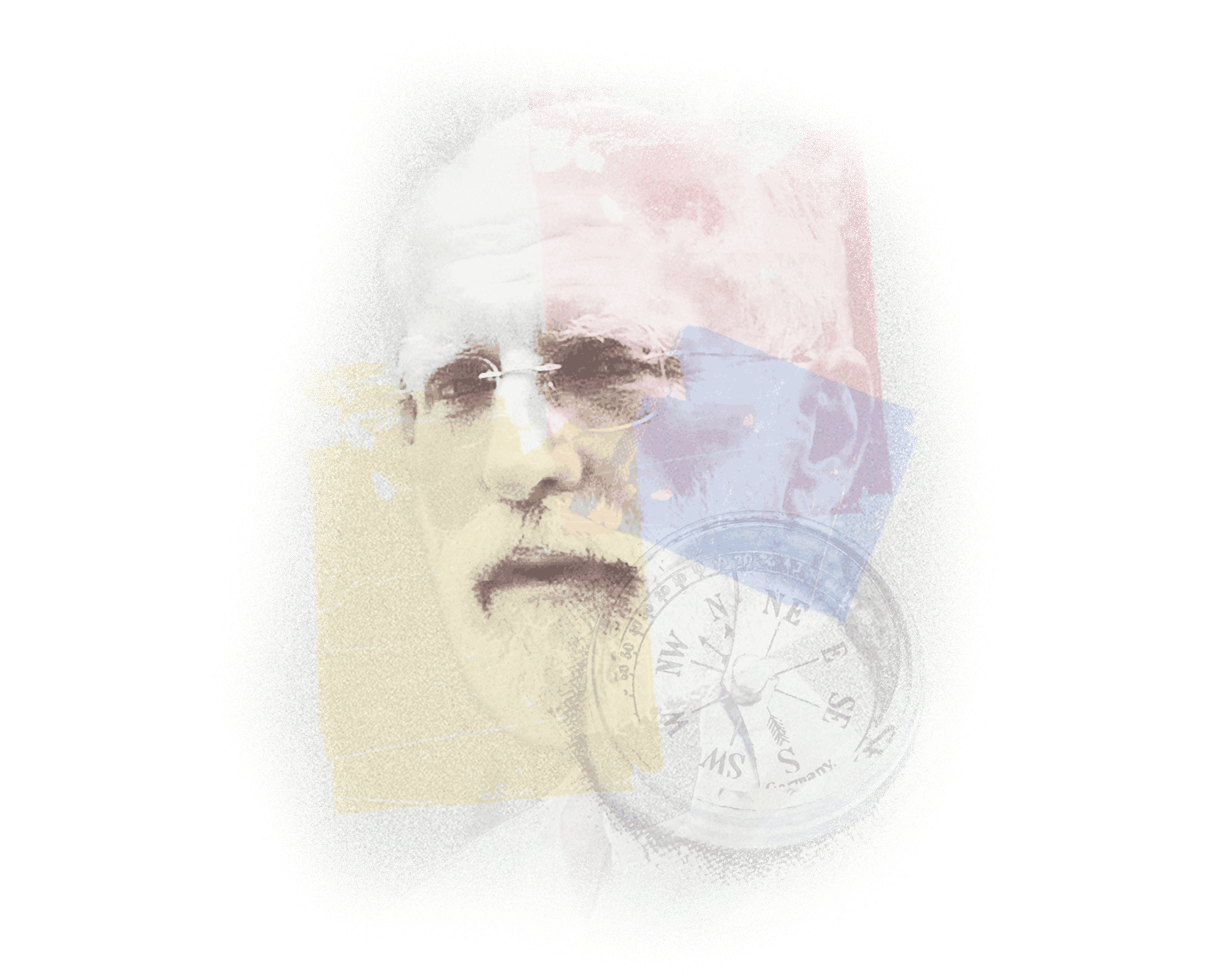
A fixed feature at the annual conference of the Nietzsche Gesellschaft [Nietzsche Society] conference is the Lectio Nietzscheana Naumburgensis: a particularly distinguished scholar delivering an extended lecture on the conference theme on the final day, thereby providing a pointed conclusion. The most recent conference in October 2025 awarded this special honor to Werner Stegmaier to recognize his long tenure as editor of the influential Nietzsche-Studien [Nietzsche Studies] and his authorship of numerous seminal monographs on Nietzsche’s philosophy. Running from October 16-19, 2025, the conference focused the theme “Nietzsche’s Technologies,” as Emma Schunack reported.
Generously granting his permission to publish his lecture in full and in this translation, Stegmaier takes on the conference theme from an unexpected perspective. Rather than examining what is commonly understood as “technologies”—machines, cyborgs, or automata—he explores instead Nietzsche’s philosophical techniques, both intellectual and rhetorical. Weighing up the original and idiosyncratic methods Nietzsche deployed while writing, Stegmaier reflects on how best to interpret and assess them. How were they able to enthuse and win over successive generations of readers? What can we learn from these today?
Comparing Nietzsche’s techniques with those of two other modern philosophical giants, Martin Heidegger (1889–1976) and Ludwig Wittgenstein (1889–1951), Stegmaier retraces all three philosophers’ break with the classical and conceptually oriented techniques of thinking inherited from antiquity, and their discoveries of radical and experimental means of developing philosophy in the age of “nihilism.” Replacing a one-dimensional, metaphysical understanding of rationality, these means cultivate a plural, perspectival mode of thought that necessarily relies on entirely different techniques. Situating Nietzsche’s methods within these broader developments in intellectual history, the Lectio establishes an utterly new framework for understanding his thought and its place within modern philosophy.
Translated by Henry Holland.
Nietzsche and Cyborgs
The International Nietzsche Congress 2025
Nietzsche and Cyborgs
The International Nietzsche Congress 2025
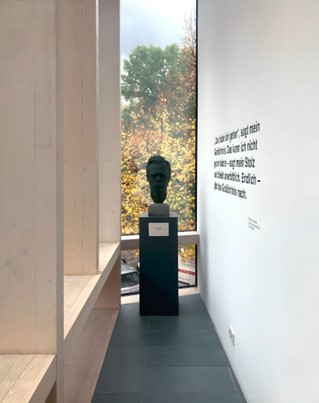

Under the topic Nietzsche's technologies international visitors were once again invited to the Nietzsche Society conference in Naumburg an der Saale this year. In the period from October 16 to 19, in addition to various lectures, a film screening and a concert, there was also an art exhibition to visit. Our author Emma Schunack was there and reports on her impressions. Her question: How can Nietzsche's technologies find expression in the technological age?
Editorial note: The conference report does not mention the important “Lectio Nietzscheana Naumburgensis,” with which Werner Stegmaier rounded off the conference on Sunday morning and took up the topic of the conference again in a completely different way by asking about Nietzsche's own “philosophizing techniques.” We have now published this important talk in full length with the kind permission of the author (link).
Deciding to Serve Life
An Essay on the Meaning of Nietzsche's Philosophy
Deciding to Serve Life
An Essay on the Meaning of Nietzsche's Philosophy


Nietzsche is generally regarded as a literary philosopher whose aphoristic nihilisms not only conjure up the death of God, but who also reinforced the dark sides of German history as a posthumous master thinker. In contrast, the following text would like to be part of the series What does Nietzsche mean to me? invite you to learn to read Nietzsche anew as the discoverer of the all-too-unknown philosophical continent of Mediterranean existentialism.