#
vampire
“It is no longer about monumentalization! Artists today want to make Nietzsche human so that one can deal with him in a new way.”
Interview with Barbara Straka about Her Book Nietzsche Forever?
Discussion with Barbara Straka
Interview with Barbara Straka about Her Book Nietzsche Forever?
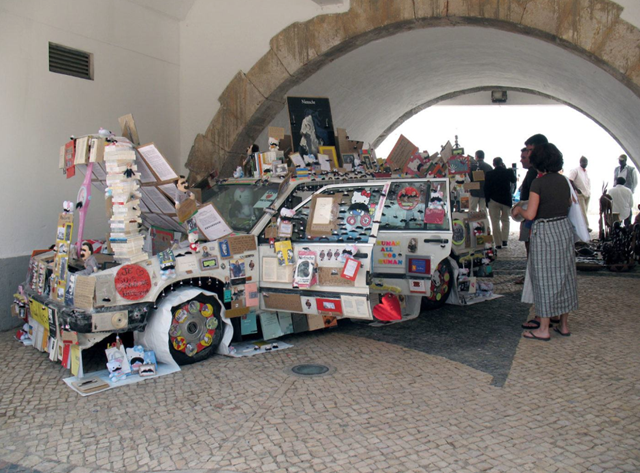
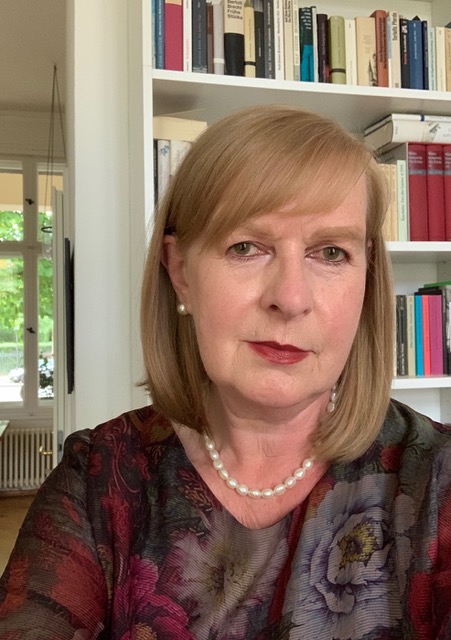
Last year, curator and art historian Barbara Straka published a two-volume monograph entitled Nietzsche forever? Friedrich Nietzsches Transfigurationen in der zeitgenössischen Kunst (Nietzsche Forever? Friedrich Nietzsche's Transfigurations in Contemporary Art), in which she explains Nietzsche's significance for the visual arts of the present day. After Michael Meyer-Albert dedicated a two-part review to her work in recent weeks (part 1, part 2), here follows an interview conducted by our author Jonas Pohler with the author in Potsdam. He discussed her book with her, but also about the not always easy relationship between philosophy and contemporary art.
Fleeing the State: Kafka and Nietzsche’s Human
Or: Becoming-woman after Deleuze & Guattari
Fleeing the State: Kafka and Nietzsche’s Human
Or: Becoming-woman after Deleuze & Guattari


Kafka and Nietzsche are united by their confrontation with the state and bureaucracy. Deleuze & Guattari, whose works are based on both, develop an apolitical response to the fatal political situation, namely transformations after Kafka, an expansion of themselves to Nietzsche, which can be understood as escape lines from a patronizing society.
Nietzsche doesn’t Mean: Nietzsche Lives
Nietzsche doesn’t Mean: Nietzsche Lives


In the last part of the series “What does Nietzsche mean to me? “, in which our regular authors briefly presented their respective understanding of Nietzsche in recent weeks, Estella Walter tells of 'her' Nietzsche as a critic of any totality in the name of the nameless reality of becoming.