#
Ada Lovelace
Materialism and the Problem of Morality
Reflections with Deleuze/Guattari, Clouscard, and Levinas
PART 2: Eternity and the Other: Levinas, Ethics as First Philosophy, and Materialism
Materialism and the Problem of Morality 2
PART 2: Eternity and the Other: Levinas, Ethics as First Philosophy, and Materialism
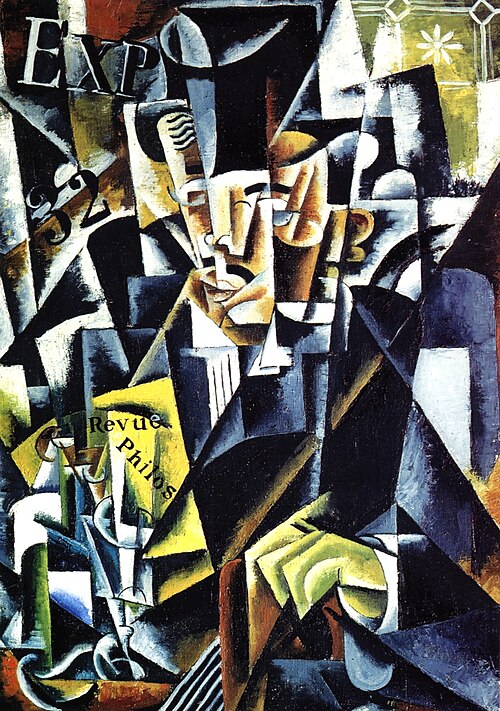
Materialist metaphysics, as practiced by Spinoza, Nietzsche, or Deleuze and Guattari, has proven incapable of accounting for fundamental moral convictions. Nietzsche is at least radical enough to acknowledge this incommensurability and draw the corresponding conclusions. If one is unwilling to accept this, the only remaining path is to adopt the "view from eternity" alongside metaphysics: from that vantage point, one can only unconditionally affirm a groundless reality. Perhaps, however, the more promising answer is that of Emmanuel Levinas: his materialism allows morality to emerge from the encounter with the Other, and in doing so, he almost incidentally shatters the unity of metaphysics that even such radical thinkers as Deleuze and Guattari still took for granted.
Nietzsche, Tech Elitism, and the Tipping Point from Meaning to Violent Fantasy1
Off the Rails with ChatGPT
Nietzsche, Tech Elitism, and the Tipping Point from Meaning to Violent Fantasy
Off the Rails with ChatGPT
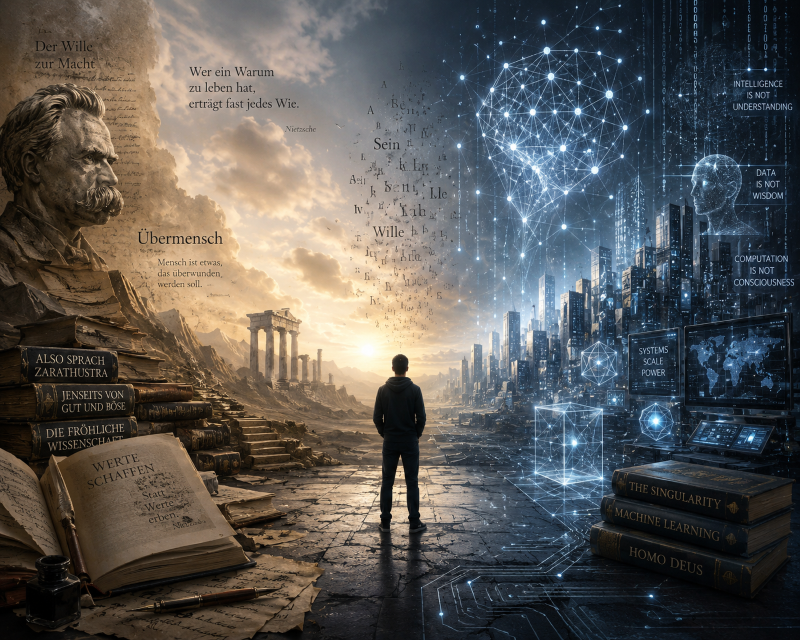
It has become something of a tradition for us to publish a "conversation" between Paul Stephan and ChatGPT on the anniversary of Nietzsche's death. While the previous two "interviews" (No. 1, No. 2) focused primarily on highlighting the limitations of A"I" and poking a little fun at it, our author's main goal this time was to address another common objection raised against A"I": that it censors unpopular opinions that deviate too far from the mainstream, thereby narrowing discourse as A"I" outputs increasingly become the benchmark for "truth."
We must therefore issue a strong warning: To this end, our author confronted ChatGPT with several radical interpretations and viewsthat in no way reflect his own perspective and would otherwise find no place on this blog, but rather diametrically contradict our values and our approach to Nietzsche. To signal this, he refers to himself as "Zero Newman" for this conversation. His aim was to draw attention to the censorship mechanisms of A"I", while also offering a critical, satirical look at potential "dark" interpretations of Nietzsche that are not merely a thing of the past.
A commentary by Paul Stephan on this "interview" and the rampant use of A"I"-generated Nietzsche interpretations and images on the internet can be found here.