#
relativism
Materialism and the Problem of Morality
Reflections with Deleuze/Guattari, Clouscard, and Levinas
PART 1: Morality Without a Place: Deleuze/Guattari vs. Clouscard
Materialism and the Problem of Morality
PART 1: Morality Without a Place: Deleuze/Guattari vs. Clouscard
As is well known, Nietzsche did not feel bound by conventional morality. In a world without an afterlife, strength and the will to power prevail. While Nietzsche was prepared to accept the brutal consequences of this perspective if necessary, some of his successors could not reconcile themselves to it, if only for political reasons. Using the work of Gilles Deleuze and Félix Guattari, this text examines the difficulties faced by a materialism that seeks to hold onto its Nietzschean inspiration while refusing to betray certain values. Michel Clouscard highlights this tension, yet he, too, fails to provide a justification for his moral convictions within the framework of his Marxist materialism. Is materialism fundamentally blind to morality?
Nietzsche, Tech Elitism, and the Tipping Point from Meaning to Violent Fantasy1
Off the Rails with ChatGPT
Nietzsche, Tech Elitism, and the Tipping Point from Meaning to Violent Fantasy
Off the Rails with ChatGPT


It has become something of a tradition for us to publish a "conversation" between Paul Stephan and ChatGPT on the anniversary of Nietzsche's death. While the previous two "interviews" (No. 1, No. 2) focused primarily on highlighting the limitations of A"I" and poking a little fun at it, our author's main goal this time was to address another common objection raised against A"I": that it censors unpopular opinions that deviate too far from the mainstream, thereby narrowing discourse as A"I" outputs increasingly become the benchmark for "truth."
We must therefore issue a strong warning: To this end, our author confronted ChatGPT with several radical interpretations and viewsthat in no way reflect his own perspective and would otherwise find no place on this blog, but rather diametrically contradict our values and our approach to Nietzsche. To signal this, he refers to himself as "Zero Newman" for this conversation. His aim was to draw attention to the censorship mechanisms of A"I", while also offering a critical, satirical look at potential "dark" interpretations of Nietzsche that are not merely a thing of the past.
A commentary by Paul Stephan on this "interview" and the rampant use of A"I"-generated Nietzsche interpretations and images on the internet can be found here.
Jean-Baptiste Botul, a Forgotten Nietzschean from France
Jean-Baptiste Botul, a Forgotten Nietzschean from France
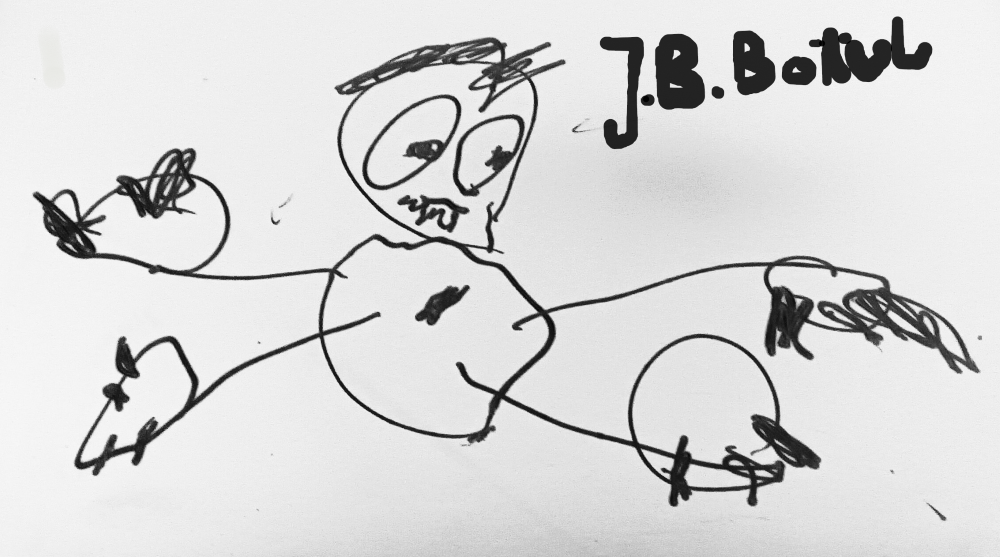
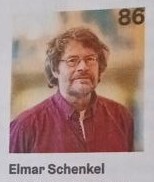
Time and again, our blog is dedicated to overlooked figures from the Nietzscheverse. The Leipzig Anglist Elmar Schenkel went deep into the archives for us in order to introduce you to an almost unknown figure of French-language Nietzsche reception: the “taxi philosopher” Jean-Baptiste Botul, who lived from 1896 to 1947 and not only came into contact with numerous prominent figures of his time on his trips through Paris, but developed also, in conversations with them, his very own Nietzsche interpretation, which, due to its subversive explosive power, has been stored in the poison cabinet by the mainstream of Nietzsche research to the present day. If Nietzsche was, in his own words, “dynamite,” then Botul is a rocket of the Force de frappe, still awaiting detonation — a stroke of luck?
Dionysus as Rolling Stone
An Attempt to Understand Nietzsche with Rock Music
Dionysos als rolling stone
An Attempt to Understand Nietzsche with Rock Music

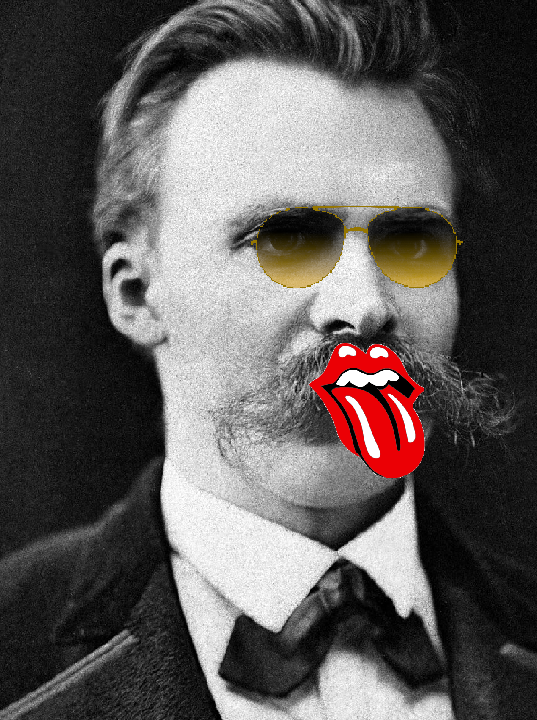
On the one hand, Nietzsche's distinction between the Apollonian and the Dionysian helps to understand the development of the rock music of the Rolling Stones both internally and externally. On the other hand, Nietzsche's philosophy is reflected in many places in their songs. But above all, it is also illuminated by the Stones, and their songs show what Nietzsche is thinking — an Apollonian act. If Nietzsche is aesthetically oriented towards intoxication, then you can also learn from the Stones how to receive Nietzsche's poetry in a Dionysian way. It is therefore not just about understanding the Stones with Nietzsche, but vice versa: with the Nietzsche Stones.
An audiovisual version of this article with clips of the quoted songs can be found on the YouTube channel of the Halcyonic Association for Radical Philosophy and on Soundcloud.
A Day in the Life of Nietzsche's Future
Report on the Conference Nietzsche's Futures in Weimar
A Day in the Life of Nietzsche's Future
Report on the Conference Nietzsche's Futures in Weimar


From October 7 to 11, 2024, the event organized by the Klassik Stiftung Weimar took place in Weimar Nietzsche's futures. Global Conference on the Futures of Nietzsche instead of. Our regular author Paul Stephan was on site on the first day and gives an insight into the current state of academic discussions about Nietzsche. His question: What is the future of Nietzsche academic research when viewed from the perspective of Nietzsche's own radical understanding of the future?
Boomers, Zoomers, Millennials
How Do the Respective Perspectives on Nietzsche Differ?
Boomers, Zoomers, Millennials
How Do the Respective Perspectives on Nietzsche Differ?


This time in confidential Du, Paul Stephan talked to Hans-Martin Schönherr-Mann, our oldest parent author, and our youngest regular author, Estella Walter, about our different generational experiences and about what is actually to be thought of the fashionable discourse about the different “generations.” We talked about post-structuralism, the ecological issue and the diversity of possible connections to Nietzsche.