#
comedy
Heightened Idyll
Nietzsche and the Forest
Part I: Sylvan Exiles in Antiquity, Romanticism, and Modernity
Heightened Idyll
Nietzsche and the Forest Part I: Sylvan Exiles in Antiquity, Romanticism, and Modernity


Is there a connection between place and thought? How might Nietzsche’s philosophy and the forest be linked?
In German culture, the forest often appears as the epitome of the idyllic. In the penultimate part of our series “The Forest as a Living Foundation”, our author Michael Meyer-Albert argues that Nietzsche gave this idyll a completely new form by dynamizing it.
He begins by discussing two forms of the traditional idyll. While the classical idyll in Southern European traditions (such as in Virgil) tended to celebrate the sunny, Arcadian pastoral landscape or the orderly garden, the philosophical idyll is found within the walls of the academy. A refuge from doxa, a tribute to the logos.
Meyer-Albert then analyzes the German forest as a specifically German form of the idyll using the term “Waldeinsamkeit” (forest solitude), coined by the Romantic writer Ludwig Tieck (1773–1853). Here, the forest is understood as a near-religiously charged sanctuary from the demands of modernity. If defended aggressively, this romanticism can quickly turn into reactionary mythology—even in a modern, left-wing guise.
Nietzsche’s modification of the anti-modern German forest idyll into a heroic idyll that affirms modernity serves as a counter-proposal to all these traditional forms of the idyllic—this will be the focus of the second part of this article (link).
Nietzsche, Comedy, and the Art of the Edge
A Conversation with Sandra Schmidt
Nietzsche, Comedy, and the Art of the Edge
A Conversation with Sandra Schmidt
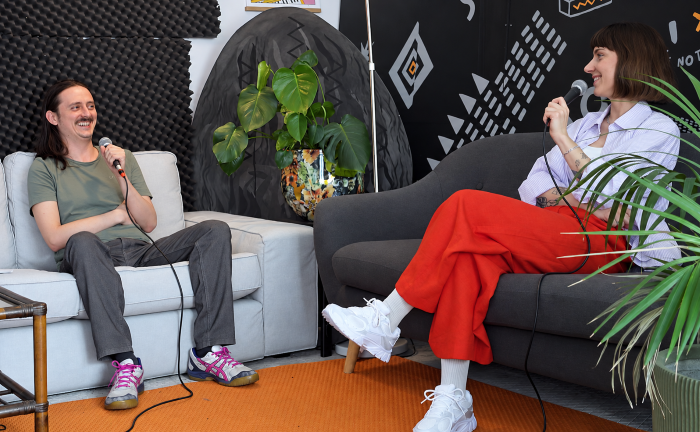
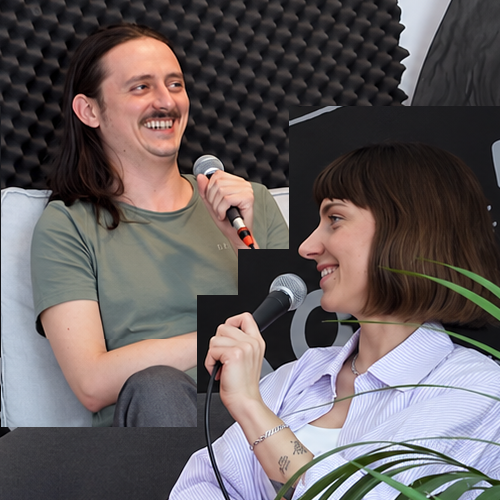
Nietzsche is a master of provocation and the punchline. In the court jester, he identifies a figure who cannot conform and therefore tells the powerful truths they would otherwise rarely hear—while simultaneously making them laugh. Can we draw a parallel here to modern stand-up comedy? How do stance and craft come together in this context? What influence do the stage, the audience, and social media have on what is perceived as funny, and when and where that happens? And who are the powerful of today, anyway: political leaders, societal majorities, or algorithms?
Our author Bernhard Ostheimer met with comedian and PhD philosopher Sandra Schmidt to talk about Nietzsche, the craft of comedy, and the art of pushing boundaries without losing touch with the audience.
You can also watch a longer, unedited version of the conversation on YouTube or listen to it on SoundCloud.
“Facts” and a Damn Good Interpretation
Nietzsche as a Solo Piece in Halle
“Facts” and a Damn Good Interpretation
Nietzsche as a Solo Piece in Halle
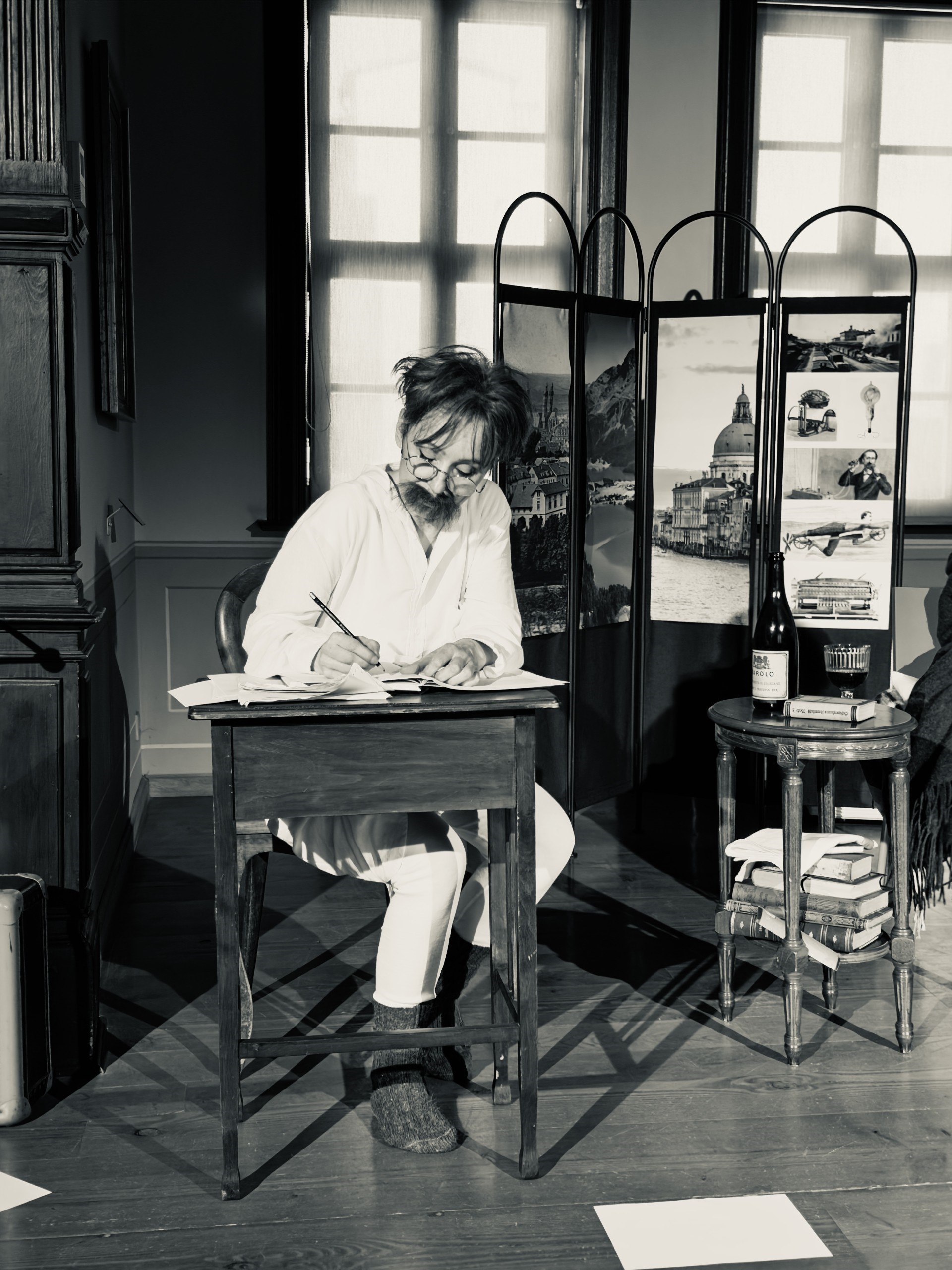
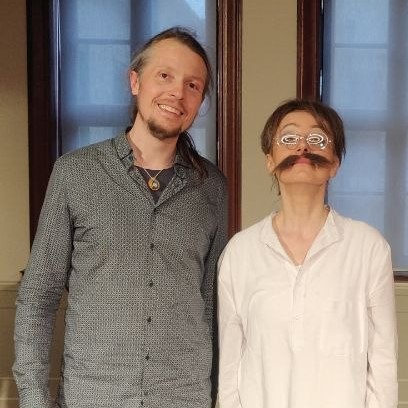
The actress Andrea Ummenberger is currently putting Nietzsche on stage in Halle with a solo play. In a captivating evening at the theatre, the audience can experience the thinker as he possibly was, at least in the interpretation of Austrian writer Alexander Widner, during his last years: not necessarily mentally abducted, but rather insane and in permanent conflict with his sister, his mother — and last but not least his home country. A self-proclaimed fool who rebels against the tight shackles of German small-mindedness and dreams of the South and liberated sensuality. Ummenberger shows us a Nietzsche who still has something to say to us today; not a brilliant idol, but rather a complex anti-hero who asks important questions.
“It is no longer about monumentalization! Artists today want to make Nietzsche human so that one can deal with him in a new way.”
Interview with Barbara Straka about Her Book Nietzsche Forever?
Discussion with Barbara Straka
Interview with Barbara Straka about Her Book Nietzsche Forever?
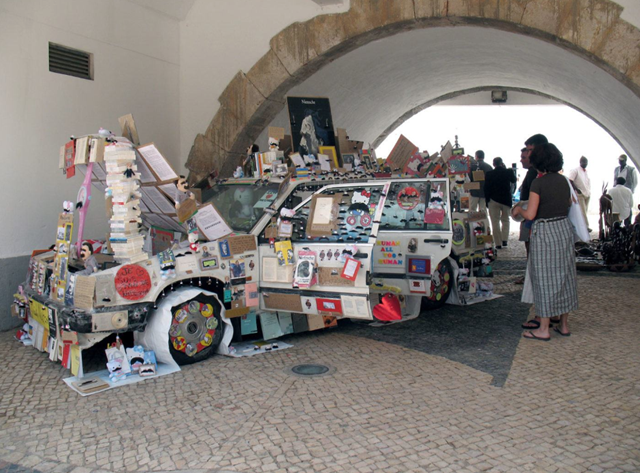
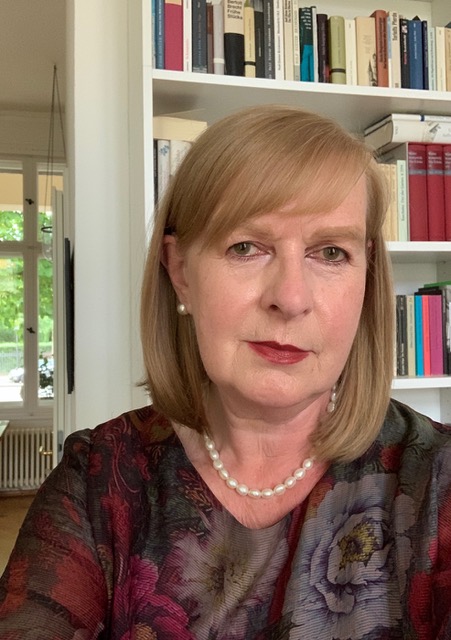
Last year, curator and art historian Barbara Straka published a two-volume monograph entitled Nietzsche forever? Friedrich Nietzsches Transfigurationen in der zeitgenössischen Kunst (Nietzsche Forever? Friedrich Nietzsche's Transfigurations in Contemporary Art), in which she explains Nietzsche's significance for the visual arts of the present day. After Michael Meyer-Albert dedicated a two-part review to her work in recent weeks (part 1, part 2), here follows an interview conducted by our author Jonas Pohler with the author in Potsdam. He discussed her book with her, but also about the not always easy relationship between philosophy and contemporary art.
Being a Father with Nietzsche
A Conversation between Henry Holland and Paul Stephan
Being a Father with Nietzsche
A Conversation between Henry Holland and Paul Stephan
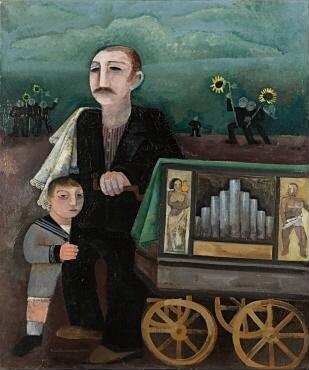
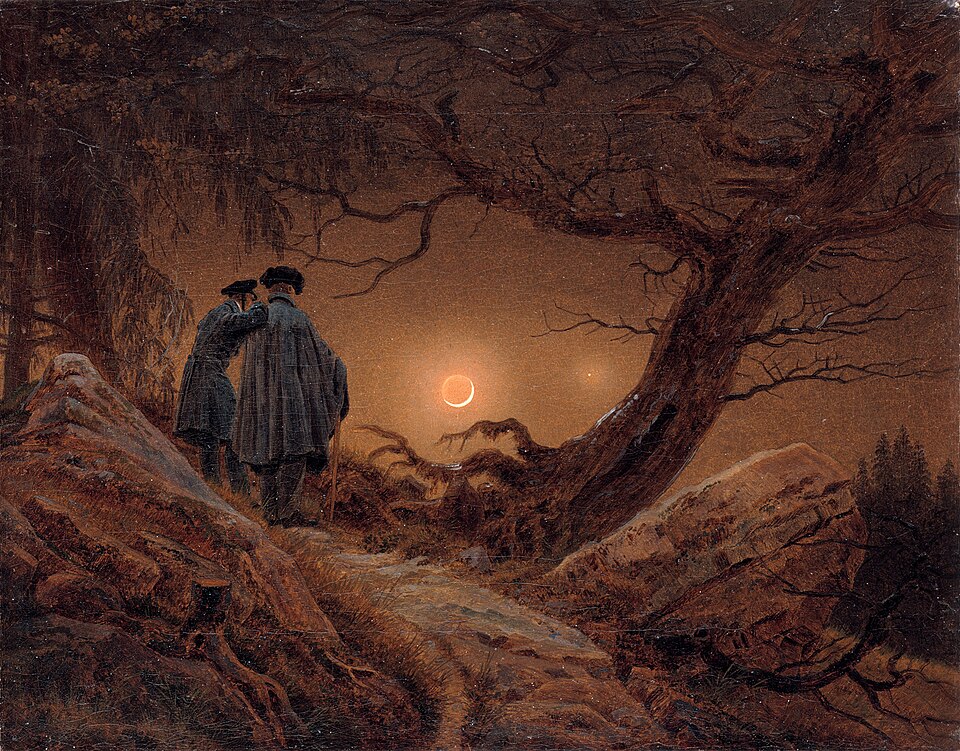
Nietzsche certainly did not have any children and is also not particularly friendly about the subject of fatherhood in his work. For him, the free spirit is a childless man; raising children is the task of women. At the same time, he repeatedly uses the child as a metaphor for the liberated spirit, as an anticipation of the Übermensch. Is he perhaps able to inspire today's fathers after all? And can you be a father and a Nietzschean at the same time? Henry Holland and Paul Stephan, both fathers, discussed this question.
We also published the complete, unabridged discussion on the Halcyonic Association for Radical Philosophy YouTube channel (Part 1, part 2).