#
spirits, demons, ghosts
Wille zum Wald
Nietzsche’s Discovery of Forest Bathing
Wille zum Wald
Nietzsche’s Discovery of Forest Bathing
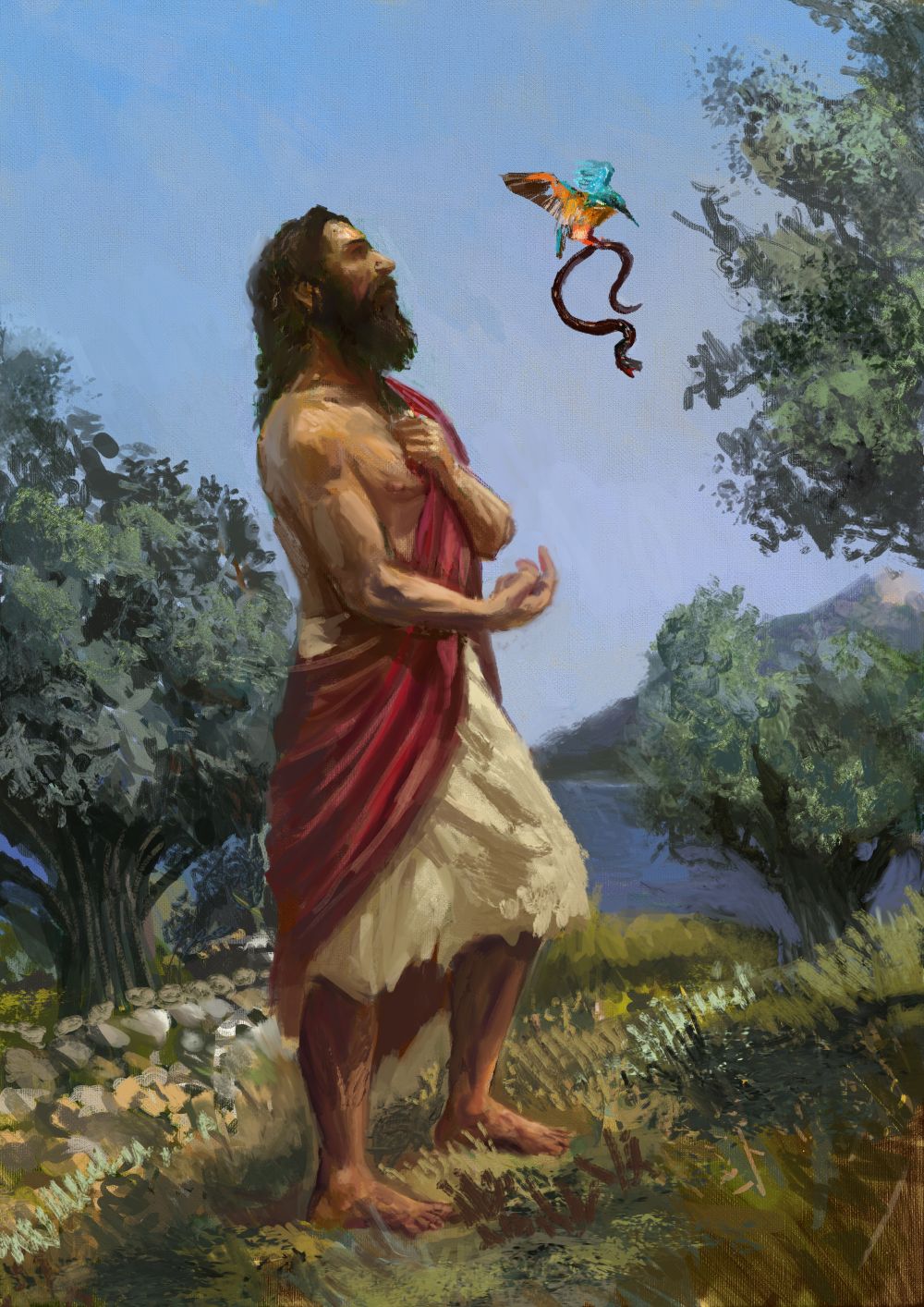
In the fourth part of our “The Forest as a Living Foundation” series, the distinguished American Nietzsche scholar Gary Shapiro investigates new angles on Nietzsche’s bonds to the woods: the philosopher’s personal enthusiasm for what is increasingly called “forest bathing,” the science behind how this practice benefits body, mind, and spirit, and the sheer pleasure of breathing fresh air, in woodland and wherever else we can find it. Shapiro’s essay showcases why this particular Lebensraum matters, not just for our individual well-being, but for the health of the entire planet.
Inside the Magic Forest
Nietzsche and the Sorcerous Power of Trees
Inside the Magic Forest
Nietzsche and the Sorcerous Power of Trees


In cultural perception, the forest is much more than a mere supplier of raw materials or a local recreation area, but, especially in German culture, a magical place of encounter with the supernatural. In the second part of our series ”the forest as a livelihood“ Christian Saehrendt explores this romantic fascination for the forest and to what extent it is also reflected in Nietzsche's works. Because Nietzsche was not only a passionate forest walker, he also writes again and again about this gateway to the “otherworld” and, last but not least, places his Zarathustra in sylvan sceneries.
The Eternal Oak
Where Everything Returns
The Eternal Oak
Where Everything Returns

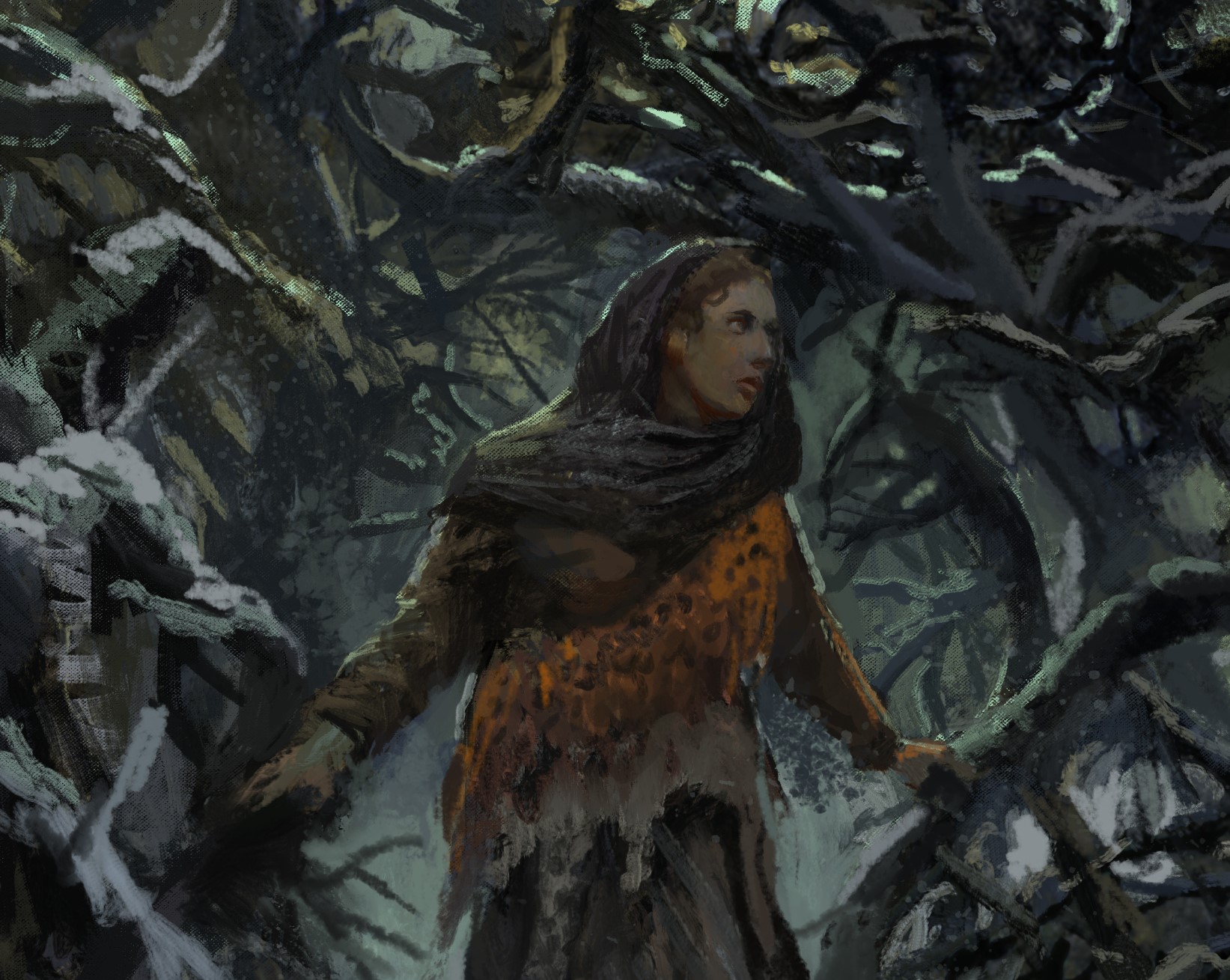
With this literary contribution by Giulia Romina Itin, we are launching our main focus topic this year. Throughout the year, we will publish several articles dedicated to the topic of “forest” — the forest in its dual meaning as an almost mythological place of encounter with the, sometimes uncanny, sometimes encouraging, primal forces of life, but also, viewed more pragmatically, as the real basis of existence of our civilization that remains decisive but also threatened. We would like to explore this double face together with you this year in order to determine the contours of the forest as a living space in a new way — with Nietzsche and beyond him. We need to see and appreciate the forest in a different way again.
If you would rather listen to this article, you will also find it read by Caroline Will in German on the Halcyon Association for Radical Philosophy YouTube channel (link) or on Soundcloud (link).
Being a Father with Nietzsche
A Conversation between Henry Holland and Paul Stephan
Being a Father with Nietzsche
A Conversation between Henry Holland and Paul Stephan
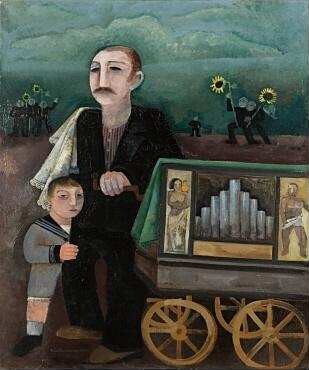
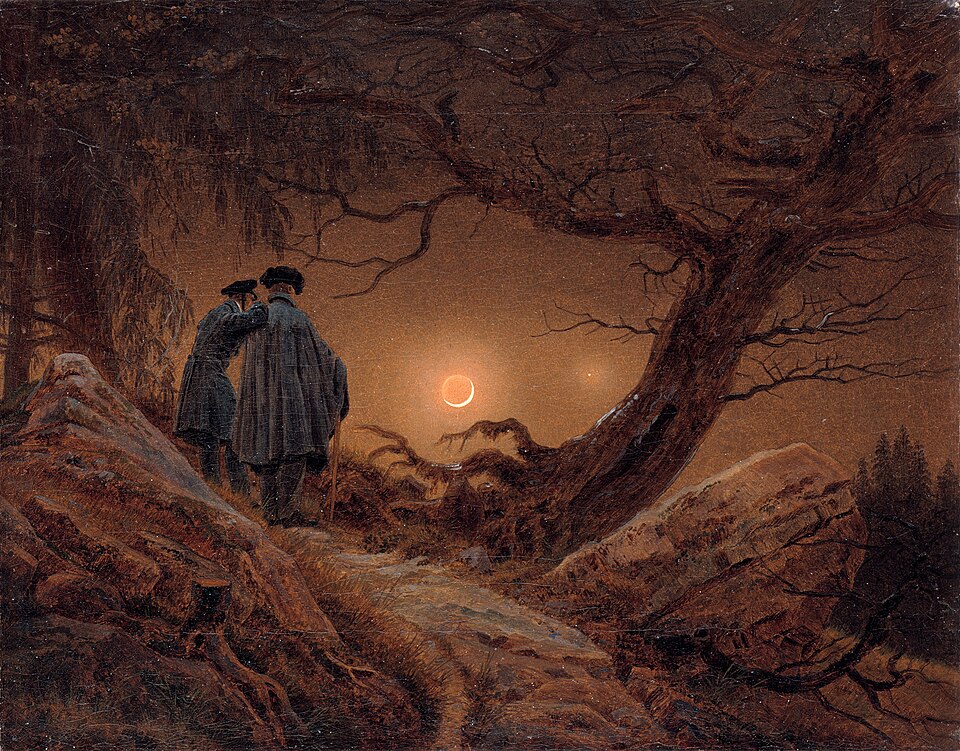
Nietzsche certainly did not have any children and is also not particularly friendly about the subject of fatherhood in his work. For him, the free spirit is a childless man; raising children is the task of women. At the same time, he repeatedly uses the child as a metaphor for the liberated spirit, as an anticipation of the Übermensch. Is he perhaps able to inspire today's fathers after all? And can you be a father and a Nietzschean at the same time? Henry Holland and Paul Stephan, both fathers, discussed this question.
We also published the complete, unabridged discussion on the Halcyonic Association for Radical Philosophy YouTube channel (Part 1, part 2).
“Peace with Islam?”
Hiking with Nietzsche Through Glasgow’s Muslim Southside: Part I
“Peace with Islam?”
Hiking with Nietzsche Through Glasgow’s Muslim Southside: Part I

In this two-part essay, the ultimate part of our ‘Hikes with Nietzsche’ series (link) for the time being, staff writer Henry Holland retraces summer rambles around Glasgow’s Southside, the home of Scotland’s most concentrated Muslim population. In this first instalment, Holland introduces the research on Nietzsche’s engagement with Islam and his reception within the Islamic world. He recounts how stumbling upon a lecture by Timothy Winter on the French theoretician and artist Pierre Klossowski and his encounter with the faith of Muhammed made him curious about this subject in the first place. We then launch into a travel diary that leads our writer to the heart of one of the present-day’s most debated topics, the role that Islam plays in modern European societies.
Mythomaniacs in Lean Years
About Klaus Kinski and Werner Herzog
Mythomaniacs in Lean Years
Über Klaus Kinski und Werner Herzog
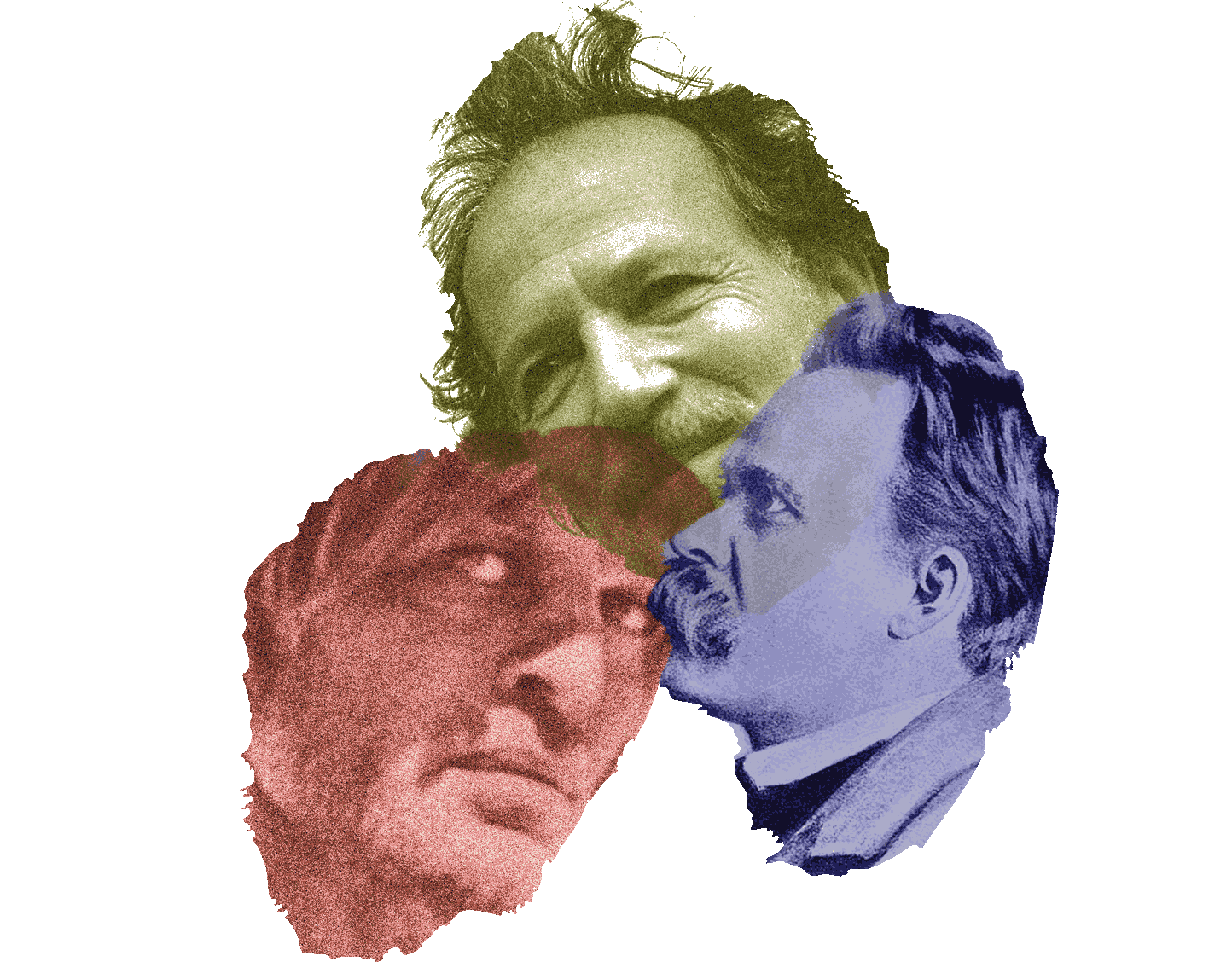

Werner Herzog (born 1942), described as a “mythomaniac” by Linus Wörffel, and Klaus Kinski (1926—1991) are among the leading figures of post-war German cinema. In the 70s and 80s, the filmmaker and the actor shot five feature films that are among the classics of the medium's history. They are hymns to tragic heroism, in which the spirit of Nietzsche can easily be recognized. From “Build Your Cities on Vesuvius! “will “Build opera houses in the rainforest! ”.
Stuck Between the Monsters and the Depths
Wanderings Through Modern Nihilism in the Footsteps of Nietzsche and Kierkegaard — Part 1
Stuck Between the Monsters and the Depths
Wanderings Through Modern Nihilism in the Footsteps of Nietzsche and Kierkegaard — Part 1


As in our series of articles”Hikes with Nietzsche“It has already been made clear that the metaphor of wandering plays a fundamental role in Nietzsche's work. In this two-part essay, Paul Stephan explores how Nietzsche uses the wanderer as a personification of modern nihilism and thus diversifies a central theme of cultural modernity, which can also be found in the writings of the Danish philosopher Søren Kierkegaard, who was born on May 5, 1813 in Copenhagen, where he also died on November 11, 1855.
The Educator’s Mark
Schopenhauer's Omnipresence in Nietzsche's Philosophy II
The Educator’s Mark
Schopenhauer's Omnipresence in Nietzsche's Philosophy II


After explaining in the first part of this article (link) how Nietzsche transformed from an admirer of Schopenhauer to a critic in the course of the 1870s, Tom Bildstein now examines in more detail how the mature Nietzsche sought to overcome Schopenhauer‘s pessimism and counter it with a “life-affirming” philosophy. Schopenhauer‘s “will to life,” which the misanthrope would like to see ascetically denied, is to give way to the “will to power” as the fundamental principle of all life, which cannot be denied without contradiction.
The Educator’s Mark
Schopenhauer's Omnipresence in Nietzsche's Philosophy I
The Educator’s Mark
The Omnipresence of Schopenhauer in Nietzsche’s Philosophy I


It is no secret that one of Nietzsche’s most important philosophical references was the German philosopher Arthur Schopenhauer (1788-1860). That’s reason enough to trace the history of Nietzsche’s reception of Schopenhauer in a two-part article. In the first part, Schopenhauer scholar Tom Bildstein examines how the young Leipzig philology student Nietzsche was first inspired by Schopenhauer’s magnum opus The World as Will and Representation (1818), only to turn into a harsh critic of the Frankfurt “sourpuss” within a few years. — Link to part 2.
The Will to Commentary
A Report on This Year's Nietzsche Society Meeting
The Will to Commentary
A Report on This Year's Nietzsche Society Meeting


The almost complete Freiburg Nietzsche commentary has now become an indispensable tool for Nietzsche research. In meticulous detail work, the authors compiled useful information on almost all aspects of Nietzsche's works (history of origin, sources, allusions, receptions, interpretations...) and commented on them passage by passage, sometimes sentence by sentence and word by word. Almost all of the volumes published so far are available free of charge on the de Gruyter Verlag website (link). Even laymen will find a real treasure trove of background information and explanations here. The three leading employees of the project — its long-time manager Andreas Urs Sommer, Katharina Grätz and Sebastian Kaufmann — took the opportunity to dedicate this year's annual meeting of the Nietzsche Society to the topic of “Commenting on Nietzsche.” They were not only looking back, but also looking ahead.
The Artist as Egomaniac
A Reckoning?
The Artist as Egomaniac
A Reckoning?


Artists often do not come off well in Nietzsche’s work. They represent the prototype of the dependent, truth-hostile and reality-denying person who is at the mercy of his own moods without self-control. A childish, dramatizing, hot-tempered and generally ridiculous creature, an egomaniac whose actions and demeanor are aimed solely at courting the applause of others. Or is Nietzsche not taking his word for it here? Should this really be his final verdict about the creative spirit?
He develops much of what Nietzsche describes about the artist on the figure Richard Wagner, with whom he has a brief, intensive, but ultimately disappointing acquaintance. The artist and the thinker could have been the ideal friendship for Nietzsche for a while. But after breaking with Wagner, Nietzsche has a lot of derogatory things to say about the artist as a type. How different — for comparison — is the friendship between artist and thinker in Narcissus and Goldmund by Hermann Hesse, who deals extensively with Nietzsche.
Whistling in the Woods and Screaming for Love
Nietzsche's Echo in the Heavy Metal Music Scene
Whistling in the Woods and Screaming for Love
Nietzsche's Echo in the Heavy Metal Music Scene

Like hardly any other philosopher, Friedrich Nietzsche has left his mark on popular culture — less in the pleasing mainstream entertainment, but more in subcultures and in artistic positions that are considered “edgy” and “dark.” In this “underworld,” Nietzsche's aphorisms, catchphrases, slogans and invectives are widely used — for example in the musical genres of heavy metal, hardcore and punk focused on social and aesthetic provocation. What is the reason for that?
Nietzsche’s Critique of Capitalist Alienation
Nietzsche’s Critique of Capitalist Alienation


In the penultimate part of the series “What does Nietzsche mean to me? “Lukas Meisner comes to a surprising result at first glance: Nietzsche and Marx both practice fundamental criticism of capitalism and Nietzsche can serve to Marx's To complement a critique of political economy with a no less radical critique of moral economy.
What Does Nietzsche Mean to Me?
What Does Nietzsche Mean to Me?

Our regular author Christian Saehrendt reports in his contribution to the series “What does Nietzsche mean to me? “about how he discovered Nietzsche as a teenager and has regarded himself as a fan of the philosopher ever since — precisely because of his contrariness.
Menke Fascinates.
Is Liberation Fascination?
Menke Fascinates.
Is Liberation Fascination?


In his recently published study Theory of Liberation [Theorie der Befreiung]Frankfurt philosopher Christoph Menke describes liberation as “fascination,” as pleasurable desubjectization and dedication. He refers decisively to Nietzsche — but for him, “fascination” means bewitching, entanglement in lack of freedom and resentment. Can the mystical power of fascination really set us free — or is it not rather Nietzsche's right and liberation means above all self-empowerment and autonomy, whereas the fascinated sacrifice means submission, not least to a fascist leader?