#
magic
Inside the Magic Forest
Nietzsche and the Sorcerous Power of Trees
Inside the Magic Forest
Nietzsche and the Sorcerous Power of Trees


In cultural perception, the forest is much more than a mere supplier of raw materials or a local recreation area, but, especially in German culture, a magical place of encounter with the supernatural. In the second part of our series ”the forest as a livelihood“ Christian Saehrendt explores this romantic fascination for the forest and to what extent it is also reflected in Nietzsche's works. Because Nietzsche was not only a passionate forest walker, he also writes again and again about this gateway to the “otherworld” and, last but not least, places his Zarathustra in sylvan sceneries.
Nietzsche’s Techniques of Philosophizing
With Glances Towards Wittgenstein and Heidegger
Nietzsche’s Techniques of Philosophizing
With Glances Towards Wittgenstein and Heidegger
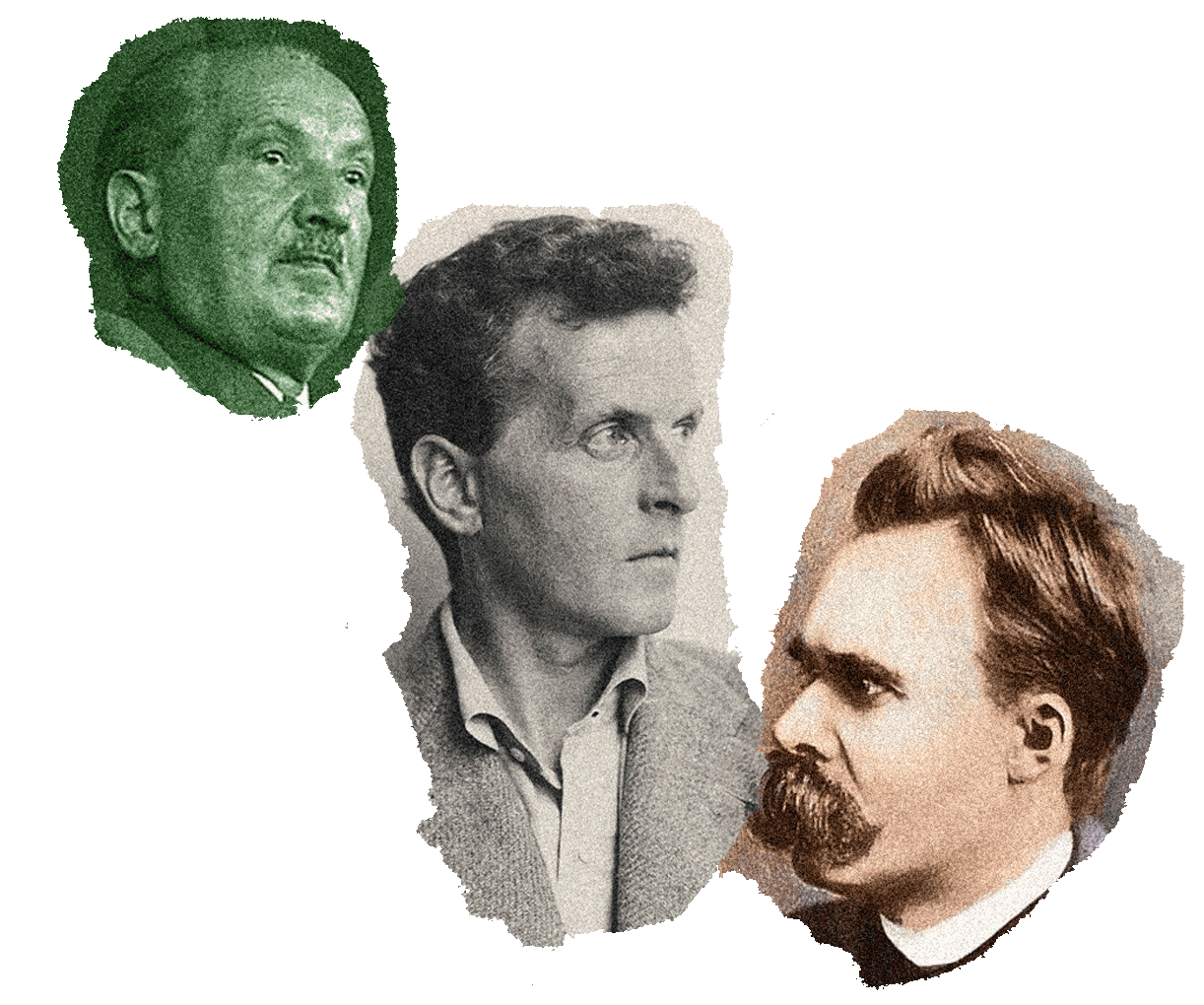
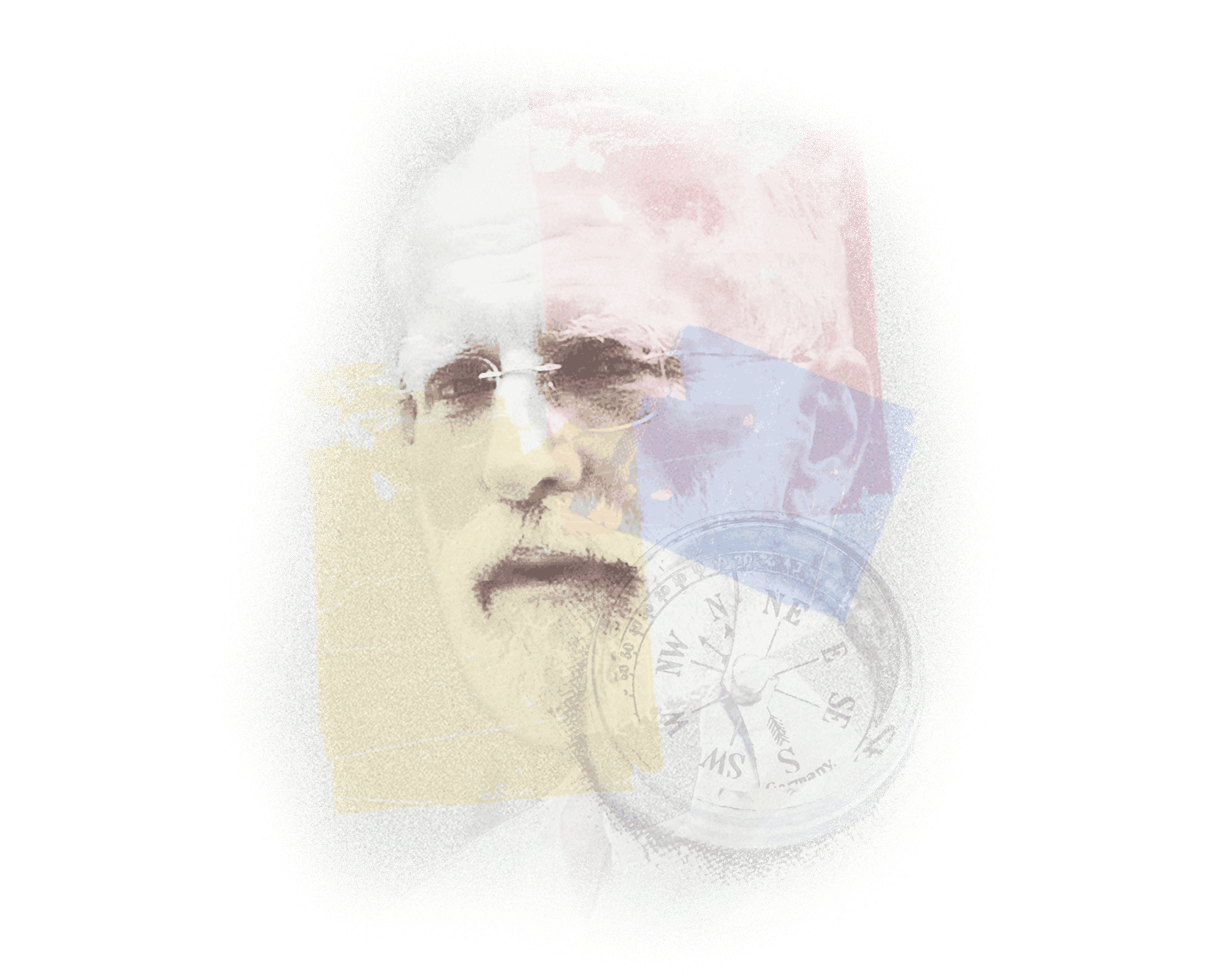
A fixed feature at the annual conference of the Nietzsche Gesellschaft [Nietzsche Society] conference is the Lectio Nietzscheana Naumburgensis: a particularly distinguished scholar delivering an extended lecture on the conference theme on the final day, thereby providing a pointed conclusion. The most recent conference in October 2025 awarded this special honor to Werner Stegmaier to recognize his long tenure as editor of the influential Nietzsche-Studien [Nietzsche Studies] and his authorship of numerous seminal monographs on Nietzsche’s philosophy. Running from October 16-19, 2025, the conference focused the theme “Nietzsche’s Technologies,” as Emma Schunack reported.
Generously granting his permission to publish his lecture in full and in this translation, Stegmaier takes on the conference theme from an unexpected perspective. Rather than examining what is commonly understood as “technologies”—machines, cyborgs, or automata—he explores instead Nietzsche’s philosophical techniques, both intellectual and rhetorical. Weighing up the original and idiosyncratic methods Nietzsche deployed while writing, Stegmaier reflects on how best to interpret and assess them. How were they able to enthuse and win over successive generations of readers? What can we learn from these today?
Comparing Nietzsche’s techniques with those of two other modern philosophical giants, Martin Heidegger (1889–1976) and Ludwig Wittgenstein (1889–1951), Stegmaier retraces all three philosophers’ break with the classical and conceptually oriented techniques of thinking inherited from antiquity, and their discoveries of radical and experimental means of developing philosophy in the age of “nihilism.” Replacing a one-dimensional, metaphysical understanding of rationality, these means cultivate a plural, perspectival mode of thought that necessarily relies on entirely different techniques. Situating Nietzsche’s methods within these broader developments in intellectual history, the Lectio establishes an utterly new framework for understanding his thought and its place within modern philosophy.
Translated by Henry Holland.
Mythomaniacs in Lean Years
About Klaus Kinski and Werner Herzog
Mythomaniacs in Lean Years
Über Klaus Kinski und Werner Herzog
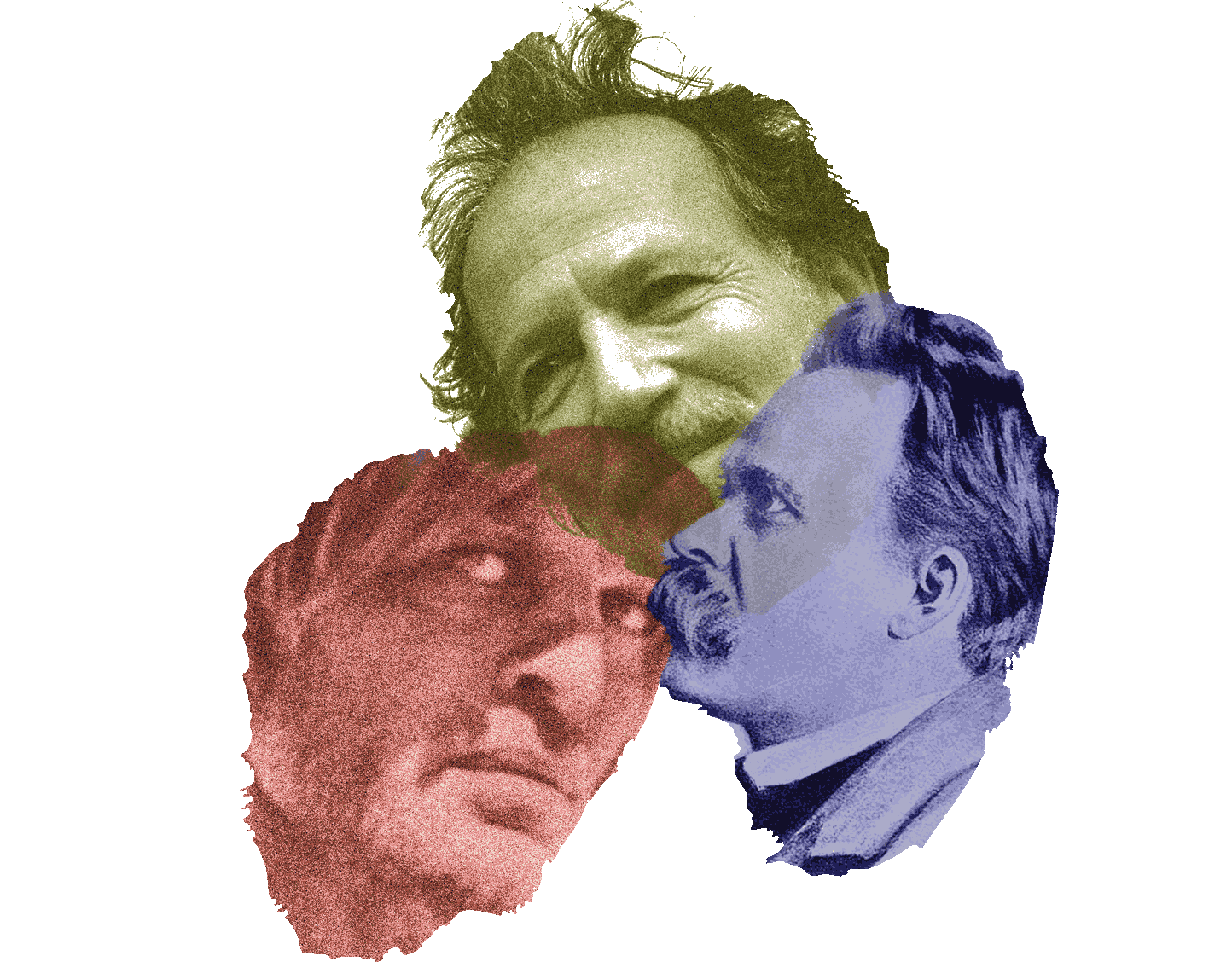

Werner Herzog (born 1942), described as a “mythomaniac” by Linus Wörffel, and Klaus Kinski (1926—1991) are among the leading figures of post-war German cinema. In the 70s and 80s, the filmmaker and the actor shot five feature films that are among the classics of the medium's history. They are hymns to tragic heroism, in which the spirit of Nietzsche can easily be recognized. From “Build Your Cities on Vesuvius! “will “Build opera houses in the rainforest! ”.
The Monkeys Dance Inexplicably. Nietzsche and Contemporary Dance Culture
Reflection, Movement, Misery
The monkeys dance inexplicably. Nietzsche and contemporary dance culture
reflection, movement, misery


In addition to hiking, dancing is one of the most prominent soldiers in Nietzsche's “moving [m] army of metaphors, metonymies, anthropomorphisms.” Based on Nietzsche's reflections on the art of movement, Jonas Pohler explores the paramount importance that it plays in our present day. Is the effect of dance primarily sexual? What does dance have to do with technology? What symbolism is the dancing gesture able to convey?
The Educator’s Mark
Schopenhauer's Omnipresence in Nietzsche's Philosophy I
The Educator’s Mark
The Omnipresence of Schopenhauer in Nietzsche’s Philosophy I


It is no secret that one of Nietzsche’s most important philosophical references was the German philosopher Arthur Schopenhauer (1788-1860). That’s reason enough to trace the history of Nietzsche’s reception of Schopenhauer in a two-part article. In the first part, Schopenhauer scholar Tom Bildstein examines how the young Leipzig philology student Nietzsche was first inspired by Schopenhauer’s magnum opus The World as Will and Representation (1818), only to turn into a harsh critic of the Frankfurt “sourpuss” within a few years. — Link to part 2.
Look, I'm Teaching You the Transhumanist
Friedrich Nietzsche as a Personal Trainer of Extropianism
Look, I'm Teaching You the Transhumanist
Friedrich Nietzsche as a Personal Trainer of Extropianism

After Natalie Schulte reported on the echo of Nietzsche's “superman” idea in the start-up scene last week (Link), Swiss art scholar Jörg Scheller is dedicating this week to her continued existence in extropianism, a subtype of transhumanism that aims to artificially accelerate human evolution on both individual and genre levels using modern technology. The physical law of “entropy,” according to which there is a tendency in closed systems to equalize all energy differences until a state of equilibrium has been established — a state of complete cooling in terms of the universe — is opposed by the proponents of this flow with the principle of “extropy,” the increasing vitality of a system.
Musing in a Southerly
Visiting Nietzsche's Summer House in Engadin
Musing in a Southerly
Visiting Nietzsche's Summer House in Engadin

The Inn River rises at an altitude of just under 2,500 m in southeastern Switzerland, in the canton of Graubünden. Over a distance of 80 km, it first flows through a high-mountain valley called the Engadin. Here, not far from the sophisticated spa town of St. Moritz, it crosses two small lakes, Lake Sils and Lake Silvaplana, between which lies the idyllic mountain village of Sils Maria. The philosopher Friedrich Nietzsche spent several summers in this exquisite landscape and was inspired by it to write some of his most important works. Christian Saehrendt set out to search for clues at what is perhaps the most important “pilgrimage site” on the Nietzsche scene.
The Artist as Egomaniac
A Reckoning?
The Artist as Egomaniac
A Reckoning?


Artists often do not come off well in Nietzsche’s work. They represent the prototype of the dependent, truth-hostile and reality-denying person who is at the mercy of his own moods without self-control. A childish, dramatizing, hot-tempered and generally ridiculous creature, an egomaniac whose actions and demeanor are aimed solely at courting the applause of others. Or is Nietzsche not taking his word for it here? Should this really be his final verdict about the creative spirit?
He develops much of what Nietzsche describes about the artist on the figure Richard Wagner, with whom he has a brief, intensive, but ultimately disappointing acquaintance. The artist and the thinker could have been the ideal friendship for Nietzsche for a while. But after breaking with Wagner, Nietzsche has a lot of derogatory things to say about the artist as a type. How different — for comparison — is the friendship between artist and thinker in Narcissus and Goldmund by Hermann Hesse, who deals extensively with Nietzsche.
Better to Want Nothing, Than Not to Want at All
Self-Alienation through Modern Science
Better to Want Nothing, Than Not to Want at All
Self-Alienation through Modern Science


Nietzsche's criticism of science is perhaps one of the most provocative, but also the most relevant, sub-areas of Nietzsche's comprehensive critique of modern culture. Estella Walter reconstructs her perhaps most important formulation in the third treatise of The genealogy of morality and shows how Nietzsche's science is a form of estrangement Understands. She explains this concept, which is so central to modern philosophy, and bridges it from Nietzsche to (young) Marx: Both are critics of the alienations of the modern way of life, whose critiques we should read together in order to reach a comprehensive understanding of it.
Deciding to Serve Life
An Essay on the Meaning of Nietzsche's Philosophy
Deciding to Serve Life
An Essay on the Meaning of Nietzsche's Philosophy

Nietzsche is generally regarded as a literary philosopher whose aphoristic nihilisms not only conjure up the death of God, but who also reinforced the dark sides of German history as a posthumous master thinker. In contrast, the following text would like to be part of the series What does Nietzsche mean to me? invite you to learn to read Nietzsche anew as the discoverer of the all-too-unknown philosophical continent of Mediterranean existentialism.
Menke Fascinates.
Is Liberation Fascination?
Menke Fascinates.
Is Liberation Fascination?


In his recently published study Theory of Liberation [Theorie der Befreiung]Frankfurt philosopher Christoph Menke describes liberation as “fascination,” as pleasurable desubjectization and dedication. He refers decisively to Nietzsche — but for him, “fascination” means bewitching, entanglement in lack of freedom and resentment. Can the mystical power of fascination really set us free — or is it not rather Nietzsche's right and liberation means above all self-empowerment and autonomy, whereas the fascinated sacrifice means submission, not least to a fascist leader?