#
Germanic
“Revolt, Slaves, Revolt!”
Hiking with Nietzsche Through Evangelical Christian London: Part I
“Revolt, Slaves, Revolt!”
Hiking with Nietzsche Through Evangelical Christian London: Part I

From the hedge-fund billions that bankroll Nigel Farage, and tie that funding to evangelical expansionism, to Nietzsche’s fulminating assault on Christianity as a “slave revolt”: this essay tracks the troubling way religion has reappeared at the heart of British public life. Arriving in London with walking boots, a rucksack, and a philosopher’s skepticism, the author follows the money, theology, and street culture surrounding charismatic Christianity and its seemingly unappeasable growth. At the centre stands Sir Paul Marshall: billionaire financier, Christian media mogul, and embodiment of a faith that feels entitled to reach for elite power.
But this is more than merely an unveiling of the knot that binds together wealth and religion. It is also a confrontation with Nietzsche’s deepest historical claim: that Christianity triumphed because the so-called weak learned to moralize against the strong. Wandering through churches, cafés, and city streets, the essay asks whether contemporary evangelical London represents a new form of that revolt—or its complete inversion.
Part I explores the rise of influential evangelical networks in modern Britain and their uneasy alliance with finance capitalism. Part II, which will appear shortly, returns to the first Christians themselves.
This article is a follow-up to Henry Holland’s account of hiking through Glasgow’s Muslim Southside (part I, part II).
Nietzsche and Nationalism?
A Disputation between Michael Drescher and Paul Stephan
Nietzsche and Nationalism?
A Disputation between Michael Drescher and Paul Stephan

Throughout his life, Nietzsche was a great critic of nationalism. The burgeoning German national sentiment, in particular, was anathema to him, and he wrote scathing remarks about his home country, such as "definition of the Germanic: obedience and long legs..."1. At the same time, nationalists and patriots of all stripes count among his fans. How can one be a Nietzschean and a (German) nationalist? What exactly is "nationalism," and is it possible to give this term a positive meaning?
Paul Stephan discussed these delicate topics, which are gaining increasing relevance given the successes of nationalist parties worldwide, in written form with YouTuber, Nietzsche expert, and nationalism researcher Michael Drescher, also known as PhrasenDrescher.
Additionally, they continued this dialogue verbally on YouTube – feel free to check out the result here (or as an audio-only version on SoundCloud).
"I confess that the deepest objection to the 'eternal return', my actually abysmal thought, is always mother and sister."1
On Nietzsche's Relationship with his Mother. Mother's Day Greetings
"I confess that the deepest objection to the 'eternal return', my actually abysmal thought, is always mother and sister."
On Nietzsche's Relationship with his Mother. Mother's Day Greetings
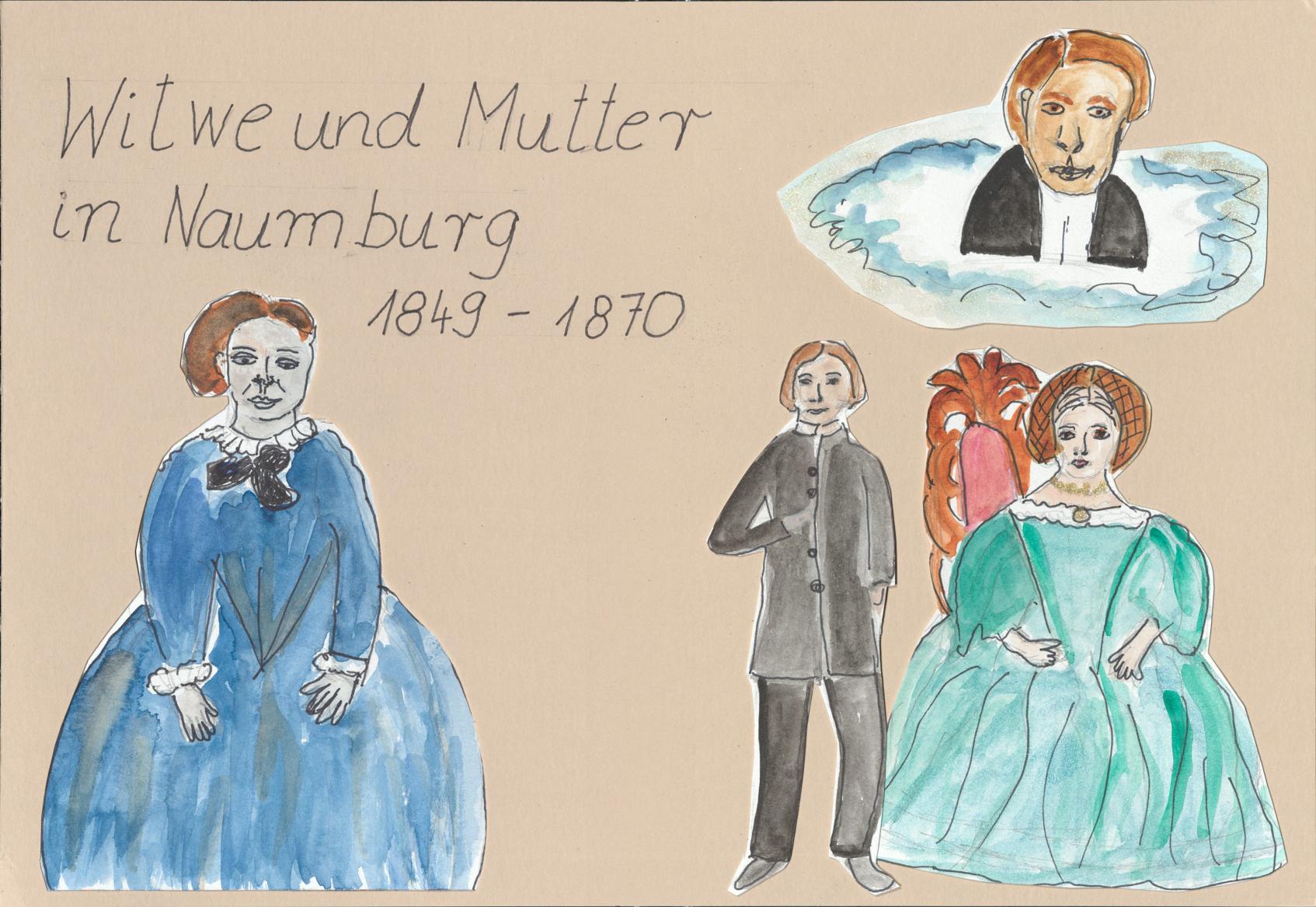

Nietzsche's philosophy is regarded as an act of self-liberation — but even the superman remained powerless against his own family. This essay highlights the pathological tension between the lonely thinker and the “canaille” relatives, mother Franziska Nietzsche and sister Elisabeth Förster-Nietzsche. While the philosopher (de)constructs “woman in itself” as flat, independent and mindless in his writings, he also has stockings stuffed and sausage boxes sent from Naumburg. An essay about the deepest objection to eternal return: one's own kinship.
This is the second part of a small series for this year's Mother's Day. In first part Henry Holland wrote about Franziska Nietzsche's life with a particular focus on her time before Nietzsche and her last years.
The Blond Beast and the “Hammertyp”
How Dieter Bohlen Finally Discovered a Titan of Equal Rank
The Blond Beast and the “Hammertyp”
How Dieter Bohlen Finally Discovered a Titan of Equal Rank


At first glance, Dieter Bohlen and Friedrich Nietzsche have as little connection as Marie Antoinette with Rosa Luxemburg or Napoleon with Angela Merkel — but a second reveals greater affinities than one might suspect. In any case, this unlike synopsis enables a new perspective — on Bohlen and on Nietzsche in equal measure. “Pairing the strangest and separating the next”1, in the following text, our regular author Christian Saehrendt undertakes a truly Nietzschean search for clues on the tracks of the “titan” of German pop, which to this day polarizes like only a few celebrities in the German-speaking world — this, too, a line of connection between philosopher and musician.
Inside the Magic Forest
Nietzsche and the Sorcerous Power of Trees
Inside the Magic Forest
Nietzsche and the Sorcerous Power of Trees

In cultural perception, the forest is much more than a mere supplier of raw materials or a local recreation area, but, especially in German culture, a magical place of encounter with the supernatural. In the second part of our series ”the forest as a livelihood“ Christian Saehrendt explores this romantic fascination for the forest and to what extent it is also reflected in Nietzsche's works. Because Nietzsche was not only a passionate forest walker, he also writes again and again about this gateway to the “otherworld” and, last but not least, places his Zarathustra in sylvan sceneries.
Monumentality Issues. Nietzsche in Art After 1945
Thoughts on the Book Nietzsche Forever? by Barbara Straka I
Monumentality Issues. Nietzsche in Art After 1945
Thoughts on the Book Nietzsche Forever? by Barbara Straka I
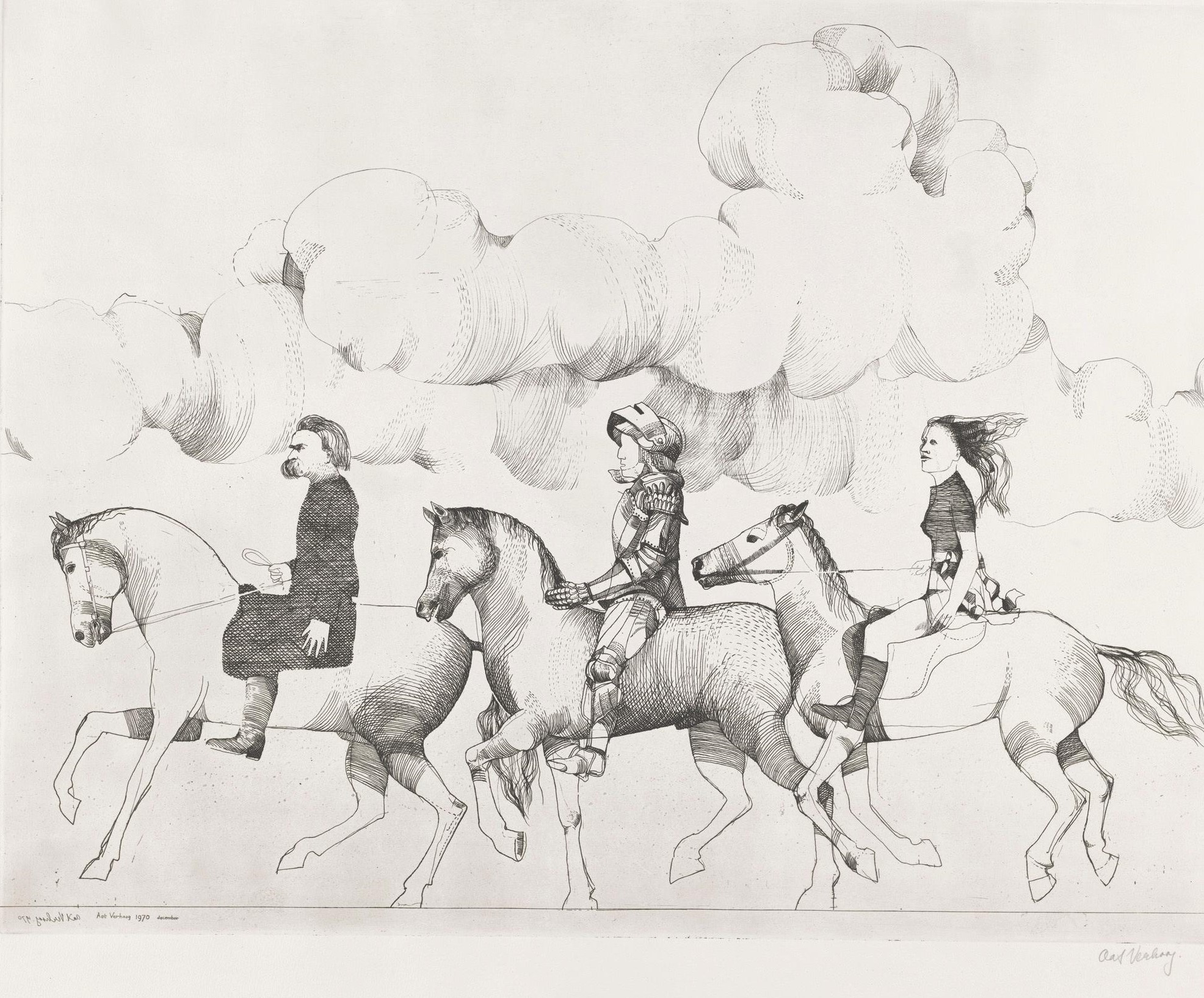

The fact that Nietzsche is a philosopher who speaks particularly to artists, even an “artist-philosopher,” is almost commonplace. In Barbara Straka's newly published book Nietzsche Forever?, the question is explored how exactly Nietzsche has been received in 20th century art, in particular that after 1945. The author has created a standard work that clearly and competently conveys the topic in plausible overviews. In this first part of this two-part article, Michael Meyer-Albert dedicates himself to her book and will then accentuate his own position in the upcoming second part.
Abonimably Married, With Children
Nietzsche as the Wagners' house friend in the “Tribschen Idyll”
Abonimably Married, With Children
Nietzsche as the Wagners' house friend in the “Tribschen Idyll”

Richard Wagner lived on Lake Lucerne for six years. In April 1866, he was able to rent the Landhaus of the Lucerne patrician family Am Rhyn, which had been built in a beautiful scenic location on the Tribschenhorn. Nietzsche had been a frequent guest there at that time and enjoyed the family connection. For him, it was an episode that shaped him throughout his life, so that the confrontation with Wagner — in its entire range from unconditional adoration to rude rejection — can perhaps even be regarded as the heart of his thinking. Today, the building houses the Richard Wagner Museum. His current special exhibition focuses on the composer's anti-Semitism.
Splendidly Isolated with a Stiff Upper Lip
Nietzsche and the Tragedy of Academic Outsiderhood
Splendidly Isolated with a Stiff Upper Lip
Nietzsche and the Tragedy of Academic Outsiderhood

“Keep a stiff upper lip,” they say in England when you want to call on your interlocutor to persevere in the face of danger and to maintain an upright posture. Advice that is certainly often helpful. Such a stoic position must be sought all the more as an academic outsider who, on the one hand, sets himself apart from the scientific mainstream, but on the other hand is also dependent on his recognition. Nietzsche himself, but also many of his admirers, found himself in such a delicate situation. Based on several such outsider figures (in addition to Nietzsche himself, such as Julius Langbehn and Paul de Lagarde), Christian Saehrendt develops a typology of the (perhaps not always quite so) “brilliant isolation” of academic nonconformism.
Nietzsche’s Monkey, Nietzsche’s Varlet
The Oswald Spengler Case
Nietzsche’s Monkey, Nietzsche’s Varlet
The Oswald Spengler Case

In the following article, Christian Saehrendt gives a brief insight into the work of one of the most controversial but also most influential Nietzsche interpreters of the 20th century: the German philosopher Oswald Spengler (1880—1936). The author of The fall of the West (1917/22) is considered one of the most important representatives of the “Conservative Revolution,” an intellectual movement that was significantly involved in the cultural destabilization of the Weimar Republic before 1933. Largely forgotten in Germany, it continues to be eagerly received in a global context, such as in Russia.