#
totalitarianism
From the Will to Power to the Human Being as a New Beginning
Nietzsche from Hannah Arendt's Perspective
From the Will to Power to the Human Being as a New Beginning
Nietzsche from Hannah Arendt's Perspective
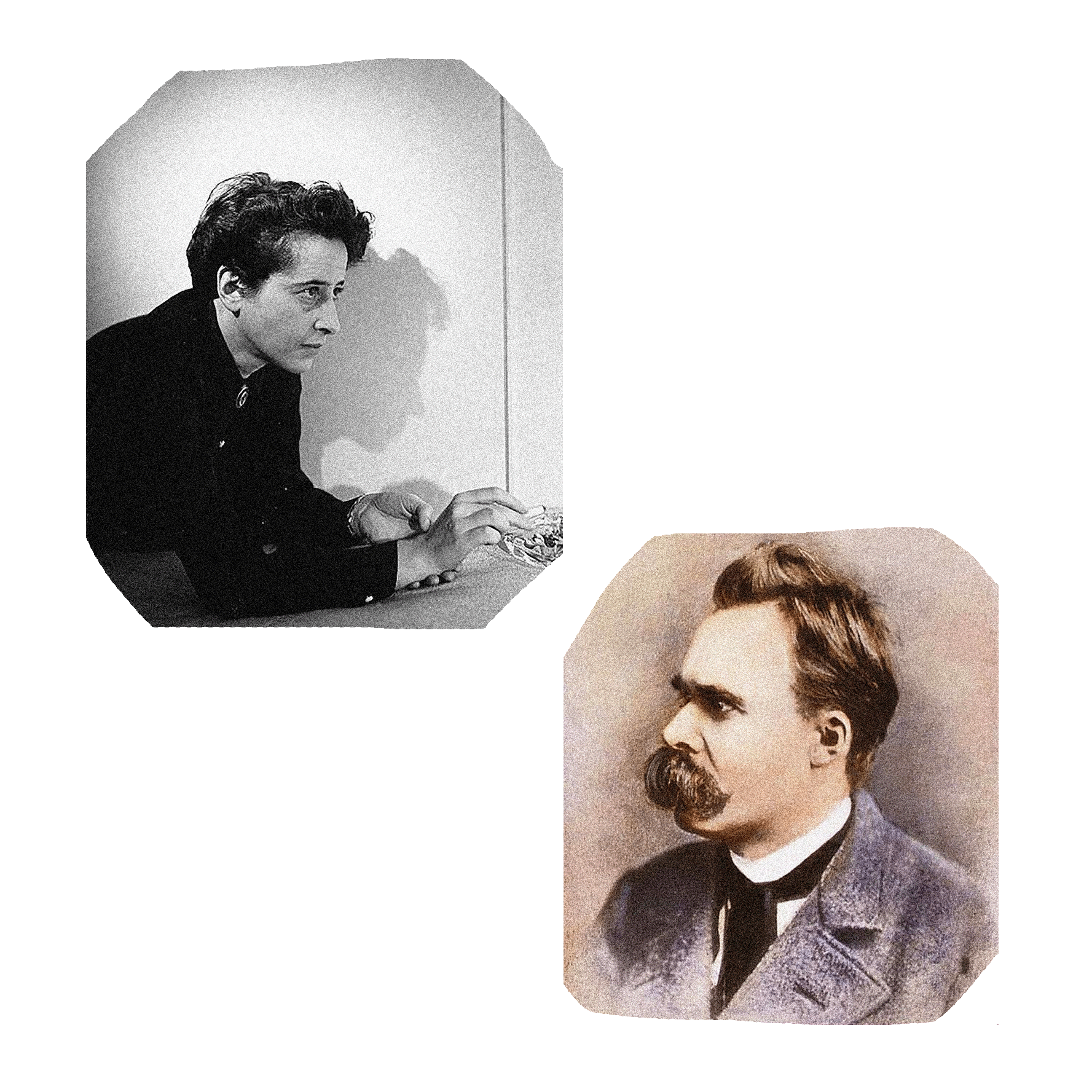

In her major work The Life of the Mind, Arendt builds upon Nietzsche’s understanding of the will to power as interpretation. Rather than following Kant’s conception of free will, she argues that through the will, something new enters the world with every newborn human being—a notion that resembles Zarathustra’s demand that the Übermensch should invent new values. Arendt also agrees with Nietzsche’s assertion that the "‘true world’" is a "fable," for Arendt because modern sciences possess no ultimate truths—a fact they themselves acknowledged around 1900, but which they now refuse to recognize. Thus, as heretics of science, Nietzsche and Arendt belong to the ranks of the "evil" philosophers.
Arendt lived from 1906 to 1975 and is considered one of the great thinkers of the 20th century. The daughter of secular Jews, she studied in the 1920s in Marburg, Freiburg, and Heidelberg under such influential philosophers as Edmund Husserl, Karl Jaspers, and Martin Heidegger. As a young student, she was briefly involved with the latter. In 1933, she was forced to emigrate, and from 1941 she lived in the USA, where she began teaching at various universities in 1953. This unorthodox intellectual is best known for her critique of totalitarianism and her communicative concept of the political.
Her 120th birthday provides sufficient reason to take a closer look at the intellectual relationship between Nietzsche and Arendt.
You can listen to and watch a version of this text, read by the author himself and supplemented with original audio clips of Arendt, on YouTube and Soundcloud .
The Postmodern Forest
How the Forest Subverts Modernity's Totalizing Claim
The Postmodern Forest
How the Forest Subverts Modernity's Totalizing Claim

Forests are trending. And this is by no means contradictory to another, even larger trend of our time: digitalization. In this article, Mandus Craiss demonstrates that the forest is a network. Digitalization also occurs in a network-like manner; both phenomena are therefore characteristic of postmodernism.
In the first part of the article, the forest is characterized as a non-centralized and thus typically postmodern natural phenomenon. The second part defines "postmodernity" and discusses the extent to which this epochal concept is still, or once again, relevant – a discourse whose very early roots can be traced back to Nietzsche. Finally, the third part explains how the network aspect of postmodernity manifests itself and how the human-forest relationship has evolved recently.
This article is part of our special series this year "the forest as a livelihood".
“How Well Disposed Would You Have to Become to Yourself and to Life”
Prolegomena to Any Future Philosophy That Will Be Able to Present Itself as an Enlightenment — Part I
"How Well Disposed Would You Have to Become to Yourself and to Life"
Prolegomena to any future philosophy that may arise as an Enlightenment — Part I
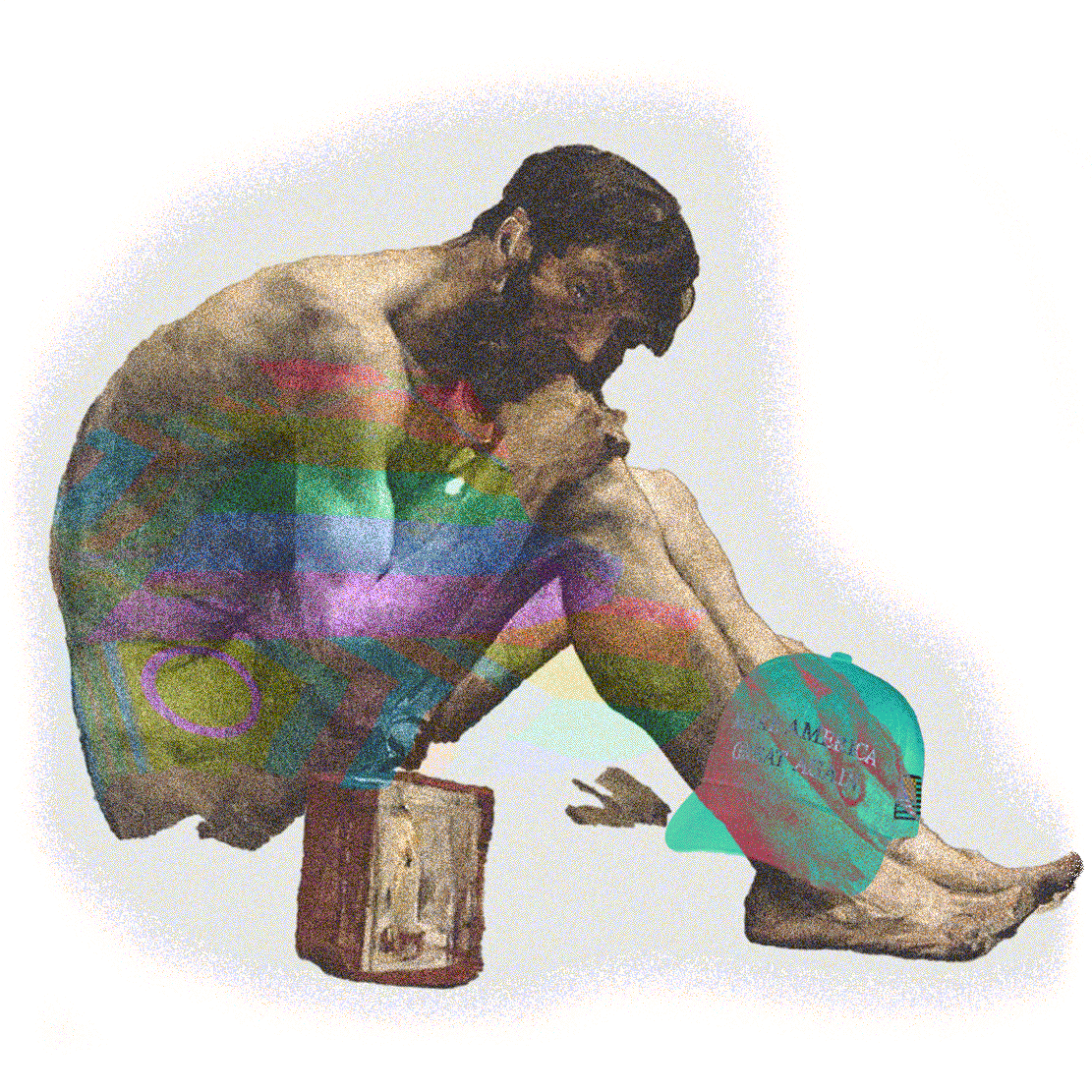
The following text explores the hypothesis that every philosophy of the zeitgeist finds its onset at something that bothers it: in the beginning, there was disgruntlement. This something is interpreted here as an illiberally disgruntled enlightenment, which is embodied in the current “polarization.” With Francis Fukuyama's help, this trail is explored and the drama of the recognition of modern Enlightenment is described.
The philosopher Fukuyama, born in Chicago in 1952, is primarily known for his essay The End of History? from 19891. There, he held that the “end of history” assumed by Hegel had finally arrived with the looming collapse of the Soviet Union. He saw the triumphant liberal Western democracies as the final stage of the process of historical progress. In 1992, Fukuyama published his main work based on this essay: The End of History and the Last Man, in which he combines Hegel's thesis with Nietzsche's diagnosis of the “last man.” Our author is also referring to this book. It caused controversial debates worldwide and continues to provoke today. — Do we really live after the “end of history”? Our author agrees with Fukuyama: While with the form of liberal democracy a final embodiment of the course of history has been achieved, history has been continuing as a conflict within this embodiment. World history has become history of liberalism.
Dionysus as Rolling Stone
An Attempt to Understand Nietzsche with Rock Music
Dionysos als rolling stone
An Attempt to Understand Nietzsche with Rock Music


On the one hand, Nietzsche's distinction between the Apollonian and the Dionysian helps to understand the development of the rock music of the Rolling Stones both internally and externally. On the other hand, Nietzsche's philosophy is reflected in many places in their songs. But above all, it is also illuminated by the Stones, and their songs show what Nietzsche is thinking — an Apollonian act. If Nietzsche is aesthetically oriented towards intoxication, then you can also learn from the Stones how to receive Nietzsche's poetry in a Dionysian way. It is therefore not just about understanding the Stones with Nietzsche, but vice versa: with the Nietzsche Stones.
An audiovisual version of this article with clips of the quoted songs can be found on the YouTube channel of the Halcyonic Association for Radical Philosophy and on Soundcloud.
Female Barbarians — When Women Become a Threat
Female Barbarians — When Women Become a Threat
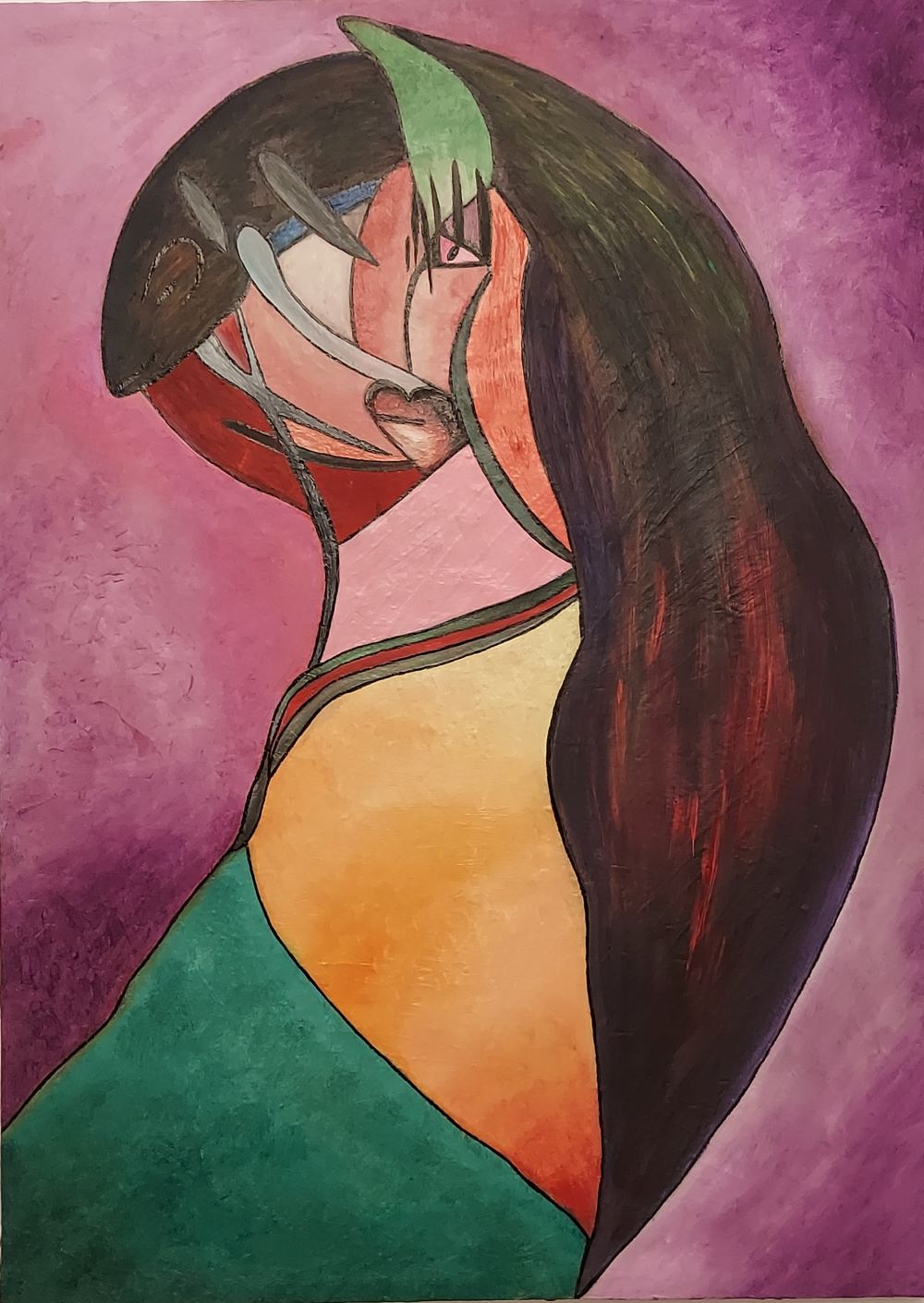

In today's world, which wants to call itself modern and equal, old patterns continue to have an effect — rivalry instead of solidarity, adaptation instead of departure. The essay provocatively asks: Where are the barbarians of the 21st century? It shows the emergence of a new female force — a woman who does not destroy but refuses, who evades old roles and gains creative power from pain. Through examples from reality and literature, the text attempts to show that true change does not start in obedience but in bold “no” — and that solidarity among women could be the real revolution.
We awarded this text second place in this year's Kingfisher Award for Radical Essay Writing (link).
If you'd rather listen to it, you'll also find it read by Caroline Will on the Halcyonic Association for Radical Philosophy's YouTube channel (link) or on Soundcloud (link).
Historic Uprising in Bangladesh
The Will to Revolution
Historic Uprising in Bangladesh
The will to Revolution


For a total of 20 years, Bangladesh was ruled by an iron, authoritarian regime under Sheikh Hasina, the daughter of the first president since the country's independence from Pakistan, Sheikh Mujibur Rahman. But within a very short period of time, nationwide uprisings of such violence broke out in July 2024 that they overthrew Hasina after just one month and drove him into exile. How did this victory come from below and how does Nietzsche help us The will to power and continue his elaborations by Foucault and Deleuze to understand this historic moment?
In the House of Semblance
Preludes on the Connection Between Architecture and Thought in Nietzsche with Constant Reference to a Book by Stephen Griek. A Review
In the House of Semblance
Preludes on the Connection Between Architecture and Thought in Nietzsche with Constant Reference to a Book by Stephen Griek. A Review


A fruitful method within philosophy can be addressed seemingly minor, everyday topics. For example, the relationship between thinking and architecture, as this text is based on the newly published book Nietzsche's architecture of the discerning By Stephen Griek tried to show. With Nietzsche in mind, according to Michael Meyer-Albert, protecting a dwelling — both literally and figuratively — from the chaos of reality is essential for a successful world relationship. He neglects this in Greek's post-modern approach, which aims at maximum openness and wants to replace clear spatial structures with diffuse nomadic networks. Architecture as an art of non-violent rooting thus becomes unthinkable; the “house of appearance” that supports human existence collapses.
The Enlightenment’s Twilight
Nietzsche's Truth of Semblance I
The Enlightenment’s Twilight
Nietzsche's Truth of Semblance I

Nietzsche's best-known formulation, according to which God is dead, not only shows an anti-religious thrust. In particular, it points out that in modern times, constitutive self-evident elements no longer have traditional validity. As the cultural understanding of truth has faltered, not only has this or that truth become questionable, but the understanding of what truth actually is. This puts enlightenment under pressure to find the questions to which it should be the answer. It is this abyss of uncanny questionability from which Nietzsche's thinking attempts to show ways out that are viable. In the first part of his text Enlightenment Twilight Michael Meyer-Albert talks about the clarified doubts of the Enlightenment about itself.
What Does Nietzsche Mean to Me?
What Does Nietzsche Mean to Me?


Our regular author Christian Saehrendt reports in his contribution to the series “What does Nietzsche mean to me? “about how he discovered Nietzsche as a teenager and has regarded himself as a fan of the philosopher ever since — precisely because of his contrariness.