#
labour
From the Will to Power to the Human Being as a New Beginning
Nietzsche from Hannah Arendt's Perspective
From the Will to Power to the Human Being as a New Beginning
Nietzsche from Hannah Arendt's Perspective
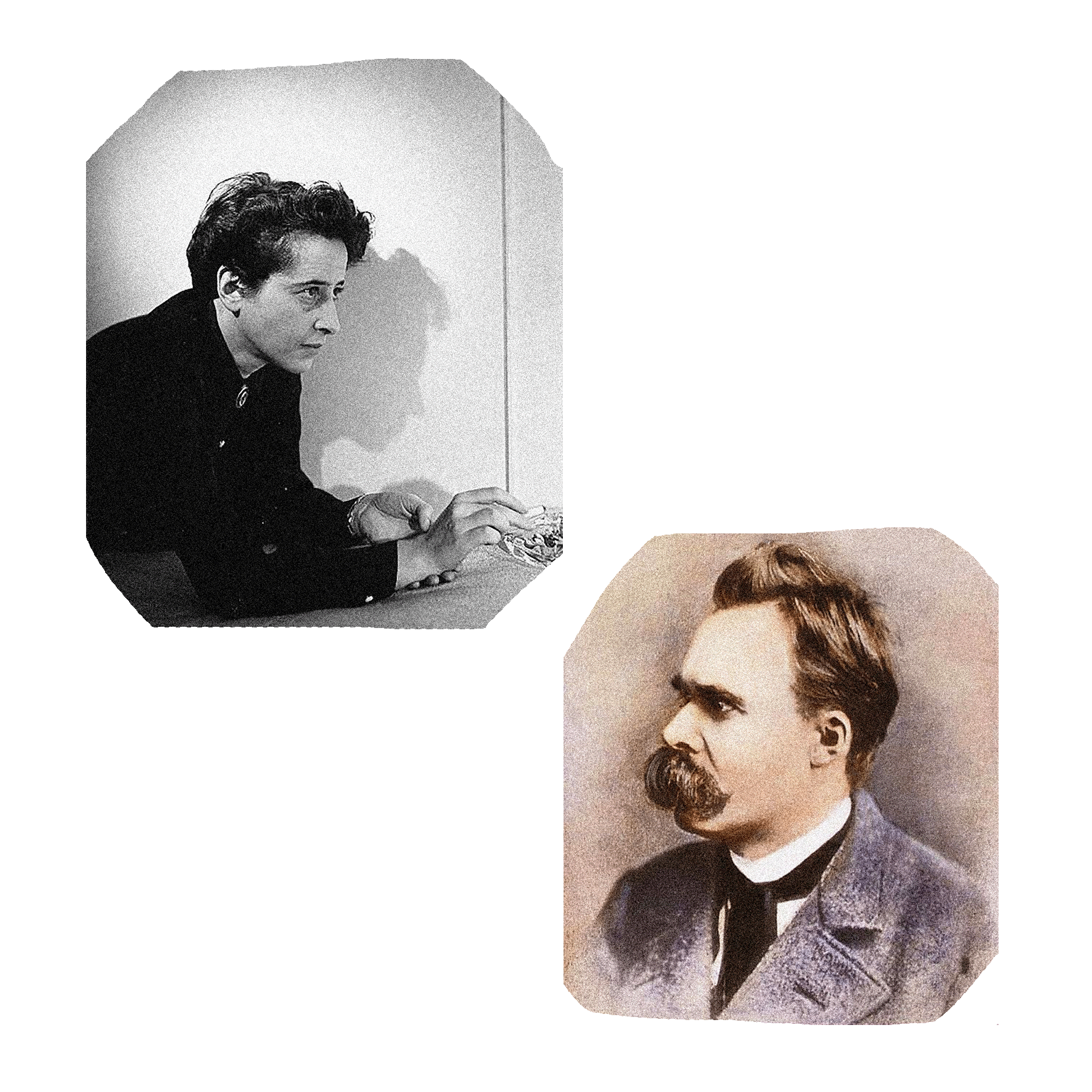

In her major work The Life of the Mind, Arendt builds upon Nietzsche’s understanding of the will to power as interpretation. Rather than following Kant’s conception of free will, she argues that through the will, something new enters the world with every newborn human being—a notion that resembles Zarathustra’s demand that the Übermensch should invent new values. Arendt also agrees with Nietzsche’s assertion that the "‘true world’" is a "fable," for Arendt because modern sciences possess no ultimate truths—a fact they themselves acknowledged around 1900, but which they now refuse to recognize. Thus, as heretics of science, Nietzsche and Arendt belong to the ranks of the "evil" philosophers.
Arendt lived from 1906 to 1975 and is considered one of the great thinkers of the 20th century. The daughter of secular Jews, she studied in the 1920s in Marburg, Freiburg, and Heidelberg under such influential philosophers as Edmund Husserl, Karl Jaspers, and Martin Heidegger. As a young student, she was briefly involved with the latter. In 1933, she was forced to emigrate, and from 1941 she lived in the USA, where she began teaching at various universities in 1953. This unorthodox intellectual is best known for her critique of totalitarianism and her communicative concept of the political.
Her 120th birthday provides sufficient reason to take a closer look at the intellectual relationship between Nietzsche and Arendt.
You can listen to and watch a version of this text, read by the author himself and supplemented with original audio clips of Arendt, on YouTube and Soundcloud .
Materialism and the Problem of Morality
Reflections with Deleuze/Guattari, Clouscard, and Levinas
PART 1: Morality Without a Place: Deleuze/Guattari vs. Clouscard
Materialism and the Problem of Morality
PART 1: Morality Without a Place: Deleuze/Guattari vs. Clouscard
As is well known, Nietzsche did not feel bound by conventional morality. In a world without an afterlife, strength and the will to power prevail. While Nietzsche was prepared to accept the brutal consequences of this perspective if necessary, some of his successors could not reconcile themselves to it, if only for political reasons. Using the work of Gilles Deleuze and Félix Guattari, this text examines the difficulties faced by a materialism that seeks to hold onto its Nietzschean inspiration while refusing to betray certain values. Michel Clouscard highlights this tension, yet he, too, fails to provide a justification for his moral convictions within the framework of his Marxist materialism. Is materialism fundamentally blind to morality?
The Artificial Nietzsche
How A"I" Distorts Our Perception of Nietzsche and How We Can Counter This
The Artificial Nietzsche
How A"I" Distorts Our Perception of Nietzsche and How We Can Counter This
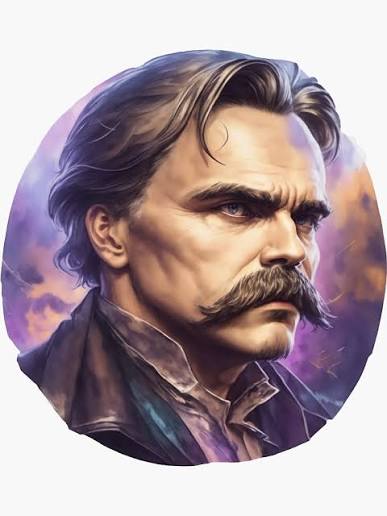
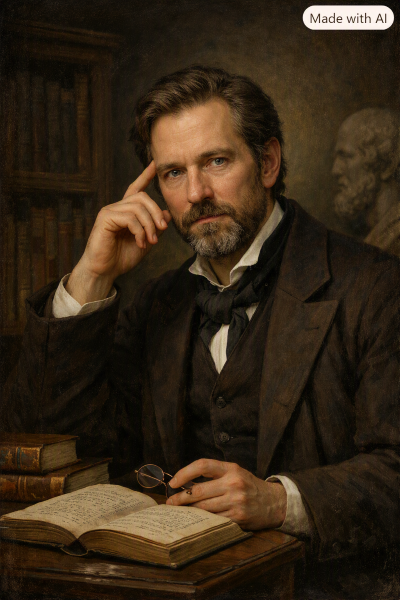
Our author Paul Stephan has finally had enough. The internet is being flooded with cheap A"I" content, often called "AI slop," which is just plain annoying—and is even being rewarded with countless likes and followers. Often, this content is about philosophy, too—specifically Nietzsche. How much damage is being done when this artificial Nietzsche increasingly displaces the real one, as A"I" outputs that repeat the same half-truths and falsehoods replace nuanced human interpretations? When machine-generated caricatures literally push out genuine photographs and artistic portraits? Paul Stephan embarked on an often frustrating search for answers and presents you with a few "highlights." Although he still believes that A"I" opens up positive possibilities—and occasionally makes use of them himself—in his third piece on the subject (feel free to read the first and second commentaries here and there), he feels it is time to take off the kid gloves and bring out the hammer. Stop the slop!
The Postmodern Forest
How the Forest Subverts Modernity's Totalizing Claim
The Postmodern Forest
How the Forest Subverts Modernity's Totalizing Claim

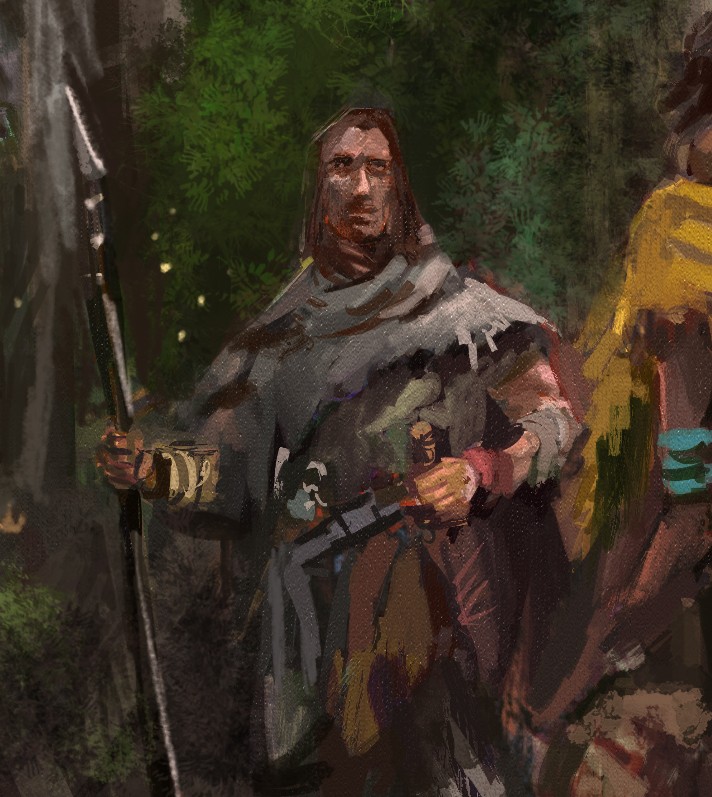
Forests are trending. And this is by no means contradictory to another, even larger trend of our time: digitalization. In this article, Mandus Craiss demonstrates that the forest is a network. Digitalization also occurs in a network-like manner; both phenomena are therefore characteristic of postmodernism.
In the first part of the article, the forest is characterized as a non-centralized and thus typically postmodern natural phenomenon. The second part defines "postmodernity" and discusses the extent to which this epochal concept is still, or once again, relevant – a discourse whose very early roots can be traced back to Nietzsche. Finally, the third part explains how the network aspect of postmodernity manifests itself and how the human-forest relationship has evolved recently.
This article is part of our special series this year "the forest as a livelihood".