#
sea
Wille zum Wald
Nietzsche’s Discovery of Forest Bathing
Wille zum Wald
Nietzsche’s Discovery of Forest Bathing
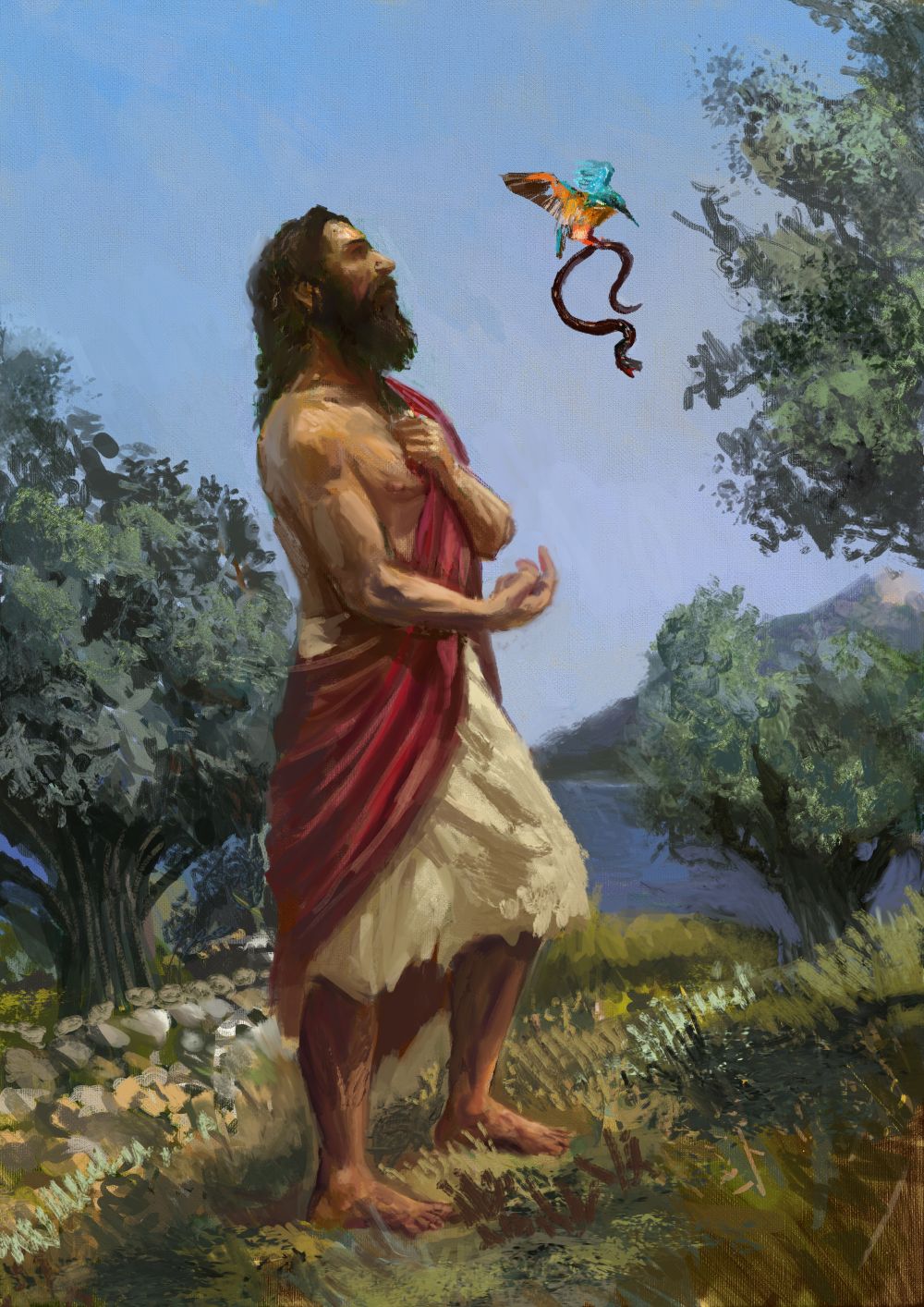
In the fourth part of our “The Forest as a Living Foundation” series, the distinguished American Nietzsche scholar Gary Shapiro investigates new angles on Nietzsche’s bonds to the woods: the philosopher’s personal enthusiasm for what is increasingly called “forest bathing,” the science behind how this practice benefits body, mind, and spirit, and the sheer pleasure of breathing fresh air, in woodland and wherever else we can find it. Shapiro’s essay showcases why this particular Lebensraum matters, not just for our individual well-being, but for the health of the entire planet.
The Postmodern Forest
How the Forest Subverts Modernity's Totalizing Claim
The Postmodern Forest
How the Forest Subverts Modernity's Totalizing Claim

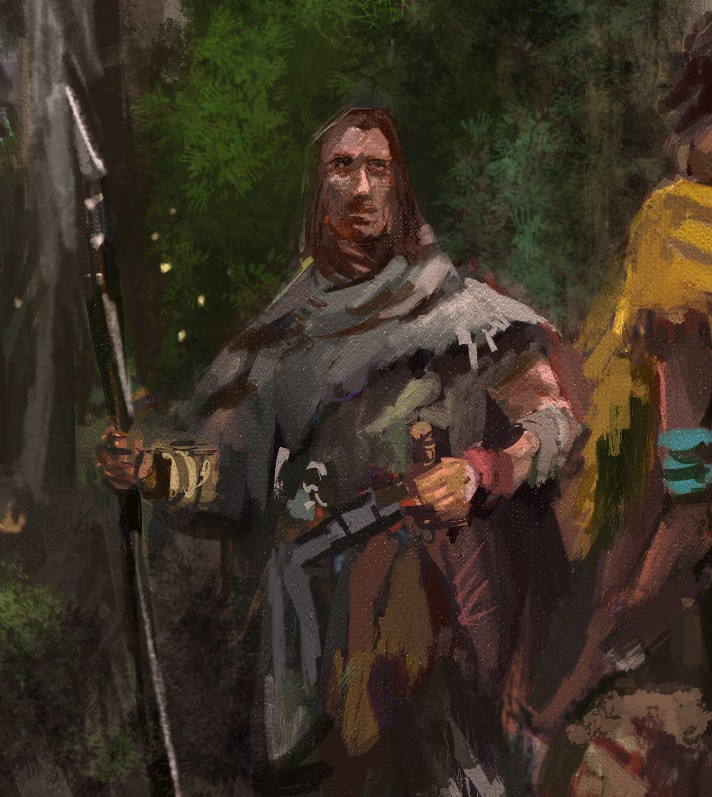
Forests are trending. And this is by no means contradictory to another, even larger trend of our time: digitalization. In this article, Mandus Craiss demonstrates that the forest is a network. Digitalization also occurs in a network-like manner; both phenomena are therefore characteristic of postmodernism.
In the first part of the article, the forest is characterized as a non-centralized and thus typically postmodern natural phenomenon. The second part defines "postmodernity" and discusses the extent to which this epochal concept is still, or once again, relevant – a discourse whose very early roots can be traced back to Nietzsche. Finally, the third part explains how the network aspect of postmodernity manifests itself and how the human-forest relationship has evolved recently.
This article is part of our special series this year "the forest as a livelihood".
On Life in Freedom
A Conversation with Jens Bonnemann about Sartre and Nietzsche
On Life in Freedom
A Conversation with Jens Bonnemann about Sartre and Nietzsche

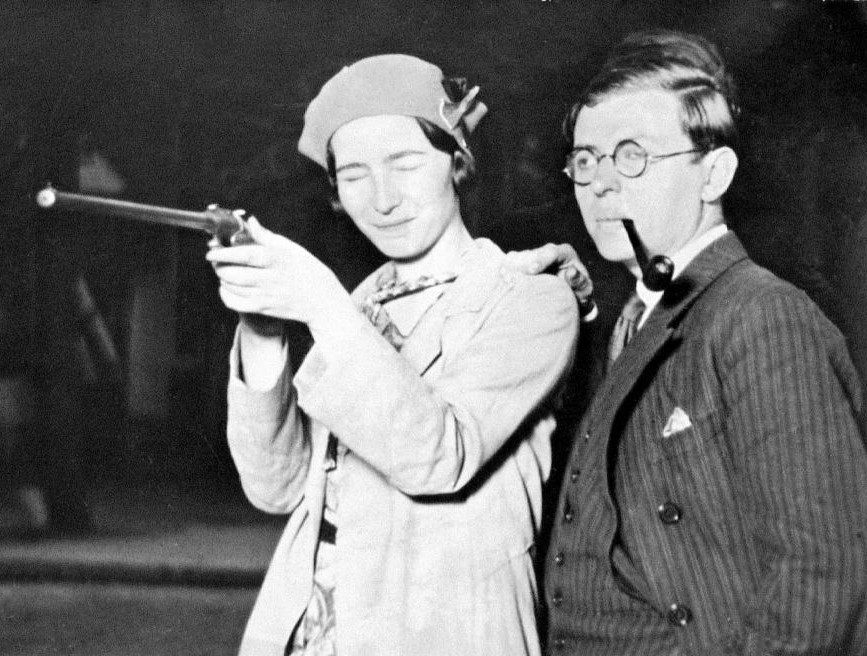
On April 15, 1980, one of the most important philosophers of the 20th century, Jean-Paul Sartre, died at the age of 74. Paul Stephan spoke with Jens Bonnemann, chairman of the German-speaking Sartre-Gesellschaft, about his basic ideas, his relationship with Nietzsche and his significance for our time. What does it mean to live in freedom after the “death of God”? What are the limits of individual freedom? What are the differences and similarities between Sartre and Nietzsche?
You can also view the unedited version of the conversation, in German, on YouTube and listen to it on Soundcloud.
“How Well Disposed Would You Have to Become to Yourself and to Life”
Prolegomena to Any Future Philosophy That Will Be Able to Present Itself as an Enlightenment — Part II
“How Well Disposed Would You Have to Become to Yourself and to Life”
Prolegomena to Any Future Philosophy That Will Be Able to Present Itself as an Enlightenment — Part II
After our author, in the first part of this article, described the current political-cultural situation with reference to Fukuyama as an outgrowth of deep-seated boredom, which numbs itself in excesses of anger and indignation, he tries in the following second to suggest a possible turn for this zeitgeist, which could manifest itself in a new Enlightenment verve and a new positive self-image of the Enlightenment. Our author, with Nietzsche, opposes the “four despairs” that afflict the present tense, “four transfigurations” and “fields of research” resulting from them. An ironic view of the world and oneself should help to practice a transfigurative perspective on the world, which would be able to overcome the lethargy of postmodernism and revitalize the modernist project. The program of self-reliant future Enlightenment.
Inside the Magic Forest
Nietzsche and the Sorcerous Power of Trees
Inside the Magic Forest
Nietzsche and the Sorcerous Power of Trees


In cultural perception, the forest is much more than a mere supplier of raw materials or a local recreation area, but, especially in German culture, a magical place of encounter with the supernatural. In the second part of our series ”the forest as a livelihood“ Christian Saehrendt explores this romantic fascination for the forest and to what extent it is also reflected in Nietzsche's works. Because Nietzsche was not only a passionate forest walker, he also writes again and again about this gateway to the “otherworld” and, last but not least, places his Zarathustra in sylvan sceneries.
Two Years through Woods of Symbols
Outlook and Summary of Our Previous Work
Two Years through Woods of Symbols
Outlook and Summary of Our Previous Work


Exactly two years ago, we published our first article on this blog, The Enduringly Contested Friedrich Nietzsche, a report by Paul Stephan about the annual meeting of the Nietzsche Society in 2023. Time to pause for a moment and think about what we've done on this blog so far and what the future could look like. Our editor-in-chief draws an interim conclusion and gives an insight into our plans.
We are combining this anniversary with two special appeals to you. On the one hand, we created a small quiz (link; in German). Answer four questions correctly, the answers to which are derived from our previous articles, and you could win one of thirteen prizes — and if you want, you can also give us valuable feedback about our work.
We would also like to draw you attention to our crowdfunding call. By July 10, we would like to invite you to help us raise €6,000 to finance further professional translations of our articles. In return, we offer you some fantastic rewards, including in particular the option of translating an article of your choice or giving us an article topic that you've always wanted to read about on this blog. Or you can get to know some of our authors at an exclusive Zoom workshop for our supporters. Become a bridge builder!
Being a Father with Nietzsche
A Conversation between Henry Holland and Paul Stephan
Being a Father with Nietzsche
A Conversation between Henry Holland and Paul Stephan
Nietzsche certainly did not have any children and is also not particularly friendly about the subject of fatherhood in his work. For him, the free spirit is a childless man; raising children is the task of women. At the same time, he repeatedly uses the child as a metaphor for the liberated spirit, as an anticipation of the Übermensch. Is he perhaps able to inspire today's fathers after all? And can you be a father and a Nietzschean at the same time? Henry Holland and Paul Stephan, both fathers, discussed this question.
We also published the complete, unabridged discussion on the Halcyonic Association for Radical Philosophy YouTube channel (Part 1, part 2).
Meaning Has Fallen, But I'm Still Dreaming
Meaning Has Fallen, But I'm Still Dreaming


This essay opposes the emptiness of a world that has lost its meaning in favor of function. With Nietzsche, Camus and the shadow of Sisyphos behind me, I search for the wild, for the dreamy, for those who do not submit and refuse to remain silent. I'm writing about modern barbarians: about people who see nothing and yet continue to breathe, keep screaming, keep dreaming. This text is my hymn to defiance, to the unformed, to the courage not to fear senselessness. Because even without meaning, I won't be silent. Not now, not in this world. And there is no other.
The essay was written as an answer to the price question of this year's Kingfisher Prize (link). We did not award him, but still publish it as an important contribution to the topic of the “new barbarians” due to its extraordinary literary quality. If you'd rather listen to it, you'll also find it read by Caroline Will on the Halcyonic Association for Radical Philosophy's YouTube channel (link) or on Soundcloud (link).
Nietzsche and the Philosophy of Orientation
A Conversation with Werner Stegmaier
Nietzsche and the Philosophy of Orientation
In Conversation with Werner Stegmaier
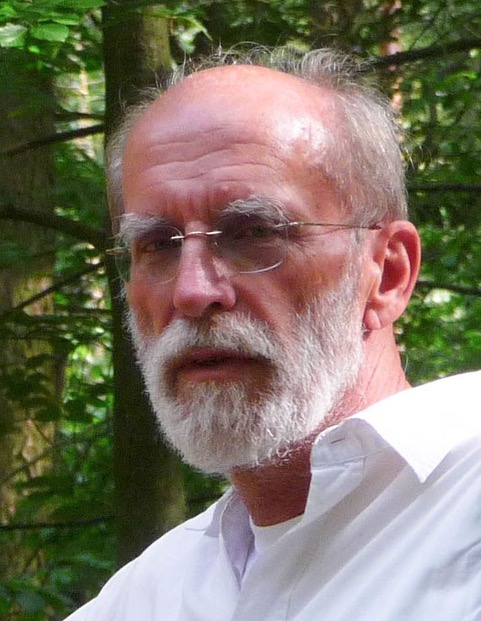
On the occasion of the 125th anniversary of Friedrich Nietzsche’s death on August 25, we spoke with two of the most internationally renowned Nietzsche scholars, Andreas Urs Sommer and Werner Stegmaier. While the conversation with Sommer focused primarily on Nietzsche’s life, our discussion with Stegmaier centered on Nietzsche’s thinking, its relevance today, and Stegmaier’s own philosophy of orientation. What are Nietzsche’s central insights – and to what extent can they help us find our way in the present? What does his concept of “nihilism” mean? And what are the political implications of his philosophy?
Translated by Reinhard Müller.
Mythomaniacs in Lean Years
About Klaus Kinski and Werner Herzog
Mythomaniacs in Lean Years
Über Klaus Kinski und Werner Herzog
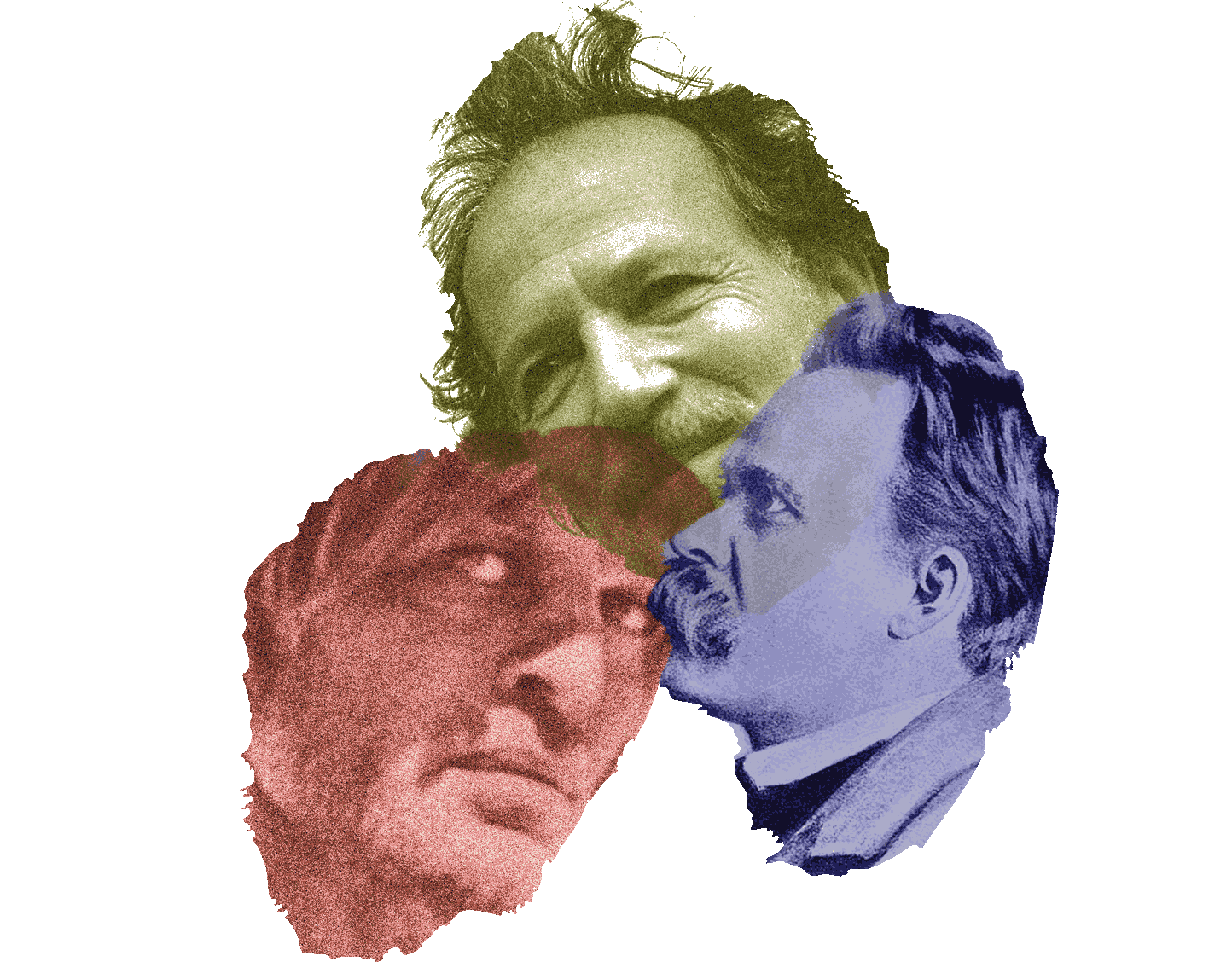

Werner Herzog (born 1942), described as a “mythomaniac” by Linus Wörffel, and Klaus Kinski (1926—1991) are among the leading figures of post-war German cinema. In the 70s and 80s, the filmmaker and the actor shot five feature films that are among the classics of the medium's history. They are hymns to tragic heroism, in which the spirit of Nietzsche can easily be recognized. From “Build Your Cities on Vesuvius! “will “Build opera houses in the rainforest! ”.
Traveling with Nietzsche through Southeast Asia IV
Malaysia
Traveling with Nietzsche through Southeast Asia IV
Malaysia


The last country that our author, Natalie Schulte, traveled by bike was Malaysia. After a good 5,000 km, she got the creeping feeling that the trip could still end poorly. With considerations as to whether cycling in Southeast Asia is a response to Nietzsche's appeal “live dangerously! “, she concludes her series of essays.
Stuck Between the Monsters and the Depths
Wanderings Through Modern Nihilism in the Footsteps of Nietzsche and Kierkegaard — Part 2
Stuck Between the Monsters and the Depths
Wanderings Through Modern Nihilism in the Footsteps of Nietzsche and Kierkegaard — Part 2


In this two-part essay, Paul Stephan examines how Nietzsche uses the wanderer as a personification of modern nihilism. After he is in the first part (link) focused on the general cultural significance of movement metaphors and the metaphor of wandering in Nietzsche's important brother in spirit, the Danish philosopher Søren Kierkegaard, it will now primarily be about Nietzsche himself.
Traveling with Nietzsche through Southeast Asia II
Cambodia
Traveling with Nietzsche through Southeast Asia II
Cambodia


Our author Natalie Schulte spent nine months cycling in Southeast Asia and reports on her travel experiences with and without Nietzsche in a short series of essays. This time it's about the vast plain of Cambodia and the temples of Angkor in the middle of the jungle.
On Dubious Paths ...
An Outline of Nietzsche's Concept of Wandering
On Dubious Paths ...
An Outline of Nietzsche's Concept of Wandering


Perhaps it is Nietzsche's main philosophical achievement that he described thinking as a process that happens in person. For him, reflection is a cooperative tension of body and mind. The mind is grounded in the nervous cosmopolitanism of the body. Nietzsche's conversion of Christianity: The flesh becomes word. This shows thinking in gestures. The following is intended to provide a sketch which indicates the main types of these reflexive gestures. This is intended to illustrate what it means when Nietzsche repeatedly describes himself as a wanderer. An intellectual tour that leads from standing and sitting as basic modes of traditional philosophy to walking, (out) wandering and halcyonic flying as Nietzsche's alternative modes of liberated thought and life.
A Day in the Life of Nietzsche's Future
Report on the Conference Nietzsche's Futures in Weimar
A Day in the Life of Nietzsche's Future
Report on the Conference Nietzsche's Futures in Weimar

From October 7 to 11, 2024, the event organized by the Klassik Stiftung Weimar took place in Weimar Nietzsche's futures. Global Conference on the Futures of Nietzsche instead of. Our regular author Paul Stephan was on site on the first day and gives an insight into the current state of academic discussions about Nietzsche. His question: What is the future of Nietzsche academic research when viewed from the perspective of Nietzsche's own radical understanding of the future?
Is Nietzsche a Philosopher for Adolescents?
Is Nietzsche a Philosopher for Adolescents?

In her contribution to the series “What does Nietzsche mean to me? “Our main author Natalie Schulte explores the question of whether the thinker can be described as a “philosopher for adolescents” and reports on her own relationship with him.