
Nietzsche POParts
Aren’t words and notes
like rainbows and bridges
of semblance,
between that which is
eternally separated?
Nietzsche
POP
arts
Nietzsche

Sind

nicht

Worte


und

Töne
Regenbogen
POP

und

Scheinbrücken

zwischen

Ewig-

Geschiedenem
arts

Timely Blog on Nietzsche’s Insights
Articles
_________
Wille zum Wald
Nietzsche’s Discovery of Forest Bathing
Wille zum Wald
Nietzsche’s Discovery of Forest Bathing
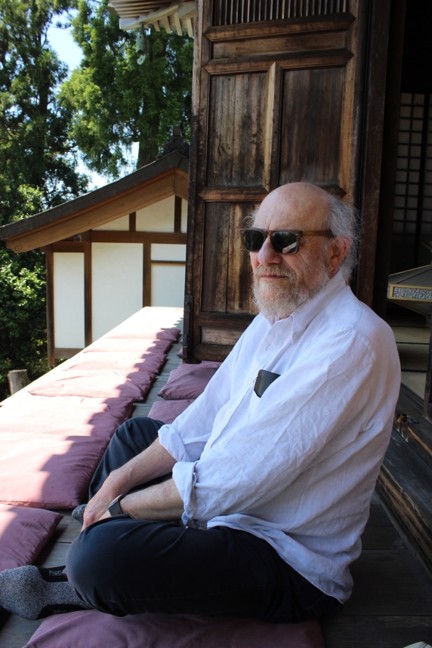
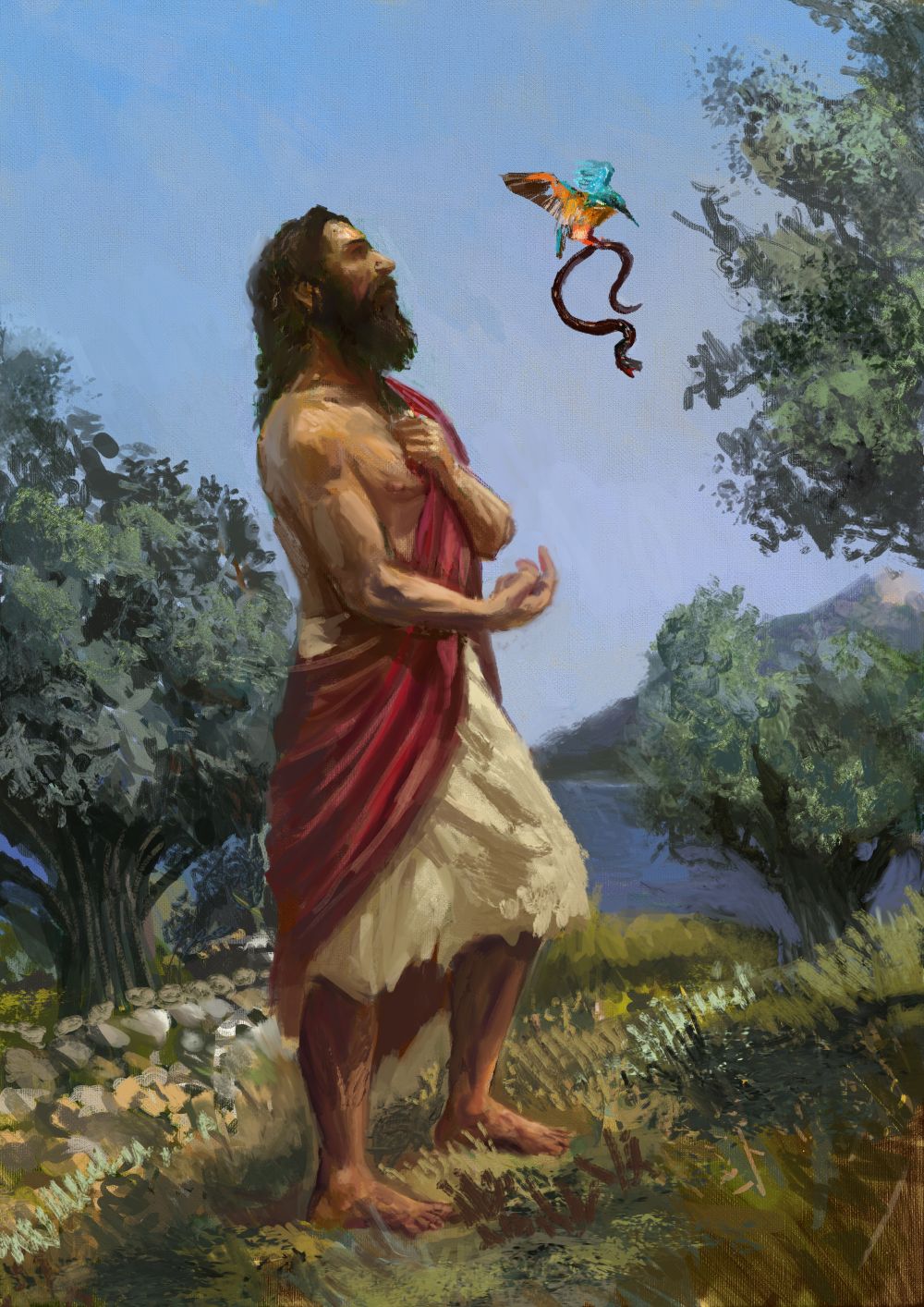
In the fourth part of our “The Forest as a Living Foundation” series, the distinguished American Nietzsche scholar Gary Shapiro investigates new angles on Nietzsche’s bonds to the woods: the philosopher’s personal enthusiasm for what is increasingly called “forest bathing,” the science behind how this practice benefits body, mind, and spirit, and the sheer pleasure of breathing fresh air, in woodland and wherever else we can find it. Shapiro’s essay showcases why this particular Lebensraum matters, not just for our individual well-being, but for the health of the entire planet.
I. Nietzsche as a Forest Enthusiast
At the lowest point of his sane life in 1877-78 Nietzsche discovered a form of self-medication to deal with his several chronic maladies. It involved long periods of daily walking, preferably in forests, for up to ten hours, whenever he was able to get out of bed. In August 1877 he reports from the forested Swiss mountain retreat of Rosenlauibad to Erwin Rohde that he walks for two hours before sunrise and another few hours in the afternoon and evening.1 In 1880 he tells Peter Gast that he’s walking ten hours a day near Marienbad.2 We know that he preferred to walk in deep shade, wore blue-lensed glasses to protect his sensitive eyes, and often carried a parasol for additional protection from the sun (was this the Regenschirm that he forgot?3).
The Japanese now have a name for such experience of the woods: shinrin-yoku, usually translated as “forest bathing.” They understand it as a form of physical and psychological therapy. Current students and practitioners describe forest bathing as a practice of mindfully immersing oneself in the woods, all senses alert to sights, sounds, smells, touch, and (sometimes) taste. “Bathing” is an appropriate way of describing this practice of soaking oneself in the total forest atmosphere and environment. Breathing forest air, it’s been experimentally shown, reduces the amount of the stress-inducing hormone cortisol in the bloodstream; regular forest walking (about four hours a day) raises the amount of cancer killing proteins and immune cells in the system. Some studies show effects in lowered blood pressure (although a few others have so far failed to confirm this) and there’s general agreement that such walking in the woods significantly lessens depression. Since trees absorb carbon dioxide and emit oxygen (the reverse of human beings), forest walkers inhale more highly oxygenated air than they would in other surroundings, supporting blood oxygenation and stimulating brain function. In letters and in published texts Nietzsche frequently recalls that almost all his writing after 1877 was based on notes and compositions made on his walks, and he speaks contemptuously of thoughts conceived while sitting.4 Certainly the tone of his middle and later books is markedly more lively and sparkling than his early works of classical scholarship which were generated in the traditional Sitzfleisch manner, requiring a desk and a mountain of books.
Nietzsche, already a stateless person, arguably became the first philosophical climate migrant when he resigned his Basel professorship in 1879 and left the city. He had spent much of 1877 and 1878 on leave, seeking relief from his many ailments in Sorrento and a series of Alpine spas and retreats. The self-designated “weather prophet”5 undertook a nomadic, singular quest to breathe freely in “good air,” settling periodically in Sils Maria, Nice, Genoa, Sorrento, along with many interrupted journeys and shorter stays in spas and retreats. Nietzsche’s meteoropathic itinerary is interwoven with all those texts where he diagnoses Europe’s health and future prospects. His search for salubrious conditions became fused with his project of articulating a healthier way forward for humans and superhumans. Nietzsche needed to escape the constraints of his Basel professorship, not only to give his growing philosophical work free reign, but because it was an environmental sinkhole. In 1869 he arrived in a city that had recently experienced a typhus epidemic, and still held the living memory of cholera in 1855. Shortly after leaving Basel, Nietzsche writes to his constant friend Franz Overbeck, declining an invitation to visit: “Yes, dear friend, you’re right, and I’d come immediately if I didn’t have Baselphobia, a genuine anxiety and aversion to the bad air, the bad water, the entire depressed essence [Wesen] of this unholy brutal site of my suffering!”6 While Lionel Gossman celebrates Basel in the Age of Burckhardt, a cultural capital where luminaries like the great historian flourished, along with Nietzsche, the church historian Overbeck, and the myth and symbol analyst Johann Jakob Bachofen,7 he acknowledges the city’s overcrowding, pollution, and obtrusive factories. As Gossman describes some of the facts on the ground – and in the air and water:
The drains were in poor condition. No one knew who was responsible for keeping them in repair, and there was no provision for regular cleaning. In addition, most of the houses that had a privy (by no means all) were not connected to the drains. The waste simply seeped through poorly maintained cesspools until finally it poisoned the city wells. The new dyeworks and chemical works were also held responsible for polluting the drinking water...8
In the Basel miasma Nietzsche’s sensitive constitution collided with Europe’s burgeoning, accelerating industrialization which was reaching a fever pitch in the 1870s. This experience resonates later in Zarathustra’s chapter, “On Passing By,” where “Zarathustra’s ape,” a parody of his cynical dimension, warns him away from “the great city”:
“Do you not already smell the slaughterhouses and soup-kitchens of the spirit? Does this city not steam with the fumes of slaughtered spirit?
Do you not see souls hanging there like limp and filthy rags? – And they even make newspapers from these rags!”9
Nietzsche experienced Basel’s air as if it were today’s Delhi and its water as comparable to Flint, Michigan’s during its ten-year water crisis. The antidote to such conditions was to be found in the elemental surroundings of “Wald, Berg, und See,” an earthly trinity often evoked in his writings10.
In June and July 1877 from Rosenlauibad, a spa in the forests of the Bernese highlands, he writes to his sister and Malwida von Meysenbug, that he is taking the water cure and notes that the quality of the air varies with the time of day and is best in the morning.11 Nietzsche notes that the altitude (4,000 feet, twice as high as Basel and without its pollution) is good for his health, and wonders whether he should seek greater heights. We recall that in Ecce Homo he marks his 1881 revelation of the thought of eternal recurrence in Sils as “6,000 feet beyond man and time.”12 This may have been the highest altitude Nietzsche ever attained; one wonders what he might have thought and written at greater heights. While he constantly aspires to the heights, a theme developed in various directions by such acute commentators as Gaston Bachelard, Luce Irigaray, and Peter Sloterdijk, he apparently never climbed above the tree line. This opens up the question: how much of Nietzsche’s health benefits from his walking had to do with the thinner air and how much from the atmospheric composition in heavily wooded areas?
II. The Science Behind Forest Bathing
In the last fifty years or so we’ve learned much about the biology and chemistry of the forest (Wald: it’s worth noting that English makes no distinction between forest and woods that would parallel German’s Wald/Forst, where Forst denotes a deliberate plantation or tree farm). Central to human therapeutic engagement with the forest is our breathing forest air. While we can also delight in many other aspects of a forest walk, which may evoke genetic memories of the species’s primordial environment, our respiration is especially crucial. Yet it was only around sixty years before Nietzsche’s climate crisis that the nature of breath began to be understood and about the same time after his death that research began to delineate the specific bodily effects of forest air. Early modern philosophy and science, grasping for an understanding of breath, tended toward mechanical models. Descartes, for example, had maintained that respiration was part of a process in which the heart acted as a heat pump, heating up inhaled air, which was then cooled in the lungs and liquified as blood.13 It took some time before Antoine Lavoisier discovered in the late 18th century that human respiration consists in inhaling oxygen and exhaling carbon dioxide. It took more time to learn that trees (especially during the day) do the reverse: absorbing carbon dioxide and emitting oxygen. This helps to explain Nietzsche’s rejoicing in the tonic air of the high forest. In today’s climate crisis we realize that forests must be protected because they operate as carbon sinks, removing greenhouse gases from the atmosphere. Tree farms, however, cannot compete with old growth forests in this respect, because they lack the full, rich substance of the old forest floor. Trees enhance the air for humans by releasing phytoncides (literally, plant-based killers), chemicals that defend them against injurious insects, parasites, and the like. Phytoncides, like trees’ profuse roots, and amazingly extensive fungal and mycorrhizal networks linking them below ground, are also means of communication, by which trees of the same species transmit relevant information concerning favorable and unfavorable conditions (the estimate is that 68 quadrillion miles of such underground networks link trees around the globe14). Forest bathing involves not only breathing cleaner, highly oxygenated air, but inhaling phytoncides with multiple and measurable salutary physical and psychological effects.
Not all trees are created equal. As Nietzsche might say, some aspire to the heights more vigorously than others. So it becomes a matter of interest to see just what we know now about the forest air that Nietzsche breathed in various settings, that atmosphere that he and his “son” Zarathustra rejoiced in as “good air.” Let’s begin with the Swiss Engadin, birthplace of his masterwork, and the site of his discovery of eternal recurrence “six thousand feet beyond man and time.” Given what we know of the local topography, and taking into account Nietzsche’s epistolary reports on his health and walking, it appears that most of his Engadin woodsy peripatetics occurred at altitudes of 4-6,000 feet. In the Sils region, at such heights, the strongly predominant species of trees are evergreen conifers including cypresses, pines, cedars, yew, and spruces. Physicians and arborists note that while all trees filter noxious particulate matter from the air, conifers do so especially well. Peter Wohlleben writes: “Forests differ a great deal from one another depending on the species of trees they contain. Coniferous forests noticeably reduce the number of germs in the air, which feels particularly good to people who suffer from allergies”15. Qing Li is a professor of medicine at the prestigous Nippon Medical School in Tokyo, specializing in forest medicine and forest bathing. In his comprehensive and beautiful book Forest Bathing, he reports on a number of studies that have tracked the effects of phytoncides. Incubating phytoncides with human “natural killer” (NK) cells – types that destroy cancer cells – found that they markedly increased the protective cells’ activity. In another register, human subjects were systematically exposed to phytoncides in controlled experiments over time. Resulting findings included heightened NK activity, decrease in stress hormones, increased sleep hours, decreased measures of anxiety, hostility, and fatigue.16 Li also reports on the beneficial effects of microbes (Mycobacterium vaccae) that are inhaled in forest environments and even in home gardening. Experiments on both mice and humans show that exposure to the microbes boosts the immune system and has anti-depressive psychological effects.17 All these results suggest that there is a firm biological basis for much of the anecdotal observations and recommendations of nineteenth century European meteoropathy. Emerging evidence suggests that diffusing essential oils derived from certain conifers (notably Japanese hinoki oil) can approximate health benefits associated with actual forest bathing.18
III. The Art of Breathing
Nietzsche read widely in various contemporary guidebooks concerning medicinal geography as he sought salubrious environments; he was in effect on a personal quest for the best of what ancient physician Galen had called “airs and places.” Adapting some of their recommendations to his individual situation, he devised a regimen of forest bathing for himself with his long walks in wooded areas.
During his first year or so of travels, as he moved toward his final departure from Basel, a time later acknowledged as his emotional and intellectual nadir, Nietzsche composed The Wanderer and his Shadow, a prolonged conversation with his double, sprinkled with both literal and metaphorical references to the importance of free breathing and salutary atmosphere. His emphasis on the importance of breath was apparently reinforced then by his beginning to following the popular exercise regime of Moritz Schreber, which emphasized the importance of deep breathing.19 In September 1878 he reports that he’s eagerly following Schreber’s regime.20 In Dawn Nietzsche prescribes a routine of such breathing for those who suffer from anxiety and distraction: fifteen minutes, lying prone, breathing slowly and deeply (aph. 462). This calls to mind many ancient and modern regimes of exercise and meditation that focus on breathwork.
Nietzsche’s pursuit of health and its conditions (“wellness”) reaches a kind of epiphany in aphorisms projecting the possibility of a pluralistic ecological utopia, a “great tree of humanity,”21 where individuals relocate to climates and milieus appropriate to their diverse metabolisms and constitutions. It’s necessary that all should find the geographical conditions that enhance both their spiritual and physical lives22:
To live at present within a single culture does not suffice as a general prescription; under these conditions too many highly useful types of human beings would die out, those who cannot breathe healthily [*] in it. We must use history to try to give them air, and to sustain them; even the human beings of backward cultures have their value, – Along with this cure for the spirit [*], humanity must strive to discover a medical geography for its physical relationships…23
Perhaps Nietzsche believed that his discovery of a forest walking routine was uniquely tailored to his needs.24 Yet if contemporary advocates of forest bathing are right, it is a regimen that would benefit almost everyone, and would be especially valuable for those confined in offices and crowded cities (thus the explosion of interest in it in urban Japan). While some may find it surprising to find Nietzsche speaking of spirit and spiritual matters, as he frequently does, there is nothing other-worldly here; Nietzsche’s Geist is close to the French esprit and to the thought conveyed in English when we refer to a spirited person or conversation. The more dualistic versions of spirit familiar from mainstream religious and philosophical traditions were themselves transformations of much earthier concepts relating to air and breath (Hebrew ruach, Greek pneuma).
The Shadow figure, airy yet less substantial than the air, returns in Zarathustra to sing the praises of the cleanest, most inspiring (in-spiriting) air (“Among Daughters of the Desert”). His song is one of many ways in which Nietzsche prefigures the post-Freudian psychoanalytic discovery of what I’ll call the respiratory erotic. Although the song is set in the (presumably treeless) desert, the Shadow likens his delight in that imagined atmosphere to his current wonderful experience of breathing pure, thin air in Zarathustra’s forested mountain redoubt. Breath is the most fundamental constant of human life, marking its first and last moments. What Nietzsche found and reports on, especially in Zarathustra, is that there is a respiratory spectrum of pleasure and pain, ranging from disturbances like coughing, choking, and sneezing to the exalted pleasure of inhaling the cleanest mountain air. A few post-Freudian psychoanalysts have suggested that the priority and primacy of breath, which can be exhilarating or painful, indicates that in addition to the classic Freudian stages of the oral, anal, and genital erotic, there is a preceding and never outgrown stage of the respiratory erotic25. Nietzsche (himself a great if unacknowledged source for Freud) seems to have come to such a realization through forest bathing. He understood that superior breathing was enabled by prolonged walking in certain forested environments and that unfavorable settings like polluted cities could cause considerable discomfort. Now our access to refined accounts of the relevant biology and chemistry helps to explain our experience on that affective spectrum. While breathing – like the oral, anal, and genital functions – may be unthought and unthematized in much of life, it accompanies human consciousness even more continuously than the three Freudian erotic modes. Thus Spoke Zarathustra records a phenomenological itinerary of the respiratory erotic, as Nietzsche’s hero journeys back and forth among forest, sea, and town.26
Ralph Waldo Emerson was a constant touchstone for Nietzsche, especially during 1877-79 when he was discovering forest bathing, a fresh voice from the New World speaking in new accents of nature and employing a philosophical vocabulary in which breath figures as a master trope for human thought and experience.27 He writes:
It seems as if the law of the intellect resembled that law of nature by which we now inspire, now expire the breath; by which the heart now draws in, then hurls out the blood, – the law of undulation.28
Such themes in Emerson have led scholars to see echoes of the ancient idea of a breathing world-soul in his thought, a theme going back to Plato’s Timaeus and the Stoics, reinforced by readings of Schelling and mediated through English writer and critic Samuel Taylor Coleridge (1772–1834).
The American thinker combined a great sensitivity to the liberating effect of forest immersion with a constant reference to the universal rhythms of breathing, themes that characterize Nietzsche’s work from this time on. In Emerson’s Essays, which the German thinker read constantly at this time, he writes:
At the gates of the forest, the surprised man of the world is forced to leave his city estimates of great and small, wise and foolish. The knapsack of custom falls off his back with the first step he takes into these precincts. Here is sanctity which shames our religions, and reality which discredits our heroes ... The tempered light of the woods is like a perpetual morning, and is stimulating and heroic. The anciently-reported spells of these places creep on us …These enchantments are medicinal, they sober and heal us. They are plain pleasures, kindly and native to us.29
IV. “I am a forest”
There seems to be a later echo of Emersonian woodland themes in Zarathustra’s chapter “The Dance-Song.” In his Essays the American writer reports that
[a] lady with whom I was riding in the forest said to me that the woods always seemed to her to wait, as if the genii who inhabit them suspended their deeds until the wayfarer had passed onward; a thought which poetry has celebrated in the dance of the fairies, which breaks off on the approach of human feet.30
And indeed, in “The Dance-Song” Zarathustra and a few of his Jünger, traveling through the forest, encounter a bevy of dancing nymph-like girls. Enjoining them to continue their dance, Zarathustra launches into his own song as the maidens dance with Cupid, whom he has summoned from sleep. Nietzsche’s avatar now identifies himself with the forest: “Indeed I am a forest and a night of dark trees: but whoever does not fear my darkness will find rose-bowers too beneath my cypresses”31. We note that dark, evergreen cypresses are among the most salutary trees for forest bathing; roses and rose-apples occur at several points in Zarathustra, indicating refreshed and renewed breath by their odors. What does it mean to be a forest? It’s tempting to read this declaration in the light of recently emergent concepts of the forest as a pluralistic community of trees and associated plants, animals, and microbes, communicating both through an underground rhizomatic network of signals and carbon transfers (“darkness” or Dunkel) and the aerial dispersion of phytoncides.32 Such a decentered assemblage can be compared to current concepts of the human neural system that have replaced former notions that assigned various functions to limited specific areas of the brain. On this view, we could prosaically paraphrase Zarathustra’s declaration “I am a forest” as “I am a multiplicity whose complexities are linked by a vast network of communicating channels.” We might see this playing out in the intricate triangular dance of ideas that Zarathustra then conducts in the forest meadow with Life and Wisdom, paralleling the maidens’ dance with Cupid. He recognizes his deep affinities with each and their tangled relations with one another. The forest inspires this variation on this traditional topos of the ancient philosophical schools, which attempted in their various ways to explain the compatibility of Life and Wisdom or to subordinate one to the other. It will also be in the forested sanctuary of his mountain home that Zarathustra attains his resolution of this play in “The Convalescent,” where he awakes to a refreshing new woodland odor, fulfilling a promise made earlier to his Jünger33. Despite his bodily challenges, Nietzsche sometimes achieved such a renewed convalescent breath through forest bathing, and Zarathustra’s path through various landscapes also records the healing, vivifying practice of immersion among those “dark trees” that enable the “good air” he seeks.
The article image was painted by the Australian artist Mitchell Nolte (link), whom we commissioned to illustrate our entire forest series.
Gary Shapiro was born in 1941 in St. Paul, Minnesota. He earned BA and PhD degrees at Columbia University where he participated in the political and cultural turbulence of the 1960s. He has taught at Columbia, Kansas University, and the University of Richmond where he is now Professor Emeritus of Philosophy. He lives in Richmond, Virginia with his partner, the artist Tanja Softic, and two cats with strong personalities. Shapiro has held fellowships or residencies at the School of Criticism and Theory, Wesleyan U. Humanities Center, Rockefeller Bellagio Center, and the National Humanities Center (US). He has published the following books: Nietzschean Narratives (1989), Alcyone: Nietzsche on Gifts, Noise, and Women (1991), Earthwards: Robert Smithson and Art After Babel (1995), Archaeologies of Vision: Foucault and Nietzsche on Seeing and Saying (2003), Nietzsche’s Earth: Great Events, Great Politics (2016). To appear in 2027: Between the Nameless and the Named: Civil Wars and Ancient Quarrels in the Novel and Philosophy. In 2019 spoke at a HARP anniversary event on “Seeking Nietzsche’s Great Tree of Humanity: The Overhuman and Powers’s The Overstory,” later German publication in Narthex (read it online here).
References
Derrida, Jacques: Spurs: Nietzsche’s Styles / Éperons: Les Styles de Nietzsche. Translated by Barbara Harlow. Chicago 2017.
Emerson, Ralph Waldo: Complete Works. New York 1926.
Fenichel, Otto: “Respiratory Introjection,” in: The Collected Papers of Otto Fenichel: First Series. New York 1953, p. 221–240.
Gossman, Lionel: Basel in the Age of Burckhardt. Chicago 2000.
Li, Qing: Forest Bathing. New York 2018.
Shapiro, Gary: “Breathing Nietzsche’s Atmospheres,” in: Lemm and Ulrich, eds.: Nietzsches Naturen. Berlin 2024.
Webster, Jamieson: On Breathing. New York 2025.
Wohlleben, Peter: The Hidden Life of Trees. Translated by Jane Billinghurst. Vancouver 2016.
Footnotes
1: Letter from 08/28/1877, nr. 656.
2: Letter from 07/18/1880, nr. 40.
3: Editor’s note: In an enigmatic entry from 1881, Nietzsche writes in his notebook: “‘I have forgotten my umbrella’” (nr. 1881,12[62]; transl. Paul Stephan). In his important essay Spurs: Nietzsche’s Styles from 1978, French philosopher Jacques Derrida uses this quote to demonstrate the impossibility of giving a single comprehensive interpretation to Nietzsche’s texts (and texts in general).
4: Editor’s note: For a detailed analysis of Nietzsche’s contempt of sitting and his philosophy of movement, cf. the essay On Dubious Paths ... An Outline of Nietzsche's Concept of Wandering by Michael Meyer-Albert on this blog.
5: Letter to Franz Overbeck from 11/14/1881, nr. 167; transl. Gary Shapiro.
6: Letter from 04/03/1879, nr. 832; transl. Gary Shapiro.
7: Editor’s note: Nietzsche was very interested in the works of the Swiss historian Jacob Burckhardt (1818–1897) and attended his lectures. He particularly influenced the philosopher’s high regard for Italian Renaissance culture and its aristocratic individualism. The theologian Franz Overbeck (1837–1905) shared a house with Nietzsche in Basel from 1870 to 1875 where they developed a close friendship lasting until Nietzsche’s mental breakdown. The Swiss jurist and anthropologist Johann Jakob Bachofen (1815–1887) is famous for his speculations about a prehistorical matriarchal society. His main work Mother Right (1861) influenced not just Nietzsche’s view on antiquity (esp. the “Dionysian” and its association with unrestricted female sexuality) but also Friedrich Engels and Sigmund Freud.
8: P. 79.
9: Transl. Graham Parkes (Oxford 2005).
10: Cf. e.g. a letter to Erwin Rohde from 06/19/1869 (nr. 8).
11: Cf. letter from 06/06/1877 (nr. 612) and letter from 07/01/1877 (nr. 630).
12: Ecce Homo, “Thus Spoke Zarathustra,” § 1.
13: See his Treatise on Man, published in 1662.
14: Cf. New York Times June 11, 2026.
15: The Hidden Life of Trees, p. 222.
16: Cf. Li, Forest Bathing, p. 97–98.
17: Cf. ibid., p. 102–103.
18: Cf. ibid., p. 231–239.
19: Editor’s note: The Leipzig-based German medical doctor and university lecturer Moritz Schreber (1808–1861) published several popular self-help books on personal health and invented the Schrebergarten. Read more about Schreber’s influence on Nietzsche in Tobias Brücker’s essay Everyday Life Contributes to Thoughts. Nietzsche and Dietetic Popular Culture on this blog.
20: Cf. letter to Ernst Schmeitzner from 09/10/1878 (nr. 754).
21: Human, All Too Human II, The Wanderer and his Shadow, aph. 189; transl. Gary Handwerk (Stanford 2013).
22: Cf. Human, All Too Human II, The Wanderer and his Shadow, aph. 188 & 189.
23: Human, All Too Human II, The Wanderer and his Shadow, aph. 188; transl. Gary Handwerk (Stanford 2013). * = my emphasis.
24: Cf. also his critique on a single diet for everyone in Twilight of the Idols (“The Four Great Errors,” aph. 1).
25: Cf. Fenichel, “Respiratory Introjection” and Webster, On Breathing.
26: Cf. Shapiro, “Breathing Nietzsche’s Atmospheres,” p. 28–34.
27: Editor’s note: The American philosopher Emerson (1803–1882) was a great influence on Nietzsche. For more on this important piece of Nietzsche’s intellectual breeding ground see the interview with Willow Verkerk on Nietzsche and North America on this blog.
28: Emerson, “Intellect.” Complete works vol. 2, p. 332.
29: Emerson, “Nature.”. Complete works vol. 3, p. 169-70 & 171.
30: Emerson, “History.” Complete works vol. 2, p. 18.
31: Transl. Graham Parkes (Oxford 2005).
32: Editor’s note: For more on the rhizomatic nature of forests see also the third part of this series, The Postmodern Forest, written by Mandus Craiss.
33: See “On the Bestowing Virtue,” 2.
Wille zum Wald
Nietzsche’s Discovery of Forest Bathing
In the fourth part of our “The Forest as a Living Foundation” series, the distinguished American Nietzsche scholar Gary Shapiro investigates new angles on Nietzsche’s bonds to the woods: the philosopher’s personal enthusiasm for what is increasingly called “forest bathing,” the science behind how this practice benefits body, mind, and spirit, and the sheer pleasure of breathing fresh air, in woodland and wherever else we can find it. Shapiro’s essay showcases why this particular Lebensraum matters, not just for our individual well-being, but for the health of the entire planet.
Nietzsche on a Bike
A Declaration of Love
Nietzsche on a Bike
A Declaration of Love

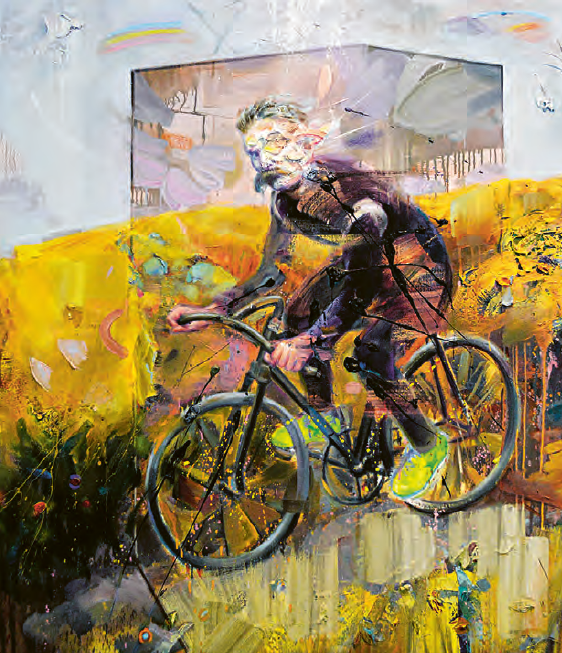
What does the most radical thinker of modernity have to do with cycling? Officially nothing: Nietzsche was a passionate hiker, and bicycles were conspicuously absent from his biography. Yet, his philosophy brilliantly anticipated the bicycle.
From the Buddhist Kala-Chakra up to Zarathustra's vision of the "self-rolling wheel," this essay embarks on a fascinating quest. It shows why the bicycle is far more than a mere means of transport: It is a philosophical instrument that teaches us the dynamic balance of life and makes the "Eternal Recurrence of the Same" palpable in the wind. An invitation to set thought in motion.
What does Nietzsche have to do with cycling? Nietzsche was a passionate hiker. There are no documented bicycle excursions by him. However, as with many other things, he may have been 'too early' here too. Yet the invention was already in the world during his lifetime. In 1817, the eccentric tinkerer Karl von Drais, who shared more than one commonality with Nietzsche, had already constructed the velocipede. But just like Zarathustra in his first attempts to bestow his wisdom upon people, he too was only mocked, caricatured, and ridiculed by the crowd. It was not until long after his death in 1851, in the mid-1890s, that cycling became a general fashion. By this time, however, Nietzsche himself was no longer able to meaningfully participate in the technological developments of his era. Like the inventor von Drais, he had been incapacitated and removed from public life in his later years.1
Nietzsche would likely have appreciated the practice, or at least certainly the symbolism and philosophical depth.2 Two wheels, connected to form an infinity, propelled at their center solely by human will. Guided by a gentle movement, steered by a straight gaze into the distance. Such lightness required millennia of preliminary work. The wheel was humanity's simplest yet most challenging invention: only when perfect symmetry can be achieved does it roll effortlessly. No one could have foreseen the consequences when, at the beginning of the 4th millennium BCE, the first circular potter's wheels were made, and shortly thereafter, two were connected by an axle. This lifted a tremendous burden from people in more ways than one. What was previously laboriously carried, pushed, or pulled could now be: driven.
.jpg)
The Archetypal Bicycle
This is undoubtedly one of the reasons why the wheel is so deeply embedded in our cultural understanding of the world as an archetype of perfect motion. Like few other technical creations – e.g., mirrors, books, clockworks – the wheel has managed to become a key symbol of our existential orientation. Its role in several of the oldest still-existing world religions was correspondingly significant. Not only is our German word 'rad' traceable to the almost synonymous Sanskrit word 'ratha', which denotes an Indian temple chariot. Especially in the Avesta, it also becomes a central cipher for the cosmos itself. The 'Wheel of Time' (Kalachakra) symbolizes the cyclical eternal return of all existence, while the Sudarshana Chakra, the rotating, razor-sharp discus of the god Vishnu, protects and maintains cosmic order (Dharma). Even today in India, during the magnificent temple festivals, one can admire the splendidly painted and decorated mythical chariots, the 'Ratha Yatra', which are pulled through the city in large processions and each contain a deity statue. During this – dare we say? – 'bike tour', the deity gets an opportunity to inspect its creation and, if satisfied, will bless it.
In Buddhism, the wheel of the cosmos transforms into that of the great teaching. The Eightfold Path is materialized in the eight spokes of a wheel for good reason: it demands and promises movement, the journey to liberation from suffering and delusion.
For the historical Zarathustra, the Iranian prophet whose work is usually dated between 1500 and 600 BCE and whose name Nietzsche borrowed for his most esoteric work, the wheel and chariot are also essential: In the Gathas, the hymns of the Avesta, a collection of Zoroastrian sacred texts, he is attributed the threefold role as 'first herdsman' ('vāstryõ.fšuyant'), 'first priest' ('āθravan'), and very prominently as 'raθaēštar', as the "first chariot warrior"3, and thus as the founder of the three estates of the desired social order (herdsmen, priests, warriors/nobles)4 attributed. It is therefore hardly surprising that the wheel also occupied a central place in Nietzsche's thought. There is the "Wheel of Time"5, the "Wheel of the World"6, the "Wheel of Reason"7, the Wheel of "Delusion"8, the "Wheel of Being"9, the "Wheel of Taste and Vanity"10 and the "actual wheel in the machinery of things"11. Above all, however, we find – especially in Zarathustra – the fascinating image of the "self-rolling wheel"12. The passage is prominent in the chapter Of the Three Metamorphoses as the crown of the last metamorphosis:
Innocence is the child and forgetting, a new beginning, a game, a self-rolling wheel, a first movement, a sacred Yes-saying. Yes, for the game of creation, my brothers, a sacred Yes-saying is needed: its own will now wills the spirit, its own world the world-lost one wins.13
The hinted at, even lauded, way of life is self-sufficient, requiring no coercion, no external impetus, no strenuous effort. It draws from no other source than itself. Complete autonomy coupled with utmost serenity, an art of living where one glides along 'as if on wheels'. It promises creation purely out of joy, and with it, an unforced, unfeigned self-affirmation. Nietzsche's aphorisms provided a wonderful blueprint for numerous personal utopias of enthusiastic readers, who were inspired by the peculiar intensity of this image, by the fresh wind of freedom that permeates it – let's call it 'the wind of motion'. Who, when reading these relevant lines, doesn't think of that strange, invigorating and affirmative feeling that eventually permeates anyone who has been cycling long enough, of having rediscovered a way of life more appropriate to humans, perhaps because it is more primordially inscribed: that of the nomad?

Movement as an Art of Living
But there's another existential layer that every passionate cyclist is secretly aware of. A bicycle, once set in motion, continues to run and carry itself for quite a distance, transforming the rider's relationship with their environment in an astonishing way. Unlike motorized vehicles, you are not merely chauffeured on a bicycle. You ride on the momentum of the initial movement, you glide 'along', moving yourself in a state between activity and passivity, in the 'medium' voice, as found in Ancient Greek, which unfortunately has no grammatical equivalent in German. We are the originators of the forward motion, yet at the same moment, gradually relieved of the necessity to constantly maintain it. Fused with it and simultaneously carried by it. Just as we keep the bicycle in motion, the medieval God should have sustained being in existence; he certainly wouldn't have abdicated so prematurely. 'It' would run as smoothly as a wheel. It doesn't trudge and march, but rolls, meaning it pulls and pushes and is simultaneously pushed and pulled by its own successful past.
Certainly, roller skates and skis – or Nietzsche's favored ice skates – also enable this intermediate state, but all require specific external conditions, demanding asphalt, snow, or ice. Only the bicycle, however, is undemanding and adaptable. Any reasonably firm surface is, in principle, rideable with the right tires, from the root-strewn Black Forest floor to the gravel roads of Mongolia and the halfpipe in New York. The bicycle is an 'all-rounder' in every respect. And, like any other regularly practiced movement technique, it shapes its own physicality. Like horseback riding, to which it bears some resemblance (cf. 'to ride a bike' in English), cycling gives the rider – with the handlebars correctly adjusted – a posture that is both casual and regal. We maintain an overview: of our path, of our 'steed', of the pedestrians. Every exercise – every 'ascetic practice' – imprints itself not only on the body but also on the spirit of the practitioner. And thus, ideally, this 'over-viewing' becomes part of the cycling traveler's personality. Thinking is life, and life is movement. This physically mediated assimilation of character traits was very familiar to Nietzsche's thought. Like hardly anyone else, he not only emphasized the physicality of thinking but also powerfully demonstrated it poetically in some of his writings. Foucault, in particular, later prominently analyzed further historical manifestations of this connection (cf. e.g., Discipline and Punish), which in other theories today is known as 'embodiment'.
High repetitions of movements involuntarily embed themselves in the psychological fabric. The style of personal physicality corresponds to the style of the respective spirit. The bicycle trains its rider to have a fine sense for the middle ground between too much and too little effort, for the balance between active and passive. One must pedal just enough as required by the environment and one's will, but at the same time allow the wheels' own momentum to carry them, in order to stay optimally in motion. Conversely, anyone who refuses to add their own power for too long stops and – falls. Cycling means being able to maintain a dynamic balance. A rider at a standstill falls. We must move to be. Cycling cultivates that magical middle ground where becoming and being merge into one, and pours it into the cyclist's skill. The rest, as mentioned, is a matter of personal style. But for every style, the bicycle offers a suitable form. From a city or touring bike, the flaneur gazes dreamily over the landscape of life. For the peak-bagger, who seeks danger, the thrill of experience, and the proximity of the gods, the mountain bike is a loyal companion from ascent and climb to descent and – sometimes – departure. Finally, the road cyclist battles alone in the open country to overcome their resistances and (performance) limits.

The Wheel of Time
On long bike tours, we rediscover one last Zarathustrian teaching: the Eternal Recurrence of the Same. And not primarily in the feeling that one has seen everyone and everything before, the recurrence of unfamiliar faces, monotonous suburban streets, or interchangeable generic villages. Just as for Zarathustra, there is a good and a bad recurrence for the cyclist. The modern long-distance cyclist comes to know recurrence as an intuition, embedded in a physical spatial experience that, after a long time, becomes a familiar given. For within the rolling wheel lies another ancient wisdom, the truth of 'κύκλος' (Kýklus), the Greek word for circle. The rotating moment of recurrence is contained within the word 'cycle'. A point on the circle rises and sets in the cycle, just as the sun rises in the morning and sets in the evening, and the wheel of the seasons turns unfailingly year after year. The circle of Eternal Recurrence is not a mathematical circle – every point equally significant, neutral to the center, an eternally static perfection – but a wheel in motion, which we, who are stretched onto this wheel with our entire lives, experience ourselves as an arc. We never see the whole wheel, but we always sense it when we mentally extend our own journey. For us as finite beings, there can be no other eternity than that which we experience as progress and finally as decline and evening. The end, however, does not lie before us, as it were, like a wall of death on a flat plain, but until the last hour and beyond, always behind the horizon towards which we move. No other technical aid simultaneously teaches us about this so physically and mentally, uniting these insights within itself in such a mythical-symbolic, sporty-practical, and bodily-spatial way as the bicycle.
Does this instructive contraption, the self-propelled bicycle, have a future now that pedelecs and e-bikes, scooters, Segway PTs, and hoverboards glide across asphalted roads? Given its past, we have as much to fear as to hope for. While the path from the clever invention of the wheel as a universal tool to the all-encompassing 'ratha', the rotating circle of souls and things, remains hidden in prehistoric darkness for now, the subsequent development from symbolism laden with meaning back to useful multi-purpose tools can be called almost symptomatic of Western thought. Thus, the Romans quickly knew how to incorporate the 'rota' into all sorts of ingenious constructions. From the scoop wheel of the watermill to the wheels in pulley systems and transport structures for war machines, right up to the extremely popular breaking wheel ('τροχός'), which they readily adopted from the Greeks along with the practice of breaking on the wheel – the inventive spirit of early Western civilizations quickly found countless ways to apply what their ancestors' gods had once used to traverse the firmament to practical use here on earth. Some voices critical of culture in later centuries had much to lament about this transformation, which turned our societal existence into a single technically controlled mechanism. The bicycle represents a singular peak in the stream of outstanding inventions of this era; while many things followed it, few surpassed it. We may hope that, like the potter's wheel, it remains a continuous companion for a long time; though some technical ingenuity may be added to it, it will fundamentally remain what it always was: a self-rolling wheel. "But where danger threatens, / That which saves also grows."14, to invoke an old Hölderlin saying. For whoever dislikes the course of time, whoever gradually feels like a mere cogwheel instead of being at the center of existence, can and should flee to freedom. We recommend: with a good book and on two wheels.
About the Article Image
Mathieu Laca: Nietzsche on a Bike (2016, oil on canvas, 122 × 107 cm, private collection, © Mathieu Laca) (Source: Barbara Straka, Nietzsche forever? Friedrich Nietzsche's Transfigurations in contemporary art. Basel, Schwabe 2025, p. 665). Used with kind permission of the artist (Website, Instagram).
Bibliography
Bertz, Eduard: Philosophy of the Bicycle, newly edited with an appendix by Wulfhard Stahl. Paderborn, Snayder, 1900, reprint 1997.
Hölderlin, Friedrich: Complete Works and Letters in three volumes, Edited by Michael Knaupp. Munich & Vienna, Carl Hanser, 2019.
Nyberg, Henrik S.: The Religions of Ancient Iran. Leipzig, Hinrichs 1938.
Schenkel, Elmar: On the Ecstasy of Travel. With photographic impressions by Hans U. Alder. Basel, Futurum 2012.
Footnotes
1: Cf. Schenkel: On the Ecstasy of Travel.
2: In his "Philosophy of the Bicycle" from 1900, Eduard Bertz, not without reason, already dedicates an entire chapter to Nietzsche and Darwin.
3: Nyberg: The Religions of Ancient Iran, p. 301.
4: Cf. 13. Gatha, Yasna 88-95.
5: Five Prefaces to Five Unwritten Books, Sec. 1.
6: Human, All Too Human I, Aph. 106.
7: Thus Spoke Zarathustra I, Of the Pale Criminal.
8: Thus Spoke Zarathustra III, Of Old and New Tablets, Sec. 9.
9: Thus Spoke Zarathustra III, The Convalescent, Sec. 2.
10: Human, All Too Human II, The Wanderer and His Shadow, Aph. 215.
11: Ecce Homo, Why I Am a Destiny, Aph. 3.
12: Thus Spoke Zarathustra I, On the Three Metamorphoses of the Spirit.
13: Ibid.
14: Hölderlin: Patmos, Stanza 1, Lines 3-4.
Nietzsche on a Bike
A Declaration of Love
What does the most radical thinker of modernity have to do with cycling? Officially nothing: Nietzsche was a passionate hiker, and bicycles were conspicuously absent from his biography. Yet, his philosophy brilliantly anticipated the bicycle.
From the Buddhist Kala-Chakra up to Zarathustra's vision of the "self-rolling wheel," this essay embarks on a fascinating quest. It shows why the bicycle is far more than a mere means of transport: It is a philosophical instrument that teaches us the dynamic balance of life and makes the "Eternal Recurrence of the Same" palpable in the wind. An invitation to set thought in motion.
Nietzsche and North America
An Interview with Willow Verkerk
Nietzsche and North America
An Interview with Willow Verkerk

Exactly 250 years ago, on the 4th of July 1776, thirteen North American British colonies declared their independence from the mother country, soon thereafter forming one of the first modern democratic republics of the world, the United States of America. We took this anniversary as an occasion to speak with the Canadian Nietzsche scholar Willow Verkerk about the different approaches to Nietzsche in Europe and North America. To what extent is this thinker, so deeply embedded in European culture, read differently “here” to “there”? What does this tell about general cultural differences between Europe and its erstwhile colonies on the other side of the ocean? And what did Nietzsche himself think about the “New World”?
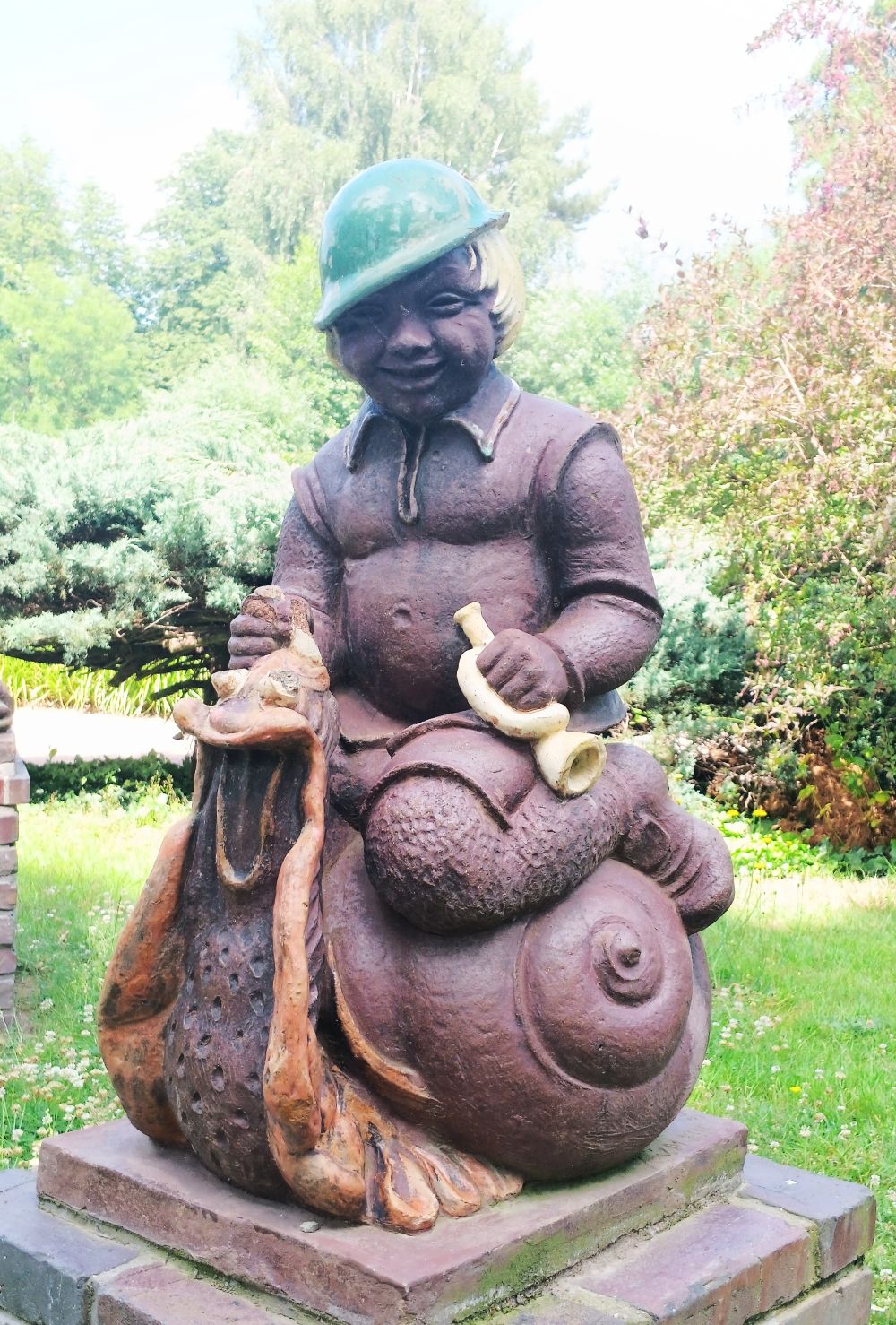
I. From Canada to Europe and Back
Paul Stephan: Dear Willow, thank you very much for your readiness to participate in this dialogue on Nietzsche and North America. I’m particularly excited about your opinions since you’re not just an expert on Nietzsche and continental philosophy in general, but also a researcher with a very international profile. You have done research in Belgium, the UK, where we first met each other at a conference on Nietzsche and feminism, Japan, and now in Canada, where you’re working as a lecturer at the University of British Columbia. Maybe you can tell us more about your background? Where have you been born and how did you get to know Nietzsche?
Willow Verkerk: I was born in Victoria, BC, in Canada. I first became interested in Nietzsche in high school when an older friend who was already in university gave me a copy of Beyond Good and Evil. I continued reading Nietzsche in Montreal where I completed my BA and MA in Philosophy under the supervision of Horst Hutter at Concordia University. Realizing that there were few Nietzsche scholars in Canada, and even fewer working in the continental tradition, I looked to Europe and found Paul van Tongeren who agreed to supervise me at Leuven University, where I completed a MPhil and PhD. Since my father was born in Arnhem in the Netherlands, I was able to obtain a Netherlands passport and this made the transition to Belgium less complicated. This was lucky, in fact, as my father died when I was 6 years old and I was raised by a single mother, an avant garde filmmaker, poet, feminist, and anti-poverty activist. She encouraged me to pursue creative and literary interests, and was supportive of my studies in philosophy.

II. “Continental” vs. “Analytic” Tradition
PS: The term “continental philosophy” is surely crucial to understanding the main differences between the European and the North American philosophy culture. You already mentioned that continental philosophy is not that well-represented within Canada. How do you understand continental philosophy and why is it apparently difficult to do academic research within this tradition on your side of the pond?
WV: In North America, continental philosophy is distinguished from Anglo-American and analytic philosophy, which mostly originated in Britain and the United States. Continental philosophy is really just European philosophy and, perhaps more appropriately, it is called this in the United Kingdom. Both continental philosophy and European philosophy refer to the philosophical traditions that originated in Germany and France, sometimes including other parts of Europe, from Immanuel Kant onward. In the Anglosphere, there has been more academic research focused on analytic philosophy, perhaps because it originated in the English-speaking world. In Quebec, which is Francophone, there is more continental philosophy. In the United States, Catholic and Jesuit universities are more interested in the history of philosophy and have more of a focus on continental philosophy. Often continental philosophy is taught and studied in political science, German Studies and French Studies, as well as Literary Studies more than in philosophy departments in North America.
Internal divides within philosophy departments vary region by region and each have their own current and historical reasons for prioritizing some areas of research over others. When I became a member of the American Philosophy Association, I was asked to join a group called ‘Beyond the Analytic-Continental Divide’ because, I think, the association was trying to mitigate the antagonism between these two schools of philosophy. Analytic philosophers previously had a bad reputation for isolating their continental colleagues. Some speculate this is because students tend to enjoy studying continental philosophy much more than analytic philosophy. My limited knowledge of the western part of North America, of British Columbia and California, is that philosophy departments here were historically dominated by logical positivism which dismissed continental philosophy and took part in various gatekeeping activities to limit the hiring of continental philosophers. However, today, it seems like the institutional climate is changing because younger academics are less interested in this division and more analytic scholars are writing about German and French philosophy, noticing that Hegel, Nietzsche, Sartre, Beauvoir, and others have insights to offer not found in the writings of, and scholarship on, Anglo-American thinkers.
PS: This antagonism is also often described in terms of style. While the writing of continental philosophers is said to be more literary – i.e., through use of metaphors, analogies, and rhetorical language – analytical philosophers prefer a more “sober” style, and try to refrain from these stylistic devices. Nietzsche seems to be clearly on the continental side and maybe his high regard (to put it mildly) among continental philosophers has something to do with the fact that he gives a justification for this approach when he talks about truth being a ‘movable army of metaphors, metonymies, anthropomorphisms’2 and about the inescapable perspectivism of our knowledge of the world.3 At the same time, there has been a growing interest in Nietzsche’s philosophy also within the analytic camp within recent decades. These interpreters are more interested in Nietzsche’s arguments than his style and try to detach the former from the latter. Do you think that’s a promising development? Or is Nietzsche somehow “stripped naked” in these interpretations?
WV: That Nietzsche is read by different kinds of philosophers and people seems a good thing. However, as you note, since he has a literary style and also writes esoterically, he is easily misread and misinterpreted. These misreadings and misrepresentations, however, are not new, and not limited to analytic philosophers. Yet, analytic philosophers not only isolate his arguments from his styles, they often isolate an argument from the book in which it appears, and more broadly from Nietzsche’s other works. Further, they tend to place him into categories familiar to analytic philosophers that Nietzsche did not employ (and likely would have problematized) to make him decipherable. In doing so, they overlook the agonistic qualities of Nietzsche’s writings and the clues he gave his readers about the topics, aims, and challenges of his various books, found in his prefaces. As you suggest, analytic philosophy also tends to seek out conclusive analysis which Nietzsche fundamentally challenged through his perspectivism and his critique of metaphysics. So, one could go as far as to claim that the methodologies of analytic philosophy are incompatible with Nietzsche. But, perhaps, it is precisely because certain analytic philosophers sense the lack in their methods that they turn to Nietzsche.
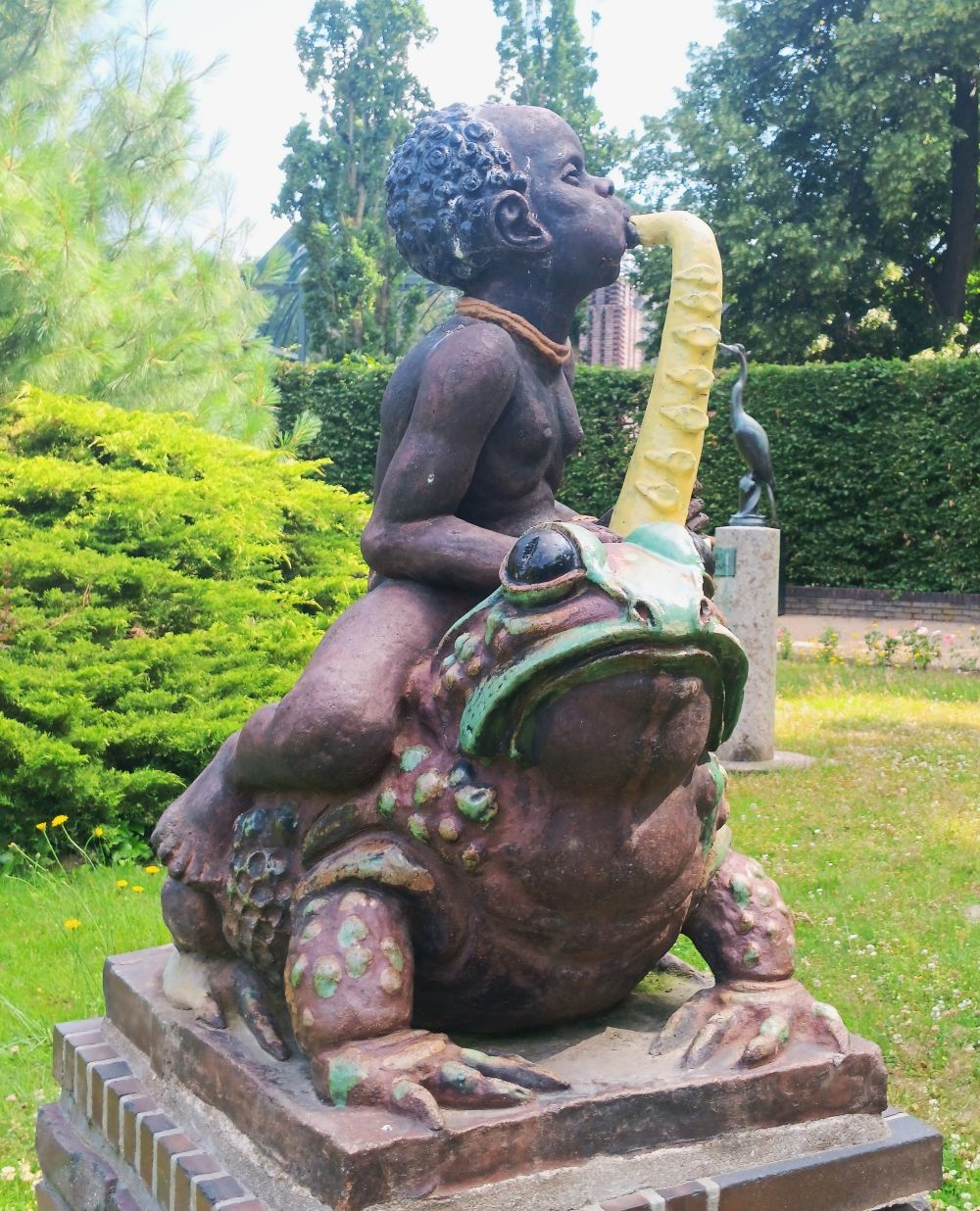
III. Nietzsche in American Popular Culture and Student Life
PS: So, we have the analytical tradition which is traditionally very strong in North America and in tension with Nietzsche but is recently more open towards his insights, and a minor continental tradition across the Atlantic as well. But what about the reception of Nietzsche outside of academia? I think, in Europe, and similarly in parts of South America, Nietzsche is a very popular philosopher with a large cultural significance to this day. Has there been a comparable cultural significance of Nietzsche in Canada and the US? Would school kids read Nietzsche? Are his thoughts taught at high school? And how interested are students in his philosophy?
WV: My experience living, working, and traveling in different cities and countries in Europe and North America is that one is much more likely to find a person interested in, and knowledgeable about, philosophy in Europe. Those who read philosophy in North America tend to be academics, artists, or creatives. I asked students, friends, and acquaintances on social media and in a course I’m teaching if they read philosophy in high school. I had both Americans and Canadians reply (but more Canadians). The consensus seems to be that those who went to private school studied some philosophy but those in public school mostly did not; some were exposed to French philosophers in French classes but German philosophy was usually not part of high school curriculum. There are some regional exceptions, mostly in those parts of the continent closer to the Atlantic and especially in French speaking regions. A few students mentioned learning about Nietzsche in movies or on television but, generally speaking, Nietzsche, and philosophy in general, do not have a comparable cultural significance in Canada and the US as compared to Europe and parts of South America. Often those students in my courses at UBC on exchange from Brazil, Chile, Mexico, South Africa, the Middle East, Europe, and China know more about Nietzsche than the North Americans. Of the 8 courses per year I teach at UBC, one is a seminar on Nietzsche, and two others include Nietzsche in the reading materials. University students generally seem very interested in him.
PS: What particularly interests your students about Nietzsche?
WV: Students who have religious backgrounds, and have or are questioning their faith, find Nietzsche’s claim in The Gay Science 125 that God is dead and we have killed him fascinating. I teach this text in a course called ‘Existentialism’ and we read the 20th century French Existentialists in response to Nietzsche’s diagnosis of nihilism after the death of God. In this course I’ve noticed that students are interested in thinking about Nietzsche’s account of nihilism and applying it to contemporary accounts of nihilism like eco-nihilism and techno-nihilism. It is surprising to see how enduring Nietzsche’s critique of passive nihilism is: his portrayal of the last human in the Prologue to Thus Spoke Zarathustra as the one who ‘just blinks’ to every question posed appears to resonate deeply with students here.
Nietzsche’s account of the will to power also fascinates students, perhaps because it has been so often misrepresented, but also because Nietzsche claims that behind every truth claim is the will to power. Investigating the relationship between power and truth is especially interesting to students working in social and political philosophy, critical theory, feminist, and anti-racist studies, since social ontology and genealogical investigations have become more popular in feminist, queer, and anti-racist scholarship. I’ve also noticed that students are drawn to learning more about Nietzsche's genealogical methodology and his theory of perspectivism. Sometimes students are disturbed by Nietzsche or take him too literally: once in a Nietzsche seminar while reading Nietzsche’s writings about woman and man after Beyond Good and Evil 231, I had two students passionately arguing, one on the edge of tears about Nietzsche’s misogyny and the other proudly announcing that Nietzsche was supporting traditional family values.
Finally, a significant number of students are interested in Nietzsche’s therapeutic philosophy, sometimes read as his remedies for nihilism, other times as his philosophy of overcoming. Recently I’ve been impressed by student work focusing on his therapeutic philosophy which links Nietzsche to Dis(ability) Studies, phenomenology, and the project of non-violent decolonization. It is incredible to see how he continues to inspire students with different disciplinary commitments and be relevant to thinking about the cultural challenges of our current age.
PS: That’s actually not so different from the main points of interest for students in Europe, I think. Here in Germany, there’s perhaps an additional great interest in Nietzsche’s unfortunate connection to fascism and national socialism. This subject regularly sparks controversial debates within and beyond the seminar room. Does this aspect play a role in North America as well or is it less significant?
WV: I'm not sure if students in North America are as interested in Nietzsche's historical connections to fascism and national socialism. It does get brought up sometimes in courses and in my social life but from Canadians and Americans I hear more often about the contemporary manosphere and the political right quoting Nietzsche or attempting to use him to prop up their claims. I have only a very limited knowledge of the use of Nietzsche by sexists, racists, and fascists in North America. I know that Jordan Peterson, a self-proclaimed self-help guru for disenfranchised young men, has an online “school” and that he attempts to use Nietzsche to talk about becoming a manly warrior. But, I only know this because I received some ads for it, oddly enough, on my social media right after returning from the Nietzsche’s Zukünfte conference in Weimar in 2024.4 Otherwise, I have had some students ask me about the connections between Nietzsche and accelerationism, sometimes mentioning Nick Land. The intellectual roots of accelerationism, from what I understand, lie in Deleuze and Guattari’s Anti-Oedipus: Capitalism and Schizophrenia and A Thousand Plateaus and are considered left-wing but today Nietzsche inspired accelerationism appears to fuel more right-wing perspectives.
PS: What do you make of such appropriations? Can Nietzsche serve as a tool to contradict these tendencies – or is this line of reading justified to some extent?
WV: One can find various quotes in Nietzsche and interpret them for all kinds of ends. A quotation that may be deemed “accelerationist” can be found in Thus Spoke Zarathustra, ‘On Old and New Tablets,’ 20: ‘But I say: to what is falling one should give a further push! Everything of today – it is falling, falling into decay: who would want to keep it! But I – I will give it a further push!’5 One of the basic tenets of accelerationism is to accelerate the decay of that which is already in decline. This indeed seems to be a Nietzschean value, connected to his writings on overcoming the problems of passive nihilism through action. However, the foundations of accelerationism do not rest on Nietzsche alone. They bring Marx into dialogue with Nietzsche, claiming that the malaises of capitalism must be accelerated so that capitalism can overcome itself. Often accelerationists also connect their manifestos with automatization and sometimes with Futurism. While I do think there is abstract support for these projects in Nietzsche's works, the accelerationists, like other political actors, merge Nietzsche with other thinkers and traditions and use him as a toolbox to prop up their own aims. Certainly, there are other quotations in Nietzsche's works which emphasize the direct opposite kind of praxis to that of accelerationism. Nietzsche also writes that one must slow down, think carefully, and return to nature: he writes numerous times in Thus Spoke Zarathustra that the Overhuman is the meaning of the earth. And, in The Gay Science, he is critical of industrialization, the speeding up of time, and the conditions of technological change which made it difficult to enjoy long walks and conversations with good friends (a condition that seems to have worsened since Nietzsche's time). So, there is evidence, and often within the same book, for contradictory readings and perspectives.
.jpg)
IV. Nietzsche and the American Culture of His Time
PS: Maybe this is the right moment to have a look at Nietzsche’s own relationship to America.
The world in which he lived was in many regards so different from our own, especially when it comes to North America. The US was still a relatively young country, Canada a colony, Europe the proud unchallenged centre of the globe.
This is also reflected in Nietzsche’s works where America is rarely mentioned – although Nietzsche’s sister lived in Paraguay for a few years to establish a “Aryan” colony there with her husband Bernhard Förster, an ardent anti-Semite whom Nietzsche despised.
First, one should mention that Nietzsche was an enthusiastic reader of American authors such as Edgar Allan Poe, Mark Twain,6 and, most prominently, Ralph Waldo Emerson (1803–1882). Little known in Germany today, the influence of Emerson on Nietzsche can hardly be understated. In his early and middle period Nietzsche quotes him excessively (sometimes without explicit acknowledgement), especially in Schopenhauer as an Educator. The heroic individualism of Emerson obviously impressed him, and he praises him on several occasions, even in his later works.7
Is Emerson still a relevant figure in North American culture today? And is his huge influence on Nietzsche widely discussed?
WV: I agree, Nietzsche’s time was very different from our own because today it seems that America is the loudest imperialist voice that assumes itself to be the center of the globe, whereas formerly Europe occupied this position. Nietzsche, however, seemed to support the imperialist European project when he writes about Europeans giving their culture and supervision to the world, suggesting that European culture is superior while also critiquing German nationalism (see ‘The Wanderer and His Shadow,’ aph. 878). Yet, as you suggest, Nietzsche's relationship with his sister deteriorated during her time with the fascist-colonialist Bernhard Förster; he thought their attempt to establish a colony, which was a great failure, was a foolish endeavor. In terms of Nietzsche’s interests in American authors, I’ve heard Emerson mentioned many times by American Nietzsche scholars and he has come up in my own research when I was encouraged during my doctoral studies to read him. My impression is that Emerson remains an important figure in American literature and is taught in both high school and university courses in the United States. The extent to which he is read by the general public is unclear to me: perhaps more than Nietzsche because he is a foundational figure in American literature. But, Americans are more likely to read fiction over philosophy and also more likely to listen to podcasts, videos, or read self-help books than canonical figures. Often their Emerson and Nietzsche are learnt about through pop culture. While the influence of Emerson on Nietzsche is a point of interest amongst their readers, I cannot say that this is widely discussed. Their philosophical relationship was explored perhaps most visibly in the US by Stanley Cavell who was a prominent American philosopher and Harvard professor who published in both academic and popular places. He wrote that it was rarely apparent to him what had brought him back to reading Nietzsche but reading Nietzsche would inevitably take him back to Emerson.9
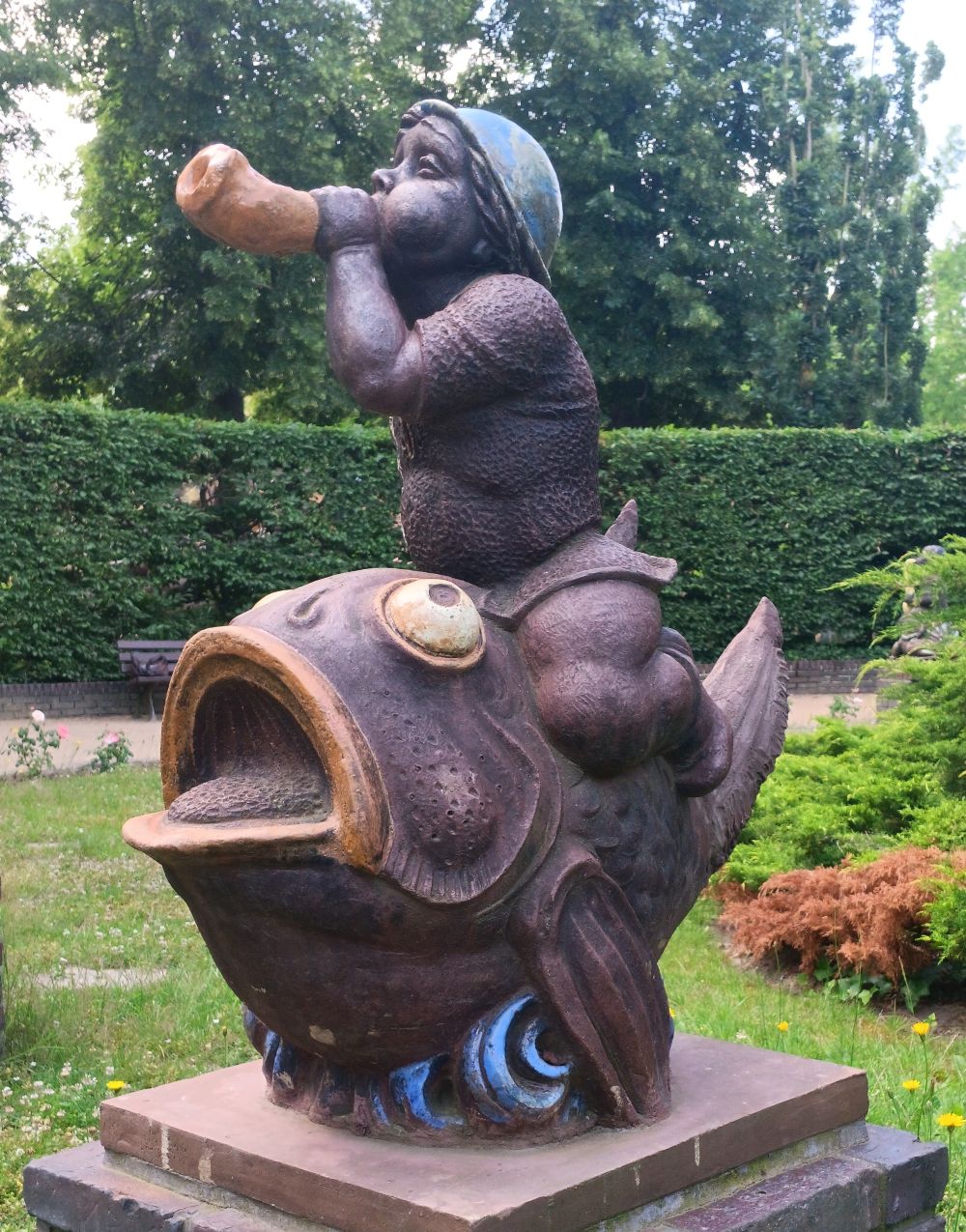
V. ‘No American future!’ – Nietzsche’s Views on America
PS: When Nietzsche writes about America itself, I see two main tendencies which seem to reflect general European attitudes towards the “New World” in his time – and still today. Firstly, he sees American not as essentially different from European culture. For example, in Daybreak he speaks, critically, of ‘our current hounded, power-thirsty society of Europe and America’10, whose extreme hunger for might manifests itself, at first glance paradoxically, in a cultural yearning for ‘powerlessness’ (ibid.) – a temporary and showy glamour that can only serve as a kind of diversion for these resolute warriors, however.
‘European’ is, he writes in ‘The Wanderer and His Shadow,’ synonymous with ‘modern’ and thus Europe reaches, culturally speaking, far beyond its geographical boundaries. It’s more than ‘this small peninsula of Asia’11 but ‘namely America belongs to it insofar as it is our culture’s daughterland’ (ibid.). Accordingly, both continents share the same ‘European-American restlessness’12 that Nietzsche contrasts with the, allegedly, ‘ one hundred times inherited Asian sedateness’ (ibid.). He critiques this modern attitude and strives for a synthesis of ‘European-American’ frenzy and Asian ease.13 All this reflects, of course, the ongoing industrialization and also European imperialism, which Nietzsche seems to be at least partially opposed to.
Secondly, to pick up the metaphor of the ‘daugtherland,’ Nietzsche often characterizes America as a very “ill-bred daughter,” however, which radicalizes these negative traits of her “mother” to a certain extreme. America – and it’s very clear that he means the US in these passages as he sometimes explicitly distinguishes between ‘America’ and ‘South America’14 – becomes, thus, synonymous with all that Nietzsche despises of modern societies, a nightmare of a perfectly rationalized world without any beauty15, sense of meaning, authenticity, greatness, in which everyone is a mere actor of himself; a perfect ‘society of the Spectacle,’ as Guy Debord put it, when writing in the 1960s. You already wrote about Nietzsche’s contempt for modernity in this regard.
Strangely enough, America seems even to be the true origin of this barbaric ‘Indian-like’16 – he speaks here of course about native Americans – ‘particular savagery with which the Americans strive for gold’ (ibid.) and their ‘breathless hustle for labor – the true vice of the New World’ (ibid.). This cult of labor is now infecting ‘old Europe’ (ibid.) – a huge danger for its culture according to Nietzsche. – This passage is a bit odd, of course, since we all know that the ruthless ‘strive for gold’ was a thing brought to America by the Europeans not the other way around.
Be it a perversion of European culture itself – unsurprisingly, England is often mentioned here as the primary foe – or a foreign “barbaric” influence: Nietzsche views this tendency as a great threat and calls for its correction. He sums up this attitude maybe most comprehensively in Human, All Too Human:
MODERN UNREST.—Modern restlessness increases towards the west, so that Americans look upon the inhabitants of Europe as altogether peace-loving and enjoying beings, whilst in reality they swarm about like wasps and bees. This restlessness is so great that the higher culture cannot mature its fruits, it is as if the seasons followed each other too quickly. For lack of rest our civilisation is turning into a new barbarism. At no period have the active, that is, the restless, been of more importance. One of the necessary corrections, therefore, which must be undertaken in the character of humanity is to strengthen the contemplative element on a large scale. But every individual who is quiet and steady in heart and head already has the right to believe that he possesses not only a good temperament, but also a generally useful virtue, and even fulfils a higher mission by the preservation of this virtue.17
In his notebooks, Nietzsche recommends a cultural-political alliance between Europa and Asia, including Russia,18 to stop this ‘madness of movement.’19 ‘No American future!’20, he declares in this vain. And he hopes: ‘The Americans are too quickly consumed – maybe only appearing to be a future world-power.’21
All these considerations are complicated by the fact that late Nietzsche, as you already mentioned, is not as romantic as early and middle Nietzsche and does not view attributes such as “barbarism,” “striving for power,” etc. as necessarily bad. On the contrary, at certain instances he doesn’t view them as bad at all. It is this that makes “accelerationist” readings of Nietzsche at least feasible.
I think Nietzsche is a rather typical European in all these regards. He despises America mainly due to its association with modern capitalism in its most extreme form but at the same time is a little bit afraid, envious, and even fascinated by it. And slightly bemused when it comes to the question how to counter the apparently unstoppable might and success of this young, dynamic colossus.
An alliance with Russia and Asia against the US? This is not even a futile intellectual fancy but has been proposed recurringly as an alternative to the perceived “Americanization” of the continent. Europe as either a mere variation of the “American way of life” or a truly alternative interpretation of “the West,” more modest, less aggressive.22
What do you make of these considerations of Nietzsche? Do they in any way resonate with an American view of the world?
WV: You commence your question with Nietzsche’s statement about Europe and America who, he indicates, seek power, at least partially, so that they can enjoy recreation. Allowing for some reductive interpretation here, one could say that Nietzsche captures the mood of capitalistic America that works hard so that they can play hard: surplus is gained so it can be expelled in excess and this itself is one of the ugly joys of wealth celebrated in the United States. Of course, there is a counter move too, inspired by western interpretations of “the East,” or Buddhistic perspectives, which seek minimalism and practice mindfulness, a trend popular amongst educated middle class professionals. So, Nietzsche, being the great philosopher of culture that he was, seems to have captured two trends in their early manifestations that moved through European and American society and have become magnified during our times. What does seem important to note here, however, is the enjoyment of expenditure or recreation is not specific to “the West”: we tend to romanticize and purify “the East.” It is not as if they do not enjoy excess too. This exotification of “the East,” a trend of Nietzsche’s time and still common today can be found amongst North American Buddhists. As someone who was initiated into Buddhism at 8 years old, and has spent considerable time in Japan meditating with Japanese monks and westerners, I’ve noticed that the American practitioners do tend to overperform their “mindfulness,” bringing that spirit of unrest, that Nietzsche elucidates, to Buddhism too, manifested through an emphatic, and arguably performative, adherence to dogma.
While it may be the case that some Europeans still look upon America as an "ill-bred daughter" which prioritizes performance over substance and accumulation over consistency, I have not found that Americans view themselves in this way. It may be the case that the rise of populism in America has caused a widespread disenchantment with the American way of life, but the majority of those experiencing disenchantment remain committed to democratic Euro-American values rather than pursuing an exit from them.
What about a European alliance with Russia and Asia over America? Some Americans particularly enamored with late-stage capitalism or who have bought into the ideologies of new fascism in America may express concern and/or fear over the socialistic values of a European alliance with “the East.” It is sometimes difficult to comprehend the plurality of responses to this moment in America: from the rise of trad-wives, to the anti-vaccination movement, to those building alternative communities of support on the left and right, as well as speculation about Trump’s relationship with Putin, we live in a time where it is difficult to navigate between the real and the fake. In Canada, the government has been working to forge new alliances with Europe and Asia, as the relationship with America has degraded under Trump. In the academic realm, some have left America for Canada, accepting lower salaries to live somewhere they perceive as safe. And, in the queer and transgender communities, families and individuals have left America for Canada, and other more hospitable countries, as it has become impossible for them to stay due to legal changes related to gender affirming care and a rise in transphobia and homophobia. Racism of many kinds has become more public, and antisemitism has returned taking on new insidious forms. In my view, North Americans have much to learn from the European memory of past mistakes. At the same time, those of us in “the West” must be cautious of stereotypes which play themselves out through new representations yet are caught up in the same old mistakes of exoticizing or dehumanizing the other.
PS: I sincerely hope that here and there we will overcome the recent malaise of “the West.” There remains a lot to be discussed in this regard – but I’m afraid we have to end our dialogue at this point. Dear Willow, thank you so much for your most insightful responses!
WV: Thank you, Paul, for a very interesting conversation. It is good to have the chance to speak with you again. I look forward to our next meeting!
Willow Verkerk (born 1976, in Victoria, Canada) is Lecturer in Continental and Social Philosophy at the University of British Columbia. She is the author of Nietzsche and Friendship (Bloomsbury: 2019) and co-editor with Nidesh Lawtoo of Homo Mimeticus III: Plasticity, Mimesis and Metamorphosis with Catherine Malabou (Leuven University Press: 2025). Willow has published various scholarly articles on love, friendship, heroism, monstrosity, gender, objectification, alienation, and sovereignty, most often engaging with Nietzsche, 20th century French philosophy, critical theory, and feminist philosophy.
Footnotes
1: Editor’s note: We’re fully aware of the highly problematic context of these sculptures. They represent racist stereotypes. Additionally, Münch-Khe was a Nazi and even had to flee to Argentine after the war. But precisely this problematic nature makes them a fitting illustration for an article dealing with these stereotypes in a critical manner.
2: On Truth and Lie in a Nonmoral Sense, § 1. Unless stated otherwise, all German quotes have been translated by Paul Stephan.
3: Cf. On the Genealogy of Morality, § III, 2.
4: Editor’s note: See the report on this conference written for our magazine by Paul Stephan, where he also talks about Willow Verkerk’s talk.
5: German original; translated by Graham Parkes (Oxford University Press: 2005).
6: On Twain, Nietzsche writes in a letter to Paul Rée from the 2nd half of June, 1877: ‘I love his kookiness more than German shyness.’ (Translation: Henry Holland.) Cf. also Posthumous Fragments, nr. 1880, 7[229].
7: Aside from the third Untimely Meditation, Nietzsche’s most explicit acknowledgement of Emerson’s influence on him is the motto of the first edition of The Gay Science from 1882 which is a direct quote from him. In a fragment from 1879, Nietzsche calls Emerson ‘the richest American.’ In another fragment from 1881, where he is apparently talking about Emerson, he goes so far as to write: ‘Until now, the most thoughtful author of this century has been an American.’ – Even in Twilight of the Idols (‘Skirmishes,’ 13), Nietzsche dedicates an entire aphorism to him, full of praise.
8: Editor’s note: See also the discussion between Michael Drescher and Paul Stephan on Nietzsche’s relationship to nationalism on this magazine.
9: See Cavell, ‘Old and New in Emerson and Nietzsche,’ International studies in philosophy, 2003, Volume 35, Issue 3.
10: Daybreak, aph. 271.
11: Human, All Too Human II, The Wanderer and His Shadow, aph. 215.
12: Posthumous Fragments, nr. 1876, 17[55].
13: Cf. ibid.
14: Cf. Posthumous Fragments, nr. 1887, 11[234] and nr. 1884 25[112].
15: Cf. for this aspect Posthumous Fragments, nr. 1880, 7[194] and nr. 1880, 7[100].
16: The Gay Science, aph. 329.
17: Human, All Too Human I, aph. 285 (translated by Hellen Zimmern).
18: Cf. Posthumous Fragments, nr. 1876, 17[53].
19: Posthumous Fragments, nr. 1876, 17[54].
21: Posthumous Fragments, nr. 1884, 26[336].
22 : Posthumous Fragments, nr. 1884, 26[247].
23: The idea of a united Europe allying with Russia or maybe even China against the US can be seen as underpinning the German social democratic approach of normalizing the relations towards “the East” from Willy Brandt to Gerhard Schröder, for example, but also in the call for a “new Europe” brought forward by Derrida and Habermas in a joint manifesto from 2003 (February 2015) (although they’re not discussing possible new alliances explicitly). Recently, it has become a bit outdated for various reasons, but Europe is still not very happy about its ever-assigned role as a mere puppet of US interests – and after some time, this old idea will undoubtedly reemerge. The Nazis’ politics of colonizing Eastern Europe and parts of the Soviet Union, and of allying with Japan to counter both the US and the British Empire represents a perversion of this idea. The strategic dilemma Europe has to face – and which Nietzsche already is aware of – is clearly that independence from the US is hardly achievable without finding new allies; which leads to new dependencies. A truly sovereign Europe would at least require a more or less full independence from oil and gas imports.
Nietzsche and North America
An Interview with Willow Verkerk
Exactly 250 years ago, on the 4th of July 1776, thirteen North American British colonies declared their independence from the mother country, soon thereafter forming one of the first modern democratic republics of the world, the United States of America. We took this anniversary as an occasion to speak with the Canadian Nietzsche scholar Willow Verkerk about the different approaches to Nietzsche in Europe and North America. To what extent is this thinker, so deeply embedded in European culture, read differently “here” to “there”? What does this tell about general cultural differences between Europe and its erstwhile colonies on the other side of the ocean? And what did Nietzsche himself think about the “New World”?
“Revolt, Slaves, Revolt!”
Hiking with Nietzsche Through Evangelical Christian London: Part I
“Revolt, Slaves, Revolt!”
Hiking with Nietzsche Through Evangelical Christian London: Part I
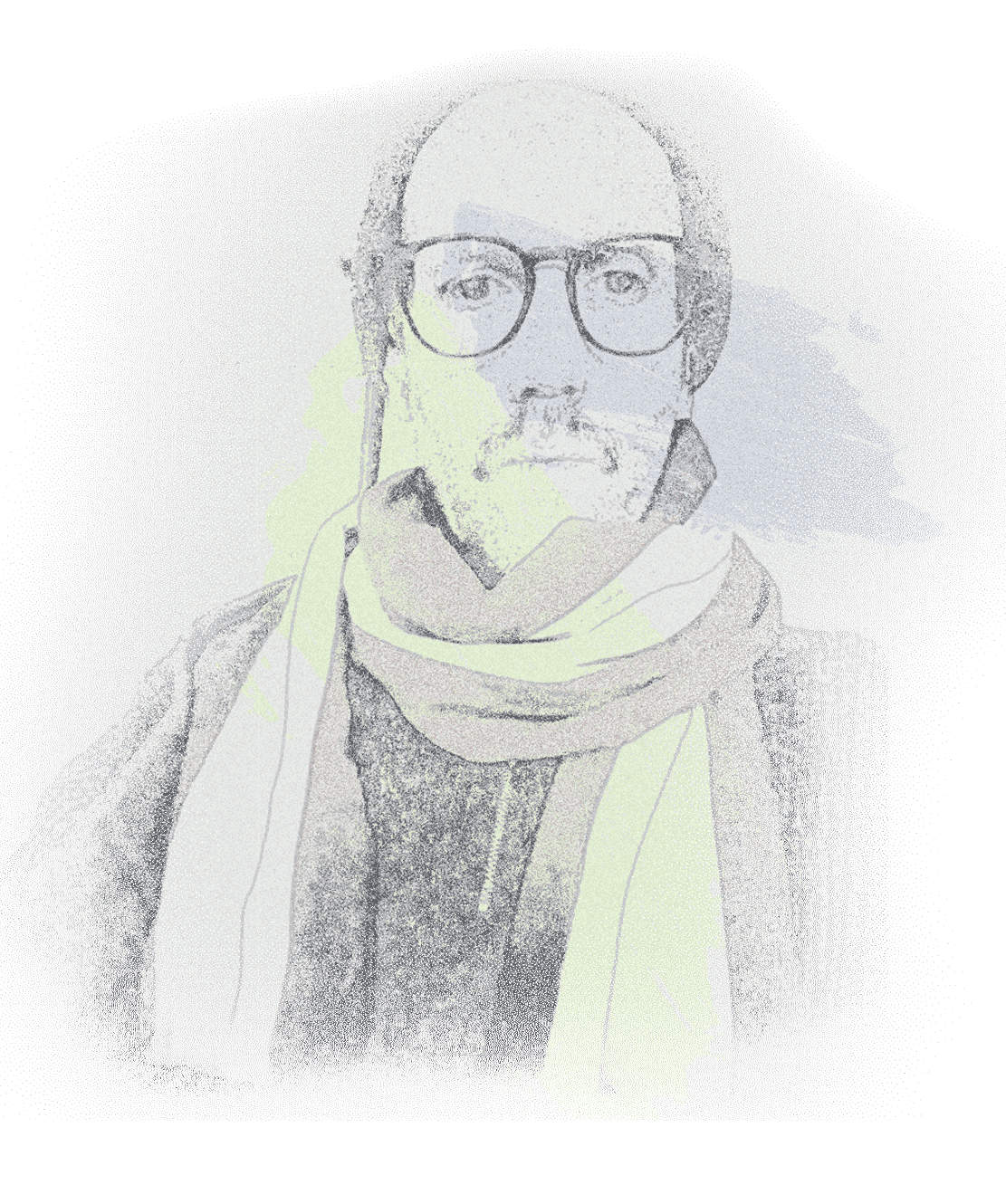

From the hedge-fund billions that bankroll Nigel Farage, and tie that funding to evangelical expansionism, to Nietzsche’s fulminating assault on Christianity as a “slave revolt”: this essay tracks the troubling way religion has reappeared at the heart of British public life. Arriving in London with walking boots, a rucksack, and a philosopher’s skepticism, the author follows the money, theology, and street culture surrounding charismatic Christianity and its seemingly unappeasable growth. At the centre stands Sir Paul Marshall: billionaire financier, Christian media mogul, and embodiment of a faith that feels entitled to reach for elite power.
But this is more than merely an unveiling of the knot that binds together wealth and religion. It is also a confrontation with Nietzsche’s deepest historical claim: that Christianity triumphed because the so-called weak learned to moralize against the strong. Wandering through churches, cafés, and city streets, the essay asks whether contemporary evangelical London represents a new form of that revolt—or its complete inversion.
Part I explores the rise of influential evangelical networks in modern Britain and their uneasy alliance with finance capitalism. Part II, which will appear shortly, returns to the first Christians themselves.
This article is a follow-up to Henry Holland’s account of hiking through Glasgow’s Muslim Southside (part I, part II).
Introduction
For readers who grew up, like me, during a high tide of secularism in the West, it has been a surprise and a shock to witness that tide turn. The secularist and consumerist wave probably peaked in the 1980s: this was a world captivated by the newest consumer gadget in the shops, the latest football star to move clubs for a world record transfer fee, and the advertising that told you sex with the sexiest was yours for the taking – if you could only rise high enough, Michael Jordan-like, to pass society’s cruel tests on who gets to have what.1 Religion and theology gathered dust somewhere in the psyche’s hinterlands. Born into a church-going and clerical family, I was of the minority still garnering religious experience, on Church of Scotland pews. But this was quaint tradition and ritual; middle-class, do-gooding whimsy; and it hardly felt like it really mattered.
Organized religion’s reclamation of a strong-arm role in British civic society flares up, highly visible, on certain city streets, but is also the result of a hundred big money deals conducted over restaurant tables or in closed rooms, which most of us only hear about years after they’ve been struck. One such spiritually minded dealer is Sir Paul Marshall. He started going to services at Holy Trinity Brompton, now commonly called HTB, in West London when in his late thirties, in 1997 – the same year he and accomplice Ian Wace got family, friends, and George Soros to chip in spare cash so that they could float their hedge fund with $50 million in seed capital. Knowing that this same fund, Marshall Wace, held $69 billion in assets as of 2025, helping the world’s richest get that tick richer, should remind us of one of the New Testament’s most conscience-nagging lines: ‘It is easier for a camel to go through the eye of a needle, than for a rich man to enter into the kingdom of God.’2 But fairness demands we also report Marshall’s consistent attempts to give away large chunks of his fortune. With assets and personal wealth estimated at around £900 million, this is easier for Jesus to encourage than for heavily moneyed Christians to do, despite the ‘hundreds of millions’ Marshall has poured into ‘schools, universities, and churches’, and into programs training Church of England priests.3
Are these phenomena necessarily suspect? And how can Nietzsche, with his infamous and still-reverberating polemics against Christianity, give us a novel perspective on it? These questions rattled around my head as my train drew into King’s Cross station early last August, fresh from my Islamic Studies jaunt around Glasgow (see my two-part article from November 2025 in this magazine4), rucksack strapped to my back and walking boots to my feet, my heart set on digging out answers from the ground up. In part one of this essay I set the scene regarding Marshall and charismatic or evangelical Christianity in London (shifting terms for the same entity), and how my urban pilgrimage walks there revealed a community that should be seen as an unexpected inversion of the ‘Slave Revolt’: Nietzsche’s catchy coinage for how an obscure, first-century Jewish sect became a world religion. In part two I turn the tables on Nietzsche’s meta-narrative on Christianity’s historical role, drawing on recent historical and religious studies research on the early Christians. As several leaders of this group did indeed grow up as slaves, or as children of slaves, shouldn’t their rebellion against a religious and social orthodoxy that was built on slavery be seen as an ethical act, and a justice-based movement, against the fatalistic and tyrannical Greco-Roman world that they were merging out of?
Marshall and Charismatic-Evangelical Christianity: Who Gets to Call who Names?
Marshall seeing religion and politics as two manifestations of a single endeavour comes into focus when you learn of which media he has bought into and pushed in the last five years. Following the launch of GB News in 2021, Marshall pledged to fund the platform to the tune of £70 million over its first two years. It’s a catchall cauldron of ‘breaking’ non-news, a politics of hate boiled and re-boiled to death, hounding its obsessions with all the grace of a terrier that’s carrying half-dead prey in its mouth. A terrier that would rather die than drop it. ‘Small boat arrivals [in the UK] on track to hit 200,000 TODAY with less than 8,000 deported in eight years’,5 the platform screams in a story that’s tweaked then recycled daily. This platform has no truck with the philosophical caveat declaring that the collective ethical agency of these 200,000 immigrants is no better or worse than the collective agency of any other randomly selected 200,000 UK residents. But another current affairs outlet that Marshall has spent millions on is incomparably more nuanced, even philosophical at times. This is a long-journalism outfit, to which non-conformist writers from both Right and Left contribute, and which goes by the distinctly Nietzschean name of UnHerd. Its financing opaque (though we estimate Marshall has forked out £17 million for the endeavour, in the nine years since it was founded)6, it manages, unlike GB News, to host genuinely great writing, through pairing unlikely voices. Terry Eagleton, for example, celebrated cultural theorist, Marxist, and paid-up anti-Nietzschean in political terms,7 has contributed dozens of articles, including the pertinent ‘Was Jesus a Revolutionary?’.
Eagleton’s colleagues representing the Right on the paper don’t hold back when it comes to opinionizing on Brexit, and what they see as its emancipatory consequences. Sohrab Ahmari, the US editor of UnHerd and a convert to Catholicism, published a fawning interview with US trade representative Jamieson Greer, parroting enthusiastically Greer’s words on the 2025 Transatlantic Trade Deal: ‘Brexit made it possible for the UK to do this’, i.e., to seal the agreement.8 Joining up the dots, the £100,000 donated by UnHerd’s owner to the Vote Leave campaign in 2016 seems like a flinging of loose change into the hat; Marshall’s bankrolling of Nigel Farage to the tune of £80,000 monthly, for the latter to present a show on GB News, reads, by contrast, like a strategic intervention to buy a neo-Conservative future for a particular walled-off island state.9
If none of this sounds faintly Christian in the colloquial sense of pity for and engagement with the poor and the meek, then it would be politic to step back a decade, or century, or two, to understand more about the evangelical or charismatic wing of the religion that Marshall is part of. We know of the etymological roots in the ancient Greek εὐαγγέλιον (euangélion), meaning good news or glad tidings, and of John (c. 6–100 CE), and the other gospel writers, as the Evangelists: the proclaimers of things ‘written, that ye might believe … and that believing ye might have life’: as John puts it.10 And from the time when other New Testament books took shape, between c. 60-90 CE, ‘evangelist’ was being used more broadly to name any wandering preacher of this same good news.11 Like the preachers whose training was paid by Marshall, these itinerants spoke with the will to convert, and with the self-empowerment belief can give you. Andrew Graystone, author of a recent book on the child abuse scandal implicating evangelical leaders that forced the resignation of Justin Welby as Archbishop of Canterbury (and thus as head of the Anglican Church) last year, sums up the anti-intellectual certainty that the HTB approach expounds: ‘You believe that your brand of Christianity is the only way to get to heaven. You believe that you were selected by God to govern.’12 The same author’s assertion that ‘Marshall’s money set the agenda of the Church [of England; hereafter C-of-E] under Welby’,13 seems justified, when we reconsider what ‘to govern’ means in the vendible system of UK democracy today. Marshall’s ‘generous’ funding of the HTB venture St Mellitus Theological College means it now educates one in four C-of-E clerics;14 the £10 million (a conservative count) that he’s funnelled into the Church Revitalisation Trust has enabled that organ ‘to plant’ 185 Marshallian ‘City Centre Resource churches in key cities across England and Wales’, a conquest that includes the recruitment of ‘worship leaders ... children’s workers ... and social action workers’.15 From out of the shadows, this figure seems to be at least co-governing what has historically been the world’s most influential Protestant church.
Everyday Londoners and Other Evangelicals
Knowing something of Marshall’s form, the HTB church is the natural place for me to start my investigative hike. Two minutes from Knightsbridge’s bling-bling denizens and shops, and encountered on a weekday with no services underway, the church feels all English pastoral, its tower topped with form rather than escape: a square, battlemented parapet. (It’s lovely irony to learn later that choosing this rather than a spire was a money-saving move by the church’s commissioners in the 1820s.) The polygonal vestry annex to the tower’s left is Gothic Revivalism in force, and the place where still today the clergy shed and don their vestments, to represent symbolically what Nietzsche calls ‘the priestly caste’.16 When I’m appalled again by the behaviour of flesh and blood Christians, it’s church architecture and indeed all the heights of sacred art that win me back, that leave me feeling that something here is worth preserving. Or even worth embodying. The boards up on the outside of the church advertising Alpha, the globally successful evangelising course launched from HTB in the 2000s, confirm that I’m in the right place for my investigations.17 Wanting to give everyday Christians another chance, I descend to the Bloom Cafe in the undercroft. Where I’m reminded that the UK now runs, any ethically responsible governing class that once served long since departed, mostly on a blend of hot beverages and kindness between ordinary inhabitants of the place.
Returning for a second Earl Grey, I get talking to Lisa, a South African, who’s preparing the drinks and serving the cakes behind the counter. I mention Alpha as a gambit, so Lisa asks me if I’m a Christian. I hedge: ‘good question’. ‘Well, then Alpha might be the very thing for you’, she responds, before pressing a slim paperback, A Life Worth Living, by Alpha-designer and former HTB vicar Nicky Gumbel, into my hands. Embarrassed by the God-talk, I return to peruse the notice on my table, informing me that revenue from my visit is going towards their ‘Social Transformation Ministry’, which prioritises those on society’s fringes ‘including women, displaced persons, prison leavers and those experiencing homelessness.’ Not doubting that those employed in this ministry work wholeheartedly to accompany these individuals, I’m fascinated how a project fuelled by Big Capital18 can talk authentically this socialist-sounding talk. The highlighting of ‘women’ as among the most marginalized is both reality – London women have substantially lower average incomes than London men, and are at higher risk of being victims of violent and sexual crimes – and a thinly-veiled political stand. Commentators in the HTB camp are fierce opponents of what they call the ‘ideology’ of ‘transgenderism’, going so far as to argue that it has ‘captured’ the BBC.19

The Christian Poets’ Streets of London
Covering miles on foot begins in godly earnest the next morning. I’ve chosen the London Martyrs’ Way, a leisurely and faithfully-curated route that meanders from Tower Hill in the city’s east, to Tyburn Tree in Hyde Park, in the city’s west.20 Follow it, and it will lead you to and past the sites of dozens of religiously-motivated executions, churchyards, and churches closed and open, pools of quiet yards away from briskly-walked streets, yards from the techno-like thrum that is London, and which never really gets switched off. The literature and history obsessed, including this author, could spend days on this trail: who wouldn’t nip round that next corner, and try that next church’s great metal door handle, to get a glimpse of the places Samuel Pepys or William Blake worshipped?21 Almost every step incarnates my bookishness. I’m led to ‘where Saint Mary Woolnoth kept the hours’, arrived at after, as T. S. Eliot reports in his epoch-making poem The Waste Land, ‘... each man fixed his eyes before his feet. / Flowed up the hill and down King William Street’.22 Aware of the tidings of The Waste Land as the mostly London terrain Eliot crosses between his infinitely talented and clever agnosticism, and his conversion to Anglo-Catholicism,23 makes seeing this church matter. But it’s not just white Anglo-American male seekers that the walk calls to mind. Soon after Tower Hill, where Catholic leaders John Fisher and Thomas More were beheaded in the summer of 1535 for resisting Henry VIII’s worldly overreach, you enter a square, ringed by skyscrapers, in which a cluster of inscribed columns meets you. These are the Gilt of Cain,24 a sculpture commemorating the bicentenary of the abolition of slavery in the British Empire. One column demands: ‘WHO WILL KICK OVER THE STALL AND TURN THE TABLE?’, a line by poet Lemn Sissay invoking Christ throwing over the tables of financial operators in the Temple,25 and thus rearticulating the unanswered question: who will finally put the brakes on the financial class and on the havoc they wreak? The class who built wealth through investing savvily the profits of slavery, and who still inhabit, representatively, the district in which this sculpture stands, the officiously named ‘City of London’?26
As unable to answer these questions as the next philosophically-inclined human, I stride on, past the entrance portico of the National Provincial Bank of England, whose deep barrel vault wants to induce the awe we can feel on the threshold to a Romanesque cathedral – or leaves us scrambling for our architectural guides, if we’ve forgotten such features’ names. I pass St Edmund, King and Martyr, its ancient plaque claiming ‘206 feet superficial’ of ‘the ground on each side of the doorway’ as its ‘freehold property’. Its modern, less pedantic sign calls it an ‘imprint church’. This is corporate but also God-given language, or so asserts Wole Agbaje, a Nigeria-born, South-London-raised evangelical, who refounded the congregation here in an HTB-backed manoeuvre, aged just 24. Agbaje retells the story of an earlier dream he had, seven nights running, of ‘forming a Gospel Showcase to tell the story of Jesus through creative media’, and of feeling ‘God say that it was going to be a movement called IMPRINT and it would bring his prodigals home’. With this divine green light leaving no room for doubt, Agbaje is seen as achieving the rejuvenation desired: just under ‘200 young people’ crowded into St Edmund for its September 2019 relaunch.27
Shining Faith With the Dullest and Greatest Music
Agbaje’s partly realised dream is to synthesise the stage arts of ‘drama, poetry, dance, video visuals and music’ to tell the ‘story of Jesus’ to Londoners.28 I won’t judge his musical aesthetics until I’ve attended one the Christian jamborees he curates. But regarding the rest of the HTB crowd, as you’d hear for yourselves if you were to enter their services, it’s Christian guitar rock ad infinitum, upbeat, generic, and incredibly dull. Unquestionably, the singers and guitarists are competent, or even talented; yet you’d have to be a hardened believer not to soon desperately sicken of it. As the songs’ protagonists already realise their sinners’ status and need for Jesus’s redemption when the music begins, the utter absence of drama, or of an individualised voice, leaves sceptical listeners wondering how they’ll survive the next six minutes.29 Back in the US, the home of such holy guitar riffs, Johnny Cash manifested more compelling anguish in one single phoneme, or chord change, of his dozens of songs about being a Christian: just listen to ‘The Man Comes Around’.30 Only one person in creation’s history gets to be Cash, but with such a soul and mind expanding heritage of sacred vocal music in English to draw from, both popular and pre-electric, the HTB leadership decision to reproduce boilerplate Neo-Gospel-Rock down the line feels smugly philistine. Walking tall away from such mere repetition, as a Cash protagonist would teach us to do, I am led to a different aesthetic world. Quite unplanned, my boots to have taken me to the approaches to St Paul’s Cathedral, the midpoint of the London Martyrs’ Way, just as the bells are calling the curious to the 5 pm Sung Eucharist.31 This is held in the drum or tall cylinder that supports the building’s central dome, the unusually large windows for a church of this time (completed under Christopher Wren’s direction in 1708) allowing sunlight from this late summer day to pour in. Sitting waiting for the service to start, your eyes are drawn up the great masonry piers, clad in the typical fluting of these times, to the Whispering Gallery thirty metres above. The whole thing is certainly grand, but free of the too-much pinky-goldness that affects many Baroque churches. Both believers and committed secularists can find beauty here, the latter left pondering which agency this movement has wielded, a non-existent deity as its focus, enabling disciples to expend such energy and resources creating this.
The unaccompanied liturgical chants that form the service, the congregation responding in turn, are nothing new, yet aren’t even slightly repetitive.32 The Sursum Corda or ‘Lift up your hearts’ dialogue, sung just before communion is taken, is one of the church’s oldest, its text dating to the Canons of Hippolytus (written early 200s, CE)33. Its melody’s basic shape emerged around the same time, and is sung today in G Mixolydian – piano and guitar players: think G Major, with a flattened 7th (F sharp to F natural).
From London Slave Ship Captain to Participant in the Slave Revolt
A talented pianist, and occasional composer, Nietzsche wrote much about music,34 and occasionally about its churchy forms. While young, he was far from being the Christian-baiting devil he posed as in his later years. A twenty-five year old professor in Basel, Nietzsche writes to his friend Erwin Rohde to recommend the ‘godly Bach’, whose St Matthew’s Passion he’s heard ‘three times’ in the past week: anyone who has ‘completely lost their knowledge’ of Christianity will hear it again in this music, which is ‘genuinely like a Gospel [Evangelium]’.35 Such passion fits with his early theory of Christianity as affirmational rather than nihilistic, and as carrying cultural gifts forward from a Grecian and particularly Dionysian world view. His note 7[13] on this from late 1870 / early 1871 can’t be read in isolation, yet nonetheless pictures early Christianity as a juxtaposition or even friction between Johannine-Grecian attitudes on the one hand, and Judaic attitudes on the other:
The Gospel according to St John born out of Greek atmosphere, out of the soil of the Dionysian: its influence on Christianity in contrast to Judaism.36
However already at this stage of his career, Nietzsche is propagating original and dehistoricizing standpoints on early Christianity, in texts including the disturbing 1872 essay on ‘The Greek State’, which he distributed to a coterie audience but chose not to publish during his active lifetime.37 In a text that argues for slavery, no abstract topic after the American Congress had passed the Abolition Amendment in January 1865, thus liberating four million African Americans, Nietzsche has brass neck enough to claim that
The enormous social emergencies of the present are born out of the emasculation of the newer type of human, not out of genuine and deep compassion with that misery; and if it is true that the Greeks’ [system of] slavery was their ruin, then the counterpart of that is far more certain, that the lack of slavery will be our ruin: a quantity that neither ancient Christianity, nor the ancient Germanic nation [Germanenthum] regarded as the least objectionable, still less condemnable.38
The progress from this philo-Christian position, hardly tenable when newer historical research on Christianity and slavery is brought to bear on it, and Nietzsche’s later, and better-known genealogy of Christianity as an ultimately successful ‘Slave Rising’ [Sklavenaufstand], whereby a former slave class became, over the course of almost two millennia, the ruling, ‘priestly’ class in the West, subjugating almost everyone to its life-denying worldview, is convoluted. But it’s also the subject of a small army of excellent articles and books, both popular and scholarly in emphasis.39
I cannot summarize this discourse here, but do repudiate Nietzsche’s 1872 argument: early Christian clergy and laity, many of them slaves themselves, or their descendants,40 were so opposed to granting one group of humans the legal rights to physically use the bodies of other humans at will,41 that this opposition became their signature idea, the motor behind their paradigm shift in ethics and in ideas. How this shift played out, and in some senses collapsed from the late fifteenth century, when thinkers of European colonialism reread canonical Christian texts to justify the enslavement of non-European peoples as labour power for the new colonies will be returned to in part II. Here I’ll also illuminate new angles on Nietzsche’s writing on both Christianity and slavery. But we part for now by returning to the City of London. Wole Agbaje, who refounded St Edmund, King and Martyr in 2019, is also responsible for the parish church that ‘chapel of ease’ is attached to – St Mary Woolnoth – and speaks out about its history.42 John Newton, former slave ship captain turned abolitionist, and lyrics-writer for ‘Amazing Grace’, preached here as Rector in the late 1700s: and for abolition. Newton mentored William Wilberforce, evangelical Christian and leader of the parliamentary wing of abolitionism in Britain until parliament passed the Slave Trade Act in 1807, prohibiting the Atlantic Slave Trade within British Empire territory.43 Why Nietzsche sought to resuscitate this most brutal of practices, which Black abolitionists in his lifetime, including Frederick Douglass (1818–1895), Harriet Tubman (c. 1822–1913), and Sojourner Truth (1797–1883),44 were dedicating their lives to fighting – and what that partisanship means regarding Christianity as a ‘slave rising’ – will be addressed in this essay’s concluding part.
To be continued.
All photographs have been taken by Henry Holland. The article imagine shows the ‘Gilt of Cain’ sculpture, in Fen Court in the City of London. On it, one finds inscribed a verse by poet Lemn Sissay: ‘WHO WILL KICK OVER THE STALL AND TURN THE TABLE?’.
Bibliography
Ahmari, S. (2025, May 9). US trade chief: Brexit liberated the UK. UnHerd. https://unherd.com/2025/05/us-trade-chief-brexit-liberated-the-uk/
Bradshaw, P. F., Johnson, M. E., & Phillips, L. E. (2002). The Apostolic tradition: A commentary (H. Attridge, Ed.). Fortress Press.
Brown, C. L. (2006). Moral Capital: Foundations of British Abolitionism. University of North Carolina Press.
Burley, R. (2026, May 18). Inside the capture of the BBC: How transgenderism killed impartiality. UnHerd. https://unherd.com/2026/05/inside-the-capture-of-the-bbc/
CCX. (2019, October). Plant stories: IMPRINT Church London. The Gregory Centre for Church Multiplication. https://ccx.org.uk/stories/imprint-church-london/
Deleuze, G. (1994). Difference and repetition (P. Patton, Trans.). Columbia University Press. (Original work published 1968)
Douglass, F. (1855). My bondage and my freedom. Miller, Orton & Mulligan.
Eagleton, T. (2026). The Ideology of the Aesthetic — Friedrich Nietzsche. Twentieth-Century Literary Criticism (M. Lazzari, Ed.). Gale Cengage. (Article originally published 1990.)
Eagleton, T. (2022, April 15). Was Jesus a revolutionary? UnHerd. https://unherd.com/2022/04/was-jesus-a-revolutionary/
Eagleton, T. (2024, February 22). Seeds of What Ought to Be? London Review of Books. https://www.lrb.co.uk/the-paper/v46/n04/terry-eagleton/seeds-of-what-ought-to-be
Eliot, T. S. (2025). The waste land. Poetry Foundation. https://www.poetryfoundation.org/poems/47311/the-waste-land (originally published 1922)
Elgat, G. (2015). Slave revolt, deflated self-deception. British Journal for the History of Philosophy, 23(3), 524–544. https://doi.org/10.1080/09608788.2015.1013915
Foner, P. S. (1950). Frederick Douglass. Citadel Press.
Forster, M. N. (2022). Nietzsche: Three genealogies of Christianity. Genealogy, 6(2), 38. https://doi.org/10.3390/genealogy6020038
GB News. (2026, May 5). Migrant crisis: Small boat arrivals hit 200,000 with only 8,000 deported in eight years. https://www.gbnews.com/news/migrant-crisis-small-boat-arrivals-hit-200000-8000-deported-eight-years
Geoghegan, P. (2025, March 6). Making media great again: Peter Geoghegan on Paul Marshall. London Review of Books, 47(4). https://www.lrb.co.uk/the-paper/v47/n04/peter-geoghegan/making-media-great-again
Geoghegan, P. (2025, March 8). We need to talk about Paul (Marshall). Democracy for Sale. https://democracyforsale.substack.com/p/we-need-to-talk-about-paul-marshall-unherd-spectator-gb-news
Graystone, A. (2021). Bleeding for Jesus: John Smyth and the cult of the Iwerne camps. Bloomsbury Continuum.
Graystone, A. (2024, March 27). The Marshall Plan: Hedge fund manager Paul Marshall is on a God-driven mission to transform the religious fabric of the nation. Prospect Magazine. https://www.prospectmagazine.co.uk/ideas/media/65415/the-marshall-plan-paul-marshall-gb-news
Holland, T. (2019). Dominion: How the Christian revolution remade the world. Little, Brown.
Nietzsche, F. (1874/1997). On the use and abuse of history for life (Part II of Untimely meditations). In D. Breazeale (Ed.), Untimely meditations (R. J. Hollingdale, Trans.). Cambridge University Press. (Originally published 1874)
Nietzsche, F. (1887/2006). On the genealogy of morality (C. Diethe, Trans.; K. Ansell-Pearson, Ed.). Cambridge University Press.
Nietzsche, F. (2009). Notebook 7, end of 1870–April 1871. In R. Geuss & A. Nehamas (Eds.), Writings from the early notebooks (L. Löb, Trans., p. 33). Cambridge University Press.
Olshanetsky, H., Silverman, A., & Cosijns, L. (2026). Turning the tables: Re-evaluating the incident between Jesus and the money-changers. Cogent Arts & Humanities, 13(1), 2587102. https://doi.org/10.1080/23311983.2025.2587102.
Painter, N. I. (1997). Sojourner Truth: A life, a symbol. W. W. Norton.
Pollock, J. (1977). Wilberforce. St Martin’s Press.
Rayman, J. (2022). Nietzsche’s genealogy in its relation to history and philosophy. Genealogy, 6(2), 54. https://doi.org/10.3390/genealogy6020054
Seal, D. M. (2025). The intersectionality of gender and slavery: Paul’s social creativity within an unchangeable system. Journal for the Study of the New Testament, 48(1). https://doi.org/10.1177/0142064X241313487
Sernett, M. C. (2007). Harriet Tubman: Myth, memory, and history. Duke University Press.
Snelson, A. (2017). The history, origin, and meaning of Nietzsche’s slave revolt in morality. Inquiry: An Interdisciplinary Journal of Philosophy, 60(1–2), 1–30. https://doi.org/10.1080/0020174X.2016.1251167
Stauffer, J. (2008). Giants: The parallel lives of Frederick Douglass and Abraham Lincoln. Twelve Books.
Stewart-Kroeker, P. (2024). Nietzsche on Socrates, Jesus, and the slave revolt in morality. International Journal of Philosophy and Theology, 85(3–4), 142–164. https://doi.org/10.1080/21692327.2024.2423000
Truth, S. (1850). The narrative of Sojourner Truth. Printed for the author.
Tubman, H. (2023). Scenes in the life of Harriet Tubman. Graphic Arts Books. (Original work published 1869).
Footnotes
1: I don’t suggest that secularism and consumerism are in anyway identical. But they have often manifested themselves side by side in recent history. What secularism means in the light of Nietzsche’s writings would make a good standalone essay.
2: Matthew 19:24; these and all other bible quotes in this essay are cited from the King James Version, unless otherwise stated; for an informative and myth-busting essay on Marshall’s money and his politics, including the statistics given here, see: Peter Geoghegan, ‘Making Media Great Again’.
3: Ibid., unpaginated.
5: GB News, ‘Migrant Crisis’.
6: For more on the platform‘s financing, and Marshall’s economic-political role in it, see: Graystone, ‘The Marshall Plan’, and Geoghegan, ‘We need to talk about Paul (Marshall)’.
7: In ‘The Ideology of the Aesthetic — Friedrich Nietzsche’ Eagleton (1990) calls Nietzsche ‘a belligerent opponent of almost every enlightened liberal or democratic value who speaks up for “everything haughty, manly, conquering, domineering”’ (cf. Beyond Good and Evil, § 62). Thirty-four years later, Eagleton (2024) published again on Nietzsche’s ‘rancid politics’ (‘Seeds of What Ought to Be?’).
8: Greer cited in Sohrab Ahmari, ‘US Trade Chief: Brexit liberated the UK’.
9: Greer cited in Sohrab Ahmari, ‘US Trade Chief: Brexit liberated the UK’.
10: John 20: 31, King James Version.
11: Cf. Ephesians 4:11, and Acts 21:8.
12: Graystone cited in Geoghegan, ‘Making Media Great Again’, unpaginated.
13: Graystone cited in Geoghegan, ‘Making Media Great Again’, unpaginated.
14: Graystone, ‘The Marshall Plan‘, unpaginated.
15: Cf. Geoghegan, ‘Making Media Great’, and Graystone, ‘The Marshall Plan’, both unpaginated.
16: First developed in ‘On the Use and Abuse of History for Life’, Part II of Unfashionable Observations (1874) (see §8), Nietzsche only fully develops the notion of ‘the priestly caste’, who presides influentially, and in life-denying, ascetic manner over contemporary society, in The Genealogy of Morality, § I — 6 (1887), and in notes from this time that were published posthumously: NF-1887,11[280] — Posthumously Published Notes, dated to November 1887 —March 1888.
17: Cf. Graystone, Bleeding for Jesus, pp. 158-159. Here Graystone explains how Alpha was developed by former HTB vicar Nicky Gumbel, together with Charles Marnham and John Irvine, all of whom Graystone characterises as shaped by participation as children and teenagers in ‘the Irwerne camps’: evangelical holiday institutions, run primarily for the children of the British elite, and thus focussed on those attending Britain’s top public schools. The scandal surrounding the camps broke in 2017, when it emerged that John Symth (1941–2018), one-time Iwerne Trust chairman, had serially abused children in the camps in the 1970s and 1980s. Justin Welby, Archbishop of Canterbury from 2013–2025, also attended the camps while growing up, and maintained personal relations with Symth for decades, as described in this article from December 19, 2024: https://www.lrb.co.uk/blog/2024/december/technically-leading.
18: Rosa Luxemburg (1861–1919) and other Marxist thinkers of her generation routinely talked of Big Capital (Großkapital), by which they meant those capitalists that owned the means of production with the highest monetizable value: and those capitalists’ economic interests. With later Marxist thinkers agreeing that the means of production also (re)produce culture, the term remains relevant.
19: Rob Burley, ‘Inside the capture of the BBC: How transgenderism killed impartiality’.
20: For a route and thoughtfully made digital guide, see: www.britishpilgrimage.org/portfolio/london-martyrs-way.
21: Samuel Pepys (1633–1703): English naval administrator and diarist, best known for his detailed diary documenting daily life in Restoration England, including the Great Plague and the Great Fire of London. William Blake (1757–1827): English poet, artist, and printmaker whose visionary works, including Songs of Innocence and of Experience, combined Romantic poetry with distinctive visual art.
22: T. S. Eliot, The Waste Land, Section I.
23: This current within the Anglican Church, attractive particularly for artists and intellectuals in the twentieth century’s first decades, keeps faith with the Anglican Communion, while striving aesthetically and theologically to see itself as part of ‘the one church‘ that has its earthly headquarters in Rome.
24: A collaboration between sculptor Michael Visocchi (b. 1977), poet Lemn Sissay (b. 1967), and graphic designer Gareth Howat, the City of London Corporation commissioned the piece, which was unveiled in 2008.
25: Mark 11:15: ‘[A]nd Jesus went into the temple, and began to cast out them that sold and bought in the temple, and overthrew the tables of the moneychangers’, King James Version. The Greek word here for ‘moneychangers’, kollybistēs (plural kollybistai), means literally a currency exchanger who charged commission for their service. This job was necessary because the half-shekel Temple tax had to be paid with a Tyrian tetradrachma, a currency that many visitors to the Temple did not have. For historicizing research on this verse from Mark, see: H. Olshanetsky, A. Silverman, & L. Cosijns, Turning the tables.
26: Also known as the Square Mile, this is both a local government district in the middle of London, and a global centre for finance capitalism.
27: Statistics and quotes from: CCX (2019), ‘Plant stories’, unpaginated. This does not try to be a neutral source; impartial sources on HTB-backed ‘church plants’ are hardly to be found.
28: Ibid.
29: Listen in, for example, to the video of the HTB service from 10 August, 2025, from c. 6:20: https://www.youtube.com/watch?v=Hm7vP_sOI60.
30: 4.5-minute YouTube version: https://www.youtube.com/watch?v=k9IfHDi-2EA&list=RDk9IfHDi-2EA&start_radio=1.
31: In this communion service, a regular C-of-E fixture, the celebrant sings rather than speaks most of the liturgy.
32: The question of repetition versus difference deserves philosophical attention, but cannot be answered here on the fly. I advise readers wanting to explore here further to revisit this thorough, and Nietzsche-inflected treatment: Deleuze, Difference and Repetition.
33: Cf. Paul F. Bradshaw, Maxwell E. Johnson, and L. Edward Phillips, The Apostolic Tradition, p. 39.
34: For a first glance into Nietzsche’s deep biographical and philosophical connection to this form of art see two articles dedicated to the topic of ‘Nietzsche and music’ on this blog by Christian Saehrendt and Paul Stephan.
35: Nietzsche to Erwin Rohde on April 30, 1870. This and all other translations from original German-language texts are the author’s own, unless otherwise stated.
36: The posthumously published ‘Notebook 7, end of 1870 - April 1871’ in Nietzsche, Writings From the Early Notebooks, p. 33. German-original at: http://www.nietzschesource.org/#eKGWB/NF-1870,7[13].
37: Presented as a private print to Cosima Wagner, the essay is the third in the collection of Five Prefaces to Five Unwritten Books.
38: The Greek State. Emphasis in the original.
39: The best place to begin with this reading is Nietzsche’s own Genealogy of Morality (1887), section I – 7, and section I – 10. Section I – 7 characterises Christianity as a takeover led by a ‘caste of priests’, aimed ascetically against everything that lends ‘a blossoming, rich, foaming-over health’ and ‘bodilyness’ to life. Moreover, Nietzsche blames ‘the Jews’ for introducing this strain into the history of morality, and regards Christianity as a continuance of this intervention, and as no rupture from it: ‘Regarding the initiative, both monstrous and fateful beyond all measure, which the Jews have advanced with this most fundamental of all declarations of war, I remind us of the principle, which I touched upon at another juncture […] namely that it is with the Jews that the slave rising in morality begins: that rising, which has now put a two-thousand-year history behind itself, and which has only slipped out of our vision today because it – has been victorious…’ (emphasis in original). – Tom Holland’s history of early Christianity, outlined in his book Dominion, is also not neutral – Holland makes no secret of his own philo-Christian position – but is a hugely informative and fast-paced account. The best English translation of Nietzsche’s Genealogy was published in 2006 at Cambridge University Press. See also M. N. Forster, Nietzsche: Three genealogies of Christianity; P. Stewart-Kroeker, Nietzsche on Socrates, Jesus, and the slave revolt in morality; J. Rayman, Nietzsche’s genealogy in its relation to history and philosophy; A. Snelson, The history, origin, and meaning of Nietzsche’s slave revolt in morality; and G. Elgat, Slave revolt, deflated self-deception.
40: T. Holland, Dominion, chapter ‘Mission: AD 19: Galatia’ (unpaginated as cited from ebook edition), emphasises the role of the Galatians (who lived in what is modern-day Turkey) as a stateless nation formerly ‘enslaved’ by Roman Empire authorities, who were not only empowered by Christianity to escape slavery themselves, but who then also went on to reject the principle of slavery outright. In this regard, Holland cites the letter by Paul the Apostle (c. 5–64/65 CE) to the Galatians, 3.28–9: ‘There is neither Jew nor Greek, slave nor free, male nor female, for you are all one in Christ Jesus.’
41: T. Holland, Dominion, chapter ‘Mission: AD 19: Galatia’ (unpaginated as cited from ebook edition), cites Musonius Rufus and other 1st century CE sources, to argue that those males categorised as ‘free-born Roman’ in this period ‘no more hesitated to use slaves and prostitutes to relieve themselves of their sexual needs than they did to use the side of a road as a toilet.’ By contrast, Holland sees Paul and other participants in the Hagioi – the collective noun for the early Christian community of believers – of Rome as campaigners against this sexual subjugation of those who were not ‘free-born Roman’ males. He reconstructs these early Christian assemblies as anti-authoritarian spaces where Christians ‘would meet to commemorate the arrest and suffering of Christ with a communal meal, men rubbed shoulders with women, citizens with slaves.’ On this same history, see also: D. M. Seal, ‘The intersectionality of gender and slavery.’
42: For Agbaje’s attitudes to this history, see the interview from May 29, 2025 at Premier Christianity. On the structuring of Agbaje’s parish, note that St Edmund, King and Martyr is run as a ‘chapel of ease‘, attached organisationally to St Mary Woolnoth. Cf. https://register-of-charities.charitycommission.gov.uk/en/.
43: On Newton’s influence on Wilberforce, see J. Pollock, Wilberforce, p. 38 and C. L. Brown, Moral Capital, p. 383. The Slave Trade Act was an improvement, but did not emancipate those already enslaved, nor make keeping slaves illegal in British Overseas Territory. Slavery only became illegal there after the Slavery Abolition Act passed in 1833.
44: For more on these Black abolitionists, including their own writings, see: F. Douglass, My bondage and my freedom; P. S. Foner, Frederick Douglass; N. I. Painter, Sojourner Truth; M. C. Sernett, Harriet Tubman; J. Stauffer, Giants; S. Truth, The narrative of Sojourner Truth; and H. Tubman, H., Scenes in the life of Harriet Tubman.
“Revolt, Slaves, Revolt!”
Hiking with Nietzsche Through Evangelical Christian London: Part I
From the hedge-fund billions that bankroll Nigel Farage, and tie that funding to evangelical expansionism, to Nietzsche’s fulminating assault on Christianity as a “slave revolt”: this essay tracks the troubling way religion has reappeared at the heart of British public life. Arriving in London with walking boots, a rucksack, and a philosopher’s skepticism, the author follows the money, theology, and street culture surrounding charismatic Christianity and its seemingly unappeasable growth. At the centre stands Sir Paul Marshall: billionaire financier, Christian media mogul, and embodiment of a faith that feels entitled to reach for elite power.
But this is more than merely an unveiling of the knot that binds together wealth and religion. It is also a confrontation with Nietzsche’s deepest historical claim: that Christianity triumphed because the so-called weak learned to moralize against the strong. Wandering through churches, cafés, and city streets, the essay asks whether contemporary evangelical London represents a new form of that revolt—or its complete inversion.
Part I explores the rise of influential evangelical networks in modern Britain and their uneasy alliance with finance capitalism. Part II, which will appear shortly, returns to the first Christians themselves.
This article is a follow-up to Henry Holland’s account of hiking through Glasgow’s Muslim Southside (part I, part II).
The Postmodern Forest
How the Forest Subverts Modernity's Totalizing Claim
The Postmodern Forest
How the Forest Subverts Modernity's Totalizing Claim
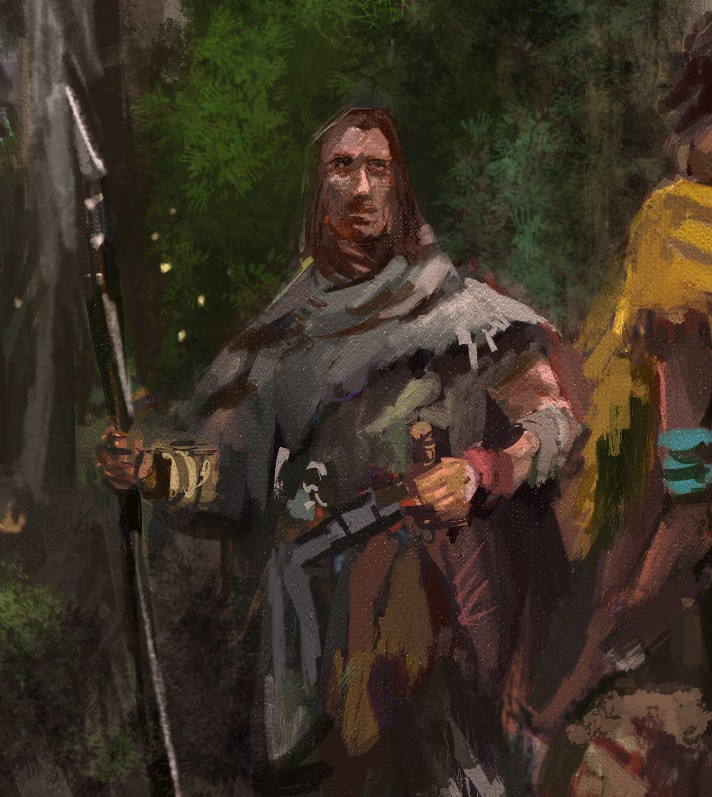

Forests are trending. And this is by no means contradictory to another, even larger trend of our time: digitalization. In this article, Mandus Craiss demonstrates that the forest is a network. Digitalization also occurs in a network-like manner; both phenomena are therefore characteristic of postmodernism.
In the first part of the article, the forest is characterized as a non-centralized and thus typically postmodern natural phenomenon. The second part defines "postmodernity" and discusses the extent to which this epochal concept is still, or once again, relevant – a discourse whose very early roots can be traced back to Nietzsche. Finally, the third part explains how the network aspect of postmodernity manifests itself and how the human-forest relationship has evolved recently.
This article is part of our special series this year "the forest as a livelihood".

I. The Forest as a “Notched Space”
Long merely a backdrop on the horizon, the forest has now once again become a destination for the working population from cities, eager to explore it from within. Wilderness schools are springing up like mushrooms; in the online directory alone wildnisschulen.de 121 wilderness schools can be found in German-speaking countries. There, a blend of survival skills, mindfulness in nature, species knowledge, and "feeling" nature is being introduced to an ever-wider audience.1 Speaking of mushrooms: "Going mushroom hunting" is also experiencing an unexpected renaissance, as can be seen on YouTube or in bookstore displays. In the visual arts, at music festivals, and on (digital) album covers, nature and wilderness motifs are very much "en vogue" – especially since the COVID-19 lockdowns pushed broad new segments of the population into the few remaining natural areas of our industrialized continent, primarily into the forests.
That this reflects a yearning for freedom is stringently argued by philosopher and publicist Alexander Grau in his 2023 book On the Forest. A Philosophy of Freedom very stringently. His thesis, which recurs in various forms throughout the book, is:
The forest serves so well as a symbol of freedom against human striving for control and obsession with order because it is, in fact, a space of diverse contingent experiences and permanent change. In this respect, the forest is a veto against “the absolutization of man and its modern culmination.”2
Sartre is quoted in the last half-sentence. What is remarkable about Grau's treatise is his detailed description of works related to forests across various political-theoretical camps: starting with the Brothers Grimm, Ludwig Tieck, and Wilhelm Heinrich Wackenroder, moving on to Heinrich Heine, then to Ralph Waldo Emerson and, of course, Henry David Thoreau (Walden), he touches upon Marx and Adorno, delves into Adalbert Stifter and Wilhelm Raabe in detail, but also the Wandervogel movement and, in doing so, Nietzsche, especially the Zarathustra, finally going into great detail once again with Ernst Wiechert, as well as with Ernst Jünger, and lastly with Jean-Paul Sartre3.
Some details of Grau's work – which tends to be placed in a conservative milieu – and his treatise are certainly debatable; for instance, the justification for why tree-hugging and forest bathing are "intellectual kitsch of the highest order" (p. 171) remains somewhat meager, yet it is precisely in these activities that Grau's intuitive approach to the forest, without "interpretation of meaning" (ibid.), which he champions in the same paragraph, is actually expressed. Nevertheless, the text as a whole impresses with a radicalism in the best sense of "going to the root" and questioning, without immediately offering new concepts, which always act as corsets for nature, which is, by contrast, uncontainably complex:
Whoever, in a fit of megalomania and oblivion to the world, breaks away from the harmony of the natural whole, will perish. True freedom is found not in the pursuit of private or political castles in the air, but by immersing oneself in the flow of nature. Today, we would speak of flow.4
Here, the postmodern "end of grand narratives" resonates, as does Nietzsche's critique of "hubris" as our entire "attitude towards nature, our rape of nature with the help of machines and the so thoughtless ingenuity of technicians and engineers"5, as Nietzsche already proclaimed in 1887 in On the Genealogy of Morality .
Nietzsche also anticipates the experience of contingency and permanent change in forests and nature in several places, as here in Twilight of the Idols: "Nature, artistically appraised, is no model. It exaggerates, it distorts, it leaves gaps. Nature is chance."6 Nature as contingency and also as self-giving extravagance – as during tree blossom.
Grau's description of the forest as a prime example of contingency (Heidegger's "thrownness"?) in nature becomes particularly interesting when he draws comparisons to other natural environments:
History is also experienced by the sea or in the steppe […]. Yet these habitats themselves seem timeless, the sea as eternal and immutable as mountains or deserts. In the forest, however, humans are confronted not only with events and the cyclical course of the seasons, but with time itself. Transience is directly experienced here; the forest exposes the eternity suggested by seas or mountains as a perceptual error.7
Everything flows, panta rhei – Heraclitus is once again vindicated.
As justification, Grau states that agricultural fields established just a few years ago are already overgrown today, and paths that were recently passable are now barely recognizable8 and also that the flora and fauna of the forest have for millennia been products of “countless generations of humanity, their way of hunting, [clearing land,] settling, and farming.”9
From this, three landscape patterns can be derived: First, the “smooth”10 space of naturally “eternal” landscapes: desert, mountains, sea. Then, secondly, the “notched” space of the eternally changing forest landscape – in which naturalness and anthropogenicity are inextricably intertwined. And thirdly, finally, the entirely man-made smooth space of “cultura,” described by Grau as “cleared farmland,”11 in which humans strive to create landscape and social order and to decouple themselves from biological evolution, in other words: creating eternity through rationality and mathematics in time (harvest cycles, planning) and space (geodesy, geometry). These endeavors are perfected with each development cycle of human culture and culminate in modernity, where almost every wild animal and health risk is controlled by civilized humans, where chance dies more with every process optimization, and freedom perishes with security in the panopticon of the digitized “Qualityland”12.
Without providing examples, Grau draws a connection to the history of philosophy:
Accordingly, philosophers of all ages saw in the vastness of the oceans and the majesty of the mountains veritable allegories of thought, which also aesthetically enhanced philosophizing and lent it pathos and majesty. Connected with this was philosophy’s claim to proclaim truths and insights that are as eternal, immutable, and boundless as seas or mountains. However, this asserted claim to absolute truth undeniably has totalitarian features. […] The forest, however, is different. Here, nothing is eternal. Here, nothing is timeless. And nothing here is static at all. Forest means change, temporality, and relativity.13
It's a good thing that criticism of totalitarianism and claims to absolute truth has prevailed not only in Alexander Grau's work but across all relevant fields of philosophy and politics. This demonstrates, on the one hand, a certain capacity for learning within the human species in the face of the "totalitarian" catastrophe of the Second World War, but also, on the other hand (somewhat later), a broadening of perspective to include previously "subaltern" viewpoints, whether through feminism, postcolonialism, Indigenous Rights Movements, or, more generally, the underlying currents of post-structuralism and social constructivism.

II. What is "Postmodernity"?
The experience of the Second World War revealed the dangers and abysses of totalitarianism, yet it took almost another generation for the realization to spread that it is not crucial which modern political system emerges victorious from war, but rather that the hubris of modernity, with its subtle claim to absolute truth, itself is built on shaky ground (or, with Grau and Sartre: on a receding forest, lurking and waiting for the ordering hand to disappear). For in that era, which from today's perspective can partly be considered historically concluded and designated with a "post-prefix"—an era in which Foucault, Deleuze & Derrida experienced their heyday, James Stirling alongside Charles Willard Moore shaped architecture, and fashion designer Vivienne Westwood or Grace Jones, singer and much more, influenced culture—the transience and contingency of human reason itself was articulated as culture for the first time in a grand conceptual framework: We are, of course, talking about Postmodernism!
In a narrower sense, this era can be understood as a central cultural movement spanning the 1970s to the 1990s. The oil crises, the collapse of the dollar-gold peg in 1971, the Club of Rome reports on the "Limits to Growth" from 1972 onwards, and other events indicated that the claim to absolute truth of the techno-economic feasibility ideology, believed in both the West and the East, seemed to be developing its first cracks.14
Michel Foucault philosophically clarifies that the Enlightenment's ambition to foster a more humane society—for example, through more rational systems of psychiatry and penal enforcement—demands a very high, perhaps disproportionate, price.
Deleuze and Guattari explore in their A Thousand Plateaus in 1980, that the rationality underlying capitalist modernity represents only one of several possibilities, even mathematically; they describe lines of flight to minority currents in mathematics, science, and history (precisely not that of the victors), extending to shamanism and other approaches to body and mind not originating from colonial powers. Rarely has the illusory nature of eternal truths been described in a more multifaceted—or, in their own term: manifold—way than by Deleuze & Guattari in their collaborative works, whose style, fitting for postmodernism, appears eclectic.15
For postmodernism, as art historian Klaus Kowalski describes, defines itself through a "democratization of cultural life oriented towards independence, which manifests in a poly-stylism"16 and as "cross-domain thematic mixtures"17 in contrast to the previous "general, world-interpreting claim"18. Collage gains popularity as a defining graphic form; in architecture, the mixing of technical modernity with features of earlier eras, such as classical columns or even Gothic or primitivist elements, becomes style-defining. Jean-François Lyotard's famous statement about postmodernism as the "end of grand narratives" underlies all these developments.19
Antonio Negri & Michael Hardt also add a change in the world of work as an argument to these perspectives, because
from the 1970s onwards, the techniques and organizational form of industrial production shifted [...] towards smaller and more mobile work units and more flexible production structures – a change often referred to as the transition from Fordist to post-Fordist production.20
They therefore define postmodernism as "today's capitalist production," which is characterized "by a series of transitions that name different facets of the same change: from the hegemony of industrial labor to that of immaterial labor, from Fordism to post-Fordism, and from modernity to postmodernity."21.
Emerging from this, they describe as a new networked global superpower, the "Empire," a complex and entangled global power relationship that cannot be attacked by storming a single center. In contrast, they posit the "Multitude" as a progressive, emancipatory actor:
A multitude is an irreducible multiplicity; the singular social differences that compose the multitude must always be expressed and must never be leveled into equality, unity, identity, or indifference.22
As such, they appear sporadically, rhizomatically,23 come together for a goal, quickly dissolve, and then reconnect – again, the network form:
The Multitude is the true productive force of our social world, whereas the Empire is merely an apparatus of appropriation that lives solely off the vitality of the Multitude – or, as Marx would put it: a vampire regime of accumulated dead labor that only survives by sucking the blood of the living.24
The "apparatus of appropriation" that Deleuze & Guattari describe on a psychological level, here in its political-economic dimension. Guy Debord's concept of "recuperation," the appropriation of subversive impulses by the "Society of the Spectacle," is also evident here… The omnipresence of an all-encompassing market has rather grown in recent decades, coupled with the equally typical postmodern loss of "grand narratives of salvation" (communism, religion, …).
Many of these dimensions of postmodernity are certainly experiencing renewed urgency in the 2020s: consider "deep fake" and "post-truth," our fragile global human culture with its public sphere and commodity flows, which were severely threatened by Covid-19, the lockdowns, the incident in the Suez Canal, and the blockade of the "Strait of Hormuz," as well as the fact that even nature itself is no longer imperishable in the face of climate change: mountains are crumbling away with the permafrost, and the sea is no longer the same both underwater (coral reefs) and at the water's surface.
Thus, the 'panta rhei' principle embodied in the forest fits very well into a 21st century that is slowly gaining momentum, and which Foucault rightly prophesied as the 'Deleuzian century'.25

III. „We are a forest that grows quietly.“
With its overgrown paths, its intertwining of standing-living and dying-lying trees, its leaf decomposition, and its diverse underground soil network, the forest is in any case a Multitude – just as the Multitude itself can be seen as 'a forest that grows quietly'26.
Forests are a network on both the micro and macro levels – which is not so dissimilar to the internet.
On the micro level, the forest floor is an extremely complex, intricate network; trees communicate with each other via root rhizomes, as one can read in Peter Wohlleben's bestselling books, exchanging substances in symbiosis with fungal mycelium, even nourishing their young or warning of predators through messenger substances in rhizomatic connections.27 Generally, the forest floor is interwoven with a network of diverse, extremely thin threads and strands.
On the macro level, forests are migration corridors for the movement of fauna and flora. For the 'specter of migration'28 This is not only about (post-)modern human society, but also about animals and plants, which on the one hand need to mix their populations to counteract inbreeding, and on the other hand, in the course of climate change, should be able to advance through migration corridors into regions where the climate (still) suits them. While in the course of industrialized modernity, humans have increasingly built and interconnected infrastructure using rational techniques of urban, road, and landscape construction, with the landscape crisscrossed by highways, power lines, and telecommunication channels, environmental organizations like BUND have been working for about 20 years to counteract this by connecting largely isolated forests into a forest biotope network through targeted, scientifically supported corridor plantings. This network is used by wildcats, lynxes, and other animals, but also generally aims to restore the original character of the forest as a network. At the German Nature Conservation Day in mid-March this year, Federal Environment Minister Carsten Schneider announced a draft law on the "Securing of Natural Infrastructure" – a significant step in times of a rather defensive environmental policy.29, with 2% wilderness as a target by 2030 – at least, that's what the National Strategy Paper states30.
The ambivalence, of course, runs deep in this endeavor, as it does in many methodologies of contemporary nature conservation: correcting previous interventions through new ones in an environment already heavily shaped by humans31; the ultimate encroachment of "cultura" on the forest – or a belated recognition of its valuable, transcendent complexity? After all, here, with rational techniques and human planning reason, an infrastructure of "wilderness" is being initiated (also in the literal sense), which is then intended to continue to exist and develop independently of "us".
If one follows Grau, and Sartre as well, the forest would likely seize every opportunity to develop independently, to overgrow "cultura" again: "The forest permanently tries to reclaim what was painstakingly wrested from it before."32. However, it is not in all natural regions of the Earth that the encroaching forest spreads as wild, permanently changing nature against culture – in other parts of the world, for example, it is the deserts that reclaim what was wrested from them. Or the steppes. In rare cases, water also does, for example, on dike marshland or in the area of dams.
Following this, the question arises whether, in times of climate change, it is always the forest that first spreads on abandoned areas; the "Lieberose Desert" in Brandenburg shows that things can also turn out differently.33 And there are calculations that many forests are permanently threatened by climate change, because here too, eternal change and entropy certainly do not stop: persistent drought leads to pest infestation, dieback, and often also to the burning down of forest areas.34 The smooth space could be on the advance, in this case the desert. Thus, "cultura" would have managed to reproduce itself and permanently prevent the "relapse" of the forest. It would be the victory of the "metropolitan desert," which is spoken of in post-situationist writings.35 Or a victory of market, noise, and "poisonous flies," which Nietzsche in his Zarathustra contrasts with forest nature:
Forest and rock know how to be silent with you, with dignity. Be like the tree you love again, the broad-branched one: silent and listening, it hangs over the sea. Where solitude ends, there begins the market; and where the market begins, there also begins the noise of the great actors and the buzzing of poisonous flies.36
A victory that might not only be external but even threatens our inner life. Thus Zarathustra warns elsewhere: "The desert grows: woe to him who harbors deserts!"37
In contrast, a central characteristic of nature and forests is their adaptability and thus resilience. Even man-made deserts like Lieberose or Bledow in Poland can recede,38 in the wildfire areas of the Harz or Saxon Switzerland, new, more resilient tree species are spreading. However, this does not absolve us of responsible action, because precisely because we humans are part of nature's network, it is ultimately our decisions that tip the scales between devastation and reforestation.
A foundation here is certainly respect for nature's complexity, which surpasses us, something Nietzsche describes in a pantheistic-sounding way when he demands: "[W]hen walking a path cut through a spruce forest, remember the cathedrals: the forest had an overwhelming influence on the builder."39
Whether in the construction of "domes" and cathedrals or in countless other examples: forest nature influences large parts of human cultural creation – but more clearly than in Nietzsche's time, we see today how human culture also influences growing parts of forest nature. – Humans and forests are indeed multidimensionally connected.
Mandus Craiss (born 1983) grew up in Ludwigsburg and studied political science, cultural studies, philosophy, modern history, and geography in Tübingen and Leipzig. He was socialized within the ecological and alter-globalization movement and traveled extensively in this context, largely by hitchhiking. As a key editor of the former BUNDjugend magazine Critical Mass he also published articles and interviews on political philosophy from Fromm to Foucault. His master's thesis deals with the works of Deleuze & Guattari in relation to unconditional basic income. He lives with his son in a shared house on the outskirts of Leipzig. For the Halcyonic Association for Radical Philosophy, he gave on YouTube an introductory lecture on Deleuze & Guattari.
The article image was painted by the Australian artist Mitchell Nolte (link), whom we commissioned to illustrate our entire forest series. The photos were taken by Mandus Craiss.
References
Deleuze, Gilles & Félix Guattari: A Thousand Plateaus.
Foucault, Michel: Writings in Four Volumes II. Frankfurt a. M. 2017.
Franke, Nils: Nature Conservation – Landscape – Homeland. Romanticism as a Foundation of Nature Conservation in Germany. Wiesbaden 2016.
Grau, Alexander: About the Forest. A Philosophy of Freedom. München 2023.
Hardt, Michael & Antonio Negri: Empire. The New World Order. Frankfurt a. M. 2003.
Ibid.: Multitude. War and Democracy in the Empire. Frankfurt/ Maina. M. 2004.
Kling, Marc-Uwe: QualityLand. Berlin 2017.
Ibid.: QualityLand 2.0. Kiki's Secret. Berlin 2022.
Kowalski, Klaus: Postmodernism. Style, Era, or Flimflam? Hanau 2013.
Lyotard, Jean-François: The Postmodern Condition. Paris & Vienna 1979.
Invisible Committee: The Coming Insurrection. Hamburg 2010.
Wohlleben, Peter: The Hidden Life of Trees: What They Feel, How They Communicate. The Discovery of a Hidden World. Munich 2015.
Footnotes
2: p. 169.
3: It is remarkable that Sartre plays such a significant role in Grau's argumentation, as he is considered a thinker rather detached from nature (cf. the conversation with Jens Bonnemann about Sartre and Nietzsche on our blog).
4: Ibid., p. 116.
5: On the Genealogy of Morality, Sec. III, 9.
6: Twilight of the Idols, Skirmishes of an Untimely Man, Aphorism 7. Unfortunately, Nietzsche's quotes on the topic of "nature" are all too often permeated by a contempt for the weak (ibid.: "The study 'according to nature' seems to me a bad sign: it betrays submission, weakness, fatalism"); nature is pitted against Christianity because the latter protects the weak; there is polemic against Rousseau's demand "Back to nature" (the "canaille"; cf. Twilight of the Idols, Skirmishes of an Untimely Man, Aphorism 48) and against the socialist Paris Commune (cf. On the Genealogy of Morality, Sec. I, 5). Nature is admired when the predator snatches its prey; at the same time, human destruction of nature ("breaking of branches, dislodging of stones, fighting with wild animals" [Human, All Too Human I, Aph. 103]) is upheld when it manifests the superiority of the superior. This reveals a deep belief in inequality and an ideological foundation of sadism as a "natural act," as if this were a basic need – and not a sublimation of an unsatisfied one, which is more likely.
7: Grau, Of the Forest, p. 38.
8: Cf. ibid., pp. 10 ff.
9: Cf. ibid., pp. 37 ff.
10: The concept of "smooth" and "striated" space originates from Deleuze & Guattari and is described in their work A Thousand Plateaus (1980).
11: Cf. Grau, Of the Forest, pp. 9 ff. This, incidentally, does not correspond to the actual Latin etymology, which rather stems from the concept of "care" (of body and mind, internally and externally). Cf. https://www.dwds.de/wb/etymwb/Kultur.
12: "Qualityland" is the name of the globalized state in Marc-Uwe Kling's two eponymous dystopian novels from 2017 and 2022; however, Orwell and Huxley could also have served as inspiration.
13: Grau, Of the Forest, p. 12 f.
14: Compared to a boat, one would no longer speak of cracks in the hull today, but of a pile of debris in the sea of chaos, with drifting planks on which isolated individuals drift, in permanent danger and unable to steer.
15: Nietzsche already anticipates this criticism of universal truths, even if he tends to proclaim many of his own universal truths against the existing ones.
16: Postmodernism. Style, Era, or Frippery?, p. 156.
17: Ibid., p. 90.
18: Ibid., p. 88.
19: Cf. Jean-François Lyotard, The Postmodern Condition, p. 23 ff.
20: Multitude. War and Democracy in the Empire, p. 82.
21: Ibid., p. 146.
22: Ibid., p. 105.
23: The concept of the "rhizome" as a counterpart to the classical logic of the root is also a key concept of Deleuze & Guattari (cf. A Thousand Plateaus).
24: Empire. The New World Order, p. 62.
25: Cf. Michel Foucault, Writings in four volumes II, p. 94.
26: There is an ecological-spiritual protest song with this name: “We are a forest that grows quietly.” Cf.: https://music.youtube.com/watch?v=v7F1zlT3I7k.
27: Most well-known, among several other publications by the author: The Hidden Life of Trees: What They Feel, How They Communicate (2015).
28: Hardt & Negri, Empire, p. 213.
30: Cf. BUND Magazine 2 / 26, p. 10; with the current 0.62%, it appears that the implementation of these goals is being pursued as neglectfully as those of the international climate targets – albeit with admittedly lower urgency.
31: Cf. Nils Franke, Nature Conservation – Landscape – Homeland. Romanticism as a Foundation of Nature Conservation in Germany.
32: Grau, Of the Forest, p. 13 f.
33: Cf. https://de.wikipedia.org/wiki/Lieberoser_Wüste.
34: Among others, available at: https://www.bundesumweltministerium.de/faqs/waelder-im-klimawandel.
35: Cf. Invisible Committee, The Coming Insurrection, p. 70.
36: Thus Spoke Zarathustra, Of the Flies of the Market.
37: Thus Spoke Zarathustra, Among Daughters of the Desert, 2.
38: See also https://de.wikipedia.org/wiki/B%C5%82%C4%99d%C3%B3w-W%C3%BCste.
The Postmodern Forest
How the Forest Subverts Modernity's Totalizing Claim
Forests are trending. And this is by no means contradictory to another, even larger trend of our time: digitalization. In this article, Mandus Craiss demonstrates that the forest is a network. Digitalization also occurs in a network-like manner; both phenomena are therefore characteristic of postmodernism.
In the first part of the article, the forest is characterized as a non-centralized and thus typically postmodern natural phenomenon. The second part defines "postmodernity" and discusses the extent to which this epochal concept is still, or once again, relevant – a discourse whose very early roots can be traced back to Nietzsche. Finally, the third part explains how the network aspect of postmodernity manifests itself and how the human-forest relationship has evolved recently.
This article is part of our special series this year "the forest as a livelihood".
Nietzsche and Nationalism?
A Disputation between Michael Drescher and Paul Stephan
Nietzsche and Nationalism?
A Disputation between Michael Drescher and Paul Stephan

Throughout his life, Nietzsche was a great critic of nationalism. The burgeoning German national sentiment, in particular, was anathema to him, and he wrote scathing remarks about his home country, such as "definition of the Germanic: obedience and long legs..."1. At the same time, nationalists and patriots of all stripes count among his fans. How can one be a Nietzschean and a (German) nationalist? What exactly is "nationalism," and is it possible to give this term a positive meaning?
Paul Stephan discussed these delicate topics, which are gaining increasing relevance given the successes of nationalist parties worldwide, in written form with YouTuber, Nietzsche expert, and nationalism researcher Michael Drescher, also known as PhrasenDrescher.
Additionally, they continued this dialogue verbally on YouTube – feel free to check out the result here (or as an audio-only version on SoundCloud).
I. Utopia, Nationalism, and Germanness
Paul Stephan: Dear Michael, thank you very much for agreeing to our conversation on "Nietzsche and Nationalism." Some of our readers probably know you less by your real name and more as "PhrasenDrescher." Under this name, you run a very popular channel on YouTube, where you have recorded some of Nietzsche's most important works as audiobooks – highly recommended! – as well as works by other significant philosophers and writers, but also frequently speak out on philosophical topics yourself. One of your main themes is nationalism, and you are currently pursuing your doctorate on this topic. So, this is the dual role in which I have invited you: as a Nietzsche expert and as a nationalism researcher.
Perhaps it should be emphasized right away that you do not approach either topic with complete neutrality. You clearly have great sympathy for Nietzsche, but also for the idea of the nation. In 2024, you also published a non-fiction book on this, Germanness for the Advanced, in which you advocate for a kind of "rehabilitation" of German nationalism.
Perhaps we should start our conversation with a clarification of terms, because your use of the term "nationalism" is probably already causing some irritation among some readers – and it also struck me when reading the book. But that's precisely what our conversation is about: to put aside one's immediate "knee-jerk reactions" and engage in a factual discourse on important fundamental questions of our time, even if we probably won't reach an agreement in the end. Listening to what the other person really has to say, instead of immediately pigeonholing them. Perhaps this can be seen as an exercise in the art of "perspektivische[n] Sehen[s]"2, which Nietzsche speaks of.
Normally, a distinction is made between patriotism and nationalism. Patriotism is said to be an unproblematic identification with one's own nation, while nationalism is its unhealthy exaggeration. In your book, you clearly distance yourself from the term "Völkisch," from racism, imperialism, chauvinism, antisemitism, and also very unequivocally from National Socialism, but you want to hold on to the term "nationalism," and, if I understand you correctly, you also describe yourself as a "nationalist." Why is this term still important to you, despite the negative connotations it has in current usage? What does it mean for you to be a "nationalist"?
Michael Drescher: Dear Paul, thank you very much for your kind words and your introduction. I am truly touched by how honestly you ask me about these matters! Such openness is something I've only been accustomed to from my university days, and even there, after some back and forth, sparks would fly. Both are practically notorious and seem all too dangerous, as the thinking associated with both is directly, at least partially, blamed for the atrocities of National Socialism and the World Wars. As a Nietzschean, you know that Nietzsche undeservedly holds this reputation, which is why he has largely been rehabilitated today. With nationalism, the whole matter is a bit more complicated.
There is the nation, there is nationalism, there is patriotism, and there is Germanness. I have tried to playfully explore the latter in my book, although all these terms, as you have already indicated, are not entirely separable from one another. I must confess that they evoke a feeling in me that is difficult to describe, yet positive. Does that jeopardize my objectivity? I don't think so, as long as I reflect on this feeling, which I share with many people. In nationalism research, it is often the other way around (whether reflected upon or not); most researchers openly reject nationalism or secretly wish that the age of nations were finally over.
German nationalism, in particular, plays a special role in nationalism research due to the intellectually explanatory writings on nationalism by Johann Gottfried Herder, Leopold von Ranke, or Johann Gottlieb Fichte. However, they are largely ignored today by mostly English-speaking research; instead, with the standardization of research operations, there is not only linguistic uniformity, because language shapes our understanding of the world. Nevertheless, I would like to leave aside the philosophers of German Romanticism, among whom Nietzsche is occasionally counted, for now, and jump directly to the end of the 20th century.
While I sharply distinguish National Socialism from nationalism, both definitionally and substantively, in my book, there is nevertheless little to object to in the idea that early National Socialism at least used nationalism as a vehicle, but ultimately abandoned it for its ideological chauvinism. The world we live in today is shaped by two epochal breaks: 1945 and 1990. After 1945, National Socialism, which was now equated with nationalism, was ideologically exposed as bankrupt and militarily defeated. Liberalism and communism (even if these terms are poorly applicable to realpolitik) had prevailed and shaped the entire world for the next few years. Konrad Adenauer simply called nationalism the "cancer of Europe." While nationalism was openly combated in the West and partly replaced by a cosmopolitan Americanism, the self-conception of nations remained stronger in the Soviet Union, which is still evident today. However, as soon as the Soviet Union disintegrated, nationalism returned in one of its worst forms in the Yugoslav Wars. After his election, German Federal President Johannes Rau summarized how most people now thought about nationalism: "[A] patriot is someone who loves his homeland, a nationalist is someone who despises the homelands of others."3 This definition solidified, even though patriotism continued to draw upon the achievements, colors, songs, and figures of nationalism (such as black, red, and gold or the national anthem). According to the Duden, "nationalism" is today "mostly used pejoratively" and means, in a thoroughly chauvinistic manner, an "exaggerated national consciousness."
But: "Rarely," the term also refers to the "awakening self-awareness of a nation with the aspiration to form its own state"4. This is where the crux of the matter finally lies. The view that collectives or peoples should be allowed to govern themselves in their own state. The pursuit of such a state and the desire to maintain it can only be described as nationalistic. This has nothing to do with chauvinism, as the first definition in the Duden dictionary suggests. Nor is the concept of nation static or biologically determined in any way. While "nation" originally comes from the Latin "nasci," meaning "to be born," nationalism research has long agreed that a felt kinship is more important in nationalism than an actual one.
After 1990, it quickly became clear that after the "end of history,"5 only the supposedly defunct nation-state would be able to guarantee democratic and liberal institutions. To this day, only nation-states are capable of safeguarding the diversity of cultural and political systems in a world oriented towards functionalism, where everything pushes towards uniformity (such as the language of science; even the contributions on Nietzsche POParts are now, as I've read, intended to target an English-speaking audience or at least be translated6). Thus, only the nation-state, or its demand by peoples suppressed by nationalistic aspirations, can guarantee the enforcement of their right to self-determination (consider Kurdistan or Ukraine). While a nation is not the same as a nation-state (often confused in English), I think it's fair to say that a nation can realize itself through nationalism within a nation-state. By this alone, nationalism is immensely emancipatory and anti-imperialistic. I would even go so far as to say that nationalism offers the greatest opportunity to counteract a global homogenization of culture, language, and other aspects of communal life. In my humble opinion, in the future world, only languages, cultures, and customs with strong institutional representation will be able to survive in the long run. This, too, is only possible through the nation-state, whereby even regionalisms or separatist movements are nationalistic (consider Catalonia). Unlike other political systems, nationalism primarily depends on how a particular group sees itself. Because, quite apart from intellectual justifications: most people want the nation, they want to be equals among equals, and they want to base their solidarity precisely on that. As the last few years have shown, the nation and national sentiment cannot be abolished by simply not addressing or ignoring them. At the latest, when the right to exist of nations, as in the case of Ukraine, Israel, or Palestine, is threatened, even the staunchest critic of nationalism can become a flag-waving nationalist.
I've taken a long detour and presented you with some historical explanations and a Duden definition. I'll also give you my most valued definition of nationalism by the religious scholar Steven Grosby, who treats nationalism as "territorial kinship." Yet, definitions, to paraphrase Nietzsche, are nothing but a "mobile army of metaphors,"7 and to this day, no researcher, let alone a politician or anyone else, has succeeded in providing a uniform and accepted definition of nation and nationalism. The terms simply refer to too many heterogeneous phenomena. But the world is indeed profound, and from a Nietzschean perspective, truths only exist through agreement. This—despite the value relativism that accompanies nationalism—is both possible and desirable in a world of nations and nation-states. It enables cooperation and only leads to conflict under adverse conditions: it is not difficult to imagine nation-states instead of states in Kant's treatise on perpetual peace, and in my opinion, the principle of subsidiarity in Catholic social teaching (tasks should be solved by institutions as small as possible and as large as necessary) is also a guarantor of peaceful coexistence, with which supranational, global problems such as climate change can also be addressed.
The alternatives to a world divided into nation-states are not convincing to me. If utopia is literally the "non-place," then the nation-state is the non-utopia and the spatially bound. Nationalism, accordingly, stands for the culturally multipolar. It is a particular spirit: it conceives of the world, as Heinrich Heine wrote about Herder, as a harp played by God, with the peoples as its strings.
If that's how a nationalist thinks, then I am one! However, for the positive aspects of nationalism to be realized and the negative ones prevented, nationalism undoubtedly needs to be better understood. This is also why I engage in research on nationalism, specifically its relationship to the nation and which came first.
Whether a peaceful and future-oriented life is possible in a Europe and a world divided into nations is, of course, uncertain. But isn't that also the case with other political systems?
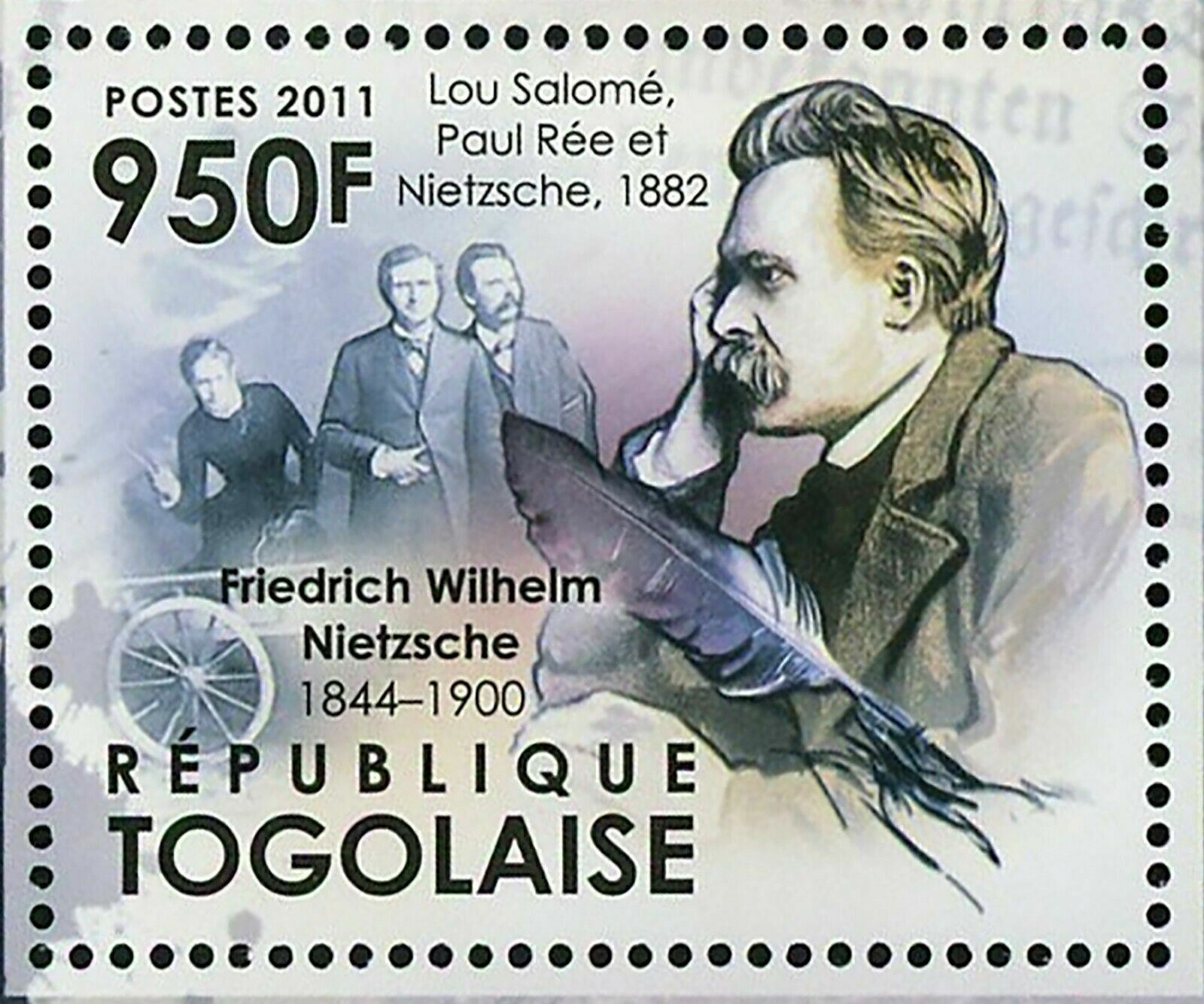
II. Nietzsche, Homeland, and Modernity
PS: Thank you for your detailed response. Yes, nationalism is indeed a remarkable historical phenomenon. It emerged in the 18th century alongside progressive ideas such as popular sovereignty, human rights, and social justice – today, there's an attempt to uphold these ideas while simultaneously detaching from nationalism. The question is whether this is easily possible, whether there isn't even a close connection – and whether nationalism, even if no longer called such, persists so stubbornly for this very reason.
Thinkers important to you, like Schopenhauer and especially Nietzsche, struggled with all these "modern ideas."8. You open your book on German identity with a Schopenhauer quote – but this one probably wouldn't have fit as well:
The cheapest kind of pride [...] is national pride. For it reveals in those who possess it a lack of individual qualities he could be proud of, as otherwise he would not resort to something he shares with so many millions. Whoever possesses significant personal merits will, rather, most clearly recognize the flaws of their own nation, as they constantly have them before their eyes. But every pathetic fellow who has nothing in the world to be proud of seizes upon the last resort: to be proud of the nation to which he happens to belong. In this he finds solace and is now gratefully ready to defend, tooth and nail, all the faults and follies that are peculiar to it.9
Goethe, whom you also count among the greatest Germans, expressed similar disdain for nationalism – and it was also a thorn in Nietzsche's side, especially in its German variant. This also seems to me to be something that truly runs through all of Nietzsche's writings, from the Birth of Tragedy up to Ecce homo : his rejection of nationalism, and especially of the German nation, in the name of his ideal of the "good European." In Ecce homo he takes his hatred of Germany so far as to define himself as a "Polish nobleman pur sang"10 – he was never a German citizen anyway, but had been stateless since 1869, when he moved to Switzerland.
He considers nationalism in times of globalization to be an artificial ideology that can only be enforced by force.11 When he himself becomes political, he distances himself from the demand for "closed, original folk cultures"12 His views clearly diverge and he distinctly pursues a 'globalist' goal, occasionally even sounding almost a little Marxist when he writes, for example:
Humans can consciously decide to evolve towards a new culture, whereas previously they developed unconsciously and by chance: they can now create better conditions for the emergence of humans, their nourishment, upbringing, instruction, manage the Earth as a whole economically, weigh and deploy the forces of humanity against each other. This new conscious culture kills the old one, which, viewed as a whole, led an unconscious animal and plant life; it also kills the distrust of progress.13
He criticizes the backwardness of German culture and even advocates for a united Europe:
Thanks to the pathological alienation that the madness of nationality has placed and continues to place between the peoples of Europe, thanks also to the short-sighted and quick-handed politicians who are currently on top with its help and have no idea how much the divisive politics they pursue can necessarily only be an interim policy – thanks to all this and much that is quite unspeakable today, the most unambiguous signs are now overlooked or arbitrarily and falsely reinterpreted, in which it is expressed that Europe wants to become one.14
Nietzsche dreams in Zarathustra of "One Goal" under which humanity must be united15 and values in Germans precisely "their old, proven quality, interpreters and mediators of peoples to be"16 and that they actually had no fixed nature, but were "the deceptive people"17 were.
When you write about the nation as a "non-utopia," that seems to me to be precisely the crucial problem with nationalism and the real reason Nietzsche rejects it. There may be 'realistic' arguments in its favor, but its fundamental impulse is: Why strive for something higher? We are already home. And this 'homeland' must then, of course, be defended against all possible dangers – which, naturally, always come 'from outside,' not from within – if necessary, with violence. It seems to me that the Marxist Ernst Bloch, of all people, is much more Nietzschean when, at the very end of The Principle of Hope writes:
Man still lives everywhere in prehistory; indeed, everything and everyone is still before the creation of the world as it should be. The real genesis is not at the beginning, but at the end, and it only begins to begin when society and existence become radical, meaning they grasp themselves at their root. The root of history, however, is the working, creating human being, transforming and surpassing given conditions. If he has grasped himself and established his own without alienation and estrangement in a real democracy, then something arises in the world that shines into everyone's childhood and in which no one has yet been: homeland.18
"Homeland" here is not at the beginning, but actually only at the end of history. Homeland is not; it becomes. – And Bloch does not even connect this radical stance with any particular anti-conservatism; instead, he repeatedly acknowledges the hope-bearing, forward-looking aspects of inherited traditions.
Philosophically speaking, this seems to me to be the only adequate concept of homeland. It sends humanity on an infinite journey to nowhere: "Odysseus did not die in Ithaca"19. From this perspective, common nationalism precisely blocks the further development of humanity by merely simulating homeland and the possibility of true homeland conceals; it is a temptation like the Sirens, Circe, or perhaps, at best, Calypso.
How would you respond to this critique of nationalism? And how do you reconcile being a Nietzschean and To be a nationalist?
MD: You are, of course, right: as a political movement capable of mobilizing the masses, nationalism was also a strange phenomenon for people who often paid for their existence as a genius with loneliness. However, I consider it a problematic undertaking to consult long-deceased philosophers, who lived under the specific conditions of their time, on current political issues; especially because political and social conditions have changed so drastically throughout the 20th century. The keyword here is Zeitgeist: some context is also important for the Schopenhauer quote. Politically, Schopenhauer sided with the Prussian monarchy. By "wretched wretch," he meant those liberal democrats who took to the barricades in 1848 and 1849 for a united, democratic Germany. Your quote, for example, continues:
The Germans are free from national pride and thereby furnish proof of the honesty attributed to them; the opposite, however, applies to those among them who feign such pride and ridiculously affect it; as is mostly done by the "German brothers" and democrats who flatter the people to seduce them.20
Regarding Schopenhauer's rather famous statements, it must also be mentioned that while Schopenhauer thought highly of Germans, his critique of nationalism simultaneously argued against democracy and the republic. He even donated money to soldiers who died in battles with democrats, not to mention his misogyny. Now, I don't believe this disqualifies Schopenhauer from discussing nationalism, nor does it mean that Schopenhauer wasn't right about some things: blunt and superficial forms of national pride also deter me. However, it highlights the importance of historical context; few who quote Schopenhauer for his anti-nationalism are aware of the historical circumstances of that time or wish to side with the reactionaries and the German Confederation, which was re-established by the time the work was published (1851).
Goethe and Nietzsche also held views that modern people might find objectionable. For instance, they were very dismissive of democracy. Their classical education led them to dream of a Europe like ancient Greece, and as the geniuses they were, their thinking was partly clearly linked to their great role models of a perhaps supranational Western culture. Unlike Heinrich von Kleist, for example, they did not see the Germanic tribes as the forefathers of German culture, but rather, if at all, as late descendants of Greece and Rome. Therefore, Goethe and Nietzsche can undoubtedly be called good Europeans.
Especially the solitary free spirit Nietzsche, who politically would have preferred to live in pre-Socratic Greece, was, you are right, entirely hostile to Germany. At the latest after his break with Richard Wagner, Nietzsche wanted to expose the Germans as responsible for numerous phenomena of decadence and energetically turned his back on them. He was particularly hostile towards Luther, but also towards the Prussian and Swabian philosophers whom Nietzsche perceived as consequential phenomena of the Reformation. However, Nietzsche rejected not only Germany and its thinkers, but, as you correctly wrote, also nationalism. In Nietzsche's time, nationalism was still accompanied by the demand for equality among citizens. Such demands, especially when they came from the masses, were for Nietzsche lived nihilism.
Today, we live in a different world: two world wars have completely transformed nationalism, like almost every other political and intellectual current. In a globalized and increasingly digitized world, complete with artificial intelligence and global interconnectedness, Europe is not becoming an ancient Greece in Nietzsche's sense (which is not at all averse to self-confident nations without a nation-state), but rather an Eastern America. If nationalism was once accompanied by the demand for more equality, today it is the demand for more diversity. Even on a smaller scale: demanding the preservation of German dialects through state measures would probably be interpreted as a nationalist demand. As this example illustrates, nationalism today is considered rather reactionary and conservative, whereas it was formerly perceived as more revolutionary and liberal. What would Schopenhauer and Nietzsche think of nationalism today? A difficult question!
To this day, nationalism also has many faces. Besides those who would simply prefer – figuratively speaking – to live the life of hobbits in the Shire, there are others who cast an eye towards a German colony on Mars. Even if the latter sounds utopian, a certain German self-confidence, also regarding its leading role in Europe, would certainly not be a bad thing.
I found your explanations on "Heimat" (homeland/home) very interesting, even if I would rather disagree: in my eyes, "Heimat" is what is familiar. At the same time, in my opinion, it can never be identical with the nation, as the latter is too large to be fully known. Especially since modernity, the world is changing at an enormous pace. This means both the loss of national characteristics and often the loss of "Heimat." Modernity cannot be reversed; but it can be guided in ways that respect both the existence of "Heimat" and that of the nation in favor of a vibrant diversity in the world.
In my opinion, one can therefore be a Nietzschean and a nationalist if one does not cling to rigid concepts and formally adapts to the ever-changing conditions in a world of becoming. Like nationalism today, Nietzsche's thinking is particular. For both, a modern world state that could formulate and implement universal truths would probably be the greatest possible dystopia. Although such a state is unrealistic, various processes are working towards the unification of all culture, even without a corresponding political will. Only the particular spirit can defend itself against this great simplicity or, in Nietzsche's words, nihilism.
III. World State, Patriotism, and Conservative Revolution
PS: Although what Nietzsche there in Human, All Too Human describes, indeed remarkably moves towards a world state... But I agree with you that Nietzsche usually expresses himself differently; one only has to think of his famous critique of the state in Zarathustra, where he, on the one hand, describes the state as "the coldest of all cold monsters"21 calls it, yet at the same time distinguishes between the state and "peoples," contrasting the natural evolution of "peoples" with their particular values against the abstract universality of the state. However, his positive counter-proposal here is not a return to the particularism of peoples, but a vision of individual liberation and the "Übermensch" (Overman/Superman) as perhaps a new universal that could replace the state.
I would object regarding the concept of "genius." Early Nietzsche adopted it quite uncritically from Schopenhauer, and even in Schopenhauer's work, it already had a clear anti-democratic meaning in the sense of the "great man" who is not understood and is suppressed by the 'stupid masses.' Interestingly, from Human, All Too Human there are repeatedly aphorisms in which Nietzsche very clearly criticizes this concept and the mystifications associated with it22 – yet at the same time, he could never quite detach himself from it.
The question here, too, is what can still be done with all these 19th-century concepts today. History has tainted them, yet at the same time, they continue to exert a great fascination and are almost indispensable to our cultural self-understanding. Who would seriously want to understand art without any reference to the concept of genius, as a mere craft like any other?
In my view, a similar problem arises with the concepts of "Heimat" (homeland) and "Nation" (nation). I also believe that they were once very progressive, with a clear edge against the cosmopolitan aristocracies of the 18th century. Even into the 20th century, it wasn't necessarily a contradiction to be left-wing and a patriot – which, of course, also led to the fateful decision of the major workers' parties not to prevent the First World War. Here, the elites of the time – that is, the "mud on the throne"23 – nationalism was used as the 'cocaine of the people,' if you will,24 to burn through people on an unprecedented scale on the battlefields of Verdun etc. Hasn't nationalism rightly fallen into disrepute simply because of this experience, and shouldn't one, especially as a Nietzschean, say: "Get out of the way of the bad smell! Get away from the steam of these human sacrifices!"25 And indeed, there were some ardent Nietzschean pacifists at that time, such as the "Red Count" Harry Kessler, Emma Goldman, who agitated against the US entry into the war, or Hermann Hesse, to name just a few.26
I mean, during this period, the Nietzschean movement definitively split into a cosmopolitan, pacifist, left-wing faction and a right-wing one, led by his sister – who beat the drums for war, using outrageous lies about her brother's views.27 –, with representatives such as the young Thomas Mann, Ernst Jünger, or Oswald Spengler. This is often referred to as the "Conservative Revolution."
In your book, you seem to refer to this concept positively and emphasize that even the conspirators of July 20th or the White Rose were close to this intellectual current and were nationalists. On your YouTube channel, you've also read aloud several of Spengler's writings – which I don't necessarily interpret as agreement, but certainly as a certain expression of sympathy.
But isn't the actual "Conservative Revolution," as the name suggests, a very avant-garde movement that explicitly turns away from 19th-century nationalism and strives for the more radical vision of re-establishing hierarchical order in the 20th century – with Italian Fascism often serving as a model and relations with National Socialism being quite ambiguous; Spengler, for example, already spoke in 1920 in his essay Prussianism and Socialism, which you also read aloud, of a 'Caesarian Socialism,' even if he later distanced himself from Nazism.28 Or consider Ernst Jünger's The Worker from 1932, where he expresses only contempt for the 'junk room' of the 19th century, and seems to directly anticipate Nazism – his clear and honorable distancing from the Nazi atrocities seems to me, not least, also a distancing from the pre-war Jünger.
What I'm getting at is this: If, for me, after the infernal period from 1914 to 1945 – and it must be emphasized here that European imperialism had previously spread similar horror on other continents – there can still be a meaningful reference to nationalism as a 19th-century idea, then one would have to strongly refer precisely to this liberal and democratic legacy of nationalism, such as the Revolution of 1848. The anthem of such a 'nationalism,' if one wishes to call it that, was perhaps penned by Bertolt Brecht, whom you count among the "great Germans" in your book, in 1950 with the Children's Anthem written, which in my view should actually be declared the national anthem. – But such a 'nationalism' would, to me, strongly contradict the anti-democratic and anti-liberal ideas of the Conservative Revolution.
Starting from such a patriotism, as I would prefer to call it, one could combine the preservation of cultural diversity with collective work towards universal "superhuman" ideals. Bloch also speaks in this sense of a "multiverse" of cultural heritages, all pointing to similar contents of hope.
I am, however, not sure if such patriotism is still conceivable in Germany today. Black, Red, and Gold is associated by very few with the flag of the democratic revolution of 1848 – one of the few truly heroic moments in the history of the German people, I would argue (and it doesn't say much good about German culture that arguably the greatest German philosopher of that era positioned himself so ' brilliantly' here) – but rather with the World Wars and Nazi barbarism, even though all of this occurred under different flags; at best, with a shallow 'hurrah-patriotism' or a rather unpromising German copy of Trumpism. Perhaps German patriotism – despite all the appealing aspects one might find in German tradition, such as pub culture, German food, the rich treasury of folk songs, fairy tales, and legends (you write about this in great detail) – was irretrievably lost in the trenches and then later in the concentration camps, and our hopes must rather lie, as Nietzsche already hinted, in the European – and in the local? Whereby Europe would then have to be conceived more as a 'world Switzerland' or 'world Sweden,' as a purified continent without any imperial ambition, as a haven of democracy, liberalism, and social market economy, under whose wing the different national cultures could express their diversity in a non-repressive way. By the latter, I mean: 'diversity' would also have to imply the recognition of non-traditional lifestyles and the lifestyles of migrants from non-European cultures, otherwise it almost sounds as if, in the name of 'diversity,' one would want to force homosexuals to enter heterosexual marriages and Muslims to eat Weißwurst and drink beer; Orwell would have had a field day with that.
MD: In my opinion, a modern world state cannot be justified by Nietzsche. A world citizen, or cosmopolitan, is, according to section 16 of The Antichrist anyway, merely the god of a declining people. At the end of Aphorism 475 from Human, All Too Human that you quoted, Nietzsche writes that Judaism, in contrast to Christianity, did not want to orientalize the Occident, but rather helped "to make Europe's task and history a continuation of the Greek."29 This underscores my argument that Nietzsche wanted a European ancient Greece. However, as you know, it's always tricky with Nietzsche quotes, because "[i]n the mine of this thinker, every metal can be found"30. Thus, in the same aphorism from Human, All Too Human he writes about progress in the sense of the victory of conscious over unconscious culture, while in Twilight of the Idols he defines progress in his sense as follows:
I too speak of "return to nature," although it is not really a going back, but an ascending – ascending into the high, free, even terrible nature and naturalness, one that plays with great tasks, is allowed to play . …31
In the same paragraph, Nietzsche emphasizes – as so often – his contempt for the idea of equality.
I find it necessary to clarify something here. I consider myself a Nietzschean based on five points of agreement in my worldview. I consider:
- the will to power as a general driving force of the world,
- the pursuit of excellence, along with a critique of the idea of equality, as important,
- so-called universal truths critically and emphasize the importance of art,
- a certain pessimism regarding future visions as appropriate, especially concerning the Last Man,
- morality as a materialistic concept in its development, often linked to weakness.
This does not mean that I approve of all of Nietzsche's statements.32 Nonetheless, I take note of them: In my view, therefore, despite some pacifist comments, Nietzsche cannot be construed as a pacifist. Zarathustra loves his "brothers in war".33 However, I also believe, and this will likely be part of our discussion, that Nietzsche cannot be made into a left-wing cosmopolitan ("No shepherd and one herd!").34). The five aspects of Nietzsche's thought I mentioned alone contradict this desire too strongly.
I, too, find the enthusiasm for war, both today and before and after the First World War, alien. At the same time, I do not condemn it morally, but rather view it historically. Accordingly, I perceive Ernst Jünger's life and work as thoroughly Nietzschean. Spengler, too, is an enthusiastic Nietzschean who frequently refers to him – and who resigned from the Nietzsche Archive when it became too National Socialist for him there. I studied him extensively in my younger years because I could not share the optimism of progress held by many fellow students, especially regarding historical materialism. I primarily recorded the audiobooks because I consider him criminally underrepresented in German intellectual history. For some time now, however, I have moved away from his philosophy of history in favor of a Nietzschean vitalism.
I believe you'll agree with me when I insist that a Nietzschean worldview cannot align with National Socialist ideology. This is proven not only by Spengler or the later Jünger, but also by the Hitler assassin Stauffenberg, who had his comrades swear:
We want a New Order, which makes all Germans upholders of the state and guarantees them law and justice, but despise the lie of equality and demand recognition of natural ranks.35
In my view, this passage is both Nietzschean and nationalistic.
So, to get to the heart of the matter: there is a continuity of non-National Socialist, German-nationalist ways of thinking from the Wars of Liberation to the present day, although history has profoundly influenced them and makes us think differently today than 50, 100, or 150 years ago. This strong moralizing mostly concerns only national thought, not to the same extent anti-democratic or anti-liberal ideas, which are advocated by Schopenhauer and Nietzsche, as well as by adherents of the Conservative Revolution. Well, I acknowledge that, but I insist that National Socialism must not be reduced to a mix of these or to one alone, with the intention of dragging everything connected to it into the abyss. In my book, I therefore point out in detail the ideological foundation of National Socialism in antisemitism and racial chauvinism. Instead of relying on emancipatory and non-chauvinistic nationalisms (to which the German state refers with its national symbols), all nationalism has been condemned and equated with National Socialism since 1945. As a leftist, you surely know all too well when leftist thought is associated with the atrocities of the Soviet Union or the GDR. Superficially, I consider both to be disingenuous. Likewise, I do not believe that German patriotism (socialism could be accused of similar things) has been "irretrievably lost" due to the atrocities of the 20th century. Rather, I believe anti-national ways of thinking would like to assume this, but they are disproven by recent election forecasts, in which non-patriotic parties and individuals tend to be penalized.
I am firmly convinced that national sentiment (for example, as territorial kinship) is natural and is what enables solidarity and coexistence in the first place. At the same time, the division of Europe into nation-states is the status quo, and any demands for a reordering require strong arguments. Nietzscheans, meanwhile, know that moral arguments for this often stem from a drive of one's own weakness, such as the desire not to be a nation. Nevertheless, we will remain a nation. Almost in contrast to every other people, this grates on many Germans, which, ironically, seems to have long since developed into a typically German peculiarity for a part of the nation.
In my view, the local and the European do not inherently contradict the national. But regardless of whether it's a Europe of fatherlands or a "world Switzerland": the conservative element of these systems must aim at preserving culture, which, given the demographic situation in Western Europe, the abandonment of traditional cultural assets, and especially anti-nationalist currents from the circles of the so-called "Paypal Mafia" – which are often anti-democratic or can even be described as neo-fascist – is by no means a given.
PS: I would immediately object to some points here again, but I think we at least agree on rejecting the "Paypal Mafia," which makes me optimistic. We will certainly discuss further details in the verbal follow-up to this written exchange, which I am very much looking forward to. Thank you for your willingness to have this conversation, Michael.
MD: Thank you very much too, dear Paul! I am also looking forward to our joint conversation, hoping to identify further parallels and common ground, as well as to discuss differences.
Michael Drescher (born 1995 in Southern Germany), also known as PhrasenDrescher, is a YouTuber, author, and is currently pursuing a doctorate on the question of the age of nations. He lives in Vienna and, during and after his philosophy studies, focuses primarily on Friedrich Nietzsche. On his YouTube channel "PhrasenDrescher" he has recorded numerous works by the philosopher and explained individual concepts, but also conducts interviews, reviews films and books, or publishes other philosophical content.
The Article image shows the only stamp dedicated to Nietzsche in a German state so far. It was issued in 2000 on the occasion of the centenary of his death (Source). It is based on a drawing by Edvard Munch.
Bibliography
Bloch, Ernst: The Principle of Hope. Frankfurt a. M. 1976.
Colli, Giorgio: After Nietzsche. Frankfurt a. M. 1980.
Förster-Nietzsche: Elisabeth: Nietzsche and the War. In: Hamburg Correspondent of Sep. 15, 1914 (No. 468, Vol. 184), p. 2.
PhrasenDrescher: Being German for Advanced Learners. Krefeld 2024.
Schopenhauer, Arthur: Parerga und Paralipomena. Minor Philosophical Writings I. Complete Works Vol. IV. Leipzig 1979.
Stephan, Paul: Left-Nietzscheanism. An Introduction. 2 Vols. Stuttgart 2020.
Zeller, Eberhard: Spirit of Freedom. The 20th of July. Berlin 2004.
Footnotes
1: The Case of Wagner, Turin Letter, Para. 11.
2: On the Genealogy of Morality, Para. III, 2.
3: https://www.bundespraesident.de/SharedDocs/Reden/DE/Johannes-Rau/Reden/1999/05/19990523_Rede.html (last accessed: 23.04.2026).
4: duden.de/rechtschreibung/Nationalismus (last accessed: 23.04.2026).
5: Editor's note: This was notably proclaimed by the American philosopher Francis Fukuyama. See, for example, this article by Michael Meyer-Albert on our blog.
6: Here's a little anecdote: Not too long ago, I met a young woman who, as a native German speaker, speaks and reads a lot of English because of her job. When the conversation turned to Nietzsche, she told me – and I can still barely believe it – that she had read the Zarathustra in English.
7: On Truth and Lies in a Nonmoral Sense, Sec. 1.
9: Arthur Schopenhauer, Parerga and Paralipomena, Aphorisms on the Wisdom of Life, Chap. 4; p. 430 f.
10: Ecce Homo, Why I Am So Wise, 3. For more on Nietzsche's "Polishness", see my article "Poland Has Not Yet Perished" on this blog.
11: Cf. Human, All Too Human I, Aph. 475 and similarly the 23rd aphorism of the book.
12: Human, All Too Human I, Aph. 24.
13: Ibid.
14: Beyond Good and Evil, Aph. 256.
15: Cf. Of the Thousand and One Goals.
16: Human, All Too Human I, Aph. 475.
17: Beyond Good and Evil, Aph. 244.
18: The Principle of Hope, p. 1628.
19: Ibid., p. 1201.
20: Schopenhauer, Parerga and Paralipomena I, p. 430.
21: Thus Spoke Zarathustra, On the New Idol.
22: In the 126th Aphorism of the first volume of MA it states, for example: "Among the greatest effects of those whom we call geniuses and saints is that they compel interpreters who, for the salvation of humanity, misunderstand." – Perhaps this observation could also be applied to Nietzsche himself.
23: Thus Spoke Zarathustra, Of the New Idol.
24: Cf. Nietzsche's very apt remarks on this in On the Genealogy of Morality, 3rd Essay, Sec. 26.
25: Thus Spoke Zarathustra, Of the New Idol.
26: As you know, I discuss all of this in great detail in my book on Left-Nietzscheanism see.
27: One can read this in her article published directly in 1914 Nietzsche and the War.
28: For a critique of Spengler's Nietzscheanism, see also Christian Saehrendt's corresponding article on our blog.
29: Human, All Too Human I, Aph. 475.
30: Giorgio Colli, After Nietzsche, p. 209.
31: Twilight of the Idols, Expeditions, Aph. 48.
32: "[O]nly when you have all denied me, will I return to you" (Thus Spoke Zarathustra, Of the Bestowing Virtue, 3). Nietzsche intended to convey that his readers should not cling to a supposedly "true" doctrine, but rather should continually reinvent both it and themselves.
33: Cf. Thus Spoke Zarathustra, Of War and Warriors.
34: Thus Spoke Zarathustra, Prologue, 5.
35: Quoted from Eberhard Zeller, Spirit of Freedom, p. 324.
Nietzsche and Nationalism?
A Disputation between Michael Drescher and Paul Stephan
Throughout his life, Nietzsche was a great critic of nationalism. The burgeoning German national sentiment, in particular, was anathema to him, and he wrote scathing remarks about his home country, such as "definition of the Germanic: obedience and long legs..."1. At the same time, nationalists and patriots of all stripes count among his fans. How can one be a Nietzschean and a (German) nationalist? What exactly is "nationalism," and is it possible to give this term a positive meaning?
Paul Stephan discussed these delicate topics, which are gaining increasing relevance given the successes of nationalist parties worldwide, in written form with YouTuber, Nietzsche expert, and nationalism researcher Michael Drescher, also known as PhrasenDrescher.
Additionally, they continued this dialogue verbally on YouTube – feel free to check out the result here (or as an audio-only version on SoundCloud).
"There are no facts, only interpretations."
From Nietzsche's Critique of Knowledge to Radical Constructivism
"There are no facts, only interpretations."
From Nietzsche's Critique of Knowledge to Radical Constructivism


Nietzsche questions truth as an adequate understanding of the world. This implies there is no longer a true world, as modern sciences assume. Radical constructivism, emerging in biology, which posits that living beings perceive their environment only as their internal structures allow, confirms Nietzsche's analyses and, consequently, postmodern philosophy, where truth is also considered merely a construction and not an objective grasp of something. From this, it follows not only that the world can be interpreted in various ways, but also that there is no single, uniquely correct truth and, therefore, no single correct way of life.
If you prefer to watch or listen to this article, read by the author himself in German, you can also find it on YouTube and Soundcloud.
So what is truth? A movable host of metaphors, metonymies, anthropomorphisms"1, Nietzsche wrote in 1873, laying the groundwork for a debate that would only escalate 100 years later, when postmodern philosophy began to argue that there is no scientific truth that adequately represents its objects, but rather that sciences construct their knowledge.
But don't modern natural sciences finally grasp nature correctly? Radical constructivism, however, has been disputing this since the 1960s. For one of its main proponents, the Chilean biologist Francisco J. Varela, "reality is not simply given: it depends on the perceiver, and that is [...] because what counts as a relevant world counts, is inextricably linked to the structure of the perceiver."2
Nietzsche paved the way for this when he argued against the positivism dominant in the 19th century, "which stops at the phenomenon 'there are only facts'": "[N]o, there are no facts, only interpretations. We cannot establish any fact 'in itself'"3.

1. The Will to Power as Interpretation
The background to this is Nietzsche's doctrine of the Will to Power. At first glance, it appears merely as a kind of driving force of biological beings, when in Zarathustra means: „Only where there is life, there is also will: but not will to live, but – as I teach you – will to power!“4 This is further confirmed by Henning Ottmann, who, commenting on Nietzsche's writings of the 1880s, observes: "'Will to Power' was everything that 'acted' and was in motion, on its way to more strength"5.
Yet in Nietzsche's Nachlass it says: „The Will to Power interprets: in the formation of an organ, it is an interpretation; it delineates, determines degrees, power differences. […] In truth, interpretation itself is a means, to become master over something.“6 Thus, Will to Power means taking possession of the world by interpreting it accordingly. For, according to Nietzsche, philosophy "always creates the world in its own image; it cannot do otherwise; philosophy is this tyrannical drive itself, the spiritual Will to Power, for the 'creation of the world,' for the causa prima."7
Marx refuses to be satisfied with mere interpretation, reads the famous eleventh Thesis on Feuerbach: "The philosophers have only interpreted the world in various ways; interpreted, the point is to change it."8 Martin Heidegger, who plays an important role in the postmodern debate, objects to this: "In following this statement, one overlooks that a change in the world presupposes a change in the conception of the world and that a conception of the world can only be gained by adequately interpreting it"9, which, for Heidegger, Marx only inadequately achieves.
However, Marx initially grounds his thesis in the philosophy of history, as history was a leading discipline at the time. And after that, he would spend a long time on economic analyses. With both, he would interpret the world in such a way that it could be changed.
And if one objects to this with: "It's all just interpretation!", then Marx could refer to Nietzsche, who concedes as much: "Suppose that this too is only interpretation – and you will be eager enough to object to this? – well, so much the better."10 Facts are always already the result of an interpretation. This is also supported by the postmodern philosopher Gianni Vattimo: The doctrine of understanding and thus of world-understanding, "hermeneutics is itself 'only interpretation'. It does not base its claims to validity on an alleged access to things themselves."11
Radical constructivism views this similarly. As Chilean neurobiologist Humberto Maturana states: "One only sees what one believes."12 A biological being always perceives the world only according to its perceptions, which it must interpret. Sensory data must be understood.
Thus, Nietzsche, in Daybreak paves the way for radical constructivism: "The habits of our senses have woven us into the deception and illusion of sensation: these, in turn, are the foundations of all our judgments and 'knowledge', – there is absolutely no escape, no secret paths or detours into the real world!"13
This corresponds to what radical constructivist Ernst von Glasersfeld writes: "Our sense organs always 'report' to us only a more or less hard impact against an obstacle, but never convey to us features or properties of that which they encounter."14 If pain suddenly appears, one must first clarify its origin and where it spreads. This is where the 'errors', distortions, differences, and above all, varying interpretations begin. But only interpreted perception says something about the world and the pain. Perception alone says almost nothing.
Therefore, one cannot rely on an original perception, which does not provide an object in itself. As von Glasersfeld remarks: "[N]o one will ever be able to compare the perception of an object with the postulated object itself, which is supposed to have caused the perception."15 The object in itself is neither an object of perception nor of experience.
2. Mathematics and Causality as Idealizations
But haven't modern natural sciences solved these problems? For Galileo Galilei, the book of nature is written in mathematical script. Everything in the world can be accurately grasped quantitatively with mathematics, because nature consists of bodies whose proportions can be measured. For Galileo, this provides an adequate explanation.
But do "triangles, circles, and other geometric figures" truly exist in nature,16, as Galileo claims? Nietzsche precisely contradicts this: "We operate with things that do not exist at all, with lines, surfaces, bodies, atoms, divisible times, divisible spaces"17. These are ideal constructs of geometry that do not occur in nature. In 1936, Edmund Husserl would confirm this: "In the Galilean mathematization of nature, nature itself is now idealized under the guidance of the new mathematics"18.
Nietzsche, however, had already recognized this: "[W]hen we first turn everything into an image , our own image! It is enough to consider science as the most faithful humanization of things possible; we learn to describe ourselves ever more precisely by describing things and their succession.”19 It is precisely this that the founder of quantum mechanics, Werner Heisenberg, would remind physics of in 1955: "Even in natural science, therefore, the object of research is no longer nature in itself, but nature exposed to human questioning, and to that extent, man also encounters himself here again."20
For Nietzsche, this calls into question the fundamental epistemological principle of Western thought, namely, the principle of causality, of cause and effect, with which one seeks to explain the world. In contrast, Nietzsche asks: "[H]ow is explanation even possible, [...] Cause and effect: such a duality probably never exists – in truth, a continuum lies before us, from which we isolate a few pieces."21. With the principle of causality, an effect is explained by a cause, meaning one thing by another. But what are the precise connections?
And for that, one must know the matter precisely. Therefore, Michel Foucault, whose post-structuralism, even before postmodernism, questioned truth as a correspondence between word and object, asks: "Why does the genealogist Nietzsche at least occasionally reject the search for origins? Primarily because it implies the search for the precisely defined essence of the matter."22.
Is it not an arbitrary division or a determination of events dictated by scientific methods? As Nietzsche remarks: "People have always believed they knew what a cause is: but where did we get our knowledge, or more precisely, our belief that we know here?"23 For many religious believers, God is considered the creator of the world and thus the first cause. Those who trust in the natural sciences accept their Big Bang theory. Similar to Nietzsche, Maturana notes: "Explanations are thus statements about generative mechanisms accepted by a listener."24
Is the principle of causality not merely due to the urge to make the world comprehensible, i.e., scientifically today? From this, von Glasersfeld concludes, "that we expect the world we live in to be a world with certain regularities, a world that functions according to certain rules."25
For if one cannot attribute a headache to the weather, it is unsettling: a brain tumor? If, however, one knows the causes, one hopes to be able to do something about it. This then leads to, as Nietzsche says: "To trace something unknown back to something known is alleviating, reassuring, satisfying, and moreover, gives a feeling of power."26
3. The End of the 'True World'
Furthermore, there is never just one interpretation to explain an event, but always several. This is actually the self-critical principle of modern sciences, which should distinguish them from religions and ideologies. Of course, scientists quickly forget this when they claim their doctrines are the only correct ones, for example, when it comes to funding.
This is simply misapplied science. Nietzsche already pointed this out to the sciences when he distinguished various forms of nihilism: "The radical nihilism is the conviction of the absolute untenability of existence, when it concerns the highest values one recognizes, plus the insight, that we have not the slightest right to posit a beyond or a thing-in-self, which is 'divine', which is morality incarnate."27 If one can no longer adequately explain the world, then no morality can be derived from it either.
From this, Nietzsche distinguishes the most extreme form of nihilism: "That there is no truth ; that there is no absolute nature of things, no 'thing-in-itself' – this is itself a nihilism, and indeed the most extreme.28 Christianity, like the modern natural sciences, thereby loses not only the foundations of its ethics but, above all, its understanding.
Then one must interpret the world differently. This also opens up perspectives for various ways of life, so that one can declare no particular way of life as the correct one, neither scientifically nor religiously; "for one recognizes," according to Maturana, "that statements cannot be justified by 'the real,' that the idea of objective reality should primarily serve as a strategic argument for the validity of explanations, and that one can, in fact, delineate many operationally coherent domains that are just as livable and sustainable as the 'sole real one' once was."29
Nietzsche had encapsulated this in a central aphorism: "We have abolished the true world: what world remained? the apparent one, perhaps? . . . But no! with the true world, we have also abolished the apparent one!"30 If there is no truth as a correspondence between statement and fact, neither a true nor an apparent world exists, but many worlds that owe their existence to different interpretations. Thus, Maturana demands recognition "that the distinction between reality and appearance is a questionable construct, from which, in turn, other, in principle explainable consequences must arise."31 With this, radical constructivism completes Nietzsche's most extreme nihilism.
All insights are due to different understandings of the world. One should account for such things from the outset. Thus Nietzsche writes programmatically: "There is only a perspectival seeing, only a perspectival 'knowing'; And [...] the more eyes, different eyes we manage to apply to the same matter, the more complete will our 'concept' of this thing, our 'objectivity' be."32 Therefore, one should not be content with a single perspective on the world.
This leads to many different paths to knowledge for radical constructivism, as it does for Nietzsche. Von Glasersfeld writes:
Since for the constructivist, knowledge is never an image or reflection of ontological reality, but always only a possible way to navigate among the "objects," finding a satisfactory way never excludes the possibility that other satisfactory ways can be found.33
Then the situation after the end of the true world – regardless of whether it is religiously or scientifically assumed – presents itself as follows: "What were we doing when we unchained this earth from its sun? Whither is it moving now? Whither are we moving? Away from all suns? Are we not plunging continually? And backwards, sideways, forwards, in all directions? Is there still an up and a down?"34 To this day, most people, especially many scientists, really dislike reading this, because then the latter can no longer dictate to the former how they should live.
For the article image (Source) is the painting An Experiment on a Bird in the Air Pump (1767/8) by the English painter Joseph Wright of Derby (1734–1797). It depicts a famous experiment in which the Irish natural philosopher Robert Boyle (1627–1692) sought to prove that animals require air to live by extracting it from a bird trapped in a glass sphere using a specially commissioned pump, then considered high-tech. The animal died in agony – quod erat demonstrandum.
Literature
Martin Heidegger in Conversation with Richard Wisser (ZDF 24.9.1969). In: Emil Kettering & Günther Neske (eds.): Answer. Martin Heidegger in Conversation, Pfullingen 1988.
Foucault, Michel: Nietzsche, Genealogy, History (1971). In: Idem: Of the Subversion of Knowledge, Frankfurt a. M. 1987.
Galilei, Galileo: Il Saggiatore (1623). In: Le opere di G. Galilei, Florence 1932.
von Glasersfeld, Ernst: The Logic of Scientific Fallibility (1987). In: Idem: Ways of Knowing. Constructivist Explorations through Our Thinking, 2nd ed. Heidelberg 2013.
Idem: Construction of the Reality of the Concept of Objectivity (1992). In: Heinz Gumin & Heinrich Meier (Eds.): Introduction to Constructivism, 10th ed. Munich 2010.
Heisenberg, Werner: The Image of Nature in Contemporary Physics. Hamburg 1955.
Husserl, Edmund: The Crisis of European Sciences and Transcendental Phenomenology (1936). Husserliana Vol. VI. The Hague 1954.
Marx, Karl: Theses on Feuerbach (1845). In: MEW Vol. 3, Berlin 1969.
Maturana, Umberto: What is Cognition? (1992). Munich & Zurich 1994.
Ottmann, Henning: Philosophy and Politics in Nietzsche (1987), 2nd ed. Berlin & New York 1999.
Varela, Francisco J.: Ethical Competence (1992). Frankfurt a. M. & New York 1994.
Vattimo, Gianni: Beyond Interpretation. The Significance of Hermeneutics for Philosophy (1994). Frankfurt a. M. & New York 1997.
Footnotes
1: On Truth and Lies in a Nonmoral Sense, Sec. 1.
2: Ethical Competence, p. 20.
3: Posthumous Fragments No. 1886 7[60].
4: Thus Spoke Zarathustra, On Self-Overcoming.
5: Philosophy and Politics in Nietzsche, p. 354.
6: Posthumous Fragments No. 1885 2[148].
7: Beyond Good and Evil, Aph. 9.
8: Theses on Feuerbach (1845), p. 7.
9: Martin Heidegger in conversation with Richard Wisser, p. 22.
10: Beyond Good and Evil, Aph. 22.
11: Beyond Interpretation, p. 155.
12: What is Knowing?, p. 31.
13: Daybreak , Aph. 117.
14: Construction of the Reality of the Concept of Objectivity, p. 21.
15: Ibid., p. 12.
16: Il Saggiatore, p. 232.
17: The Gay Science, Aph. 112.
18: The Crisis of European Sciences and Transcendental Phenomenology, p. 20.
19: The Gay Science, Aph. 112.
20: The Concept of Nature in Contemporary Physics, p. 18.
21: The Gay Science, Aph. 112.
22: Nietzsche, Genealogy, History, p. 71.
23: Twilight of the Idols, The Four Great Errors, Sec. 3.
24: What is Knowledge?, p. 43.
25: The Logic of Scientific Fallibility, p. 73.
26: Twilight of the Idols, The Four Great Errors, Sec. 5.
27: Nachlass No. 1887 10[192].
29: What is Knowledge?, p. 47.
30: Twilight of the Idols, How the "True World" Finally Became a Fable.
31: What is Knowledge? p. 53.
32: On the Genealogy of Morality, 3rd Essay, Sec. 12.
33: Construction of the Reality of the Concept of Objectivity, p. 32.
"There are no facts, only interpretations."
From Nietzsche's Critique of Knowledge to Radical Constructivism
Nietzsche questions truth as an adequate understanding of the world. This implies there is no longer a true world, as modern sciences assume. Radical constructivism, emerging in biology, which posits that living beings perceive their environment only as their internal structures allow, confirms Nietzsche's analyses and, consequently, postmodern philosophy, where truth is also considered merely a construction and not an objective grasp of something. From this, it follows not only that the world can be interpreted in various ways, but also that there is no single, uniquely correct truth and, therefore, no single correct way of life.
If you prefer to watch or listen to this article, read by the author himself in German, you can also find it on YouTube and Soundcloud.
"I confess that the deepest objection to the 'eternal return', my actually abysmal thought, is always mother and sister."
On Nietzsche's Relationship with his Mother. Mother's Day Greetings
"I confess that the deepest objection to the 'eternal return', my actually abysmal thought, is always mother and sister."1
On Nietzsche's Relationship with his Mother. Mother's Day Greetings
Nietzsche's philosophy is regarded as an act of self-liberation — but even the superman remained powerless against his own family. This essay highlights the pathological tension between the lonely thinker and the “canaille” relatives, mother Franziska Nietzsche and sister Elisabeth Förster-Nietzsche. While the philosopher (de)constructs “woman in itself” as flat, independent and mindless in his writings, he also has stockings stuffed and sausage boxes sent from Naumburg. An essay about the deepest objection to eternal return: one's own kinship.
This is the second part of a small series for this year's Mother's Day. In first part Henry Holland wrote about Franziska Nietzsche's life with a particular focus on her time before Nietzsche and her last years.
“I had the impression that he could possibly kill or strangle his mother in this condition. ”2 Köselitz wrote these lines to Overbeck in 1893 after a visit to Nietzsche, after he had already fallen victim to spiritual absenteeism, was cared for with sacrifice by his mother. Perhaps the aggressive behavior observed by Köselitz can only be interpreted as a symptom of insanity and Nietzsche's already decaying personality. More evil tongues could claim that the same aggressiveness reveals the suppressed feeling that Nietzsche would in reality have shown towards his mother: contempt that ignites into hatred beneath the surface.
Well, so we could ask, what does that actually concern us? Whether Nietzsche loved or despised his mother, whether her care was self-sacrificing, or whether she only wanted to meet social expectations of a “loving mother” regardless of her actual feelings? Whether she wanted to protect Nietzsche from the eyes of neighbors or herself from their talk as she increasingly locked him in the house? Whether she was spiritually limited and bigoted her Christian ideals, whether the “laundry of virtues” and the numerous “may God judge it.”3 stemmed from a brave, fateful soul or one of resentment who did not want to allow anyone and certainly not her children a life beyond the normative corset, which she would rather have seen unhappy, but married and leave the son sick in a regular job rather than permanently taking sick leave and vagabond in climatic cures that he himself considered good?4
Yes, that could of course not matter to us or just satisfy our personal curiosity if these considerations could not help us to like Nietzsche's philosophy a little more by readjusting, balancing and understanding better: When he becomes so abusive again in his misogyny, when he so rages against Christian charity, when he lets himself go in the fury of his contempt.
I. Between mom and llama
Well, we could say that he also knew Malwida von Meysenbug, Lou von Salomé, Meta von Salis and Ida Overbeck — all clever women — but he was influenced by two others. Because the family never completely lets you go, or at least not Nietzsche.
The fact that they are not good for him can be found again and again in his letters: “I don't like my mother, and hearing my sister's voice displeases me; I am invariably I got sick when I was with them. ”5 The fact that he gives his mother very limited insight into his inner life — or we could even say: none at all — that he advises her not to read his books, does not prevent him from having her send him food packages over and over again. This tradition begins in his school years, a box wanders back and forth, Nietzsche writes to his mother what his son's heart desires, and then the box filled with food and washed clothes comes back. Why stop doing that? Even a lonely philosopher can eat well for once:
When the sausage arrives at the end of next week, it would be the best time! Then I ask for 1) 1 pair of woolen stockings, 2) a glove (knitted) to wash (as the good llama used to do for me) (I mean to bathe in the morning) and 3) finally a pair of black knitted fairly long gloves with one thumb. Please please! ”6
And the much-maligned sister is also allowed to help make Nietzsche's life easier. In Basel, she manages the household for Nietzsche, who is suffering from time to time in terms of health, so that she “shares with him about a third of Nietzsche's time in Basel.”7 spends. And when she is called, she comes to Tautenburg, herself as a chaperone, where Salomé and her brother discussed and wandered together for about three weeks in August 1882. A Nietzscher mistake with ultimately fatal consequences for the friendship between Nietzsche and Lou von Salomé, at least from his later point of view. Because it remains questionable whether Salomé's sharp tongue would have grown without Sister Friedrich Nietzsche.
At least the two blood-related women Elisabeth and Franziska Nietzsche can hardly refuse anything to their hearts and you won't be surprised if something is expected in return for such service of love: a decent bourgeois life, that wouldn't be too much to ask, no abuses against authorities and a little more adjustment to the spirit of the times. You have such wonderful writing talent — your sister could have thought — and then he writes something like that of all things. The mother doesn't even read the books and that's probably better that way.
The big disagreement with mother and sister happened in 1882 as part of the “Lou Affair.” Elisabeth Nietzsche intrigues against Lou von Salomé, who, as you have to admit, probably treated her more than disparagingly. Jealousy certainly plays a part. How inappropriate the friendship between the two is, what Lou von Salomé claims about Nietzsche behind Nietzsche's back, these tips of Elisabeth Nietzsche reach both mother and Frederick. A visit to Naumburg ends in disaster. Nietzsche leaves and writes to Overbeck:
For example, I haven't forgotten for an hour that my mother called me a disgrace for my father's grave. I won't mention other examples — but a pistol barrel is now a source of relatively pleasant thoughts for me.8
As a thank you for all the attention and disappointed expectations — imposed by many Nietzsche researchers — mother and sister are now heavily blamed. All the unspeakable things Nietzsche wrote about women were attributable to them. And maybe even the bossy grandmother Erdmuthe and the aunt: the weak Auguste and the nervous Rosalie. What springs from such a household of women is misogyny, which is also a good part of self-loathing, because if we cannot live out our hate and do not free ourselves from it freely and cheekily, then it goes into the interior, then we just hate ourselves and those who have shaped us.
II. Nietzsche's Misogyny
Franz Overbeck writes about Nietzsche in his memoirs:
[S] I myself was by no means easy for him everywhere, and he may have developed the “will to power” into an ideal with such eloquence as was only possible for one who had this ideal in mind so much as such and had not actually become flesh of himself.9
How to deal with women who are constantly dancing on your nose? Some aphorisms from Human, all-too-human sound like reflections on this question. In his opinion, women with their “sudden decisions about the pros and cons” of a matter that is better considered thoroughly were romanticized far too often by men as “Sibylline Oracles,” although the diversity of things simply suggests that “the nature of things [...] is set up in such a way that women are always right.”10.
Is there a man who cannot defend himself against feminine, pragmatic reason speaking? “The intellect of women shows itself as complete mastery, presence of mind, use of all advantages. ”11 Once they are inflamed with hatred, the women after Nietzsche have no reluctance. No moral corset imposes them and so they practice “finding sore spots [...] and stabbing them: for which purpose their dagger sharpening intellect serves them excellently.”12.
After extensive squabbling, one sex remorses that it has hurt, while it bothers the other “that he has not done enough woe to the other because he is trying to make his heart heavy afterwards through tears, sobs and disturbed faces.”13. With these words, which reader would not like to imagine a family dispute in the house of Nietzsche? And imagine a Nietzsche who, instead of being beautifully independent, is free from “compulsion, disturbance, noise, business, duties, worries.”14 Moves in philosophical expanses, grumbles about domestic matters — and that too with a bad conscience. Nasty women's rooms!
It was precisely because they were able to poison the men's entire domestic lives (so, according to Nietzsche, Xanthippe first drove her husband Socrates out into the alleys and into philosophy15). The women rule, but on a small and covert basis16 — and that is also the only way women can do it — according to Friedrich Nietzsche. Therefore, for their own sake, they should not desire what they want to compete with the man recently: for emancipation.17 It's hard to imagine what that would mean for science if women got involved with their overly sharp, quick, contradictory thinking.18 And the further emancipation goes, the more women lose their original power over men. They masculinize themselves, which is why an age with a higher degree of emancipation paradoxically means less power for women.
Nietzsche also writes this in Beyond good and evil, where he does a lot more. Interestingly enough, he includes the aphorisms 231 to 239 from the Seventh Main Piece, our virtues (we already know — not women), with an introductory thought:
But at the bottom of us, completely “down there,” there is certainly something irteachable, a granite of spiritual fate, of predetermined decision and answer to predetermined questions. With every cardinal problem, an immutable “that's me” says; about man and woman, for example, a thinker cannot relearn, but can only learn out.19
These “decisions” will later be interpreted differently at different times and put on the thinker who said such things himself as
A guide to the problems that we are, - more correctly, to the great foolishness that we are, to our spiritual fate, to Unteachable completely “down there.” — Based on this abundant manner, as I have just committed against myself, I will perhaps be allowed to testify a few truths about the “woman herself”: provided that you now know from the outset how much it is — my Truths are.20
You can use this line to claim that Nietzsche makes fun of the prevailing prejudices against women in the following aphorisms by sharpening them and satirizing them as “foolishness.” However, we can also take him at his word that it was indeed his truth and that he knew how much it was part of his “unteachable right down there.” Perhaps every person will find in themselves a few ugly, low convictions that they would usually be afraid to express publicly, not because they do not believe in them, but because they are afraid of how people will then think of them.
III. An apology?
It may be difficult to distance yourself from the experiences you have, and at a time when women were patronized and kept small, they were largely the way they were formed. Let's think of Franziska Nietzsche, who met her spouse at the age of 17 (it's all right, “[d] he only mistake is that I'm so young mother”21), or because Ludwig Nietzsche presented her with a draft as a sample letter for how she should write as a pastor.22 Elisabeth Nietzsche, a graduate of a girls' school, used idiosyncratic punctuation throughout her life, which was mainly characterized by cut-outs. Her youthful writing style is aptly described by Kerstin Decker:
She usually sounded what a young girl should sound like according to general agreement, enthusiastic, uplooking, sentimental, not clinically stupid, but something, and shivering in front of male size: “Beloved Fritz! How long have I been longing to write to you, but the longing has been particularly vivid since the last eight days since I was intoxicated by your dear new book “[.]23
But is it possible to excuse the overall judgment that Nietzsche makes about women by describing the inculcated minelessness of women? In Nietzsche research, it is often argued that the alleged mental limitations of Elisabeth and Franziska Nietzsche provoked or even legitimized Frederick's misogynistic attitude. But this view is entangled in an absurd perpetrator-victim reversal: Victims of repressive education and intellectual incarceration are burdened with moral responsibility for a male system of thought that justifies precisely that oppression. It is the perfection of the circle: Women are blamed for providing the philosopher with the arguments for their own devaluation through their (forced) immaturity. The deformation caused by education and paternalism among women is transfigured as the cause of male resentment instead of seeing it as its product. And didn't Nietzsche have enough “countermaterial” from women in his hand that could just as easily have freed him from his “fate”?
In contrast to Elisabeth Nietzsche, Nietzsche's mother never attempts to reach independent intellectual judgments herself. Whenever it is appropriate, she consults someone who can tell her what things look like. And when she does not feel what she is thinking about, she falls into inner turmoil. The attending physician imposes the following verdict on her lack of understanding that the insane Nietzsche is incurable: “Mother makes a limited impression.”24. Probably the most self-powerful act in her life will be the decision to take the sick Nietzsche25 and to keep him with her even in exchange for the sister's appropriations. She finally relinquishes authority over his spiritual inheritance26 Even though the publication of the Antichrists It hurts a lot27 And it remains questionable which work would have survived if the powers of attorney had remained in mother's hands and whether she had not yielded to the pastor's insistence to destroy one or the other document.
When it comes to woman-male relationships, we can regard both Friedrich, Elisabeth and Franziska Nietzsche as victims of their time. And anyone who has suffered more from others in the end will always remain our own imaginary product:
When I look for the deepest contrast to myself, the incalculable baseness of instincts, I always find my mother and sister—to believe I am related to such a canaille would be blasphemy against my divinity. The treatment I experience from my mother and sister, up to this moment, fills me with an unspeakable horror: here a perfect infernal machine works, with unfailing certainty about the moment when I can be wounded bloody[.]28
On August 15, 1900, Nietzsche, who had been mentally abducted for a good 10 years, dies in good custody by his sister Elisabeth Förster-Nietzsche at Villa Silberblick in Weimar.
The article image was drawn by Zwickau artist Christina Stephan, who also inspired us to create this small series. Learn more about her and her art on her website. It shows Nietzsche's mother with her children Elisabeth and Friedrich and her husband who died young.
Literature
Decker, Kerstin: The sister. The life of Elisabeth Förster-Nietzsche. Berlin & Munich 2016.
Gabel, Gernot U. & Carl Helmuth Jagenberg (eds.): The incapacitated philosopher. Letters from Franziska Nietzsche to Adalbert Oehler from the years 1889-1897. Hurth 1994.
Janz, Curt Paul: Frederick Nietzsche. biography. The years of infirmity. documents. Sources and registers, Vol. 3. Frankfurt a.M. 1993.
Overbeck, Franz: Works and estate. Autobiographical. “My friends Treitschke, Nietzsche and Rohde”, edited by Barbara Reibnitz and Marianne Stauffacher-Schaub. Stuttgart & Weimar 1999.
Podach, Erich F. (ed.): The sick Nietzsche. Letters from his mother to Franz Overbeck. Vienna 1937.
Schmidt-Losch, Ursula: “a missed life”? Nietzsche's mother Franziska. Aschaffenburg 2001.
Volz, Pia Daniela: Nietzsche in the maze of his illness. A medical-biographical investigation. Würzburg 1990.
footnotes
1: Ecce homo, Why am I so wise, § 3; translation: Daniel Fidel Ferrer (Kuhn von Verden Verlag: 2023).
2: Quoted by: Pia Daniela Volz, Nietzsche in the Labyrinth of His Illness, p. 471.
3: On the Christian language in Nietzsche's parents' home, see the chapter”The good Lord will “... religious language in the house of Nietzsche 1844-1850 and its early (st) consequences at Ursula Schmidt-Losch, “a missed life”?, p. 105-120.
4: “I'm me Isn't it who has shown you an excess of undeserved kindness over the past year? Are you ungrateful through and through? Or lie in the last reason that the simplest truth is upside down with you? Who behaved badly against me if not you? Who has put my life at risk if not you? Who abandoned me as completely as you did, and when I needed comfort, answered me with ridicule and defile my entire life and aspirations? I know Even more so, and from childhood on, the moral distance that separates me and you, and I needed all my gentleness, patience and silence so as not to make you feel them all. Don't you understand anything about the reluctance I have to overcome to be so closely related to people like you are! What makes me vomit when I read letters from my sister and have to swallow this mixture of nonsense and audacity that even cleans itself up morally? “(Letter to Franziska Nietzsche in Naumburg (drafts), Nice, January/February 1884, No. 482.)
5: Letter to Franz Overbeck v. 06/03/1883, No. 386.
6: Letter to Franziska Nietzsche v. 13/07/1881, No. 126.
7: Schmidt-Losch, “A missed life”? Nietzsche's mother Franziska, p. 29.
8: Letter to Franz Overbeck v. 10/02/1883, No. 373.
9: Franz Overbeck, Works and estate, p. 25.
10: Human, all-too-human I, Aph 417.
11: Human, all-too-human I, Aph 411. Could Nietzsche also have thought of his mother, who was extremely adept at making financial provisions for herself and hers when it came to pragmatic housekeeping? Schmidt-Losch writes, taking Franziska Nietzsche's correspondence into account: “In doing so, she develops a degree of skill, even virtuosity, which is in astonishing discrepancy with assessments of her intelligence, to which Franziska was subjected by many biographers. Even the young Röcken widow knew how to pull out all the stops when it came to organising support; and towards the end of her seventh decade, Franziska brilliantly played out her mastery of requesting support “(”A missed life”? Nietzsche's mother Franziska, p. 27).
12: Human, all-too-human I, Aph 414.
13: Human, all-too-human I, aph. 420.
14:On the genealogy of morality III, paragraph 8.
15: Cf. Human, all-too-human I, Aph 433.
16: Cf. Human, all-too-human I, aph. 412 & Beyond good and evil, Aph 239.
17: Cf. Beyond good and evil, Aph 232 & 239.
18: Cf. Human, all-too-human I, Aph. 416, 419 & 425 and Beyond good and evil, Aph. 232, 233, 234 & 239. You can see a shift in the accent of judgment between the two works. While women's inability to do science in Human, all-too-human is described as a current situation which could also change one day (cf. Aph. 416 & 425), is used in Beyond good and evil asserts the innate flatness of women and the unnaturalness of their instincts when they are interested in the mind (cf. Aph. 234, 238 & 239). In this respect, the development can be described as an aggravation of misogynous thought within Nietzsche's philosophy.
19: Beyond good and evil, Aph 231.
20: Ibid.
21: This reminder and also her mother's response “'this mistake is improving every day my child, '” Franziska Nietzsche writes down in her memoirs (see: Franziska Nietzsche: My life. At: Schmidt-Losch, “a missed life”, PP. 80-103; 99).
22: This is how Schmidt-Losch describes Franziska Nietzsche's “re-education” in the new marriage as follows: “[A] us the natural and uncomplicated girl from the countryside should a woman become a pastor. In a concept book, she practices writing letters that her master and master will correct. A draft letter is obviously so lousy that the pastor finally drafts a sample letter based on Franziska's text, the pleasant wording of which Franziska will be well-behaved in the future” (“a missed life”?, P. 19).
23: The sister P. 157.
24: Curt Paul Janz: Frederick Nietzsche. Vol. 3, p. 51.
25: Even the decision to move Nietzsche from Basel to Jena can be understood as a compromise with Overbeck, who replies in a letter to Köselitz: “I was of the opinion at all a year ago that Nietzsche should stay close to me, fought in particular against the hasty way Nietzsche was taken away by his mother, demanding that she should first travel alone and first seek suitable accommodation near her Formal search” (cited below ibid.).
26: Although reluctantly: “I signed the just signed regarding the transfer of my son's intellectual property for foreign money only at the request and insistence of my daughter Mrs. Dr Föster and it was therefore done through a deliberate need” (Gernot U. Gabel & Carl Helmuth Jagenberg [eds.] The incapacitated philosopher. Letters from Franziska Nietzsche to Adalbert Oehler from the years 1889-1897, P. 74).
27: “[I] think that the terrible Antichrist and several poems could be omitted in the eighth volume, I feel bitter grief about this: has he already said more than enough about it in his works and I now understand his words twice: 'Don't read it mother, it is written from a completely different point of view. '” Franziska Nietzsche naively writes these complaining words about the document to Franz Overbeck, to whom she can fortunately report that, as a woman, she is also not able to judge at all with regard to philosophical books, because “[ue] in general I think that philosophy is not for women, we lose ground under our feet.” (Erich F. Podach [ed.], The sick Nietzsche. Letters from his mother to Franz Overbeck, p. 180 f.). The latter can certainly be understood as a side-swipe at the daughter, who sees herself as suitable for publishing her brother's philosophical works.
28: Ecce homo, Why am I so wise, § 3; translation: Daniel Fidel Ferrer. Elisabeth Förster-Nietzsche had the sheet with these lines picked up by Köselitz from publisher Naumann and destroyed it. However, Köselitz had already made a copy. Franziska Nietzsche only learned orally from her daughter of the derogatory body with the aim of injuring her.
"I confess that the deepest objection to the 'eternal return', my actually abysmal thought, is always mother and sister."1
On Nietzsche's Relationship with his Mother. Mother's Day Greetings
Nietzsche's philosophy is regarded as an act of self-liberation — but even the superman remained powerless against his own family. This essay highlights the pathological tension between the lonely thinker and the “canaille” relatives, mother Franziska Nietzsche and sister Elisabeth Förster-Nietzsche. While the philosopher (de)constructs “woman in itself” as flat, independent and mindless in his writings, he also has stockings stuffed and sausage boxes sent from Naumburg. An essay about the deepest objection to eternal return: one's own kinship.
This is the second part of a small series for this year's Mother's Day. In first part Henry Holland wrote about Franziska Nietzsche's life with a particular focus on her time before Nietzsche and her last years.