#
democracy
Nietzsche, Tech Elitism, and the Tipping Point from Meaning to Violent Fantasy1
Off the Rails with ChatGPT
Nietzsche, Tech Elitism, and the Tipping Point from Meaning to Violent Fantasy
Off the Rails with ChatGPT


It has become something of a tradition for us to publish a "conversation" between Paul Stephan and ChatGPT on the anniversary of Nietzsche's death. While the previous two "interviews" (No. 1, No. 2) focused primarily on highlighting the limitations of A"I" and poking a little fun at it, our author's main goal this time was to address another common objection raised against A"I": that it censors unpopular opinions that deviate too far from the mainstream, thereby narrowing discourse as A"I" outputs increasingly become the benchmark for "truth."
We must therefore issue a strong warning: To this end, our author confronted ChatGPT with several radical interpretations and viewsthat in no way reflect his own perspective and would otherwise find no place on this blog, but rather diametrically contradict our values and our approach to Nietzsche. To signal this, he refers to himself as "Zero Newman" for this conversation. His aim was to draw attention to the censorship mechanisms of A"I", while also offering a critical, satirical look at potential "dark" interpretations of Nietzsche that are not merely a thing of the past.
A commentary by Paul Stephan on this "interview" and the rampant use of A"I"-generated Nietzsche interpretations and images on the internet can be found here.
Nietzsche and North America
An Interview with Willow Verkerk
Nietzsche and North America
An Interview with Willow Verkerk
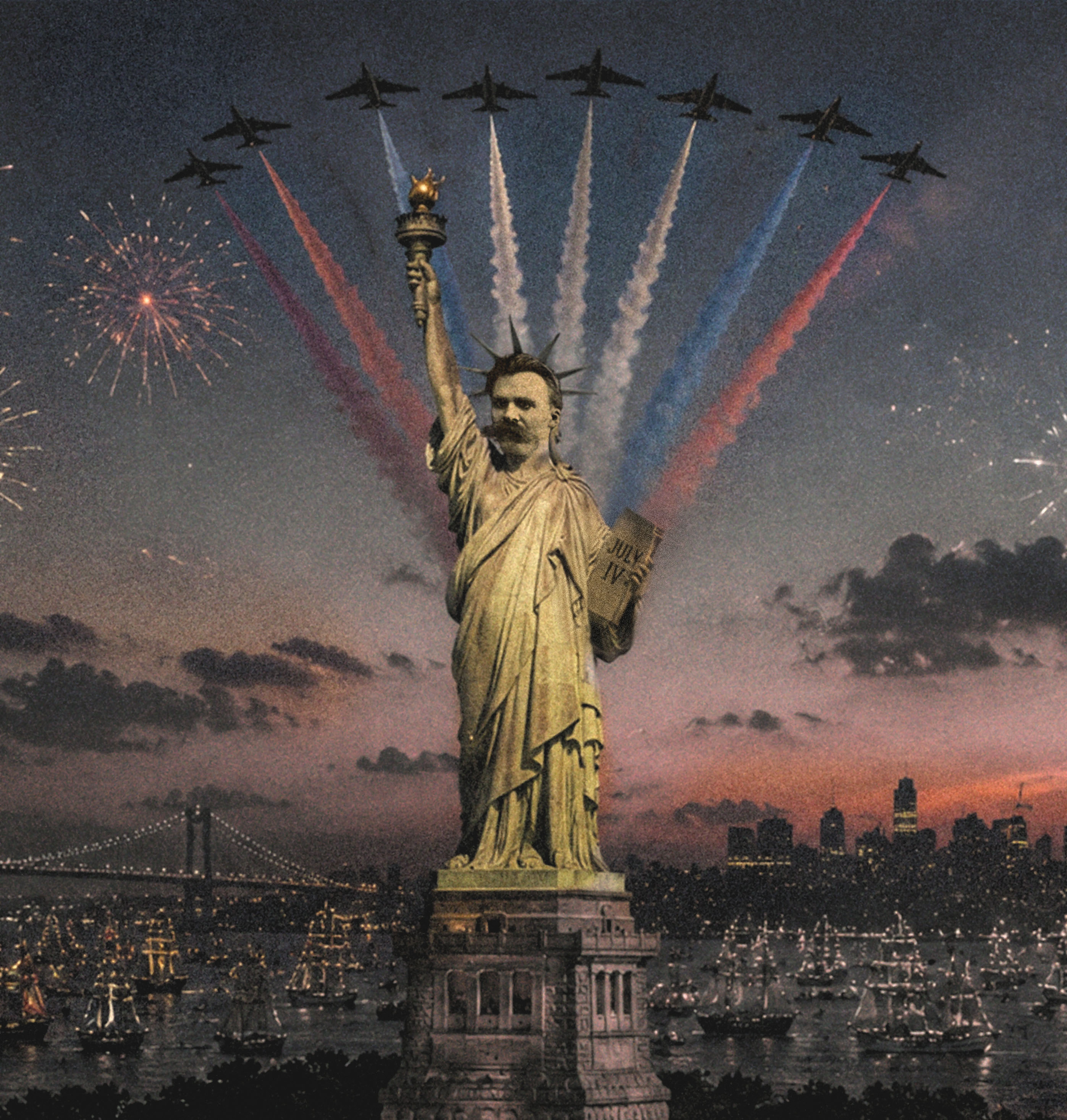
Exactly 250 years ago, on the 4th of July 1776, thirteen North American British colonies declared their independence from the mother country, soon thereafter forming one of the first modern democratic republics of the world, the United States of America. We took this anniversary as an occasion to speak with the Canadian Nietzsche scholar Willow Verkerk about the different approaches to Nietzsche in Europe and North America. To what extent is this thinker, so deeply embedded in European culture, read differently “here” to “there”? What does this tell about general cultural differences between Europe and its erstwhile colonies on the other side of the ocean? And what did Nietzsche himself think about the “New World”?
The Postmodern Forest
How the Forest Subverts Modernity's Totalizing Claim
The Postmodern Forest
How the Forest Subverts Modernity's Totalizing Claim

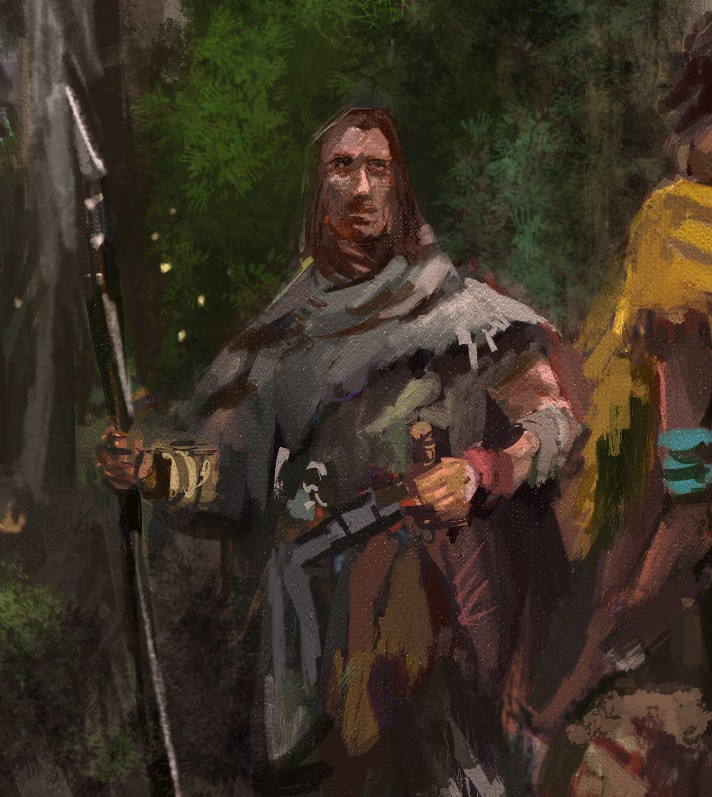
Forests are trending. And this is by no means contradictory to another, even larger trend of our time: digitalization. In this article, Mandus Craiss demonstrates that the forest is a network. Digitalization also occurs in a network-like manner; both phenomena are therefore characteristic of postmodernism.
In the first part of the article, the forest is characterized as a non-centralized and thus typically postmodern natural phenomenon. The second part defines "postmodernity" and discusses the extent to which this epochal concept is still, or once again, relevant – a discourse whose very early roots can be traced back to Nietzsche. Finally, the third part explains how the network aspect of postmodernity manifests itself and how the human-forest relationship has evolved recently.
This article is part of our special series this year "the forest as a livelihood".
Nietzsche and Nationalism?
A Disputation between Michael Drescher and Paul Stephan
Nietzsche and Nationalism?
A Disputation between Michael Drescher and Paul Stephan

Throughout his life, Nietzsche was a great critic of nationalism. The burgeoning German national sentiment, in particular, was anathema to him, and he wrote scathing remarks about his home country, such as "definition of the Germanic: obedience and long legs..."1. At the same time, nationalists and patriots of all stripes count among his fans. How can one be a Nietzschean and a (German) nationalist? What exactly is "nationalism," and is it possible to give this term a positive meaning?
Paul Stephan discussed these delicate topics, which are gaining increasing relevance given the successes of nationalist parties worldwide, in written form with YouTuber, Nietzsche expert, and nationalism researcher Michael Drescher, also known as PhrasenDrescher.
Additionally, they continued this dialogue verbally on YouTube – feel free to check out the result here (or as an audio-only version on SoundCloud).
Nietzsche as a Populist?
Attempt at an Anachronistic Determination of Proportions
Nietzsche as a Populist?
Attempt at an Anachronistic Determination of Proportions
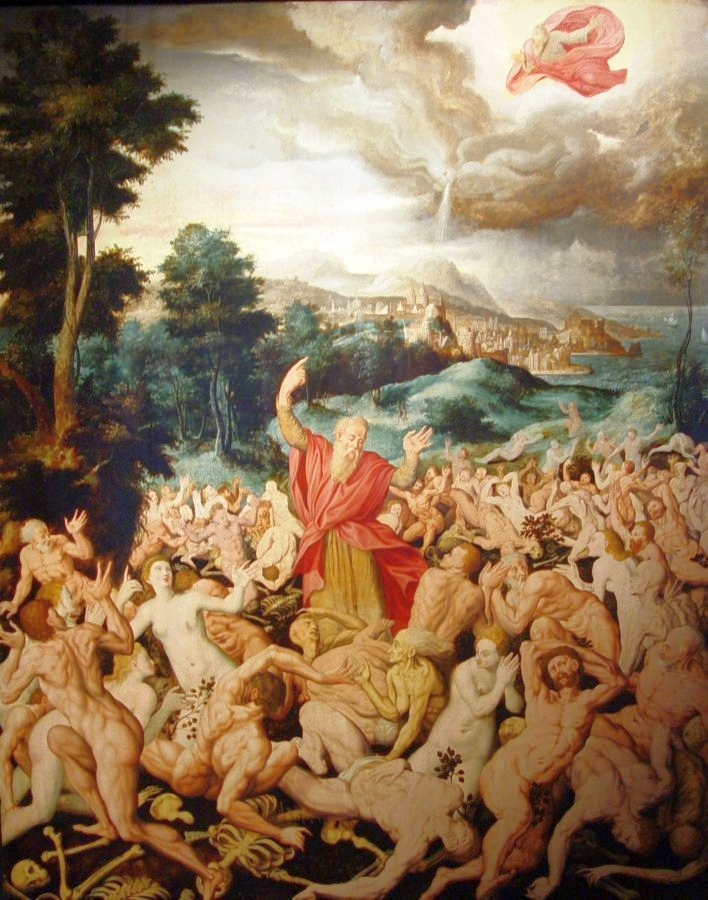
What would Nietzsche have said about the rampant populism of our time? Does his elitist attitude, his “aristocratic radicalism,” not make him an anti-populist par excellence? Or did he not himself dream of populist leaders inspiring the masses and the mass success of his books? — But what is “populism” anyway and what is the score of Nietzsche's stance on populist movements in his own time?
These are not entirely unimportant questions for our blog, which Jenny Kellner addresses in detail in the following article.
On Life in Freedom
A Conversation with Jens Bonnemann about Sartre and Nietzsche
On Life in Freedom
A Conversation with Jens Bonnemann about Sartre and Nietzsche

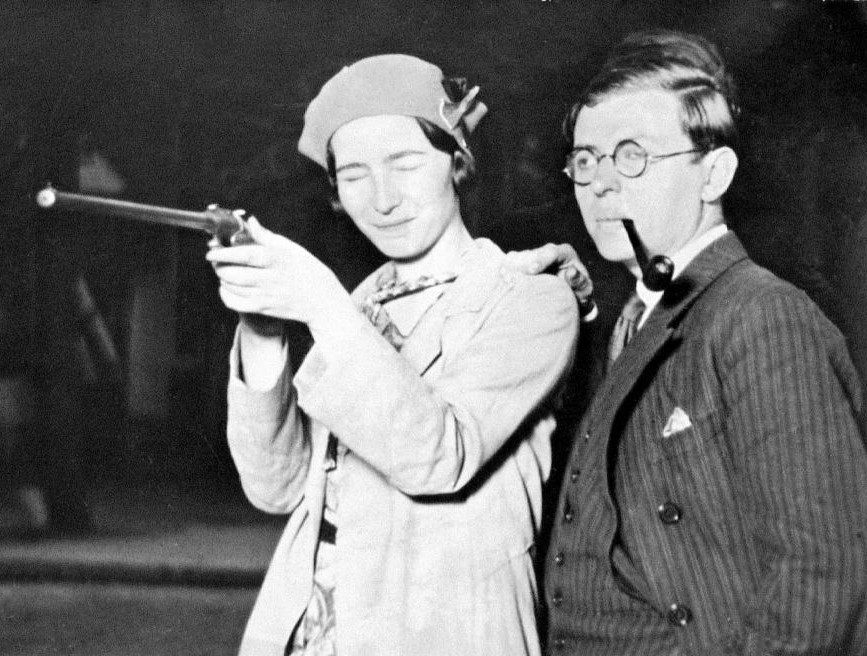
On April 15, 1980, one of the most important philosophers of the 20th century, Jean-Paul Sartre, died at the age of 74. Paul Stephan spoke with Jens Bonnemann, chairman of the German-speaking Sartre-Gesellschaft, about his basic ideas, his relationship with Nietzsche and his significance for our time. What does it mean to live in freedom after the “death of God”? What are the limits of individual freedom? What are the differences and similarities between Sartre and Nietzsche?
You can also view the unedited version of the conversation, in German, on YouTube and listen to it on Soundcloud.
“How Well Disposed Would You Have to Become to Yourself and to Life”
Prolegomena to Any Future Philosophy That Will Be Able to Present Itself as an Enlightenment — Part II
“How Well Disposed Would You Have to Become to Yourself and to Life”
Prolegomena to Any Future Philosophy That Will Be Able to Present Itself as an Enlightenment — Part II
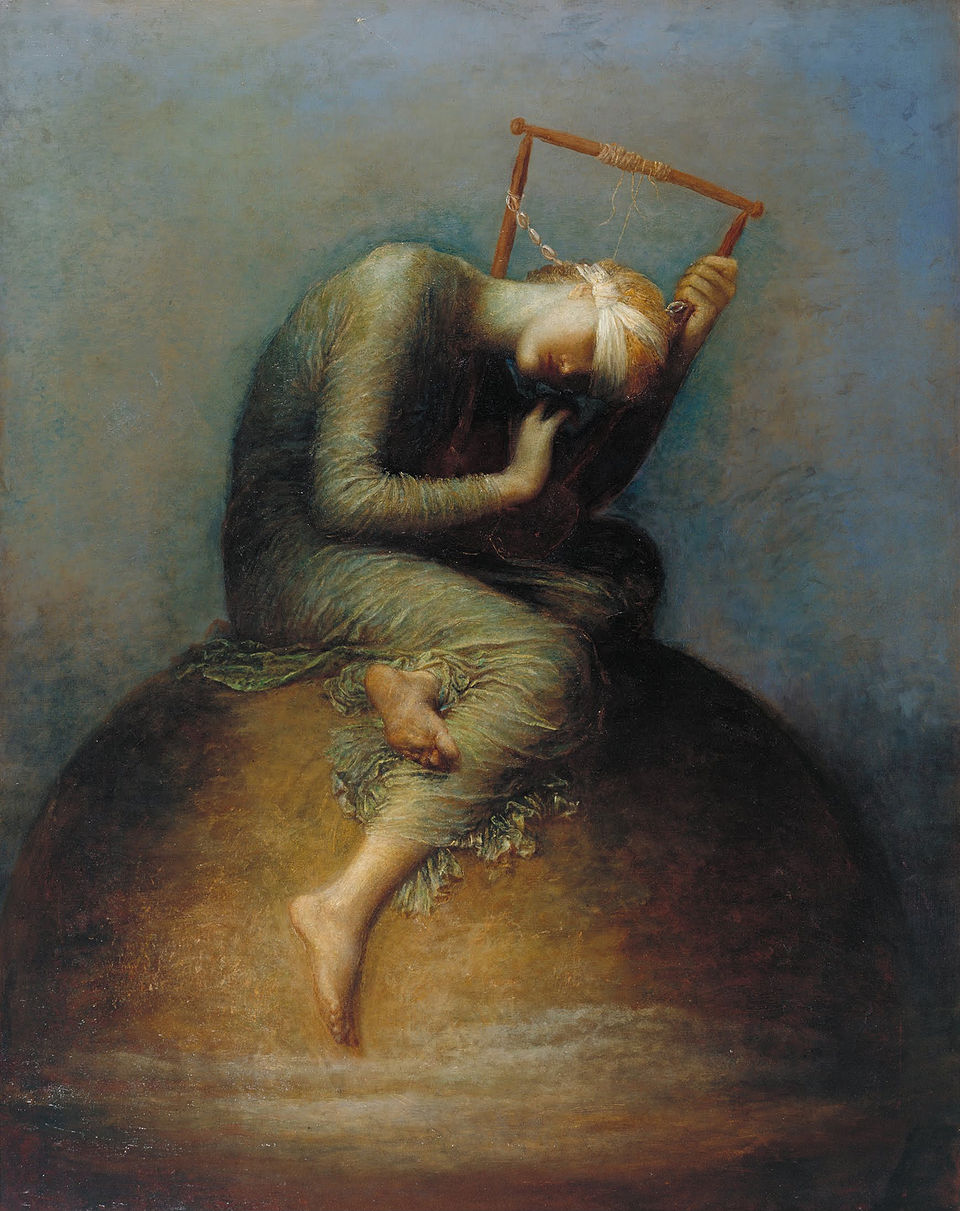
After our author, in the first part of this article, described the current political-cultural situation with reference to Fukuyama as an outgrowth of deep-seated boredom, which numbs itself in excesses of anger and indignation, he tries in the following second to suggest a possible turn for this zeitgeist, which could manifest itself in a new Enlightenment verve and a new positive self-image of the Enlightenment. Our author, with Nietzsche, opposes the “four despairs” that afflict the present tense, “four transfigurations” and “fields of research” resulting from them. An ironic view of the world and oneself should help to practice a transfigurative perspective on the world, which would be able to overcome the lethargy of postmodernism and revitalize the modernist project. The program of self-reliant future Enlightenment.
“How Well Disposed Would You Have to Become to Yourself and to Life”
Prolegomena to Any Future Philosophy That Will Be Able to Present Itself as an Enlightenment — Part I
"How Well Disposed Would You Have to Become to Yourself and to Life"
Prolegomena to any future philosophy that may arise as an Enlightenment — Part I
The following text explores the hypothesis that every philosophy of the zeitgeist finds its onset at something that bothers it: in the beginning, there was disgruntlement. This something is interpreted here as an illiberally disgruntled enlightenment, which is embodied in the current “polarization.” With Francis Fukuyama's help, this trail is explored and the drama of the recognition of modern Enlightenment is described.
The philosopher Fukuyama, born in Chicago in 1952, is primarily known for his essay The End of History? from 19891. There, he held that the “end of history” assumed by Hegel had finally arrived with the looming collapse of the Soviet Union. He saw the triumphant liberal Western democracies as the final stage of the process of historical progress. In 1992, Fukuyama published his main work based on this essay: The End of History and the Last Man, in which he combines Hegel's thesis with Nietzsche's diagnosis of the “last man.” Our author is also referring to this book. It caused controversial debates worldwide and continues to provoke today. — Do we really live after the “end of history”? Our author agrees with Fukuyama: While with the form of liberal democracy a final embodiment of the course of history has been achieved, history has been continuing as a conflict within this embodiment. World history has become history of liberalism.
Peace through Strength
Nietzsche's Perspective on Negotiated Power and Armed Peace
Peace from Strength
Nietzsche's Perspective on Negotiated Power and Armed Peace
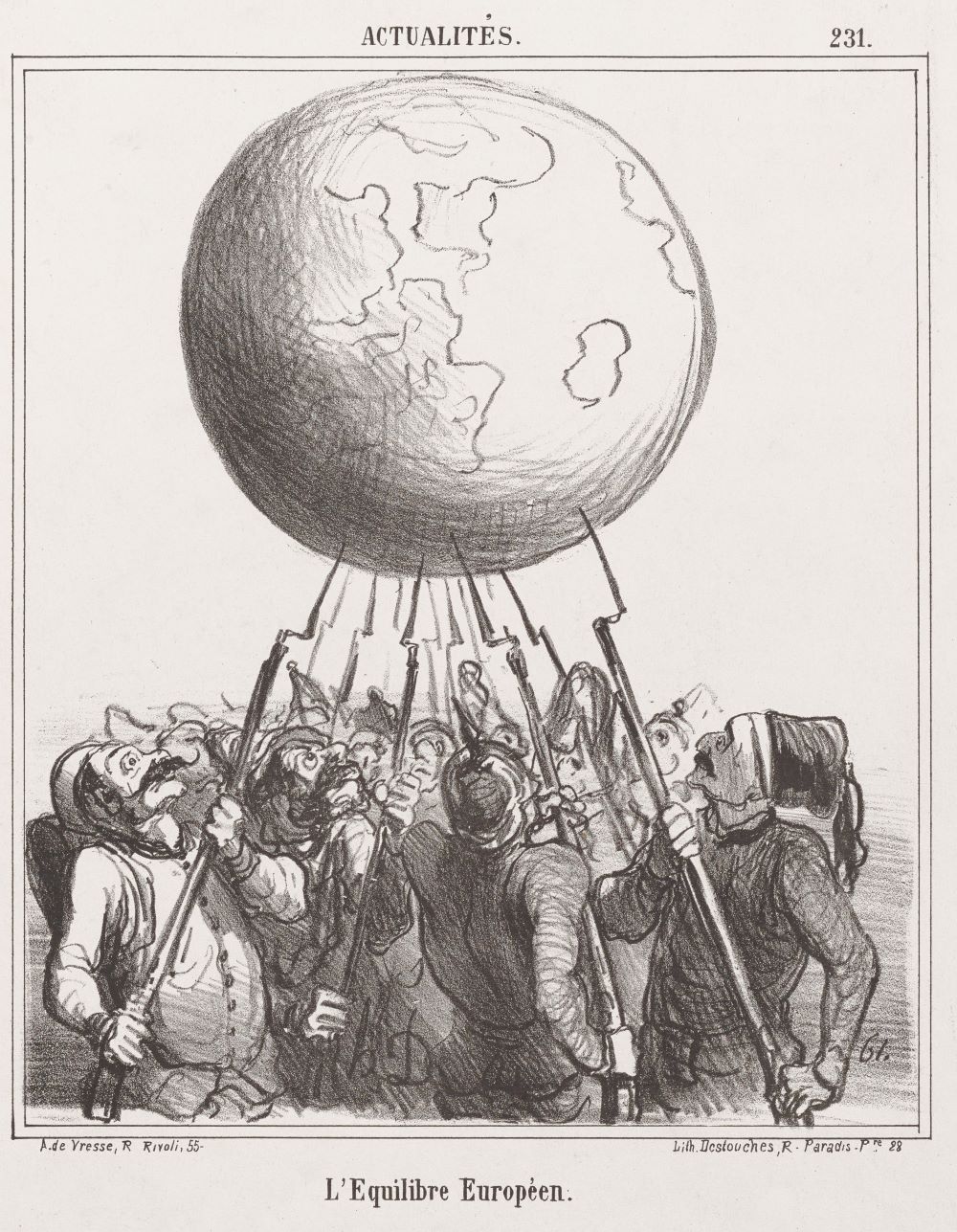

War in Europe was considered unthinkable for a long time — until it became a reality. But how can peace be thought of when normative guarantees fail? What if there are a few powerful and many weak players? Friedrich Nietzsche devised a surprisingly timely answer in 1879: Peace is not a sign of weakness, but an actively negotiated balance of power. He showed how a stable peace obliges all actors to build up their own strength. Nietzsche's transformation from an advocate of war to a thinker of peace based on strength is an admonition — also and especially to the weaker.
From Denier to Conspiracy Theory to Ghosting
Nietzsche and the Social Upheavals Caused by Today's Widespread Resentment
From Denier to Conspiracy Theory to Ghosting
Nietzsche and the Social Upheavals Caused by Today's Widespread resentment

After Hans-Martin Schönherr-Mann has already dealt with Nietzsche's concept of resentment in two articles on this blog (here and there), he now addresses the question of how it can be applied to the current social situation.
His thesis: The current political landscape is characterized by many divisions based on resentment. They are due to the weaknesses of their own arguments. This is how critics are defamed as “corona” or “climate deniers.” The objections are often branded as conspiracy theories. You can't ask 'Cui bono?' anymore. Or you break off contact without comment to protect yourself. This is not only in line with Nietzsche's understanding of resentment in many places, precisely because he himself is not free from it, but is looking for ways out of it.
“What is the topicality of Nietzsche's analysis and critique of 'resentment'?“ is also the question of this year's Kingfisher Award for Radical Essay Writing, in which you can once again win up to 750 Swiss francs. The closing date for entries is August 25. The complete tender text can be found here.
If you'd rather listen to the article, you can find an audiovisual version on the Halcyonic Association YouTube channel, read by the author himself (link) and a listening-online version on Soundcloud (link).
Nietzsche’s Techniques of Philosophizing
With Glances Towards Wittgenstein and Heidegger
Nietzsche’s Techniques of Philosophizing
With Glances Towards Wittgenstein and Heidegger
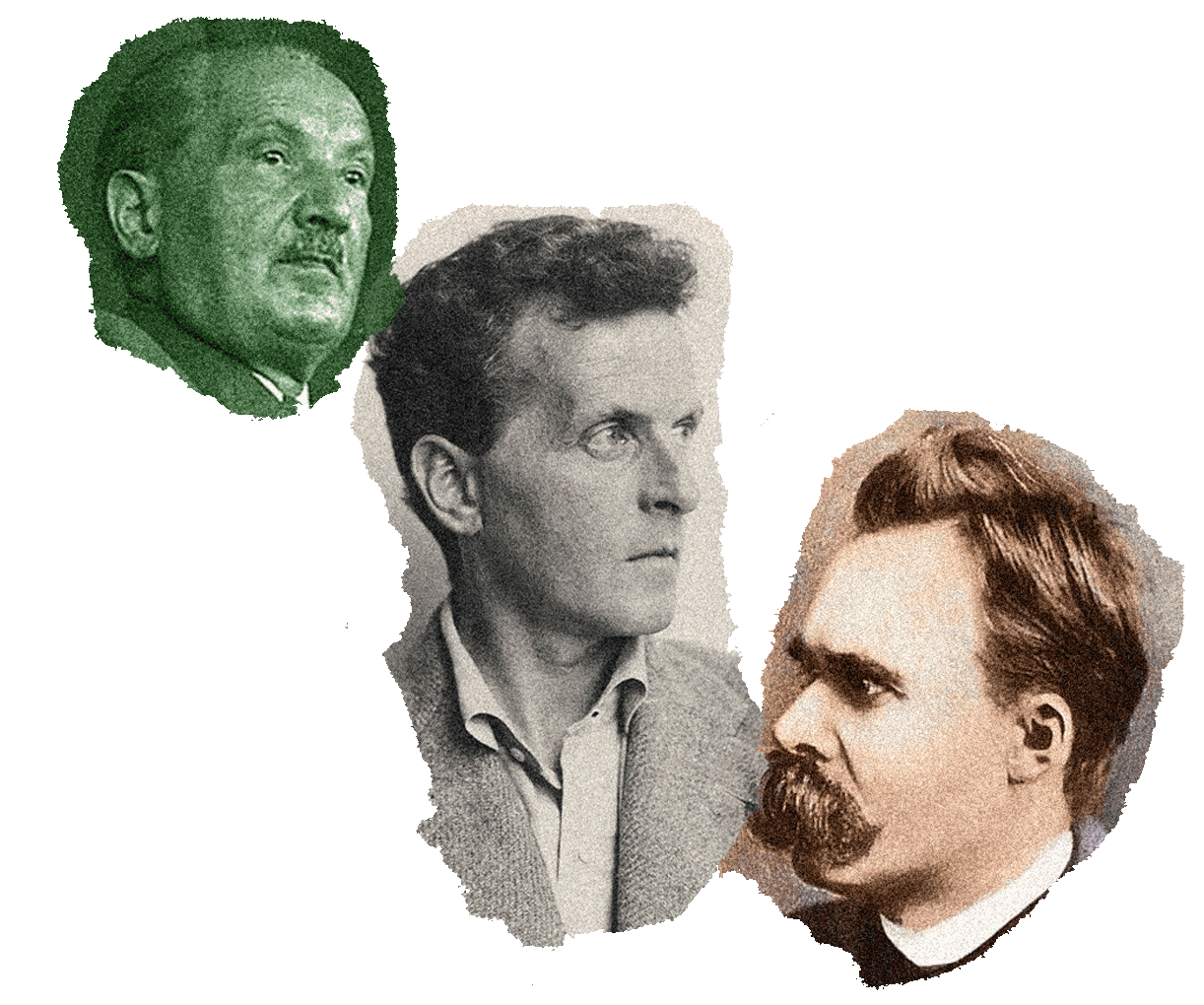
A fixed feature at the annual conference of the Nietzsche Gesellschaft [Nietzsche Society] conference is the Lectio Nietzscheana Naumburgensis: a particularly distinguished scholar delivering an extended lecture on the conference theme on the final day, thereby providing a pointed conclusion. The most recent conference in October 2025 awarded this special honor to Werner Stegmaier to recognize his long tenure as editor of the influential Nietzsche-Studien [Nietzsche Studies] and his authorship of numerous seminal monographs on Nietzsche’s philosophy. Running from October 16-19, 2025, the conference focused the theme “Nietzsche’s Technologies,” as Emma Schunack reported.
Generously granting his permission to publish his lecture in full and in this translation, Stegmaier takes on the conference theme from an unexpected perspective. Rather than examining what is commonly understood as “technologies”—machines, cyborgs, or automata—he explores instead Nietzsche’s philosophical techniques, both intellectual and rhetorical. Weighing up the original and idiosyncratic methods Nietzsche deployed while writing, Stegmaier reflects on how best to interpret and assess them. How were they able to enthuse and win over successive generations of readers? What can we learn from these today?
Comparing Nietzsche’s techniques with those of two other modern philosophical giants, Martin Heidegger (1889–1976) and Ludwig Wittgenstein (1889–1951), Stegmaier retraces all three philosophers’ break with the classical and conceptually oriented techniques of thinking inherited from antiquity, and their discoveries of radical and experimental means of developing philosophy in the age of “nihilism.” Replacing a one-dimensional, metaphysical understanding of rationality, these means cultivate a plural, perspectival mode of thought that necessarily relies on entirely different techniques. Situating Nietzsche’s methods within these broader developments in intellectual history, the Lectio establishes an utterly new framework for understanding his thought and its place within modern philosophy.
Translated by Henry Holland.
Nietzsche and the Philosophy of Orientation
A Conversation with Werner Stegmaier
Nietzsche and the Philosophy of Orientation
In Conversation with Werner Stegmaier
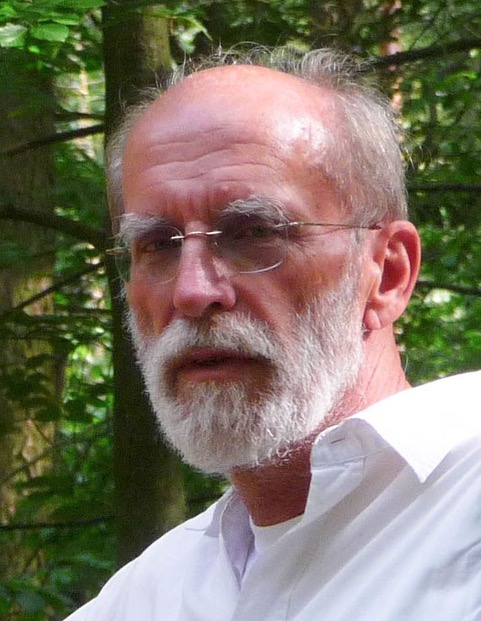
On the occasion of the 125th anniversary of Friedrich Nietzsche’s death on August 25, we spoke with two of the most internationally renowned Nietzsche scholars, Andreas Urs Sommer and Werner Stegmaier. While the conversation with Sommer focused primarily on Nietzsche’s life, our discussion with Stegmaier centered on Nietzsche’s thinking, its relevance today, and Stegmaier’s own philosophy of orientation. What are Nietzsche’s central insights – and to what extent can they help us find our way in the present? What does his concept of “nihilism” mean? And what are the political implications of his philosophy?
Translated by Reinhard Müller.
Why Are Many People No Longer Committed to Democracy!
Individualism as a Political and Social Threat in Tocqueville and Nietzsche — but also as an Opportunity
Why Are Many People No Longer Committed to Democracy!
Individualism as a Political and Social Threat in Tocqueville and Nietzsche — but also as an Opportunity
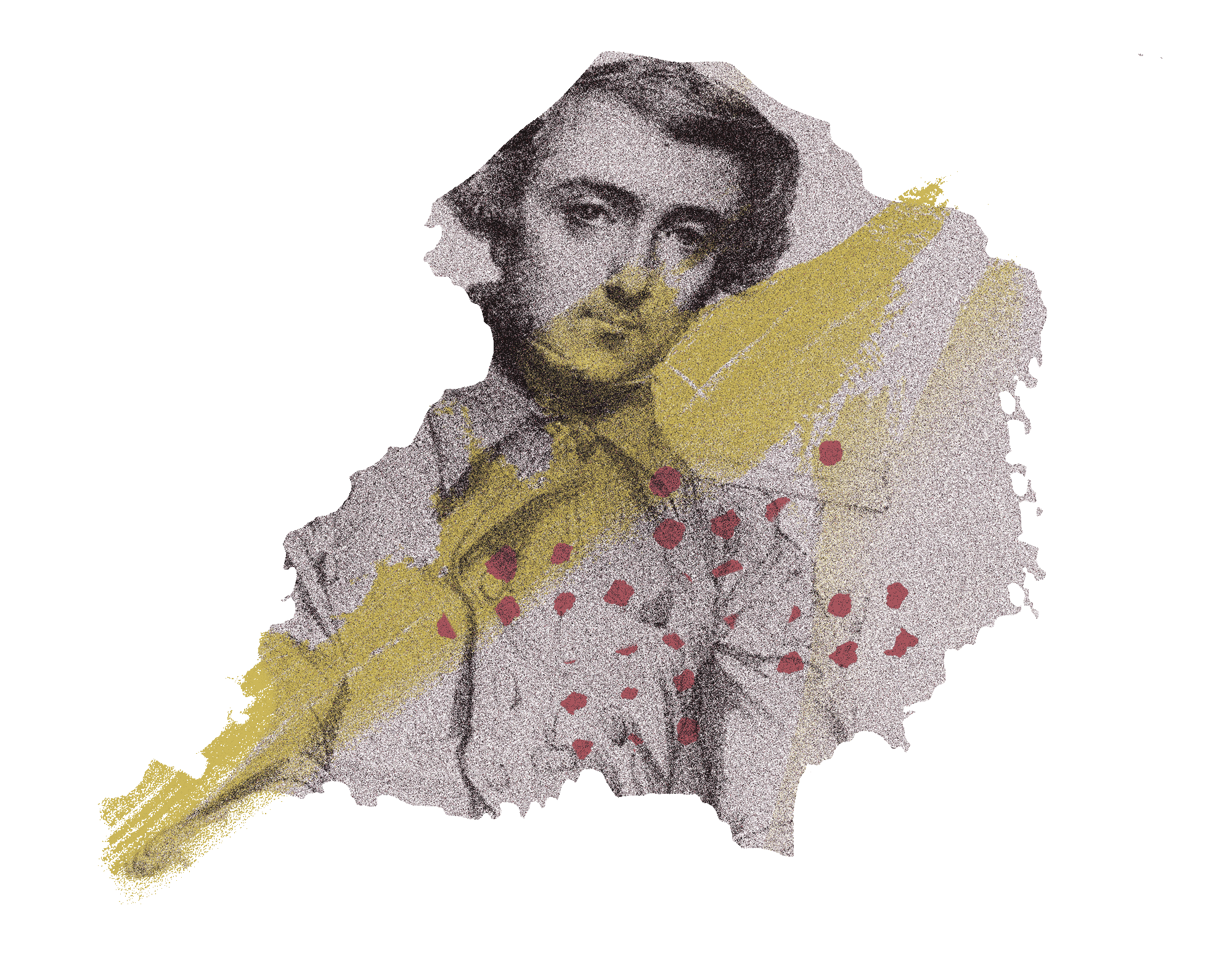
Individualism, even egoism, is frowned upon in all political, religious and social camps. They are attributed to liberalism and capitalism. Such people are not committed to others, are not involved politically or for the environment. They also do not respect a common understanding of the world and therefore behave irresponsibly. The Nietzschean is not impressed by such verdicts. She dances — not only!
Nietzsche and Intellectual Right
A Dialogue with Robert Hugo Ziegler
Nietzsche and the Intellectual Right
A Dialogue with Robert Hugo Ziegler


Nietzsche was repeatedly elevated to a figurehead by right-wing theorists and politicians. From Mussolini and Hitler to the AfD — Nietzsche is repeatedly seized when it comes to confronting modern society with a radical reactionary alternative. Nietzsche was particularly fascinating to intellectual right-wingers, such as authors like Ernst Jünger, Carl Schmitt and Martin Heidegger, who formed a cultural prelude to the advent of National Socialism in the 1920s, even though they later partially distanced themselves from it. People also often talk about the “Conservative Revolution”1.
What do these authors draw from Nietzsche and to what extent do they read him one-sidedly and overlook other potentials in his work? Our author Paul Stephan spoke about this with philosopher Robert Hugo Ziegler.
Mythomaniacs in Lean Years
About Klaus Kinski and Werner Herzog
Mythomaniacs in Lean Years
Über Klaus Kinski und Werner Herzog
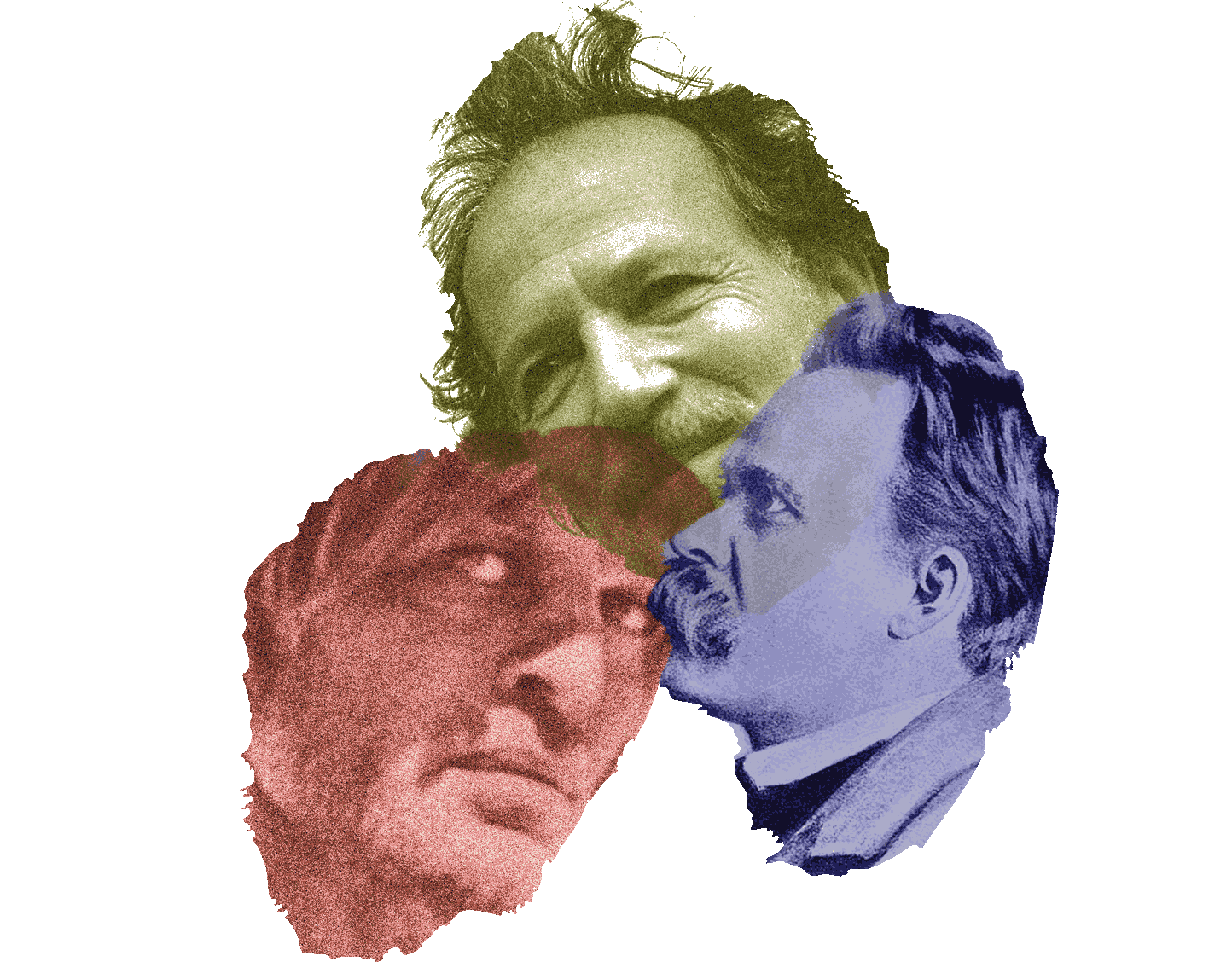

Werner Herzog (born 1942), described as a “mythomaniac” by Linus Wörffel, and Klaus Kinski (1926—1991) are among the leading figures of post-war German cinema. In the 70s and 80s, the filmmaker and the actor shot five feature films that are among the classics of the medium's history. They are hymns to tragic heroism, in which the spirit of Nietzsche can easily be recognized. From “Build Your Cities on Vesuvius! “will “Build opera houses in the rainforest! ”.
Historic Uprising in Bangladesh
The Will to Revolution
Historic Uprising in Bangladesh
The will to Revolution


For a total of 20 years, Bangladesh was ruled by an iron, authoritarian regime under Sheikh Hasina, the daughter of the first president since the country's independence from Pakistan, Sheikh Mujibur Rahman. But within a very short period of time, nationwide uprisings of such violence broke out in July 2024 that they overthrew Hasina after just one month and drove him into exile. How did this victory come from below and how does Nietzsche help us The will to power and continue his elaborations by Foucault and Deleuze to understand this historic moment?
Fleeing the State: Kafka and Nietzsche’s Human
Or: Becoming-woman after Deleuze & Guattari
Fleeing the State: Kafka and Nietzsche’s Human
Or: Becoming-woman after Deleuze & Guattari

Kafka and Nietzsche are united by their confrontation with the state and bureaucracy. Deleuze & Guattari, whose works are based on both, develop an apolitical response to the fatal political situation, namely transformations after Kafka, an expansion of themselves to Nietzsche, which can be understood as escape lines from a patronizing society.
Caught in the Crossfire of the Culture Wars, There Stands Nietzsche
Comparing Two Current Perspectives
Caught in the Crossfire of the Culture Wars, There Stands Nietzsche
Comparing Two Current Perspectives


It is well known that Nietzsche's history of influence has been read and absorbed across all political camps. But what about our present tense? Paul Stephan examines the writings of two authors who are about the same age as himself, in their mid/late 30s, and whose perspectives on Nietzsche could hardly be more different: While French journalist and YouTuber Julien Rochedy declares Nietzsche a pioneer of a right-wing cultural struggle, the German philosopher and political scientist Karsten Schubert attacks him for a left-wing identity politics. Both positions do not really convince our authors; rather, they are entirely within the framework of the prevailing simulation of politics as a cultural struggle, which would need to be countered by focusing on the really pressing life problems of contemporary humanity.
A Day in the Life of Nietzsche's Future
Report on the Conference Nietzsche's Futures in Weimar
A Day in the Life of Nietzsche's Future
Report on the Conference Nietzsche's Futures in Weimar

From October 7 to 11, 2024, the event organized by the Klassik Stiftung Weimar took place in Weimar Nietzsche's futures. Global Conference on the Futures of Nietzsche instead of. Our regular author Paul Stephan was on site on the first day and gives an insight into the current state of academic discussions about Nietzsche. His question: What is the future of Nietzsche academic research when viewed from the perspective of Nietzsche's own radical understanding of the future?
Nietzsche and Ukraine
A Conversation with Vitalii Mudrakov
Nietzsche and Ukraine
A Conversation with Vitalii Mudrakov


Vitalii Mudrakov is one of Ukraine's leading Nietzsche experts. Due to the war, he and his family currently live in Germany. Paul Stephan talked to him in detail about some aspects of the rich Ukrainian reception of Nietzsche in the context of the country's independent cultural history, which has often been ignored. It shows that Nietzsche's liberal thinking repeatedly inspired central protagonists of Ukrainian culture in their struggle for an independent nation free from Habsburg, Tsarist or Soviet foreign rule — and today again the struggle for their own self-assertion in the face of the Russian invasion.
Цю статтю перекладено українською мовою. Переклад можна знайти тут.
Determining Nietzsche
Determining Nietzsche


Does Nietzsche have clear philosophical doctrines? There is still a fight with Nietzsche's ambiguity today. When does he mean what he says? In her essay, Natalie Schulte explores the question of where, in the midst of assimilating ambiguity through ideological programs on the one hand and academically savvy dispersal of Nietzsche's thought structures into indiscriminate and incoherent fragments and perspectives, on the other hand, today's engagement with Nietzsche has to locate its decisive challenges. Between the dangers of confusing his philosophy and the limitless relativization of his theses, she is looking for a fruitful third way of dealing with the question of the “actual Nietzsche.”
The Enlightenment’s Twilight
Nietzsche's Truth of Semblance I
The Enlightenment’s Twilight
Nietzsche's Truth of Semblance I


Nietzsche's best-known formulation, according to which God is dead, not only shows an anti-religious thrust. In particular, it points out that in modern times, constitutive self-evident elements no longer have traditional validity. As the cultural understanding of truth has faltered, not only has this or that truth become questionable, but the understanding of what truth actually is. This puts enlightenment under pressure to find the questions to which it should be the answer. It is this abyss of uncanny questionability from which Nietzsche's thinking attempts to show ways out that are viable. In the first part of his text Enlightenment Twilight Michael Meyer-Albert talks about the clarified doubts of the Enlightenment about itself.
“Poland is Not Yet Lost”
Germany's Neighboring Country as a Political Utopia in Nietzsche's Posthumous Writings
“Poland is Not Yet Lost”
Germany's Neighboring Country as a Political Utopia in Nietzsche's Posthumous Writings

The late Nietzsche repeatedly imagines himself as a descendant of Polish nobles. It is not just a personal whim, but also says something about Nietzsche's philosophical positioning: For him, Poland is a kind of “anti-nation,” a people of “big individuals” — and last but not least, the Polish noble republic is the political utopia of a radical democratic community, which, precisely in its failure, corresponds to his idea of “aristocratic radicalism.” Paul Stephan goes in this Long Read explores the deeper meaning of this topic in Nietzsche and questions his transfiguration of the old Rzeczpospolita: From a political point of view, this is not as desirable a model as Nietzsche suggests. Jean-Jacques Rousseau continues to lead in this regard Considerations on the Government of Poland from 1772.
Wrangling Over The Will: The Nietzschean-Marxian Legacy
About Jonas Čeika's How to Philosophize with a Hammer and Sickle
Wrangling Over The Will: The Nietzschean-Marxian Legacy
About Jonas Čeika's How to Philosophize with a Hammer and Sickle


Nietzsche has repeatedly become the subject of political interpretive projects, from left and right. Nietzsche and Marx was seen time and again as a double team of a concept of comprehensive emancipation beyond the well-trodden paths of dominant left-wing political trends. In his book How to Philosophize with a Hammer and Sickle. Nietzsche and Marx for the Twenty-First Century and in countless YouTube videos, Jonas Čeika updates this perspective for our time. For Nietzsche PopArts, Henry Holland addressed the question of what to think of this approach.
What Does Nietzsche Mean to Me?
What Does Nietzsche Mean to Me?


Our regular author Christian Saehrendt reports in his contribution to the series “What does Nietzsche mean to me? “about how he discovered Nietzsche as a teenager and has regarded himself as a fan of the philosopher ever since — precisely because of his contrariness.
From Stalin to Nietzsche, or How I Became a Nietzschean, 1970-1990
From Stalin to Nietzsche, or How I Became a Nietzschean, 1970-1990
As a Marxist, Nietzsche was an early nuisance. But with the Nietzsche Renaissance in the eighties, I couldn't get past him anymore. That's when I discovered Nietzsche as an innovative thinker. - Part II of the series “What does Nietzsche mean to me? “, in which our regular authors introduce themselves.