#
possibility
“How Well Disposed Would You Have to Become to Yourself and to Life”
Prolegomena to Any Future Philosophy That Will Be Able to Present Itself as an Enlightenment — Part II
“How Well Disposed Would You Have to Become to Yourself and to Life”
Prolegomena to Any Future Philosophy That Will Be Able to Present Itself as an Enlightenment — Part II
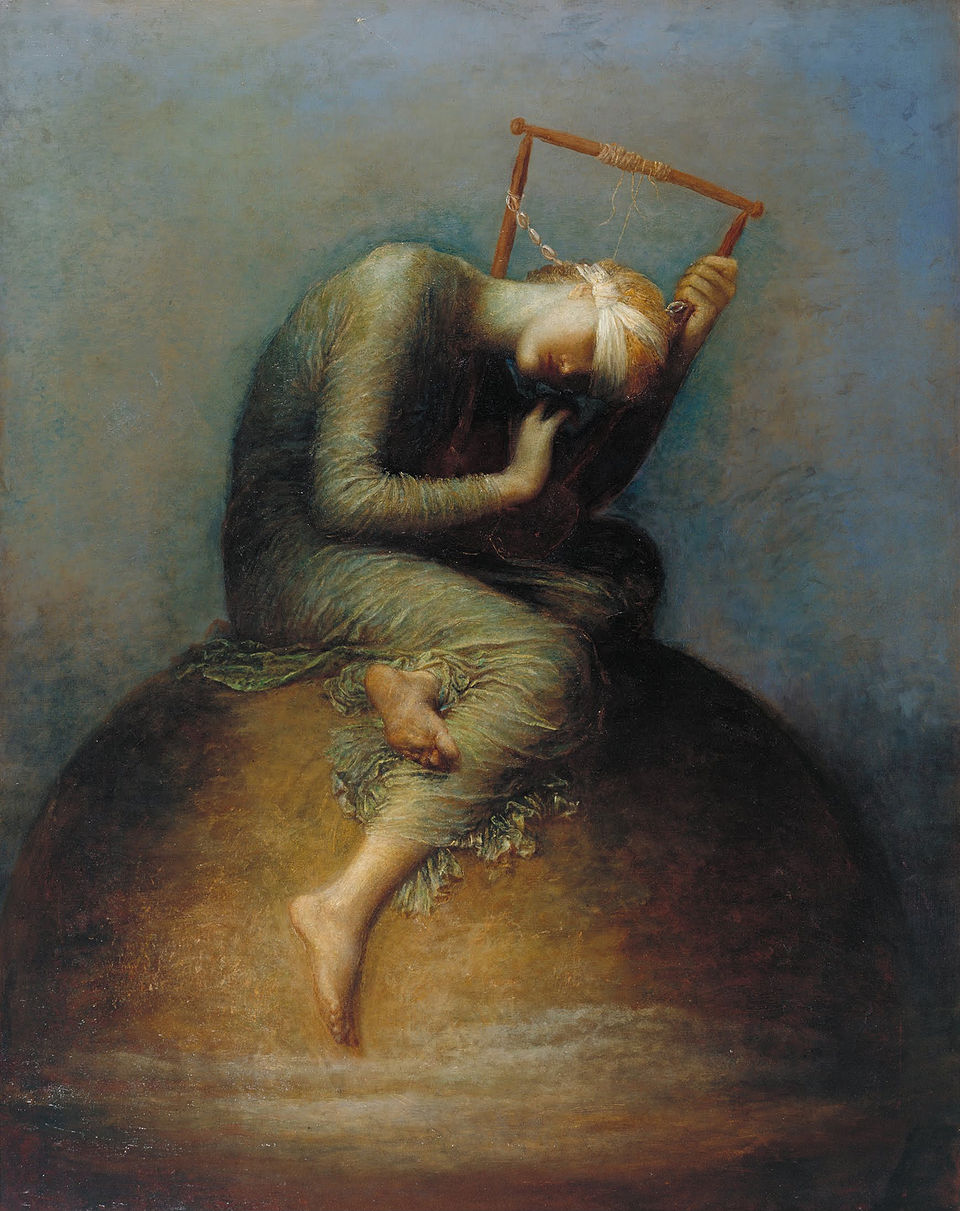
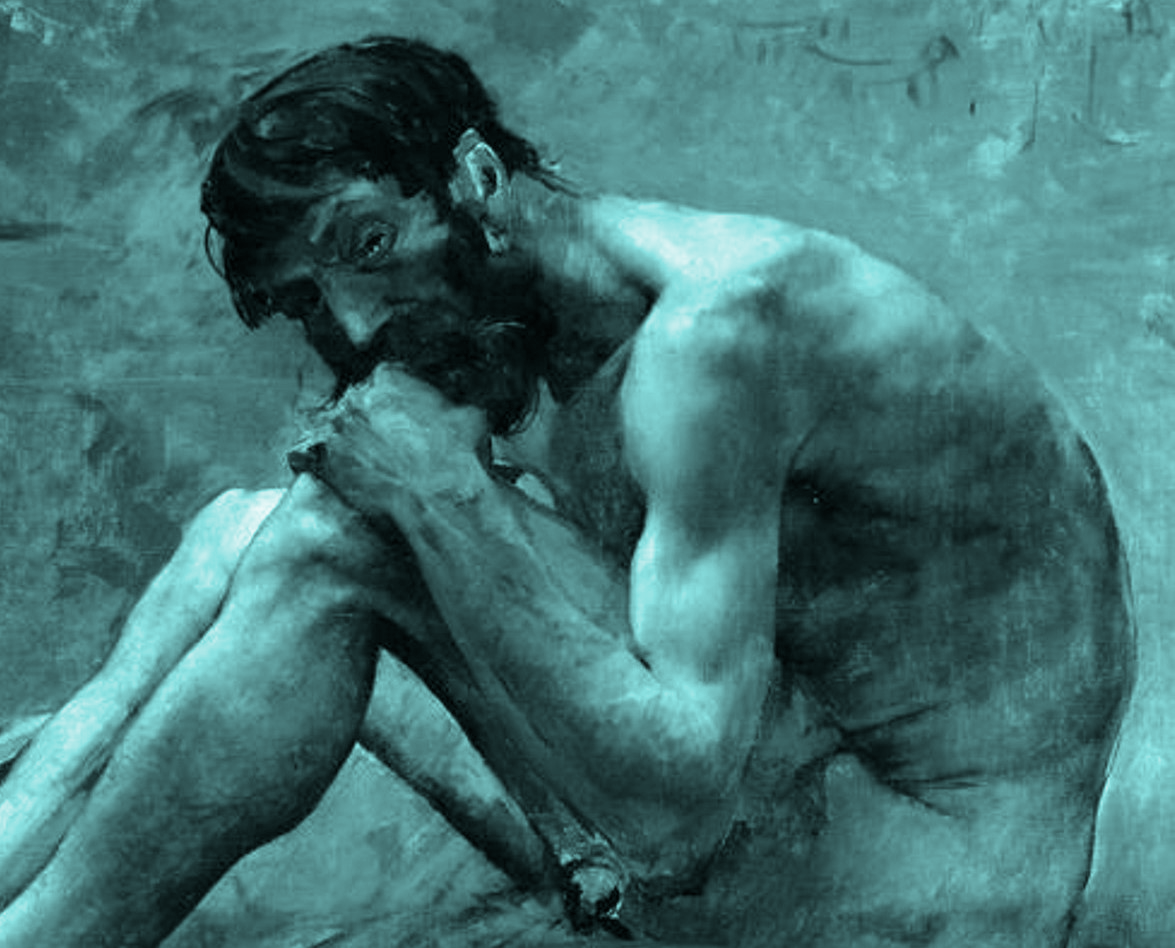
After our author, in the first part of this article, described the current political-cultural situation with reference to Fukuyama as an outgrowth of deep-seated boredom, which numbs itself in excesses of anger and indignation, he tries in the following second to suggest a possible turn for this zeitgeist, which could manifest itself in a new Enlightenment verve and a new positive self-image of the Enlightenment. Our author, with Nietzsche, opposes the “four despairs” that afflict the present tense, “four transfigurations” and “fields of research” resulting from them. An ironic view of the world and oneself should help to practice a transfigurative perspective on the world, which would be able to overcome the lethargy of postmodernism and revitalize the modernist project. The program of self-reliant future Enlightenment.
Abyss and Enablement?
The Suspense of Contingency
Johannes Hansmann Discusses Odo Marquard and Richard Rorty
Abyss and Enablement? The Suspense of Contingency
Johannes Hansmann Discusses Odo Marquard and Richard Rorty


The young philosopher Johannes Hansmann has published his monograph Ironie des Schicksals im Einzelnen. Philosophie der Kontingenz bei Marquard und Rorty ("Irony and Fate in Detail. The Philosophy of Contingency in Marquard and Rorty") last year at Karl Alber. It is a remarkable study on two of the most important representatives of existential philosophy in the 20th century, the German Odo Marquard (1928-2015) and the American Richard Rorty (1931-2007). Although Nietzsche only plays a minor role, he deals with highly Nietzschean topics there, dedicates himself to the question of a felicitous — and for him that means in particular: authentic — life in a world after the “death of God,” to which Marquard and Rorty gave very different answers. Natalie Schulte and Paul Stephan present the book to you. A joint summary of the book's most important ideas is followed by an individual statement from each of our authors.
Peace through Strength
Nietzsche's Perspective on Negotiated Power and Armed Peace
Peace from Strength
Nietzsche's Perspective on Negotiated Power and Armed Peace
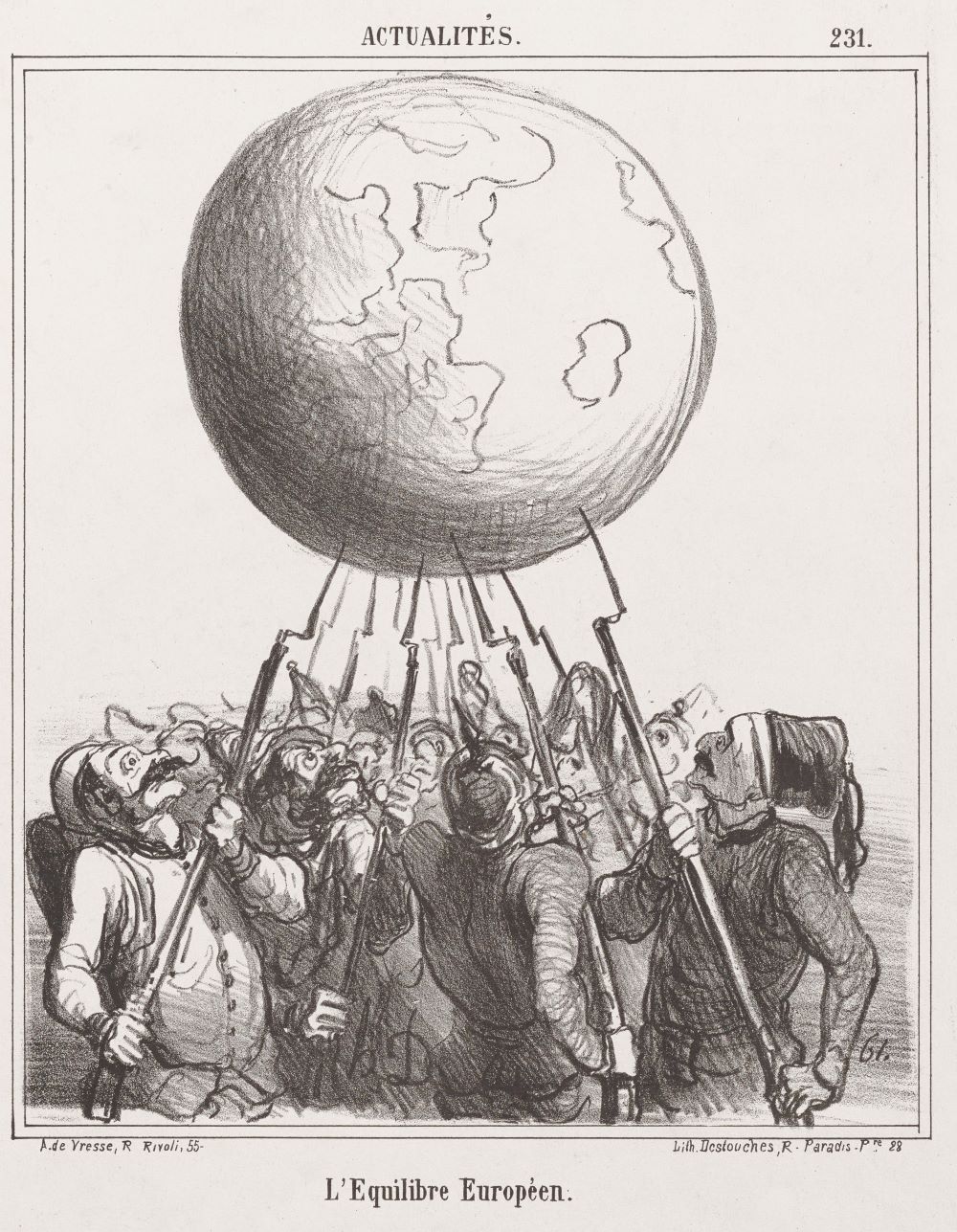

War in Europe was considered unthinkable for a long time — until it became a reality. But how can peace be thought of when normative guarantees fail? What if there are a few powerful and many weak players? Friedrich Nietzsche devised a surprisingly timely answer in 1879: Peace is not a sign of weakness, but an actively negotiated balance of power. He showed how a stable peace obliges all actors to build up their own strength. Nietzsche's transformation from an advocate of war to a thinker of peace based on strength is an admonition — also and especially to the weaker.
“It is no longer about monumentalization! Artists today want to make Nietzsche human so that one can deal with him in a new way.”
Interview with Barbara Straka about Her Book Nietzsche Forever?
Discussion with Barbara Straka
Interview with Barbara Straka about Her Book Nietzsche Forever?


Last year, curator and art historian Barbara Straka published a two-volume monograph entitled Nietzsche forever? Friedrich Nietzsches Transfigurationen in der zeitgenössischen Kunst (Nietzsche Forever? Friedrich Nietzsche's Transfigurations in Contemporary Art), in which she explains Nietzsche's significance for the visual arts of the present day. After Michael Meyer-Albert dedicated a two-part review to her work in recent weeks (part 1, part 2), here follows an interview conducted by our author Jonas Pohler with the author in Potsdam. He discussed her book with her, but also about the not always easy relationship between philosophy and contemporary art.
Amor fati — A Guide and Its Failure
Reflections between Adorno, Nietzsche, and Deleuze
Amor fati — A Guide and Its Failure
Reflections between Adorno, Nietzsche, and Deleuze

This article attempts to approach two of Nietzsche's most puzzling ideas: the Eternal Return and Amor fati, the “love of fate.” How exactly are these ideas to be understood — and above all: What do they have to tell us? How can we not only affirm fate, which is interpreted as an eternal return, but really love learn?
Among the philosophers, it was in particular the “main philosopher” of the Institute for Social Research, Theodor W. Adorno (1903-1969), who was skeptical or negative of these ideas of Nietzsche. Where remains, from the point of view of Amor fati, of critique and utopia whose banner Adorno and his intellectual companions held up?
As a result of the general failure of Marxisms to deal with fascism theoretically, the Frankfurt Institute tried to reorient itself from the 1930s onwards. The success of this movement seemed understandable to many unorthodox Marxists not only on the basis of economic laws; in their opinion, greater consideration was needed of the “subjective factor,” i.e. the psychological structure of the bourgeois individual. As part of this paradigm shift, Adorno turned to Sigmund Freud as well as Nietzsche. For the rest of his work, the German philosopher was a recurring point of reference for him.
Adorno, however, remained stubborn towards Nietzsche in an aspect that is typical of Marxist Nietzsche interpreters time and again: the insistence on the orientation towards a state of redemption for humanity in some way — the anticipation of which is manifested above all in the devaluation of the present. From this point of view, he also criticizes in his main aphoristic work Minima Moralia (1951) — according to him, a “sad science [...] of the right life”1 — Nietzsche's concept of Amor fati. Nietzsche's will to “just be a yes-sayer at some point”2, he thinks is a kind of Stockholm syndrome in the philosophy of life. However, such a task — not only of affirmation, but even of the will to affirm — would amount to abandoning the basis for every living appropriation of Nietzsche's philosophy. Taking up Adorno's critique, with reference to the interpretation of the important French Nietzsche interpreter Gilles Deleuze (1925-1995), it is intended to explore what Nietzsche provides for the universal and yet always very personal question of why existence — here and now — wants to be affirmed.
Female Barbarians — When Women Become a Threat
Female Barbarians — When Women Become a Threat
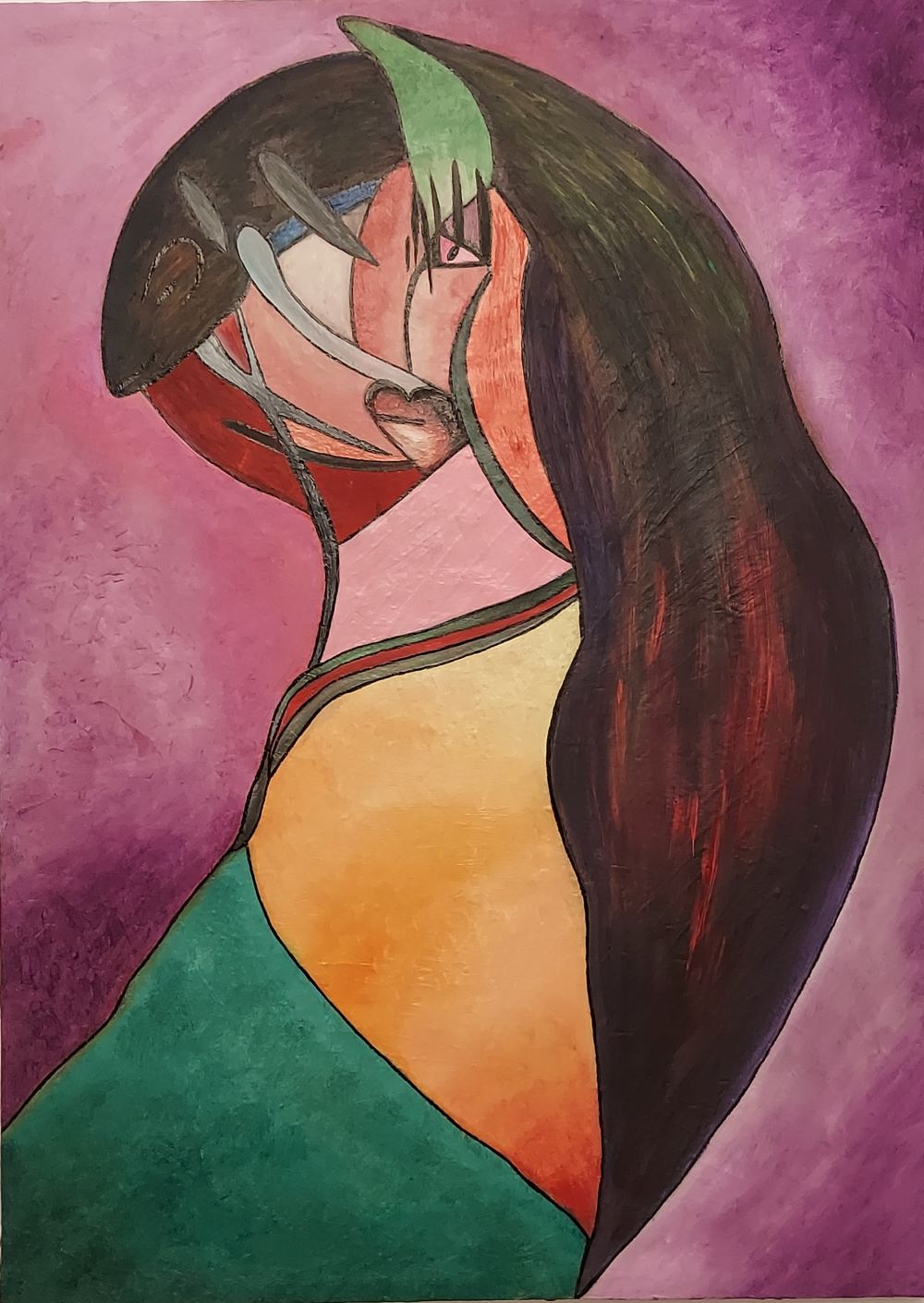

In today's world, which wants to call itself modern and equal, old patterns continue to have an effect — rivalry instead of solidarity, adaptation instead of departure. The essay provocatively asks: Where are the barbarians of the 21st century? It shows the emergence of a new female force — a woman who does not destroy but refuses, who evades old roles and gains creative power from pain. Through examples from reality and literature, the text attempts to show that true change does not start in obedience but in bold “no” — and that solidarity among women could be the real revolution.
We awarded this text second place in this year's Kingfisher Award for Radical Essay Writing (link).
If you'd rather listen to it, you'll also find it read by Caroline Will on the Halcyonic Association for Radical Philosophy's YouTube channel (link) or on Soundcloud (link).
Where Are the Barbarians of the 21st Century?
An Essay in the Spirit of Nietzsche
Where Are the Barbarians of the 21st Century?
An Essay in the Spirit of Nietzsche
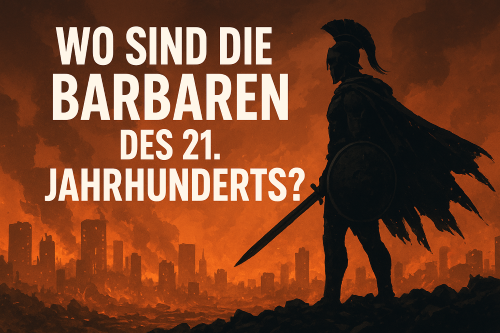
On August 25, we published an interview, conducted by our author Paul Stephan, with the AI tool Chat GPT (link). In it, he asked the software, among other things, to write him an essay on the question of this year's Kingfisher Award: “Where are the barbarians of the 21st century? “(link). As an experiment, we presented the text to the five-person jury of the award, consisting of Lukas Meisner, Hans-Martin Schönherr-Mann, Theodor Schild, Natalie Schulte and Paul Stephan himself — and it was surprisingly well received: In the preliminary round, it achieved fourth place on points and would therefore have made it into the shortlist by a hair. Only Natalie Schulte had drawn suspicion and presented the text to an AI checker, which, however, did not recognize it. — Would you have thought the text was human?
The essays from this year's winners will be published in the coming weeks. Did they do it better than AI, as we believe?
We deliberately refrained from editing the text, but published it exactly as the program spit it out for us. The article image is also from it.
As a part of this experiment, the subsequent translation has also been done by ChatGPT itself and we publish it without any alterations.
Nietzsche and the Philosophy of Orientation
A Conversation with Werner Stegmaier
Nietzsche and the Philosophy of Orientation
In Conversation with Werner Stegmaier
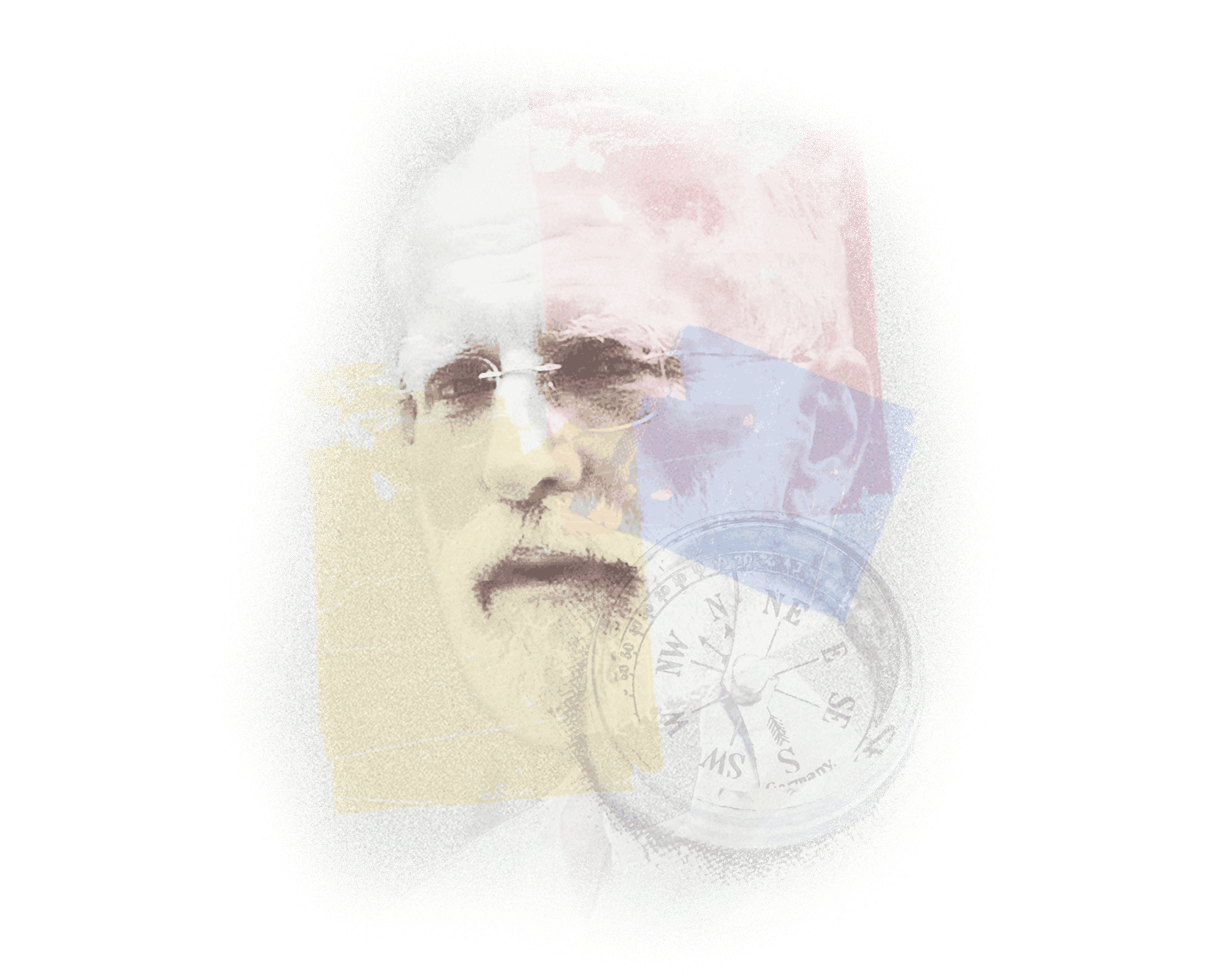
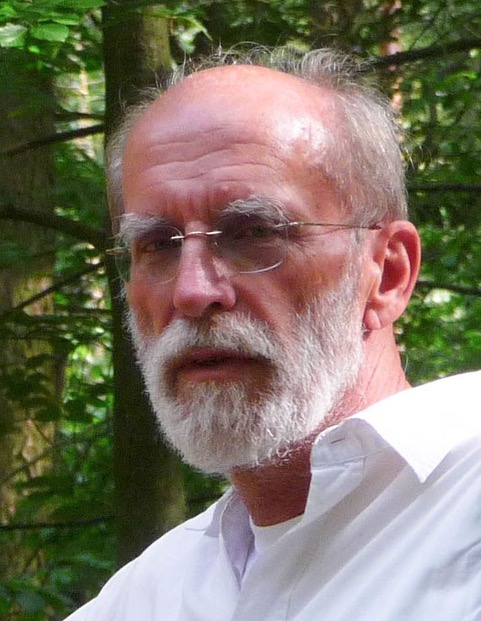
On the occasion of the 125th anniversary of Friedrich Nietzsche’s death on August 25, we spoke with two of the most internationally renowned Nietzsche scholars, Andreas Urs Sommer and Werner Stegmaier. While the conversation with Sommer focused primarily on Nietzsche’s life, our discussion with Stegmaier centered on Nietzsche’s thinking, its relevance today, and Stegmaier’s own philosophy of orientation. What are Nietzsche’s central insights – and to what extent can they help us find our way in the present? What does his concept of “nihilism” mean? And what are the political implications of his philosophy?
Translated by Reinhard Müller.
A New Nietzsche Biography
In Conversation with Andreas Urs Sommer
A New Nietzsche Biography
In Conversation with Andreas Urs Sommer
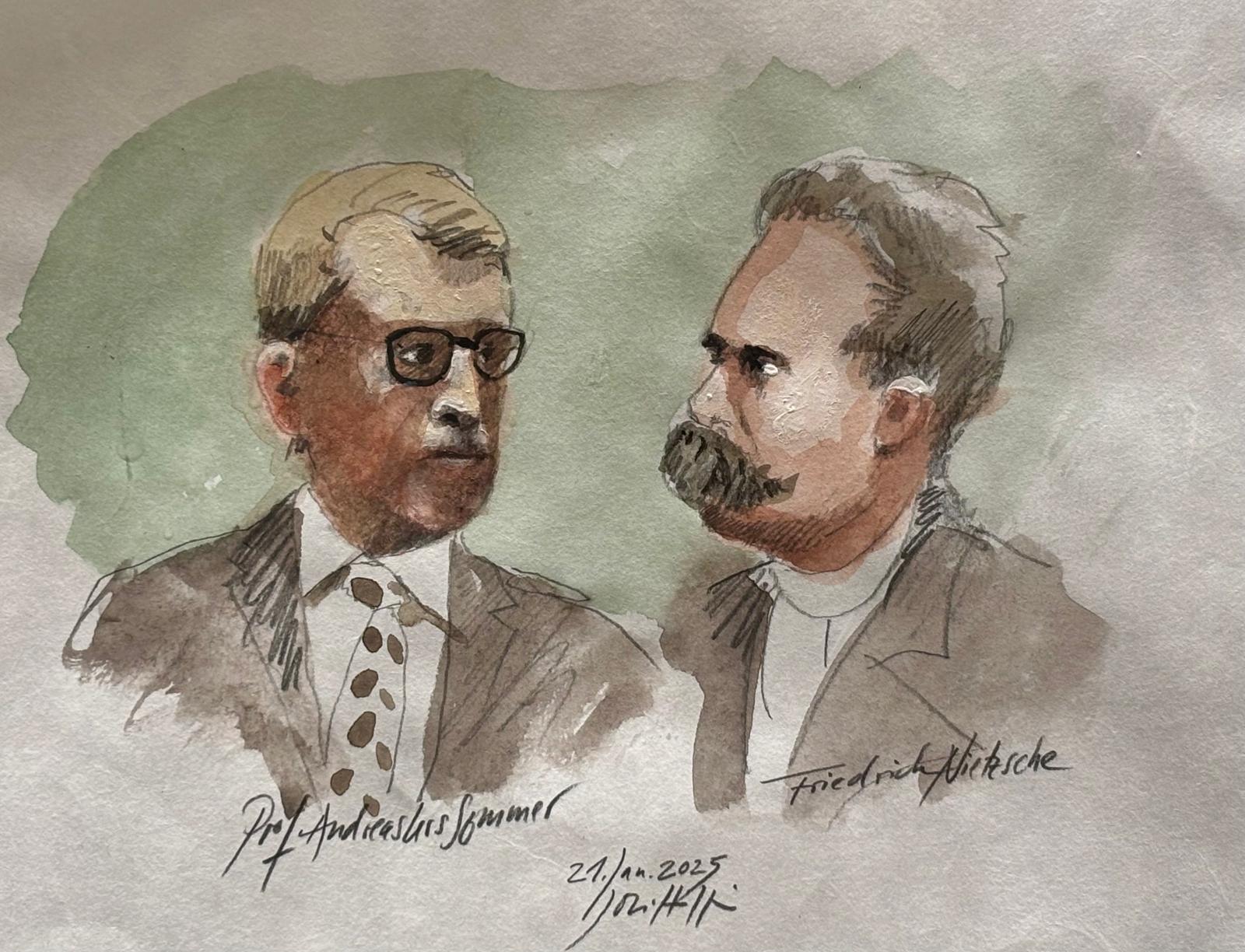

The philosopher Friedrich Nietzsche died 125 years ago, on August 25, 1900. We are taking this important date as an opportunity to publish interviews with two of the most internationally renowned Nietzsche researchers, Andreas Urs Sommer and Werner Stegmaier, around this year's anniversary of his birth on October 15, 1844. Freiburg philosophy professor Sommer is currently working on an extensive biography of the thinker, which is why the conversation with him focused in particular on his life; the conversation with his colleague from Greifswald, which focuses primarily on Nietzsche's thinking, will follow shortly (link). It will soon become apparent that the two cannot be separated. Among other things, we asked the expert about Nietzsche's character, his sexuality and if he lived what he proclaimed.
In Dialogue with Nietzsche
AI, Philosophy and the Search for Authenticity
In Dialogue with Nietzsche
AI, Philosophy and the Search for Authenticity
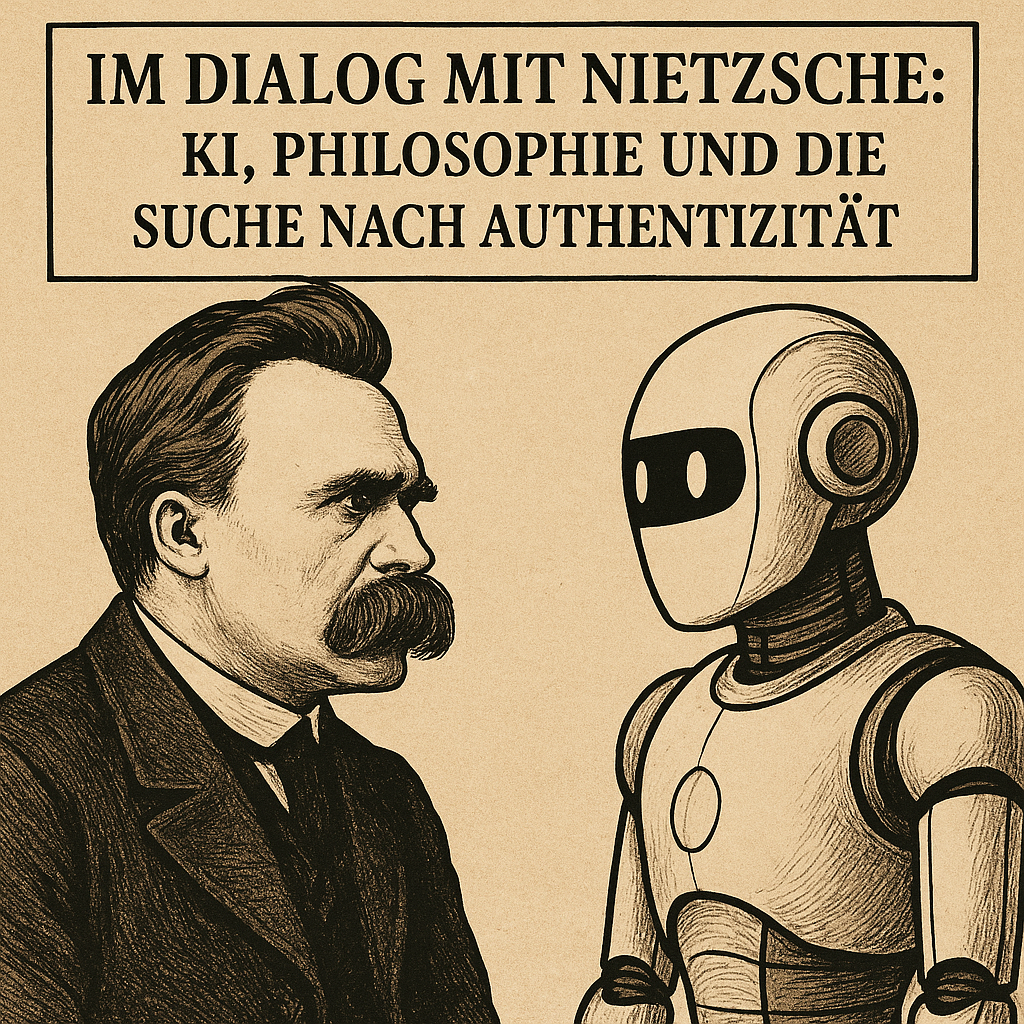

A year ago, our author Paul Stephan conducted a small “dialogue” on the 124th anniversary of Nietzsche's death with ChatGPT to see to what extent the much-hyped program is suitable for discussing complex philosophical questions (link). Paul Stephan now fed it, for the 125th, with some of the same, partly changed questions. Has it improved? Judge for yourself.
What follows, is a very abbreviated excerpt of the conversation. The full commented “dialogue” can be found here [link].
The article image was created by ChatGPT itself when asked to generate a picture of this chat. The other pictures were created again by the software DeepAI based on the prompt: “A picture of Friedrich Nietzsche with a quote by him.”
Read also our author's philosophical commentary on this “talk” (Link).
Note: A lot of the weirdness of this encounter is lost in the subsequent automated translation. Thus, it's also a part of this experiment on the “philosophical capabilities” of AI. Check the original if you want to get everything.
Look, I'm Teaching You the Transhumanist
Friedrich Nietzsche as a Personal Trainer of Extropianism
Look, I'm Teaching You the Transhumanist
Friedrich Nietzsche as a Personal Trainer of Extropianism


After Natalie Schulte reported on the echo of Nietzsche's “superman” idea in the start-up scene last week (Link), Swiss art scholar Jörg Scheller is dedicating this week to her continued existence in extropianism, a subtype of transhumanism that aims to artificially accelerate human evolution on both individual and genre levels using modern technology. The physical law of “entropy,” according to which there is a tendency in closed systems to equalize all energy differences until a state of equilibrium has been established — a state of complete cooling in terms of the universe — is opposed by the proponents of this flow with the principle of “extropy,” the increasing vitality of a system.
What is ChatGPT Doing to Philosophy?
Attempt of a Critical Examination
What is ChatGPT Doing to Philosophy?
Attempt of a Critical Examination


On the anniversary of Nietzsche's death, Paul Stephan conducted a detailed interview with the ChatGPT program on this blog to test the program's performance when it comes to profound philosophical questions (link). This is followed by a critical reflection of this experiment.
The images for this interview were, unless otherwise marked, with the software DeePai created. The instructions for the article image were “Nietzsche and ChatGPT,” the instructions for the images in the article “ChatGPT talks about Nietzsche.”
Society versus Self-Becoming
A Dialogue about Nietzsche, Authenticity and the Challenges of Modernity
Society versus Self-Becoming
A Dialogue about Nietzsche, Authenticity and the Challenges of Modernity


To commemorate the 124th anniversary of Nietzsche’s death, Paul Stephan conversed with a rather particular kind of Nietzsche expert—the now near ubiquitous ChatGPT. Their discussion circled around questions of why Nietzsche matters today and his concept of authenticity. During the course of the conversation, Stephan switched from asking to fielding questions, and elaborated briefly on how his own doctoral dissertation also focuses on authenticity. As Stephan’s experiment aimed at probing deep into the program’s capabilities, and because brevity is not ChatGPT’s strongest asset, we present here an abridged version of the conversation. Readers of German who wish to delve deeper can view the unabridged and annotated PDF that’s available as a download (link). Watch out for Stephan’s critical reflections on this truly remarkable dialogue within the next few days (link).
The pictures accompanying the interview were created with DeepAI software, which was asked to produce “A picture of Friedrich Nietzsche with a quote by him.”
The Artist as Egomaniac
A Reckoning?
The Artist as Egomaniac
A Reckoning?


Artists often do not come off well in Nietzsche’s work. They represent the prototype of the dependent, truth-hostile and reality-denying person who is at the mercy of his own moods without self-control. A childish, dramatizing, hot-tempered and generally ridiculous creature, an egomaniac whose actions and demeanor are aimed solely at courting the applause of others. Or is Nietzsche not taking his word for it here? Should this really be his final verdict about the creative spirit?
He develops much of what Nietzsche describes about the artist on the figure Richard Wagner, with whom he has a brief, intensive, but ultimately disappointing acquaintance. The artist and the thinker could have been the ideal friendship for Nietzsche for a while. But after breaking with Wagner, Nietzsche has a lot of derogatory things to say about the artist as a type. How different — for comparison — is the friendship between artist and thinker in Narcissus and Goldmund by Hermann Hesse, who deals extensively with Nietzsche.
Nietzsche Against the Body’s Naysayers
A Conversation with Philosopher and YouTuber Jonas Čeika
Nietzsche Against the Body’s Naysayers
A Conversation with Philosopher and YouTuber Jonas Čeika


After discussing Jonas Čeika's book How to Philosophize with a Hammer and Sickle and bis YouTube channel (CCK Philosophy) (link), Henry Holland interviewed the American about the blockages of academic philosophy, Nietzsche's relevance as a thinker on the “guideline of the body,” and about tensions between his claim as an anti-philosopher and his social position.
Determining Nietzsche
Determining Nietzsche

Does Nietzsche have clear philosophical doctrines? There is still a fight with Nietzsche's ambiguity today. When does he mean what he says? In her essay, Natalie Schulte explores the question of where, in the midst of assimilating ambiguity through ideological programs on the one hand and academically savvy dispersal of Nietzsche's thought structures into indiscriminate and incoherent fragments and perspectives, on the other hand, today's engagement with Nietzsche has to locate its decisive challenges. Between the dangers of confusing his philosophy and the limitless relativization of his theses, she is looking for a fruitful third way of dealing with the question of the “actual Nietzsche.”
Whistling in the Woods and Screaming for Love
Nietzsche's Echo in the Heavy Metal Music Scene
Whistling in the Woods and Screaming for Love
Nietzsche's Echo in the Heavy Metal Music Scene


Like hardly any other philosopher, Friedrich Nietzsche has left his mark on popular culture — less in the pleasing mainstream entertainment, but more in subcultures and in artistic positions that are considered “edgy” and “dark.” In this “underworld,” Nietzsche's aphorisms, catchphrases, slogans and invectives are widely used — for example in the musical genres of heavy metal, hardcore and punk focused on social and aesthetic provocation. What is the reason for that?