#
justice
“Revolt, Slaves, Revolt!”
Hiking with Nietzsche Through Evangelical Christian London: Part I
“Revolt, Slaves, Revolt!”
Hiking with Nietzsche Through Evangelical Christian London: Part I

From the hedge-fund billions that bankroll Nigel Farage, and tie that funding to evangelical expansionism, to Nietzsche’s fulminating assault on Christianity as a “slave revolt”: this essay tracks the troubling way religion has reappeared at the heart of British public life. Arriving in London with walking boots, a rucksack, and a philosopher’s skepticism, the author follows the money, theology, and street culture surrounding charismatic Christianity and its seemingly unappeasable growth. At the centre stands Sir Paul Marshall: billionaire financier, Christian media mogul, and embodiment of a faith that feels entitled to reach for elite power.
But this is more than merely an unveiling of the knot that binds together wealth and religion. It is also a confrontation with Nietzsche’s deepest historical claim: that Christianity triumphed because the so-called weak learned to moralize against the strong. Wandering through churches, cafés, and city streets, the essay asks whether contemporary evangelical London represents a new form of that revolt—or its complete inversion.
Part I explores the rise of influential evangelical networks in modern Britain and their uneasy alliance with finance capitalism. Part II, which will appear shortly, returns to the first Christians themselves.
This article is a follow-up to Henry Holland’s account of hiking through Glasgow’s Muslim Southside (part I, part II).
Nietzsche and Nationalism?
A Disputation between Michael Drescher and Paul Stephan
Nietzsche and Nationalism?
A Disputation between Michael Drescher and Paul Stephan

Throughout his life, Nietzsche was a great critic of nationalism. The burgeoning German national sentiment, in particular, was anathema to him, and he wrote scathing remarks about his home country, such as "definition of the Germanic: obedience and long legs..."1. At the same time, nationalists and patriots of all stripes count among his fans. How can one be a Nietzschean and a (German) nationalist? What exactly is "nationalism," and is it possible to give this term a positive meaning?
Paul Stephan discussed these delicate topics, which are gaining increasing relevance given the successes of nationalist parties worldwide, in written form with YouTuber, Nietzsche expert, and nationalism researcher Michael Drescher, also known as PhrasenDrescher.
Additionally, they continued this dialogue verbally on YouTube – feel free to check out the result here (or as an audio-only version on SoundCloud).
“How Well Disposed Would You Have to Become to Yourself and to Life”
Prolegomena to Any Future Philosophy That Will Be Able to Present Itself as an Enlightenment — Part II
“How Well Disposed Would You Have to Become to Yourself and to Life”
Prolegomena to Any Future Philosophy That Will Be Able to Present Itself as an Enlightenment — Part II
After our author, in the first part of this article, described the current political-cultural situation with reference to Fukuyama as an outgrowth of deep-seated boredom, which numbs itself in excesses of anger and indignation, he tries in the following second to suggest a possible turn for this zeitgeist, which could manifest itself in a new Enlightenment verve and a new positive self-image of the Enlightenment. Our author, with Nietzsche, opposes the “four despairs” that afflict the present tense, “four transfigurations” and “fields of research” resulting from them. An ironic view of the world and oneself should help to practice a transfigurative perspective on the world, which would be able to overcome the lethargy of postmodernism and revitalize the modernist project. The program of self-reliant future Enlightenment.
“How Well Disposed Would You Have to Become to Yourself and to Life”
Prolegomena to Any Future Philosophy That Will Be Able to Present Itself as an Enlightenment — Part I
"How Well Disposed Would You Have to Become to Yourself and to Life"
Prolegomena to any future philosophy that may arise as an Enlightenment — Part I
The following text explores the hypothesis that every philosophy of the zeitgeist finds its onset at something that bothers it: in the beginning, there was disgruntlement. This something is interpreted here as an illiberally disgruntled enlightenment, which is embodied in the current “polarization.” With Francis Fukuyama's help, this trail is explored and the drama of the recognition of modern Enlightenment is described.
The philosopher Fukuyama, born in Chicago in 1952, is primarily known for his essay The End of History? from 19891. There, he held that the “end of history” assumed by Hegel had finally arrived with the looming collapse of the Soviet Union. He saw the triumphant liberal Western democracies as the final stage of the process of historical progress. In 1992, Fukuyama published his main work based on this essay: The End of History and the Last Man, in which he combines Hegel's thesis with Nietzsche's diagnosis of the “last man.” Our author is also referring to this book. It caused controversial debates worldwide and continues to provoke today. — Do we really live after the “end of history”? Our author agrees with Fukuyama: While with the form of liberal democracy a final embodiment of the course of history has been achieved, history has been continuing as a conflict within this embodiment. World history has become history of liberalism.
Two Years through Woods of Symbols
Outlook and Summary of Our Previous Work
Two Years through Woods of Symbols
Outlook and Summary of Our Previous Work


Exactly two years ago, we published our first article on this blog, The Enduringly Contested Friedrich Nietzsche, a report by Paul Stephan about the annual meeting of the Nietzsche Society in 2023. Time to pause for a moment and think about what we've done on this blog so far and what the future could look like. Our editor-in-chief draws an interim conclusion and gives an insight into our plans.
We are combining this anniversary with two special appeals to you. On the one hand, we created a small quiz (link; in German). Answer four questions correctly, the answers to which are derived from our previous articles, and you could win one of thirteen prizes — and if you want, you can also give us valuable feedback about our work.
We would also like to draw you attention to our crowdfunding call. By July 10, we would like to invite you to help us raise €6,000 to finance further professional translations of our articles. In return, we offer you some fantastic rewards, including in particular the option of translating an article of your choice or giving us an article topic that you've always wanted to read about on this blog. Or you can get to know some of our authors at an exclusive Zoom workshop for our supporters. Become a bridge builder!
Peace through Strength
Nietzsche's Perspective on Negotiated Power and Armed Peace
Peace from Strength
Nietzsche's Perspective on Negotiated Power and Armed Peace

War in Europe was considered unthinkable for a long time — until it became a reality. But how can peace be thought of when normative guarantees fail? What if there are a few powerful and many weak players? Friedrich Nietzsche devised a surprisingly timely answer in 1879: Peace is not a sign of weakness, but an actively negotiated balance of power. He showed how a stable peace obliges all actors to build up their own strength. Nietzsche's transformation from an advocate of war to a thinker of peace based on strength is an admonition — also and especially to the weaker.
Monumentality Issues. Nietzsche in Art After 1945
Thoughts on the Book Nietzsche Forever? by Barbara Straka II
Monumentality Issues. Nietzsche in Art After 1945
Thoughts on the Book Nietzsche Forever? by Barbara Straka II

Barbara Straka's newly published book Nietzsche Forever? explores the question of how Nietzsche is received in 20th century art, in particular that after 1945. But the reception of Nietzsche's reception raises the question of whether the philosopher's monumentality is lost sight of. Does this reveal a fundamental problem of our age with monumentality? In any case, starting from Nietzsche, Michael Meyer-Albert argues against Straka for a “post-monumental monumentality” as an alternative to aesthetic postmodernism. In the first part of the two-part series, he dedicated himself to her book, and now he is accentuating his opposite position.
From Denier to Conspiracy Theory to Ghosting
Nietzsche and the Social Upheavals Caused by Today's Widespread Resentment
From Denier to Conspiracy Theory to Ghosting
Nietzsche and the Social Upheavals Caused by Today's Widespread resentment
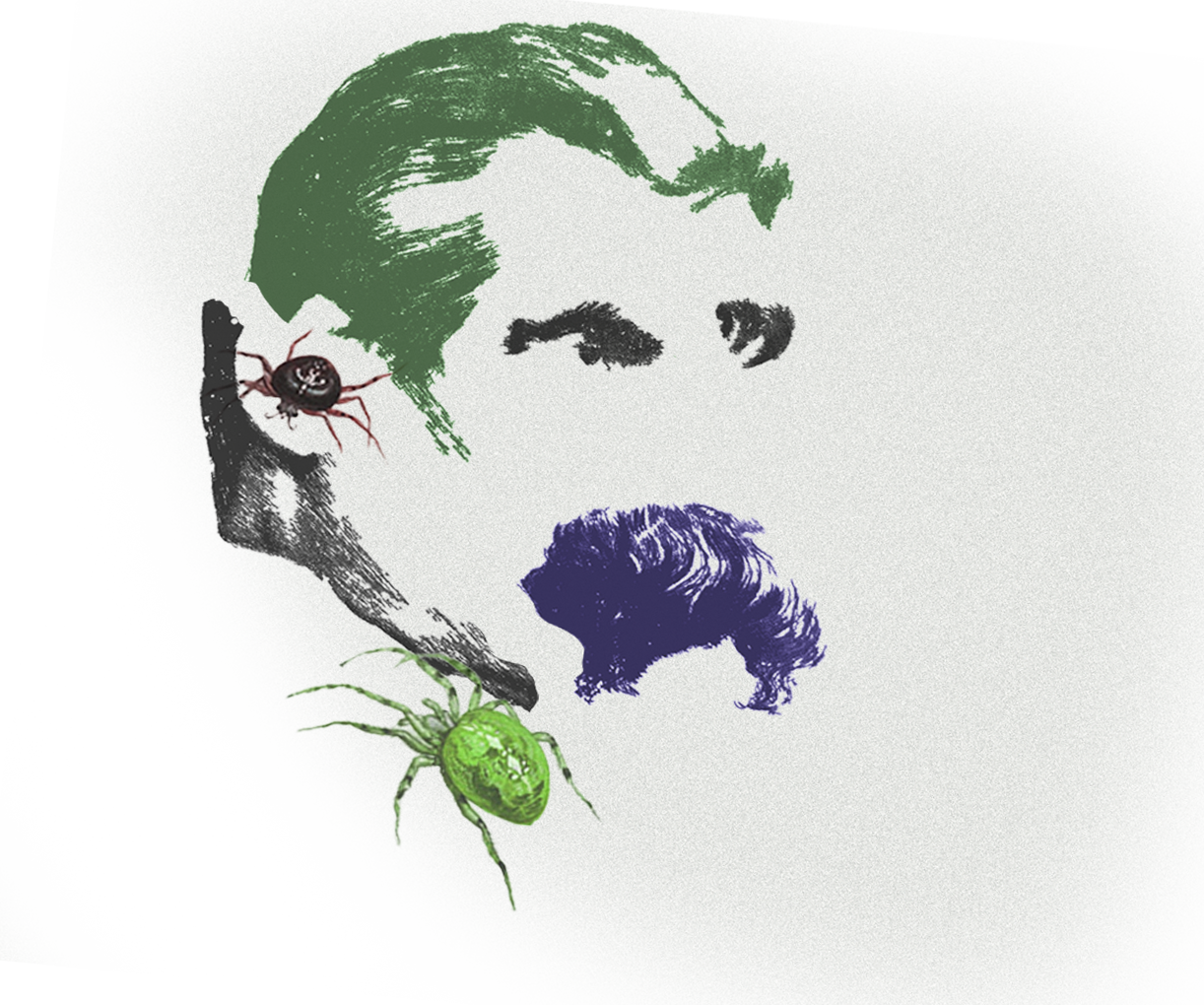

After Hans-Martin Schönherr-Mann has already dealt with Nietzsche's concept of resentment in two articles on this blog (here and there), he now addresses the question of how it can be applied to the current social situation.
His thesis: The current political landscape is characterized by many divisions based on resentment. They are due to the weaknesses of their own arguments. This is how critics are defamed as “corona” or “climate deniers.” The objections are often branded as conspiracy theories. You can't ask 'Cui bono?' anymore. Or you break off contact without comment to protect yourself. This is not only in line with Nietzsche's understanding of resentment in many places, precisely because he himself is not free from it, but is looking for ways out of it.
“What is the topicality of Nietzsche's analysis and critique of 'resentment'?“ is also the question of this year's Kingfisher Award for Radical Essay Writing, in which you can once again win up to 750 Swiss francs. The closing date for entries is August 25. The complete tender text can be found here.
If you'd rather listen to the article, you can find an audiovisual version on the Halcyonic Association YouTube channel, read by the author himself (link) and a listening-online version on Soundcloud (link).
Nietzsche’s Techniques of Philosophizing
With Glances Towards Wittgenstein and Heidegger
Nietzsche’s Techniques of Philosophizing
With Glances Towards Wittgenstein and Heidegger
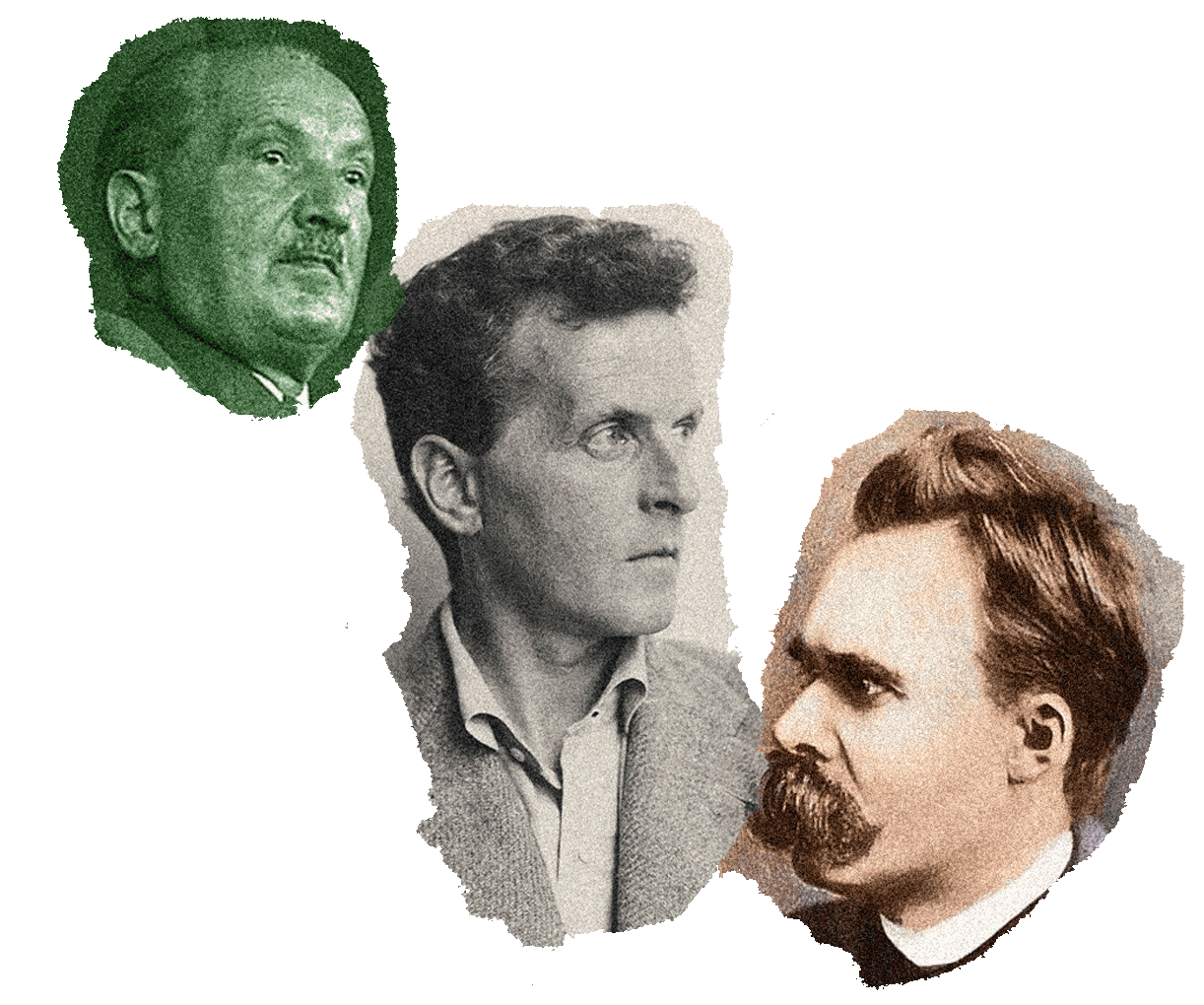
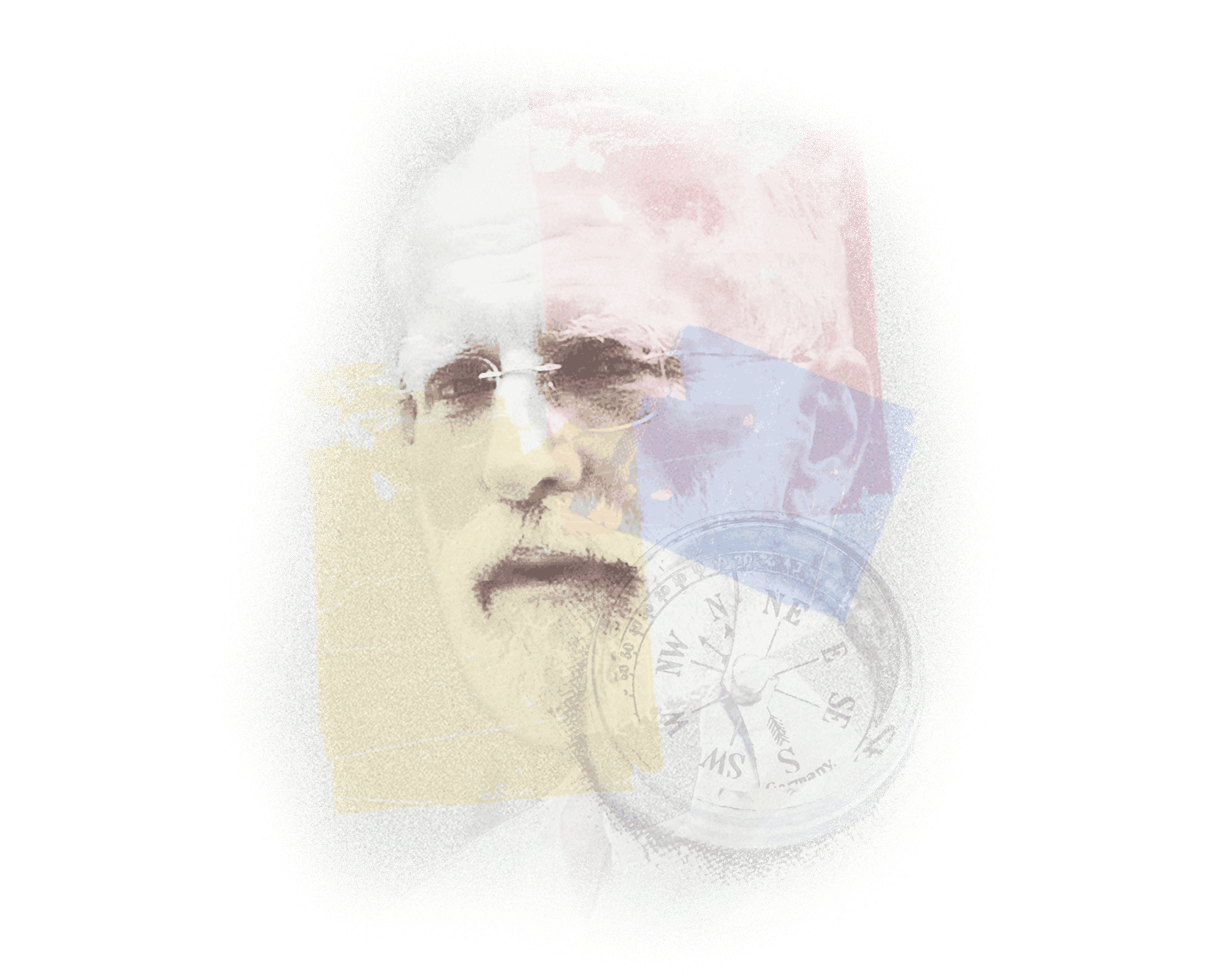
A fixed feature at the annual conference of the Nietzsche Gesellschaft [Nietzsche Society] conference is the Lectio Nietzscheana Naumburgensis: a particularly distinguished scholar delivering an extended lecture on the conference theme on the final day, thereby providing a pointed conclusion. The most recent conference in October 2025 awarded this special honor to Werner Stegmaier to recognize his long tenure as editor of the influential Nietzsche-Studien [Nietzsche Studies] and his authorship of numerous seminal monographs on Nietzsche’s philosophy. Running from October 16-19, 2025, the conference focused the theme “Nietzsche’s Technologies,” as Emma Schunack reported.
Generously granting his permission to publish his lecture in full and in this translation, Stegmaier takes on the conference theme from an unexpected perspective. Rather than examining what is commonly understood as “technologies”—machines, cyborgs, or automata—he explores instead Nietzsche’s philosophical techniques, both intellectual and rhetorical. Weighing up the original and idiosyncratic methods Nietzsche deployed while writing, Stegmaier reflects on how best to interpret and assess them. How were they able to enthuse and win over successive generations of readers? What can we learn from these today?
Comparing Nietzsche’s techniques with those of two other modern philosophical giants, Martin Heidegger (1889–1976) and Ludwig Wittgenstein (1889–1951), Stegmaier retraces all three philosophers’ break with the classical and conceptually oriented techniques of thinking inherited from antiquity, and their discoveries of radical and experimental means of developing philosophy in the age of “nihilism.” Replacing a one-dimensional, metaphysical understanding of rationality, these means cultivate a plural, perspectival mode of thought that necessarily relies on entirely different techniques. Situating Nietzsche’s methods within these broader developments in intellectual history, the Lectio establishes an utterly new framework for understanding his thought and its place within modern philosophy.
Translated by Henry Holland.
“Peace with Islam?”
Hiking with Nietzsche Through Glasgow’s Muslim Southside: Part II
“Peace with Islam?”
Wanderungen mit Nietzsche durch Glasgows muslimischen Süden: Teil 2

In the second part of his article on hiking through Glasgow’s Muslim-esque Southside, our staff writer Henry Holland delves into Nietzsche’s impassioned yet scattergun engagement with the youngest Abrahamic religion. He investigates how the experimental novel The Baphomet by French artist and theoretician Pierre Klossowski – which got him hooked on the Islam-Nietzsche intersection in the first place – blends Islam-inspired mysticism, sexual transgression and Nietzscheanism itself into an inimitable potion. With insights on Muslim-esque readings of Nietzsche in tow, Holland returns with Fatima and Ishmael to Scotland’s largest city, thus wrapping up his travelogue whence it began.
Nietzsche and Cyborgs
The International Nietzsche Congress 2025
Nietzsche and Cyborgs
The International Nietzsche Congress 2025
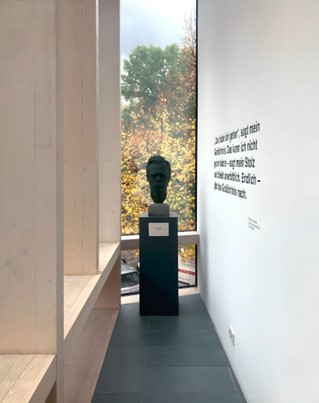

Under the topic Nietzsche's technologies international visitors were once again invited to the Nietzsche Society conference in Naumburg an der Saale this year. In the period from October 16 to 19, in addition to various lectures, a film screening and a concert, there was also an art exhibition to visit. Our author Emma Schunack was there and reports on her impressions. Her question: How can Nietzsche's technologies find expression in the technological age?
Editorial note: The conference report does not mention the important “Lectio Nietzscheana Naumburgensis,” with which Werner Stegmaier rounded off the conference on Sunday morning and took up the topic of the conference again in a completely different way by asking about Nietzsche's own “philosophizing techniques.” We have now published this important talk in full length with the kind permission of the author (link).
Why Are Many People No Longer Committed to Democracy!
Individualism as a Political and Social Threat in Tocqueville and Nietzsche — but also as an Opportunity
Why Are Many People No Longer Committed to Democracy!
Individualism as a Political and Social Threat in Tocqueville and Nietzsche — but also as an Opportunity
Individualism, even egoism, is frowned upon in all political, religious and social camps. They are attributed to liberalism and capitalism. Such people are not committed to others, are not involved politically or for the environment. They also do not respect a common understanding of the world and therefore behave irresponsibly. The Nietzschean is not impressed by such verdicts. She dances — not only!
Turning Moral Weakness Into Power
Nietzsche and the Accusation of Resentment
Turning Moral Weakness Into Power
Nietzsche and the Accusation of Resentment


Strangers seem creepy to many. They immediately fear that these strangers will harm them. Many decent earners think that recipients of citizen benefits are lazy and therefore do not allow them to receive government support. To many educated people, illiterate people appear rude and simple-minded, with whom they therefore want as little as possible nothing to do with, whom they do not trust. Religious people are often afraid of atheists, who in turn are afraid of contact with religion. What you don't know often appears to be dangerous and you prematurely discount that. Such prejudices lead to rejection, which often solidifies to such an extent that counterarguments are no longer even heard. This is resentment that has existed for a long time, but which today makes consensus almost impossible in many political and social debates. This can degenerate into hate and contempt and then into violence whether between rich and poor, right and left, machos and feminists, abortion opponents and abortion advocates, vegetarians and meat-eaters. When one side prevails, it imposes its values on the other, and the resentment even becomes creative. In any case, it prevents you from making an effort to understand the other person. For Nietzsche, resentment has been driving the dispute over what is morally necessary for a long time.
“Resentment” is one of the key terms of Nietzsche's late work. The philosopher is referring to an internalized and solidified affect of revenge, which leads to the development of an overall negative approach to the world. Especially in On the genealogy of morality Nietzsche is trying to show that the entire European culture since the rise of Christianity has been based on this affect. Judaism and Christianity, in their hatred of aristocrats, propagated an ethics of the weak — in this act, resentment became creative. With a new creative ethic, Nietzsche now wants to contribute to a renewed revaluation of values in order to return to a life-affirming aristocratic ethic of the “strong.” In this article, Hans-Martin Schönherr-Mann introduces Nietzsche's reflections on resentment and works out what makes the accusation of mutual resentment so popular to this day.
Traveling with Nietzsche through Southeast Asia III
Thailand
Traveling with Nietzsche through Southeast Asia III
Thailand


Our author Natalie Schulte traveled by bicycle for nine months Vietnam, Kampuchea, Thailand and malaysia. In her penultimate contribution to the series ”Hikes with Nietzsche“ she muses on encounters with wild animals that she met or could have met on her journey. It is hardly surprising that this includes considerations about the importance of animals, as they occur in Nietzsche's philosophy.
Homesick for the Stars
Prolegomena of a Critique of Extraterrestrial Reason
Homesick for the Stars
Prolegomena of a Critique of Extraterrestrial Reason

On April 12, 1961, Soviet cosmonaut Yuri Gagarin achieved the unbelievable: He was the first person in history to leave the protective atmosphere of our home planet and circumnavigate the Earth in the Vostok 1 spaceship. In 2011, the anniversary of this “superhuman” act was declared International Manned Space Day. The stars aren't that far away anymore. With the technical progress achieved, the fantasy of expanding human civilization into space takes on concrete plausibility. The following text attempts to philosophically rhyme with these prospects and finally describes the approach of a possible space program from Nietzsche. Although airplanes didn't even exist during his lifetime, his concepts can still be applied to this topic in a productive way, as is so often the case.
Editorial note: We have explained some difficult technical terms in the footnotes.
Historic Uprising in Bangladesh
The Will to Revolution
Historic Uprising in Bangladesh
The will to Revolution


For a total of 20 years, Bangladesh was ruled by an iron, authoritarian regime under Sheikh Hasina, the daughter of the first president since the country's independence from Pakistan, Sheikh Mujibur Rahman. But within a very short period of time, nationwide uprisings of such violence broke out in July 2024 that they overthrew Hasina after just one month and drove him into exile. How did this victory come from below and how does Nietzsche help us The will to power and continue his elaborations by Foucault and Deleuze to understand this historic moment?
Age-Old Rage
The birth of Modernity out of the Spirit of Resentment
Age-Old Rage
The birth of Modernity out of the Spirit of Resentment


“Resentment” is one of the guiding concepts of Nietzsche's philosophy and perhaps even its most effective. In his new book The cold rage. Resentment theory and practice (Marburg 2024, Büchner-Verlag), Jürgen Grosse argues that since the 18th century, more or less all political or social movements have been those of resentment. Our main author Hans-Martin Schönherr-Mann has read it and presents major theses below.
Riveting Strangeness
Remarks on Kafka's Work
Riveting Strangeness
Remarks on Kafka's Work

Franz Kafka died 100 years ago. The following text is an attempt to update his work with a socio-psychological perspective inspired by Nietzsche. His thesis: Kafka narratingly shows what Nietzsche philosophizes about. Michael Meyer-Albert wants to promote the logic of a non-naive world enlightenment in the fictions of one of the most important authors of modern times: affirmation of life instead of suicide.
Editorial note: We have explained some difficult technical terms in the footnotes.
Fleeing the State: Kafka and Nietzsche’s Human
Or: Becoming-woman after Deleuze & Guattari
Fleeing the State: Kafka and Nietzsche’s Human
Or: Becoming-woman after Deleuze & Guattari

Kafka and Nietzsche are united by their confrontation with the state and bureaucracy. Deleuze & Guattari, whose works are based on both, develop an apolitical response to the fatal political situation, namely transformations after Kafka, an expansion of themselves to Nietzsche, which can be understood as escape lines from a patronizing society.
Caught in the Crossfire of the Culture Wars, There Stands Nietzsche
Comparing Two Current Perspectives
Caught in the Crossfire of the Culture Wars, There Stands Nietzsche
Comparing Two Current Perspectives

It is well known that Nietzsche's history of influence has been read and absorbed across all political camps. But what about our present tense? Paul Stephan examines the writings of two authors who are about the same age as himself, in their mid/late 30s, and whose perspectives on Nietzsche could hardly be more different: While French journalist and YouTuber Julien Rochedy declares Nietzsche a pioneer of a right-wing cultural struggle, the German philosopher and political scientist Karsten Schubert attacks him for a left-wing identity politics. Both positions do not really convince our authors; rather, they are entirely within the framework of the prevailing simulation of politics as a cultural struggle, which would need to be countered by focusing on the really pressing life problems of contemporary humanity.
“A Gods’ Table for Divine Dice Throws and Dice Players”
Nietzsche's Superman Visits the Start-Up Scene
“A Gods’ Table for Divine Dice Throws and Dice Players”
Nietzsche's Superman Visits the Start-Up Scene


Nietzsche's superman is dead. Hardly anyone can do anything with this obscure idea anymore. You'd think so. And yet, in the current startup environment, you encounter numerous set pieces from Zarathustra's promise. What is it all about? — On the occasion of Nietzsche's 180th birthday, Natalie Schulte dedicates herself to this peculiar continuation of one of the philosopher's best-known concepts. A plea for taking a closer look at Nietzsche's idea despite its past and present misinterpretations.
Editor's note: We have translated longer English quotations into German in the footnotes ourselves.
Nietzsche and Ukraine
A Conversation with Vitalii Mudrakov
Nietzsche and Ukraine
A Conversation with Vitalii Mudrakov


Vitalii Mudrakov is one of Ukraine's leading Nietzsche experts. Due to the war, he and his family currently live in Germany. Paul Stephan talked to him in detail about some aspects of the rich Ukrainian reception of Nietzsche in the context of the country's independent cultural history, which has often been ignored. It shows that Nietzsche's liberal thinking repeatedly inspired central protagonists of Ukrainian culture in their struggle for an independent nation free from Habsburg, Tsarist or Soviet foreign rule — and today again the struggle for their own self-assertion in the face of the Russian invasion.
Цю статтю перекладено українською мовою. Переклад можна знайти тут.
Boomers, Zoomers, Millennials
How Do the Respective Perspectives on Nietzsche Differ?
Boomers, Zoomers, Millennials
How Do the Respective Perspectives on Nietzsche Differ?


This time in confidential Du, Paul Stephan talked to Hans-Martin Schönherr-Mann, our oldest parent author, and our youngest regular author, Estella Walter, about our different generational experiences and about what is actually to be thought of the fashionable discourse about the different “generations.” We talked about post-structuralism, the ecological issue and the diversity of possible connections to Nietzsche.
What is ChatGPT Doing to Philosophy?
Attempt of a Critical Examination
What is ChatGPT Doing to Philosophy?
Attempt of a Critical Examination

On the anniversary of Nietzsche's death, Paul Stephan conducted a detailed interview with the ChatGPT program on this blog to test the program's performance when it comes to profound philosophical questions (link). This is followed by a critical reflection of this experiment.
The images for this interview were, unless otherwise marked, with the software DeePai created. The instructions for the article image were “Nietzsche and ChatGPT,” the instructions for the images in the article “ChatGPT talks about Nietzsche.”
Nietzsche Against the Body’s Naysayers
A Conversation with Philosopher and YouTuber Jonas Čeika
Nietzsche Against the Body’s Naysayers
A Conversation with Philosopher and YouTuber Jonas Čeika


After discussing Jonas Čeika's book How to Philosophize with a Hammer and Sickle and bis YouTube channel (CCK Philosophy) (link), Henry Holland interviewed the American about the blockages of academic philosophy, Nietzsche's relevance as a thinker on the “guideline of the body,” and about tensions between his claim as an anti-philosopher and his social position.
Determining Nietzsche
Determining Nietzsche

Does Nietzsche have clear philosophical doctrines? There is still a fight with Nietzsche's ambiguity today. When does he mean what he says? In her essay, Natalie Schulte explores the question of where, in the midst of assimilating ambiguity through ideological programs on the one hand and academically savvy dispersal of Nietzsche's thought structures into indiscriminate and incoherent fragments and perspectives, on the other hand, today's engagement with Nietzsche has to locate its decisive challenges. Between the dangers of confusing his philosophy and the limitless relativization of his theses, she is looking for a fruitful third way of dealing with the question of the “actual Nietzsche.”
Whistling in the Woods and Screaming for Love
Nietzsche's Echo in the Heavy Metal Music Scene
Whistling in the Woods and Screaming for Love
Nietzsche's Echo in the Heavy Metal Music Scene


Like hardly any other philosopher, Friedrich Nietzsche has left his mark on popular culture — less in the pleasing mainstream entertainment, but more in subcultures and in artistic positions that are considered “edgy” and “dark.” In this “underworld,” Nietzsche's aphorisms, catchphrases, slogans and invectives are widely used — for example in the musical genres of heavy metal, hardcore and punk focused on social and aesthetic provocation. What is the reason for that?
The Enlightenment’s Twilight
Nietzsche's Truth of Semblance II
The Enlightenment’s Twilight
Nietzsche's Truth of Semblance II

After Michael Meyer-Albert in the first part of his text Telling the sad story of the self-doubt of the Enlightenment, he now reports on Nietzsche's “cheerful science” as an alternative.
“Je suis Nietzsche!”
A Dialogue about Bataille, Freedom, the Economy of waste, Ecology and War
“Je suis Nietzsche!”
A Dialogue about Bataille, Freedom, the Economy of waste, Ecology and War

Paul Stephan talked to Jenny Kellner and Hans-Martin Schönherr-Mann about the interpretation of one of the most important Nietzsche interpreters of the 20th century: Georges Bataille (1897—1962). The French writer, sociologist and philosopher defended the ambiguity of Nietzsche's philosophy against its National Socialist appropriation and thus became a central source of postmodernism. Based on Dionysian mythology, he wanted to develop a new concept of sovereignty that transcends the traditional understanding of responsible subjectivity, and criticized modern capitalist rationality in the name of an “economy of waste.” With all this, he provides important impulses for a better understanding of our present tense.
Deciding to Serve Life
An Essay on the Meaning of Nietzsche's Philosophy
Deciding to Serve Life
An Essay on the Meaning of Nietzsche's Philosophy

Nietzsche is generally regarded as a literary philosopher whose aphoristic nihilisms not only conjure up the death of God, but who also reinforced the dark sides of German history as a posthumous master thinker. In contrast, the following text would like to be part of the series What does Nietzsche mean to me? invite you to learn to read Nietzsche anew as the discoverer of the all-too-unknown philosophical continent of Mediterranean existentialism.