
Nietzsche POParts
Aren’t words and notes
like rainbows and bridges
of semblance,
between that which is
eternally separated?
Nietzsche
POP
arts
Nietzsche

Sind

nicht

Worte


und

Töne
Regenbogen
POP

und

Scheinbrücken

zwischen

Ewig-

Geschiedenem
arts

Timely Blog on Nietzsche’s Insights
Articles
_________
Jean-Baptiste Botul, a Forgotten Nietzschean from France
Jean-Baptiste Botul, a Forgotten Nietzschean from France
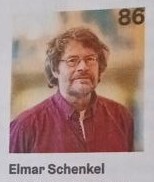
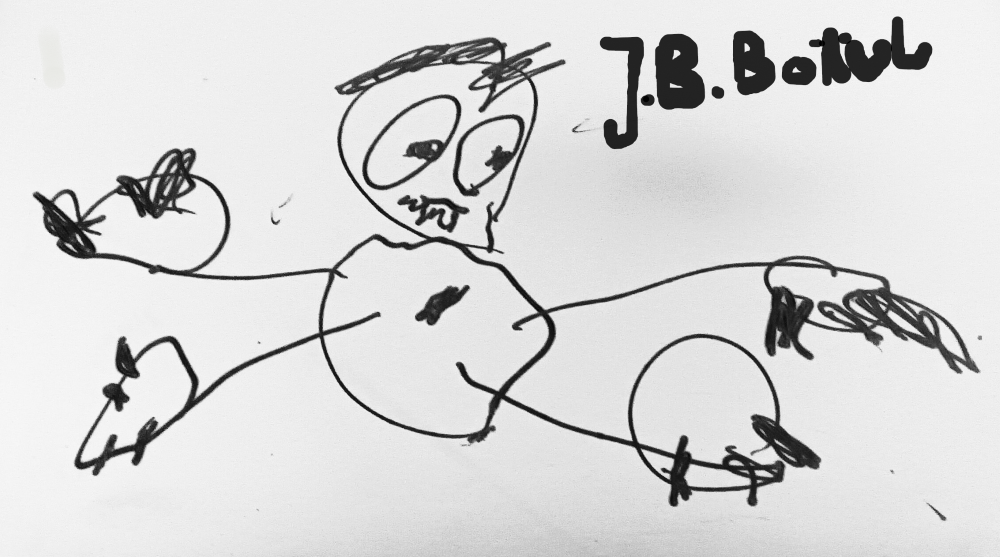
Time and again, our blog is dedicated to overlooked figures from the Nietzscheverse. The Leipzig Anglist Elmar Schenkel went deep into the archives for us in order to introduce you to an almost unknown figure of French-language Nietzsche reception: the “taxi philosopher” Jean-Baptiste Botul, who lived from 1896 to 1947 and not only came into contact with numerous prominent figures of his time on his trips through Paris, but developed also, in conversations with them, his very own Nietzsche interpretation, which, due to its subversive explosive power, has been stored in the poison cabinet by the mainstream of Nietzsche research to the present day. If Nietzsche was, in his own words, “dynamite,” then Botul is a rocket of the Force de frappe, still awaiting detonation — a stroke of luck?
Before AI, i.e. artic intelligence, starts writing new texts by Nietzsche (like the psychics and spiritists who continued the works of Conan Doyle and Joseph Conrad, or Schubert's Unfinished finalized) or even invent further exegetes (from Guatemala, Puerto Rico or the Vatican), it is time to rescue and examine the last castaways in the analog world. In other words, there are still a number of completely lost Nietzsche commentators who have worked intensively on Nietzsche away from the mainstream, often not only by studying him but also by studying him lived have. If you look at France, you should not recite the same mantras of Derrida, Foucault or Deleuze, but also consider Jacques Bouveresse (1940-2021), who played Nietzsche against Foucault as an anti-relativist and played Nietzsche against Foucault in his last book (Les foudres de Nietzsche1), scourging the delusion of the French Nietzsche followers.

I. A Life between Tango and Taxi
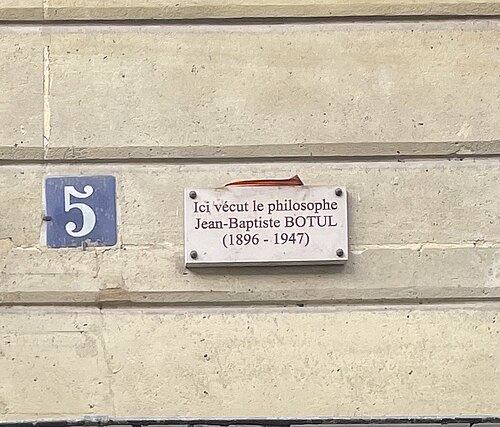
Jean-Baptiste Botul is also one of these French Nietzsche experts. Botul shared his birthday, August 15, 1896, with Sri Aurobindo (1872-1950), an Indian politician, mystic and philosopher who repeatedly referred to Nietzsche, and the Day of Indian Independence 49 years later. There is only sparse information about his parents: The father ran a lottery shop on the Loire, the mother sewed uniforms for the military. One can only speculate about Jean-Baptiste's early years. One of his followers, the Irish philosopher Frederick de Selby, appears to have used the art of speculation in his rather thin biography of Botul, making a distinction between euphoria and outright lies. It was published in 1953 under the title Biographical Extravagancies. The Life of J.-B. Botul and can only be viewed in special libraries. (The German interlibrary loan service that I wanted to use unfortunately completely failed.) Since this work appears to be quite unreliable, that might not be a bad thing.
Let us therefore stick to the undeniable facts that Frédéric Pagès strings together in his edition (2004) of Botul's main work: In 1894, Botul met the founder of the scouting movement, the British cavalry officer Robert Baden-Powell (1857-1941), but it was not founded until 1907. So there should be in his Memories of an eclectique (1934) have postponed the memory somewhat. He certainly wanted to highlight similarities between himself and Baden-Powell: searching for clues, observing wild animals in the jungle, moral principles, idealistic activism. The first engagement with Marthe Betenfeld failed. In 1914, Botul evaded mobilization by fleeing to Argentina. At the same time, the kindred boy Jorge Luis Borges (1899-1986) moved from Buenos Aires to Switzerland to learn the language of Heine and Schopenhauer. Meanwhile, Botul is dedicating himself intensively to tango and will soon be offering courses in this discipline. In particular, he is now a taxi driver. A first philosophical attempt is taxi analysis, which we only know combines tracking (worthy of Holmes) with logical-analytical thinking (Bouveresse says hello!). But he doesn't yet leave any traces himself. He now becomes a representative of the French government on a Mexican atoll — unknown why there and anyway. From 1919, correspondence with the serial killer Henri Désiré Landru, the so-called “Bluebeard from Gambais,” presumably out of an interest similar to Musil's in his Man Without Qualities harbored opposite Moosbrugger.
Botul begins a proper study of philosophy at the Sorbonne. Pagès writes of a brief relationship with the noble Marie Bonaparte (1882-1962), “Freud's Princess” and girlfriend of Rilke, as well as author of a three-volume analysis by Edgar Allan Poe. The same, and this is important now, from a brief liaison with Lou Andreas-Salomé, who belonged to the same circle around Freud. This can be dated to 1923, but it was only around 1930 that an erotic correspondence can be found, hitherto unedited, as the legal issues in this delicate matter remain unresolved. The brief affair with Simone de Beauvoir, as she suggests to Pagès, seems doubtful to me. Botul had the tendency to interpret taxi rides with celebrities as friendship or even as an affair.
A visit to Röcken — Nietzsche's birthplace and burial ground — appears to have taken place in the 1930s. A letter about this to Elisabeth Foerster-Nietzsche is preserved in the Botul archive, which is located in the castle of the Baron de La Cuisse-Este-Maison, Indre-Loire. In this letter, he writes (without date) about his planned visit to “Recken.” There is no sign of this in the guest books or similar documents in skirts or sützen. But it is possible that the horse on the goat stable at the rectory in Röcken was drawn with brown lines by him, as it is signed with JBB. The Nietzsche-Verein Röcken has the firm intention of having the picture dated exactly once. A Leipzig sepulchral researcher is in the starting blocks. In any case, this strange image has the potential to become a magnet for tourism in the Lützen area in addition to the graves of Gustav Adolf and Nietzsche.
Botul spent the last decade until his death in 1947 (also on August 15) as a taxi driver in Paris. He claims to have driven Stefan Zweig once.

II. The Nietzsche Pendulum
Let us turn to his Nietzsche studies, which, however, appear less academic, but they are closer to Nietzsche than those of established philosophers because they bring Nietzsche into life or describe him in an experience of life. The correspondence with psychoanalyst Lou Andreas-Salomé led to this. In the Botul Archive, we learn more, even though the archive manager there, the named Baron, had a somewhat opaque relationship with Botul and does not want to make the letters available to the public because they are banned from publishing until 2044. His suggestions, however, give an idea of the dimensions of thinking of “JBB,” as he always abbreviates it.
According to this, Botul has in his Memoirs of a Forgetful (published posthumously, Les Éditions de la Quinzaine, Paris 2023, in which his works were published in their entirety, by the way) wrote about a taxi ride that changed his life. One evening, it is February 6, 1937, in front of the Paris Opera House, the streets shining with rain, a customer gets into a taxi, a young lady who, when asked “Where? “only “Cours Désir” stated what he probably misunderstood, because he was currently working intensively on psychoanalysis (he also called it “taxi analysis”). The young lady is a student at a strict Catholic institute on Rue de Rennes, which bears this very associative name.
What exactly happened that night remains in the shadow of history. In any case, she only arrived home early in the morning, causing her parents' anger. She did not want to give any information. Botul stated that Daemon of Noon I forced him to talk to the young woman about Nietzsche all night, i.e.: He saw in the lady an embodiment of the recently deceased Lou Andreas-Salomé, a demon with whom he had so much in common. As a result of this suspicious trip, the dreaded “taxi court” was convened, and numerous taxi drivers also gathered to interrogate Botul. Botul presented his understanding of German philosophy to this committee for about twelve hours. Here he called it Nietzsche's “taxography” for the first time, which was to become the title of his seven-volume major work. The success among his colleagues was that during his nine-hour presentation, most of them had left the hall, or the chairman threatened him that there would soon be a fight if he did not immediately leave this German philosopher. Botul hurried home and began to write down his work as if in a trance.

He described the conversations with taxi customers as “taxography,” which, while accepting many detours, he unerringly engaged in thoughts about Nietzsche. After arrival, customers were unable to complain about the fare because they had experienced a certain mental uplift; some compared it to a near-death experience. But let us be careful because many did not want to provide any information. Even as the “botulism” was already becoming a phrase in the Latin Quarter, no one wanted to admit that they had received their survey in this taxi. In any case, “elevation” is a correct word, because, as from taxography III (§ 8), Botul always developed his thoughts on Nietzsche in terms of two dualities: Up vs. Down and Easy vs. Heavy; Exaltation and Humiliation, Aggravation and Relief. A pendulum law. Botul wanted to wrest the hammer from Nietzsche and equip him with a shovel instead. While the hammer destroys or nails down, the shovel is mobile; it is also an instrument of archaeology (here first echoes of Foucault, who unfortunately discovered Botul too late), a child's tool and a symbol of construction. Your movement is versatile. You can excavate thoughts, yes, even as Nietzsche knew, poems that are also trees.2 This is how Botul named him Elevateur de la poésie, which, by the way, was supposed to come as a “poem lifter” in the German translation, but unfortunately became “weightlifter” due to a typographical error. Not a good omen for German reception. The shovel, however, combines the top and bottom as well as the light and the heavy, a quality that Botul thought of. Time was neither cyclical nor linear for him, but he saw with Nietzsche in time a sphere on which the lines from above and below, from East and West intersected without interruption. Superhumans can arise at any of these intersections. They are not the product of breeding or the future, but are the result of pure chance. According to JBB, this is what Nietzsche meant with the preposition “on the way to the superman.”3.
Botul often brought taxi customers into his car, his “Frédéric Mobile”, with the help of a calendar and detailed observations of their steps through Paris. Some traces of them could be reconstructed in his writings. It should be noted that he hated quotation marks above all else. In taxography IV, § 37, we find a text in which every word is provided with quotation marks — in retrospect an early parody of postmodernism, which was intended to put its “Nietzsche” on the sign.
A trace may be mentioned as an example. He was a great admirer of composer Erik Satie (1866-1925) and was also able to steer him into his taxi one day, in front of the famous cabaret, of course Le Chat noir. The gymnopedist quickly got into the old, well-known taxi. Although he had never read it, he liked to be engaged in a conversation about Nietzsche's pendulum thinking. In the notes of Satie's friend Contamine de Latour (1867-1926), we read about Satie's difficulties with music. Botul seems to have adopted the text with minor modifications:
He [Botul writes about himself in the memoirs always in the third person, sometimes singular, sometimes plural; just Nietzschean] created a personal philosophy. His philosophical education was very incomplete, so he gathered together the elements he had mastered and made a special recipe from them, declared the rest to be non-existent and even harmful to a good philosophical way of thinking. He was in the situation of a person who only knew thirteen letters of the alphabet and decided to create a new philosophy with this material instead of admitting his lack of skill.
His motto: In any moment, you can be a superman. But this is only possible with the complete map of Paris in mind. He was a great admirer of the French writer Marcel Schwob (1867-1905), who unfortunately died early. His dream would have been to have driven him in a taxi and then to have been drawn by him as a literary portrait. The trip with Stefan Zweig was too short for such a result. He was able to bring the legendary Pierre Menard to a Spanish archive, where he was currently carrying out his monumental studies on the geology of La Mancha.
In his later years, Botul turned to Asian thought without giving up Nietzsche. “Nietzsche would have done that too,” he used to say, “unless he would have become a Jesuit, maybe even a taxi driver if his eyes had allowed it.” One of his last words was: “It's a shame that the term 'Zen. ' ”
May there finally be a renaissance, also here in the German-speaking world. After all, Bernard-Henri Levy has his Kant critique with the help of Botul's brilliant analyses of Kantian sex life (La vie sexuelle d'Emmanuel Kant, ed. F. Pagès, posthumously 1999).
Unfortunately, flat spirits keep trying their hand at JBB, this mountain range of a thinker, and, up to this day in 2026, often with the accusation of having led a dubious existence that Nietzsche research did not advance, but did not advance at all: on the contrary.
Elmar Schenkel, Anglist and author, read Nietzsche at the age of 16 in his Catholic village in Westphalia. As a German teacher in France, he became aware of the importance of Nietzsche. Member of the board of the Nietzsche-Verein Röcken since 2015. Publications about Nietzsche: 101 letters to Friedrich Nietzsche about his 175th birthday (Edited by Fayçal Hamouda); Ed.: Nietzsche: The happy science (Kröner Verlag 2023); as author: True stories about Friedrich Nietzsche (Tauchaer Verlag 2024) and Nietzsche globally. Around the World in 80 Supermen (Kröner 2025).
Article Image
Undated portrait of Botul, probably created around 1905, which is attributed to the young Pablo Picasso, but could possibly also be by Paul Klee. It is the only surviving authentic pictorial representation of Botul, who was hostile to photography and had a strict aversion to painters. Used with permission from Archive Botul, Inv. -No 13.
Literature
Botul, Jean-Baptiste: taxography I-VII. Paris: Editions naufrages 2025.
Bouveresse, Jacques: Les foudres de Nietzsche et l'aveuglement des disciples. Marseille: Hors d'atteinte 2021.
From Selby, Frederick: Biographical Extravagancies. The Life of J.-B. Botul. Dublin: Dalkey Publishers 1953.
Pages, Frederic: Nietzsche et le Demon de Midi. Paris: Editions Mille et Une Nuit. 2004.
Wehmeyer, Grete: Erik Satie. Reinbek near Hamburg: Rowohlt 1998.
Footnotes
1: Editor's note: The title of this untranslated work is ambiguous; it can be translated both literally as “Nietzsche's Lightning” and translated as “Nietzsche's Wrath.”
2: “And indeed! Where such trees stand next to each other, there are Blissful islands! But one day I want to dig them and set everyone alone: that they learn loneliness and defiance and caution” (So Zarathustra spoke, From the blissful islands).
Jean-Baptiste Botul, a Forgotten Nietzschean from France
Time and again, our blog is dedicated to overlooked figures from the Nietzscheverse. The Leipzig Anglist Elmar Schenkel went deep into the archives for us in order to introduce you to an almost unknown figure of French-language Nietzsche reception: the “taxi philosopher” Jean-Baptiste Botul, who lived from 1896 to 1947 and not only came into contact with numerous prominent figures of his time on his trips through Paris, but developed also, in conversations with them, his very own Nietzsche interpretation, which, due to its subversive explosive power, has been stored in the poison cabinet by the mainstream of Nietzsche research to the present day. If Nietzsche was, in his own words, “dynamite,” then Botul is a rocket of the Force de frappe, still awaiting detonation — a stroke of luck?
“A Question of Context”
Thoughts and Memories of Alexander Kluge
“A Question of Context”
Thoughts and Memories of Alexander Kluge


The filmmaker, writer, lawyer, and philosopher Alexander Kluge, born in 1932, died on March 25. Kluge, who became known to a large audience not least through his films and his artistic television interviews, was repeatedly inspired by Nietzsche. In his diverse work, he not only dedicated himself decisively to him, but also followed a profoundly Nietzschean, perspectivist approach throughout his life. That should be reason enough to dedicate an obituary to him on our blog, which art historian and curator Barbara Straka thankfully wrote for us.
I have followed Alexander Kluge's films, his writings, theories and food for thought intensively since the mid-1970s. He was one of the great universal and lateral thinkers between art, literature, film, philosophy, science, history and politics. His death opens a huge gap, if not an abyss. And that in these times!
My favorite movie was always The Patriot (1979), I've certainly seen it twenty times. Cult! Strangely enough, the equally cumbersome and poetic film, with Hannelore Hoger in the lead role, is rarely mentioned or shown today. Because it is about Germany. Back then shared. today Thinking about it can easily get you sidelined. Really? One of the intertitles states: THE CLOSER YOU LOOK AT A WORD, THE FARTHER IT LOOKS BACK: GERMANY. How could there be or have been misunderstandings? And that a decade before the fall of the wall? The words clever exemplify the critical self-reflection that he wanted to initiate in us, the 1968 and post-68 generations. I, then a teacher training student, remember the scene with history teacher Gabi Teichert, who researches and digs for the source material for German history, who personally goes to the Bonn Bundestag to question members of parliament: “Don't you also think that the source material for the history books in the Federal Republic of Germany must be changed? “So the story? How should you change them? One of Kluge's typical ideas that led to mental hiccups. You had to digest that first. Because back then, in the 1970s, we left-wing intellectuals in old West Berlin and in West Germany were all thinking about the revolutionary change in history forward. Of course, history cannot be changed retrospectively, but looking at it can. With this trick, the word and visual artist Kluge succeeded almost incidentally in installing a Nietzschean, i.e. perspective view of history and also of the concept of truth. Because didn't we think that what was written in the history books of the Gabi Teichert generation was “truth”? It was just one of many. Like today. There have been many more in the post-factual age, but there is no one left to sort them for us, like Alexander Kluge.
He was a great individual, like Nietzsche, but he also had allies and co-thinkers such as scientists, writers, and artists. The start was made by Oskar Negt (1934-2024), with whom he in 1972 Publicity and experience wrote and wrote the tremendous mammoth work in 1981 History and self-will presented. In the former, the organization of the bourgeois and proletarian public sphere was analysed by Negt and Kluge examining the connections between social experiences and structures of public spheres, it was then, more pragmatically, a “book of use.” “We are interested,” wrote the authors, “what does material-altering work in a world in which it is obvious that disasters occur. These are the historical working capacity: Born from separation processes and armed with self-will that defends itself against separations.”1. On the other hand, Kluge chose the category of connection throughout his life. Against Negt's political-sociological, purist view, Kluge became aware of personal, real human experiences in order to enable a new, autonomous public sphere. This required insight into the connections, ultimately the old Faustian question of what holds the world together on the inside. But Kluge wanted the “sensuality of connection.”2. He was driven by a tremendous interest in knowledge and by a passion for communication that is unparalleled at a time when everyone is next to themselves. He cleverly knew how to turn the capitalist category of “self-interest” from head to toe: He challenged his audience, reading and seeing, to pick out from the big picture of history the things, messages, examples and experiences that have to do with their own life. His films and books were offers of inner insights, calls for individual resistance, emancipation assistance from a late enlightenment who wants to help out of immaturity. But there was no longer a consistent narrative thread, just collages and fragments, which nevertheless had a lot to offer and remained in the memory. He did not want a “reader” from A to Z, but wanted a selective dive, in a sense by jumping head into the cold water, with permanent repeatability in individual reception: “There is no book more than the opportunity to behave independently” (ibid.). That also required courage, but you could learn that from him as a reader, and you could become addicted to it just like swimming once you got used to cold water.
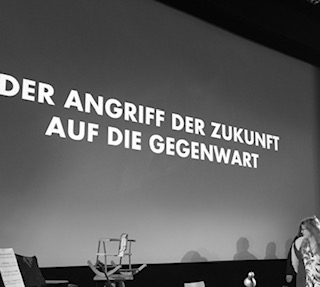
Later, there were other allies who joined Kluge or that he found: the writer Ferdinand von Schirach or the artists Anselm Kiefer and Gerhard Richter. They all embodied what he was looking for: the sensuality of connection. Because Kluge had long since experienced that language alone was not enough. He was not only a collector of stories, but also of pictures, newspaper and advertising photos, which he processed into image-text collages and interspersed into his films and books, sometimes confusing and irritating, seemingly incoherent. Work of discovery, ordering and structuring came to the reader, whom Kluge wanted to empower him to become independent, as did Nietzsche his audience.
Like Nietzsche, Alexander Kluge was a word and image artist. Both spoke in metaphors and fragments whose meaning one had to evoke or which one had to recompose. Both made use of the full range of literary and visual options. At Kluge, the media and the confident use of photo and film were added. Like Nietzsche, he understood how to use words to create images in front of our inner eye and Vice Versa To put pictures into words that actually contained the ineffable and outrageous, showed the incomprehensible, such as episodes of the Second World War that Kluge, born in Halberstadt, had witnessed and repeatedly recalled from memory, called upon, presented in his short stories and films and established as lessons. In the movie The Patriot Kluge does this with the help of the artificial figure “The Knee” from Christian Morgenstern's poem A knee goes alone around the world, which personifies Kluge and makes him a participating observer of the events of the World War, allows him to fight against the “quarrelsome brain.” In this way, he succeeded in describing or filming the incommensurable as that “depiction of the unrepresentable” (Jean-François Lyotard). He had internalized and authentically transformed the pathetic “never again” worn out in post-war Germany as his own life experience, but exaggerated linguistically and visually and impressively made comprehensible for the next generation.
Kluge was an excellent philosophical and scientific thinker and author, but he was also a talented storyteller and storyteller. “Whoever laughs at fairy tales was never in need,” says the screenplay for patriot, and he masterfully understood how to extract emancipatory and utopian content and potential from the traditions of myths, legends and fairy tales collected since time immemorial, to blend into his films as subtitles or to intersperse subheadings in his treatises. The fairy tale of stubborn child The Brothers Grimm is one such example. Disobedience is punished and leads to death, but self-will still emerges from the grave, as the dead child keeps sticking his hand out of the ground. Grimm's fairy tales — for Kluge an example of the trench in German history: “They dug and dug and found the fairy tales. Its content: How a people worked on their wishes for over 800 years”3.
I always liked to listen to Kluge when I was able to see him “live” or during interviews on television (he was never in the picture himself). Once I dared to call him myself, it was in the early 80s. Back then, there was a strange atmosphere of fear and hopelessness in all discourses in the old Federal Republic; there was a vital and not just virtual peace movement against the impending US medium-haul deployment in Europe. What could art do about it? That was the big question. Could it change political consciousness or even reality? I was just curating an exhibition of politically critical art in Berlin and wanted to invite Alexander Kluge to a panel discussion, but he said both dryly and politely: “I am a lawyer and unfortunately have no time to come to Berlin.” But he sent me a portrait of himself, signed, which I kept. Of course, this did not show him as a lawyer, but as an author. He had many roles and was present at countless events and forums. So he could hide behind one or the other when needed.
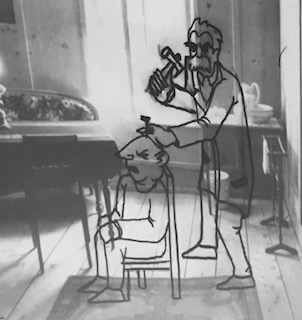
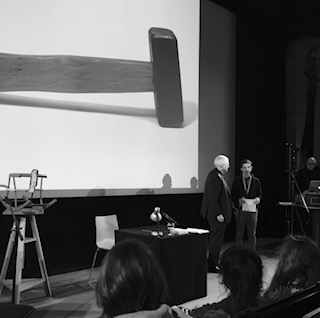
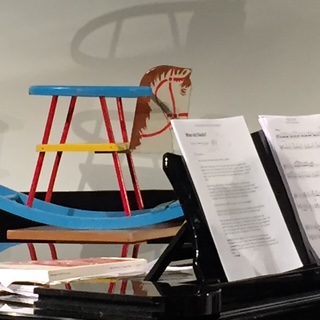
On December 6, 2016, I saw Kluge “live” again at the Babelsberg Film University, where he gave a presentation on DADA and then received a prize from the students. It was an experience to listen to him — brilliant speaker with the voice of a storyteller that he was — but it was also funny with the rocking horse on stage and other bits and bobs that were standing around there. Students then showed a film about Nietzsche with a character hitting another on the head with a hammer, accompanied by weird music. The whole thing as a stick figure aesthetic against the backdrop of the Nietzsche museum room in Sils Maria, where not only So Zarathustra spoke But so did the idea of eternal return. The film was entirely in the style of clever, black and white, fragmentary subheadings filling with screen. That's when the hammer came into the picture. It was Nietzsche and Kluge's symbolic tool. How could you have better clarified what Nietzsche into On the genealogy of morality With his saying he meant: “[N] ur that doesn't stop Woe zu tun“Remains in memory”? Kluge quotes him more completely, in typical discomfort, as early as 1979 in a draft text The Patriot: “'It was never without blood, torture, sacrifices when people felt it necessary to remember! Ah, reason, seriousness, control over affects, this whole gloomy thing that means thinking, all these privileges and showpieces of man: how expensive have they paid off! How much blood and horror is at the root of all good things. '” — Our beautiful Germany, adds Kluge, “is a 'tremendous collection' of such 'good things.' They are the commodity that history deals with, that good thing in people that continues incessantly.”4.
All images used in the article are photographs taken by the author during the mentioned presentation on 6/12/2016 in Babelsberg.
Barbara Straka, born 1954 in Berlin, studied art education/German literature and art history/philosophy in West Berlin. As a curator and art mediator, she has initiated exhibitions and major projects of contemporary art in Germany and abroad since 1980. She was director of the 'Haus am Waldsee Berlin — Place of International Contemporary Art, 'President of the Lower Saxony Art University HBK Braunschweig and consultant for cultural and creative industries and international affairs at the Berlin Senate. She is the author and editor of numerous publications on art after 1945 (www.creartext.de).
Literature
Kluge, Alexander: The patriot. Texts/images 1 — 6. Berlin 1979.
Kluge, Alexander & Oscar Negt: History and self-will. Historical organization of work assets — Germany as a production public — Contextual violence. Berlin 1981.
Höhne, Petra & Michael Kötz: The sensuality of context. On Alexander Kluge's film work. Cologne 1981.
Footnotes
1: Kluge & Negt, History and self-will, P. 5.
2: Petra Höhne & Michael Kötz, The sensuality of context.
3: The Patriot, ibid., p. 123.
4: Alexander Kluge, The patriot. Texts/images 1 — 6, P. 26.
“A Question of Context”
Thoughts and Memories of Alexander Kluge
The filmmaker, writer, lawyer, and philosopher Alexander Kluge, born in 1932, died on March 25. Kluge, who became known to a large audience not least through his films and his artistic television interviews, was repeatedly inspired by Nietzsche. In his diverse work, he not only dedicated himself decisively to him, but also followed a profoundly Nietzschean, perspectivist approach throughout his life. That should be reason enough to dedicate an obituary to him on our blog, which art historian and curator Barbara Straka thankfully wrote for us.
“How Well Disposed Would You Have to Become to Yourself and to Life”
Prolegomena to Any Future Philosophy That Will Be Able to Present Itself as an Enlightenment — Part II
“How Well Disposed Would You Have to Become to Yourself and to Life”
Prolegomena to Any Future Philosophy That Will Be Able to Present Itself as an Enlightenment — Part II
After our author, in the first part of this article, described the current political-cultural situation with reference to Fukuyama as an outgrowth of deep-seated boredom, which numbs itself in excesses of anger and indignation, he tries in the following second to suggest a possible turn for this zeitgeist, which could manifest itself in a new Enlightenment verve and a new positive self-image of the Enlightenment. Our author, with Nietzsche, opposes the “four despairs” that afflict the present tense, “four transfigurations” and “fields of research” resulting from them. An ironic view of the world and oneself should help to practice a transfigurative perspective on the world, which would be able to overcome the lethargy of postmodernism and revitalize the modernist project. The program of self-reliant future Enlightenment.
4. Misothymia and Hybrithymia
With the deeper reflection made possible by Fukuyama, the phenomenon of illiberal polarization can be understood in more detail. Polarization results in bipolar disinhibition of isothymia and megalothymia, which can be seen as a reasonable form of recognition in the mirror of the other person.
The truth of these excesses lies in the fact that their intensity articulates a diffuse form of recognition of the desire for recognition. They are true as self-unclear forms of will to want to live thymotically. This is also where they get their attraction.
The charisma of polarization lies in the fact that it compensates for the lack of Thymos. Both poles offer thymotic stimulation. They act irresistibly as messengers with an aura of substance. In both struggles for recognition, drama flows unnoticed, which arise from a bored lack of substantial life. It's finally about something again. Important again at last. At last the “big moral words again, always the bumbum of justice”1 in the mouth.
The particular complexity of the current polarization results from the fact that the different forms of recognition are at war with each other in order to make themselves believe that the battle for recognition is not over and must continue with full force. This leads to an escalation of the forms of recognition described by Fukuyama. Through their cultural-fighting orientation, they transform themselves into illiberal figures that radiate into the community.
Isothymia becomes megalothymic as a fight against megalothymic and megalothymic mobilizes isothymically in the sign of pre-modern megalothymia. For some, the urge to show it to everyone and to win is the evil of the world. For others, striving to suppress the desire to be superior is evil par excellence. The terms “misomegalothymia” and “hybrithymia” could be used for these escalated aggregate states of isothymia and megalothymia.
Misomegalothymia describes an active hostility to any ambition in itself to develop a desire to be superior.2 It represents an escalation of the empathy of isothymic sense of justice. The prelude to this is the marginalization fixation of a hyperisothymia, which, as a permanent microagressivity, requires the world to adapt to its elaborate feelings of hurt. You are proud to be so rude in an overharsh world (think of Hugo Baal's phrase “Athletes of Despair” in reference to early Christian hermits). Hyperisothymia takes on an offensive form in polarization. Successes, victories, superiority are understood solely as an expression of an aggressive will to power, which must be eliminated. In the perspective of hyperegalitarian, selective solidarity, the quest to be better appears like a pre-modern relic of a virile warrior culture. Isothymia as support for marginalized groups towards equality becomes a fight against any ambition not to be equal.
Megalothymia feels threatened in its right to exist by misomegalothymia and reacts by radicalizing its own desire to be recognized — often with an “even more so” attitude, often as a local reaction of defiance. The prelude to this is often a relapse into old pride customs as an essential guiding culture that claims irreformable validity and activates the mere affiliation to certain cultural figures as a basis of superiority. This tendency is intensified in hybrithymia. The decoupling from a real basis of superiority is thus complete. Competence no longer matters. It is about an urge to be regarded as a performance of validity that does not have more to offer than that. Hybrithymia legitimizes itself as a mere disinhibition of superiority, which appears excessive and provocatively as a show of superiority. She is her own work as a trumpy lack of work, which feels so superior that she no longer needs any works. It proves itself to be the force of its appearance and as a coup against anything that only shows the appearance of withholding recognition.
5. The Four Despairs
If the struggle for recognition is recognized as a manifestation of indignant enlightenment that is reaching greater proportions in the current polarization, the question is whether there are not also rational reasons for thymotic resentment. If one continues in the direction of Fukuyama's analyses, a sharper picture emerges of the insulting conflicts that turn modern consciousness against its own freedom. There are also rational thymotic reasons that go beyond a lack of life-and-death struggle, which has hurt the Enlightenment's self-respect so much that it no longer feels comfortable in its own skin. This means that there is another component from the “middle” which means that the excess of enlightenment from the margins can continue to let off steam against itself. Even the “moderates” believe too little in their own as an enlightenment, because it is shown in the light of defects that make it doubtful. Contrary to Fukuyama's description, the main threat to liberal democracy is therefore not isothymically stimulated, megalothymically charged boredom that becomes pregnant with a will to fight for the sake of struggle. Rather, the story continues as a project against mass demoralizing lethargy. Four reasons for enlightened lethargy can be identified, all of which are rooted in tradition and — at least this integrity provides minimal reassurance — represent typical constants in modern culture.
a) Romantic Despair
Humans in the “Anthropocene” (Paul Crutzen) are increasingly aware of their nature-destroying potential. The fact that he cannot live in harmony with the earth weighs on his trust in the ability to cooperate. The crown of creation has embarrassed itself. This critique has its roots in Romanticism. The doubt itself widens to the question of whether the human is not fundamentally bionegative as an ignoble unwild. Titles such as “The Fall of the Earth in the Spirit” by Theodor Lessing from 1918 interpret the Enlightenment as rational, mechanical and hostile to life. Max Weber interprets capitalism as a “steel-hard case.” The ecocentrism of all countries sometimes declares that being human is an earth-incompatible way of life.
b) Humanistic Despair
The excesses of uninhibited freedom in the consumer sphere and on the world stage show a neglect of noble behavior. Freedom appears as the egomania of a will to power. The illustrative examples of authoritarian tendencies in the political world, which is no longer just non-Western, and the degree of destruction of nature that cannot be ignored provide evidence for an interpretation of Human condition as misery due to the will to power. Man becomes impossible. This negative view of freedom as recklessness is latently promoted by the massive influence of Augustine's thinking, who, with his merciless doctrine of grace, understands subjectivity solely from the perspective of “original sin.” Schopenhauer in the 19th century and Heidegger in the 20th century are philosophical titans of denial of goodwill for good opportunity who transform Augustine's heritage into secular. Heidegger's human ideal would be to be as a fundamental ontological “Degrowth“, in which man, as a “shepherd of being,” gently as the notorious mushroom collector and sparrow observer writer Peter Handke reoriented himself on bees and birches in his notebooks:
Birch trees never exceed their capabilities. The bee colony lives in its best possible way. Only will, which is omnipresent in technology, drags the earth into the confluence and use and change of the artificial. It forces the earth beyond the established circle of its possible [.]3
c) The Skeptical Despair
The increase in information and the increasing interconnection of everything with everything create a state of complexity that appears chaotic and in which you feel powerless. Freedom sinks into resignation from confusion. It contains dramas and concepts that set out around 1600. The modern skepticism, which began from Copernicus and Galileo's refutations of sensual appearance, had a philosophical effect on Descartes' thinking. This is the source of epistemic paranoia as to whether recognition can ever reach an objective world at all.
This paranoid doubt about everything in the modern age is reinforced by a change in public communication. On the one hand, the digital omnipresence of an information industry creates a flood of information about situations where nothing can be done about. The more informed, the more powerless. There is also a change in the quality of world messengers: So that the flood of information does not create chaotic effects on the part of information producers, there is a tendency to reduce complexity through narratives and reporting reporting. Mediumship is thus moving away from the work of interpreting and experiencing reality by “embedded journalism” and embedded philosophy. Uninvestigative intelligence amplifies the effect of confusion. This creates a mediumship of “last people,” that transform their resignation of complexity into new communities. Mind completely shields itself from stressful reality. As a community of conspiracy hordes, he hides into communicative caves and emigrates into an unassailable sovereignty that always knows exactly what is.
d) Existentialist Despair
Provoked by being surrounded by destruction of nature, the will to power and chaos, one's own leisure time appears not as dignified pride, but as an unpleasant state of diffusely insulting and degapping powerlessness. The self-transparency of the mind acquires the characteristics of absolute doubt, which attains the quality of a truth of despair.
In Western tradition, this mood is suggested and refined primarily by the philosophy of existentialism through philosophical abstraction, but has significant preludes in the culture of Belle Epoque between 1871 and 1914, who also belongs to Nietzsche. Kafka is probably the most brilliant representative of this attitude, but it also echoes in Schiller's term of “sentimental.” Notorious here are the exaggerated descriptions of modernity as “transcendental homelessness” (Lukács) or Weber's phrase of “disenchantment of the world.” Existentialism transforms aghast into a sign of the true. Mind alone becomes lethargic, not because you can't do anything and don't know what to do with yourself that could change anything about it, but because that corresponds to the contingency of existence, as with Sartre, who taught that existence precedes essence. In Heidegger, this emptiness is sacralized into “abandonment of being.” This can also result in a final stoicism that starts lethargy like a service. Time without being resolutely and radically authentically confronts the “throw” (Heidegger), the “absurd” (Camus), the “disgust” (Sartre).
6. The Goodwill to Appear
In view of these descriptions of the thymotic insults of enlightened consciousness, the central concept of appearance in Nietzsche's philosophy once again gains acute significance. Nietzsche recognized that the honesty of the Enlightenment as a “passion of knowledge” requires a regulatory idea in order not to lose its vitality.4 Precisely because the accumulation of knowledge has a harrowing effect on positive self-respect, Nietzsche votes in favor of an anti-Enlightenment “countervailing power.” Too much devastating truth provokes a transfigurative appearance. As a “goodwill to appear”, the quest for recognition is subdued in such a way that its vitality is not irreversibly damaged by the disillusioning results of its findings. It is important to establish a distance from the urge for truth in an “artificial distance” and to look at the dramas that go with it more conciliatory from this distance. When the truth is too cruel, relief is the real deal. Analogous to the romantic irony of the text, there is a philosophical irony of thought. Self-irony relieves the self-interpretation of the idea of being an atlas that not only has to handle the weight of the world, but also doesn't cut a good figure in the process. Philosophy becomes the art of turning philosophy.
In a thymotizing new version of Plato's concept of the three parts of the soul, it could be assumed, Nietzsche is thinking of an epistemic justice in which honesty and vitality are balanced by the controlling power of appearances. Before the Enlightenment falls into the maelstrom of rejecting itself and the world as insane and unjust — “The whole is the untrue” (Adorno) — Nietzsche philosophically appeals for a higher therapeutic justice that protects against excessive because masochistic demands. Paradoxically, Nietzsche takes thymotics seriously by ironizing it. The pathos of the true can thus be understood as clarification, as relief, as an invigorating and motivating lie.
The aim of this vital ironization is to maintain the “passion of knowledge” as a source of pride even with regard to chasms that, as Paul Valéry said, are known to be big enough for everyone. Nietzsche is therefore concerned with basal encouragement. Where there is despair, self-irony can still create the soothing veil of reconciliation. In this way, enlightenment preserves a “freedom above things” in situations that seem hopeless.
7. The Four Transfigurations
Nietzsche's idea of an enlightened thymotic irony towards the Enlightenment can be transferred to the current state of the times. The “goodwill to appear” must therefore prove itself fourfold in the depth of the enlightenment. A philosophical transfiguration attempts to show motivational ways of describing the debilitating phenomena: “He is a thinker: that is, he knows how to take things more simply than they are. ”5 This is intended to plausibly reveal realities that are also latent in the matter. Enlightenment explains itself “how you could regard yourself as a hero, from afar and, as it were, simplified and transfigured — the art of 'setting yourself in the scene' in front of yourself . ”6
a) The Romantic Transfiguration
With regard to the lack of cooperation with nature, reference can be made to the sub-areas of technology and science which, as “bionics”, expressly invent nature-imitating techniques. In it, they follow Francis Bacon's saying that only those who listen to nature can also conquer nature. Knowledge can only be power because it is obedience to nature. Paying attention to the intrinsic complexity of things and the contexts they produce highlights the act of humility of knowing. Obedience as the first scientific obligation thinks under the “primacy of the object” (Adorno). In doing so, natural acts of creation are partly accelerated, but partly also increased, improved and completely reimplemented through a more precise understanding.7 Humans live unsymbiotically with nature. The fact that humans can be counternatural is only something reprehensible in the light of an “original sin” devised by Augustine. This view continues unnoticed in the hysterical growth of growth phobia, which blocks the essential tendency to explain what needs to be improved. Humans can be nature-optimizing in nature and therefore produce a second improved earth on earth that creates improved stories of creation.
b) The Humanistic Transfiguration
The egomania of the will to power can be understood not only as imperious arbitrariness that wants to assert itself, but also as the authority of a competence that wants to convince through its ability. The will is thus atoned. He appears as an embodiment of a truth, not only as an “informal compulsion of a better argument” (Habermas), but as a betterment in a certain skill. In a reevaluation of Heidegger's thinking, one could speak of will as the conquest of unconcealment. He embodies the scope of gaining truth and colonizes them through his inventive initiative. The expansion of the reality zone is stabilized by the willingness to commit objectivities. Being is guarded not through the “will to not” (Heidegger), which is symbiotically oriented towards bees and birches, but through the pull of successful unlikely work. Think of the increases in life made possible by trade routes across the world's oceans, through better medical vaccines, of the accumulation of lovers through “online dating” (“Tinder children”). The will to want can also mean something for the gross domestic product and one's own body mass index to do.
On a social level, there is a culture of competition in a post-feudal social formation that is intended to evaluate the best performers. With Fukuyama, the will to win is to be interpreted as a form of megalothymia that has the ambition to show off its own excellence and to show it to the whole world. As a competitor, the other person doesn't have to be the enemy you have to destroy in order to be. Where there was killing, there can be victories. Ambition can once again strive to present works that are not regarded as arrogant works of art from the outset, but are evidence that training egomania can turn into admirable excellence.
c) The Skeptical Transfiguration
The aspect of complexity is particularly enhanced by Nietzsche, for example. The decisive event for him that God was dead has shaken and shadowed the values and transfigurations of the world and of life. Everything became more chaotic, more disenchanted, more doubtful. He registers the emotional pain that results from this omnipresent skepticism, but reinterprets Götterdämmerung. It may be dawn. Especially when the requirements of origin lose their decisive influences, this opens up the opportunity for initiative, recombinatorics, essay-like existence. The sea of interpretations is once again open and promising. As an ambiguous existence, the world as a “new infinity” tempts you to be discovered again and again. Life as an essay as a retreat from retreat.
d) The Existentialist Transfiguration
The desolation of existence in empty time in particular could be creatively transformed with Nietzsche as a prelude to a new energy of creative acts of knowledge. It is to be understood as a phase, as a lull that precedes new vigour. Unlike Heidegger, for example, who wants to present boredom as an indication of a new need as “need of necessity” and prematurely substantiates it into a mood of “abandonment of being,” Nietzsche distances himself from such metaphysical interpretations. Letting be also means abandoning the dogmas of abandonment, absence, misery. With Nietzsche, the diffuse pain of boredom receives the connotation of mental contractions that can announce new things and create them. Success is bubbling in the grey of everyday life.
8. The Four Fields of Research
Enlightenment is gradually regaining a trust in itself that can promise and a promise that it trusts. She tests herself as a work on plausible overviews with the belief that in what she shows, to better describe the real as it is, without claiming to be able to completely describe the “it is so.” She also knows a vacation from discerning life as “goodwill to shine”, which regenerates itself in a therapeutic, well-dosed escapism.
On a positive note, Enlightenment can theoretically address the content of their resentment as clarification against the Enlightenment. Once again, four points arise here that could serve as fields of research for future enlightenment.
a) Critique of Resentful Reason
With a rediscovered “passion of knowledge,” a critique of thymotic extremes should first be formulated. The starting point would be to understand misomegalothymia and hybrithymia as phenotypes of resentful reason. Nietzsche's backworld and world slanderers find themselves in the defamers of the western prosperity zone, who obscure this halfway optimal this world in the name of an over-optimal otherworldly world. Enlightenment as a critique of “critical theory” frees itself from the will to resignation and its desire to doom as a diffuse revenge against everything that is successful, creative and free as a healthy self-will. As anti-Adornism, an enlightenment enlightened by its enlightenment must tirelessly suggest that there is a real life in the wrong one.
The methodological starting point so that such critique does not just become a critical “critical theory” again is the mode of this anti-resentful critique, not a detailed examination of individual arguments of the affluents. Instead, it is important to repeat in a larger context a therapeutic philosophy such as the post-Aytic American philosopher John McDowell carried out with regard to paranoid modern skepticism. In a kind of philosophical exorcism, the context of minimal optimism is to be plausibly described, within which the suspicions of resentful reason settled themselves. You describe a credible different framework and the confused suspicions of the will to misery disappear “like a face in the sand on the seashore” (Foucault). Distress and distress are unnecessary.8 Ideas like those from a”Deep State“or one”patriarchy“As an interpretive film for the current situation in the West, with regard to established differentiations: the liberal rule of law, the way of life of the inventive entrepreneur, the research company, the healthcare system, the pension system, social security and, above all, the expansion of the cultural consumption zone. All this creates effects of life increases that increase literate life expectancy with massive expansion of leisure time, liquefy the constraints of origin and thus notoriously brighten up the metaphysically balanced feelings of life and constructs of reality that always locate the best in an afterlife and paint this world as scarcity, need and misery. Philosophy has endeavoured, in the jargon of alienation, to disparage this connection of prosperity to a “delusion connection” (Adorno). Peter Sloterdijk has at the end of his Opus magnum SPhären A lucid portrait of the relieved society and its enemies was given back in 2004:
The excessive victimism in the established era of prosperity can only be interpreted by the situational blindness of newly relieved people. [...] Today, it is gradually becoming apparent that the denial of levitation is the constant of the recent history of ideas.9
b) Half-Open Cosmopolitanism
The fact that enlightenment could fall into the trap of self-hating freedom of mind can be an occasion to reflect more deeply about the existence of existence. In this process, designs such as Heidegger's “Throwness” are massively de-dramatized and stripped of their existential pathos. The own must be emphasized over the primacy of the foreign. Being has always been taken for granted. This nestle shelter allows a non-animal cosmopolitanism that is impregnated by moods. A philosophical economy of the own and the foreign would have to formulate a more concrete concept of liveliness. The central perspective is, as much could be said here: Priority is given to one's own. Inclusion only works as an exception. Existence can only become more liberal as a conservative. The common fatherland of global citizens is attention that finds windows to the world in their local homes.
Nietzsche's idea of appearances serves as a basic thesis when formulating a maximally half-open cosmopolitanism: Life requires priority of one's own over the foreign as a protective cocoon that limits and blocks out the inflowing new to such an extent that positive resonances can stabilize. A cultural immune system functions as a therapeutic suppression, as “a certain warm fear-preventing narrowness and inclusion in optimistic horizons.”10:
And this is a general law: every living person can only become healthy, strong and fertile within one horizon; if it is unable to draw a horizon around itself and in turn too selfish to include one's own gaze within a stranger, it taint or hastily seeps away at present doom.11
c) Body and Mind and Training
Dealing with resentful upsets gives greater importance to the connection between body and mind. It is essential to write understandings of the relationship between mind and world, which emphasize corporeality more strongly than nervous openness to the world in the constitutive dimensions of mood and atmosphere. It is therefore not a question of physical strengthening, but of discovering the metaphysically coded phenomenon of “inspiration” as a somatic mood. As a result, a bodily grounded concept of intelligence requires a physical-atmospheric Work outto get in shape. He trains on soul equipment in a somatic-mental gym. It is essential to cultivate underlying sentiments and to disempower incorporated resentments. When humans, as an “animal with classics” (Ortega y Gasset), emphasized the primacy of the mind as a matter of course, the winning combination was reading large books in libraries. Today, it might be listening to inspiring podcasts while jogging. The decisive factor here is that mind-body formation is not a one-time climb from higher altitudes, from which a panorama of views suddenly emerges in brighter atmospheres. Qualified recognition is carried out as a daily exercise program during ascent. Human revolt is lifelong learning. Sisyphus as an eternal student. There is no waking up in the morning from restless dreams and you find yourself transformed into a tremendous cosmopolitan athlete in your bed.
d) Global Civilization Sciences
Overall, these projects open up the agenda of a civilization program of global reach. Nietzsche saw this as the battlefield for a post-heroic heroism of recognition. Viewed from an enlightened vitality, all local cultures are to be regarded as forms of training — in order to translate the term “breeding”, which Nietzsche uses more frequently, in a contemporary way. Locality is to be evaluated to see what contributions they could make to building a civil globality. Philosophy becomes comparative cultural studies as an experiment with sustainable concepts, sounds and rituals from the perspective of civilisation. What do the individual local cultures have to say? Can they be told anything? Who remains most loyal to Earth?
Regarding this issue, Hans Jonas has proposed an extended, irreversible version of the categorical imperative: “Act in such a way that the effects of your actions are compatible with the permanence of genuine human life on Earth.”12
Jonas' idea can serve as a basal yardstick. However, it requires significant development and expansion. Particularly in view of the growth of secular-eschatologically dramatized ecological growth phobia and a masochistic fixation of the Enlightenment on certain forms of social microviolence, it is necessary to point out the highly cultural dimension of a “principle of responsibility.” Nietzsche could be central to this. He trains a glimpse to comprehensively assess the various local cultures as global training cultures. Nietzsche emphasizes in particular the departure from end-time imperatives that lose sight of humanism as a quest for optimization by means of the individual's powers of knowledge, which morally grant themselves the license to immoral themselves and want to radically change what exists through revolution — think of the tradition of moral immorality, which ranges from the Inquisition to Georg Lukác's idea of “second ethics.”13 This aspect becomes even more important after the 20th century. After all these departures, thinking must be understood as an arrival, but this can no longer mean the finished world of creation of a metaphysics. Nietzsche's entire philosophy could be understood as a kind of advertisement for an ambiguous existence, an “open sea.”14that would have to be discovered. His formula for this: Remain loyal to the earth. It is important to recognize this world without gods, utopias and revolutions and to accept responsibility for the magical possibility of flights of fancy.
9. The Beautiful Own
The current zeitgeist can be described as the transition of an abundance of freedom into forms of identity that must react to the real existing globalization, insofar as they still value the status of enlightened consciousness.15 The illiberal upset, which is embodied in polarization and can be described more precisely by Fukuyama's thoughts, basically shows the difficulty of formatting in recognizing this new reality. Enlightenment must now ask itself how to develop an identity that could function without metaphysical dogmatics of obedience, without mobilizing revolutionary security and without resigned demoralization as a “passion of recognition” (Nietzsche).
As a guard of appearances that protect relief and stimulate resonance, Nietzsche reveals the first contours of existentialism that moves ascents horizontally. If secular loyalty to the earth succeeds, it is embodied as a differentiation in an economy of the own and the foreign, which has the “ambiguous character.”16 can let go of existence. This includes the habit of a stable openness to intellectual transgressions as “reverence for everything that goes beyond [one's own] horizon. ”17 Beyond tolerable obedience and permanent departure, the dynamics of a new humanism are philosophically tested, whose creative exuberance — ergothymia — demonstrates and thinks more intensively. The works, constructions, ideas that come out of arrival recognize you. As self-solarizations, they glorify life.18
Nietzsche ultimately tries to illustrate his understanding of arrival with the idea of the “eternal return of the same” as a cosmologizing thought experiment. In doing so, the idea of rebirth is changed. What would it be like if you had to relive your life this way and not otherwise? Could that be answered in the affirmative? The pain of truth and the truth of pain are not denied. But pain is no longer substantialized and as the grave, serious, tragic — think of the European mega imprints of Plato's melancholy concept of “anamnesis” — the good is always behind us, there are only traces of remembrance of it — and Augustine's gloomy idea of “original sin” — man is corrupt from birth, he can be saved by the grace of God alone — understood. Saying “yes” to a cosmos that allows everything to recur again in the same way affirms the uncertainty of life with an entrepreneurial commitment to actively shape the oscillation of arrival and overcoming as a new basic form of post-metaphysical life. In it, art expands into the art of living:
[H]ow well disposed would you have to become to yourself and to life to crave nothing more fervently than this ultimate eternal confirmation and seal?19
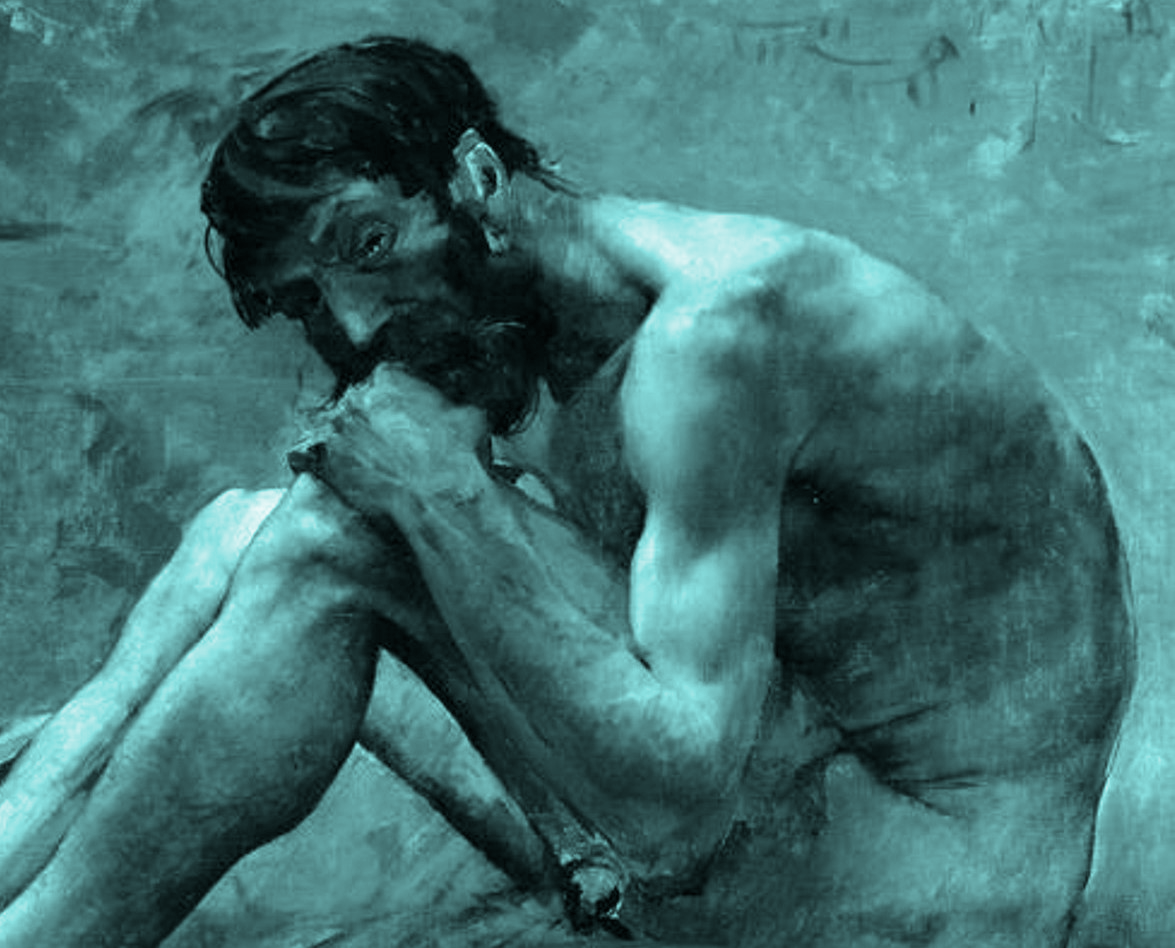
Article Image
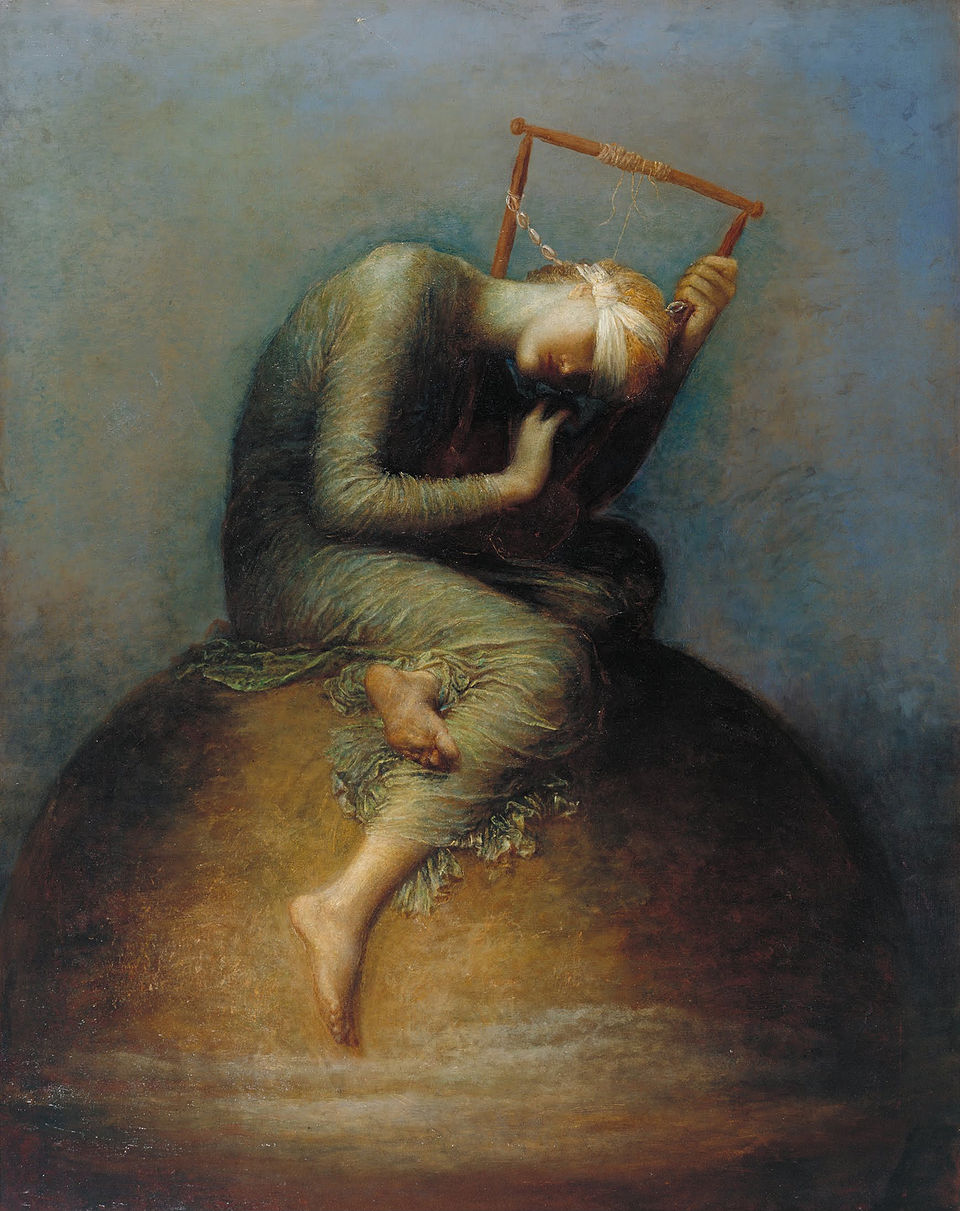
George Frederic Watts: Hope (1884) (source)
Sources
Adorno, Theodor W. & Max Horkheimer: Dialectic of Enlightenment, Frankfurt a.M. 1998.
Bejan, Teresa M.: Hobbes Against Hate Speech. In: British Journal for the History of Philosophy 32/2 (2022), PP. 247-264.
Fukuyama, Francis: The End of History and the Last Man, New York 2006.
Günther, Gotthart: The consciousness of machines. A metaphysics of cybernetics. 3., for an introduction and the German translation of Cognition and Volition extended edition. Baden-Baden 2002 (also available online).
Heidegger, Martin: Overcoming metaphysics, In: Talks and essays (1954). Pfullingen 1985.
Jonas, Hans: The principle of responsibility. Frankfurt am Main 1986.
Sloterdijk, Peter: foams. Spheres III Frankfurt am Main 2004.
Lukács, Georg: Tactics and ethics. In: Political essays I: 1918—1920. Darmstadt & Neuwied 1975.
Sontag, Susan: What's Happening to America (A symposium). In: Partisan Review 34/1 (1967), p. 57 f.
Footnotes
1: The happy science, No. 359.
2: The tendency to completely expel Thymos can be found among the fathers of liberal thought (see Fukuyama, p. 184 f.). Hobbes and Locke could therefore be described as the first woke. It fits in with the fact that Hobbes was the first thinker to use a mature language custom of political correctness than Agree not to disagree devotion, which provided for state penalties. Because even contradicting someone else's opinion is a source of aggression, its articulation should be prohibited, at least on fundamental issues, and especially vis-à-vis the state. Consensus becomes the first civic duty. Cf. Hobbes, From Cive, Sections five and six in the first chapter. See also Teresa M. Bejan: Hobbes Against Hate Speech. pp. 247-264. In defense of Hobbes, it could be noted that his thinking was hypnotized by the proximity to the Thirty Years' War (1618-48).
3: Heidegger, Overcoming metaphysics, p. 94 — It remains appealing to imagine how the cultural development of the West would have gone if Augustine's rival thinker Pelagius, who emphasizes free will for his own moral efforts and rejects the thesis of the original corruption of man as a sin being, had become formative.
7: Cf. Gotthard Günther, The consciousness of machines, p. 102 ff.
8: Cf. The happy science No. 56.
9: Sloterdijk, spheres III, pp. 690 & 696. The entire third chapter of this volume can be read as a canonical continuation of “cheerful science,” which masterfully strives to illustrate the relieving weight of the world in modern times.
10: The happy science, No. 370.
11: The benefits and disadvantages of history for life, Paragraph 1.
12: Jonas, The principle of responsibility, P. 36.
13: With the concept of “second ethics,” Lukács argues that a crime (such as violence or murder) has ethical value when the agent knows that it is actually wrong — the first ethics of law — but still commits the act in order to achieve the higher goal of the revolution. You sin for the absolute good: “Only someone who knows steadfastly and unquestionably that murder is not permitted under any circumstances can — paradoxically and tragically — commit murder as an ethically moral act” (Georg Lukács, Tactics and ethics (1919), P. 77).
14: The happy science, No. 343.
15: In addition to the path to mobilization through polarizing populisms as a kind of instant identity, the supermarket also lends itself to denying reality, which promises a vacation away from identity with increasingly sophisticated entertainment media. Gaming and streaming are digital paradises that accommodate “goodwill to shine.” Consumers are lucky enough not to need Thymos first-hand. However, there is also a paradoxical overconsumption which, in the form of connoisseurism, develops megalothymic superiority in an area aimed at complete neutralization of “courage.”
17: Ibid.
18: “If you consider how a philosophical overall justification of his way of living and thinking works on each individual — namely like a warming, blessing, fertilizing, shining specifically for him sun, how it makes self-sufficient, rich, generous in happiness and goodwill regardless of praise and rebuke, as it incessantly turns evil into good, all powers to blossom and mature Bringing and not letting the small and big weeds of grief and annoyance arise at all: — this is how you finally exclaim: Oh that many Such new suns would still be created! Even the bad guy, even the unfortunate person, even the exceptional person should have his philosophy, his right, his sunshine! “(The happy science No 289.)
19: The Gay Science, § 341 (translation: Walter Kaufmann. New York: Random House 1974, p. 274.
“How Well Disposed Would You Have to Become to Yourself and to Life”
Prolegomena to Any Future Philosophy That Will Be Able to Present Itself as an Enlightenment — Part II
After our author, in the first part of this article, described the current political-cultural situation with reference to Fukuyama as an outgrowth of deep-seated boredom, which numbs itself in excesses of anger and indignation, he tries in the following second to suggest a possible turn for this zeitgeist, which could manifest itself in a new Enlightenment verve and a new positive self-image of the Enlightenment. Our author, with Nietzsche, opposes the “four despairs” that afflict the present tense, “four transfigurations” and “fields of research” resulting from them. An ironic view of the world and oneself should help to practice a transfigurative perspective on the world, which would be able to overcome the lethargy of postmodernism and revitalize the modernist project. The program of self-reliant future Enlightenment.
"How Well Disposed Would You Have to Become to Yourself and to Life"
Prolegomena to any future philosophy that may arise as an Enlightenment — Part I
“How Well Disposed Would You Have to Become to Yourself and to Life”
Prolegomena to Any Future Philosophy That Will Be Able to Present Itself as an Enlightenment — Part I
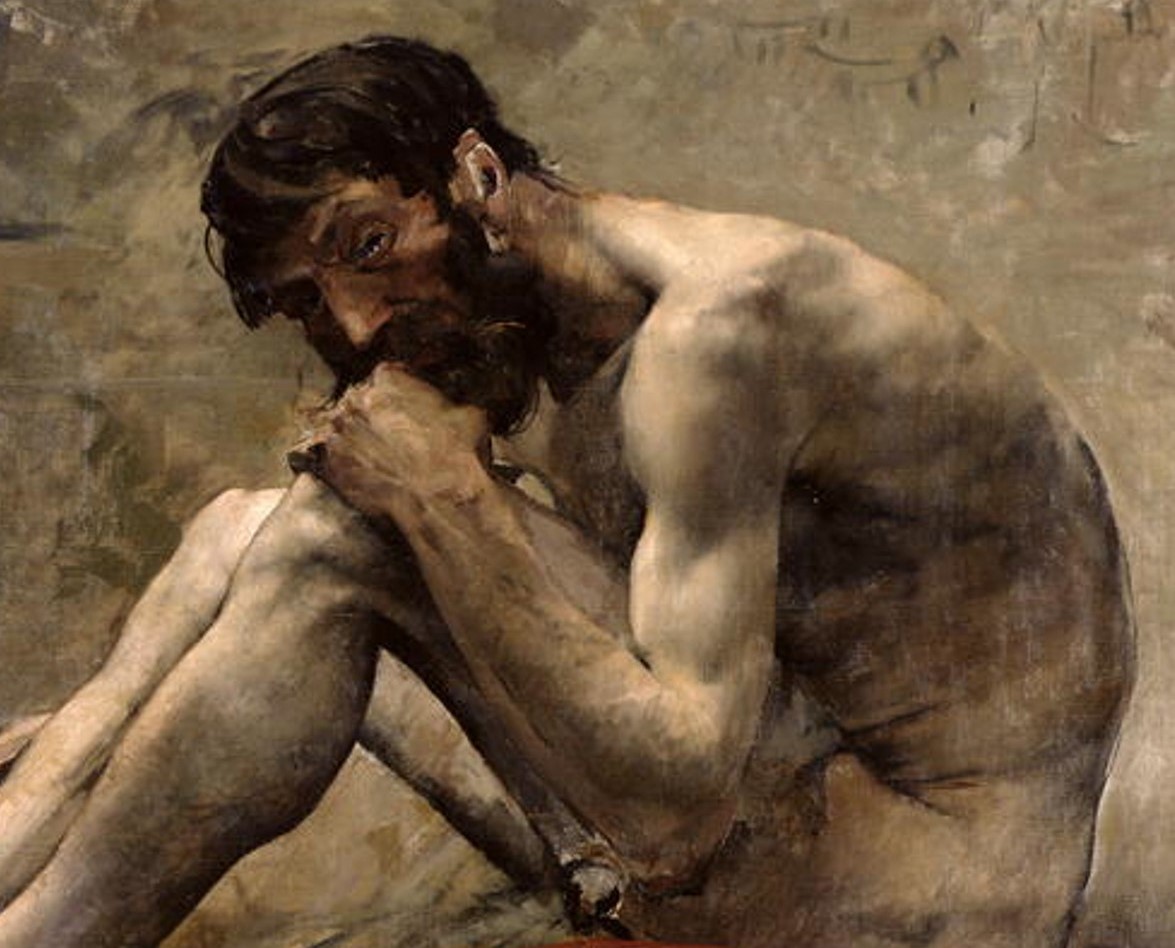
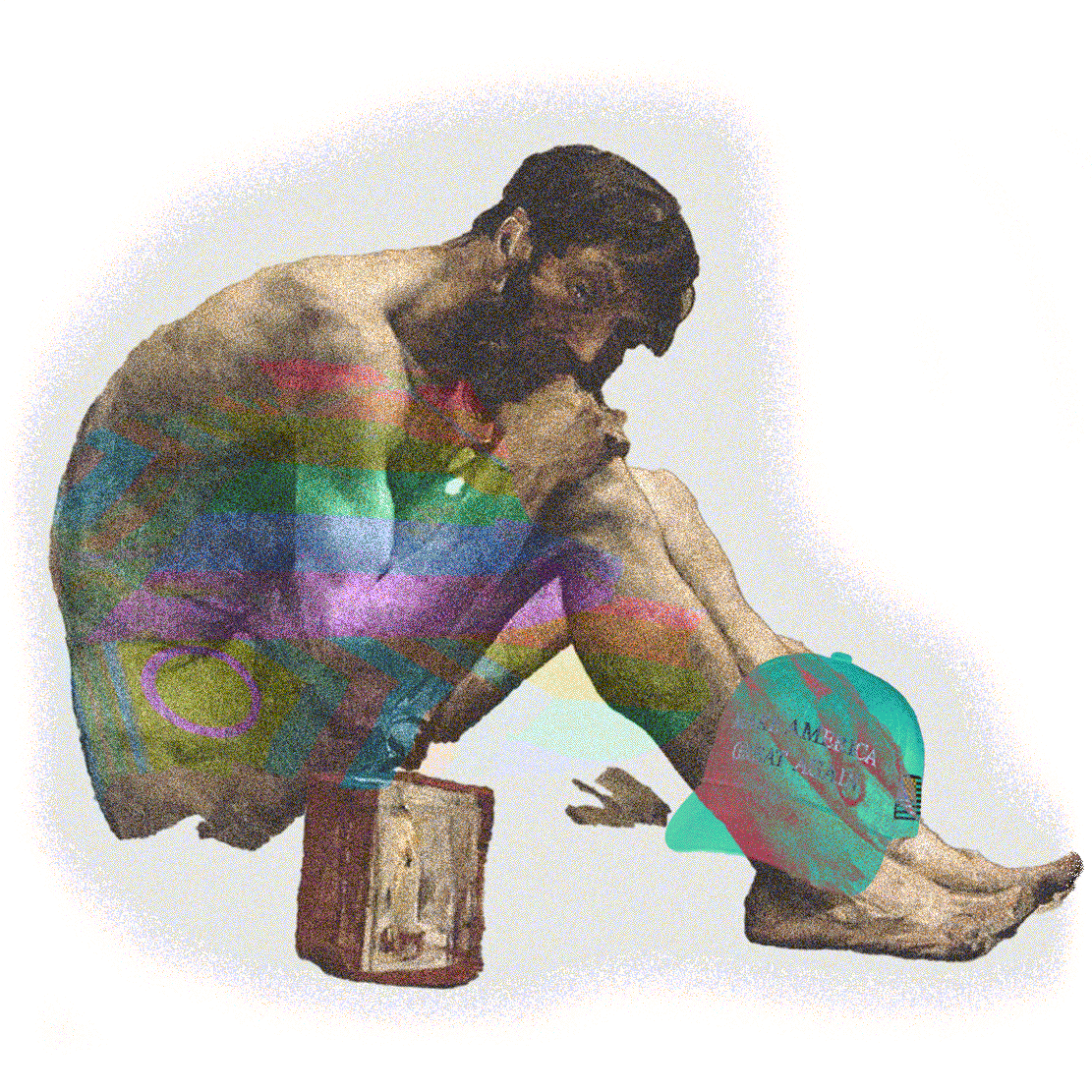
The following text explores the hypothesis that every philosophy of the zeitgeist finds its onset at something that bothers it: in the beginning, there was disgruntlement. This something is interpreted here as an illiberally disgruntled enlightenment, which is embodied in the current “polarization.” With Francis Fukuyama's help, this trail is explored and the drama of the recognition of modern Enlightenment is described.
The philosopher Fukuyama, born in Chicago in 1952, is primarily known for his essay The End of History? from 19891. There, he held that the “end of history” assumed by Hegel had finally arrived with the looming collapse of the Soviet Union. He saw the triumphant liberal Western democracies as the final stage of the process of historical progress. In 1992, Fukuyama published his main work based on this essay: The End of History and the Last Man, in which he combines Hegel's thesis with Nietzsche's diagnosis of the “last man.” Our author is also referring to this book. It caused controversial debates worldwide and continues to provoke today. — Do we really live after the “end of history”? Our author agrees with Fukuyama: While with the form of liberal democracy a final embodiment of the course of history has been achieved, history has been continuing as a conflict within this embodiment. World history has become history of liberalism.
"We do not easily negate; we make it a point of honor to be affirmers.”
Nietzsche, Twllight of the Idols, Morality as Anti-Nature, 6 (source of translation)
"Proctophantasmist: You still are here?
Nay, ’tis a thing unheard!
Vanish, at once! We’ve said the enlightening word.
The pack of devils by no rules is daunted:
We are so wise, and yet is Tegel haunted.
To clear the folly out, how have I swept and stirred!
Twill ne’er be clean: why, ’tis a thing unheard!! ”
Goethe, Faust (source of translation)
1. Basic Disgruntlement
A ghost is haunting the West — the specter of anti-liberal disgruntlement. It stems from a culture of Enlightenment that pushes its promise of a better life through intelligence into the background through a habit of criticism. Because spirit and freedom do not seem to complement each other, spirit begins to suspect freedom. The skeptical spirit thus itself becomes a reason why trust in the spirit's vital promise of ascension has given way to intelligent suspicion. The cunning cleverness, with which Odysseus escaped from Polyphemus' cave and with which Boccaccio in his Decameron made sympathy for this world against dogmatic Christianity plausible, becomes an abstract discourse of hypercritical consciousness, which develops its inventive power in ever new suspicions against itself. Being becomes being-against as being-against-oneself. As “Enlightenment about the Enlightenment,” Enlightenment turns from exhilarating logos into the myth of a tribunalization that, in ever more advanced narratives, casts a gloomy light on its own existence — to the delight of the autocratic Internationale, which looks grudgingly at Western culture. Adorno, the siren-like grandmaster of the apodictic hypersensitivities of a cultural criticism industry against everything that exists, explained together with his co-author Horkheimer: “Enlightenment is totalitarian.”2 Thinking must be correct when it repeatedly rejoins into the chorus that there can be no right life in the wrong one. Through this type of diagnoses, which in a totalitarian manner adjudge Enlightenment to be totalitarian and whose heirs today determine the subject matter of the humanities almost hegemonically, a point is reached at which Enlightenment must ask itself whether it has not fallen into an extremism of criticism, which shows masochistic traits and, in this state, contributes to exacerbating the problem of dysfunctional liberalism. An Enlightenment that no longer follows the fury of criticism must reinterpret the disgruntling interpretations so that there could be a change of mood. It finds its yardstick in experiencing freedom as a fragile opportunity to recognize an unlikely abundance to which, surprisingly enough, we belong.3
2. Toxic Elective Affinities
In a kind of Enlightenment about the Enlightenment of Enlightenment, it would first be possible to differentiate phenomenologically two main types of extremist criticism. The first litany, which often belongs more to the left-wing camp, is directed against the own as an aggressiveness against the foreign. The West is stigmatized as a capitalist-colonialist plot by white men against the rest of the world. In an expression that leaves nothing to be desired, the young Susan Sontag writes in this sense: “The white race is the cancer of humanity.”4 This kind of big interpretation leads to the plausibility of social chemotherapy that pays homage to the utopia of a radically different future: “in solidarity,” “empathetic,” “consensual.” Today, this critique of the own often shows itself under the value of “justice.”
Criticism in the opposite tendency is directed against one's own as a force pervaded by strangers. It takes place under the guiding principle of “decadence.” Perceiving one's own culture as “alienated” is usually practiced by right-wing critics. The decline of values is stylized as the notorious “fall of the West” (Oswald Spengler, 19185). He is summoned in the mode of the dark romance of an end-time Götterdämmerung. Cultural criticism becomes eulogy. Salvation lies in the nostalgia of the good old days, garnished with the authority of God. Currently, this criticism of one's own, which is interpreted as “alienated,” is mostly seen as a defense of “freedom.”
Both critiques could be interpreted as justified to a certain extent. A modern liberal-democratic society needs the conflict that stems from its internal tension of freedom and justice. A proportionate and recongestant immune response against lack of freedom and against injustice indicates social fitness. However, this vital and vitalizing response has currently reached the state of emergency of a permanent stress response, which is taking on the outlines of a double autoimmune disease. The tricky thing is that both overreactions are not reduced because they represent a milieu for each other that makes their respective state of alarm appear appropriate. These cultural critiques, formed from contrasting angles but related emotional states, thus create mutual stability. They form a successful toxic relationship as intertwined cultural autoimmune diseases. In doing so, each other's exaggerations become welcome reasons to be able to glorify one's own exaggerations as objective and realistic. While you stand out clearly in your distortions alone, you look good in the light of the contrasting distortions. Your own contradictions and radicalisms can thus easily be reinterpreted as “fake facts” and appropriate proportionality. The agenda of one side determines the agenda of the other. This is how “Woke” and “MAGA” complement each other in the USA.
The longer this double autoimmune reaction lasts, the more it stabilizes. The sentiments of Occidental “no” against themselves are concentrated and organized in diametrically arranged industries of cultural criticism. This is reflected, for example, in a homophobic friendliness that is otherwise not interested in the foreign and a xenophobic love of home that has understood little of its own culture. Being for something is fed by being in opposition to being in opposition to the other being. You like something because the other side doesn't like it. In this interprovocation, certain shibboleths, codes of belonging, are formed, which mark one's own horde membership. They each provide the philosophical service of a warming horde of communal ill-finding and ill-doing in times of a functionally “differentiated society” (Luhmann). Hassen unites and creates the magic of community. The slogan in these racquets is: The fight must go on and on. Together in hate, they become analogous conspiracy theories against the West. In this way, a bipolar cultural struggle against the West is being formed, which maintains its integrity from the struggle of the two main poles of cultural criticism in a self-image as a rational immune response.
Public discourse is increasingly being consumed by the phenomenon of “polarization,” because the spaces of neutral confrontation are themselves under the suspicion of being partisan. This situation is escalated by the utopia of a radical new start promoted by both sides. The concept of world revolution is available on the left and the concept of rebirth is available on the right. In slogans: “Smash the system! ““Make America great again! ”
Under the stress of two self-stabilizing autoimmune diseases, the social body increasingly lacks the capacity for sustainable cultural work, in which the foreign and the own become more deeply recognizable, become friends with each other on this basis or can at least remain cooperative in a conscious sense of otherness while civilizing each other. In the spirit of Odo Marquard, it could be said that what avoids declarations of a state of emergency would be healthy.6
3. And Yet It Continues
In order to better understand the phenomenon of radical Enlightenment versus one's own Enlightenment, one could refer to ideas that Francis Fukuyama wrote in the last chapter of his great book The End of History and the Last Man from 1992. Contrary to what is sometimes assumed, Fukuyama does not triumphantly argue that the has ended with the victory of the West against the East in the Cold War. Instead, he adopts a view that gathers “weakly deterministic”7 arguments as to why historical development has a tendency to lead to liberal democracies. Fukuyama justifies this interpretation by saying that liberal democracy is the political form for the possibility of a rational civilizing of a basic psychological energy, which he understands as “thymos” with reference to Plato's teaching of the three parts of the soul. Unlike “sophia,” which embodies wise reflection, and “eros,” which means greedy desire, thymos stands for a psychological figure that has received little attention in modern times. It covers the spectrum of feelings associated, for example, with pride, recognition, self-esteem, envy, jealousy, and ambition. Thymos, translatable roughly as “courage,” is portrayed by Fukuyama in the manner of a drive for heroism:
“Thymos” is the side of man that deliberately seeks out struggle and sacrifice, that tries to prove that self is something better and higher than a fearful, needy, instinctual, physically determined animal.8
In his diagnosis, Fukuyama distinguishes between two types of thymos. “Isothymia” is stimulated by the defamation suffered and urges equal treatment. “Megalothymia,” on the other hand, describes the urge to show off one's own abilities ambitiously and “show it to everyone else.”9 In a fight for recognition, both forms of thymos prove themselves in the quality of honorable sacrifice for something higher than one's own life.
Political thought has traditionally considered the negativity of the megalothymic. In an instructive overview, Fukuyama lists the previous ways of dealing with it. While Plato attached great importance to the education of Thymos, Machiavelli votes for a Balance of Thymos, Power should be kept in check by force.10 Modern liberalism in Hobbes and Locke thinks of Thymos as a vain quest for recognition,”Vainglory“To completely neutralize (Hobbes). A rational quest for self-preservation and material prosperity should replace the barbaric desire for fame. After all, the founding fathers of the USA did not seek to “rationalize away” thymotic energies, but rather to implement them in a politically wise manner Checks and Balances to channel.11 Fukuyama joins this model. He makes it clear that the liberal attempt to domesticate Thymos through reason and consumption alone falls short. Peace does not produce peace and prosperity does not produce prosperity. In a liberal democracy, the extremes of Thymos must not only be tamed, but they must also be transformed in such a way that they become essential productive elements of social life as civil courage and as a desire to do one's best.12 However, this only ever happens in a balance of freedom and justice, which is always considered trade off is to be watched. Emphasis on freedom comes at the expense of justice and vice versa. As examples, Fukuyama cites the USA, where the primacy of freedom and Europe, where the primacy of justice is decisive, and he also explicitly mentions Germany as the country in which the”European Dream“was most clearly realized as the successful end of history in peace and prosperity.13
Fukuyama sees the core problem of Western culture in not being able to moderate the irrevocable tensions and excesses of isothymia and megalothymia effectively enough. The reason for this is a lack of understanding of the power of recognition. In addition, isothymia as a plausible factor in postal history is culturally interpreted as good and megolathymia as an apparent relic from non-civil times as evil. So the story doesn't end for Fukuyama. It goes on. But now as an internal tension of liberal democracies that have successfully left the history of imperial history.14
The good life in prosperity has its specific difficulty in the absence of the magic of recognition struggles. This creates the type of “last person,” which Fukuyama, unlike Nietzsche, does not portray as squinting comfort in small day and night lusts. There is aggressive dissatisfaction in the thymos oblivion of prosperity. Peace becomes unpeaceful because it is bored with itself. You are no longer in demand as a top performer. Everyday life can be tackled by just giving 40%. The battles have been fought, and efforts are still being made to do so. Little enemy, little honor. Normality is an underchallenge. “The inadequate/Here is the event” (Goethe). As a result, there is a greed for symbolic sham battles that distract attention from the fact that the true struggles for recognition in the West have largely been successfully ended and are largely successfully institutionalized in the West.
The best of all political worlds has the problem that it disposes of radicalization to radicalization through its too brief understanding of de-radicalization. Therefore, the lack of challenge must be balanced in such a way that life continues to be thymotically stimulated but does not tip into uninhibited thymotic excesses (see “Cancel Culture” and “MAGA” and the anger attention industry, for which in English the terms Angertainment, Doomporn or Ragebait circulate).
Fukuyama sees the future task of liberal democracies as resolving the lack of awareness of the negative consequences of recognition. Politically, recognition has been latently recognized, but in theory they have not yet understood deeply enough what it means. This is how confusion ensues. It remains unclear what a thymotically comprehensive dignified human condition is and how exactly human rights are to be defined, and so it remains unclear how thymotic energies are to be treated within the framework of a liberal democracy.15 This ambiguity leads to a consensual way of life that is thymotically underwhelmed and is attracted by thymotic exaggerations. This opens the way for two radical extremes — on the one hand, the hyper-intensified demand for the recognition of ever more specific identity rights (isothymia) and, on the other hand, the unleashed return of megalothymia, which manifests itself in the ruthless drive for imperialist superiority. This creates a mental situation that Fukuyama foresaw in 1992: “This opens the way to hyperintensified demand for the recognition of equal rights, on the one hand, and the re-liberation of megalothymia on the other.”16 History continues: As a battle of citizens, the descendants are of citizens who successfully ended the story.
The article image was created by Linus Rupp based on the painting Diogenes by Jules Bastien-Lepage (1873; link).
Footnotes
1: A German translation of this important text by Alexander Görlitz and Paul Stephan, published by the Halcyon Association for Radical Philosophy, was published in 2020 as the first volume of the series of publications Edition Halkyon (link). (Editor's note: You can also acquire this brochure as a reward at our recent crowdfunding campaign.)
2: Adorno & Horkheimer, Dialektik der Aufklärung, p. 12.
3: The following thoughts can be seen as additions to the aphorisms with which the small notebook Die Freiheit zu sein (“The freedom to be”) from the year 2022 (link), which was intended as a kind of attempt at a cautiously affirming philosophy, fade out. (Editor's note: You can also acquire this brochure as a reward at our recent crowdfunding campaign.)
4: Susan Sontag, What's Happening to America, p. 57 f. (Our translation.)
5: Editor's note: On Spengler's right-Nietzscheanism, see also Christian Saehrendt's article Nietzsche’s Monkey, Nietzsche’s Varlet on this blog.
6: Editor's note: Cf. the article Abyss and Enablement? The Suspense of Contingency Johannes Hansmann Discusses Odo Marquard and Richard Rorty by Natalie Schulte and Paul Stephan on this blog (link).
7: Fukuyama, The End of History and the Last Man p. 354.
8: Ibid., p. 304.
9: Ibid., p. 180.
10: Consider the European Pentarchy from 1763 to 1914, which could currently be repeated on a larger scale globally if a post-transatlantic West was created. It would consist of the USA, China, Russia, Europe, and the Gulf region.
11: See ibid., p. 184 ff.
12: In addition, there must be rooms, arenas, in which the megalothymic can exist. Fukuyama, for example, speaks of “free solo rock climbers”, “skydiving”, “ironman”: “TheAlpinist has, in short, re-created for him or herself all the conditions ofhistorical struggle: danger, disease, hard work, and finally the risk of violent death” (ibid., p. 319).
13: Ibid., pp. 293 f. & 346 f. The thymotic epochal change in Germany could perhaps be described as an outbreak from an all-out war for all to prosperity for all, which could currently be known as the slogan “Care for all.” The welfare state becomes the care state. The self-image as a victim becomes opium for the people and the defense of this self-image becomes the cocaine of the people's representatives. Both sides instrumentalize isothymia as an “affect medication” (Nietzsche). Some do not want to despise and change and others do not want to feel important and therefore do not want to upset the sovereign. Mediocracy instead of meritocracy. Perhaps it is the unfamiliarity in dealing with thymotic energies that has led to the growth of a custom of slight insult in Germany, the special student of modern times and the model student of posthistory, so that even current heads of state are not afraid to apply the strict sanctions of paragraph 188 of the Criminal Code against harmless satire.
14: Ibid., p. 292 ff. — Realpolitik remains acute insofar as there is an inequality with regard to the historical development of post-history (see ibid., p. 276 ff.) Tensions may continue to arise at the collision zones of modern and ancient history, in which the language of realpolitik Lingua franca is. This phenomenon can currently be observed — March 2026 — in the conflict between the Shiite theocracy in Iran and its Western opponents. But Fukuyama also admonishes that the paradigm of realpolitik has considerable weaknesses in looking at everything through the filter of strength. It should be added: It is part of the pattern of real politics that criticism of this scheme is already interpreted as a form of weakness. This leads to solutions that become problems: “Treating a disease that no longer exists, realist now find themselves proposing costly and dangerous cures to healthy patients” (ibid., p. 253).
15: Ibid., p. 296 f. & 337 f. — The so-called strengthening of right-wing politics should be interpreted as cultural backlash megalothymic energies in a hegemony of isothymic dramas. There is a lack of forms of rational thymotics that would not have to repeat the old idiocies in order to be able to embody themselves.
16: Ibid., p. 337 f.
“How Well Disposed Would You Have to Become to Yourself and to Life”
Prolegomena to Any Future Philosophy That Will Be Able to Present Itself as an Enlightenment — Part I
The following text explores the hypothesis that every philosophy of the zeitgeist finds its onset at something that bothers it: in the beginning, there was disgruntlement. This something is interpreted here as an illiberally disgruntled enlightenment, which is embodied in the current “polarization.” With Francis Fukuyama's help, this trail is explored and the drama of the recognition of modern Enlightenment is described.
The philosopher Fukuyama, born in Chicago in 1952, is primarily known for his essay The End of History? from 19891. There, he held that the “end of history” assumed by Hegel had finally arrived with the looming collapse of the Soviet Union. He saw the triumphant liberal Western democracies as the final stage of the process of historical progress. In 1992, Fukuyama published his main work based on this essay: The End of History and the Last Man, in which he combines Hegel's thesis with Nietzsche's diagnosis of the “last man.” Our author is also referring to this book. It caused controversial debates worldwide and continues to provoke today. — Do we really live after the “end of history”? Our author agrees with Fukuyama: While with the form of liberal democracy a final embodiment of the course of history has been achieved, history has been continuing as a conflict within this embodiment. World history has become history of liberalism.
Inside the Magic Forest
Nietzsche and the Sorcerous Power of Trees
Inside the Magic Forest
Nietzsche and the Sorcerous Power of Trees


In cultural perception, the forest is much more than a mere supplier of raw materials or a local recreation area, but, especially in German culture, a magical place of encounter with the supernatural. In the second part of our series ”the forest as a livelihood“ Christian Saehrendt explores this romantic fascination for the forest and to what extent it is also reflected in Nietzsche's works. Because Nietzsche was not only a passionate forest walker, he also writes again and again about this gateway to the “otherworld” and, last but not least, places his Zarathustra in sylvan sceneries.
“Look at me so sweet in the forest
I'm going to be so sorry, forget it soon.
Does a rose blossom fragrant in shark grass,
I'll kiss the rose and cry a little.
Funny how wind blows, a dream sweeps through the heart
Does a lime blossom fall from a tree. ”1

With the beginning of Romanticism, the forest in German-speaking countries became a place of longing, where you can escape from hectic and rationalistic modern life. For Nietzsche too, the forest becomes a relaxing retreat, but also a source of inspiration and a veritable “magic forest”, where people transform into trees and encounter ghosts becomes possible.
The modern person, who evades mass urban society and chooses voluntary isolation in the forest, opens up his channels of perception for nature and his own inner life. In doing so, he also opens a door to archaic pre-Christian ideas, according to which all living nature is also animated and is penetrated by good and evil spirits. Not only in Grimm's fairy tales, but in many subsequent creations of high and popular culture, the forest appears as a place of transformation and enchantment of modern man. Dark, fearful topoi play a major role in this: witches, wizards and creepy hermits, forest spirits and wolves. Nietzsche also regularly sought solitude during forest hikes and flirted with a life as a forest remit.
Nietzsche's Wanderlust
Even today, a hiking trail near Cham in the Bavarian Forest reminds of Nietzsche's forest and wanderlust. In August 1867, he visited this area together with his student friend Erwin Rohde, after he had completed his philosophy studies. “As soon as I was loose and single, I flew to the Bohemian Forest with friend Rohde to bathe the tired soul in nature, mountains and forests,” he wrote to his friend Carl von Gersdorff.2 He explained to mother and sister: “I really want forest and mountain after such needs have been artificially built up as a result of a 2-year stay in Leipzig and have thus become very strong. ”3 This hike awakened Nietzsche's love for the forest.4 Experiences of nature cheered him up and created feelings of grandeur: “Mighty black firs against mountains and spring greenery standing out — sun on long treeless strips in the forest in the evening — you expect the most cheerful dance”5, he wrote down in 1878 and added: “In spring, grassy path in the forest — undergrowth and bushes, then taller trees — feeling of blissful freedom. ”6 Forest life enchanted Nietzsche in such a way that even passers-by noticed it: ”Once, in the forest, a gentleman who passed by me got very excited: I felt at that moment that I must have the expression of bright happiness in my face and that I had already been walking around with him for 2 hours. ”7 In addition, Nietzsche sometimes stylized himself as a hermit or flirted with this role when he shares his master plan with Heinrich Köselitz, for example: “Move away from the world into the forest! Dot. ”8 In a later letter to Köselitz, Nietzsche took up this idea again: “I'm leaving for the next few days, via Munich to Naumburg, to hide in a forest. ”9 But a nice neighborhood would be a prerequisite for hermit existence, Nietzsche confided to his sister: “A deep forest would be the best thing, but there would have to be cheerful people who I don't need to be wary of.”10 — because Nietzsche also knows: “[T] he forest solitude is uncanny.”11
Delivered to the Forest Spirits
The fear of the forest with its darkness and demons, the discomfort in “haunted” places has always been part of the Central German mentality. Nietzsche was certainly influenced by this; he will also have known Grimm's fairy tales, in which the forest plays a prominent role. Places that must seem scary to forest goers included deserts. Many Central German villages were abandoned in times of plague and medieval climate change. They were desolate. There are numerous legends about this sunken villages. They sometimes saw nighttime lights there and avoided these places whenever possible. Stories about hermits were also a source of discomfort, wild women and represent witches. Irritating, supernatural perceptions, which hikers sometimes reported, were attributed in folk stories to the work of forest spirits who accompany the hiker for a while and which you should never irritate if you did not want to lose orientation.12 Also animated by ghosts Irrwurzeln and Irrgräsern According to the vernacular: Soil plants with a distinctive red color, growing near graves. Whoever steps on it wanders around in circles without ever finding their way out of the forest again.13 Even at the time of the Germanic ancestors, the landscape of Central Europe, with everything in it, was considered to be inhabited by good and bad spirits: whether rock, animal or plant. These traditions continued in folk stories, in the world of legends and fairy tales, and sometimes also subcutaneously in the Christian faith. Nietzsche views this critically, but at the same time as the basis for a sublime experience of nature:
Man has even applied this interpretation of all movements and lines to intentions to the nature of inanimate things — in the delusion that there is nothing inanimate: I believe that everything we call a sense of nature when looking at sky, ground, forest, thunderstorm, stars, sea, landscape, spring, has its origin here — without the ancient practice of fear that everything has a second underlying meaning Looking back, we would now have no joy in nature, just as we would not enjoy humans and animals, without that teacher of Understanding, fear.14
Referring to Schopenhauer's philosophy of nature, he attested to Richard Wagner that he wanted to make animated nature speak with his music:
He also dives into dawn, forest, fog, chasm, mountain height, night showers, moonlight and reminds them of a secret desire: they also want to sound. When the philosopher says that it is a will that thirsts for existence in animate and inanimate nature, the musician adds: and this will wants, at all levels, a resounding existence.15
The centuries-old fear of forest demons may have been reinforced by poisonous and psychotropic plants and mushrooms that people consumed unintentionally or ritually in previous centuries. Black belladonna, for example, owed hallucinations, the urge to speak, severe excitement, but in higher doses also coma and cardiac arrest. Folk names such as Vertigo cherry, devil cherry, walkerberry, wild berry, furberry, wolfberry or Tollkraut indicated that unpredictable demons were seen at work here. Fortunately, there were also protective forest plants, such as St. John's wort, blackthorn and elderberry. Black elderberry For example, was used as a protective plant against black magic, fire and lightning strikes, as Lebensbaum and regarded as the abode of well-intentioned house spirits. The person who cut down and cut back an elderberry bush provoked misfortune and death. The name of the shrub is said to be derived from Ms. Holla or Holda, a Germanic goddess of home and fertility, a deity friendly to humans, who was able to heal animals and humans. The Brothers Grimm also have in their fairy tale Ms. Holle This mythological figure uses — in general, the Grimms' fairy tales were preceded by numerous stories of witches, vampires and werewolves from regional legends — as can be seen when looking at the historical traditions of the authorities and courts. The Germans' penchant for the supernatural also occupied the Allied occupiers in their reeducation programs. At that time, intelligence officer Terence J. Leonard analyzed German schoolbooks from 1925 to 1945 on behalf of the Textbook Section of the British military government. He found that apart from militarism and hero worship, there is a “cult of morbid and occult” prevailing in these books and he asked himself: “[W] he can children from an early age in the spirit of a deceptive pagan mysticism Smus (ghosts in trees!) Have you ever been raised to completely get rid of these ideas? “German philology is steeped in an “atmosphere of black magic, a mishmash of good and evil.” The Allied re-educator rejected the objection that fairy tales always ended in a good way, because the question was how the turn for the better is achieved in German fairy tales. People could never achieve anything on their own, but only “with the help of a malformed dwarf, an ugly woman, talking animals, or spirits speaking from trees. ”16
Become a Tree!
Even in ancient times, forest gods and spirits had taken possession of plants. Nietzsche refers to this several times. In his “Dionysian worldview,” he mentions “the wisdom of the forest god Silen” and the Forest Demon Pan, who has “the gift of prophecy.” Together with Satyrs They both belonged to Dionysus' entourage.17 Like the Greeks had their demons, the Romans had theirs Genien, guardian spirits who guided man, protected and possibly saved him remain invisible, as Nietzsche in the strange sentence — “The geniuses in the forest wait until the wanderer is over.”18 — expressed. Nietzsche repeatedly brings the forest into play as a place of gaining knowledge — symbolically, but also in a very concrete way. He writes at one point: “We are the knights who understand birds' voices in the forest, we follow them. ”19 In another place, he reports about “swarms of muses in the fog of the mountains,” about forest and mountain spirits who throw good and bright things at the hiker “out of their tops and hides of leaves,” “the gifts of all those free spirits who are at home in mountains, forests and solitude and who, like him, are wanderers and philosophers in their soon cheerful and thoughtful manner. ”20 The forest spirits appear to Nietzsche here as friendly relatives and companions.
It is hardly surprising that Nietzsche's fictional character too Zarathustra shares its creator's love of the forest. Zarathustra repeatedly roams the forests and meets miraculous figures there. Right at the beginning of the book, chased by wolves, he drags the body of an injured acrobat through the dark forest for hours, seeks help from a hermit in vain and conceals the carcass in a hollow tree to protect it from animal damage. He later meets two richly decorated kings and the creepy “ugliest person” in the forest. At the same time, the forest serves as a metaphor for Nietzsche in his Zarathustra story. This is how a hunter is described in this book who returned “from the forest of knowledge” unsuccessfully and in a dark mood21, elsewhere Zarathustra praises the sublime peace of the forest: “Forest and rock are worthy of being silent with you”22, and asks people to transform themselves into the tree: “Like the tree you love again, the broad-leaning one: it hangs over the sea quietly and listening” (ibid.). In Nietzsche, tree and man sometimes appear as dual beings because he finds a decisive thing in common between them:
It is with people as with trees. The more he wants to go up and up into light, the more his roots strive earthwards, downwards, into darkness, into depth — into evil.23
The transformation of people into trees, or the image of the human-inspired tree, can be found several times in Nietzsche's writings, especially in the words Zarathustra, who muses about a tree on the mountainside. One cannot help but recognize Nietzsche's self-stylization here:
This tree stands alone here in the mountains; it grew high above humans and animals. And if he wanted to talk, he wouldn't have anyone to understand him: that's how tall he grew. Now he waits and waits—what is he waiting for? He lives too close to the seats of the clouds: he's probably waiting for the first flash?24

Zarathustra then also performs the transformation into a tree, into an object of an animated nature. This is how Zarathustra declared when he entered a forest clearing with his disciples:
I may be a forest and a night of dark trees: but anyone who is not afraid of my darkness will also find roses under my cypresses.25
Literature and forest landscape produce each other. Writers, philosophers and poets are inspired by the dense plant world and subsequent travelers and inhabitants perceive the forest filtered and pointed through stories and through reading. In doing so, the boundaries between literary fiction, expectations and real experience are blurred. This also affected the walker Nietzsche, who perceived the forest as a place of miraculous transformation, but also as an eerie intermediate world with which the hiker, now turning into a tree himself, into a forest, can merge.
The article image was painted by Australian artist Mitchell Nolte (link), whom we commissioned to illustrate our entire forest series.
Literature
Story from Bohemia. Folklore Archives. Central Archive of the German Folk Narrative Marburg, No. 140604.
Legend from Styria in the forest near St. Margareten. Folklore Archives. Central Archive of the German Folk Narrative Marburg, No. 188320 & 188737.
Leonard, Terence J.: First Steps in Cruelty. In: British Zone Review. vol I, No. 34, 4/1947, pp. 10-13. Translation and reprint in: Hessian newspapers for folk and cultural research, Vol. 18: Two hundredth of the Grimms, Marburg 1985, p. 111ff.
Footnotes
1: Letter to Raimund Granier dated 28/07/1862.
2: Letter to Carl von Gersdorff dated 24/11/1/12/1867.
3: Letter to Franziska and Elisabeth Nietzsche dated 6/8/1867.
4: Cf. https://www.bayerischer-wald.de/attraktion/friedrich-nietzsche-wanderweg-9d4b9f08fc.
5: Subsequent fragments 1878 27 [36].
6: Subsequent fragments 1878 30 [116].
7: Letter to Heinrich Köselitz of 20/8/1880.
8: Letter to Heinrich Köselitz v. 21/4/1883.
9: Letter to Heinrich Köselitz v. 7/5/1886.
10: Letter to Elisabeth Nietzsche v. 7/5/1885.
11: Letter to Heinrich Köselitz of 18/7/1880.
12: See e.g. Story from Bohemia.
13: See e.g. Legend from Styria in the forest near St. Margareten.
14: Morgenröthe, Aph 142.
15: Richard Wagner in Bayreuth, paragraph 9.
16: Terence J. Leonard, First Steps in Cruelty (Translation, p. 113). The text was apparently aimed primarily at members of the British occupying power in order to explain the mentality of the Germans to them.
17: The Dionysian worldview, paragraph 2.
18: Subsequent fragments 1882 17 [10].
19:Subsequent fragments 1870 5 [44].
20: Human all too human I, aph. 638.
21: So Zarathustra spoke, From the exalted.
22: So Zarathustra spoke, From the flies of the market.
23: So Zarathustra spoke, From a tree on a mountain.
24: Ibid.
Inside the Magic Forest
Nietzsche and the Sorcerous Power of Trees
In cultural perception, the forest is much more than a mere supplier of raw materials or a local recreation area, but, especially in German culture, a magical place of encounter with the supernatural. In the second part of our series ”the forest as a livelihood“ Christian Saehrendt explores this romantic fascination for the forest and to what extent it is also reflected in Nietzsche's works. Because Nietzsche was not only a passionate forest walker, he also writes again and again about this gateway to the “otherworld” and, last but not least, places his Zarathustra in sylvan sceneries.
The Eternal Oak
Where Everything Returns
The Eternal Oak
Where Everything Returns


With this literary contribution by Giulia Romina Itin, we are launching our main focus topic this year. Throughout the year, we will publish several articles dedicated to the topic of “forest” — the forest in its dual meaning as an almost mythological place of encounter with the, sometimes uncanny, sometimes encouraging, primal forces of life, but also, viewed more pragmatically, as the real basis of existence of our civilization that remains decisive but also threatened. We would like to explore this double face together with you this year in order to determine the contours of the forest as a living space in a new way — with Nietzsche and beyond him. We need to see and appreciate the forest in a different way again.
If you would rather listen to this article, you will also find it read by Caroline Will in German on the Halcyon Association for Radical Philosophy YouTube channel (link) or on Soundcloud (link).
My legs are heavy and I barely feel my arms anymore. My head blares continuously and the voices sound like a distant echo in my skull. This life doesn't belong to me; my soul is stuck in a body that hasn't belonged to me for a long time. Maybe it never did. I'm not ill. Just tired, endlessly tired of these voices whispering over and over again: “There is no escape.” No escape from what? From this leaden burden on my shoulders? Or from this endlessly repetitive vicious circle that gives me the same pain day after day?
I'm walking alone in the woods. A cool autumn day, but the sun warms me enough. I like to go here; the forest relieves my head, eases the tangled thoughts that sit deep in my chest every day. I don't like the word “difficulty.” “Heavities” would be more honest, because everything is heavy. But here, between the trees, this heaviness seems lighter for a moment. There is no meaning, alright, I agree with Friedrich Nietzsche on that, but the meaninglessness doesn't bother me here. Here, it is just there, like the wind, like the rustling, like the light that falls through the branches.
I am thinking of the infinite void, of the nihilism that Nietzsche warned us against breaking in. Or rather wanted to warn? I believe nihilism has has entered long time ago. No, I don't belief so, because God is dead. I know that nihilism has entered a long time ago. I see it in the eyes of people who only have dollar signs shining. They're holding this square thing that screams, flashes, vibrates. When I ask them “Why?”, they shrug their shoulders. Sometimes I get dizzy when I'm standing among them, these robots. I'm one of them, but I think they programmed me in a wrong way. I speak another language and I see differently. Is my perspective the wrong one or theirs? Am I sick or are they? “You don't belong here,” I hear my teacher's voice. I was seven back then. Maybe I'm really sick.
A red squirrel sits a little further away. You barely see them anymore. Their world is dying, tree by tree, so that the industrial building can grow. Poor squirrel, I think. Poor paws. Poor forest. Everything is affected by nihilism as if by a parasite. And the nihilistic parasite is efficient: one cut and it's all over. The squirrel whizzes up the trunk. Further ahead, a fox, its eyes light up at me like two tiny mirrors. But as soon as I take a step, it's gone. It's all over.
I keep going and I come to a huge oak tree. It stretches its crown into the sky like a cathedral, maybe a thousand meters, maybe only twenty. Measures blur. Can that oak tree tell me what's waiting for us up there? Void. I'm moving on. I don't know how long. I don't like relying on time. They used to say, “Your time will come.” I never understood what time they meant or how it should come. Today I know that it was a lie. They barely ever said anything else. These robots.
There is the oak tree again. That can't be the case. I've already passed by it. The big oak tree. I must have been wrong. I'm going on, the same way back. But there it is again. I'm pausing. Turn me around. Go faster. The oak tree. I'm going backwards. The oak tree. I close my eyes and walk blindly through the undergrowth, feeling roots, thorns, branches. I open my eyes. The oak tree. I'm getting down on my knees. It stands in front of me unchanged. I roll across the forest floor, soil stuck under my fingernails, moss squeezing into my face. But when I look up: the oak tree. I realize that no matter what I do, this oak tree is waiting. I'm trapped. In this forest, in this body, in this life. Every path leads back to it. Each step is repeated. I slap my fists on the rind, but nothing changes. I scream into the dark forest but no one hears me. There is no one there.
And suddenly, between my hectic breaths, I no longer hear the voices in my head, but a sentence that breaks away from the depths of my memory. Like the leaf that falls from a branch over there. “You must live this life, as you are living it now, again and countless times.” Nietzsche. The demon. The biggest heavyweight. I stare at the oak tree as if it had whispered this sentence to me. Maybe it has, maybe it's the demon.
I wipe dirt off my face and watch the moonlight fall through the crown of the oak tree. What if this return isn't a coincidence? What if it's a question? I'm taking a step back. The air smells of soil and cold. My heart beats faster, but not because of fear. More because something lifts up in me, like an animal that has slept too long. So a question: Can I bear coming back to this exact point over and over again? Would I want this life, every tiredness, every mistake, every despair again? And then again and again? And infinitely often?
Turn thoughts into my head. I hear my teacher again, the other students and finally my grandmother: I'm not one of them here. And I could run, run away from anything, from the oak tree. I could pretend I've never seen it and live a lie. But I can also stay.
I sink to the ground, very carefully at first. The earth below me is cold, but it sustains me. I lean my back against the oak tree and my gaze wanders into the night sky. I sit there leaning against the oak tree and breathe. Deep in, then out again. I'm just breathing. Not nice or calm, but I'm breathing. And as I sit there, I feel the voices calm down, the voices that have been loud for so long. If I keep coming back to the oak tree, it's probably because it's the only one that understands me. I don't have to pretend for the oak tree, I don't have to explain myself to it. And that's when I realize for the first time that an eternal return might not mean being trapped. Maybe it means that you find places in life that feel familiar to you and where you simply may be. Which you can also stick to. My scratched hand strokes the rough bark and it feels like the wounds are healing.
A small, weak “yes” is created somewhere in me. Not a big “yes” to life, but a “yes” to this moment. To the oak tree. About me, and for a moment, it's enough just to be there.
Giulia Romina Itin was born near Lucerne in 2007 and is currently studying philosophy and history at the University of Basel. In her texts, she deals with existential and sociocritical questions: meaning and meaninglessness, rebellion, identity, the dreamy, and resistance to the preformed. Her thinking is shaped primarily by Friedrich Nietzsche and Albert Camus, whose perspectives on freedom, revolt, and absurdity sharpen her attention to the fractures of the present day. In addition to studying, Giulia writes poetry and prose so as not to fall silent inwardly in a meaningless world. For her, writing means continuing to ask questions where others are silent.
The article image was painted by Australian artist Mitchell Nolte (link), whom we commissioned to illustrate our entire forest series.
The Eternal Oak
Where Everything Returns
With this literary contribution by Giulia Romina Itin, we are launching our main focus topic this year. Throughout the year, we will publish several articles dedicated to the topic of “forest” — the forest in its dual meaning as an almost mythological place of encounter with the, sometimes uncanny, sometimes encouraging, primal forces of life, but also, viewed more pragmatically, as the real basis of existence of our civilization that remains decisive but also threatened. We would like to explore this double face together with you this year in order to determine the contours of the forest as a living space in a new way — with Nietzsche and beyond him. We need to see and appreciate the forest in a different way again.
If you would rather listen to this article, you will also find it read by Caroline Will in German on the Halcyon Association for Radical Philosophy YouTube channel (link) or on Soundcloud (link).
Two Years through Woods of Symbols
Outlook and Summary of Our Previous Work
Two Years through Woods of Symbols
Outlook and Summary of Our Previous Work


Exactly two years ago, we published our first article on this blog, The Enduringly Contested Friedrich Nietzsche, a report by Paul Stephan about the annual meeting of the Nietzsche Society in 2023. Time to pause for a moment and think about what we've done on this blog so far and what the future could look like. Our editor-in-chief draws an interim conclusion and gives an insight into our plans.
We are combining this anniversary with two special appeals to you. On the one hand, we created a small quiz (link; in German). Answer four questions correctly, the answers to which are derived from our previous articles, and you could win one of thirteen prizes — and if you want, you can also give us valuable feedback about our work.
We would also like to draw you attention to our crowdfunding call. By July 10, we would like to invite you to help us raise €6,000 to finance further professional translations of our articles. In return, we offer you some fantastic rewards, including in particular the option of translating an article of your choice or giving us an article topic that you've always wanted to read about on this blog. Or you can get to know some of our authors at an exclusive Zoom workshop for our supporters. Become a bridge builder!
In Nature's temple, living pillars rise,
Speaking sometimes in words of abstruse sense;
Man walks through woods of symbols, dark and dense,
Which gaze at him with fond familiar eyes.
Like distant echoes blent in the beyond
In unity, in a deep darksome way,
Vast as black night and vast as splendent day,
Perfumes and sounds and colors correspond.1
I. The Spleen of Leipzig
For two years now, I have been hiking as part of my work for Nietzsche POParts through “woods of symbols,” as they are described by the poet Charles Baudelaire (1821—1867) in his famous poem Correspondences. It is Nietzsche's labyrinthine thinking, including its diverse receptions, interpretations, and references to the present, that captivates, confuses, inspires me time and again. Sometimes I feel as if I had it with “chaotic night's immensities”2 and I would like to scream from the depths with Nietzsche's great brother in spirit: “I envy the most humble beast that ease” (ibid.), sometimes — and fortunately this is more like my normal feeling — I enjoy this trip out into the open sea, to which Nietzsche invites me again and again: “There'll be nothing but beauty, wealth, pleasure, [/] With all things in order and measure.”3
I am the one whose job it is to stay course on this trip “into the Blue”4. I'll go deep into the engine room like a text machine, I get up high into the lookout and look for the “dancing star” that this chaos could possibly give birth to.5 Meanwhile, there are sometimes cheerful, sometimes in-depth conversations on the mezzanine floors. There is sometimes a dispute. And yes, I sometimes feel as though I find what I'm looking for when an enthusiastic reader writes to me that a text has particularly moved her or brought her to new ideas. That's what counts at the end of the day.
But I want to resist the temptation to get personal here. All I have to say in this regard is that I am extremely grateful to everyone who has supported and accompanied this project since it began more than two years ago, whether as authors, readers, translators, financiers, critics, editors, assistants in the engine room. I would particularly like to thank Buser World Music Form for their generous both financial and spiritual support for the project. A heartfelt thank you! Let's create a rainbow over and over again!
What I actually want to write about now is our project. There are obviously two main levels to consider — past and future. Because writing specifically about the present tense is probably unnecessary. So, it's very simple: Part 1: Where are we? What has happened so far? Part 2: Where could things go in the next few years?
II. What Has Happened So Far on Nietzsche POParts?
Counting two part articles twice, we have published exactly 90 articles so far, an average of one per week. In addition, there are now 112 aphorisms in the section Darts & Donuts, not to mention occasional special content on our social media channels and on YouTube, where we have published 33 videos so far. If Google Analytics is to be believed, our texts have so far reached a total of around 16,000 visitors from all over the world — especially from Germany (5,500), Switzerland (900) and Austria (700), but also the USA (2,450), China (1,900) and India (1,500) — who viewed our site a total of 36,500 times. The most-read articles were there, at least in quantitative terms, with more than 300 views each Look, I'm Teaching You the Transhumanist by Jörg Scheller, the interview Nietzsche and Ukraine, which I conducted with Vitalii Mudrakov, Is Nietzsche a Philosopher for Adolescents?, the debut article by Natalie Schulte, Homesick for the Stars. Prolegomena of a Critique of Extraterrestrial Reason by Michael Meyer-Albert, Henry Holland's review of Jonas Čeika's book How to Philosophize with a Hammer and Sickle, the recently published articles Dionysus as Rolling Stone by Hans-Martin Schönherr-Mann and Peace through Strength by Tobias Brücker, my interview with Andreas Urs Sommer about his new Nietzsche biography as well as, which of course makes me particularly happy, my own articles “Poland is Not Yet Lost” Germany's Neighboring Country as a Political Utopia in Nietzsche's Posthumous Writings and Society versus Self-Becoming, my first “conversation” with ChatGPT which has been manually translated into English by Henry Holland.
These figures certainly leave some room for improvement in terms of quantitative reach, but at the same time they also show that our blog is frequently visited, even though we sometimes turn to rather 'sneaky' topics and our texts are often not exactly written for mass use. Nietzsche himself dreamt of great sales successes time and again, but he also warned himself, perhaps not least: What? You search? You would multiply yourself by ten, by a hundred? You seek followers? — Seek zeros!”6 In the end, his dream of millions of copies and global translations of his works came true — but in many cases he also simply became a source of catchword and figurehead, one of those “fashion philosophers.”7, from which he always tried to differentiate himself, even though his own writing style actually makes him a popular rather than an elite author.
What is worth more in the end? 1,000 likes from people who, at best, have taken a superficial note of your own content and to whom you have ingratiated with, or five readers to whom you have conveyed something decisive. According to Nietzsche's own teaching, the latter option would clearly be preferable, but, as I said, he was not entirely true to himself in this regard. In the end, it must be about hoping that the right readers will find you just by staying true to your own ideas and striving to express them ever better; quantitative success should be understood more as an effect, not as an end in itself.
Yes, it is possible to reach a much wider reach than we do on social media and elsewhere with Nietzsche. But most of what you find there is hardly what we can regard as exemplary as a philosophy magazine: fake quotes with pleasing AI images, mostly mere calendar sayings that do not provoke anyone (unless in a cheap way) or even encourage them to “overcome themselves.” We don't want to be in common with that; there are enough such questionable Nietzsche channels. We continue to use AI, if at all, as a mere tool and slow food instead of algorithm fodder. We are looking for thoughtful depth and authentic passion for the cause.8
If you look at the qualitative side, that is actually decisive, things are of course more difficult to grasp and I myself am probably the wrong person to judge it. In any case, as this short list of our “bestsellers” suggests, our choice of subject matter is, consciously, as diverse as Nietzsche's work itself. We do not try to convey a specific doctrine or ideology, but simply to think again and again about, with, and against Nietzsche, to take up the perspectives he has developed and to make it the starting point for our own expeditions. We are not necessarily Nietzscheans, but we are convinced that Nietzsche has something important to say and that it is worthwhile to look at his work again and again in order to better understand our present day.
In this spirit, an archive of possible current perspectives on and with Nietzsche has been created on our blog over the past two years. We reported about several important Nietzsche events, our initial regular authors laid out in a series of articles their personal relationship with Nietzsche, we came up with the topic ”Marx and Nietzsche” again and again, and what is actually to be thought of Nietzsche in general in political terms. However, as the name of our blog might suggest, a particular focus was on aesthetic and pop cultural topics. Two articles — one from Christian Saehrendt and one by myself — were dedicated to Nietzsche's relationship with music, we investigated Nietzsche's reception in the heavy metal scene, compared Nietzsche with Franz Kafka, wrote about Klaus Kinski and Werner Herzog, analyzed Taylor Swift with Nietzsche and Nietzsche with the Rolling Stones. But we treated Nietzsche's contemporary context as well: time and again his illustrious relationship with Richard Wagner, arguably his most important thought leader, Arthur Schopenhauer, and his big “brother in spirit,” Søren Kierkegaard. In our main series of articles last year, we undertook various “Hikes with Nietzsche”, which took us all the way to Southeast Asia, and announced the Kingfisher Prize for Radical Essay Writing, dedicated to the topic “Where are they barbarians of the 21st century? “— a question that provoked some excellent submissions. As far as Nietzsche's aftermath is concerned, our authors were particularly interested in his French, post-modern reception, whether that of Michel Foucault, Georges Bataille, or Gilles Deleuze. We repeatedly investigated various aspects of digitization, in particular the cultural effects of the increasing use of artificial 'intelligence'. However, interpretations of Nietzsche's writings themselves were not neglected, such as his basic concept of ”Amor fati“or that of resentment, to whom we also dedicate this year's Kingfisher Award. And last but not least, we dealt with news from the “Nietzsche world,” for example we talked with relevant experts such as Andreas Urs Sommer, Werner Stegmaier, and recently Barbara Straka about their research, presented recent publications related to Nietzsche and visited important “Nietzsche places” with you, such as Tribschen, Sils Maria and Naumburg.
It's fair to say that we have dealt with some 'classic Nietzsche topics,' as well as a few more marginal ones, but we are unlikely to run out of material for further articles given the breadth of Nietzsche's work and, above all, his impact. We have actually only just begun to explore the 'fabulous world of Professor Nietzsche' together with you and indeed have a lot of plans for the near and distant future.
III. Prelude to a Philosophy of the Future
We definitely want to maintain the current diversity and variety of topics, because there is hardly any other way dealing with Nietzsche. The main topics will continue to be the French reception of Nietzsche, art and aesthetics, pop culture, and digitization. We also want to continue to attach great importance to the visual design and have our articles illustrated in a high-quality way — I would particularly like to highlight the great work of our 'head layouter' Linus Rupp, who is not only responsible for designing and programming the page, but also designs the article images again and again (you will quickly recognize his particular style when scrolling through and he will continue to create article images regularly).
In addition to the term “resentment,” however, the main topic this year should be forests. In several articles, we will deal with various aspects of the forest as livelihood, with Nietzsche and beyond him. It will be about the solitude of the forest, its inhabitants (from mythical creatures to witches to animals), hikes through the forest, but also its increasing threat from human intervention.
Where do we want to go with all this? I think our claim must be to become the place for up-to-date Nietzsche research on the Internet, at least as far the German-speaking world is concerned. We would like to work towards this in the coming years and have certainly laid a good basis for this over the past two years of our existence. The aim must be to understand Nietzsche research not as an elite project or as an academic finger exercise, but to conduct Nietzsche reception “in a scuffle” — very close to current topics and interests, without therefore tending to the spirit of the times or popularizing Nietzsche in a bad sense and robbing Nietzsche of his critical potential.
Because that is what he is above all: a “seismograph,” as Ernst Jünger put it, of the contradictions and tendencies of his time, their observer and critic — who is therefore also suitable to be able to better classify and understand the earthquakes and faults of our time, to move us into a perspective distance from them in order, armed with Nietzsche's hammer, to penetrate ever deeper into the dimensions where the tectonic plates move and the next volcanoes form.
But we also want to increase our international impact. As the analysis above shows, there is certainly interest in our articles and we have already had all of our content translated into English. We increasingly want to replace these largely provisional and sometimes still very deficient AI translations with professional ones — a thoroughly ambitious project in which we are looking for your support in the form of a crowdfunding call. We want to combine this with publishing original English-language texts more often in the future, which we will then translate into German.9 — Who knows, we might even be able to become the Internet location for current Nietzsche research worldwide. If you like our work so far, feel free to support us and become a “good European” in the spirit of Nietzsche, a ”interpreter[] and mediator[] among peoples”10.
We live in an age not just “the isolation of nations, through the rise of national enmities” (ibid.), but even the fragmentation of “nations” themselves into submilieus, which barely have anything to say to each other and seem to reside in their own living environments. Intellectual cross-border exchange is therefore more important than ever in order to counteract this dangerous trend and return to a joint or at least: more common understanding of the world. Nietzsche, the great advocate of “perspectivism”11, who developed and played through such different perspectives in his own work, who has become interesting and important for such different milieus and “nations” — albeit sometimes extremely different, even opposite form — is more suitable than almost any other thinker not only as a figurehead, but as a genuine dialogue partner in such an attempt. Contrary to many prejudices, he was a resolute internationalist and cosmopolitan, not only dreaming of a united Europe,12 but also of “One goal”13, which could unite all of humanity. He was one thing in particular: a “free spirit” in battle with the “idols” of his time. It is indisputable that this spiritual independence sometimes led him astray and this is discussed again and again on our blog14 — that he can be a role model and source of ideas for us in the fight with the “idols” of our time, be it AI, be it Taylor Swift, be it Donald Trump, is also true, however.
IV. “A dreamer always wants even more”
In any case, my motto and ours remains — coined not by Nietzsche but by Ernst Bloch, but definitely in his spirit: “A dreamer always wants even more,” and we are just at the beginning of a journey that will take us ever deeper into the rabbit hole of the 'Nietzscheverse.'
But what's the point of all this in the last resort? In a presentation on the social role of art15 Herbert Marcuse quotes, like Bloch a Nietzschean Marxist, a verse from a poem by the English poet and contemporary of Nietzsche Arthur O'Shaughnessy (1844-1881):
One man with a Dream, at pleasure
Shall go forth and conquer a crown;
And three with a new song's measure
Can trample an empire down.16
These verses certainly reflect Nietzsche's own understanding of the role of art and philosophy for society, for example when he wrote in Zarathustra writes: “It is the quietest words that bring the storm. Thoughts that come with dove feet rule the world.”17
Nietzsche was undoubtedly one of the inventors of new “measures.” Like only a few, he redefined philosophy through his way of writing and thinking — and, incidentally, also revolutionized poetry, developing “measures” in a quite literal sense. Time and again, he serves as a source of inspiration for intellectual, political, or cultural avant-gardes who are looking for something new, who dare to swim a few strokes out into the “open sea.”18. Nietzsche speaks to them from within their souls when he writes:
[W]hat is needful is a new justice! And a new watchword. And new philosophers. The moral earth, too, is round. The moral earth, too, has its antipodes. The antipodes, too, have the right to exist. There is yet another world to be discovered—and more than one. Embark, philosophers!19
What has it brought about now, this pathos of the New? Do these brave ones trample down empires? Or did their work remain relatively peripheral, did it even lead to the foundation of new empires which thought they would remain for a millenium...
I'm skeptical, but at the same time I don't want to let my 'naivety' go away. It is Nietzsche who admonishes us again and again: “By my love and hope, I implore you: Don't throw away the hero in your soul! Keep your highest hope holy!”20 And even the early Nietzsche warned: “Who destroys the illusion in himself and in others, nature punishes him as the strictest tyrant.”21 Because “only in love, only shadowed by the illusion of love does man create, namely only with absolute belief in what is perfect and right” (ibid.).
Readers more accustomed to the later, skeptical Nietzsche will find this emphasis on the 'lofty' Nietzsche unusual, perhaps even 'sentimental' and 'kitschy.' And yet, it seems to me that Nietzsche expresses his program most clearly and distinctly in On the Advantage and Disadvantage of History for Life: Scientific 'reason' is not everything; it must be revised and supplemented by a deeper, more comprehensive “great reason”22 of the living body, otherwise “the overshadowing and uglifying of Europe”23 threatens, the complete loss of meaning, the destruction of everything that makes life worth affirming.
I think you can be skeptical of much of what Nietzsche wrote in his life and at least think that this one idea is worth considering. But then it would be not so much the question of to what extent any avant-garde really succeeded in changing the world, but what the position of such an avant-garde should be if they want to at least have the chance to do so.
An imposition? It seems to me that such “militant optimism” (Ernst Bloch) is rather a necessity at a time that (seemingly) leaves little to hope for. We must hope that bold visions such as those of O'Shaughnessy, Marcuse, or even Nietzsche can come true so as not to lose the courage to act — which would make the world even more like Nietzsche described it in his dystopia at the beginning of Zarathustra: “Everyone wants the same thing, everyone is the same: anyone who feels differently goes to a madhouse voluntarily.”24
Nietzsche is at least a thinker for all those who do not voluntarily embark on their path to psychiatry, who do not want to be talked out of their 'delusion,' as individual as themselves, by the one-sided and long-refuted “reason” of science. Not, mind you, in the name of mere irrationality, but of “great reason”! For all those who still bear chaos within themselves, who have the courage to give birth to a “dancing star.”
I think it still makes sense — and perhaps now more than ever — to stick to this basic approach. When writing with, about, against Nietzsche, we should always return to him and stick to him as the key point of every possible 'Nietzscheanism.' The “dancing star,” not to mention the “superman,” as a point of reference to somehow get through the ordered chaos of the world of the 21st century while maintaining at least a minimum of dignity.
And who knows, it might just succeed unexpectedly: a philosophical idea, an aesthetic vision, the silent prayer of a “chapelless faith” (Rainer Maria Rilke) that would be powerful enough to bring down this empire and to let a new reason, a new life, a new living body emerge from its ruins. Let us follow Baudelaire's and Nietzsche's invitation to travel, let us remain true to ourselves: “There'll be nothing but beauty, wealth, pleasure, [/] With all things in order and measure.”
En avant!
Literature
Marcuse, Herbert: Art in the One-Dimensional Society. In: Douglas Kellner (ed.): Art and Liberation. Collected Papers of Herbert Marcuse IV. New York: Routledge 2007, pp. 113—122 (online).
Footnotes
1: Charles Baudelaire, Correspondences. In: Flowers of Evil, translated by Jacques LeClercq (link).
2: Baudelaire, Out of the Depths. In: Flowers of Evil, translated by Jacques LeClercq (link).
3: Baudelaire, Invitation to the Voyage. In: Flowers of Evil, translated by Roy Campbell (link).
4: The Gay Science, Lieder des Prinzen Vogelfrei, Towards New Seas (own translation).
5: Cf. Thus Spoke Zarathustra, Preface, 5.
6: Twilight of the Idols, Maxims and Arrows, paragraph 14 (translation, slightly altered).
7: Human, All Too Human II, Assorted Opinions and Maxims, aph. 5 (own translation).
8: A critical-polemical discussion of the 'AI Nietzsche,' whom you encounter online at every turn, is planned for the near future!
9: In fact, some texts are already available in English or in professional English translation (link).
10: Human, All Too Human I, aph. 475 (translation; slightly altered).
11: See esp. On the Genealogy of Morality, paragraph III, 12.
12: “Owing to the morbid estrangement which the nationality-craze has induced and still induces among the nations of Europe, owing also to the short-sighted and hasty-handed politicians, who with the help of this craze, are at present in power, and do not suspect to what extent the disintegrating policy they pursue must necessarily be only an interlude policy--owing to all this and much else that is altogether unmentionable at present, the most unmistakable signs that Europe wishes to be one, are now overlooked, or arbitrarily and falsely misinterpreted“ (Beyond Good and Evil, aph 256; translation, slightly altered).
13: Thus Spoke Zarathustra, Of a Thousand and One Goal (own translation).
14: For a critical discussion of the concept of the “good European”, see my older text Das Problem Europa. Überlegungen mit Friedrich Nietzsche ("The problem of Europe. Reflections with Friedrich Nietzsche").
15: Cf. Art in the One-Dimensional Society. .
16: Cit. ibid., p. 115.
17: Thus Zarathustra Spoke, The Quietest Hour (own translation).
18:The Gay Science, aph. 343 (own translation).
19: The Gappy science, aph. 289 (translation [p. 232]).
20: Thus Spoke Zarathustra, Of a Tree on a Mountain.
21: On the Advantage and Disadvantage of History for Life, paragraph 7 (own translation).
22: Thus Spoke Zarathustra, Of the Despisers of the Body.
Two Years through Woods of Symbols
Outlook and Summary of Our Previous Work
Exactly two years ago, we published our first article on this blog, The Enduringly Contested Friedrich Nietzsche, a report by Paul Stephan about the annual meeting of the Nietzsche Society in 2023. Time to pause for a moment and think about what we've done on this blog so far and what the future could look like. Our editor-in-chief draws an interim conclusion and gives an insight into our plans.
We are combining this anniversary with two special appeals to you. On the one hand, we created a small quiz (link; in German). Answer four questions correctly, the answers to which are derived from our previous articles, and you could win one of thirteen prizes — and if you want, you can also give us valuable feedback about our work.
We would also like to draw you attention to our crowdfunding call. By July 10, we would like to invite you to help us raise €6,000 to finance further professional translations of our articles. In return, we offer you some fantastic rewards, including in particular the option of translating an article of your choice or giving us an article topic that you've always wanted to read about on this blog. Or you can get to know some of our authors at an exclusive Zoom workshop for our supporters. Become a bridge builder!
Abyss and Enablement? The Suspense of Contingency
Johannes Hansmann Discusses Odo Marquard and Richard Rorty
Abyss and Enablement?
The Suspense of Contingency
Johannes Hansmann Discusses Odo Marquard and Richard Rorty


The young philosopher Johannes Hansmann has published his monograph Ironie des Schicksals im Einzelnen. Philosophie der Kontingenz bei Marquard und Rorty ("Irony and Fate in Detail. The Philosophy of Contingency in Marquard and Rorty") last year at Karl Alber. It is a remarkable study on two of the most important representatives of existential philosophy in the 20th century, the German Odo Marquard (1928-2015) and the American Richard Rorty (1931-2007). Although Nietzsche only plays a minor role, he deals with highly Nietzschean topics there, dedicates himself to the question of a felicitous — and for him that means in particular: authentic — life in a world after the “death of God,” to which Marquard and Rorty gave very different answers. Natalie Schulte and Paul Stephan present the book to you. A joint summary of the book's most important ideas is followed by an individual statement from each of our authors.
I. From Nietzsche via Marquard to Rorty
Hardly any thinker has shaken the intellectual topography of the 20th and 21st century as radically as Friedrich Nietzsche. With the dictum of “death of God,” he marked not only the end of an era, but the collapse of all metaphysical foundations. Where the big “absoluteness programs” break away, people are left behind in existential homelessness — an emptiness that Johannes Hansmann wrote in his book The irony of fate in detail. The philosophy of contingency in Marquard and Rorty makes it the starting point for a successful academic investigation.
Hansmann addresses the basic existential question with which Nietzsche broke up modernity and which cannot be delegated because everyone has to answer it simply by being: How do we want to live when there is no “top” anymore? It is the question of living autonomously in full awareness of both our finiteness (“vita brevis”) and the randomness of living conditions — culture, time and place — into which we are born became, and the randomness of events that still befall us will — Accidents, illnesses, losses.
Nietzsche has critiqued the supposedly eternal, immutable ideals of our culture, in both their platonic and Christian forms. He has thus deprived us of the comfort that our lives have an overriding goal and are embedded in a higher context that gives meaning to our suffering. With his book, Hansmann answers this problem. He describes what a possible life practice could look like following this criticism — and this loss of comfort. He focuses on two thinkers, Odo Marquard and Richard Rorty, who, as witty philosophers of contingency, radically address the consequences of the metaphysical homelessness of humans.
Odo Marquard (1928—2015), a formative figure in German post-war philosophy and a prominent representative of the “Knight School,” developed his ideas in response to the historical-philosophical promises of salvation of his time. As a skeptic and master of subtle irony, he pleaded for a philosophy of human finiteness that does not combat the unavailable of life, but compensates for it through serenity and adherence to tried and tested traditions.
Richard Rorty (1931—2007), one of the most influential American philosophers of the late 20th century, made the journey from an analytical language philosopher to a radical neopragmatist. He adopted the idea that philosophy could discover an “objective truth” beyond our language, and instead relied on the individual's ability to create themselves again and again through creative self-and world descriptions.
Both thinkers are heirs to Nietzsche's skepticism. After his destruction of the traditional metaphysical system of values, they are looking for new ways of thinking and living in the modern age. While Rorty Nietzsche takes up and develops his own ideas of a re-aestheticization of life freed from old burdens, Marquard creates a philosophy of contemporary serenity.
In a fruitful examination of these two approaches, Hansmann shows that the failure of supra-temporal standards does not necessarily have to result in nihilism or limitless arbitrariness. Instead, using Marquard and Rorty, he explores how the unavailable and chance can become the new center of closer reflection. He asks: Beyond the search for the one absolute, are there other paths that give us a foothold in contingency? Instead of regretting the loss of the “absolute,” we should actually welcome it, because only the absence of the absolute gives us the freedom to truly determine ourselves. As part of a philosophy of living art, Hansmann attempts to combine the strengths of Marquard and Rorty with his concept of “authentic autonomy” and to show that even without absolute criteria, the self-choice of the respective individual does not have to sink into arbitrariness.
II. How Does Hansmann Argue?
Hansmann's concise study begins with an examination of the question “What is contingency? ”. This is done primarily in terms of the conceptual history of the Ritter School, in keeping with the methodological approach of the Ritter School. Here, Hansmann creates a very interesting compilation of the (Western) philosophical debate on the topic from Aristotle to Luhmann, from which it quickly becomes clear how complex this term, which is frequently used in contemporary discussion, actually is. In the basic meaning of the term, “contingency” means that which is neither necessary nor impossible as that which is merely given in fact, which could also be different. But what exactly falls under this category and what internal distinctions does it include — particularly against the background of the theological question of how God had to create the world as he did, or not?
Hansmann's own main point here is to show that there is a small but decisive difference in meaning between the terms “contingency” and “coincidence”, which are also frequently used synonymously in philosophical discussion: They “are not the same thing, because chance loses the action-opening dimension of possibility that the contingency suits it.” (p. 21) He particularly appeals to Marquard's equation of the two terms.
According to Hansmann, contingents and random events differ not so much in their mere existence — they are equally events that neither happened necessarily nor are impossible — but in the perspective that we throw at them in our actions: On the one hand, we regard them as mere coincidences that we have to accept and which are in a certain way factually necessary, but not logically necessary; on the other hand, as opportunities for new options for action that we may or may not seize opportunities for usthat we have to relate to.
You can perhaps illustrate this distinction with the following example: I offer my son to buy him an ice cream; he can choose a type of ice cream and chooses “strawberry.” It's all completely random and I can completely accept it. But this coincidence appears as a contingency when I take my son's choice as an opportunity to ask him why he chose this kind and no other variety, what is his favorite variety in general, etc. The event therefore becomes an opportunity to improve our relationship.
For Hansmann, Marquard tends more towards the perspective of chance — which doesn't ask what new leeway random events open up, but accepts them for now — Rorty tends to the perspective of contingency, which always questions the coincidences about the new opportunities they open up.
The vast majority of the study is then carried out by reconstructing Marquard. This imbalance between the chapters is somewhat surprising, but it may be due to the fact, also marked by Hansmann (see p. 61), that there has been hardly any academic research on Marquard for many years. The philosopher worked primarily outside academia as a highly influential essayist and journalist in the late Bonn Republic, not so much within the Academy. It is therefore understandable to give a somewhat larger space to the reconstruction of Marquard's philosophy, and Hansmann actually succeeded in providing an excellent introduction here, which is worth reading for anyone who wants to learn more about Marquard's thinking.
Marquard's experimental philosophy, which has barely been recorded in monographs but primarily in lectures, essays and other brief forms, revolves around the core idea of an “apology of chance.” This means acknowledging that there is and cannot be absoluteness in the human situation simply because of the individual's mortality (“vita brevis”). We are doomed to improvise and can hardly hope to leave even a tiny footprint in the senseless course of events. Utopian hopes of all kinds — and this is where Marquard's lead against Marxism, the Frankfurt School, but also the existentialism of the French version — should be replaced by compensating stories that make us endure the senselessness of the world without ever being able to change it.
His guiding principle, also repeatedly quoted by Hansmann: “The future needs an origin.” Or even, to put the same idea in a slightly different way: The “burden of proof always lies with the person making the change” (cited on page 150). Criticism, for its part, is criticized and tried to unmask as the figment of vain narcissism by those who want to immunize themselves against any criticism, who, again in Marquard's words, not only have a conscience but want to be a conscience. Marquard therefore does not want to position himself against every change in the world, but pleads not to overwhelm the world with criticism and the urge to change, but to “spare” it.
The “liberal” philosophy of Rorty's contingency sounds completely different from this decidedly conservative approach. Despite their similar starting point — the assumption of a random or contingent world after the “death of God” — both come with diametrically opposite consequences. Rorty calls for people not to accept the world as it is, but to accept its contingency as an opportunity for individual self-creation in the sense of a Nietzschean narrative ethic of authenticity — “but we want to be the poets of our lives”1 — to understand. The “liberal ironic woman”, who behaves ironically about the world and its values, acts as the heroine of a corresponding utopia (see p. 248) — with Rorty openly saying that he does not want this to be understood as general ethics, but as an attitude that he knows can only ever be that of a small social minority.
It is therefore not surprising that Nietzsche actually plays no role in the Marquard chapter of the study, apart from a few catchphrases and allusions, while he repeatedly serves as an explicit reference figure in the Rorty chapter and also in Rorty's writings. Both are within the spiritual horizon of the modern existential philosophy founded by Søren Kierkegaard (1813-1855), but while Marquard is more like Kierkegaard's “ethicist,” who comes to terms with what exists and hopes to find his authenticity in it, and Heidegger's teaching of “being to death,” Rorty and Nietzsche are on the path of an, albeit a little, ethos subdued, “aesthetician.”
In his main work Either — or (1843), the Danish thinker presented the aesthetic and ethical worldview as two absolutely mutually exclusive perspectives on the world, between which the individual had to decide. This original dualism of modern existential philosophy remains unresolved even in Hansmann's study and in the end it is up to the reader himself whether Rorty's or Marquards version of it is more likely to convince him.
Kierkegaard himself followed these two “stages” of existence by a third, the religious one, in which the individual transcends both the restrictions of aesthetics and ethics by placing his existence on an absolute basis, unconditional submission to God. Following the mainstream of modern existential philosophy, this is no longer an option for Rorty and Marquard that could be seriously considered. God has just died for them in the modern age, truly died. And yet Hansmann chooses a well-known prayer of all things to outline an attempt to mediate between Rorty and Marquard at the very end of the study:
God, give me the serenity
accepting things that I can't change
the courage to change things that I can change
and the wisdom to distinguish one from the other. (P. 271)
Hansmann himself admits that this conclusion doesn't sound particularly original or profound — but it is true that philosophical insights sometimes seem quite banal once you strip them of their conceptual disguise. In any case, he is also there again with Kierkegaard, who in Sickness to death (1849) defines the communication of possibility and reality as the essential task of each individual, which existence places on him.
In his study, Hansmann thus succeeds in a contemporary continuation of existential philosophical debates in the wake of Kierkegaard and Nietzsche. At a time when this way of thinking from the point of view of the individual and their life experience has tended to recede into the background in philosophy and dominate philosophies that emphasize his social integration and moral responsibility — if they do not immediately completely abstract from his existence — this is a bold undertaking. And Hansmann, not least through his pleasantly playful and unacademic language, succeeds in demonstrating that God may be dead, the “paths of freedom” that Sartre once spoke of but are therefore far from abandoning. The question of a meaningful, authentic life in a contingent world continues to haunt us, because we cannot avoid it as the mortal individuals that we are. It remains ours.
_klein.jpg)
III. Beyond Nihilism — Contingency as Freedom (Natalie Schulte)
Johannes Hansmann's research is particularly impressive due to a quality that is rare in academic writings: she speaks with her own, authentic voice. Far removed from hermetic expert discussion, Hansmann succeeds in developing a sophisticated philosophical panorama that not only informs the reader, but also touches their existentially. In doing so, he covers the spectrum — from the ancient roots of the concept of chance to the post-modern art of living — and shows that the question of contingency is the actual fate of modern people.
Hansmann establishes a distinction that is often lacking in the history of philosophy due to this clarity: contingency versus chance. While “chance” describes what unpredictably comes upon us (birth, illness, loss, death), “contingency” describes the dimension of possibility that opens up action, the knowledge that I could also act in a completely different way.
Hansmann shows in a fascinating way that this term has a specifically Christian origin: Only through the idea of Creatio ex nihilo — creation from nothing — God Could create the world had to But not — existence becomes radically contingent. After the “death of God,” this dimension of possibility is brought back into the individual by the “Creator God” projection screen. People inherit the burden and freedom of having to establish the world and themselves again and again.
In his analysis of Odo Marquard, Hansmann highlights his “Apology of Accidental” as a shield against excessive claims of absoluteness. In a world that has been disenchanted by modern science and harassed by philosophies of history (as heirs to otherworldly promises of salvation), Marquard offers “unagitated existentialism.” In contrast to the heroic pathos of Sartre, Marquard acknowledges with emphasized composure: Death is faster than the absolute choice. Hansmann makes it clear that Marquard's philosophy is not a philosophy of renunciation, but a defense of human dignity in the face of our finiteness. Since our lifetime is the “scarcest of all resources,” we cannot start from scratch every time, but must build on tried and tested traditions. Skepticism becomes a liberating attitude that frees us from the need for unity and allows us to “tell many different stories” in order to make sense of the world again.
Hansmann presents Richard Rorty as a dynamic counterpart. Here, the perspective changes from preservation to reinvention. Rorty's radical insight that truth does not exist in the world, but only in language, becomes a catalyst for the aesthetization of life. With the “liberal ironic” type, Rorty sketches an experimental figure that does justice to the contingency of existence. Being ironic means taking a stance but not being completely absorbed in it, but being able to distance yourself from it at any time and not taking yourself completely seriously in your own convictions.
The aim of Hansmann's journey is the concept of “authentic autonomy.” This is where all the threads come together: From Marquard, we learn skepticism and a productive connection to our origins; from Rorty, the courage to reconfigure the self and irony. For Hansmann, authenticity does not mean an ultimately arbitrary and therefore indifferent decision between two options, but the choice to show yourself as who you essentially are and want to be. The fact that this includes the sometimes painful discovery that being and will do not necessarily fall into one can be an occasion for a reorientation of what you want to achieve instead. Contingency is therefore not seen as a threat, but as a reason for making freedom possible. In doing so, Hansmann is making a plea for an art of living that ironically greets fate instead of despairing under it.
Interestingly enough, Nietzsche is by no means absent from this detailed analysis, although he is only mentioned in passing. The historical and philosophical forays are completely coherent and the Nietzsche-loving reader will feel Nietzsche atmospherically even far away from the “test of God.” What would Nietzsche have said about Rorty and Marquard? That can only be assumed. Even though Rorty might have impressed Nietzsche with the radicalism with which he adopted the concept of truth, the question is whether he would not have been more skeptical of the 'obscurantism, 'which Rorty knowingly or unknowingly opens the door. As far as Marquard is concerned, his orientation towards the existing would probably have been a bit too boring for him. He would probably have maintained the suspicion that it was a philosophy of “surrender.” But if Marquard wrote that only someone who can be an individual learns not to “be bribed by the applause of others,” he would certainly have regained Nietzsche's goodwill. And how could he speak out completely against someone who says about his own philosophical position: “I have no approach at all, or more correctly: I do have an approach, namely a stomach approach; but that is only a philosophical position for overreflected people” (p. 62). In conclusion, it can only be said that Hansmann has written a profound and clever book in which both thinkers, Rorty and Marquard, can shine with their exciting ideas and with their dazzling language.

IV. “Concrete Possibility” — An alternative? (Paul Stephen)
Hansmann's extremely instructive study taught me in the best sense of the word, but at the same time left me baffled. I have little to do with Marquard's conservative stance. His mantra “Future needs origin” doesn't just sound like a CDU campaign slogan. What I find particularly fascinating about Marquard's thinking is that he consistently attempts to complete a point of view that is so diametrically opposed to the mainstream of modern philosophy, yes: the modern mentality par excellence. In any case, this includes intellectual courage. And he also simply writes well (perhaps not least because he knows that he has to make his thing aesthetically appealing in order to give it the appearance of plausibility in the first place).
Rorty picks me up earlier, but at the same time, his liberal aestheticism seems to me to have lost some of its splendor. He represents more or less exactly the left-liberal image of Nietzsche, common sense-Postmodernism, with which I grew up intellectually, but which seems to me more and more like a dead end of a different kind. He simply fits in too well into a neoliberal society in which permanent creative self-invention becomes a categorical imperative and an ironic distance from everything and everyone to the Anna-normal attitude. Kierkegaard has relentlessly laid bare the aporia of aesthetic existence — Nietzsche not only glorifies them, but also uncovered their abysses. Rorty's cheerful nihilism falls behind them both.
Chance vs. contingency — this convincing conceptual distinction is taken up at the beginning of the book, but the dualism between facticity and possibility, mirrored in contrast between Marquard and Rorty, is not really conveyed at the end. You just need both. That is certainly not wrong, but it is not enough for me as a philosophical position.
One opportunity not taken by Hansmann to overcome dualism lies precisely in Aristotle's concept of possibility, with which his study begins, but only briefly touches on his decisive punchline without drawing the decisive systematic consequences from it. Hegel and in 20th century philosophy in particular the great thinker of utopian hope, Ernst Bloch (1885-1977), who crossed the line between existential philosophy and Marxism, have pointed to Aristotle's greatest philosophical innovation, arguably one of the greatest innovations in the history of philosophy of all (yes: we probably did not get much beyond him in this regard after 2,500 years): Possibility as Dýnamis or, as Bloch calls it, to determine “concrete possibility.”
In our everyday perception, we tend to regard things as coincidence in the sense of Hansmann, in their immediate circumstances. The stone is a rock, the house is a house, the plant is a plant. The Rorty consciousness of contingency is then imposed on this world of cold, immutable facts, which dissolves this facticity into nothing and, at least in imagination, out of things Anything does.
But things are never what they are. The sculptor, who created a beautiful Madonna and Child, did not simply wring off the stone something that was external to its essence. Our Lady has always slumbered in him as a concrete potential that was just waiting to be discovered and actively realized by the artist.
Generally speaking, we live in a world of fields of possibility, not facts. Every thing is a field of opportunity. Actually, there are no things. But this does not dissolve the world into a riot of arbitrariness. We are more concerned with structures that correspond to the clouds of quantum physics, whose shape is not random — the electron cannot be anywhere at any given time, that would be absurd — but also do not obey the strict requirements of classical mechanics, but are subject to certain rules of probability.
The so-called “things” are never defined in this way; they themselves refer to countless ways of “overcoming oneself” (to speak with Nietzsche). A stone is an eternal Madonna, the pillar of a palace, the flow of an ornament, provided that a knowledgeable person enters it who develops and realizes these immanent potentials. But they are therefore also not arbitrary, because the stone could never become an edible scoop of ice cream or a rain cloud in the sky. Practice would then primarily be a study of possibilities in order, through imagination and empirical research, to recognize in things at the same time what they are in their potential and then release this possibility in concrete action, provided that this possibility is in the human interest. You may not want to turn the stone into a murder weapon, at least not under most circumstances.
On the basis of the concrete sense of possibility understood in this way, a world attitude emerges beyond Marquardian resignation and Rorty's irony, which Bloch as”Docta Spes“, taught hope, or also referred to as “militant optimism.” This position is also based on the famous saying of the American theorist and activist Angela Davis (born in 1944): “I no longer accept the things I can't change. I'm changing things that I can't accept.” That's Anti-Marquard at first. I'm not coming to terms with the supposed facticities anymore, I'm looking for ways to change them. But it is also anti-Rorty, insofar as this is not about an ironic game of reinterpretations and relativizations, but the serious confrontation with things in order to change them, which requires first acknowledging and then understanding their inherent necessity in order to debunk in themselves the potential of their own self-overcoming.
Assuming, for example, inhuman situations such as slavery in the 19th century USA, Marquard's position does not appear particularly ironic, but simply cynical. Sure, he wouldn't go so far as to say that nothing should be changed at all, but he would probably be on the side of Southerners, who called for a 'slow process of reform, 'with the ulterior motive of maintaining their extra profits resulting from this extreme form of exploitation for at least a few more years longer. But why artificially maintain a state of affairs which has obviously lost all historical justification, which has actually become impossible in the name of the abstract principle “future needs origin”? Rorty, on the other hand, would probably denounce the contingency of slavery—but what exactly would his argument against Marquard actually consist of? Recognizing mere contingency is not enough; it requires an awareness of the intolerability of certain conditions and of their concrete variability.
In the case of slavery, there were, on the one hand, subjective factors — the growing resistance of slaves and whites sympathising with them, fed by the obvious complete incompatibility of this 'special institution” with the basic values of modernity and the delegimitation of racism as their pseudo-scientific justification (i.e. the recognition of the contigence of the existence of blacks as slaves) — but on the other hand, it was also objective factors that finally brought it down: It was economic It has become pointless and just an obstacle in the development of modern agriculture. Without the unwillingness to continue to accept it, it would not have been abolished any more than without the concrete window of opportunity created by industrialization and the implementation of modern institutions.
We should neither hastily accept things as factual realities nor pretend that we are acting in an unconditional field in which anything is possible. The interplay of possibility and reality is not just a matter of subjective decision, but a dialectic that takes place at every moment in things understood as a process. It is only up to us to give this process direction in our spirit.
Article Image
Paul Klee: Tightrope Walker (1923) (source)
Footnotes
Abyss and Enablement?
The Suspense of Contingency
Johannes Hansmann Discusses Odo Marquard and Richard Rorty
The young philosopher Johannes Hansmann has published his monograph Ironie des Schicksals im Einzelnen. Philosophie der Kontingenz bei Marquard und Rorty ("Irony and Fate in Detail. The Philosophy of Contingency in Marquard and Rorty") last year at Karl Alber. It is a remarkable study on two of the most important representatives of existential philosophy in the 20th century, the German Odo Marquard (1928-2015) and the American Richard Rorty (1931-2007). Although Nietzsche only plays a minor role, he deals with highly Nietzschean topics there, dedicates himself to the question of a felicitous — and for him that means in particular: authentic — life in a world after the “death of God,” to which Marquard and Rorty gave very different answers. Natalie Schulte and Paul Stephan present the book to you. A joint summary of the book's most important ideas is followed by an individual statement from each of our authors.